


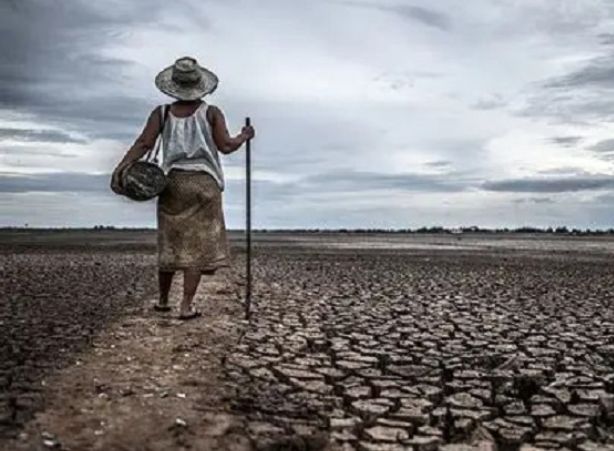

For many people, El Niño is simply a scientific term heard in weather forecasts. For millions of African farmers, however, it represents something far more serious – a climate phenomenon that can determine whether households harvest enough food to survive or face months of hunger.
Across Africa, particularly in countries where agriculture depends heavily on rainfall, El Niño has emerged as a major threat to food security, livelihoods and economic stability.
El Niño has emerged as a major threat to food security in Africa
Recent climate shocks across Southern and East Africa have exposed the vulnerability of farming systems that remain largely dependent on increasingly unpredictable weather patterns.
In Malawi, the effects of El Niño have been particularly severe. The 2023/24 agricultural season was characterised by delayed rainfall, prolonged dry spells and erratic weather conditions that significantly reduced maize production, the country’s staple food crop.
The situation prompted the government to declare a state of disaster in 23 districts affected by drought conditions linked to El Niño.
According to government estimates and humanitarian agencies, including the World Vision International, approximately 5.7 million Malawians experienced acute food insecurity during the 2024/25 consumption period as a result of the drought.
Yet the country’s climate-related challenges did not begin with El Niño.
Many communities are still recovering from the devastating effects of Cyclone Freddy, which caused widespread destruction across southern Malawi.
Thousands of households lost homes, crops and livelihoods. Just as recovery efforts were beginning to take hold, drought conditions returned, further exposing the fragility of Malawi’s agricultural systems.
The crisis extends beyond Malawi’s borders.
According to the World Food Programme, the current El Niño weather pattern has contributed to one of the most severe food security crises Southern Africa has experienced in recent years.
Neighbouring Zambia has also suffered one of its worst droughts in decades, resulting in extensive crop losses and reduced hydropower generation, affecting both agricultural production and energy supply.
These developments underscore a growing reality: climate change is no longer simply an environmental issue. It has become a direct threat to economic development, social stability and human well-being.
This reality poses significant challenges to Africa’s long-term development ambitions.
The African Union’s Agenda 2063, commonly known as “The Africa We Want,” envisions a continent characterised by inclusive growth, food security and climate resilience.
Similarly, Malawi’s national development blueprint, Malawi Vision 2063, places agriculture at the centre of economic transformation through increased productivity, commercialisation and industrialisation.
However, these aspirations will remain difficult to achieve if agriculture continues to be highly vulnerable to droughts, floods and other climate-related shocks.
Agriculture remains the backbone of most African economies, employing millions of people and contributing significantly to national incomes.
Yet smallholder farmers continue to rely largely on seasonal rainfall, leaving them exposed to increasingly frequent and severe climate events.
Today, many farmers face a complex combination of challenges, including droughts, floods, pest outbreaks, rising production costs and volatile markets.
Perhaps the greatest injustice is that African farmers are bearing the brunt of a climate crisis they contributed little to creating.
Although Africa accounts for only a small share of global greenhouse gas emissions, it remains among the regions most severely affected by climate change.
The issue is therefore not only environmental but also one of equity, justice and sustainable development.
Despite these challenges, there are reasons for optimism.
Across the continent, farmers are increasingly adopting climate-smart agricultural practices such as irrigation, water harvesting, conservation agriculture and drought-tolerant crop varieties.
These innovations are helping communities adapt to changing climatic conditions and improve resilience.
However, adaptation cannot rest solely on the shoulders of farmers.
Governments must increase investments in irrigation infrastructure, climate-smart technologies, agricultural research, extension services and early warning systems.
Development partners must strengthen support for climate adaptation and disaster preparedness initiatives.
At the same time, policymakers must ensure climate resilience is fully integrated into national and regional development strategies.
Development frameworks such as Agenda 2063, Malawi Vision 2063 and the Sustainable Development Goals provide clear pathways for building more resilient economies and food systems.
However, achieving these goals will require sustained investment, political commitment and coordinated action.
El Niño serves as a powerful reminder that climate change is already reshaping lives and livelihoods across Africa.
The question is no longer whether climate-related shocks will continue to occur.
The more urgent question is whether African countries are adequately prepared to respond.
Protecting farmers means protecting food security. Protecting food security means safeguarding livelihoods, economic growth and the continent’s future.
As climate risks intensify, building resilient agricultural systems must become a priority not only for governments and development partners but for all stakeholders committed to Africa’s sustainable development.
Emmanuel Harawa, is of the AfricaBrief


…. And What Is El Nino? By Yusuf Ozi-Usman
According to ChatGpt, El Niño is a naturally occurring climate phenomenon in which the surface waters of the central and eastern tropical Pacific Ocean become warmer than normal. It is part of a larger climate cycle known as the El Niño–Southern Oscillation.
Although it begins in the Pacific Ocean, El Niño affects weather around the world, including Nigeria. Its impacts can include higher global temperatures, more droughts in some regions, heavier rainfall and flooding in others, increased risk of wildfires in dry areas and changes in agriculture, fisheries, and water supplies.
In Nigeria, El Niño can contribute to hotter-than-normal temperatures, delayed or irregular rainfall in some parts of the country, reduced crop yields due to drought in certain regions and in some years, heavier rainfall and flooding in other areas because of complex interactions with regional weather systems.
An El Niño event usually develops every 2 to 7 years and typically lasts 9 to 12 months, although some events can persist longer.
The opposite phase of El Ninois called La Niña. During La Niña, the Pacific Ocean becomes cooler than normal, often bringing weather patterns that are broadly opposite to those of El Niño.
In simple terms, El Niño is the unusual warming of part of the Pacific Ocean that changes weather patterns across the globe, affecting rainfall, temperatures, farming, and water resources in many countries, including Nigeria.