

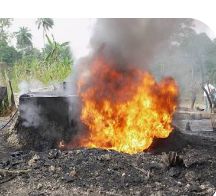
When the Goi oil spill occurred in Ogoniland, Rivers State in 2004, it became one of the most visible symbols of the environmental crisis in Nigeria. Entire fishing settlements were devastated, mangrove forests were destroyed and thousands of residents lost their traditional means of livelihood.
In deed, many Niger Delta communities presented a collective picture of being trapped between wealth and death through environmental challenges.
Across Rivers, Bayelsa and Delta States, were recurring of oil spills, pipeline failures and associated pollution that left thousands of residents struggling with damaged farmlands, contaminated fishing waters and declining livelihoods.
But the most devastating incidents, as earlier said, was the October 2004 spill and fire involving the Trans-Niger Pipeline that passed through Goi community in Ogoniland, Rivers State. The spill discharged crude oil into surrounding creeks and mangrove forests before a fire erupted, burning for several days and destroying vegetation, aquatic life and economic trees relied upon by local residents. Subsequent assessments described extensive damage to the mangrove ecosystem and fishing grounds that had sustained families for generations.
Community leaders in Goi lamented that the once-thriving fishing settlement had become a shadow of itself. Fishermen reported sharp declines in fish catches, while farmers complained that crude oil contamination had rendered portions of their land unproductive. Women involved in fish processing and local trading also reported severe economic hardship as environmental degradation spread through the area.
The Goi disaster drew renewed attention to the broader environmental crisis in Ogoniland, where oil production had largely ceased in the early 1990s even as pipelines transporting crude from other locations continued to traverse local communities. Environmental advocates argued that aging infrastructure, inadequate maintenance and delayed response mechanisms contributed significantly to the frequency and severity of spills.
Throughout 2004, concerns over pollution extended beyond Goi. Residents in several Niger Delta communities complained of recurring pipeline leaks, polluted streams and loss of biodiversity. Human rights organizations documented allegations that communities often received inadequate consultation regarding oil operations and insufficient remediation following environmental incidents. Reports also highlighted failures to promptly clean contaminated sites and restore affected ecosystems.
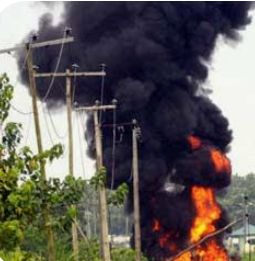 Environmental experts warned that the destruction of mangrove forests represented one of the most serious ecological consequences of oil pollution in the Delta. Mangroves serve as breeding grounds for fish and act as natural barriers against erosion and flooding. Once coated with crude oil or damaged by fire, regeneration can take years or even decades.
Later scientific investigations confirmed that oil contamination in parts of Ogoniland had penetrated deep into soil and groundwater systems, affecting drinking water sources and public health.
The crisis also highlighted the tension between Nigeria’s dependence on petroleum revenues and the environmental realities confronting host communities. While crude oil exports generated billions of dollars for the national economy, many Niger Delta settlements lacked adequate healthcare, clean water, roads and educational facilities.
Community leaders repeatedly questioned why regions producing the country’s most valuable resource continued to experience widespread poverty and environmental neglect.
Oil companies operating in the region often attributed some spill incidents to sabotage, illegal bunkering and vandalism, while community groups and environmental activists pointed to aging infrastructure and inadequate maintenance as major contributing factors.
The debate over responsibility became a recurring feature of investigations into oil spill incidents across the Delta.
For residents of Goi and other affected communities, however, the immediate concern remained survival. Families dependent on fishing and farming faced declining incomes, polluted water sources and uncertainty about future restoration efforts.
Many called for comprehensive environmental remediation, compensation for losses and stronger regulatory oversight to prevent future disasters.
Over twenty years after, the Niger Delta continues to grapple with oil pollution, but the nature, causes, responses and public awareness surrounding oil spills have changed significantly.
In 2004, most discussions about oil spills focused on aging pipelines, equipment failure and inadequate environmental safeguards by oil companies. Communities complained of delayed responses to spills, weak regulatory oversight and lack of compensation.
The destruction of Goi and similar communities brought international attention to the environmental cost of oil production in Nigeria.
Subsequent court cases and investigations kept these issues in the public eye for years.
One of the most important changes since 2004 has been the growth of environmental regulation and monitoring.
The establishment and strengthening of agencies such as the National Oil Spill Detection and Response Agency (NOSDRA) improved reporting requirements and response mechanisms.
Today, oil-spill incidents are more likely to be documented, investigated and publicly reported than they were two decades ago. However, enforcement challenges remain.
Another major change is the shift in the causes of many spills.
While equipment failure and corrosion remain significant factors, sabotage, oil theft and illegal refining have become dominant contributors to environmental incidents in many parts of the Niger Delta.
According to recent reports by the Nigerian Upstream Petroleum Regulatory Commission, more than 66 percent of recorded spill incidents in 2024 were linked to sabotage and related human interference.
The emergence of large-scale crude-oil theft networks transformed the environmental landscape. Illegal tapping of pipelines, artisanal refining camps and unauthorized connections now contribute substantially to pollution.
Security agencies and oil companies invested heavily in surveillance, community partnerships and pipeline protection to combat these activities.
There has also been progress in environmental awareness and activism.
In 2004, affected communities often struggled to attract international attention. By 2026, environmental groups, community organizations, journalists and international institutions routinely monitor pollution incidents.
Court judgments in Nigeria, the United Kingdom and the Netherlands increased pressure on oil companies to address environmental liabilities and compensate affected communities.
The launch of the Ogoniland clean-up programme following recommendations from the United Nations Environment Programme marked another significant development. Although progress has been slower than many residents expected, the clean-up initiative represents one of the largest environmental restoration efforts ever undertaken in Nigeria.
It reflects growing recognition that remediation is as important as preventing future spills.
Technological improvements have also altered spill management. Modern leak-detection systems, satellite monitoring, drones and enhanced reporting platforms now allow quicker identification of incidents. Nevertheless, recent spill events show that equipment failures, defective repairs and infrastructure deterioration still pose substantial risks.
Despite these changes, many challenges remain unchanged. Communities across Rivers, Bayelsa and Delta States continue to report contaminated waterways, declining fish populations, damaged farmlands and health concerns, linked to long-term pollution.
New spill incidents continue to occur, reminding stakeholders that the environmental crisis has not been fully resolved.
The most significant difference between 2004 and 2026 is not the disappearance of oil spills, but the transformation of the debate around them. In 2004, the discussion centered mainly on corporate responsibility and environmental neglect. And in 2026, the conversation includes infrastructure integrity, oil theft, illegal refining, environmental justice, remediation, community participation and long-term sustainability.
The Niger Delta of 2026 is better informed, more closely monitored and more legally empowered than the Niger Delta of 2004. Yet the region continues to face the difficult task of balancing oil production with environmental protection.
The challenge for Nigeria in the coming years will be to ensure that economic gains from petroleum development no longer come at the expense of the people and ecosystems that sustain the Niger Delta.
 Yusuf Ozi-Usman
Yusuf Ozi-Usman is Editor-In-Chief of Greenbarge Reporters online newspaper, and former Environment Desk Editor of Daily Trust newspaper in Abuja. He toured the entire Niger Delta region at the time.