



For many Nigerian Muslims, the journey to Hajj is the fulfillment of a lifelong spiritual dream. Families save for years to be able to perform the fifth religious obligation at least, once in lifetime. Communities gather to pray for departing pilgrims.
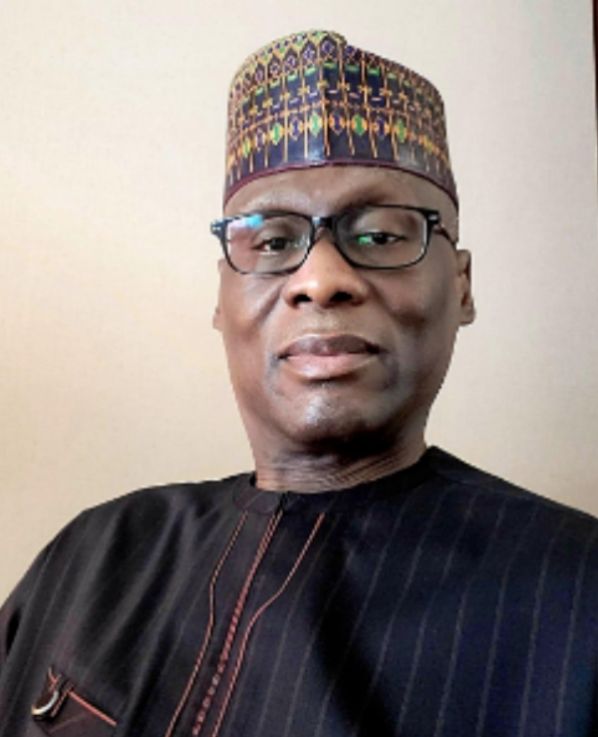
Expectations are always high not only spiritually, but administratively. At the center of this sacred responsibility is the National Hajj Commission of Nigeria (NAHCON). Under the leadership of its new Chairman, Ambassador Ismail Abba Yusuf, there is a real opportunity to reposition the Commission to restore confidence through improved service delivery.
The challenges facing NAHCON are not new, and to pretend otherwise will not help.
Late preparations have repeatedly complicated operations. When accommodation contracts, airline agreements, and service arrangements are concluded too close to the Hajj season, costs rise and options become limited. This has sometimes placed unnecessary pressure on both officials and pilgrims.
The solution is simple in principle, though demanding in practice: planning must begin immediately one Hajj ends. A culture of early preparation would allow Nigeria to secure better rates and better facilities in Makkah and Madinah.
Another reality is the instability of foreign exchange. Owing to the fact that most Hajj payments are made in foreign currency, fluctuations in the naira directly affect pilgrimage fares.
Pilgrims often struggle to understand why costs rise suddenly.
NAHCON may not control the exchange rate, but it could control communication. A transparent breakdown of Hajj fares—clearly explaining accommodation costs, airfare, feeding, and administrative charges—would go a long way in reducing suspicion and anxiety.
Logistics remain a sensitive area. Delayed flights, overcrowded schedules, and coordination lapses have, at times, overshadowed what should be a spiritually uplifting journey. Airlift operations must be treated as a critical component, not a secondary detail.
Contracts with airlines should include firm performance expectations, and contingency plans should always be in place. Pilgrims—many of them elderly—deserve predictability and dignity in travel arrangements.
Accommodation in Saudi Arabia has also generated recurring concerns. Securing decent buildings close to the Haram requires early negotiation and rigorous inspection.
Nigerian pilgrims should not arrive to discover facilities that fall below expectations.
To this end, a stronger monitoring system, combined with transparent allocation processes, would reassure pilgrims that they are receiving value for what they paid.
Coordination between NAHCON and State Pilgrims’ Welfare Boards is another area that needs strengthening. While NAHCON provides national oversight, state boards are directly involved in registering and preparing pilgrims. When communication gaps occur, the result is confusion over documentation, vaccinations, or visa processes. A unified digital platform linking NAHCON with all state boards could reduce errors and speed up information flow. In an age of technology, manual systems should no longer slow down such an important national assignment.
Digital reform offers perhaps the most practical way forward. An automated registration and payment system would reduce human interference, enhance transparency, and allow pilgrims to track their status in real time. Although technology cannot replace integrity, but it can reduce opportunities for inefficiency and error.
Public perception also matters. Over the years, allegations—some proven, others speculative—have affected the Commission’s image.
Thus, rebuilding trust requires openness. Regular briefings, publication of audited reports, and competitive procurement processes are not luxuries; they are necessities. When people see transparency, confidence follows.
Above all, pilgrims’ welfare must remain central. Hajj is physically demanding. Many Nigerian pilgrims are elderly and require medical support, clear guidance, and organized feeding arrangements. Strengthening medical teams, improving orientation programs before departure, and ensuring effective on-ground support in Saudi Arabia would significantly enhance the experience.
Ambassador Ismail Abba Yusuf is therefore expected to bring his diplomatic experience that could be leveraged to strengthen Nigeria’s engagement with Saudi authorities. High-level coordination can help secure favorable tent allocations in Mina, better transportation scheduling, and improved service conditions.
Repositioning NAHCON is not about cosmetic change; it is about institutional discipline. It requires early planning, financial transparency, technological innovation, and compassionate leadership. If these elements are pursued consistently, the Commission can regain full public confidence.
Hajj is a sacred obligation. Managing it should reflect excellence, accountability, and empathy. With deliberate reforms and steady leadership, NAHCON can rise above its challenges and truly serve Nigerian pilgrims in a manner worthy of the spiritual journey they undertake.
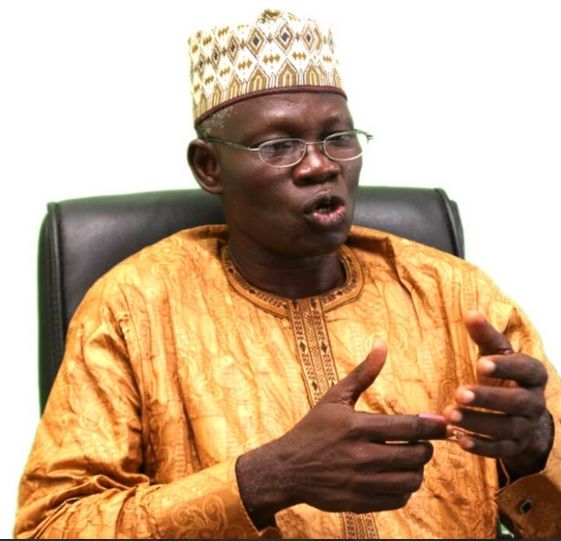

– Abdulkarim Abdulmalik, is a journalist and Author of a handbook on: “Pilgrims’ Companion, a Self-guide to Hajj and Ummrah.”