The Nigerian Institute of Industrial Security (NIIS) has advised the federal government of Nigeria to embrace technology by equiping security agencies with advanced facilities to confront the rising insecurity across the country. Rising from its 2024 17th Annual Security Conference in Lagos yesterday, December 14, the NIIS said that the only way to speedily address insecurity, including kidnapping, terrorism and others is for the government to adopt advance technology. The NIIS, headed by its President, Alhaji Isa Ozi Salami OFR, commended the efforts of the nation’s security forces for their commitment to securing the country from criminals, but stressed that with provision of state-of-the-art fighting tools, they would do better. The theme of the 17th Security Conference was: “Holistic Security in the Industrial Age: Integrating, Innovation, Ciber Resilience and Human Factor.” Experts in security system, including the Assistant Inspector General of Police, Fayode Adegote took turn to speak at the Conference and reached a consensus that there is need for government to equip security agencies with sophisticated, and technologically advanced tools to face the modern security challenges. Speaking to newsmen shortly after the conference, the Institute’s President, Isa Ozi Salami said that the conference did not bother itself about what happened in the past, but “looked forward to what needs to be done to holistically address the insecurity in the country.”
President Bola Ahmed Tinubu has said that it has never been in his character to inflict pains and hardship on fellow Nigerians. President Tinubu, who spoke at the 48th convocation ceremony of the Obafemi Awolowo University, OAU, Ile-Ife, Osun State yesterday, December 14, said: “I am not unaware of the harsh economic situation of our country, neither do I take pleasure in inflicting pains and anguish on my compatriots.” The President, who was by his Special Adviser on Economy, Dr. Tope Fasua, appealed to Nigerians to be patient with his government. He said that his government has been working to ensure that the country works in favour of every citizen by correcting the mistakes made by past administrations. He stressed that his government will not embark on blame game but ready to change the country for better through his economic reforms. “Our reform policies were aimed at making Nigeria work for everyone, but the pains that come with the reform must be endured in the meantime.” Tinubu admitted that the country is faced with the stark reality of results of some policies hitherto executed by past administrations but which had no direct positive impact on the generality of our people. “We have gladly accepted the assets and liabilities of our heroes past without any intention of apportioning blames or pointing an accusing finger at any individual or group of people. “As we are trying to fix, reconfigure and correct past mistakes and errors, we implore all Nigerians to cooperate with us, to endure this unintentional hardship so that, like the graduates of today, we all can celebrate and be celebrated at the end of the day. I am certainly seeing the light at the end of our tunnel.” This was even as the First Lady, Senator Oluremi Tinubu, advised the graduating students to think outside the box so as to seize the opportunities that would be coming their ways. “I charge you all to think out of the box to seize the opportunities coming into the country. We must accept that things will be done differently to achieve meaningful development.” The Chancellor of the University and Etsu Nupe, Alhaji Yahaya Abubakar, said that the backbone of every nation is its investment in education which will drive its developmental drive in the competitive world. Also, the Pro-Chancellor, Professor Siyan Oyeweso, called on the 977 post graduates to deploy the knowledge to continue to build a nation full of opportunities for the coming generation.
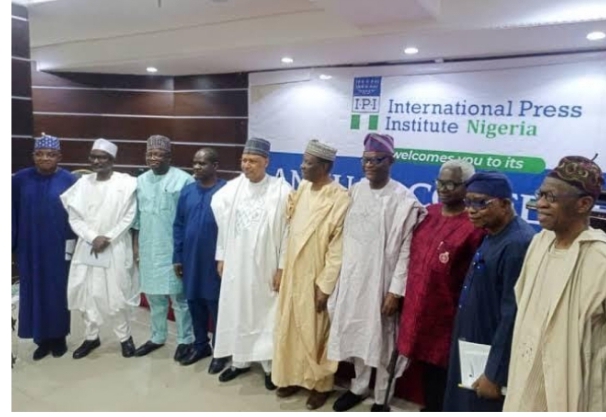
The Nigerian chapter of International Press Institute (IPI) has re-elected the Editor-in-Chief of Premium Times online newspaper, Musikilu Mojeed as President. Also re-elected at the end of its Annual General Meeting (AGM) in Abuja, Nigeria’s Federal Capital Territory (FCT) is the Chief Executive Officer (CEO) of the Media Trust Group, Ahmed I. Shekarau as Secretary. Their re-election, including that of other four officials, to run the affairs of the Nigerian affiliate of the global media body for the next three years, was unopposed. A statement by a member of the global executive board of the IPI, Raheem Adedoyin, said that other members elected into the executive committee of IPI Nigeria include Fidelis Mbah of Al Jazeera Television (deputy president), Rafatu Salami of Voice of Nigeria (treasurer), Yomi Adeboye of Herald Newspaper (assistant secretary) and Tobi Soniyi of Arise News (legal adviser). Speaking during the inauguration of the new leaders, Mojeed promised inclusive administration and solicited the support and commitment of members to enable his team achieve the organisation’s set objectives of enhancing the Nigerian media operating environment. The election of new leaders was preceded by the organisation’s annual general meeting where the Mojeed-led executives rendered account of their three-year stewardship and updated members on the financial state of the body. Some sections of the organisation’s constitution were also amended during the AGM. A major highpoint of the event was the arrival of ex-Governor Segun Osoba, a renowned journalist and prominent, longtime member of the IPI. He praised IPI Nigeria members for their commitment to press freedom, journalists’ rights and independent journalism. Chief Osoba, who recently returned from an overseas trip, further commended the organisation’s leadership for ensuring a successful conference. Apart from ex-Governor Osoba, some other prominent journalists who attended the AGM included a former Editor-In-Chief of Tribune Newspapers (who chaired the forum), Folu Olamiti; former presidential spokesperson and ex-President of the Nigerian Guild of Editors, Malam Garba Shehu; chairman of the Editorial Board of the Herald and member of the global board of the IPI, Adedoyin; Chairman of the Board of Trustees of the International Centre for Investigative Reporting (ICIR), Oluwafisan Bankale and the Executive Director of the organisation, Dayo Aiyetan. Other dignitaries at the congress were Professor Abigail Ogwezzy-Ndisika of the University of Lagos; Kunle Babs, the Nigerian Bureau Chief of Feature Story News; Danlami Nmodu, publisher of Newsdiary Online; Fabian Benjamin, editor-in-chief of JAMB Bulletin; Sule Yau Sule of Bayero University, Kano; Dotun Oladipo, publisher of The Eagle Online; Funke Egbemode, former President of the Nigerian Guild of Editors; Ochiaka Ugwu, an editor with Peoples Daily; Ken Ugbechie, publisher of Political Economist; Lawal Sabo Ibrahim, former managing director of The Triumph newspapers; Mohammed Danjuma, publisher of Katsina Times; Christopher Isiguzo, former president of the Nigerian Union of Journalists (NUJ); Lanre Arogundade, executive director of the International Press Centre; Zainab Suleiman Okino, chair of the editorial board of Blueprint Newspapers; and Hameed Bello, chief operating officer of Peoples Daily newspapers. Earlier on Wednesday, IPI Nigeria hosted a well attended conference with the theme: “Democracy, Media Freedom and the Imperative of Protecting the Nigerian Civic Space.” The Minister of Information and National Orientation, Mohammed Idris, who chaired the conference’s opening day session said press freedom exists in Nigeria. The keynote address was delivered by Professor Tony Iredia. He disagreed with the minister, arguing fiercely that press freedom does not exist in Nigeria. The Director-General of the Department of State Services, Adeola Oluwatosin Ajayi, gave a presentation on “Dissecting the Frosty Relationship Between the Nigerian Media and Security Agencies” while the Chairman of the Economic and Financial Crimes Commission, Ola Olukoyede, spoke on “How the Media and Journalists can Partner Anti-corruption Agencies in the Fight Against Corruption.” Similarly, former Minister of Information and Culture, Alhaji Lai Mohammed, addressed participants on the topic “Government Vs Media: How to Reduce Tension, Enhance Mutual Understanding, and Avoid Censorship.” The three-part event concluded on the night of 12th December with a dinner for the organisation’s members, partners, and supporters. The International Press Institute (IPI), with headquarters in Vienna, Austria, is a global network of media executives, editors, and leading journalists. Since its establishment in 1950, it has consistently advocated for journalists’ rights and media freedom worldwide. IPI Nigeria is the Nigerian branch of IPI Global and is totally committed to credible and independent journalism, media freedom, freedom of speech and the free flow of news and information in Africa’s most populous country and the continent’s biggest economy.
The Odovidi (traditional head) of Egbira speaking people resident in Kuje, the Nigeria’s Federal Capital Territory (FCT), Alhaji Momohjimoh Abdulsalam, has paid a solidarity visit on the immediate past Governor of Kogi State, Alhaji Yahaya Adoza Bello in the Kuje Correctional Center (prison). The Chief was accompanied on the visit today, December 14, by some leaders, including an elder statesman and retired school principal, Alhaji Yakubu Ozi Salami; Editor-in-chief of Greenbarge Reporters online newspaper and Author of Standard Ebira English Dictionary, Yusuf Ozi-Usman; a Director in the services of the FCT Administration, Alhaji Yusuf Momohjimoh, a youth leader, Asana Abdulsalam and others.
The visit came about 24 hours after a Federal High Court in Abuja granted the former Governor bail in the sum of N500 million. Justice Emeka Nwite of the Federal High Court in Abuja, had, yesterday, December 13, granted the bail and ordered him to provide two sureties with landed property in Abuja and that the title documents for these property should be verified by the deputy chief registrar of the court. The court said that the sureties must swear to an affidavit of means. It directed both Yahaya Bello and his sureties to submit recent passport photographs and to surrender his international passport, barring him from travelling outside Nigeria without court approval. “I hereby grant bail to the defendant in the sum of N500 million and two sureties in like sum who must possess landed property in Abuja.” The court directed that Yahaya Bello should remain in Kuje prison until the bail conditions are met. The bail was granted without opposition from the EFCC, which left the decision at the court’s discretion. The court scheduled February 24 and 28, 2025, for the commencement of the trial on the 19-count money laundering charges brought against the former Governor by the Economic and Financial Crimes Commission (EFCC). Yahaya Bello had pleaded not guilty to allegations of N80.2 billion fraud. Aides of the former Governor, friends and well-wishers swarmed Kuje prison today, on similar solidarity visit, offering prayers to him for quick return to his normal vibrant life.
Former Vice Chancellor of the University of Abuja, Professor Nuhu Yakubu and the current Provost of the National Defence College, Abuja, Professor Adam Ahmed Abere Okene are among the first class scholars of Egbira extract that are expected to participate in a lecture being hosted by De Club 10 Kogi Central on December 26. According to the President of De Club 10, Alhaji Abdulrazak O. Leramoh, Professor Nuhu Yakubu will lead as keynote speaker on the topic: “Salvaging Egbira language from extinction: what must be done.” The President, in a chat with our Editor, said that other scholars expected to brainstorm on the topic at Afims Hotel in Okene are Professor Mariam Tenuche, Professor Abdulhameed Onsachi; President of the umbrella body of Egbira nation, Ebira People’s Association (EPA), Dr. Godwin Oyibo; Dr. Habiba Suleiman and Dr. Kabiru Abarkaka, as well as the chairman of Egbira Development Scheme, Alhaji S.S Salami (PEN).
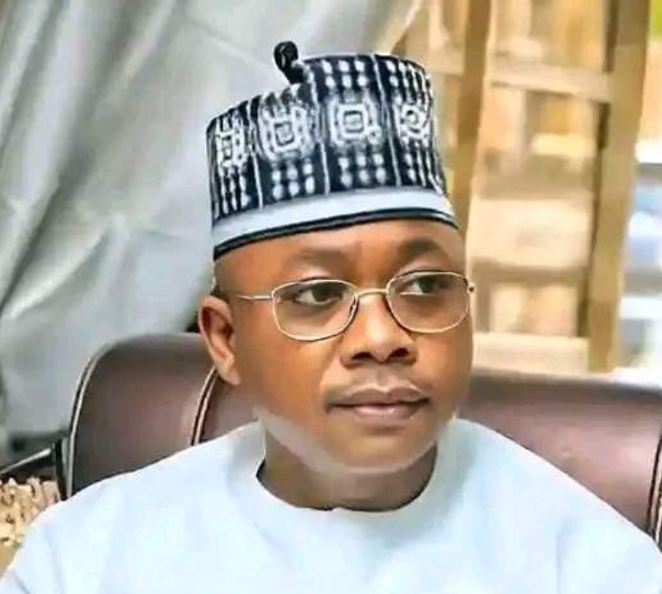
He said that the Ohinoyi of Egbiraland, Alhaji Ahmed Anaje will be the father of the day, while the Kogi State Governor, Alhaji Ahmed Usman Ododo will be Special Guest of Honour, adding that the governor will also be honoured with an award of good governance. Also to receive award of recognition are Professor M S. Audu, Chief J. O Omuya, Chief Edward Jatto, and Alhaji Hamza Lawal. De Club 10 President said that for a long time, government had neglected the development and teaching of Egbira language at the elementary education level as against what happened during and immediately after the colonial rule in Nigeria. He lamented that the efforts of a few authors who have written books on Ebira language to educate the younger ones across the world, have never seem to be yielding good result because of lack of encouragement from relevant authorities.
A total sum of N1.727 trillion, being November 2024 Federation Accounts Revenue, has been shared to the Federal Government, States and the Local Government Councils. The Director of Press and Public Relations in the office of the Accountant General of the Federation, Bawa Mokwa, in a statement today, December 13, said that the revenue was shared at the December 2024 meeting of the Federation Accounts Allocation Committee (FAAC) held in Abuja. The N1.727 trillion total distributable revenue comprised distributable statutory revenue of N455.354 billion, distributable Value Added Tax (VAT) revenue of N585.700 billion, Electronic Money Transfer Levy (EMTL) revenue of N15.046 billion and Exchange Difference revenue of N671.392 billion. A communiqué issued by the FAAC indicated that total gross revenue of N3.143 trillion was available in the month of November 2024. Total deduction for cost of collection was N103.307 billion while total transfers, interventions and refunds was N1.312 trillion. According to the communiqué, gross statutory revenue of N1.827 trillion was received for the month of November 2024. This was higher than the sum of N1.336 trillion received in the month of October 2024 by N490.339 billion. Gross revenue of N628.972 billion was available from the Value Added Tax (VAT) in November 2024. This was lower than the N668.291 billion available in the month of October 2024 by N39.318 billion. The communiqué stated that from the N1.727 trillion total distributable revenue, the Federal Government received total sum of N581.856 billion and the State Governments received total sum of N549.792 billion. The Local Government Councils received total sum of N402.553 billion and a total sum of N193.291 billion (13% of mineral revenue) was shared to the benefiting States as derivation revenue. On the N455.354 billion distributable statutory revenue, the communiqué stated that the Federal Government received N175.690 billion and the State Governments received N89.113 billion. The Local Government Councils received N68.702 billion and the sum of N121.849 billion (13% of mineral revenue) was shared to the benefiting States as derivation revenue. From the N585.700 billion distributable Value Added Tax (VAT) revenue, the Federal Government received N87.855 billion, the State Governments received N292.850 billion and the Local Government Councils received N204.995 billion. A total sum of N2.257 billion was received by the Federal Government from the N15.046 billion Electronic Money Transfer Levy (EMTL). The State Governments received N7.523 billion and the Local Government Councils received N5.266 billion. From the N671.392 billion Exchange Difference revenue, the communiqué stated that the Federal Government received N316.054 billion and the State Governments received N160.306 billion. The Local Government Councils received N123.590 billion, while the sum of N71.442 billion (13% of mineral revenue) was shared to the benefiting States as derivation revenue. In November 2024, Oil and Gas Royalty and CET Levies recorded significant increases, while Excise Duty, Value Added Tax (VAT), Import Duty, Petroleum Profit Tax(PPT), Companies Income Tax (CIT) and Electronic Money Transfer Levy (EMTL) decreased considerably.
The immediate past Governor of Kogi State, Yahaya Bello may breathe fresh air again with the court granting him bail in the sum of N500 million.
Justice Emeka Nwite of the Federal High Court in Abuja, gave the ruling on bail today, December 13, with stringent conditions. The court stipulated that Yahaya Bello must provide two sureties with landed property in Abuja. The title documents for these property are to be verified by the deputy chief registrar of the court and the sureties must swear to an affidavit of means. Also, both Yahaya Bello and his sureties are required to submit recent passport photographs. As part of the conditions, Yahaya Bello was ordered to surrender his international passport and is barred from travelling outside Nigeria without court approval. “I hereby grant bail to the defendant in the sum of N500 million and two sureties in like sum who must possess landed property in Abuja.” The court directed that Yahaya Bello should remain in Kuje prison until the bail conditions are met. The bail was granted without opposition from the EFCC, which left the decision at the court’s discretion. The court scheduled February 24 and 28, 2025, for the commencement of the trial on the 19-count money laundering charges brought against the former Governor by the Economic and Financial Crimes Commission (EFCC). Yahaya Bello had pleaded not guilty to allegations of N80.2 billion fraud.
An adhoc committee set up by the Senate has summoned the minister of the Federal Capital Territory (FCT), Nyeson Wike over the demolition of Structures in the capital city. The nine-man Committee was set up today, December 12, to ascertain the propriety of the demolitions. The committee did not give specific date for the minister to appear before it. The setting up of the adhoc committee and summoning of the minister followed complain by a Senator representing the FCT, Ireti Kingibe, who told her colleagues at the plenary that the demolitions of Structures are causing untold hardship to victims. Senator Ireti pleaded with the Senate to intervene and prevent further demolition of structures, including estates already marked. Senator Natasha Akpoti-Uduaghan (PDP, Kogi Central) seconded the motion, asking that the demolitions should be stopped pending the outcome of a Senate investigation into the matter. However, the Senate President, Godswill Akpabio gave reasons why the Senate cannot stop Wike from the demolition exercises. According to Akpabio, “all demolitions could not be stopped because some were ordered by the courts. “The minister can continue with demolition of structures ordered by the courts in order not to be culpable of disobeying court orders.” The minister was accused of revoking the land titles of an estate in the FCT and issued the same to Saravera Nigeria Limited, and the Minority Leader and member of the House of Representatives representing Obio/Akpor Constituency, Kingsley Chinda. The General Manager of the estate in the Lifecamp area of Abuja, Vincent Enoghase, had claimed that the Federal Capital Development Authority (FCDA) had issued a demolition notice.
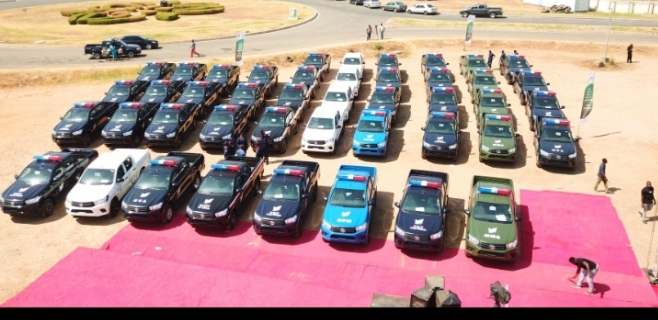
Minister of the Federal Capital Territory (FCT), Nyeson Wike has given marching order to the security operatives not to allow criminals breathing space, especially as the festive period set in. The minister, who handed 50 operational vehicles, as donation to the security agencies today, December 12, asked them to take the battle right to the doorsteps of the criminals. “We must not give them space; we must not allow the criminals to strike before we go in. “We have to take the war to them. Let them know that we are serious. So, this festive period, make sure that you don’t give them any gap.” Wike assured that there’s adequate provision made in the budget of the FCT by the National Assembly for the purchase of the 50 operational vehicles. He said that the FCTA had earlier in the year, distributed another set of 50 operational vehicles to the security agencies, bringing the total number to 100. He disclosed that 12 police divisions are currently being constructed in the six Area Councils of the FCT as was requested by the FCT Police Commissioner, and assured that the divisions would be completed, furnished, and handed over to the police by April next year. According to the minister, there has been improvement in security situation in the capital city, especially a reduction in kidnapping incidents in the rural areas. He commended the security agencies and pledged the continued support of the Administration. Wike identified difficult terrain and remoteness of the FCT Area Council as factors militating against the fight against insecurity, even as he expressed confidence that the provision of access roads in the rural areas will make it easier for the security agencies to operate in these areas. He called on the residents to support the security agencies by reporting untoward activities in their communities to nip security threats in the bud.
The Nigerian Content Development and Monitoring Board (NCDMB) has executed the engineering, procurement, and construction contract with Julius Berger PLC for the development of Oloibiri Museum and Research Centre (OMRC). It would be located at Otuabagi, Ogbia Local Government Area of Bayelsa State. The Executive Secretary NCDMB, Engineer Felix Omatsola Ogbe executed the contract at the Board’s liaison office in Abuja, with the project construction to be delivered within 30 months. The Oloibiri Museum and Research Centre (OMRC) is being jointly financed by the Petroleum Development Technology Fund (PTDF), NCDMB, Shell Petroleum Development Company/Nigerian National Petroleum Company Ltd and the Bayelsa State Government, in the ratio of 40:30:20 and 10 respectively. The project is registered by guarantee, with the four organisations serving as partners. The contract agreement has been approved by the partners and signed by Julius Berger PLC. The Executive Secretary of NCDMB serves as the chairman of the registered company and signed the contract on behalf of the partners, with the Director, Legal Services of NCDMB, Naboth Onyesoh, serving as the Secretary of the company. The President Muhammadu Buhari administration had in February 2023, awarded the contract for the Engineering, Procurement and Construction scope of the OMRC to Julius Berger at the sum of N117billion. The groundbreaking of the OMRC was performed in February 2023, a colorful ceremony attended by leading government officials, oil and gas stakeholders and community members. Engr. Felix Omatsola Ogbe expressed delight on the execution of the contract, which marked the commencement of construction activities. He noted that the project will catalyze immense economic benefits for the Bayelsa and the national economy during the construction and operation stages. He thanked the partners of the project and other stakeholders who contributed to the success of the project to date. He said that the project was conceived to pay homage to the birthplace of Nigeria’s hydrocarbon commercial production journey which commenced in 1958. He added that President Bola Tinubu believes that the project is long overdue hence the multi-level government and private sector collaboration was engineered to actualize the establishment of the project. The OMRC project is expected to deliver a world-class oil and gas museum, showcasing the history of crude oil production in Nigeria and display of geological formations, early equipment, tools, and platforms used in the evolution of oil and gas activities. In addition, the research testing center that will provide a facility where field trials of prototypes of oil and gas related indigenous research will be conducted, grant access to university students in oil and gas related disciplines to potentially better understand indigenous oil and gas technology advancements.The OMRC project will also facilitate the commercialization of research through the creation of a suitable ecosystem for the development of home-grown technology for oil and gas operations and create a new commercial value chain from Museum and Research operations that will generate employment for Nigerians.
We use cookies on our website to give you the most relevant experience by remembering your preferences and repeat visits. By clicking “Accept”, you consent to the use of ALL the cookies.
This website uses cookies to improve your experience while you navigate through the website. Out of these, the cookies that are categorized as necessary are stored on your browser as they are essential for the working of basic functionalities of the website. We also use third-party cookies that help us analyze and understand how you use this website. These cookies will be stored in your browser only with your consent. You also have the option to opt-out of these cookies. But opting out of some of these cookies may affect your browsing experience.
Necessary cookies are absolutely essential for the website to function properly. This category only includes cookies that ensures basic functionalities and security features of the website. These cookies do not store any personal information.
Any cookies that may not be particularly necessary for the website to function and is used specifically to collect user personal data via analytics, ads, other embedded contents are termed as non-necessary cookies. It is mandatory to procure user consent prior to running these cookies on your website.






 The visit came about 24 hours after a Federal High Court in Abuja granted the former Governor bail in the sum of N500 million.
 He said that the Ohinoyi of Egbiraland, Alhaji Ahmed Anaje will be the father of the day, while the Kogi State Governor, Alhaji Ahmed Usman Ododo will be Special Guest of Honour, adding that the governor will also be honoured with an award of good governance.