President Mohammadu Buhari has submitted to the Senate, request for the appointment of Special Advisers.
The request which is contained in a letter that is expected to be read tomorrow, July 11 at the Senate plenary, according to the President, is in compliance with section 151 of the constitution of the Federal Republic of Nigeria 1999 as amended, which confers on him the power to appoint Special Advisers to assist him in the performance of his functions.
This was even as the Senate President, Senator Ahmad Lawan, gave a hint today, July 10, of the possibility of the President sending his ministerial list to the Senate this week.
According to him, the executive arm of government is working round the clock towards ensuring that the Senate gets the ministerial list before the end of the week.
The National Judicial Council (NJC), has formally registered its appreciation to President Muhammadu Buhari for his unequivocal position on the financial autonomy for the States Judiciary.
This is even as it called on the various State Executives to, as a matter of urgency, commence its immediate implementation, saying that this is not only in line with the Constitutional dictates, but presently the Judicial position.
Rising from an emergency meeting today, July 10, in Abuja, the Council recommended the appointment of Hon. Dr. Justice I. T. Muhammad, as the substantive Chief Justice of Nigeria even as it also approved the recommendation of its Interview Committee that screened the two candidates presented by the Federal Judicial Service Commission to it for appointment as Chief Justice of Nigeria.
Subsequently, the Council recommended to the Governors of Sokoto, Lagos, Anambra, Ebonyi, Niger, Taraba, Kano, and Jigawa States, eight successful candidates for appointment as Chief Judges and Grand Kadis for the States.
They are Hon. Mr. Justice Muhammad S. Sifawa as Chief Judge of Sokoto State, Hon. Mr. Justice Kazeem O. Alogba as Chief Judge of Lagos State, Hon. Mr. Justice Ijem Onwuamaegbu as Chief Judge of Anambra State and Hon. Mr. Justice Nwaigwe A. Anselm as Chief Judge of Ebonyi State.
Others areHon. Mr. Justice Aliyu M. Mayaki as Chief Judge of Niger State, Hon. Mr. Justice Filibus B. Andetur as Chief Judge of Taraba State; Hon. Kadi Tijjani Yusuf Yakasai as Grand Kadi of Sharia Court of Appeal in Kano and Hon. Kadi Isa Jibrin Gantsa as Grand Kadi of Sharia Court of Appeal in Jigawa State.
A statement by the NJC Director of Information, Soji Oye, said that the newly appointed Heads of Court will be sworn-in after the approval of the President and their respective State Governors and confirmation by the Senate and State Houses of Assembly as the case may be.
The statement said that the Council also considered notification of retirements of Chief Judge of the Federal High Court, Chief Judges of Gombe, Edo, Niger, Ebonyi, Acting Chief Judge of Kebbi States as well as those of nine other Judicial Officers from the Federal High Court, High Courts of Gombe, Delta, Edo, Imo, Benue and Katsina States.
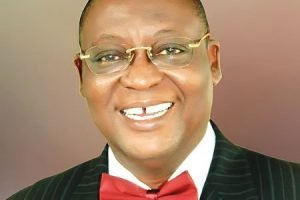
The Senate has made it clear that soon, it would begin its annual vacation whether or not President Muhammadu Buhari submits for consideration, the list of ministers to form Federal Executive Council.
Chairman of the Senate Committee on Media and Public Affairs, Senator Adedayo Adeyeye, who spoke to news men today, July 9 in Abuja said that it is not the duty of the Senate to determine when the ministerial list would be submitted to it.
“It is the prerogative of the president to send his ministerial nominee list to the Senate and when he does that we will consider it.
“The executive is aware of the timetable of the Senate. There is a particular time the Senate will go on recess. That being in mind they should be mindful of when they will carry out this constitutional responsibility.
“That is our constitutional mandate but it is not within our power to even advise or anything, so we will wait until the list is submitted. I will not say anything more than that.
“I don’t think this matter should worry any Nigerian. We are supposed to receive the letter with the list of ministerial nominee transmitted to the Senate.
“If a thing is not my job why should it worry me. When the list comes to us, Nigerians will look at the time the list arrives here and the time the list is approved.
“Let me tell you one thing, the executive are aware and most Nigerians are aware of the timetable of the Senate.
“There is a particular time of the year when the Senate will go on recess that being in mind, they should be mindful of when to carry out this constitutional responsibility because the Senate itself has its own timetable.
“Like the judiciary is right now on recess, a lot of judges have travelled out except those handling election matters.
“So in the same way, there will be a time, very soon when the Senate will go in recess.
“I think the Executive are mindful of this to know the timetable of the Senate and it is left to them to adjust to that timetable or not.
“When the matter comes before us, we will look at it and carry out our constitutional responsibility.”
Chairman of Katsina State Peoples Democratic Party (PDP), Salisu Yusuf Maijigiri, has told the Presidential Election Petition Tribunal in Abuja, the Nigeria’s Capital that the Presidential candidate of his party, Atiku Abubakar won the February 23 election by 905,000 against 872,000 votes polled by the candidate of the All Progressives Congress (APC), President Muhammadu Buhari.
Testifying before the Tribunal today, July 9, Salisu Yusuf said that the 1, 555, 633 votes credited to Buhari was not the true reflection of what transpired on the election day, maintaining that the figure was just allocated.
He alleged that agents of PDP in the 34 local government areas of the state were chased away while the ad-hoc staff of the Independent National Electoral Commission (INEC) were substituted with untrained ones used to produce fake results in the state.
Salisu Yusuf Maijigiri insisted that PDP won in Katsina State with 905,000 votes while APC came second with 872,000 votes from the result collated by his party.
President Muhammadu Buhari received a team of Arewa House Centre for Historical Documentation and Research, led by the Director General of Arewa House, Prof Idris Jimada, at the State House, Abuja. | State House photo
President Muhammadu Buhari has put up a strong case for a better welfare package for teachers in Nigeria’s educational institutions as a way of reviving the educational sector with renewed focus on teaching valuable lessons such as integrity in schools.
President Buhari, who received a delegation from the Arewa House Centre for Historical Documentation and Research at the State House, stressed that improved educational standards in the nation’s schools at all levels will require giving priority to the welfare and training of teachers, who directly create the enabling environment for learning.
According to the President, the quality of training, welfare and happiness of teachers directly impact on the quality of education children and adults get in schools, urging more focus and research on impact of teachers.
The President spoke against the backdrop of a proposal by the Arewa House Centre for Historical Documentation and Research to start an annual, “Buhari Integrity Lecture Series.”
The President insisted that if it has to do with integrity, “we must go back to history and try to assess the contribution of teachers to education, where teachers treated every child as their own in instilling discipline and sharing of knowledge.
“I have been lucky to be in boarding school for nine years, three years in primary school and six years in secondary school before I joined the military. And if we are talking of good education, it has to start with the teaching in schools, where children grow and the environment of learning.”
President Buhari said that education cuts across the three tiers of government, and that it is important to consider who pays the teachers at every level and whether the teachers get adequately compensated to provide quality education.
“We must make education and health a priority relative to the resources available.”
The President said that the challenge of repositioning the educational sector and cultivating strong moral values in children goes beyond the northern part of Nigeria, and should be pursued holistically at a national level.
“Your nomenclature is Arewa, but the problem of education is a national issue.”
He said that the focus must also be on providing accessible quality education for the privileged and underprivileged in the country, adding: “we will have a better society when education is not only for those who can afford to pay expensive fees in schools.”
The Director of Arewa House, Professor Idris Shaaba Jimada, told the President that there is need to inculcate the virtue of integrity that he had stood for over the years, and propagated as an important aspect of development.
Idris Jimada said that the Arewa House Centre for Historical Documentation and Research had decided on instituting “The Buhari Integrity Annual Lecture Series,” which would appraise the President’s position on morality and inspire more people to appreciate integrity as integral to Nigeria’s development.
“Integrity should be taught in our schools as part of civic education, and we are proposing that it starts with you.”
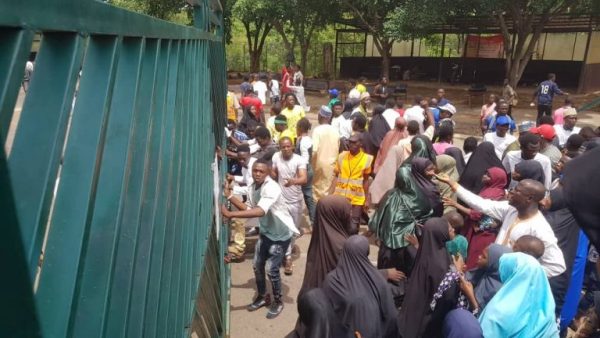
The Nigeria’s Federal Capital Territory Police Command has announced the arrest of 40 members of the Islamic Movement of Nigeria (IMN), otherwise known as Shiites, after a violent protest today, July 9, at the National Assembly during which they allegedly shot a police officer and others.
This is even as the Inspector General of Police (IGP), Mohammed Adamu has ordered surveillance by his officers around the Federal Capital, against the backdrop of the protest, which Shiite carried out over the continued detention of their leader, Ibrahim El-Zakzakky. A statement by the FCT Command Public Relations Officer, DSP Anjuguri Manzah, narrated that Shiite members started the protest, which was camouflaged in a peaceful procession, but that it became violent during which time they tried to force their way into the National Assembly. “Police operatives on the ground, however, acted proactively, professionally and used minimum force to disperse the unruly protesters. “Members of the sect during the violent protest shot two (2) police personnel on the leg, while clubs and stones were used to inflict injuries on six other policemen. The injured policemen have been taken to the hospital for prompt medical attention.” The statement said that investigation is now in progress, even as the 40 members who have been arrested will be dealt with in accordance with the appropriate law of the land.
The FCT Command said that while it recognizes and respects the right of citizens to peaceful procession, but that attempt by any individual or group of persons to cause the breakdown of law and order will not be tolerated. “Members of the public are enjoined to go on with their lawful activities as normalcy has been restored, and adequate security measures have been emplaced by the Command to forestall any security breach.” Also in a statement, the Force Public Relations, Frank Mba, confirmed that the violent protest by members of the El-Zakzakky Group, which led to the unprovoked assault on and injury to Police personnel on lawful duty as well as willful damage to public properties.
“The Inspector General of Police, IGP M.A Adamu, NPM,mni has ordered a 24 hour Police surveillance in the FCT and its environs. Similarly, the Commissioners of Police and their supervisory Assistant Inspectors General of Police in States contiguous to the FCT were also placed on the alert to ensure maximum security in their respective Areas of responsibility (AOR) to avert any possible breach of public safety and security.”
The statement stressed that the Force is not against Citizens expressing their grouse against the State, but that such ventilations must be done through legitimate and acceptable processes and not by taking the laws into their own hands.
The IGP, in the statement, “warned that citizens should not test the collective will of the People and the State by engaging in lawless acts likely to cause the breach of the peace.
“Meanwhile, the IGP has ordered a speedy and diligent investigation into the incident as well as prompt prosecution of all the persons arrested and now in Police custody in connection with the incident.”
I love reading my friend, Mallam Nasir Ahmed El Rufai, the governor of Kaduna State. You may not always agree with him. You may not like his style. Some even think he talks too much. But here is a man who is passionate about Nigeria, and about governance. He fears no foe and he says and do what he believes in. I prefer him to the caterwauling princes who pretend to be concerned about advancing the cause of the people but are always thinking of the next election and the next appointment. These are those a friend of mine refers to as the “kids without the whiz.” They abound in our land, but El Rufai is different.
Hence, when El Rufai talks we must pay heed.
To this end, however, I’m worried about the statement made recently by El Rufai about two Nigerians; one the backward North and second the developing south. I think he got things wrong and he needs to be quickly corrected.
It is very important to correct this assertion so that some non-discerning elements from the South will not start jumping up and dancing. They will not as profoundly delusional as the elephant, who was about to be made king of the jungle where the lion has set a trap with his chief adviser the tortoise on a throne set atop massive hole; a o merin jo ba!
It is a fallacy to say that the south is developing. Every part of Nigeria is at best yearning for development. At worst we have a profound reality, an uneven pace of development across states around which Nigeria has been divided since 1967.
See, it may be high time we stop analyzing Nigeria in the spectrum of North and South protectorates, because that regional divide ceased on January 1, 1914. Nigeria since 1967, has been a nation of states.
Some state being lucky every now and then to be blessed with great administrators, like Baba Jakande in Lagos or Chief Ajasin in Ondo, or Ahmed Tinubu and his golden team in Lagos, in a more recent era.
What becomes obvious on deeper analysis, is that discounting for historical advantages secured between 1952 and 1966 with regional governments in place across Nigeria, what emerges is a nation deeply united in bad governance, poverty index and quality of outcomes.
We have one large underdeveloped country which calls for the attention of all of us, be it North or South. El Rufai assertions may be true some twenty to thirty years ago, with the advantages the South secured in pre-independence governance. I can write a book to put a lie to that assertion now based on the facts known to me.
I have traveled around this country North and South; I have seen things for myself . I am therefore not talking from the prism of someone who sits in Washington and the western capitals and come up with some fake indicators. I know and I can assert that the neglect of many years has come to haunt both the North and the South. I am from the South West. That part which I know so well is living on past glory.
Today education in the Southwest is growing in quantity and not quality. The products rather than portending hope for the future is largely lethal to the health of society. Just go to Facebook and see the quality of the grammar these products of neo-Southwest education propound daily on the platform. It truly will sadden everyone or anyone.
I come from Ekiti which is largely in conventional wisdom regarded as the bastion of education in the Southwest.
The myth abroad is that every household can boast of one or two professors. While this may be true in the past, it unfortunately no longer ring true. Here is a state where a governor used to encourage “miracle examination centers” for students, with invigilators bribed to look away so that the students could cheat and top the league table of states.
This produces at the end of the day a high percentage of performance and rating for the state, that is subsequently celebrated by the Governor whose perfunctory attempt at caring is a careless head fake to excellence and perpetual ode to mediocrity! Now the products of that appalling situation are out of school and are recruited into “yahoo yahoo” and “yahoo plus” as they are called. Parents are now known to look for money to buy laptop for their wards to engage in this despicable business of scam. What a country!
Contrast this with the thousands of students sent out on scholarship by northern governors to some of the good schools abroad yearly, a policy akin to that of China that has made major leap by learning or stealing from the accomplishments of western nations. So southerners, let no one deceive you that you are developing. You’re living on past glory! Leave education and go into food production. Or do I say agricultural production.
Most of the foods consumed in the South today are produced by the North. The youths down here are no longer encouraged to farm. Where there is some modicum of farming going on, it is done by the Ebiras of Kogi, the Igedes Of Benue State and the young farmers from Benin republic. Travel through Benue to any surrounding states you will encounter a gang of youths with cutlasses in hand and hoes hanging on their shoulders joyously heading to farm. Now we have Benue yam, oranges, mango, cashew etc. Contrast this with a trip from Kabba and go through Ondo or Ekiti and head towards Lagos you will see villages all the way where young and able bodied men are playing table tennis and other sports at 11.00 am or filling pot holes while begging for money from travelers. This cannot be progress
The beef we consume, the tomatoes, the yam, the beans , the water melon, the goats for our pepper soup are grown or reared by peasant farmers and transported to the South for our dinner table. The average southerner wants an office job, and there are not enough to go around! In vast areas of our land, young people roam the streets with half bottle filled up with codeine and hard drugs, when they grow despondent and dangerously educated. In the past four years there has been a near revolution in the agricultural production and processing in the North.
The landscape of Kebbi, Kano, Jigawa, Sokoto and many other northern states have been turned to huge plantations of wheat, rice, and sugar cane. This is being followed up with huge processing plants put in place by the private sector in collaboration with the Central Bank. These programs were on willing state, willing partner basis.
After all, the CBN Governor is Igbo and we cannot claim discrimination. Over three hundred billion has been disbursed through Anchor Borrower Program and NIRSAL was originally capitalized to the tune of $500 million to work with states that have leadership and capacity to engage. Jigawa is going heavily into the red goat rearing with the goal of processing their hides for the consumption of the world animal skin market which has hitherto been dominated by Morocco. Cash trees are being planted by the forward looking governor of Jigawa who has seen that the market for both hard and soft wood in China is limitless.
He got the idea when he attended a meeting where deforestation and illegal lumbering was discussed. Instead of digging in against loggers, he volunteered to plant more trees for collective prosperity! In Kaduna where Governor El Rufai governs, the biggest animal feed plant in Africa was commissioned two years ago.
Just imagine the spin-off effect on grain farmers across the North. In Healthcare, his state has been the largest recipient of aid from Bill and Melinda Gates Foundation as the Kaduna’s primary healthcare system is being transformed. This is even as only a small glitch which will soon be resolved will ensure Kaduna state get the cheapest ever loan from World Bank to transform her schools. Of course, this is after the Governor bravely reformed the school system by sacking fake teachers and employing more real ones!
El Rufai knows the truth. He is too clever not to. I think he may be saying what he said to ginger his brother governors to do more for their people or at best humoring our people for political advantage. Least of course and very unlikely was that he sought to lure the South of the country to a false sense of accomplishment. For four years the Buhari administration advertised her anchor borrower program in agriculture. Let us ask how many southern governors took advantage of this program?
The ministry of agriculture under the same government came up with a cocoa farm renewal program. No enthusiasm was shown to it. Instead we had a fellow, whose best idea was to cultivate marijuana for export. Good luck. A friend of mine visited a government agent in charge of this last week. What he told him was depressing. “Why are your government so disinterested in this program that would have been of benefit to your people?” was the question he raised that requires answers from our governors.
Travel around the South and see the army of youths who are unemployed. Yes there are similar army in the North as well but the values even in their deprivation is different. Northern unemployment numbers are also seasonal according to NIBSS, rising in the dry season due to lack of irrigable lands. That is not even going to last forever, as various programs to revive the River Basins are ongoing and the employment number up North will stabilize. I have journeyed around the country with people of power.
Wherever we have been we have been mobbed by these youths. While the Northern variants of it shout “Sai Baba”, the South variants shout, “give us the money”. Their eyes are blood-shot , their teeth discolored and reeking of the smell of drugs , enough to get you high. Their sense of entitlement is legendary.
When you try to pacify them by offering them the change in your pocket they throw it back at you saying “ this is not our money.“ Before you know it they are throwing rocks at your convoy. This was my experience as we travelled around the Southwest during the last election. I was ashamed.
Yet our governors live in affluence, appointing several assistants with no defined or productive functions. All they are after is making money from government. This for me is not an indicator of development. We have too many gods rather than governors. This may not be pleasant to some of my friends who are governors. My apologies.
I am saying this because it time we must say the truth to ourselves. It is kidnapping and banditry we are seeing now. If we don’t take actions rebellion may knock on the door. Young men and women who should be employed after half baked Education are unemployable. Even after massive cheating schemes, Southwest states still continue to underperform in standardized tests done in Nigeria.
At last count, Abia and Anambra led in 2018 while Oyo, Osun and Ogun were below National Average. Add to the fact that the gap in education is inevitably closing. While in 1990, the North had 14 universities, the South had 27. Today that number is 58 and 102 respectively. This is a 414% versus a 370% improvement. Slowly but surely.
In poverty ranking, while the impact of a more diversified economy is felt in lower poverty rates, the Southwest especially continue to house the highest numbers of the urban poor who continue to depend on welfare from remittances to stay afloat. Poverty better measured in the number of people living their best life will reveal a very different measure I suppose. In the ease of doing business category that measures current governance, Kaduna was the leader, followed by Enugu while Southwestern states lagged behind at last 10 position with Oyo and Osun struggling for last position with Nasarawa. It is horrible. It is bad.
Our Governors are now Demi-gods. They will rather do business with themselves, the Lebanese, than with Nigerians, and have infused the system with frustrated businessmen who rather take their monies elsewhere. Truth is, a fair comparison will reveal that we are jostling for position among laggards. Let our governors, both in the North and the South, come up and reassess themselves and govern in the true sense of the word.
The accoutrements of power are so much than the responsibility. They should begin to do away with the meretricious and opt for the things that will uplift their people. They should not abandon their role to the omnibus Federal Government.
Nigeria as a whole cries for development not a part as expostulated by my dear friend Governor El Rufai. The devil is in the details. We must rise up and demand good governance across board.
Senator Babafemi Ojudu is the former Special Adviser on Political Matters to the President , and aide to His Excellency, Vice President, Professor Yemi Osinbajo.
The Director-General of the Nigerian Maritime Administration and Safety Agency (NIMASA), Dr. Dakuku Peterside, has commended the judgment of the Federal High Court in the case involving Seadrill Mobile Unit Nigeria Limited and the Federal Ministry of Transportation (FMOT), which confirmed NIMASA’s right to collect fees from drilling operations.
Dakuku said that the judgment is “yet another landmark attempt by the judiciary to set the record straight and boost implementation of our Cabotage law, while generating opportunities for jobs.”
The suit instituted by Seadrill Mobile Unit Nigeria Limited was to determine whether drilling operations fell within the definitions of “Coastal Trade” and “Cabotage” under the Coastal and Inland Shipping (Cabotage) Act, and whether on a proper interpretation of the Cabotage Act, drilling operations fell within the definition of “vessels” under the Act.
On the first issue, the court, presided by Justice Babs Keuwumi, ruled that drilling operations fell within the ambit of exploration, exploitation, or transportation of the mineral or non-living natural resources of Nigeria, whether in or under Nigerian waters, as provided under the definition of coastal trade in the Cabotage Act.
The court also held that the combined reading of the Admiralty Jurisdiction Act, Interpretation Act, and Cabotage Act meant that drilling rigs fell under the definition of vessel under the Cabotage Act.
Having determined the two questions in the affirmative, the court granted NIMASA leave to collect all outstanding payment of the 2% Cabotage surcharge from owners of drilling rigs and associated platforms.
The implication of the judgement is that oil rigs operating on Nigerian waters are subject to the provisions of the Cabotage Act.
The NIMASA boss reacted by saying that the judgment marked the opening of an important opportunity for job, incomes, and economic growth. He appealed to persons engaged in inland trade to pay their Cabotage fees and reaffirmed the Agency’s commitment to the enthronement of global best practices in the Nigerian maritime sector.
“The Cabotage Act is very clear and it has again been interpreted and confirmed by the court. We expect that with this judgement, all parties will obey the court order and do the needful. It is all for the growth of the Nigerian maritime sector and the country’s economy at large.
“On our part, as a responsible Agency, we will continue to sensitise stakeholders, because every craft that is engaged in Coastal and Inland Trade must pay the Cabotage fees.”
The DG reiterated the determination of the Agency to end the Cabotage Waiver regime in the next five years. He said measures had been put in place by the Agency, in collaboration with stakeholders in the sector, to achieve a seamless waiver cessation.
Section 2(d) of the Cabotage Act provides that Coastal Trade or Cabotage means the engaging by vessel in any marine transportation activity of a commercial nature in Nigerian waters and the carriage of any goods or substances whether or not commercial nature within the waters of Nigeria.
NIMASA is the government Agency responsible for regulating and promoting shipping activities as enshrined in the NIMASA Act, 2007.
President Muhammadu Buhari has promoted two senior army officers to higher ranks in recognition of what the President said “their extra-ordinary feats, courage, exemplary leadership, loyalty, uncommon commitment and valour in the counter insurgency operation in the North Eastern part of the country.”
Those who were promoted, in a statement today, July 9 by the acting director of Army Public Relations, Colonel Sagir Musa, are
General L O. Adeosun, the Chief of Training and Operations at Army Headquarters, promoted to the rank of Lieutenant General and Brigadier General A B. Biu, General Officer Commanding 7 Division and Commander Sector 2 Operation LAFIYA DOLE Maiduguri, promoted to the rank of Major General.
The statement said that Lieutenant A J. Danjibrin of 211 Demonstration Battalion Bauchi has also been promoted to the rank of Captain.
The statement linked the promotions to President Buhari’s total and unflinching support to the Armed Forces of Nigeria in the bid to effectively contain the security situation in the country, especially activities of terrorists in the North East.
“In particular, the government has shown commitment to recognizing excellence, dedication and commitment on the part of personnel of the Nigerian Army.
The statement said that the President had conveyed his personal congratulations to the promoted officers and charged them to continue to be shining examples to their colleagues.
The Chief of Army Staff, Lieutenant General Tukur Yusufu Buratai, has also, behalf of officers and soldiers of the Nigerian Army, congratulated the promoted officers and extended his best wishes to them in all their future endeavours.
President Muhammadu Buhari is happy with a Nigerian writer, Lesley Nneka Arimah, who had just won the 2019 Caine Prize for African Writing.
The President, in a statement by his special adviser on media and publicity, Femi Adesina, said that the prize had confirmed the literary masterpiece of the author and made Nigeria proud.
The President noted that the winning write up, titled: “Skinned’’ showed the depth of insight and skilfulness in bringing up the issue of women inclusiveness, “which continues to occupy the minds of leaders across the world, especially in Africa.”
He stressed that Arimah’s award, with a book focused on empowering women had created another platform for discussions and actions on a topical issue of development that every government must take seriously.
President Buhari also congratulated the family and friends of the prolific writer, affirming that her brilliance has brought pride and glory to the country, and the continent.
We use cookies on our website to give you the most relevant experience by remembering your preferences and repeat visits. By clicking “Accept”, you consent to the use of ALL the cookies.
This website uses cookies to improve your experience while you navigate through the website. Out of these, the cookies that are categorized as necessary are stored on your browser as they are essential for the working of basic functionalities of the website. We also use third-party cookies that help us analyze and understand how you use this website. These cookies will be stored in your browser only with your consent. You also have the option to opt-out of these cookies. But opting out of some of these cookies may affect your browsing experience.
Necessary cookies are absolutely essential for the website to function properly. This category only includes cookies that ensures basic functionalities and security features of the website. These cookies do not store any personal information.
Any cookies that may not be particularly necessary for the website to function and is used specifically to collect user personal data via analytics, ads, other embedded contents are termed as non-necessary cookies. It is mandatory to procure user consent prior to running these cookies on your website.


 President Mohammadu Buhari has submitted to the Senate, request for the appointment of Special Advisers.
 The National Judicial Council (NJC), has formally registered its appreciation to President Muhammadu Buhari for his unequivocal position on the financial autonomy for the States Judiciary.
 The Senate has made it clear that soon, it would begin its annual vacation whether or not President Muhammadu Buhari submits for consideration, the list of ministers to form Federal Executive Council.
 Chairman of Katsina State Peoples Democratic Party (PDP), Salisu Yusuf Maijigiri, has told the Presidential Election Petition Tribunal in Abuja, the Nigeria’s Capital that the Presidential candidate of his party, Atiku Abubakar won the February 23 election by 905,000 against 872,000 votes polled by the candidate of the All Progressives Congress (APC), President Muhammadu Buhari.
 The Nigeria’s Federal Capital Territory Police Command has announced the arrest of 40 members of the Islamic Movement of Nigeria (IMN), otherwise known as Shiites, after a violent protest today, July 9, at the National Assembly during which they allegedly shot a police officer and others.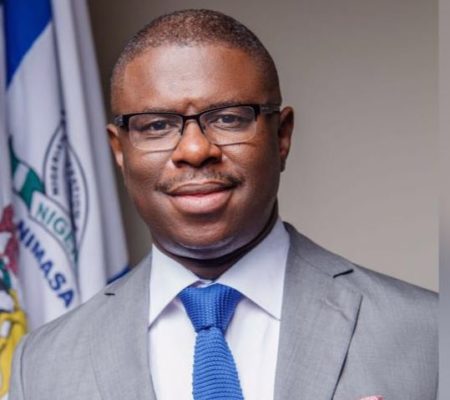




Gov El Rufai, My Friend, You Are Wrong This Time, By Babafemi Ojudu
I love reading my friend, Mallam Nasir Ahmed El Rufai, the governor of Kaduna State. You may not always agree with him. You may not like his style. Some even think he talks too much. But here is a man who is passionate about Nigeria, and about governance. He fears no foe and he says and do what he believes in. I prefer him to the caterwauling princes who pretend to be concerned about advancing the cause of the people but are always thinking of the next election and the next appointment. These are those a friend of mine refers to as the “kids without the whiz.” They abound in our land, but El Rufai is different.
Hence, when El Rufai talks we must pay heed.
To this end, however, I’m worried about the statement made recently by El Rufai about two Nigerians; one the backward North and second the developing south. I think he got things wrong and he needs to be quickly corrected.
It is very important to correct this assertion so that some non-discerning elements from the South will not start jumping up and dancing. They will not as profoundly delusional as the elephant, who was about to be made king of the jungle where the lion has set a trap with his chief adviser the tortoise on a throne set atop massive hole; a o merin jo ba!
It is a fallacy to say that the south is developing. Every part of Nigeria is at best yearning for development. At worst we have a profound reality, an uneven pace of development across states around which Nigeria has been divided since 1967.
See, it may be high time we stop analyzing Nigeria in the spectrum of North and South protectorates, because that regional divide ceased on January 1, 1914. Nigeria since 1967, has been a nation of states.
Some state being lucky every now and then to be blessed with great administrators, like Baba Jakande in Lagos or Chief Ajasin in Ondo, or Ahmed Tinubu and his golden team in Lagos, in a more recent era.
What becomes obvious on deeper analysis, is that discounting for historical advantages secured between 1952 and 1966 with regional governments in place across Nigeria, what emerges is a nation deeply united in bad governance, poverty index and quality of outcomes.
We have one large underdeveloped country which calls for the attention of all of us, be it North or South. El Rufai assertions may be true some twenty to thirty years ago, with the advantages the South secured in pre-independence governance. I can write a book to put a lie to that assertion now based on the facts known to me.
I have traveled around this country North and South; I have seen things for myself . I am therefore not talking from the prism of someone who sits in Washington and the western capitals and come up with some fake indicators. I know and I can assert that the neglect of many years has come to haunt both the North and the South. I am from the South West. That part which I know so well is living on past glory.
Today education in the Southwest is growing in quantity and not quality. The products rather than portending hope for the future is largely lethal to the health of society. Just go to Facebook and see the quality of the grammar these products of neo-Southwest education propound daily on the platform. It truly will sadden everyone or anyone.
I come from Ekiti which is largely in conventional wisdom regarded as the bastion of education in the Southwest.
The myth abroad is that every household can boast of one or two professors. While this may be true in the past, it unfortunately no longer ring true. Here is a state where a governor used to encourage “miracle examination centers” for students, with invigilators bribed to look away so that the students could cheat and top the league table of states.
This produces at the end of the day a high percentage of performance and rating for the state, that is subsequently celebrated by the Governor whose perfunctory attempt at caring is a careless head fake to excellence and perpetual ode to mediocrity! Now the products of that appalling situation are out of school and are recruited into “yahoo yahoo” and “yahoo plus” as they are called. Parents are now known to look for money to buy laptop for their wards to engage in this despicable business of scam. What a country!
Contrast this with the thousands of students sent out on scholarship by northern governors to some of the good schools abroad yearly, a policy akin to that of China that has made major leap by learning or stealing from the accomplishments of western nations. So southerners, let no one deceive you that you are developing. You’re living on past glory! Leave education and go into food production. Or do I say agricultural production.
Most of the foods consumed in the South today are produced by the North. The youths down here are no longer encouraged to farm. Where there is some modicum of farming going on, it is done by the Ebiras of Kogi, the Igedes Of Benue State and the young farmers from Benin republic. Travel through Benue to any surrounding states you will encounter a gang of youths with cutlasses in hand and hoes hanging on their shoulders joyously heading to farm. Now we have Benue yam, oranges, mango, cashew etc. Contrast this with a trip from Kabba and go through Ondo or Ekiti and head towards Lagos you will see villages all the way where young and able bodied men are playing table tennis and other sports at 11.00 am or filling pot holes while begging for money from travelers. This cannot be progress
The beef we consume, the tomatoes, the yam, the beans , the water melon, the goats for our pepper soup are grown or reared by peasant farmers and transported to the South for our dinner table. The average southerner wants an office job, and there are not enough to go around! In vast areas of our land, young people roam the streets with half bottle filled up with codeine and hard drugs, when they grow despondent and dangerously educated. In the past four years there has been a near revolution in the agricultural production and processing in the North.
The landscape of Kebbi, Kano, Jigawa, Sokoto and many other northern states have been turned to huge plantations of wheat, rice, and sugar cane. This is being followed up with huge processing plants put in place by the private sector in collaboration with the Central Bank. These programs were on willing state, willing partner basis.
After all, the CBN Governor is Igbo and we cannot claim discrimination. Over three hundred billion has been disbursed through Anchor Borrower Program and NIRSAL was originally capitalized to the tune of $500 million to work with states that have leadership and capacity to engage. Jigawa is going heavily into the red goat rearing with the goal of processing their hides for the consumption of the world animal skin market which has hitherto been dominated by Morocco. Cash trees are being planted by the forward looking governor of Jigawa who has seen that the market for both hard and soft wood in China is limitless.
He got the idea when he attended a meeting where deforestation and illegal lumbering was discussed. Instead of digging in against loggers, he volunteered to plant more trees for collective prosperity! In Kaduna where Governor El Rufai governs, the biggest animal feed plant in Africa was commissioned two years ago.
Just imagine the spin-off effect on grain farmers across the North. In Healthcare, his state has been the largest recipient of aid from Bill and Melinda Gates Foundation as the Kaduna’s primary healthcare system is being transformed. This is even as only a small glitch which will soon be resolved will ensure Kaduna state get the cheapest ever loan from World Bank to transform her schools. Of course, this is after the Governor bravely reformed the school system by sacking fake teachers and employing more real ones!
El Rufai knows the truth. He is too clever not to. I think he may be saying what he said to ginger his brother governors to do more for their people or at best humoring our people for political advantage. Least of course and very unlikely was that he sought to lure the South of the country to a false sense of accomplishment. For four years the Buhari administration advertised her anchor borrower program in agriculture. Let us ask how many southern governors took advantage of this program?
The ministry of agriculture under the same government came up with a cocoa farm renewal program. No enthusiasm was shown to it. Instead we had a fellow, whose best idea was to cultivate marijuana for export. Good luck. A friend of mine visited a government agent in charge of this last week. What he told him was depressing. “Why are your government so disinterested in this program that would have been of benefit to your people?” was the question he raised that requires answers from our governors.
Travel around the South and see the army of youths who are unemployed. Yes there are similar army in the North as well but the values even in their deprivation is different. Northern unemployment numbers are also seasonal according to NIBSS, rising in the dry season due to lack of irrigable lands. That is not even going to last forever, as various programs to revive the River Basins are ongoing and the employment number up North will stabilize. I have journeyed around the country with people of power.
Wherever we have been we have been mobbed by these youths. While the Northern variants of it shout “Sai Baba”, the South variants shout, “give us the money”. Their eyes are blood-shot , their teeth discolored and reeking of the smell of drugs , enough to get you high. Their sense of entitlement is legendary.
When you try to pacify them by offering them the change in your pocket they throw it back at you saying “ this is not our money.“ Before you know it they are throwing rocks at your convoy. This was my experience as we travelled around the Southwest during the last election. I was ashamed.
Yet our governors live in affluence, appointing several assistants with no defined or productive functions. All they are after is making money from government. This for me is not an indicator of development. We have too many gods rather than governors. This may not be pleasant to some of my friends who are governors. My apologies.
I am saying this because it time we must say the truth to ourselves. It is kidnapping and banditry we are seeing now. If we don’t take actions rebellion may knock on the door. Young men and women who should be employed after half baked Education are unemployable. Even after massive cheating schemes, Southwest states still continue to underperform in standardized tests done in Nigeria.
At last count, Abia and Anambra led in 2018 while Oyo, Osun and Ogun were below National Average. Add to the fact that the gap in education is inevitably closing. While in 1990, the North had 14 universities, the South had 27. Today that number is 58 and 102 respectively. This is a 414% versus a 370% improvement. Slowly but surely.
In poverty ranking, while the impact of a more diversified economy is felt in lower poverty rates, the Southwest especially continue to house the highest numbers of the urban poor who continue to depend on welfare from remittances to stay afloat. Poverty better measured in the number of people living their best life will reveal a very different measure I suppose. In the ease of doing business category that measures current governance, Kaduna was the leader, followed by Enugu while Southwestern states lagged behind at last 10 position with Oyo and Osun struggling for last position with Nasarawa. It is horrible. It is bad.
Our Governors are now Demi-gods. They will rather do business with themselves, the Lebanese, than with Nigerians, and have infused the system with frustrated businessmen who rather take their monies elsewhere. Truth is, a fair comparison will reveal that we are jostling for position among laggards. Let our governors, both in the North and the South, come up and reassess themselves and govern in the true sense of the word.
The accoutrements of power are so much than the responsibility. They should begin to do away with the meretricious and opt for the things that will uplift their people. They should not abandon their role to the omnibus Federal Government.
Nigeria as a whole cries for development not a part as expostulated by my dear friend Governor El Rufai. The devil is in the details. We must rise up and demand good governance across board.