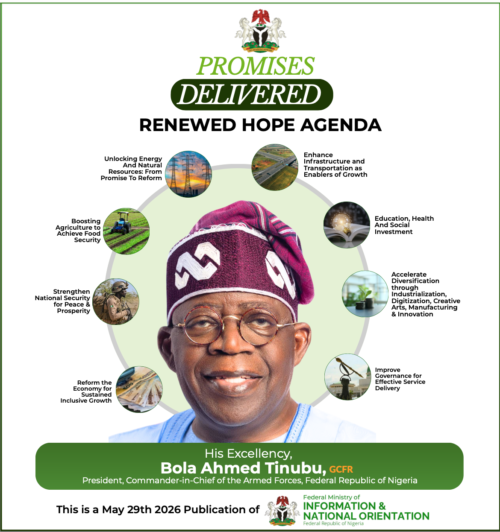
“I urge Dr. Bukola Saraki to stand firm and take solace in the fact that Nigerians still hold the constitution higher than any other authority.”
These were the words of encouragement by the defeated Presidential candidate of the opposition Peoples Democratic Party (PDP), Alhaji Atiku Abubakar while reacting to the new move by the Economic and Financial Crimes Commission (EFCC), to arraign Saraki in court soon.
In a statement today, July 2 which he personally signed, Atiku called on all Nigerians, and especially those tasked with upholding the constitution and the laws of the land, to note that silence in the face of oppression is akin to acquiescence.
“I, Atiku Abubakar, will always stand up for the constitution and Nigeria.”
He said that he always stands against corruption in government, which was why his office personally facilitated the take-off of the Economic and Financial Crimes Commission, after it was created by then President Olusegun Obasanjo.
“However, there is a huge difference between prosecution and persecution. I am all for prosecuting the corrupt, but I believe it is wrong to use the instruments of state to persecute political opponent.
“Dr. Bukola Abubakar Saraki, the immediate past Senate President, is one of the most investigated politicians in Nigeria. He has been investigated and prosecuted all the way to the Supreme Court and has prevailed against his accusers. It was expected that that should have been the end of the matter.
“However, the revival of previously investigated cases, and the fact that Dr. Saraki was politically opposed to the administration of General Muhammadu Buhari seems to give strong grounds for objective bystanders to conclude that his current travails have gone beyond prosecution and are now tending towards persecution.
“The laws of the Federal Republic of Nigeria are made for all and we fought for democracy so that the powers of the state would not be used to suborn tyranny and oppression.”
A combined team of security operatives in Kano in the early hours today, July 2, rescued the kidnapped District Head of Daura, Alhaji Musa Umar-Uba.
It was gathered that the kidnapped district head was rescued after a fierce gun battle with his captors who were holed up in a secluded house along Madobi road in Samegu quarters close to Sani Abacha Youth Center, Kano.
A Federal High Court in Abuja has ordered the arrest of the President of the Nigeria Football Federation (NFF), Amaju Pinnick and four other officials of the football body for their refusal to appear in court to answer to the charges of misappropriation of funds belonging to NFF.
Others to be arrested are the NFF Secretary, Sunusi Mohammed; the 1st Vice-President, Seyi Akinwumi; the 2nd Vice-President, Shehu Dikko and an Executive member, Yusuff Fresh.
Prosecution Counsel, Celsius Ukpong had prayed the court to grant a bench warrant following the tactics of the defendants in avoiding court summon.
Counsel to the defendant, Sani Katu objected the prayer, insisting that his clients are among the Federal Government delegation to the 2019 AFCON in Egypt and prayed the court to grant him time to show prove of his claim.The prosecution counsel well armed, informed the court that none of the defendant made the 11 man delegation of the federal Government to Egypt.
The judge, Justice Ojukwu ruled that the defendants do not have business in Egypt since they are not the players or technical officials assign to the team and then issued the bench warrant, while adjourning the case to September 26 for arraignment.
Reacting to the ruling, the prosecution counsel said: “we are happy that a bench warrant has been issued, the defendants have been avoiding court summons. We will get them by force if they fail to surrender. The only way out is for them to come and submit themselves for arraignment. They are facing 17 count charge and September 26 is a date for their arraignment.” The Federal Government had through the Special Presidential Investigation Panel on the Recovery of Public Property, filed 17 counts, marked FHC/ABJ/CR/93/2019, before the court, in which it accused the NFF officials of alleged misappropriation of $8,400,000 belonging to the football body.
In a swift reaction, lawyer representing the President of the NFF, Sani Katu said that no bench warrant was issued against his client on Monday.
“The court order was made in two folds. One was for the issuance of a bench warrant from the second to the fifth defendant excluding Pinnick.
“The second part is that the bench warrants will cease to exist if the second to the fourth defendant can bring a document to show that they are taking part in the Africa Cup of Nations.”
Plateau State Governor, Simon Lalong has confirmed that President Muhammadu Buhari is not imposing on any state, the new concept of rearing cattle and other animals, known as Ruga settlement.
“To the benefit of Mr. President, the President has not imposed that on any states, it was voluntary. And they said any state that is prepared to do that to address insecurity in his state should come and apply.
“So some of the states applied and we are at the level of the pilot scheme and some mischief makers would start bringing terms to cause confusion in the country. It’s very unfortunate.”
The Plateau State governor, who spoke to news men today, July 1, at the Presidential Villa, Abuja, said that different states have adopted their different approaches, “but Ruga term is not general to everybody. In my state, we call it livestock something, it’s not Ruga and we have explained it to people.
“This is a policy that we felt that it is not only for economic sense, but it would also address the issue of security. So if it is going to address insecurity in a period the country is confronted with serious security challenges then federal government would come and assist those who want to do it.
“They are not imposing it on any state. I am a member of this committee under the chairmanship of the Vice President, the federal government has not impose that on any state.
“They said if you have land for pilot scheme they can assist, and donor agencies are coming from all over, it is not a federal government project, the World Bank is involved, the African Development Bank is involved.
“So if you have a scheme like this that can take poverty, bring revenue and also address insecurity, you will need to go into it but with due consultation from your state.
“We did a lot of sensitization, in my state it took me three months to do sensitization and we all agreed that we should bring this concept to empower people. It is not meant to empower one tribe it is for everybody and that would address the issue of insecurity because we don’t want people moving from one place to another looking for grasses.
“The fact that federal government is to bring the subsidy was a request from the committee chaired by Mr. Vice President Goodluck Jonathan did it and he budgeted about N10 billion but we didn’t see the money. If he has done that at that time, we would not be fighting insecurity between herders and farmers today.”
File photo: Dame Patience Jonathan alights first, with her husband former President Goodluck Jonathan behind from the presidential jet NAF1 in one of his official visits to United state of America, 2013. | Photo by thescoopng
Former Nigerian First Lady, Mrs. Patience Jonathan and her cronies have finally lost all the billions of naira and millions of dollars to the Federal Government.
The order was handed down today, July 1st by the Judge of the Federal High Court in Lagos, Justice Cecilia Olatoregun. The monies are made up of $8,435,788.84 and N9.1 billion.
The forfeited funds are $3.65million, $4.7million, N1.81billion, N226..38 million, N1.09 billion, N39.42 million, N7.22million, N55.94million. N174.17million, N858.93million, N1.81billion, N1.1billion, N317.40million, N1.90billion and $429.389.87million.
The judge directed that the humongous funds should be forfeited to the Federal Government on the grounds that they were proceeds of crimes while Mrs. Jonathan and the firms could not legitimately account for the ownership of the funds.
The court had on April 19, 2018, made an order of interim forfeiture of the various sums of money, following an ex-parte application filed by the Economic and Financial Crimes Commission, EFCC, against Jonathan and some companies.
The companies named in the suit marked FHC/L/CS/620/18, are: Globus Integrated Service Limited; Finchley Top Homes Limited; AM-PM Global Network Limited; Pagmat Oil and Gas Limited and Magel Resort Limited.
The funds were warehoused in some banks, including Skye Bank Plc (now Polaris Bank Plc), Diamond Bank Plc, Stabic-IBTC and First Bank Plc.
In granting the interim forfeiture order, Justice Olatoregun had ordered the EFCC to publish the order in a national newspaper for the respondent or anyone interested in the money to show cause, within 14 days, why it should not be permanently forfeited to the Federal Government of Nigeria.
Following the publication of the interim forfeiture order, the EFCC, through its counsel, Rotimi Oyedepo, had, on October 29, 2018, moved a motion for the final forfeiture of the sums of money to the Federal Government.
Dissatisfied with the ruling of the trial court, the first respondent, Jonathan, through her lawyer, Ifedayo Adedipe, SAN, had approached the Court of Appeal, Lagos Division, seeking an order to set aside the interim forfeiture order of April 19, 2018 granted to the EFCC by Justice Olatoregun.
Her appeal, however, was subsequently dismissed by the Court of Appeal in Lagos.
In an attempt to claim ownership of the money, the first respondent also approached the Supreme Court to set aside the judgment of the appellate court.
However, the apex court, on March 8, 2019, upheld the interim forfeiture of the funds.
A five-man panel of the apex court led by Justice Dattijo Muhammad, in a unanimous decision, refused to set aside the order of temporary forfeiture of the sums of money issued by the trial court.
The apex court held that the Court of Appeal, Lagos Division, was right to have affirmed the forfeiture order.
Delivering judgment today, Justice Olatoregun held that the money was reasonably suspected to be proceeds of crime.
The Judge also held that: “There is no reason provided in the affidavit to convince the court or to show cause why the monies should not be forfeited to the Federal Government of Nigeria.
“There is no evidence to reasonably show, beyond doubts, that the monies were legitimately earned.”
Justice Olatoregun, therefore, granted the EFCC’s application that the money should be permanently forfeited to the Federal Government.
The Aare Onakakanfo (chief war lord) of Yoruba land in the Southwest, Chief Gani Adams has made it clear to the United States of America that Nigeria has grown beyond resorting to war for whatever reason.
Chief Adams, who received a two-man team of officials from the US Embassy in Lagos, led by the Political Officer, Shashank Iyer, in his Lagos home today, July 1, warned that if Nigeria should go to war today, it would affect other countries of the world.
“It is not in the world’s interest for Nigeria to go to war. The world will be affected.
“With a population of over 200 million, every part of the world will feel the disintegration of Nigeria.
“So what we are seeking for is for your government to prevail on Nigeria’s government to restructure. Most of our problems will be solved in four years once restructuring takes place.
He insisted that the solution to all the crises bedeviling the country lies in restructuring the polity, adding that the country’s numerous problems will be resolved within four years if the President Muhammadu Buhari Administration agrees to restructuring.
“To save this country, the only way is to accept the report of the Constitutional Conference of 2014 or revert to the 1963 Constitution. As it now, no zone is peaceful anymore.
“Even in Katsina, the President’s state, two traditional rulers were kidnapped without trace till today.”
Aare Adams said that the US had helped Nigeria before now with the restoration of democratic rule in 1999, even as he commended the former US Ambassador to Nigeria, Walter Carrington, for the role he played.
He said that without such intervention, a revolution is imminent in Nigeria, adding: “lessons from Ilorin and Lokoja in the past when the Fulanis came to require for land for their cattle are imperative. They gradually took the place over. The same happened in Plateau and Southern Kaduna.”
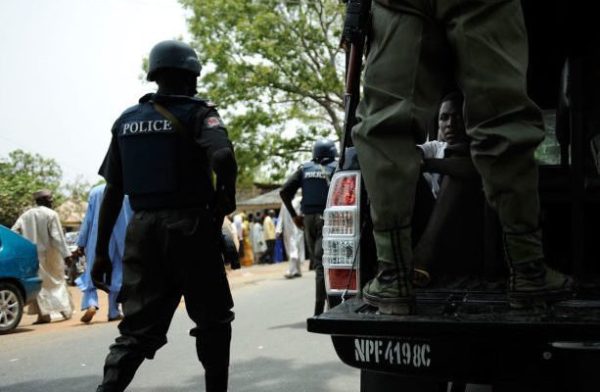
The Inspector General of Police, Mohammed A Adamu has swiftly responded to the killing of a Divisional Police Officer (DPO) and other senior police officers in Yenagoa, capital of Bayelsa State by yet-to-be-identified gunmen, by deploying crack detectives from his office to fish out the perpetrators.
Report reaching us said that the attack by the unknown gunmen was carried out today, July 1, at Agudama Ekpetiama Police Station, Yenagoa, Bayelsa State, resulting in the death of the Divisional Police Officer, SP Ola Rosanla with three other Police officers and left two others injured.
The Inspector General, who was infuriated by the unprovoked attack, vowed that no stone will be left unturned towards apprehending the perpetrators and bringing them to book, even as he ordered the immediate deployment of crack detectives from his Intelligence Response Unit (IRT), the Forensic and Homicide sections of the FCID and Special Operatives of the Marine Police Department to Yenagoa to complement the efforts of the Bayelsa Police Command in carrying out discrete investigation into the unfortunate incident.
The IGP paid tribute to the fallen heroes, even as he described the incident as a classic example of the risk and sacrifices the Police are exposed to in their daily task of protecting our homeland.
He called on the Agudama Ekpetiama Community and the entire people of Bayelsa State to remain calm and to avail the Police with credible information that will help the Law Enforcement agencies towards apprehending the criminals.
The governors of Southeast and South South have collectively rejected the idea of Ruga settlements, saying that the agreement they reached with Miyetti Allah Cattle Breeders Association of Nigeria (MACBAN) has nothing to do with Ruga settlements
According to their spokesman and Governor of Ebonyi state, Dave Umahi, the agreement was that members of MACBAN would bring their cows to sell and take back grass in return to feed their herds.
Governors from the south east and the south south zones of Nigeria have rejected the proposed Ruga farm settlements for herdsmen across states of the federation.
The governors said they were not part of the move and that they had no plans for such settlements in their zones.
Their joint decision was contained in a statement today, June 30, by Governor Dave Umahi of Ebonyi state, through his media aide, Emmanuel Uzor, in Abakaliki.
The statement said that the south east and the south south governors were joining other political zones in the country to deny members of Miyetti Allah Cattle Breeders Association of Nigeria (MACBAN) of Ruga settlement in their areas.
The statement said that governor Umahi asked the members of MACBAN to accept anti-grazing law established by the federal government in the northern region long ago.
According to Umahi, the south east, being an agrarian region, is faced with limited landmass and cannot accommodate any Ruga settlement.
The governor asked the federal government to follow the recommendations reached by the technical committee on farmers and herdsmen clash carved from the federal cconomic council. “Umahi was the chairman of NEC sub technical committee on farmers and herdsmen clash and he toured the states of Benue, Taraba, Nasarawa, Adamawa, Zamfara and two other states where he made, in one of his recommendations to the federal government. the revamping of grazing reserve in the north where all the cattle rearers in the south will take their cattle to and rely on the grass that are grown in the south.”
The statement added that it would work in a way that the herdsmen would bring down their cows to the south east and sell as meat while they will load the grasses which are grown in the zone in the same trailer with which they transported their animals to feed their cattle in those grazing reserves which should be made comfortable for them.
“By this herdsmen are expected to embrace anti open grazing by returning to the ranches in the north and do their business on the trade by barter basis of selling cows to the south and buying grass to feed their cows in the north.”
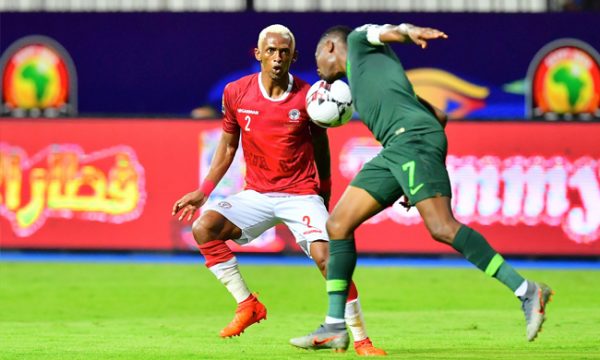
Lowly-rated Madagascar shocked highly-rated Nigeria 2-0 after an awful performance by the Super Eagles handed the Indian Ocean islanders leadership of Group B. The result condemned the three–times champions to finishing second and a probable encounter with the Black Stars of Ghana in the Round of 16.
The then group leaders started on the wrong footing as Leon Balogun failed to deal with a routine back pass.
It led to the ball being snatched by Lalaina Nomenjanahary to score the first goal for the competition debutants after only 13 minutes.
The Eagles, who won each of their two previous matches by the odd goal, then showed a palpable lack of mental power to respond.
Samuel Kalu fluffed a great pass by Ahmed Musa in the 19th minute.
Musa himself, left with the goalkeeper to beat as a pass found him in the penalty box, bungled with a poor first touch.
His subsequent attempt to dribble the goalkeeper failed.
In the second half, instead of working hard to get on level terms in no time, Nigeria quickly found themselves further behind.
That was when substitute Wilfred Ndidi deflected a free-kick by Carolus Andrea past a wrong-footed goalkeeper Ikechukwu Ezenwa.
A deep soul–searching is now imminent in the Nigeria camp after such a flat performance.
They lost to a team rated lower than 100th in the world and we’re making their first-ever appearance at the Africa Cup of Nations.
First touches left the Eagles’ midfielders and forwards down, as they made heavy weather of simple passes and controls.
Also, creativity was totally lacking in a team that earned a ticket to Egypt with a match to spare.
Skipper Mikel Obi, making his 89th appearance for the Eagles, was a shadow of himself, while Alex Iwobi was no magnificent difference when he came on.
Moses Simon and Wilfred Ndidi brought no spark or innovation on board when they were introduced.
Such a sound beating by a team that had never scored against Nigeria in four pervious meetings was a dampener.
It will now be interesting to see how the Eagles overcome this adversity and put up a show in their Round of 16 encounter at the same venue on Saturday.
Madagascar finished the group stage unbeaten and scored two lovely goals from dead-ball situations.
The Super Eagles have however not been able to make hay from free-kicks in recent memory.
This calls to question, the continued delegation of the responsibility to one man who has refused to perfect his act.
Three opportunities presented themselves from 20 yards and they were all wasted in non-challant manner.
Coach Gernot Rohr, who rang five changes to the team which defeated Guinea on Wednesday, must now come up with a solution.
He must bring up the formula to lift a dispirited dressing room before Saturday.
The nation has taken note of the poorly-choreographed shenanigans by the Edo state governor, Godwin Obaseki, through a facilitated coup executed by five or nine of the 24 APC members that comprise the State House of Assembly. Obaseki and his camp had resorted to a gangsterish operation of forcefully “arresting” or “abducting” members of the other camp.
The “arrest” was to force them to attend the divisive inauguration held on Monday, June 17, while the “abduction” was to get them into the chambers to take the hemlock of forced swearing in. The controversial speaker, Frank Okiye, and his cohort have burdened themselves with a membership drive for legitimacy.
Legitimizing the travesty of the rebellious minority in the attempt to supplant the established majority in the appropriation of the speakership position is herculean. The preponderant view is that sooner or later, the travesty will come to a denouement and rationality will be restored.
But the immediate concern is whether or not Obaseki is benefiting from good advice. Some people believe that the state’s governance architecture is being mismanaged. They are of the opinion that the governor is progressing in errors and making strategic missteps. He is thus escalating intra-party tension to the joy of the opposition PDP.
Those close to the development in Edo claim that Obaseki has resorted to arm-twisting and witch-hunt because he lacks the temperament to lobby and persuade; otherwise he should have been able to manage the disparate elements within the political family that he inherited from Comrade Adams Oshiomhole.
It is thus feared that the centre can no longer hold on the governor’s watch and there are reasonable doubts if this debacle was envisaged when Oshiomhole, single-handed, ensured that the party picked Obaseki as his successor. Building on the understanding of his political family, Oshiomhole had constructed a triumvirate that included Philip Shaibu as deputy governor and Osarodion Ogie as the Secretary to the State Government.
Whereas that is what every good team leader should do; Oshiomhole successfully managed the intricacies of power transfer. He purportedly arranged the team to be able to continue in his governance trajectory and preserve the administration’s legacy. Perceptibly, Oshiomhole did the right thing by ensuring that the APC supported his pick through the instrumentalities of conversation and rational argument.
However, Oshiomhole’s alleged overbearing leadership by those he carried on his back to get into offices would appear unfortunate. That is the complexion of betrayal. That he was not overbearing when he assisted them to power mirrors unconscionable dubiety. Obaseki remains the greatest beneficiary of Oshiomhole’s political eleemosynary acts.
Recall that Obaseki, a graduate of Classics, chaired the State Economic and Strategy Team for seven years. That would play a providential role in his choice. He was believed, against the run of his academic discipline, to be a mismatch. He was, however, said to be largely instrumental to the formulation of the policies that “transformed” the economy of the state.
Those close to him said he was smart enough to employ consultants on economy to assist in formulating policies for which he was touted as the “economic brain box” of the Oshiomhole administration. That Oshiomhole lobbied party leaders to support Obaseki’s candidature on that score approximated a catholic consultative approach and indicated his resolve to preserve the Zeitgeist of the administration through Obaseki’s governorship: continuity of APC’s development policies and programmes in the State.
Some party leaders are not happy that the governor has betrayed the philosophy that underpinned the idea of continuity. According to credible feelers from Benin, the governor has largely upended most of the projects that Oshiomhole started and which were conceptualized with his (Obaseki) input. A sampler: the N30-billion Benin Water Storm project, which was designed to address the perennial erosion problem in the state capital, has been abandoned.
Yet another: the Benin Central Hospital has yet to fully take off. The project was inaugurated by President Muhammadu Buhari before Oshiomhole left office in 2016. What is required, according to credible information, is for Obaseki to use his good offices to ensure that the contractors supply equipment ordered as well as to emplace the requisite administrative infrastructure.
But the seeming change in policy direction must be curious to his estranged political leader and associates. This perhaps speaks to Obaseki’s disguised contempt for Oshiomhole and his alleged domineering leadership. Obaseki played the Chichidodo bird (in Ayi Kwei Armah’s The Beautyful ones are not yet born) and secured a strategic endorsement by playing the possum- projecting the chimera of meekness and loyalty.
Although, some are wont to assert that Oshiomhole is in a cold embrace with karma, they have yet to issue convincing validations about the truth of that assertion. If Oshiomhole had entered into political agreements with some forces in Edo state and there was bad faith by the other parties to necessitate a determination of the agreements, he could not be said to have acted out of place.
Without a doubt, Oshiomhole’s relationship with Obaseki was that of “godfather-godson”. The claim that godfatherism had been dismantled in Edo is a fiery tale. What Oshiomhole did was to refine and redefine the concept to align it with democratic ethos of conversation, election and consensus. Certainly, godfatherism is an ecumenical concept and a cosmopolitan reality.
The godfather provides a protective shield for the godson. So it was with Oshiomhole and Obaseki. As quid pro quo, Obaseki was to give back fidelity to the philosophical inspiration of continuity of APC’s laudable development programmes and policies. It may, however, be difficult to know where Oshiomhole offended his godson; the opinion in some quarters is that Obaseki’s rebellion is not only a sacrilege but also not an appropriate comeuppance. .
There is a line of argument that Oshiomhole, who is national chair of the APC, possibly misconceived or misconstrued the Obaseki persona. The subsequent decision of picking Obaseki resides in the past. There is festering tension in Edo. Oshiomhole’s muted disposition is indicted in the worsening tension. Perhaps the plan is to undercut him in the miasma of Edo local politics.
But Oshiomhole’s position as national chair purportedly enjoys presidential approbation and can thus not be diminished in the circumstance of his godson’s rebellion. Even though, his purported proxy counterpoise in the festering battle to undercut him is more speculative than otherwise, there is a sense in which he is believed to be a rallying point for party men and women opposed to Obaseki’s alleged divisive governance style.
For instance, it is considered politically imprudent for the governor to ceaselessly aggravate APC leaders by characterizing them as only interested in having the state’s resources shared to them. Those who left the party before the 2019 general election are back and are committed to scuttling Obaseki’s second term bid. This is the point at issue. The governor knows and has been reaching out of the APC to allegedly procure curious endorsements.
Obaseki’s perceived hijack (whether it will stand or not is another kettle of fish) of the State Legislature is the latest desperate and dilatory attempt at power inebriation. With nomination for next year’s governorship election a few months away, Obaseki has become the proverbial chicken perching on a rope, causing the chicken and the rope to be ill-at-ease. He is on a rebellion, raiding the godfather’s political ark-a dangerous and provocative undertaking by every imaginable standard.
Can the godson, who is enjoying the support of his deputy, Phillip Shaibu, another godson to Oshiomhole, whose imprimatur is believed to be writ-large on the recent rascally act in the State Legislature, come back to his senses and avert a possible collateral damage in the APC? Can there be reconciliation and compromise? Are these possibilities now not too remote to contemplate? Can Obaseki shed his garb of perceived selfish politics believed to be what is ailing the Edo APC and return to the republican path? Only time will tell.
Ojeifo, journalist and analyst contributed this piece from Abuja via ojwonderngr@yaho.com
We use cookies on our website to give you the most relevant experience by remembering your preferences and repeat visits. By clicking “Accept”, you consent to the use of ALL the cookies.
This website uses cookies to improve your experience while you navigate through the website. Out of these, the cookies that are categorized as necessary are stored on your browser as they are essential for the working of basic functionalities of the website. We also use third-party cookies that help us analyze and understand how you use this website. These cookies will be stored in your browser only with your consent. You also have the option to opt-out of these cookies. But opting out of some of these cookies may affect your browsing experience.
Necessary cookies are absolutely essential for the website to function properly. This category only includes cookies that ensures basic functionalities and security features of the website. These cookies do not store any personal information.
Any cookies that may not be particularly necessary for the website to function and is used specifically to collect user personal data via analytics, ads, other embedded contents are termed as non-necessary cookies. It is mandatory to procure user consent prior to running these cookies on your website.


 “I urge Dr. Bukola Saraki to stand firm and take solace in the fact that Nigerians still hold the constitution higher than any other authority.”
 A combined team of security operatives in Kano in the early hours today, July 2, rescued the kidnapped District Head of Daura, Alhaji Musa Umar-Uba.


 The Inspector General of Police, Mohammed A Adamu has swiftly responded to the killing of a Divisional Police Officer (DPO) and other senior police officers in Yenagoa, capital of Bayelsa State by yet-to-be-identified gunmen, by deploying crack detectives from his office to fish out the perpetrators.
 Lowly-rated Madagascar shocked highly-rated Nigeria 2-0 after an awful performance by the Super Eagles handed the Indian Ocean islanders leadership of Group B. The result condemned the three–times champions to finishing second and a probable encounter with the Black Stars of Ghana in the Round of 16.

