No fewer than 45,689 applicants, today, December 7, sat for a Computer-Based Aptitude Test as part of the recruitment process to secure employment at Nigerian National Petroleum Company Limited (NNPCL). The aptitude test, administered at the Ansar-Ud-Deen Society Centenary Resource Centre in Maitama, Abuja, as well as at various other testing centres across Nigeria, marked the second stage of the rigorous recruitment process that began earlier this year. Recall that on July 25, 2024, the company announced openings for new entrants into the company. The NNPCL spokesperson, Olufemi Soneye, in a statement, had said that the recruitment would be for various positions across various departments within the energy company and interested applicants to visit the NNPCL careers page for application instructions. In a new post on its official Facebook handle to update the public on the process on Saturday, the national oil firm reiterated that only the most qualified candidates would be selected for employment at the end of the exercise. The post read: “As the Computer-Based Aptitude Test for NNPC Ltd.’s recruitment begins today at various centres across the country, 45,689 applicants compete in a transparent and inclusive recruitment process.” This is even as the NNPCL Group Chief Executive Officer, Mele Kyari, paid a visit to the centre, and promised a smooth, transparent, fair, and credible process.
“As an equal opportunity employer, NNPC Ltd. has made special provisions to ensure that applicants with disabilities can take the test without any hindrance.
“The GCEO reiterated that only the most qualified candidates among the 45,689 applicants will be selected for employment,” the statement added.
Nigeria, through the Police Service Commission (PSC) has dismissed 19 senior officers and demoted others in ranks for reasons bordering on misconduct. Those so dismissed are 10 Assistant Superintendents, six Deputy Superintendents, two Chief Superintendents and one Superintendent. The Head of Press and Public Relations of PSC, Ikechukwu Ani, in a statement today, December 6, in Abuja, said: “after rigorous consideration of the pending disciplinary matters before the commission, it also approved the reduction in ranks of 19 other senior police officers, consisting of one Assistant Commissioner of Police, one Chief Superintendent, two Superintendents, two Deputy Superintendents and 13 Assistant Superintendents.” Ikechukwu Ani said that the PSC punished two Assistant Inspectors-General of Police, with one being reprimanded for refusal to carry out lawful instructions while the other received letter of warning for negligence. The PSC spokesman said that several other officers found culpable received different punishments, including, severe reprimand, and letters of warning. According to him, most of the officers dismissed will also be prosecuted by the legal unit of the Nigeria Police Force. He said that three pending disciplinary matters were stepped down with a request for further information from the Inspector General of Police after considering 23 appeals and petitions and nine legal matters/court judgments. Ikechukwu Ani said that the commission would henceforth be considering police disciplinary matters with dispatch. He said that the idea is to free police officers who are not found wanting to continue with their career progression and those found culpable to serve their punishments. The PSC spokesman said that the PSC boss had warned that the commission would not spare police officers who indulge in civil matters like land disputes, marital issues and rent related disputes.
Minister of the Federal Capital Territory (FCT), Nyeson Wike has given instant approval to request openly displayed by resident of Ketti who turned out to welcome him, for the establishment of a senior secondary school in the community. The minister, who flagged off the construction of the 10.5-kilometer Kabusa-Ketti access road in the Abuja Municipal Area Council (AMAC) today, December 4, in response, assured that the request of the protester would be granted. “Let me assure you that I have seen what you have written there without you even saying it. “Let me approve that Ketti will get a Senior Secondary School.” Wike said that governance is a two-way contract between the people and the leadership, saying that President Bola Tinubu’s government would continue to fulfill the promises he had made to the people. The Minister commended the residents for coming out to show appreciation for the road project and urged them to continue to support the government. He assured them that the FCT Administration would continue to interact with them to address the issues that affect them. The minister stressed that development would not be concentrated in the Abuja city center, adding that the Kabusa-Ketti road would be provided with streetlights as part of efforts to tackle insecurity. “Our effort is not to concentrate development in the city. “Mr. President has directed that we must also open up all the satellite towns, and that is what we are doing today in Kabusa-Ketti.”
The Independent Corrupt Practices and Other Related Offences Commission (ICPC) has trained 109 personnel and have been commissioned as its pioneer Armed Squad. Their training came in the wake of the approval by the Federal Government, through the Office of the National Security Adviser (NSA), of the request by the Commission for its personnel to bear arms. At the graduation ceremony of the officers today, December 4, in Abuja, the Chairman of ICPC, Dr. Musa Adamu Aliyu, described the commissioning of the officers into the elite armed squad of Nigeria’s law enforcement agencies as a significant milestone for them. He said that it is also a milestone for the Commission, which he said is determined to build the capacity of its workforce for the responsibility of ridding the nation of corruption and other vices. The ICPC Boss, who was represented at the ceremony by the Commission’s Director of Operations, Shehu Yahaya, said that the skills acquired in the course of the one-month intensive training would inspire the graduands to serve the Commission diligently.
The Kogi State Governor, Ahmed Usman Ododo has said that the key goals of the 2025 budget for the state are to boost internally generated revenue (IGR), pursue debt repayment, foster conducive business environment, encourage public private partnerships, block wastages and leakages in revenue streams and prioritize completion of ongoing projects and programmes while introducing new critical projects. Presenting the state’s 2025 budget of a little over N584 billion before the State House of Assembly, Governor Ododo said that the objective of the budget is to improve quality of education at all levels, improve access to healthcare, ensure food security, expand trade and commerce, create opportunities for youth development, improve road networks in urban and rural areas, improve the quantity, quality and access to safe water among others. Breakdown of the total budget of N584,404,119,489.00 shows that the sum of N302, 813, 903,802, representing 51.99 percent is for capital expenditure while N279, 590,215,687, representing 48.01 percent is for recurrent expenditure. The budget, christened “budget of consolidation and continuity for inclusive development” is N176, 82,989,476 higher than the 2024 revised budget, representing a 43.34 percent. The allocation to sectors indicates that the sum of N120, 047, 367,416 which is 20.61 percent is allocated to administration; N227, 820,142,196, representing 39.12 percent for economic matters; N23,754,514,351, representing 4.08 percent for law and Justice, and N210,782,095,526, representing 36.19 percent for social services. Governor Ododo said that the budget is anchored on the state’s fiscal strategy and its Public Financial Management Reform, saying that it is aimed at improving efficiency and effectiveness of spending, greater control of the state wage bill, boosting revenue generation by identifying and blocking leakages, and directing capital expenditure to critical infrastructure such as road, housing, education, health, and other thematic areas of job creation, youth engagement, infrastructure, and utilities, public sector and pension reforms. The Governor gave indication of plans by the State Executive Council to soon present a bill for legislation on the 32-year development plan for the state, from 2024 to 2056. According to the Governor, providing legislative backing for the 32-year development plan of the State government is to ensure continuity and consolidation of on-going development in infrastructure and human capital development, enhancement of the quality of lives and livelihood of people in urban and rural areas, support for new initiatives in solid minerals development, law, justice and public service reforms, among others which he said have to be sustained to prevent project abandonment and deviation from the strategic vision to position the state as an investment destination. “As part of our efforts to build a new and prosperous Kogi State, we have developed a 32-year state development plan with the theme ‘Shared Hope and Prosperity’. “The document is a comprehensive roadmap designed to transform Kogi State into a thriving, inclusive and sustainable economy.” Governor Ododo said that the state development plan is anchored on three pillars of fostering prosperity, building resilience and providing direction for sustainable development through exceptional innovation, wealth creation, healthcare and human capital development established on the foundation of peace and exemplary governance. He said the state development plan which is now operational is in three phases beginning with its first phase from 2024 to 2033 to lay the foundation for growth with investment in critical infrastructure, human capital development and economic diversification, adding that the phases two and three from 2034 to 2043 and 2043 to 2056 will focus on accelerating economic growth, improving governance and enhancing environmental sustainability; and consolidating on the gains of the earlier phases promoting innovation and ensuring the state remains competitive and attractive for investment.
The Central Bank of Nigeria (CBN) has explained that the Early Exit Package (EEP) for about 1,000 of its staff, which is being misconstrued as “forced retirement” by social media “is entirely voluntary” and without any negative repercussions for eligible staff. Reacting to media reports that it is planning to disengage about 1,000 staff, with over N50 billion earmarked to settle those that would be affected, the Apex Bank’s spokesperson, Mrs. Hakama Sidi Ali, stressed that the exercise is not a “mass retirements.” In a statement today, December 4, Mrs. Hakama Sidi Ali said that the decision to implement the Early Exit Package was the outcome of extensive consultations with the Bank’s Joint Consultative Council (JCC), a body representing staff interests. She explained that the EEP, a longstanding policy that was previously accorded to the executive cadre, has now been made available to eligible staff at all levels. “For some time, staff representatives through the JCC, had called on management to approve the early exit package for all cadres. Following these discussions, management decided to meet this popular demand.” Mrs. Hakama Sidi Ali described the concerns about potential repercussions for staff who decline the package as unfounded, saying that management is committed to supporting employees’ professional growth and well-being. She emphasized that the initiative is an internal corporate matter that is designed to promote career development for staff.
Kogi State Government has uncovered Zango market near Osara in Adavi local government as hideout used by criminals, including Kidnappers for nefarious activities. “Intelligence reports indicate that criminal elements have been using the market as a hideout, often in collaboration with some truck drivers who park along the roadside. This situation poses a significant security threat to the Confluence University of Science and Technology, Osara, and the broader Osara community.” The State Commissioner for information, Kingsley Femi Fanwo, in a statement today, December 4, said that the Kogi State Government has ordered the immediate closure of the said market and also banned the roadside parking of trucks in the vicinity of the market, in response to the growing security concerns in Osara and its surrounding areas. “To ensure strict compliance, the State Government has given market operators and truck drivers a one-week grace period, starting today, to adhere to these directives. After this period, enforcement will be fully implemented.” The statement said that the state governor, Ahmed Usman Ododo has directed the Secretary to the State Government to officially communicate this order to all relevant parties, including law enforcement agencies, to ensure seamless compliance. “Additionally, the Governor has tasked the Office of the State Security Adviser with overseeing security operations in the affected areas during and after the grace period.” The State Government, in the statement, reassured residents of its unwavering commitment to safeguarding their lives and property. “Proactive measures will continue to be taken to ensure that criminal activities are eradicated, leaving no room for lawlessness in the state. “We also extend our gratitude to the citizens for their vigilance and active participation in the community-driven security framework. Your efforts in providing timely intelligence and activating grassroots security networks are invaluable to the success of our collective mission to keep Kogi safe.”
President Bola Tinubu has called on his South African counterpart, Cyril Ramaphosa to come together and go deep into lifting Africans from the dept of poverty and other misfortunes, irrespective of what it would cost them to do so. Speaking today, December 3, at the opening of the 11th session of the Nigeria-South Africa Bi-National Commission (BNC) in Cape Town, President Tinubu stressed the urgent need for the two of them to overcome what he called “irritants” that hinder their collaboration and focus on transforming Africa’s global image. The Nigerian leader, who co-chaired the presidential BNC with his South African counterpart, highlighted the importance of cooperation between the continent’s two largest economies and its potential to redefine the global perception of the continent. “The continent looks up to us; we cannot afford to fail it. “We need to leverage the potentials of this partnership to strengthen economic, political, business-to-business, as well as people-to-people relationships between the two countries, bearing in mind the tremendous benefits it promises. “Our successes will change the negative narratives of seeing Africa as a country perpetually mired in poverty and conflict and with their leaders unable to offer the kind of transformational leadership the continent deserves. “As the adage goes, ‘the glory of the eagle does not please the kite,’ let us remain mindful of the overt and covert hostilities that the success of our partnership will attract. “If we are vigilant, committed and persistent, we will surely soar like the eagles over the reach of predators. So, we must remain strongly united on purpose.” Tinubu suggested to South Africa to champion Africa’s interests during its current G20 presidency, saying that Nigeria is ready to join the bloc alongside South Africa and the African Union. President Tinubu warned that the African countries involved should not count their successes by the number of MoUs and agreements signed, saying that such are mere papers “until we implement them in spirit and letters. This is the job of our senior officials, and I must implore them to redouble their efforts in this regard.” President Tinubu acknowledged that South African companies such as MTN and Multichoice have made significant inroads into the Nigerian market even as Nigerian businesses like Dangote Group and Access Bank have similarly extended their presence in South Africa. “But that is not enough. I cannot pretend that all has gone satisfactorily well. We can identify the gaps and challenges, including persistent irritants in our relations, and deal with them appropriately. This is the real essence of the BNC. “Together, we can act as engines of economic integration and development in our respective sub-regions as well as on the continent.” The Nigerian leader proposed joint action on mining to tackle illegal mining and enhance professional capacity development. “Our natural resources are supposed to be mined for the betterment of our people. However, there seems to be a concerted effort flowing in the opposite direction. Throughout Africa, illegal mining is not only robbing our nations of precious income, which could foster development. “Sponsored by powerful outside forces, such mining is fomenting strife, servitude, poverty, environmental degradation and undermining the writ of legitimate government. “We cannot allow this inland piracy to become a scourge to our good and healthy designs for our people. South Africa and Nigeria should and must take the lead in placing this issue before the global community and in resolving it for the good of our continent and its people.”
Federal House of Representatives have asked the Central Bank of Nigeria (CBN) to suspend its alleged move to lay off over 1,000 workers, including Directors and top management staff. The directive followed a motion, titled: “Need to Investigate the Retirement of Over 1,000 Staff of the Central Bank of Nigeria (CBN) and the Associated N50 Billion Payoff Scheme,” presented at the plenary today, December 3, by Rep. Kama Nkemkama (LP-Ebonyi). The motion, presented under urgent public importance was promptly adopted. Nkemkama said that the proposed mass retirement of over 1,000 staff, including directors and senior management, raised critical questions, such as the criteria for selection, transparency, and adherence to due process in line with public service guidelines and labour laws. He said that such a significant decision has socio-economic implications for the affected individuals, their dependants, and the broader economy. He said that the move would potentially lead to increased unemployment and public dissatisfaction, even as he expressed worry that the reported payoff scheme amounting to N50 billion might lack sufficient accountability and oversight mechanisms. The lawmaker said that this would pose risks of mismanagement and abuse of public funds in a sector vital to Nigeria’s financial stability. Adopting the motion, the House constituted a high-level ad hoc committee to investigate the planned mass retirement of over 1,000 staff of the CBN The House said that the investigation would ascertain the criteria, process, and legality of the exercise. The House resolved to examine the N50 billion payoff scheme to ensure transparency, accountability and proper utilisation of funds. The House also resolved to engage the leadership of the CBN to evaluate the potential economic and institutional impact of mass retirement on Nigeria’s financial sector. It called on the CBN to suspend further implementation of the retirement exercise and associated payoff scheme pending the outcome of its committee’s investigation. The House further called on the Federal Ministry of Labour and Employment to ensure that the rights of the affected staff were protected in accordance with Nigerian labour laws. It requested the committee to report back to the house within four weeks for further legislative actions.
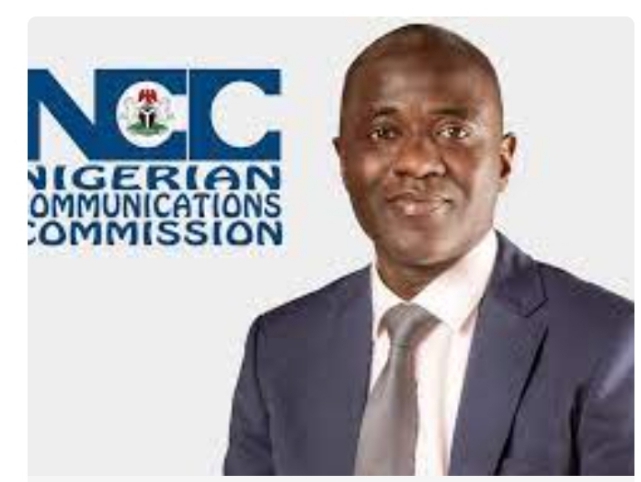
The Executive Vice Chairman of the Nigerian Communications Commission (NCC), Dr. Aminu Maida has been appointed to the Board of Directors of the International Institute of Communications (IIC). Those who are familiar with such position said that the appointment of Dr. Maida has set the tone as an outstanding achievement for Nigeria as well as , lifting the country ‘s voice in shaping the future of the global telecom sector The International Institute of Communications (IIC) brings leaders in telecommunications, media, and technology (TMT) at round table and enhance collaborative efforts on regulatory frameworks, emerging technologies, and sustainable developments. The appointment of Dr. Wada Maida is believed to offer Nigeria a stronger international platform to influence key discussions on telecommunications and digital equity. Reacting to his appointment, Dr. Maida described it as an honour for him to serve on the Board of the International Institute of Communications. “I look forward to sharing insights from Nigeria’s transformative journey and collaborating on strategies to foster a more inclusive and sustainable global telecom industry.” The new role also showcases Nigeria’s growing prominence in its digital economy initiatives and leveraging technology for development.
We use cookies on our website to give you the most relevant experience by remembering your preferences and repeat visits. By clicking “Accept”, you consent to the use of ALL the cookies.
This website uses cookies to improve your experience while you navigate through the website. Out of these, the cookies that are categorized as necessary are stored on your browser as they are essential for the working of basic functionalities of the website. We also use third-party cookies that help us analyze and understand how you use this website. These cookies will be stored in your browser only with your consent. You also have the option to opt-out of these cookies. But opting out of some of these cookies may affect your browsing experience.
Necessary cookies are absolutely essential for the website to function properly. This category only includes cookies that ensures basic functionalities and security features of the website. These cookies do not store any personal information.
Any cookies that may not be particularly necessary for the website to function and is used specifically to collect user personal data via analytics, ads, other embedded contents are termed as non-necessary cookies. It is mandatory to procure user consent prior to running these cookies on your website.