

INEC And Nigeria’s Many Political Parties, By Reuben Abati
 Dr. Reuben Abati
Nigeria’s Independent National Electoral Commission (INEC) as part of its review of the 2019 General elections in the country is reportedly working on a proposal for the alteration of the 1999 Constitution as amended to enable it reduce the number of political parties in the country. A total of 91 political parties participated in the 2019 general elections, the highest number ever. There were 71 Presidential candidates. The ballot paper was quite long. Festus Okoye the INEC Commissioner in charge of information and voter education says this created a “logistics nightmare,” and “confused many voters, particularly the less educated during the election.” INEC wants the Constitution amended to enable it register and deregister parties that are at best “mere platforms for political jobbers.”
Indeed, many Nigerians have expressed concern about the length of the ballot paper used for the February 23 and March 9 general elections in Nigeria. You necessarily had to search for the party logos, despite the fact that the logos were arranged alphabetically. If INEC says many voters particularly the uneducated were confused, we can only assume that INEC as the umpire is giving this information based on the feedback that it got. The truth of the matter is that many of the 91 political parties were unknown. Most of them were registered at the last minute and some of them in fact were known only by the name of the founder/chairman. The emergence of many political parties may give the impression of a flourishing multi-party democracy but when these political parties are no better than special purpose vehicles or briefcase parties to promote a personality or to raise funds and launder money, then indeed, there should be cause for concern. But where should INEC draw the line?
This question is pertinent in the light of constitutional provisions in Chapter 4 of the 1999 Constitution which guarantee the freedoms of association, assembly, expression and belief, key issues at the heart of the political party formation process. Those who argue that the more political parties we have, the better also often rely on the Supreme Court 2002 judgement in Gani Fawehinmi vs INEC where the court held that the right of association is a fundamental human right. Chief Gani Fawehinmi whose contributions to the development of our jurisprudence through advocacy and litigation remains evergreen had gone to court to challenge the electoral commission’s refusal to register the National Conscience Party (NCP). The Supreme Court dismissed 12 of the 13 guidelines used by INEC for party registration as “unconstitutional.”
However, a political party is a creation of law, and it must be remarked that no right is absolute. Section 222 of the 1999 Constitution refers. Political parties are registered based on stipulated rules and guidelines, and where those provisions spelt out in the relevant statutes are not met, such parties do not live up to the billing of being regarded as political parties. This much was demonstrated in August 2011 when the then INEC, with Professor Attahiru Jega as Chair, de-registered six political parties for having failed to participate in the April 2011 elections. The parties failed to field even a candidate! They are: the Democratic Alternative (DA), National Action Council (NAC); National Democratic Liberty Party (NDLP); Masses Movement of Nigeria (MMN); Nigeria Elements Progressive Party (NEPP); and National Unity Party (NUP). INEC relied on Section 78(7) of the Electoral Act 2010. In the 2011 election, there were 63 political parties. In 2019, the number had increased to 91!. As Nigeria prepares for the 2023 general elections, there can be no doubt that more political parties would emerge. But is the proliferation of political parties good for our democracy? Does INEC need to have the constitution altered to be able to de-register political parties?
I think not. It will be recalled that in March 2019, Femi Falana, SAN had expressed an opinion on this matter, and if I may be permitted to quote Falana’s persuasive argument in a piece titled “INEC’s power to deregister political parties” , his whole point is that the law already grants INEC the powers to de-register political parties. He correctly referred to the May 2017 amendment to the 1999 Constitution, to wit, the Fourth alteration to the Constitution, Section 225 thereof, wherein it is stated that INEC is empowered to de-register political parties on the following grounds: “(a) a breach of any of the requirements for registration; (b) failure to win at least 25 per cent of votes cast in: (i) one state of the Federation in a presidential election; or (ii) one local government of a state in a governorship election; (c) failure to win at least (i) one ward in the chairmanship election; (ii) one seat in the national or state House of Assembly election; or (iii) one seat in the councillorship election.” This particular alteration having been signed into law, albeit President Buhari assented to the fourth alterations piecemeal, (he withheld assent on five issues), represents the true position of the Constitution. INEC therefore needs not seek any further alterations or amendments to the Constitution. Falana has argued, and he is right that if the law is applied, there would be fewer than 10 political parties standing.
What remains is for INEC to apply the law. But I must add a caveat here: the de-registration of political parties must not end up as an act of vendetta, witch-hunt or intimidation. Any political party that is de-registered on the basis of performance or violation of the law, has every right to re-apply for registration and should the same political party meet the statutory conditions, it should be registered afresh. The rules must be upheld but at the same time, constitutional rights must be respected. Where does that leave us? We are left with the need for INEC as the regulatory body doing everything possible to respect the rules and thereby deepen the electoral landscape.
Nigeria’s political party system must not be allowed to become a scam, the political equivalent of the notorious 419. I am reliably told that the biggest lottery in Nigeria today, is the formation of a political party. The political parties are also fast becoming like churches. Anybody can set up a political party, and use it to raise funds: you can sell tickets to aspiring candidates who need a platform, you can raise funds online, all you need to do is to print a few posters and make as much noise as possible. You can even at the last moment, step down and declare support for a richer party and collect a ransom! This may sound cynical but that is precisely what I understand is going on in the real sector of Nigeria’s political party system. It is unjustifiable and it must not be sustained. Once upon a time in Nigeria, we had political parties that were ideas-driven. In the First and Second Republics, political leaders tried to push ideas. Political leaders were identified with particular visions. Today, many of our political leaders know next to nothing about anything. The naked desperation for power is all that we see on display. This is shameful in a country that produced Nnamdi Azikiwe, Obafemi Awolowo, Ahmadu Bello, Ernest Ikoli, SLA Akintola, Adegoke Adelabu, Aminu Kano, Ibrahim Waziri, Nwafor Orizu, Mbonu Ojike, Anthony Enahoro, Kenneth Mbadiwe. Where are the visionaries of today? We are unfortunately in the age of Godfathers. Men who fight over positions, and who play God over the fortunes of their compatriots and our country. We are in the season of mediocrity, incompetence, and opportunism. Professor Pat Utomi even puts it better. He says “criminals” have taken over Nigeria.
INEC has a lot more to worry about, beyond the size of the ballot paper and the number of registered political parties. I will return to that shortly. In the Presidential and legislative elections conducted on April 17, 2019 in Indonesia, the ballot paper was so large, it could serve as a wrapper. Each voter had five ballot papers! But that is because for the first time, Indonesia conducted its Presidential and legislative elections, federal and local, on the same day to save cost. There were 18 political parties on the ballot, much fewer than ours, 190 million voters, and over 240, 000 candidates. Indonesia managed to conduct an election that was considered free and fair, with incumbent President Joko Widodo (a.ka. Jokowi) winning with over 55% of total votes cast. I am not an admirer of President Widodo. I think he, like Marie Le Pen (France) and Boris Johnson (UK) is too Trumpian, but the negative influence that US President Donald Trump has exerted on the balance of geo-politics and the character of global politics, is a subject for another day. India also held general elections this year between April 11 to May 19. It was an election in seven phases, 900 million voters, and 67% turn out. Incumbent President Narendra Modi of the Bharatiya Janata Party (BJP) recorded what you could call a landslide victory.
The election was actually a referendum on Modi’s leadership even if I consider his propaganda, presidential style campaign approach and his partisanship a bit too much for India. But whereas we have seen incumbents in many of the elections this year holding on by hook or crook to power (a notable exception is Ukraine), I believe that there are lessons that Nigeria’s INEC can learn from other jurisdictions about institutional capacity and processes. The review that INEC seems to be ready to embark upon must take a holistic view of what has happened this year in other jurisdictions. What lessons can we learn?
I add to that the fact that there are some urgent issues arising from the 2019 general election in Nigeria that will require special attention. Section 225 of the 1999 Constitution is effusive about the “finances of political parties”. Section 226 insists on “annual report of finances” but as we know, every election in Nigeria is over-monetized. Those who have the deepest pockets buy the votes and short-change Nigerians. There were stories of bullion vans being moved around during the 2019 general elections. INEC has been very quiet about that. Who are the owners of the bullion vans? Who used bullion vans to buy votes? Section 227 of the 1999 Constitution is very eloquent about objection to the use of “physical force or coercion in promoting any political objective or interest” Where was INEC? The 2019 general elections in Nigeria raised many questions about security, campaign finance and the integrity of the democratic process. It is good news, absolutely good news, however, that INEC under Professor Yakubu Mahmoud is now showing a willingness to listen and to make amends and respond to the urgent need to deepen Nigeria’s electoral process.
I commend that and I note in particular, INEC’s response to the report by the European Union Electoral Observer Mission. The EUEOM came up with 30 recommendations. Both INEC and the Presidency have said they would pay careful attention to the recommendations. This is a laudable departure from the needless arrogance and contempt with which the Buhari government habitually attends to criticisms. One more observation here: INEC says it did not use but only experimented with an electronic server during the 2019 elections. In the 21st century, that sounds asinine, like 14thcentury stuff. All things being equal, President Buhari has one more general election to conduct: the 2023 general elections. He can either turn it into a legacy event, or a source of compounded disgrace. The choice is his to make.
II: Aisha Buhari: “Call Me First Lady”
I wrote a piece recently (ThisDay, May 28) in which I referred to Mrs Aisha Buhari, the wife of the Nigerian President. I argued that she is not “joking” and that with her husband being elected for a second term in office, Nigerians should watch out for her. That piece attracted an offensive rejoinder in at least one newspaper. The person who tried to respond to me spent the whole time ignoring the issues and called me names. It is very difficult, in this business, to join issues with quacks who cannot even write a successful sentence and those who publish them.
I am actually a fan of Mrs Aisha Buhari, the wife of President Muhammadu Buhari. She is beautiful, classy, smart and assertive. In four years, she has shown that she cannot be silenced, and that her husband cannot confine her to the kitchen or “the other room”. She has proven that her husband spoke wrongly about the other room when he visited a non-existent “West Germany”. She has established that she belongs to the present, and in that wise, she has not disappointed with her contemporaneity, cosmopolitanism and politics. She has turned “pillow talk” into a tool of power. She has shown that “the other room” can be a place of truth.” She has had her public moments of doubt but we can all see that she is enjoying the place where she is. She is strong and courageous.
The other day, she reportedly made a statement that nobody should refer to her henceforth as “wife of the President” but as “First Lady of Nigeria.” She pointed out that in 2015, she had opted for the title of “wife of the President” out of her own volition but she soon discovered that many Nigerians are confused about who the real First Lady is, because the wives of state Governors also use the title of “First Lady.” Mrs. Buhari has a point but she also misplaced the point.
As Presidential spokesman of Nigeria, I used to tell Commissioners of Information and Chief Press Secretaries in the states who referred to Governors’ residences as State Houses that there is only one State House in Nigeria – the Aso Rock Presidential Villa in Abuja. Governors live in Government Houses. Only the President lives in State House! The difference is that while one is a matter of protocol, the other, Mrs Buhari’s case, is controversial. The Office of the First Lady of Nigeria is unknown to the Nigerian Constitution. It is an American convention which we have inherited and promoted. Mrs Buhari may very well be asserting herself afresh to remind us that she is the First Lady of the “other room”. But what do I know – an innocent newspaper columnist spinning tales! As for Mrs. Buhari, she is actually wife of the President in truth!.


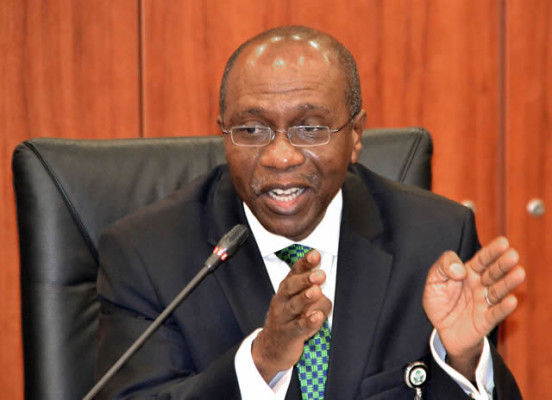
 The Independent National Electoral Commission (INEC) has explained why it did not use server for the transmission of electoral results in the 2019 general elections even though it was only used to experiment during some staggered elections held in 2018.
 President of the United States of America, Donald Trump, has sent his chief of staff, Mick Mulvaney, out of his Oval Office for interrupting an interview with his coughing.
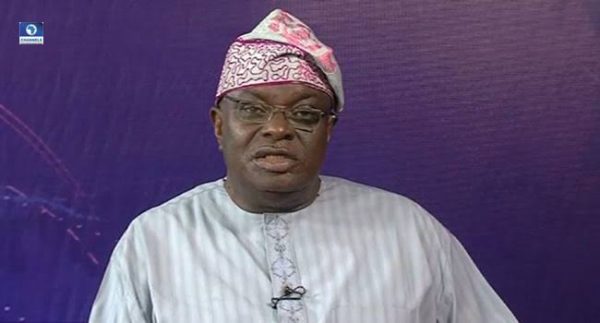
 The new speaker of the House of Representatives, Femi Gbajabiamila has said that he would surprise opposition members of the House when he makes appointment of chairmen of committees of the House in a few weeks time.
 Renowned African business entrepreneur and philanthropist, Tony Elumelu has said that there are many ways 100 million citizens of the country can be lifted from poverty.

