Home Blog Page 1051

Online Transactions Will Soon Attract Value-Added-Tax, Says Inland Revenue Boss

Chairman of the Federal Inland Revenue Service (FIRS), Babatunde Fowler, has announced that the agency will soon begin collection of Value Added Tax (VAT) on online transactions.

Speaking in an interview with the News Agency of Nigeria (NAN) in New York today, Saturday, Fowler said: “soon, we will ask banks to impose VAT on online transactions for purchases of goods and services. “Not that it is something new; it actually should be in existence. We will certainly follow up to make sure that every VAT that is due to be collected is collected.”

He explained that the move is part of measures by FIRS to meet its N8 trillion revenue target for 2019.

Fowler said the agency had started taking action against companies and businesses that refused to embrace the Federal Government’s tax amnesty programme, adding that FIRS hopes to generate between N750 billion and N1 trillion from the clampdown, which includes closure of defaulters’ bank accounts.

“We are going after everybody. I am sure you have heard that we have placed lien on some accounts of defaulters that have a billion naira turnover annually. So certainly, we are not leaving anyone out of the tax net.

Officially known as the Voluntary Asset and Income Declaration Scheme, the tax amnesty programme was launched in 2017. It gave tax defaulters a one-year period of grace to declare and settle their unpaid taxes.

There have been complaints by some taxpayers of being wrongly targeted by FIRS in the clampdown.

Asked to comment on that, Fowler admitted, blaming it on “administrative error,” arising from the huge number of accounts involved.

“Well, there is certainly one or two instances where we made administrative error, but when you are looking at over 50,000 accounts, there is a tendency that sometimes an error might be made. For those that we made errors on, I wrote them personally apologizing and of course we lifted the lien on their accounts.”

On plans by the Joint Tax Board to raise the country’s tax population to 45 million, Fowler said the agency was relying on multiple information sources. These, according to him, include the country’s Bank Verification Number database and sister agencies with relevant information.

Zamfara Prayer Warriors Join President Buhari In Makkah

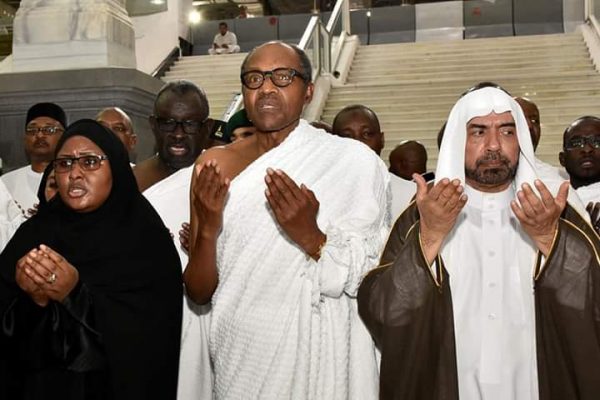
Prayer warriors from Zamfara State, led by the State Governor, Alhaji Abdulaziz Yari have joined President Muhammadu Buhari in Makkah, Saudi Arabia to offer prayers for Nigeria.

The warriors, also include the Emir of Maradun, Alhaji Garba Tambari, today, Sunday had an Iftar dinner (a fast-breaking meal), during which time President Buhari expressed serious concern over the loss of lives and destruction of property especially in Zamfara State following banditry attacks.

The President expressed determination to ensure that justice prevails and Nigerians find peace and prosperity wherever they lived.

The Emir of Maradun led prayers for the repose of victims of violent attacks in Zamfara State and all over Nigeria and for God to help the country achieve total peace and stability.

The President was accompanied to the event by Nigeria’s Ambassador to Saudi Arabia, Justice Isa Dodo (rtd), and some personal aides.

The holy month of Ramadan is a blessed time for spiritual reflection and commitment; prayers are encouraged to achieve forgiveness, peace and prosperity of Nations.

Vicious Kidnapper, Armed Robber, Shaho, Killed In Gun Battle With Police

kidnappers arrested for terrorising Mubi-Adamawa Axis

Police have announced the killing of a 31 year old Sumaila Sule, popularly called in crime world as Shaho after a deadly shootout with police operatives attached to Operation Puff Adder in Kaduna state.

Shaho, who is a native Rijana village in Kachia LGA of Kaduna state was one of the masterminds of the kidnapping recently, of the chairman of the Universal Basic Education Commission (UBEC) along Abuja- Kaduna road.

A statement today, Sunday, by the Force spokesman, Frank Mba, said that Shaho and his gang has been responsible for terrorizing citizens in Kaduna and its environs.

The statement said that the shootout between the kidnappers and police took place in yesterday, Saturday evening, at the outskirts of Rijana village.

“The police operatives, in line with the mandate of Operation Puff Adder, were carrying out routine surveillance and raid of suspected criminal hide-outs, when they suddenly came under gun fire attack from a heavily armed criminal gang. The police team fought back gallantly, repelling the attack and eventually bringing SHAHO down, whilst his gang members fled. SHAHO was rushed to hospital, where he eventually died the next day.”

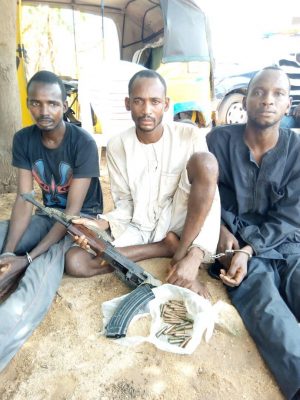
The statement said that acting on information elicited from the suspect before his death, its operatives carried out sweeping follow-up operations at different target locations between yesterday and today, leading to the arrest of four other members of his gang and the recovery of three AK 47 rifles.

It gave the names of arrested gang members as 26 year old Musa Hassan,  25 year old Yau Umar, 22 year old Umar Musa and 28 year old Muhammad Sani, all of them natives of Rijiana Village Kachia LGA Kaduna State.

“Shaho and his gang members have been on the radar of the intelligence community for a while, as they have been implicated in several high level kidnappings and other heinous crimes along Kaduna-Abuja road and beyond.”

Super Falcons Emergence As 2019 WAFU Champions Thrills Buhari

President Muhammadu Buhari has expressed satisfaction with the superlative performance of the Super Falcons that saw them emerged as 2019 WAFU Women’s Cup Champions, with an unbeaten record throughout the tournament.

In a statement today, Sunday, the senior special assistant to the President on media and publicity, Malam Garba Shehu quoted Buhari as commending the Falcons for their fighting spirit and resplendent skills as evidenced in team work, discipline and focus, which enabled them to defeat the Ivorian Dame Elephantes at the finals of the championship.

The President also expressed satisfaction with the sacrifice, commitment and diligence all officials and management of the team, led by Thomas Dennerby.

He advised the team as it prepares for the forthcoming FIFA Women’s World Cup in France, to stay focused and unleash the same zeal that won the WAFU Women’s Cup Champions.

4 Reasons For Optimism On Economic Inclusion In Nigeria

  • By Joe Abah, Nate Bourns, Brigit Helms

Viewed in isolation, statistics on the Nigerian economy paint a bleak picture. Having emerged from the 2017 recession, Nigeria is growing at an anemic 1.5 to 1.9 percent per year—against population growth of 2.6 percent. Nigeria is one of the few countries in the world where poverty has worsened— 90 million of its citizens languish in absolute poverty. With the median age stuck at 17.9 years, some say a “youth bomb” has already detonated; certainly, youth unemployment is unacceptably high at 43 percent. And development indicators around health and education leave much to be desired: 30 percent of Nigerians are unable to read or write, according to the Minister of Education.

Yet we are optimistic. Why? Because we see Nigeria not in isolation, but in context. We recently sat down with Nigerian stakeholders to talk in depth about how to build a more inclusive economic system. Together, we sense a new version of capitalism emerging. Instead of equating business with extractingeconomic value, a new generation of entrepreneurs and policy makers is focused on creating value for Nigeria—by increasing access to vital services and jobs.

We find at least four reasons for optimism, if we take collective action now.

Aging societies in the West know that young people are the key to growth. Nigeria’s army of young job seekers could be readily transformed into an army of job creators, according to young entrepreneurs like Sam Immanuel, founder and CEO of Semicolon, a training ground for young “techpreneurs” in Lagos’ “Yabacon Valley.” Semicolon’s 12-month programs train promising young people not only how to code but how to solve some of Nigeria’s seemingly intractable problems and build sustainable business models around them. Job opportunities for this new generation are global in reach and potential scale.

The U.K. Department for International Development’s Women for Health project in northern Nigeria has shown that even the most difficult-to-reach young women working in the most challenging conditions can leverage technology to make a difference. By enabling young women in primarily conservative Muslim communities to access digital health worker training, W4H is creating sustainable and culturally appropriate solutions to fill serious gaps in healthcare availability for women in the region.

The digital economy could revolutionize service delivery and job creation, the two main pathways out of poverty. The GSMA indicates Nigeria has 97.5 million unique mobile subscribers, meaning roughly half the population has a mobile subscription, and half of this group accesses the mobile internet, making mobile the main driver of internet access. More than half of GSMA’s projected growth in new mobile subscribers in West Africa by 2025 will come from Nigeria. While access remains highly uneven—rural Nigerians tend to be excluded—the growth trend is clear. At the same time, fixed broadband access, while limited by State and local right-of-way regulations, is 22 percent (compared to a 30 percent target for 2018) but on the rise, and Federal and State governments increasingly understand that expanding access is the only way to go.

In terms of job creation, the tech conglomerate, incubator, and investor Lofty Group has demonstrated that tech startups can grow into major job creators. Companies such as Andela, Flutterwaye, and Paystack have attracted heavy hitters in the investment world and created thousands of jobs. While some observers suggest fintech and payments services receive too much attention, overall this ecosystem shows that tech innovation is alive and well in Nigeria. Imagine putting that energy to work, at scale, for healthtech,edtechenergytechgovtech, or any other tech you can think of.

Without a verifiable, credible identity, it’s difficult to participate in the formal economy. While some Nigerians lack any form of formal identity, many can avail themselves of a wide range of identifications. However, none of them is standard nor ubiquitous, and the National Identity Management Commission is working to harmonize these various forms. Shifting from a card-based approach to a universal digital ID holds enormous promise for growth. A recent report on digital ID from McKinsey estimates that over the next decade, Nigeria could unlock value equivalent to 5 to 7 percent of 2030 GDP by ensuring ubiquitous digital identity, most of that value accruing to consumers, microenterprises, taxpayers, and beneficiaries of public initiatives.

The commission strives to enroll 5 million people in digital ID per month, up from around 500,000 historically, to reach universal identity within three years. Some 35 million numbers have been distributed so far. While these targets sound daunting, there is precedent. In India, under the Aadhaar scheme, the government distributed biometric identification numbers to 1.2 billion citizens in less than seven years. The Aadhaar number is now vital for Indians to access bank accounts, subscribe to mobile services, pay taxes, and receive government payments, among other things.

Past policy choices have frozen most Nigerians out of the mobile money market, with major ramifications for economic inclusion. For example, only around six percent of the adult population is active mobile money users, compared to 73 percent in Kenya. A decade ago, Nigerian authorities determined to limit mobile money operations to banks, as opposed to the telco-led models in East Africa. Given the low levels of formal financial inclusion, this decision inhibited the growth of mobile money. However, the Central Bank’s new digital financial services policy of 2018 may remove those brakes, allowing mobile network operators to enter the fray more directly.

The Federal government, through the National Information Technology Development Agency and other stakeholders, seems to be taking digital and economic inclusion seriously. The benefits of digital inclusion—job creation, GDP growth, new industries, business innovation, workforce transformation—have captured the attention of policy makers. At the State level, the Nigerian Governors’ Forum has put the digital economy on the policy agenda. From ICT regulation to cyber security to digital jobs to increased local content, the question now is how to act on it.

More broadly, our discussions exemplified the fact that economic inclusion in the digital age has struck a chord with Nigerians across the spectrum, not just with Federal and State government but also with the private sector, civil society, development partners, and the media. One thing is certain: no single entity can solve this problem on its own. Collaboration—often among uneasy bedfellows—is critical, and that collaboration will have to be more committed, more energetic, and more tangible than ever for Nigeria to achieve a truly inclusive economic system in our lifetime.

  • Dr Joe Abah is DAI Country Director for Nigeria and former Director-General of the Bureau of Public Service Reforms in the Presidency, Nigeria.
  • Nate Bourns is DAI Vice President, Global Operations and adjunct Professor at the Tecnologico de Monterrey in Mexico.
  • Brigit Helms is DAI Vice President, Technical Services and a founding management team member of CGAP, the global center of excellence for financial inclusion. 

Dan Agbese, Journalistic Maestro, Gets Presidential Salute At 75

A veteran journalist, columnist and satirist, Mr. Dan Agbese has received salutation from President Muhammadu Buhari as he clocked 75 years tomorrow, May 20.

The President, in a statement by his spokesman, Femi Adesina, joined the media world to celebrate the veteran journalist, columnist and author, congratulating him for years of consistency, resilience and patriotism.

President Buhari noted that Agbese’s passion for journalism reflects his deep love for Nigeria as depicted in the subjects of his columns and books, and the analytical and investigative prowess given to the treatment of national issues.

He commended the veteran for sacrificing his time and talent in pursuit of a greater future for the country, even as he said that he had made sacrifices for Nigeria’s return to democracy and strengthening of democratic institutions that must be acknowledged, and which will remain indelible in the sands of time.

Buhari extolled virtues of humility, discipline, focus and exceptional brilliance of Dab Agbese which he said, have contributed to the dynamism and vibrancy of the Nigerian media industry

The President prayed to God to grant Agbese, who was co-founder of Newswatch magazine, longer life, good health and more wisdom to keep serving the country through his profession.

How I Escaped Death Penalty In Saudi Arabia – Zainab Aliyu

Zainab Aliyu, 22, is a lucky young lady. She was accused of – and arrested for – smuggling packages of Tramadol into Saudi Arabia, an offence which carries a penalty of death sentence over there. However, after a thorough investigation by Nigerian and Saudi authorities, and a long-drawn drama in the media, she was exonerated, as the drugs were discovered to have been planted in luggage that was not hers but tagged in her name. She returned to Nigeria last Monday, after four months in jail.

Here, she shares her experience:

Question: You were arrested on the 26th of December 2018, and detained for four months by Saudi authorities, over allegations of drug trafficking. You have since been exonerated after a long-drawn drama, so can you share with us the events that unfolded that fateful day?

Zainab Aliyu: My mother, my sister Hajara, and myself, we were sleeping in our hotel room, when suddenly some Arabs and two black men forcefully entered. They woke us up, all of us, and started asking questions about a consignment of drugs which they said we had illegally brought into the Holy Land from Nigeria. We asked what drugs, and they said we left them at the Jeddah Airport. Of course, we all denied the allegations, and told them that we had not left any luggage at Jeddah. So, after they realized that we didn’t know anything about what they were asking us about, they searched my bag, and the entire room, but they could not find anything incriminating. They told my mother that they were taking me to their office for further investigation because the consignment of drugs they found was bearing my name, and therefore I must follow them to their office to answer some questions.

I began to cry, out of a mix of fear and confusion, and my mother and sister also started crying because we all knew that we did not travel with any prohibited item into the country, not to talk of drugs. After we left the hotel, I realized that I was not the only person arrested, because I met Malam Ibrahim Abubakar, who was also arrested for the same allegation. Apparently, they arrested him first, then me. But we were taken to the office together. So, when we arrived at their office in Madinah, they gave us some forms and asked us to fill, which we did. After that, we were kept in the office until the next day.

Question: Did you communicate with your mother after you arrived at the security office?

Zainab: No, they seized my phone, so there was no way I could communicate with my mother. In fact, at that time I was confused because I was not even myself Wallahi. I was just crying and thinking of what might happen to me, or where I would be taken to. I was completely confused. So, the next day, we were taken to Jeddah, like the security agents said, for further investigation. Again, we were given papers and directed to fill, and we did. They also snapped several photos of me, before I was taken to a female prison, while Baba Ibrahim Abubakar was taken to the male prison. I was taken to the prison located outside Jeddah, around 12am Saudi time. That’s how we were separated. You know we travelled to Saudi Arabia on the same airplane and we were arrested same day for the same allegation, even though we stayed in different hotels. When we met, he asked me about my own situation, and I told him. He then told me about his own case, and from there we realized that we were facing a similar problem. Since then, we continued communicating, even though some of the security agents warned him to stop talking to me.

Question: Were you informed that you would be taken to jail?

Zainab: No, nobody told me where I was to be taken to, and even after I was taken there, I never imagined that it was a prison, because deep inside my heart, I knew I did not commit any offense that would warrant such punishment. But after some time, I realized that I was actually taken to prison. So, I was given a room, and we were four in it. In fact, it is after I got there that one of my roommates helped me with her cell phone with which I called my mother.

Question: Can you describe the room?

Zainab: All I can say is that it was a room with mattresses and blankets. But not everyone had a pillow. Some did, and others didn’t. But Wallahi, I spent almost one week without knowing that I was in a prison, because I did not commit any offence. We were being fed well, but it was not like home at all. Honestly, I was not able to eat real food at the first instance, but later I started. Initially, I was taking only water and juice which the prison officials provide us. Later, I began to eat, because there was no way I could survive without it. Also, with the counselling that I had been receiving from my parents, I got the courage to continue with my life there.

Question: Can you recall some details of your first day in prison?

Zainab: Yes. I met several people. But I can assure you, it took me some days before I could trust some of the inmates. That’s because after realizing that I was actually framed, I couldn’t bring myself to trust anyone. I did not trust anybody there, even among my roommates. The only person that I can say I trusted, is one Ethiopian lady with whom I was brought in.

Question: Was there any harassment or ill-treatment from the prison officials? Zainab: There was nothing like that. They treated us like human beings. Nobody humiliated or harassed anyone in there. And I spent 124 days there.

Question: Did any official from the Nigerian Embassy visit you then?

Zainab: Yes. After I spent three weeks there, some officials visited us and they gave us assurance that they would do everything to ensure that we were released. But since then, nobody visited us again. They only returned to the prison the very day I was released.

Question: After you settled down in the prison, did the prison officials allow you to talk to your family?

Zainab: Yes. There was a telephone line in the prison which we were allowed to use to call our family members for only 10 to 15 minutes. I was first allowed to talk to my mother after I spent two days in prison. Like I said earlier, I used my roommate’s cell phone to call my mother, but subsequently, I used the public line provided to us by the Saudi authorities. The first time I used the public phone, I was only able to call my father, who was in Nigeria, because it’s only his phone number that I was able to recall. Then after we spoke, he gave me the phone numbers of my mother and my sister.

Question: How would you describe life in prison?

Zainab: Honestly, it was terrible, because you don’t have rights. You are restricted from doing so many things. You’re always thinking of your future. You have no certainty of your condition, whether you are going to be freed or not. You don’t even know your fate. So, it is a kind of life that cannot be explained; it is only when you taste it that you will understand. What shocked me the first day I entered the prison was that the inmates told me that if I was found guilty of the offence I was accused of, my punishment was death. So, understandably, I was devastated. But because my parents were always counselling me, I dedicated myself to prayers.

Question: Did you make any friends in prison?

Zainab: Yes, but only the Ethiopian lady I mentioned earlier, called Rehisty. When we were brought there, together, we found it difficult to communicate, because she could only understand a little English, and I understand only a little Arabic. So, it took us some time before we started communicating, in Arabic, which I picked up while in detention. I learnt pure Arabic. I also joined Tahfiuz school, and Alhamdulillah, I was able to memorize half of the Holy Qur’an during my stay in the prison. I also learnt how to live with people from different backgrounds.

Question: Were you and Rehisty freed together?

Zainab: No, I left her in the prison, and I don’t know when she is going to be freed. We were only brought in together, and I don’t know whether we faced the same charges or not. I don’t know the level of commitment by her country to free her. Wallahi, she and I, we cried so much before we departed. We lived like sisters, so when I was going, we shed tears. In fact, it was an unforgettable moment. But there was nothing we could do. So, we met there, and parted there. Our prayer had been to gain freedom together, since we came in together. But Allah, in His infinite wisdom, did not make that happen.

Question: After you found out that you were framed at MAKIA, did you recall any unusual thing that might have transpired at the airport before you took off to Saudi Arabia?

Zainab: Honestly, I did not notice anything unusual on the part of the security agents conducting the screening. In fact, I was sick on the very day we travelled and was not myself, so I did not pay much attention to what other people were doing at that time. I was always near my mother, up till the time we departed.

Question: How did you feel when you got to know that you were going to be freed? Zainab: Sincerely speaking, I cannot explain how I felt, when I was told that after all the investigation carried out in Nigeria and Saudi Arabia, I was found to be innocent of the offence I was earlier accused of. You know, I cannot explain my feelings. Somebody that was to be killed if found guilty, now released because he is innocent. Honestly, I cannot express my feelings.

Question: When you were freed, where were you taken to?

Zainab: I was first taken to the residence of the Nigerian Ambassador, where I spent only three days, and then moved to the residence of the NIA officials, and spent almost a week. After we started preparing to return to Nigeria, I went back to the Ambassador’s residence.

Question: How did it feel when you first saw your parents at MAKIA, upon returning to Nigeria?

Zainab: I cannot explain that. My entire family broke into tears of joy. Alhamdulillah, I am short of words to express my happiness that very day.

Question: While in detention, did you ever think you would be exonerated, and regain your freedom?

Zainab: Well, sometimes I did, that one day, I was going to be out of the situation. But sometimes, I did give up. However, anytime I spoke with my family, they gave me the courage that yes, one day, I would certainly regain freedom. My father always told me that I should leave everything to Allah, and that whatever condition I found myself in, Allah has the power to take me out of it. He always told me to have faith in Allah, and that He would surely come to my aid. And Alhamdullilah, here am I today granting you an interview, at home, in my father’s sitting room. Alhamdulillah! I thank President Muhammadu Buhari, Madam Abike Dabiri, and the Minister of Justice, Justice Malami, and all others who in one way or the other contributed to my release. To my fellow students at Yusuf Maitama Sule University, and other tertiary institutions, who showed real love to me while I was held, I say thank you all. I am also calling on some people who have created Instagram and Twitter handles, and even a Facebook account in my name, to please stop, because it is not good to deceive people. Honestly, I am not on social media, so the general public should take note.

Source: Daily Trust on Saturday.

Age-Cheating: CAF Disqualifies Guinea From U-17 World Cup In Brazil

Confederation of African Football (CAF) has disqualified Guinea from taking part at this year’s Under-17 World cup in Brazil after they were found guilty of age-cheating at the recent U-17 Africa Cup of Nations which served as World Cup qualifiers.
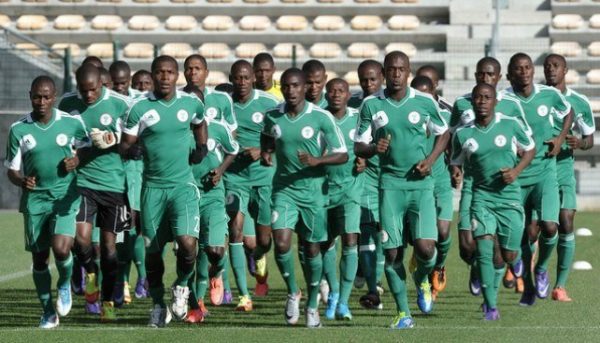
Guinea, who were runners-up at the U-17 Nations Cup in Tanzania in April, thought they had secured their World Cup spot by reaching the semi-finals.

But CAF said in a statement that Guinea used two ineligible players in Tanzania and that Senegal will replace them in Brazil.

“The players Aboubacar Conte and Ahmed Tidiane Keita were not eligible to participate with Guinea in the Final Tournament of the U-17 Afcon played in Tanzania.

“Due to the existence of two different passports for each of the players concerned, one passport was used for the International Under-16 Cup held in Japan, the year of birth date being 2001, and the other for the final U-17 Afcon tournament in Tanzania, which indicated the year of birth as 2002, which clearly shows that there was forgery.”

“Because of their participation, the team is excluded from the competition and all its results and achievements during the competition must be cancelled.”

“The Guinean Football Federation, following its disqualification, is prevented from representing Caf at the Fifa U-17 World Cup to be held in 2019.”

“The Organizing Committee will be invited to reinstate Senegal and the Executive Committee to approve the participation of Senegal as Caf’s 4th representative at the Fifa U-17 World Cup to be held in 2019,” Caf stated following a meeting of its disciplinary committee.

Senegal will now join Cameroon, Nigeria and Angola as Africa’s representatives at this year’s U-17 World Cup in Brazil.

Guinea, who have been banned from taking part in the next two editions of the U-17 Africa Cup of Nations, have appealed and claimed that Caf’s “decision is clearly wrong”.

The Guinea Football Federation has also been fined US$ 100,000 with half of the amount being a suspended fine for a period of four years.

The runners-up silver medals which Guinea received in Tanzania must be returned within 21 days and if they fail to do so a penalty of $US 20,000 will be imposed.

Guinea’s punishment is the result of a second protest. During the tournament in Tanzania, CAF had initially cleared Guinea of any wrongdoing after Senegal FA filed a complaint against the two players.

Both had featured in a 2-1 win over Senegal in the group stage.

CAF had also stopped six players – including one Guinean – from taking part at the Nations Cup in Tanzania following MRI tests before the tournament.

FIFA U20 World Cup: Flying Eagles Fly To Poland 

The Nigeria U20 football players, the Flying Eagles, will tomorrow, Sunday, fly from to Germany to Tychy, Poland to prepare for the  FIFA U20 World Cup starting in Poland on Thursday next week.

Speaking to the players today, Saturday, the President of the Nigeria Football Federation (NFF), Amaju Melvin Pinnick charged them to do the nation proud on and off the field during the competition.

 “I have spoken to the head coach and he has assured me that you guys have made tremendous progress since arriving at the training camp here in Germany.

“Let me state clearly that as an U20 squad from Nigeria, so much is expected of you at the world stage. Nigeria has been in the final of the FIFA U20 World Cup on two occasions and won the bronze medals once before.

“The NFF and Nigerians generally, as well as the football world, expect so much from you in Poland. You must perform very well on the field while showing good attitude and sense of fairplay, and also make discipline, diligence and decency your watchwords off the field, in order to fly Nigeria’s flag high.”

On Friday, the Flying Eagles engaged Red Bull Leipzig of Germany in their final pre-World Cup friendly, three days after drawing 1-1 with Red Bull Salzburg in another friendly in Austria.

U20 AFCON: Aigbogun submits final list of 21 players (Opens in a new browser tab).

The Flying Eagles are expected to take on Qatar in their first match of the FIFA U20 World Cup on Friday, 24th May, before other Group D games against USA (27th May) and Ukraine (30th May).

Minister Warns ‘Those Masquerading As Democrats’ But Bent On Destroying Democracy

Alhaji Lai Muhammed

The Minister of Information and Culture, Lai Mohammed, has insisted that the opposition is planning to sabotage Muhammadu Buhari’s Administration, generally overheat the polity, and make the country ungovernable.

Speaking today, Saturday at the 2019 edition of his Annual Ramadan Lecture held at his home town Oro, Kwara, the minister warned those he described as masquerading as democrats but are bent on destroying the nation’s democracy.

He insisted that there are credible evidences to show that the Peoples Democratic Party (PDP) and its presidential candidate, Atiku Abubakar are doing everything possible to sabotage the Buhari Administration.

“As you are aware, a few days ago, we raised the alarm that either by themselves or via their proxies, the PDP and its presidential candidate are doing everything possible to sabotage the Buhari Administration.

“Our interventions are based on credible evidence, and no government, with the kind of evidence that we have, of plans to subvert the power of the state, attack the nation’s economic live wire and generally unleash mayhem on the polity, will keep quiet.

“The security agencies are all alert to their responsibilities and will not sit by and allow anyone to reverse the gains of our democracy under any guise,” he said.

Lai Mohammed noted that similar alarms had been raised by the police, the military, and the DSS, adding that the government will neither be distracted nor dissuaded by pseudo and partisan analysts that had teamed up with the opposition to “either exhibit their ignorance or to engage in red herring and name calling.”

He called on Nigerians to use the occasion of the Ramadan to pray for the peace unity and stability in the country.

 “I make this request against the background of those who are daily plotting to exploit our national fault lines of religion and ethnicity.

“Those (are the people) who masquerade as democrats but can’t take electoral defeat; who will not hesitate to collude with anti-democratic forces and dead-enders to fan the embers of violence in the country.

“Those who have elevated their personal ambition over and above our survival as a nation,” he said.

The minister thanked all Nigerians for their support and prayers for the administration. He urged them not to relent, especially in the run-up to the May 29 inauguration of the president.

Source: NAN.

Advertisement ADVERTORIAL
WP2Social Auto Publish Powered By : XYZScripts.com