Home Blog Page 106

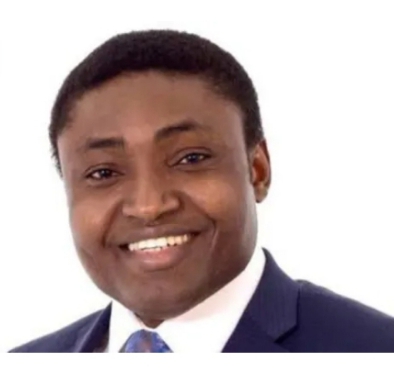
The Damage Ajuri Inflicted On Tinubu’s Media Friendly Mien, By Yusuf Ozi-Usman

Whoever brought Ajuri Ngelale to be the spokesman and special adviser to President Bola Tinubu had, from the word-go, reduced the President to a local political champion that he was far away from.
Apart from being a dark horse, even in the basic Journalism profession, Ajuri lacked basic human relationship. He came in with a dangerous agenda of divide-and-rule among the presidential media men and women. He virtually turned the status of presidency into that of local government.
On arrival at the presidency as the presidential official spokesperson last year, he addressed media men covering the beat. He made it clear that he was going to reduce the number of journalists in the beat. As a matter of fact, that statement alone showed him out as a person that lacked even the human relationship he was employed to bring to bear on his principal.
Of course, it was not surprised that a few days later, on August 18, he practicalised what he had designed to achieve. He orchestrated the sacking of over 20 media men representing their various organizations from the Villa in a very disgraceful manner. The sacking was done with all the trappings of arrogance; giving no iota of reasons or formula used for the action. Despite moves by people of goodwill; people who knew the dangerous implications of such action to intervene and to make him reverse the action, Ajuri remained adamant and arrogantly so.
In deed, it is clearly on record that Tinubu, who engaged Ajuri used to be the darling of media men and women across Nigeria. Tinubu was not known to discriminate against journalists. As a matter of fact, his ability to embrace media practitioners of all hoos made him an outstanding media personality amongst his peers.
Someone like Tinubu who fought military regime to a standstill was seen as the champion of democracy. When the story is being told about how democracy found its way into Nigeria, Tinubu would stand out like a sore thumb. And he did not become champion of democracy by choosing and selecting which media and media practitioners should be his friends or mouthpiece.
But to begin to choose and select which media and media practitioners should remain in the Presidency just when he finally became president, willy nilly, portrayed a serious character defects in him directly and or through Ajuri whom he asked to do it for him. In other words, displaying of such charater actually showed either that he was at a cross-purpose with his Chief spokesman or that he had metamorphosed into a different thing.
One doesn’t blame Ajuri much for one thing, that those who brought him to Tinubu did not understand and appreciate the responsibilities and complexity involved in being a PRESIDENTIAL SPOKESMAN. Or they were trying to compensate him for whatever favour he might have done for them or Tinubu or both, not for the purpose of competent output. Those people could have just made way for him to get fat contracts, get his millions or billions cash and crawl back to from where he came.
Here was Ajuri who had not risen to any appreciable level in journalism all his 38 years on earth. He was just a common reporter with AIT and one other private radio station. It is not just enough, as he might have convinced his sponsors, for one to know how to blow grammar and twist words to create some kind of, mainly, negative effects.
Historically speaking, spokespersons of the past Presidents were known to have risen through the ranks in journalism to the position of Editor, and in public relations fields before they got appointed. It started from late Wada Maida, late Oluremi Oyo, Dr. Reuben Abati, Olusegun Adeniyi, Femi Adesina, Garba Shehu and others. They were not only Editors-in-chief in the print media but were at one time or the other, Presidents of the Nigerian Guild of Editors (NGE). There were others too who became Presidential spokespersons after going through tough Journalism experiences. And because each of these experienced journalists knew where the shoes pinched, they operated with a great amount of humility, respect for not only their contemporaries but also the junior colleagues. They imbibed some elements of political sagacity in their interactions with people around the seat of power and beyond, because they understood the values of such personal touch to the whole gamut of the job.
Whatever anyone would say, it was quite obvious that Ajuri, from the way he crashed into the Villa, had failed right from the very moment he was engaged, not because he wanted to fail but because he saw himself in a shoe that was began than his legs. Besides, he was too proud to understand the limits of his power, and above all, he regarded the position of the Presidential spokesperson as next to God: that he was untouchable. In fact, from the very beginning, his arrogance was palpable and at the point of self-destruction.
All said, I submit that Tinubu needs a far more better spokesperson than Ajuri that had just breezed in and breezed out.
It doesn’t really matter whether he was booted out when his inefficiency and arrogance reached the point of no return or he turned in his letter saying goodbye to the Villa, what is important is that he has returned to his own level: not Presidential spokesperson that he abused severally, but to where he can enjoy his voice, shouting at the boys around him
It is obvious that the Presidency needs to take its time to avoid bringing in another kind of Ajuri, which may spell a disaster to the image of the President himself. He or she must be the spokesperson that would work hard to ensure internal cohesion of the immediate constituency of the presidential media circle.

BREAKING: President Tinubu’s Spokesman, Ajuri Steps Aside Over Family Ill Health

Special Adviser to President Bola Tinubu on media and publicity, Ajuri Ngilela has begged to be excused from duty to attend to the health challenges of his immediate family members.
In a letter, dated September 7, and addressed to the Chief of Staff to the President, Ajuri said that he was proceeding on an indefinite leave of absence to frontally deal with medical matters presently affecting his immediate, nuclear family.
“While I fully appreciate that the ship of state waits for no man, this agonizing decision — entailing a pause of my functions as the Special Adviser to the President on Media & Publicity and Official Spokesperson of the President; Special Presidential Envoy on Climate Action, and Chairman, Presidential Steering Committee on Project Evergreen — was taken after significant consultations with my family over the past several days as a vexatious medical situation has worsened at home.
“I look forward to returning to full-time national service when time, healing, and fate permit.
“I respectfully ask for some privacy for my family and I during this time.”

Attorneys-General From 36 States, Stakeholders Storm Abuja, September 9 Against Corruption

Attorneys-General and Commissioners for Justice from all 36 states of Nigeria and key stakeholders in the nation’s justice sector, are expected to converge in Abuja on 9 September for a one-day roundtable discussion the challenges of corruption in Nigeria.
The event, tagged the AGs Summit and themed: “Building a Unified Front Against Corruption in Nigeria,” is organized by the Independent Corrupt Practices and Other Related Offences Commission (ICPC) with support from the MacArthur Foundation.
According to the Chairman of ICPC, Dr. Musa Adamu Aliyu, the summit is a strategic initiative aimed at enhancing anti-corruption efforts across all levels of government.
He said that it will strengthen collaboration between the ICPC and State Attorneys-General nationwide in advancing the National Anti-Corruption Strategy (NACS).
A statement by the Commission’s spokesperson, Demola Bakare, said that the event will feature the Attorney-General of the Federation (AGF), Lateef Fagbemi, as the special guest of honour while the former AGF, Kanu Agabi will deliver the keynote address on the summit’s theme.
The statement said that a panel discussion will take place, led by former Lagos State Attorney-General, Moyosore Onigbanjo.
Other notable contributors include Ekpo Nta, former Chairman of ICPC; Professor Mohammed Tabiu of Bayero University, Kano; Professor Abdulkarim Kana of Nasarawa State University, Keffi and Barrister Hauwa Abubakar, Attorney-General of Borno State.
“This engagement seeks to identify and address the systemic challenges within the justice system that contribute to corruption, hindering ICPC’s efforts.
“The summit also aims to develop effective strategies to enhance the ICPC’s capacity for corruption prevention, foster a stronger understanding between the ICPC and the Attorneys-General, and identify specific areas for collaboration between the ICPC and state governments.”

Why President Tinubu Should Be Merciful To Nigerians, Friday Sermon By Imam Murtadha Gusau

In the name of Allah, the Most Compassionate, the Most Merciful.
All praises are due to Allah, Lord of all the worlds. May His blessings and benedictions be upon the Messenger, his household and companions.
Dear brothers and sisters! The Nigerian National Petroleum Company Limited (NNPC) on Tuesday, 03/09/2024 raised the pump price of petrol to N897 per litre from the official price of N617.
This is coming days after the national oil company said it was heavily constrained by the huge debt it owes international suppliers. The debt is estimated to be $6.8 billion.
NNPC filling stations in Nigeria had already effected the prices, with its downstream facilities selling for N897.
However, independent filling stations were selling for between N930 and N950.
Truly, Nigerians feels betrayed and unhappy by the federal government following the increase in the pump price of petrol at NNPC Ltd’s fuel stations.
Respected brothers and sisters! Indeed, showing mercy to others is essential for one to receive mercy from Allah the Almighty.
Abu Hurairah (May Allah be pleased with him) reported: The Prophet Muhammad (Peace be upon him) kissed his grandson Hasan Bin Ali in the presence of Aqra’ Bin Habis. Thereupon Aqra’ remarked: “I have ten children and I have never kissed any one of them.” The Messenger of Allah (Peace be upon him) cast a glance upon him and said, “He who does not show mercy to others, will not be shown mercy.” [Bukhari and Muslim]
Therefore, if we want peace, unity and progress we must show mercy, compassion and kindness towards those around us.
And this Prophetic Hadith, narrated by Abu Hurairah, speaks about the importance of showing mercy and kindness towards others.
This Hadith teaches us that it is important for us to show compassion and kindness towards those around us if we want to receive the same from Allah. We should strive to treat people with respect and love so that we can earn His blessings in return. Furthermore, this Hadith also serves as a reminder for us to be grateful for all the blessings we have been given by Allah and use them wisely in order to gain His pleasure.
Jarir Ibn Abdullah reported: The Messenger of Allah, (Peace be upon him) said:
“Allah will not be merciful to those who are not merciful to people.” [Bukhari and Muslim]
Abdullah Ibn Amr reported: The Messenger of Allah (Peace be upon him) said:
“The merciful will be shown mercy by the Most Merciful. Be merciful to those on the earth, and the One in the heavens will have mercy upon you.” [Sunan al-Tirmithi]
Abdullah Ibn Amr reported: The Messenger of Allah (Peace be upon him) said:
“Whoever does not show mercy to our young ones, or acknowledge the rights of our elders, is not one of us.” [Musnad Ahmad]
Ibn Abbas reported: The Messenger of Allah (Peace be upon him) said:
“He is not one of us who is not merciful to our young, nor respects the rights of our elders, nor enjoins good, nor forbids evil.” [Sunan al-Tirmithi]
Respected brothers and sisters! For all of the attributes ascribed to leaders how high on the list would you place being merciful? After all, leaders are tough, decisive, driven, and are no-nonsense type of people. But drill down to the finer qualities of what makes a leader inspiring and worth following is a sense of mercy that embodies their leadership style. They don’t overlook the obvious and are not afraid to act when times are tough. Leaders lead with a clear set of goals and outcome expectations. But they also understand that life happens and a merciful leader will make allowances. Don’t be so rigid with rules, regulations, policies, and procedures that you fail to see the human equation. Mercy is not weakness. The merciful leader is strong enough to care, gracious enough to show it, and confident enough to live it.
Allah the Almighty told the Prophet Muhammad (Peace be upon him), the greatest leader on earth:
“Owing to Mercy from Allah, you were gentle in dealing with them [your companions]. Were you harsh [and crude], hard of heart; they would have fled from you. Therefore, pardon their abuses, seek [Allah’s] forgiveness for them, and consult them in the affair. Once you have resolved on a course of action [be decisive] and trust in Allah. Surely, Allah loves those who trust in Him.” [Qur’an, 3:159]
This Qur’anic verse contains a wealth of instruction to guide those who are leaders, and as Muslims we should all be leaders. The Prophet (Peace be upon him) mentioned:
“All of you are shepherds, and each of you will be asked concerning his flock.” [Bukhari]
Let us examine some of the implications of the Qur’anic verse relevant to leadership.
Allah the Almighty says:
“Owing to Mercy from Allah…”
Here Allah is reminding His Prophet (Peace be upon him) that the mercy he displays, in fact all of the virtues or favours that he enjoys are all from Allah. This is a critical point for any leader to realise, because of the propensity of those in positions of leadership to assume that they are in those positions because of something they have done. While it is certainly true that in many instances, hard work and perseverance have assisted a particular individual in his or her rise to the top, even the possession of those qualities is due to Allah.
Acknowledging this at the very beginning of our affair is one of the keys to real power as it helps to render us humble, and humility before people unlock for that person the power of Allah. The Prophet Muhammad (Peace be upon him) mentioned in that regard:
“No one humbles themselves for the sake of Allah except that Allah elevates him.” [At-Tirmithi]
Those who doubt the efficacy of such an approach-forgetting this was the way of our Prophet Muhammad (Peace be upon him-should consider the insights offered by Jim Collins in his book, Good to Great. He mentions what he calls Type 5 Leaders. They are those exceptional leaders who lead companies in their transition from being good to great. They combine personal humility, which is essential for gentleness in one’s dealings, with intense will. This unique combination of virtues is the essence of the message this Qur’anic verse is presenting to us, as we shall see.
Recognising that everything comes from Allah is also one of the keys to gaining an increase in good things, for we can not give thanks for a blessing we do not recognise. In recognising Allah for blessing us with the qualities that may have helped us to become capable leaders, we are able to thank Him for those blessings. Hence, we are subject to a rule He has established to govern our etiquettes in responding to a blessing:
“If you give thanks [for my blessings] I will increase you in them…” [Qu’ran, 14:7]
Recognising that everything comes from Allah also helps us to realise our limitations. We come to understand that we must work hard to accomplish our goals. However, at the end of the day, we do not control the outcomes of our strivings. As soon as we can accept that fact we instantly gain peace of mind, for we do not endeavour to burden ourselves with things beyond our control. Furthermore, when in positions of leadership, we are less likely to look for oftentimes innocent parties to blame for failures that occur. This helps to create a healthier and more productive work environment for everyone.
Allah the Most High says:
“…you were gentle in dealing with them [your companions].”
The Prophet (Peace be upon him) said:
“Gentleness does not exist in anything except that it beautifies it, and it is not removed from anything except that it defiles it.” [Abu Dawud]
In many instances when we are in a leadership position we try to impose our authority on others. In some instances this only engenders stubborn rebellion and opposition. In others it brings about grudging compliance. Neither situation is healthy. Gentleness, on the other hand encourages willing compliance.
Allah the Almighty says:
“Were you harsh [and crude], hard of heart; they would have fled from you.”
Here Allah is telling His Prophet (Peace be upon him) that despite your charisma, your concern for the believers and all of your other positive characteristics, were you harsh and hard-hearted, your companions would have left you. Therefore, you must avoid those characteristics. This is a lesson for us in terms of how we should approach leadership and positions of authority.
People who are harsh in their leadership styles and policies oftentimes demand respect. They should be mindful of the fact that respect that is demanded is seldom lasting, and it is never sincere. People who are gentle in the appropriate situations, compassionate, empathetic and magnanimous command respect. Respect that is commanded is sincere and lasting.
Leaders who are fair, merciful and gentle attract talented individuals, while those that are harsh are usually intimidated and threatened by talented people and generally repulse them. Their insecurity is sensed by talented people who are secure within themselves. This leads to them shying away from harsh individuals. This in turn leads to a corrupt or incompetent inner circle developing around leaders who demand respect through harsh treatment and crude mannerisms. The Prophet Muhammad (Peace be upon him) mentioned that:
“When Allah desires good for a leader He gives him a good circle of advisers. The opposite is also true.” [Bukhari]
In the long run, magnanimity will always trump tyranny. Tyranny may achieve temporary victories, but the fruit of those victories is bitter and the season of its harvest is very short. This is true in interpersonal relations as well as in relations between nations. We have to strive to be people who at every level are committed to being open-hearted and magnanimous in our character.
Allah the Most High says:
“Therefore, pardon their abuses…”
We should be quick to pardon others, where our rights are involved, or where the transgressions we observe arise from ignorance. One of the greatest lessons we enforce upon ourselves when we are quick to pardon is that perfection is Allah’s alone. Recognising that, we do not expect perfection from ourselves, nor do we expect it from others. We do strive for perfection and constant improvement. However, we realise that perfection is simply not our lot in life. When our parents, spouses, children, employees, coworkers, and others understand that they have room for error in their dealing with us they are more relaxed and therefore less likely to err. This is a simple yet unappreciated truth.
Also, we have to understand that when we are merciful and forgiving, we invite Allah’s mercy and forgiveness into our life. Allah mentions in the Qur’an:
“O believers! Verily, among your spouses and children are those that are enemies unto you. If you pardon them, overlook their faults and seek forgiveness for them; then you should know that Allah is Oft Forgiving and Most Merciful [to you].” [Qur’an, 64:14]
Our beloved Prophet Muhammad (Peace be upon him) reminded us:
“The merciful people are those Allah will show mercy to…” [At-Tirmithi]
This Prophetic Hadith involves a promise and a principle. It is especially relevant for leaders, for those leaders who show no mercy, will be shown no mercy-neither by Allah, nor by those they oppress if they ever gain the upper hand over them. One rare exception is the mercy our Prophet Muhammad (Peace be upon him) showed to the members of his tribe, Quraish, once he was given authority over them.
Allah the Most High says:
“Seek Allah’s forgiveness for them…”
When we seek Allah’s forgiveness for someone we are acknowledging that there is only so much we can do for them. After that we are implicitly saying that we are deputing their affair to Allah, who can do so much more for them. We are also letting them know that we are concerned for their ultimate wellbeing and salvation.
When this message is conveyed to our subordinates we will find them most happy and committed, ready to serve, for they understand that we do not just see them as an asset to be exploited, rather we see them as a servant of Allah who we can help along on the road to salvation.
Allah the Almighty says:
“And consult them in the affair.”
Mutual consultation (Shura) is one of the pillars of social relations in Islam. As the saying goes:
“Two heads are better than one.”
The more people we can involve in a project or decision, the more thorough our approach to that project or decision will be. Islam has high respect for the idea of due diligence in public decision-making methodology. We should deliberate and consult before making what will sometimes be far-reaching decisions. One of the reasons for our contemporary weakness is that we have gotten away from this idea.
Here the Prophet Muhammad (Peace be upon him) who is divinely guided in religious affairs, in the broadest sense of religion, is encouraged to consult his companions because he is laying the foundation for effective rule and leadership to guide those succeeding him. However, we will only be the beneficiaries of the wisdom he bequeathed to us if we implement those teachings in our lives. This area of endeavour is no exception.
We should also understand that a team will always accomplish more than a single individual. These instructions will help us to build strong teams. We should also understand that “good” can always be “better.” One of the first things mentioned by Abubakar, may Allah be pleased with him, upon assuming the Caliphate, was:
“If I do well help me to do better.”
Abubakar, may Allah be pleased with him, was sending out two messages. The first was that I can always do better but only with your help. The second was an invitation to get involved. Good leadership does not wait for involvement to happen, it actively encourages it.
Allah the Almighty says:
“Once you have resolved on a course of action [be decisive]…”
Once a course of action has been chosen it must be accompanied by decisiveness. Great leaders are decisive, after due diligence has been exercised. The greatest of all leaders, the five great Prophets, Nuh, Ibrahim, Musa, Isa and Muhammad are described as Ulul Azm the possessors of decisive resolve. No one will follow an indecisive leader. Decisiveness is a function of will. This is the second quality mentioned by Collins in his book, Good to Great.
In confronting the challenges before us as Muslims in this country we should understand that resolve is one of the qualities we will need to have. Allah mentions in the Qur’an:
“You will surely be tested in your wealth and your lives and you will hear from those given the scripture before you and from the idolaters much abuse. If you patiently persevere and remain mindful of Allah, [you should know] that is a manifestation of resolve.” [Qur’an, 3:186]
As we listen to the defamation of our religion and the slander of our Prophet (Peace be upon him) we should not allow that to dishearten us or turn us away from the good works we are doing. We should persevere, we should forge on, and we should realise that we are not violating any laws nor transgressing against any of the principles upon which this nation was founded-even thought the nation itself oftentimes does not honour those principles.
Allah the Most High says:
“And trust in Allah…”
Allah never disappoints. When we trust in Him, we will never be disappointed. People will eventually disappoint us, in real or perceived ways. Although those disappointments usually do not result in any permanent damage to our relationships they can be frustrating. When we place our trust in Allah we remove this great cause of our frustrations.
When we trust in Allah, we also are less demanding of people. This is one of the ways to encourage others to do more for us in a spirit of willful volunteerism. What is given voluntarily is given sincerely. Sincerity is a quality that helps bring blessings to our actions. Ultimately, the value of our actions is associated to the blessings they contain, and not their abundance.
Allah loves those who trust in Him. If Allah is for us no one can be against us. As leaders we want Allah on our side. This is one of the keys in moving from good to great, for when we ally ourselves with Allah we ally ourselves with the source of all strength and power. Trusting in Allah is just one of the things we can do to invite His love. He the Almighty mentions in the Qur’an:
“Verily, Allah loves those who do good.” [Qur’an, 2:195]
“Surely, Allah loves those who turn to Him in repentance.” [Qur’an, 2:222]
“…and Allah loves those who purify themselves.” [Qur’an, 2:222]
“Allah loves those conscious of him.” [Qur’an, 3:76]
“Allah loves those who manifest excellence in their faith.” [Qur’an, 3:134]
“Allah love those who are patient.” [Qur’an, 3:146]
“Verily, Allah loves those who rely on him.” [Qur’an, 3:159]
“Allah loves those who are just.” [Qur’an, 5:42]
Hence, trusting in Allah, being good and excellent in all of our affairs for His sake, turning to him in repentance, being conscious of Him, purifying ourselves, patiently persevering and being just, these are all qualities and actions that invite Allah’s love into our lives.
When we are beloved to Allah then, as He mentions in a sacred Hadith (Hadith Qudsi):
“I become the hearing with which he hears, the sight with which he sees, the hand with which he grasps and the feet that convey him. [In this state] if he were to ask anything of Me, I would grant it. And were he to seek my protection, I would protect him.” [Bukhari]
This does not mean that Allah becomes a part of us. However, it does mean that He will bless us to use all of our faculties in ways that are pleasing to Him, Subhanahu wa Ta’ala.
My beloved people! What could be better or more beneficial for us than this?
Dear brothers and sisters! Here are some of the leadership qualities of the Prophet Muhammad (Peace be upon him):
1. Leading with Compassion and Mercy
The very first leadership quality of the Prophet (Peace be upon him) that the Qur’an mentions is that he led with compassion and mercy.
2. Selflessness
The second quality of the Prophet (Peace be upon him) is that he put others first before himself. Some people think once they become a leader, it means they get the best parking and the high end office, and it means they get this many benefits. But the Prophet Muhammad (Peace be upon him)’s leadership was not that of being a king, but rather he was someone who was in service of others. He put others first before himself, and told his people:
“Whatever I leave behind, give it away.”
There were many times during his own life where he would give things away to those who were hungry, those who were poor, those who needed it.
There’s the story of how Abubakar went to the Prophet (Peace be upon him) and showed him that there was a stone tied to his stomach because of the hunger that he was feeling. It was a time of drought and the Prophet (Peace be upon him) raised his shirt and there were two stones tied to him. So the Prophet (Peace be upon him) was always putting others first before himself. That was his way of leadership.
So if we are in any position of leadership, how are we putting others first? Are we able to have that genuine concern for others? Not to the point where we are being taking advantage of of course, but at least to the point where people can feel that there’s a leadership that’s taking place.
3. Trustworthiness
The third quality of the Prophet (Peace be upon him)’s leadership is that of being trustworthy for 40 years. The Prophet (Peace be upon him) had this reputation before he was even a Prophet that he was the trustworthy, the truthful, and that anyone could leave their belongings with him.
There were no banks that time. There was no safety deposit box. There was nowhere that you could keep your belongings. There was no locks on doors. The windows in every home were open windows. So you could not really secure your precious belongings if you were to go somewhere. Many of the people of Makkah were merchants. So it was very common to leave Makkah and go somewhere else for business and for trade, but when they would go, they would sing to someone, “Hey, can you take care of my belongings?” And it was also a common thing that if you left your belongings with the wrong person, you came back and they would say, “Oh, it’s stolen,” when in fact that person had taken it for themselves.
But the Prophet (Peace be upon him) had this reputation of being so trustworthy that even after he became a Prophet and he proclaimed his message, many of the non-Muslims in Makkah would continue to leave their belongings with him. Even though they knew that there was persecution, even though they knew that all of this was going on, they trusted him no matter what. That’s how great his reputation is.
What about us? Are we able to actually fulfil those promises? Are we able to actually fulfil what we are saying? Then if and when we make a mistake, are we able to apologise for those mistakes?
4. Consultation (Shura)
The fourth quality of the Prophet (Peace be upon him) in terms of leadership – and of course, these are just a few qualities as we don’t have the time to go over all of his qualities – is that he would take Shura. That is even something that is mentioned in the Qur’an.
5. A True Leader Create Other Leaders
I’ll end off with this last qualify of the Prophet (Peace be upon him)’s leadership. If you read any list of leadership qualities – for example, The 21 Laws of Leadership by Don Maxwell – you will find this is an essential core principle of a true leader: A true leader creates other leaders.
A true leader gives other people time to shine. A true leader creates other leaders and the Prophet (Peace be upon him) was the best example of that.
When Mu’az was a young man, he saw his potential, and he said:
“Mu’az go to Yemen. The people of Yemen want to accept Islam. You go to Yemen and lead there.”
So the Prophet (Peace be upon him) would give people that opportunity. He would look for potential and he would create and nurture more leadership – so much so that, after he passed, there were many who could have taken leadership. There was Abubakar, Umar, Uthman, Ali. There were many who could have taken that leadership. Even beyond those four, there were many others that were in that consideration. Each time one passed, there were many others who were in consideration for those places of leadership and positions of leaders. So that was a crucial thing.
That brings me back to what I said about Prophet Ibrahim. When Allah told Prophet Ibrahim that he would be a leader, what did he reply? He said, “What about my descendants? Who will be the leaders after me?”
Dear servants of Allah! There are so many things in life, and leadership, that are much easier to say than do. Mercy is one of those. The definition of mercy that I’m thinking of includes synonyms like empathy, understanding, and forbearance (which means patience, self-control, restraint, and tolerance).
This is not the first time I’ve written about the hard work of first seeking to understand if leaders truly want to be understood. In fact, as I’m writing this I feel somewhat like a broken record. But I’ll keep repeating this same chorus over and over because it seems to be one of the most difficult and most necessary aspects of effective leadership. Understanding doesn’t mean you have to “agree.” Understanding means you’ve truly listened. It means that you’re aware of other’s feelings and thinking. It doesn’t mean you have to agree with their point of view, but it means that you’re willing to understand and appreciate it. Adapt your own behaviour style and lead with mercy.
Grace and mercy are very close cousins. Showing mercy is an example of leading with bold grace.
Dear brothers and sisters! Please before I conclude, read the following quotes on the importance of showing mercy to the people:
“A little bit of mercy makes the world less cold and more just.” ~ Pope Francis
“Teach me to feel another’s woe, to hide the fault I see, that mercy I to others show, that mercy show to me.” ~ Alexander Pope
“God tolerates even our stammering, and pardons our ignorance whenever something inadvertently escapes us – as, indeed, without this mercy there would be no freedom to pray.” ~ John Calvin
“I believe in peace. I believe in mercy.” ~ Malala Yousafzai
“I have always found that mercy bears richer fruits than strict justice.” ~ Abraham Lincoln
“Sweet mercy is nobility’s true badge.” ~ William Shakespeare
“Charity is a supreme virtue, and the great channel through which the mercy of God is passed onto mankind.” ~ Conrad Hilton
“Where mercy is shown, mercy is given.” ~ Duane Dog Chapman
“Darkness cannot drive out darkness; only light can do that. Hate cannot drive out hate; only love can do that.” ~ Martin Luther King Jr.
Lastly, and sincerely speaking, Let the President Bola Ahmed Tinubu and all around him know that, Nigerians are not happy and are very sad and disturbed by the policies and leadership styles of his government. Therefore we are calling on the President to please lead the country with mercy.
All praise is due to Allah, Lord of the worlds. May the peace, blessings and salutations of Allah be upon our noble Messenger, Muhammad (Peace be upon him), and upon his family, his Companions and his true followers.
Murtadha Muhammad Gusau is the Chief Imam of: Nagazi-Uvete Jumu’ah Mosque; and Late Alhaji Abdur-Rahman Okene Mosque, Okene, Kogi State, Nigeria. He can be reached via: gusauimam@gmail.com; or +2348038289761.
This Friday sermon (Jumu’ah Khutbah) was prepared and delivered on Friday, 03 Rabi’ul Awwal, 1446 AH (September 06, 2024).

DSS Technically Shuts Its Door On Media, Public, Redeploys Spokesman

The Department of State Service (DSS) has formally and technically shuts its door on the media and public concerning its operations.
Consequently, it has redeployed its long time public relations director, Dr. Peter Afunanya.
Dr. Afunanya, who himself broke the news to newsmen in a chat said that the DSS new media policy to the public would take into account the ideal of “the less visible the service becomes in the media and public spaces, the more effective it will be in picking the needed and requisite intelligence to secure the country against subversive elements and tackle the growing insecurity across the federation.”
Dr. Afunanya, who announced his exit as the spokesperson of the service, said: “Beginnings also end. It’s goodbye. It’s good night and yet a good morning. I remain a Nigerian with love, loyalty, honour and glory. So, help me God.”
He said that the new communication policy is in line with global best practices amongst covert policing institutions in the world.
This means that the service will return to the culture of opaqueness in dealing the public, particularly the media, especially as it relates to information sharing.
The outgoing DSS spokesperson explained that the service is working out new modalities of sharing information with the media.
According to him, robust media engagement witnessed under his headship is no longer tenable as information can only be shared when it is extremely necessary.
Dr. Afunanya who said that he had been redeployed back to core intelligence duty, shared with nostalgia, his 10-year experience with journalists as the image maker of the service.
He advised the media to cooperate with the service in the interest of national security and economic growth.
Dr. Afunanya commended the service for the opportunity offered him to grow from a mid-level officer to a director in the public relations directorate, promised to give his best in his new assignment.

NLC Hits Back At Presidency On Fuel Price Increase, Says Its Media Man Is Suffering From Selective Amnesia

The Nigeria Labour Congress (NLC) has expressed surprise at what it called “dubious denial” by Abdulaziz Abdulaziz, a media aide to President Bola Tinubu that there was no discussion on fuel price increase during the negotiation for national minimum wage for workers.
A statement today, September 4, reacting to the Presidency’s denial, by the spokesman to the NLC, Benson Upah, said: “we have since asked ourselves if he (Abdulaziz) is suffering from selective amnesia or attention span deficit.”
The NLC statement said that it is a lie for Abdulaziz to claim that he sat through the two meetings President Bola Ahmed Tinubu had with Labour leaders on minimum.

“We find amusing the denial of Abdulaziz,” the labour union said, adding that the presidency is once again playing its dirty politics with the emotions of Nigerians.
“Whatever the matter is with Abdulaziz, we stand by our statement. And if Abdulaziz was at those meetings as he claimed, he should be courageous enough to let the world know whether the President gave the labour leaders one hour to meet and resolve to either accept and allow increase or accept N62,000.
“Labour leaders, instead, chose to meet outside the Villa and report in a week. When they came back, they were blunt and rejected the offer.
“As for Abdulaziz’s side-dig, he should stop insulting the intelligence of Nigerians as they do not need Comrade Joe Ajaero to know they have been taken for a ride and that life has never been this mean, all due to the policies of government.
“We also find it necessary to let Abdulaziz and those who sent him know that Nigerians are entitled to a decent, respectable life free from harassment, intimidation and starvation.
“Government may have all the ultimate weapons of coercion, true power resides with the people.
“Finally, we are also acutely conscious of the fact that falsehood does not live forever.”

Presidency Accuses NLC Of Playing “Dirty Politics” Over Fuel Price Increase

The Presidency has accused the Nigeria Labour Congress (NLC) of what it called “dirty politics” on the issue of fuel price increase which was effected by the Nigerian National Petroleum Company Limited (NNPCL) yesterday, September 3.
Abdulaziz Abdulaziz, a media aide to the President, stressed that President Bola Tinubu never made any promise regarding fuel price increase as alleged by the NLC President , Joe Ajaero.
In a tweet today, September 4, the Presidential media aide described the allegation by the NLC President as “dirty politics.”
He said that he was present at two meetings between President Tinubu and labour leaders during minimum wage negotiations and that there was no discussion of a fuel price hike in exchange for a minimum wage increase.
Abdulaziz insisted that President Tinubu never made such a promise.
“I sat through the two meetings President @officialABAT had with Labour leaders on minimum wage. At neither of the meetings was an offer made in exchange for a fuel price hike. Ajaero is once again playing his dirty politics with the emotions of Nigerians.”
The NLC President had accused President Tinubu of betraying the trust of Nigerians by increasing fuel prices despite a promise to maintain stable prices. The labour union claimed that an important condition for accepting the N70,000 national minimum wage was a guarantee that fuel prices would not be increased.

Ex Minister Imoke To Deliver Keynote Address At GOCOP 2024 Conference In Kogi; Buratai, Maida To Feature Too

Former Nigeria’s Minister of Power and Steel, Senator Liyel Imoke has been scheduled to deliver a keynote address at the annual conference of the Guild of Corporate Online Publishers (GOCOP) coming up on October 3, 2024 in Lokoja, the Kogi State capital.
Also expected to engage in brainstorm at the Conference are the former Chief of Army Staff, Lt-General Tukur Yusuf Buratai (Rtd), the Executive Vice Chairman, Nigerian Communications Commission (NCC), Dr. Aminu Maida, a Professor of Political Science at the Federal University Lokoja, Rotimi Ajayi and an edutainment communicator and veteran broadcaster, Ms Debrah M. Ogazuma.
The Chairman of the 2024 Conference Planning Committee, Danlami Nmodu, mni, in a statement by the Publicity Secretary of GOCOP, Sir Remmy Nweke, said that Imoke would lead discussion on the theme: “Nigeria: Tackling Insecurity, Power Deficit, and Transitioning to Digital Economy.”
Senator Imoke was one time a Special Adviser to President Olusegun Obasanjo on Utilities and Chairman, Presidential Committee on OMPADEC and NEPA Technical Boards.
In 2007, Senator Imoke was elected Governor of Cross River State and served his people in that capacity from 29 May 2007 to 29 May 2015.
Imoke studied Law at the University of Buckingham, England for his LLB degree in 1985, and then studied at the American University in Washington, D.C., where he gained a master’s degree in Law. He completed his legal education at the Nigerian Law School, Lagos, in 1988.
He was earlier elected a Senator in 1992 and was in the National Assembly until the military incursion, following the annulment of the presidential election of June 12,1993.
He then went into private enterprise in 1993 as a Managing Consultant.
Retired Lt-General Buratai would be joined by Dr. Aminu Maida as Guest Speakers.
The statement said that Professor Ajayi would join other panellists, including a former Commissioner in Kwara state and National Coordinator of West African Media Network (WAMNET), Ms Ogazuma.
The 2024 GOCOP conference is the 8th in the series and would be chaired by former Nigeria’s Ambassador to Spain, Yusuf Mamman.
The 2023 edition was chaired by the JAMB Registrar and Chief Executive, Prof Ishaq Olarenwaju Oloyede, while the first Nigerian Professor of Capital Market, Prof. Uchenna Joseph Uwaleke was the keynote speaker.
Previous speakers at the annual conference consisted of Rev. Matthew Hassan Kukah, the Bishop of the Catholic Diocese of Sokoto who delivered the 2019 lecture on “Economy, Security and National Development: The Way Forward.”
In 2021, Mr. Boss Mustapha, as the Secretary to the Government of the Federation and Chairman of the Presidential Task Force on Covid-19, keynoted the conference and spoke on: “Post Covid-19 Pandemic: Recovery and Reconstruction in Nigeria.”
Professor Mahmood Yakubu, Chairman, Independent National Electoral Commission, delivered the keynote at the 2022 edition themed “2023 Elections: Managing the Process for Credible Outcome.”
GOCOP was established to ensure that online publishers uphold the tenets of journalism.
Membership of the Guild is a constellation of editors and senior journalists who, having distinguished themselves in their various positions in the print and electronic media, ventured into online publishing which is both the present and future of journalism globally.
The Guild has over 104 corporate publishers as members.

NLC Describes Fuel Price Increase As “Betrayal,” Asks Tinubu To Stop Culture Of Terror, Lying

The Nigeria Labour Congress (NLC) has kicked against the increase in the price of petroleum as announced by the Nigeria National Petroleum Company Limited (NNPCL) today, September 3, describing it as a “Betrayal.”
In a statement reacting to the increase, the Congress President, Joe Ajaero wanted immediate reversal of the price of petrol, advising President Ahmed Bola Tinubu to put an end “to policies that engender hunger and insecurity” and “to government’s culture of terror, fear and lying.”
In the statement titled: “we feel betrayed,” the NLC President, stressed the deep sense of betrayal Nigerians feel as the federal government clandestinely increased the pump price of pms. “One of the reasons for accepting N70,000 as national minimum wage was the understanding that the pump price of pms would not be increased even as we knew that N70,000 was not sufficient.
“We recall vividly when Mr President gave us the devil’s alternatives to choose from: either N250,000 as minimum wage (subject to the rise of the pump price between N1,500 and N2,000) and N70,000 (at old pms rates), we opted for the latter because we could not bring ourselves to accept further punishment on Nigerians.
“But here we are, barely one month after and with government yet to commence payment of the new national minimum wage, confronted by a reality we cannot explain.
It is both traumatic and nightmarish.
“Yet, when we told government that it’s approach to resolving the fuel subsidy contradictions was patently faulty and would not last, it’s front row cheer leaders sneered at us, saying we did not understand basic economics .
“But if truth be told, this act of betrayal is consistent with the character of this government. We recall the assurances we were given by the leadership of the National Assembly on the 250% tariff hike, that it had been dealt with and there was no need to openly engage the Minister of Power who was at that meeting.
“Instead of the promised reversal, the rate has since been jerked up further putting more Nigerians and businesses in jeopardy.
“The combined effects of government’s ferocious right -wing market policies brought Nigerians and Nigeria to their all-time low and led to the End-Hunger/End Bad Governance protests.
“Rather than make amends, government arrested and hounded into detention some of those who took part and some of those who had nothing to do with these protests, charging them with criminal conspiracy, subversion, treasonable felony, terrorism financing and cyber crime with an intent to overthrow the government of President Tinubu.
“The police and other security agencies have since been on rampage terrorising the citizenry in pursuance of government’s agenda of muzzling lawful dissent.
In brazen pursuit, they have defamed and libelled not a few individuals.”
Joe Ajaero said that when the State and the security forces picked on the citizens in a hybrid war, “we had our suspicions. We knew they were up to something sinister and needed to distract/divert our attention or possibly frighten or weaken us before they came out with it so that we would not have a robust response.
“Now that they chickens have come to roost, we were right in our suspicions. However, we want to let Nigerians know that the clandestine/surreptitious increase in the pump price of pms is the first among the equally sinister policies government has up its sleeve.
“On our part, we stand resolute with the people and will neither be distracted nor intimidated by the government or its security agencies.
“We insist that government cannot criminalise protests or basic rights in the domain of the citizenry.
“Accordingly, we demand the immediate:
1). Reversal of the latest increase in the pump of pms across the country;
2). Release of all those incarcerated or being prosecuted on the assumption of having participated in the recent protests;
3). Halt the indiscriminate arrest and detention of citizens on trumped up charges;
4). Reversal of the 250% tariff hike in electricity;
5). Stop to the hijack of the duties of the Ministry of Labour and Employment;
6). End to policies that engender hunger and insecurity;
7). Halt to government’s culture of terror, fear and lying.
“We are guided by our belief in our country and the need to secure and sustain its sovereignty, integrity and welfare of the people.
“In the coming days, the appropriate organs of the Congress will be meeting to take appropriate decisions which will be made public.”

I Have No Hand In NNPC Increase In Fuel Price, Minister Washes Hand Off

The Minister of State for Petroleum Resources, Senator Heineken Lokpobori, has washed his hand on the increase of fuel price to N1,000 per litre by the Nigerian National Petroleum Company Limited.
In a statement today, September 3, signed by Nnemaka Okafor, who is Special Adviser, the Minister said: “The Federal Government is compelled to address the outright falsehoods currently being circulated on social media, which claim that the Honourable Minister for Petroleum Resources (Oil), Senator Heineken Lokpobiri, has directed the Nigerian National Petroleum Company Limited (NNPCL) to inflate petroleum prices above the approved pump price.
The minister made it clear that NNPC Limited operates as an independent entity and that he would not interfere in its affairs.
“It must be stressed that NNPCL operates as an independent entity under the Companies and Allied Matters Act (CAMA), with a fully empowered Board of Directors.
“The Ministry of Petroleum Resources does not, and will not, interfere in the internal decisions of NNPCL, including pricing matters.
“Any suggestion otherwise is incorrect and reveals a profound misunderstanding of the deregulated nature of Nigeria’s petroleum sector.”
He condemned the claims that the ministry gave directive to the company to raise the price of petrol as baseless, malicious and a deliberate attempt to incite public discontent.
“We challenge anyone in possession of any evidence – be it written documents, audio, or video recordings – that supports these fabrications to make it public.
“Such a claim is entirely devoid of truth and should be recognized as an intentional effort to mislead the public.”

Advertisement
Advertisement ADVERTORIAL
WP2Social Auto Publish Powered By : XYZScripts.com