Home Blog Page 1072

Communities In Bayelsa Threatened By Landslide

Many houses in Odi town in Kolokuma/Opokuma Local Government Area of Bayelsa State as well as other parts of the State have been washed away by landslide due to the collapse of a mass of earth or rock from a mountain.

Information reaching us showed that recent heavy rains swept away houses and property worth millions of naira into the nearby river, destroyed electricity cables, and threw the town into darkness.

The State Governor, Seriake Dickson has already visited the scene describing the incident as an ecological disaster.

Governor Dickson confirmed that aside Odi, other communities in the state like Akassa, Egweama, Koluama, Twon-Brass, Agbere and Toru-Orua were under threat from similar challenges.

He called on the Federal Government to intervene in the grave ecological threat facing the town through the Ecological Fund under its control even as he said that the state Government would commence immediate steps to respond to the development within the limits of available resources.

He directed the Ministries of Environment, and Works and Infrastructure to jointly undertake a technical assessment of the area, the impact of the landslide and recommend lasting solutions.

“We have seen the devastation caused by the landslide and this is not something new to most of our communities.

“We have the Ecological Fund managed by the Federal Government and these are the purposes for which it was set up. It was for people who actually need that type of intervention.

“The situation in Odi is pathetic, our prayers are with the people of this community and its leadership. I have seen the houses destroyed and swept into the river but no life was lost”

“We will not wait for the Federal Government or its intervention agencies. It would be nice if they come to our aid like they ought to and i will make that request but seeing our people in this state, despite the funding constraint, we will still start something immediately.”

The governor expressed joy that no one died due to the disaster and assured the people of government’s commitment to tackle the environmental challenges facing them.

Libya Boils Again As Over 120 Die In Rival’s Battle For The Capital, Tripoli

Libyan Militants

Peace has again escaped Libya as fighting rages near Tripoli, leading to the killing of 121 people when strongman, Khalifa Haftar launched an offensive to take the Libyan capital, Tripoli.

The World Health Organization reported today, Sunday that the clashes between Haftar’s forces and those of the U.N, backed Government of National Accord (GNA), proclaimed “advances” but that neither appears to have made substantial progress on the ground in recent days.

Report said that with more than 560 people wounded since the fighting started on April 4, the WHO said it was sending more medical supplies and staff to Tripoli.

On its Twitter feed, the agency denounced “repeated attacks on health care workers” and vehicles during the fighting.

The U.N.’s humanitarian coordination office, OCHA, said Saturday that three medical personnel had been killed and that shrapnel had put five ambulances out of action.

The mounting violence has sparked global alarm over the oil-rich country, in turmoil since NATO-backed forces overthrew former dictator Moammar Gadhafi in 2011.

A bewildering array of militias have sought to take control since his ouster.

Haftar, who leads the self-styled Libyan National Army (LNA), has pushed from his power base in the country’s east towards the Libyan capital in the west, the seat of the UN-backed unity government led by Fayez al-Sarraj.

The unity government said its forces had shot down an LNA fighter jet on Sunday “that was preparing to conduct air raids” south of Tripoli.

An LNA source said the plane had come down in an area under its control and that the pilot, who had ejected, was “safe and sound”.

That came as the strongman met in Cairo with key backer Egyptian President Abdel Fatah al-Sisi, who pledged support for “efforts to fight terrorism and extremist militias to achieve security and stability … throughout the country,” Sisi’s office said.

Haftar also has the support of key Gulf Arab states and Russia.

With gunfire echoing through city blocks and tanks rumbling through towns and districts south of Tripoli, many panicked residents have fled their homes.

More than 13,500 people have been displaced and over 900 are now living in shelters, OCHA said.

Both sides have launched daily air raids and accuse each other of targeting civilians.

One airstrike the GNA blamed on Haftar’s forces hit a school in Ain Zara, south of Tripoli, which has been the scene of violent clashes for days.

On Sunday, the U.N. mission in Libya warned that international humanitarian law “prohibits the bombing of schools, hospitals, ambulances and civilian areas”.

The mission warned that it would document all breaches in order to inform the U.N. Security Council and the International Criminal Court.

The LNA meanwhile accused the Tripoli-based forces of an air raid “targeting civilians” in the Gasr Ben Ghachir region south of Tripoli.

GNA spokesman Mohamed Gnounou said his forces had carried out 21 air strikes targeting LNA positions and supply lines between Friday and Saturday.

Gnounou late on Saturday claimed “great advances on all fronts,” including in Al-Aziziya, a city about 50 km south of Tripoli.

“We have not started this war,” he said, “but we will decide the time and place of its end.”

On the LNA’s side meanwhile, spokesman Ahmad al-Mesmari said the attacking forces were also “moving forward on all fronts.

He reiterated his claim that “terrorists” and “criminals” were fighting on the side of the U.N.-backed GNA forces.

“The decision is no longer in Sarraj’s hands,” he said. “It is in the hands of terrorists now.”

The European Union also expressed its “concern” on Thursday at the involvement of “terrorist and criminal elements” in the fighting.

Sarraj on Saturday denounced the “misinformation campaign by some parties that our forces include fighters belonging to terrorist organizations and groups”.

In a statement, he “strongly denied” the claim and insisted that it was the LNA attack on the capital that was “paving the way the way for dormant terrorist cells” to attack Libyans.

Need For President Buhari To Revoke Licenses Of DISCOs, By Moosa Yousufu Onogu

I write this open letter to President Muhammadu Buhari appealing to him to immediately revoke the licenses of the power Distribution Companies (DISCOs) in Nigeria.

For long, they have exploited Nigerians by not giving meters to consumers as required by the regulations under which they are operating. Instead, they churn out impossibly high bills to consumers every month, still maintaining the old exploitative system.

Despite the high, sometime, unexplained bills, the DISCOs would not give power to the exploited consumers, a situation that is not different a bit from what it used to be under the defunct National Electric Power Authority (NEPA).

As a matter of fact, consumers are being made to fund and maintain, through another funny arrangement, transformers and electrical poles which are supposed to be the responsibility of these exploiters.

They have since embarked on cutting down of staff strength as a way of maximizing profit or is it loot?

My other point sir, is on the bill on Ajaokuta Steel Complex for which I strongly appeal to you to please sign as the complex stands the chance of not only boosting the technological advancement of Nigeria but create a lot of jobs. Experience across the world has shown that while oil may dry up leaving the country to look for alternative revenue generation source, Steel technology will last for eternity with several usages.

Moosa Yousufu Onogu in wrote from Okene.

Between Moribund Nigeria And Domineering Ethiopian Airlines, By Folu Olamiti

To say Nigeria – the supposed Giant of Africa – is without a national airline, befuddles right thinking Nigerians. The once buoyant Nigeria Airways came to into limelight in 1958 after the dissolution of West African Airways Corporation (WAAC). It began operation on October 1, 1958, and in 1971, it was rebranded to the name it had until it ceased operations in 2003.

At the peak of its life span, the airline had 44 aircrafts on its fleet, and strongly showcased and flew Nigeria’s flag around the world. Through the sheer magnificence and efficiency of the airline, Nigeria became the toast of many airlines and attracted their managements to Nigeria to learn the rope on how to run a viable and profitable airline.

Nigeria boasted of the best and latest airplanes in the industry, ranging from Airbus A310 to Boeing 737 to Douglas DC 10. Not only that, the airline was booming with a workforce of 2,191 people. But then, some easily predictable and some unforeseen variables set in and ailed the popular airline; then began its slow and sure death.

The ugly variables included: complacency, lack of foresight, inability to analyse current trends and predict the future. Others were: mismanagement, corruption and over staffing, to mention a few. The airline, in its history, accumulated a huge debt totalling $528 million. Finally, the airline ceased operations in 2003 and was liquidated a year later. More than 3000 jobs went with it.

I went this far, giving the history of the behemoth to show how poor management, indiscipline and lack of foresight can kill a dream, no matter how big. While Nigeria’s neighbours like Chad, Togo, Cameroon and Ghana, to mention but a few, that had next to nothing in terms of the size of their economies, still boast of viable and profitable airlines, Nigeria is lost from the pack.

Of course, among this pack of nations, Ethiopia stands out. Until the recent disaster, Ethiopian Airline has proudly being the market leader in aviation in Africa. Sadly, and ostensibly due to no apparent fault of its own, disaster befell the airline on March 10 this year when its Boeing 737 Max crashed six minutes after take-off outside Addis Ababa. Many families, including those of two eminent Nigerians who perished in the crash, are still in deep mourning.

But will the tragedy mark the beginning of the end of Ethiopian Airlines? The answer is a big NO. By the grace of God Almighty, the airline is set to continue its seamless operations with the same resolute resolve its management has been investing in achieving excellence in terms of its corporate goals.

I flew in an Ethiopian aircraft, last December, to Johannesburg and I was spoiled a little during the journey. I was amazed at the high level of efficiency in every aspect of its operations. From check-in to boarding and take-off, everything was seamless.

Ethiopian Airlines started operation in 1946, having been founded by the late leader, Emperor Haile Sellasie. It all began as a state-owned carrier operating in a joint venture with the defunct Trans World Airlines (TWA). It underwent radical upheaval in the following decades – including the fall of Ethiopia’s monarchy, the reign of a brutal Marxist regime, and a famine that killed over one million people. The irony here is the magical way the Ethiopian Airlines weathered the storms and bounced back in a market where several flag carriers from bigger African economies, such as South African Airways and Kenya Airways, fell into bankruptcy or financial difficulty. Nigeria Airway went into permanent death.

The success story of Ethiopian Airlines lies in its managerial ability. Tewolde GebreMariam, the current Chief Operation Officer, began his career with the airline in 1985. Although Ethiopia’s weak economy might have been a blessing, the airline’s management has always been acutely aware that “if they made losses, the government was not in a position to bail them out”, using the words of Elijah Chingosho, a former secretary general of the African Airlines Association and managing director of Ultimate Solutions Consulting, an aviation pioneer.

For decades, Ethiopian Airlines survived but it wasn’t until the mid-2000s that it started to thrive. In 2005, that the airline started making global headlines when it announced that it would be the first in Africa to launch a Boeing 787 Dreamliner, placing a $1.3 billion order for 15 of the fuel-efficient, long-range aircraft. Soon after, the airline began expanding its international network with a focus on emerging economies. One major target, China, is now one of the Ethiopian government’s economic partners.

The airline grew in leaps and bounds. One Negatu, born in Ethiopia, said: “Everyone belittling its strategy” has been taking unawares as the airline now flies 40-plus per week to China, 20 to India and 14 to Nigeria. As part of its expansionist programme, Ethiopia Airlines would soon sign an agreement with Lufthansa, Singapore Airlines and Asian Airlines. The airline also operates Africa’s largest aviation academy, where pilots, ground staff, maintenance technicians and cabin crew from across the continent come to train. But its biggest innovation is still to come as it plans to open Africa’s skies. Africa skies remain largely unconnected. Only five countries have direct flights to more than 20 other nations, according to the African Union. Ethiopia tops that list.

From the inflight magazine, Selamta, I read how Ethiopian Airlines has pursued its own strategy: a 15-year plan to dominate Africa’s skies by acquiring minority stakes in other carriers. In 2010, it became a founding partner in Togo-based airline ASKY. Two years later, it helped establish Malawian Airlines. It replicated the strategy last year with airlines in Guinea, Chad and Mozambique. It goes further by helping its partners with expertise and credit lines for new aircrafts.

James Asquith, one of the frequent fliers on the airline, also the official Guinness World Record Holder as the Youngest Person to Travel to every country in the world, has this to say as he concluded his impression after a trip to Addis Ababa:

“My flight flew with Cloud Nine business class with great food, an extensive drinks selection and a very comfortable and semi-private seat that turned into a flat-lie in bed. The experience was fantastic. As I stepped off my return flight into the U.S., I smiled remembering the last thing I did: attend the welcome ceremony for the 100 aircraft. When I say goodbye, I congratulated everyone on their achievements and the Ethiopian Airlines CEO said he hope to see me when they receive their 200th plane. This was met with shouts of ‘no, 300’, ‘400’. This is an airline that is unstoppable growth path-driven by its people. One way or another, hopefully I’ll be back for aircraft number 200 soon”.

Ethiopian airlines is arguably the biggest aviation brand in Africa. It is a successful billion-dollar company that competes globally every single day. The crash of the airline’s Boeing 737 Max last month was felt deeply. It was not only the family of those that perished in the crash that mourned or are mourning. Many people, across the world, wept as if they had their loved ones in the tragic flight.

However, despite the deluge of tears, many saw the crash as a wake-up call for the airline. The management has resolved that the airlines focus to dominate the aviation world must remain on course. With the opening of the first phase of Bole International Airport’s new terminal to handle 22 million travellers each year, the airport, according to the CEO, Tawolde, will exceed Johannesburg’s OR Tambo International Airport as the largest capacity airport in Africa.

The big question is: Why has Nigeria refused to pick up from where she failed many years ago? Rather she prefers to donate her airspace to foreign airlines who are now making millions of dollars out of the country daily. Ethiopia is bruised but she is not allowing one disaster to kill her dream.

Kogi Governorship Election: Number Of Yahaya Bello’s Challengers Rising

The number of politicians eying the governorship seat of Kogi State, possibly to displace the incumbent, Alhaji Yahaya Bello, in the November 2nd election, as scheduled by the Independent National Electoral Commission (INEC) has now risen to nearly 30, with four in the All Progressives Congress (APC) fold.

One of them, according to report coming from the state, is the current member of the House of Representatives, James Abiodun Faleke, representing Ikeja Federal Constituency in Lagos, two sons of the late former governor of the state, Abubakar Audu and a top shot of the Nigerian Consumer Protection Council, Babatunde Irukera, all on the platform of the APC.

Faleke, who also sought to be declared the candidate of the APC after the death of Audu in 2015 few hours after the election, is still enjoying the support of Senator Bola Tinubu, a leader of the party. Faleke was the running mate to Audu before Audu died few hours before he would have been declared the winner of the poll.

Others from the opposition political parties are Senator Nicolas Ugbane, Professor Saidu Onalo Ogah, Hon Zakari Alfa, AVM Salihu Atawodi, Comrade Sunday Oma Bala, Dr. Aminu Musa Audu.

Others are Engr. Abdulmalik Muhammed, Hon. Muhammad Shaibu Tettes, Alhaji Sanu Lulu Abdullahi, Barrister Abdullahi Haruna, Comrade Henry Anibe Agbonika, Hon. Ahmed Ibrahim Aruwa, Alhaji Abubakar Ibrahim Idris andHon. ,alik Isah.

Also Mr. Sunday Ogu, Barrister Dr. Halima Alfa, Alhaji Yusuf Dentele, Chief Dr. Joseph Ameh Erico, Mr. Yakubu Mohammed, Dr. Idris Omede, Mr. Mustapha Mona Audu, Hon. Humphrey Abah, Aminu Abubakar Suleiman, Alhaji Yusuf Alih Idah, Dr. Safiya Stephanie Musa, Professor Sunshine Ogwu Ochala and Dr. Abuh Sunday Omogani are also in contention.

Police Engage Criminals In Gun Battle, Arrest 9, Recover Weapons In Kaduna-Abuja Road

Police have announced the arrest of nine notorious criminals on Abuja-kaduna Expressway after a gun battle even as they recovered some weapons from them

Among the weapons recovered are six Ak47 Rifles, one Pump Action Gun, 1,206 Rounds Of Ak47 Ammunition, seven Magazines, 28 Cartridges and 158 expended shells.

In a statement today, Sunday, by the Force Spokes man, Frank Mba, the police said that the operation was carried out by officers attached to Operation Puff adder deployed to the area.

“The recovery followed a serious exchange of gun fire encounter, between the police operatives and a  heavily armed notorious criminal gang at the Akilbu Forest, off Abuja-Kaduna Expressway.

The police said that at the end of the battle nine members of the gang were arrested while two others escaped with gunshot wounds.

The statement said that one of the police operatives sustained gunshot wound and that he is presently receiving treatment in a hospital.

“Effort is being intensified to arrest the fleeing members of the gang.”

The Inspector General Police, Muhammed Adamu expressed satisfaction with the successes recorded so far in the fight against kidnapping and other heinous crimes across the Country, even as he reiterated his call for support by the public to the Police and other sister agencies.

He gave the assurance that the war against armed bandits will soon be won.

Jibrin From Sudan, Atiku From Cameroon, No One Is A Nigerian, By Fredrick Nwabufo

Before 1914, the geographical space called Nigeria existed in bifurcation – the northern and southern protectorates. And before the British savaged and carved out the area for immanent exploitation, there were thriving kingdoms, ethnic groups, cultures, traditions, and civilisations.

In the stout bushes of the eastern section of the lower Niger, a republican system of government, more organised than that of the ancient city-states of Greece, flourished among the Igbo people. There were sacerdotal institutions upon which the society pivoted.  And the people never referred to themselves as “Nigerians”, which is originally an alien appellation and colonial tag.

And in the western plains of the lower Niger, a form of constitutional monarchy, more polished than that of the British, burgeoned among the Yoruba people. There was a sophisticated system of checks and balance, a boisterous culture and civilisation. But these people never referred to themselves as “Nigerians”.

In the hills and archipelagos of the upper Niger area, a disciplined monarchical system flourished among the Hausa people.  And they never regarded themselves as “Nigerians”. In fact, they fought one of the bloodiest battles against the progenitors of “Nigeria”.

Casting off pretension, the founding fathers – Nnamdi Azikiwe, Obafemi Awolowo and Ahmadu Bello did not operate in the consciousness of “Nigeria” because the construction was not organic. They acted in cognizance of their “nativity”.

In 1947, in his book, ‘Path to Nigeria Freedom’, Awolowo expressed concern about the artificiality of the colonial heritage. He said: “Nigeria is not a nation; it is a mere geographical expression.  There are no Nigerians in the same sense as there are English or Welsh or French. The word Nigeria is merely a distinctive appellation to distinguish those who live within the boundaries of Nigeria from those who do not.”

Taking inspiration from Awolowo, “there are no Nigerians” in the true sense of the word. Nevertheless, owing to today’s realities, it is convenient to describe those occupying the “Niger area” as Nigerians.
However, Awolowo’s statement should not be construed as an expression of hopelessness in Nigeria’s unity. In fact, he was advancing reasons for unity and why each entity within Nigeria must be allowed to grow at its own pace.

But is Atiku Abubakar Nigerian or Cameroonian?  In my essay, ‘Nnamdi Kanu is right; Atiku’s Adamawa was in northern Cameroon’, I had expounded a historical argument about his origins.

I said: “On 11 February 1961, a plebiscite was held in British Cameroons to determine which parts of the territory would stay in Cameroon or align with Nigeria. While northern Cameroon favoured a union with Nigeria, southern Cameroon wanted an alignment with the mother country.  On 1 June, 1961, northern Cameroon became part of Nigeria, and on 1 October 1961, the southern territory dissolved into Cameroon.

And really, much of the present day Adamawa state in Nigeria is part of the old northern Cameroon. In fact, there is a region called “Adamawa” in Cameroon today. And even the kingdom of the Lamido of Adamawa stretches into Cameroon. Atiku’s hometown, Jada, was a part of Ganye, which was the headquarters of the British Cameroons.”

However, it is ludicrous to allege that a man who became Nigeria’s vice-president, who has lived, invested and paid tax in the country for years is not a citizen.  And by the way, northern Cameroon was constitutionally wedded with Nigeria in “holy matrimony”.

But when it comes down to it, no one is really a Nigerian. Awolowo says so.

Fredrick is a media personality.

Twitter: @FredrickNwabufo

Result Atiku Presented Was Fabricated, INEC To Tribunal

INEC Boss, Prof. Mahmood Yakubu

The Independent National Electoral Commission (INEC has told the Presidential Electoral Tribunal that the result which the Peoples Democratic Party (PDP) and it’s Presidential candidate, Atiku Abubakar claimed to have retrieved from its internet server was fabricated.

In its response to the result which Atiku presented to the Tribunal to show that he won the just concluded presidential election, the electoral umpire’s filing at the tribunal partly reads: “Further to the foregoing, the website described as www.factsdontlieng.com was neither created nor owned by the 1st Respondent (INEC). It is a site not known to the 1st Respondent.

“The 1st Respondent does not share information with such an unclassified entity and any information purportedly derived therefrom which does not accord with the result as declared by the 1st Respondent is not authentic but rather was invented for the purpose of this case.

“The 1st Respondent (INEC) did not adopt electronic transmission or collation of results in the conduct of the election, voting by electronic means not having been adopted as a provision of the Electoral Act. The 1st Respondent specifically denies the existence of electronic transmission of results as it is unknown to the Electoral Act, 2010 (as amended) and Regulations and Guidelines for the conduct of the elections, 2019, and put the Petitioners to the strictest of proof thereof.”

While the official result declared by INEC showed that President Muhammadu Buhari scored 15,191,847 votes to defeat Atiku who got 11,262,978 votes, the PDP candidate claimed that the server result he obtained showed that he scored a total of 18,356,732 votes to defeat President Buhari, who allegedly got 16,741,430 votes.

APC’s Claim That I’m Not A Nigerian Is Laughable – Atiku 

Alhaji Atiku Abubakar

Presidential candidate of the opposition Peoples Democratic Party (PDP), Alhaji Atiku Abubakar has described the claim by the ruling All Progressives Congress (APC) that he is not a Nigerian as laughable.

He said that the APC position, which it filed as its defense in his petition to the Presidential electoral tribunal on the rigged 2019 election “is so pedestrian and shows such straw clutching desperation on their part, that I shall not dignify it with an answer. Our lawyers would, of course, do the needful in court.

“But the point I want to draw the attention of Nigerians to is that both the APC and its candidate have by this infantile logic admitted to the fact that they trampled on the will of Nigerians and that their only defence is to attempt an unconstitutional redefinition of the term ‘Nigerian.”

In a statement by his media aide, Paul Ibe, Atiku said that he has verifiable and incontrovertible evidence to show that the last Presidential elections were fraudulent, not credible and did not reflect the will of the Nigerian people.

He said that he has been vindicated by the response of the All Progressives Congress and its candidate, President Muhammadu Buhari, to his petition to the Electoral Tribunal hearing the petition he filed.

Atiku said that he based his case on facts and statistical evidence and challenged both the Independent National Electoral Commission (INEC) and the APC, to disprove his factual submissions.

“The fact that the APC chose to base its defence on the ridiculous assertion that the Waziri Adamawa is not a Nigerian should show to Nigerians the type of characters we have in the APC and its government, whose legitimacy runs out on May 29, 2019.

“I am, however, confident in the Nigerian judiciary, as well as in the Nigerian people. I trust that the Tribunal will treat such a claim with the contempt it deserves. We must maintain our fidelity to the rule of law and to our fountain of origin, the 1999 Nigerian Constitution (as amended).”

Atiku said that he had served the nation diligently in various capacities, from the civil service, where he rose through merit, to the top of his chosen field, to public service, where he was the Vice President of the Federal Republic of Nigeria.

According to him,  he has committed his assets and talents to developing the nation through the provision of tens of thousands of direct jobs and hundreds of thousands of indirect jobs.

“I make bold to state that those who have made Nigeria the world headquarters for extreme poverty are the very people whose Nigerianness should be in doubt, and not a man, who worked with President Olusegun Obasanjo to double the per capita Income of our nation in less than eight years.”

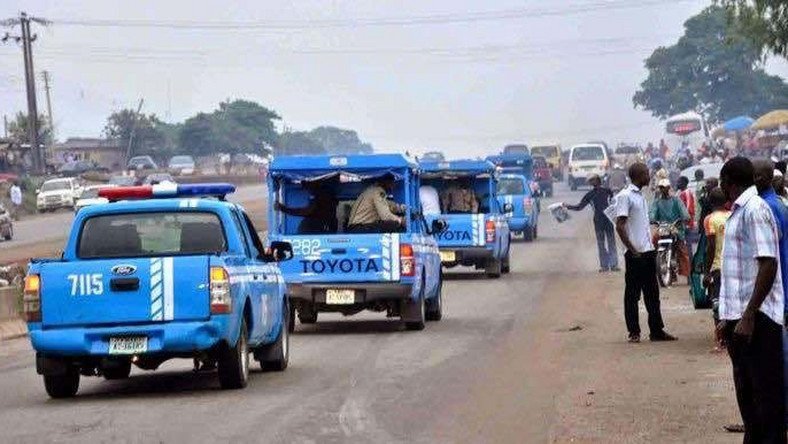
Don’t Chase Erring Motorists, FRSC Cautions Personnel

The Federal Road Safety Corps (FRSC) has cautioned its personnel against chasing erring motorists no matter the traffic offence committed.


The FRSC Corps Public Education Officer, Mr Bisi Kazeem, gave the warning in a telephone interview with the News Agency of Nigeria (NAN) in Lagos.

He was reacting to media reports of an accident on Friday in Ibadan following a chase by FRSC officers.

Kazeem said that the Corps Marshal of the FRSC, Mr Boboye Oyeyemi, frowned at the incident.

“The Corps Marshal, Mr Boboye Oyeyemi, condemned the act as it is our rule that officers should not chase any erring motorist.

“Rather the vehicle number should be taken and the offender will in no time be arrested through our drivers’ licence portal.

“As a paramilitary agency investigation must be carried out and if the officers are found guilty, they will be dealt with accordingly,” Kazeem said.

Advertisement ADVERTORIAL
WP2Social Auto Publish Powered By : XYZScripts.com