No fewer than of 8,916 senior police officers have benefitted from the promotion galore approved by the Police Service Commission (PSC).
The spokesman of the commission, Ikechukwu Ani, said in a statement today, Sunday that the approval followed the meeting of the commission, held in Abuja.
He said the commission approved the promotion of three Commissioners of Police ( CPs) to the next rank of Assistant Inspectors General of Police. They are: Jona Jackson Mava; Olushola Babajide David and Titus Sumba Larmode.
He said that acting appointments of two CPs were also confirmed. The beneficiaries are: Rudolf Echebi Obe, Works and Danladi Lalas, Air Wing.
Ani said that 71 Assistant Commissioners of Police (ACP) were elevated to the next rank of Deputy Commissioners of Police ( DCP ).
They include Ogundare Emmanuel, Alonge Adebowale; Augustina Ogbodo; Ibrahim Abdullahi, Garba Ahmed; Uzuegbu Kanayo, Zubairu Abubakar; Vincent Nwajiofor (works), Polycarp Dibia and Frank Mba, the Force Public Relations Officer.
He said that 102 Chief Superintendents of Police (CSPs) were also promoted to ACPs.
They are Michael Masomene; Egbe Eko Edum; Onyeamu Onyeamu, Dauda Ayuba; Chinedu Ugwu; Moses Gana, Victor Bepeh among others.
He said that the commission also promoted 487 Deputy Superintendents of Police ( DSPs) to Superintendents of Police ( SP).
They include Atiku Ibrahim, Personal Assistant to the acting Inspector General of Polic, Florence Odewo, Ojo Abraham, Mohammed Idris and Abraham Ogedengbe, among others.
Ani said that 1,165 Assistant Superintendents of Polic ( ASPs) were promoted to the next rank of Deputy Superintendents of Police, (DSP).
He said that 7,806 Inspectors were also elevated to the rank of ASPs. They are: Chinemelum Bartholomew, Jeremiah Zumnan, Adewale Ajibuwa and Saviour Etetim, among others.
He said that the promotions would be conveyed to the acting Inspector General of Police on Monday for approval.
Minister of Labour and Productivity, Senator Chris Ngige, has said that the anchor borrowers programme in the agricultural sector, floated by the government of President Muhammadu Buhari has created over eight million new farmers.
Senator Ngige, who briefed senators on the achievements of his ministry during the 2019 budget defence session in Abuja, named three of the jobs created through the programme, including white collar, blue collar and pink collar jobs.
The Minister who was answering questions on what the government is doing to mop up the growing army of unemployed youths in the country told the Senate Committee on Labour and Productivity that there are three categories of jobs which the government has created.
According to him, the government has created millions of jobs in the informal sector including empowering women and artisans.
He said that the Federal Government has also lifted embargo on employment so as to offer more white collar jobs to deserving applicants.
Dr. Ngige however emphasized that job creation in every country is not the sole responsibility of the government.
According to him, the private sector is playing a significant role in the creation of job opportunities for the people even as he called on those in the private sector to take more than passing interest in the creation of job opportunities in the interest of the youths.
Dr. Ngige scored the government high in job creation and empowerment, adding that for the first time, Nigeria has developed a national roadmap on job creation.
He said that the eight million new farmers were doing excellently in rice production in Kano, Katsina, Jigawa, Ebonyi and part of Anambra and other states.
The minister also said that more than one million jobs were created through the social security programme of the government, particularly the N-Power, which he said has about five hundred thousand jobs, conditional cash transfer policy of the government and Tradermoni initiated by the Vice President.
Russia on Saturday warned Washington to stop interfering in the stand-off between Venezuela’s government and the opposition movement, and once again defended its decision to send personnel to the country.
“We recommend that the United States stop threatening Venezuela, smothering its economy and pushing it towards civil war in open violation of international law,” foreign ministry spokeswoman Maria Zakharova said in a statement.
On Friday, a statement from the US National Security Advisor John Bolton warned “actors external to the Western Hemisphere against deploying military assets to Venezuela”.
But Zakharova, in her statement Saturday, said Russia had made it clear it was not sending a military contingent to Venezuela.
Two Russian military planes landed a week ago at the main airport outside Caracas and offloaded equipment and troops, ratcheting up international tensions.
Russian officials insist the troops came to Venezuela as part of a long-standing agreement on military and technical cooperation.
But US President Donald Trump has called on Russia to “get out” of Venezuela, with Russia saying its troops will stay for as long as needed.
The military specialists are apparently helping to fix a malfunctioning Russian S-300 ground-to-air missile system, US envoy Elliott Abrams said Friday.
Russia and Venezuela signed a military cooperation treaty in 2011 involving the sale of Russian weapons to Venezuela.
Earlier Saturday, Rosoboronexport, Russia’s state arms export company said it has opened a training centre for military helicopter pilots in Venezuela, after Moscow flew in troops and equipment.
Venezuela, Russia’s largest client in Latin America, has already received “a significant amount of Russian arms and military technology”, Rosoboronexport spokesman Davydenko added.
The United States and more than 50 other countries recognise Venezuelan opposition leader Juan Guaido as interim president. Russia, along with China, backs President Nicolas Maduro.
All Progressives Congress House of Representatives members-elect from six states in Southwest Nigeria rose from a closed-door meeting at the Ibadan Business School, Bodija, on Friday and pledged to stand by the party’s decision on the House leadership structure.
Led by National Coordinator, Hon. Olubunmi Tunji-Ojo, Federal rep-elect from Ondo State, alongside Southwest Coordinator, Musliudeen Akinremi, the group said that the zone deserved the position of the Speaker.
They said as loyal party members, they had no objections to the party’s position on the selection of the house leadership.
Akinremi, the host lawmaker, who was flanked by James Owolabi (Ifako-Ijaye, Lagos state); Peter Owolabi (Ekiti North constituency 1); and Lanre Edun (Abeokuta South), spoke on behalf of the other lawmakers. He said, “We had a fruitful deliberation during the meeting which lasted over three hours.
“All of us agreed on the party’s supremacy and the need to rally support for the success of President Muhammadu Buhari administration when we are inaugurated in June this year.
“We all agreed to abide by the consensus arrangement of the party in choosing the house leadership. We pledged to protect the interest of the party, especially on the need to make APC stronger ahead of 2023, in Yorubaland,” Akinremi told journalists.
Nigeria Immigration Service boss, Muhammad Babandede
The Ghanaian Immigration Service has arrived Nigeria to beg its Nigerian counterpart to reconsider its stand over the recent deportation of four Ghanaian nationals by Nigerian authority.
Spokesman of the Nigerian Immigration Service, Sunday James, who spoke in Statement in Abuja today, Saturday, said that the Comptroller-General of Ghana Immigration Service, Kwame Takyi accompanied by the Ghana High Commissioner to Nigeria, Rashid Bawa, had already had an audience with the Comptroller-General, Muhammad Babandede.
“The meeting, which held behind closed doors, appeared to be a conciliatory meeting following the deportation of four Ghanaian nationals from Nigeria to Ghana.
“Babandede, when contacted, confirmed the meeting saying details of a further meeting were being worked out by the Ministers of Interior and Foreign Affairs of Nigeria and Ghana.
“There is no cause for alarm as both countries will resolve issues between both countries diplomatically.”
The Nigeria minister of interior, retired Lt.-General, Abdulrahman Dambazau, had authorized the deportation order of the four Ghanaian nationals over alleged violation of provisions of the Immigration Act and Regulations.
Earlier, Nigeria had protested the mass deportation of at least 723 of its citizens between 2018 and February 2019. The Nigerians were accused of illegal stay, cyber-crime, prostitution and other social vices.
Pope Francis on Saturday joined Morocco’s King Mohammed VI in saying Jerusalem should be a “symbol of peaceful coexistence” for Christians, Jews and Muslims, on the first day of a visit to the North African country.
The spiritual leader of the world’s 1.3 billion Catholics was invited by King Mohammed VI for the sake of “interreligious dialogue”, according to Moroccan authorities.
In a joint statement, the two leaders said Jerusalem was “common patrimony of humanity and especially the followers of the three monotheistic religions.”
“The specific multi-religious character, the spiritual dimension and the particular cultural identity of Jerusalem… must be protected and promoted,” they said in the declaration released by the Vatican as the pontiff visited Rabat.
The Moroccan king chairs a committee created by the Organisation of Islamic Cooperation to safeguard and restore Jerusalem’s religious, cultural and architectural heritage.
The joint statement came after US President Donald Trump’s landmark recognition of the disputed city as capital of Israel, which sparked anger across the Muslim world, especially from Palestinians who see Jerusalem as the capital of their future state.
Improving relations with other religions has been a priority for the Argentine pontiff, whose papacy has been marred by clergy facing a wave of child sex abuse allegations.
– Opposing extremism –
Addressing thousands of Moroccans who had braved the rain to attend the welcome ceremony, Francis said it was “essential to oppose fanaticism”.
He stressed the need for “appropriate preparation of future religious guides”, ahead of meeting trainee imams later on Saturday.
Catholics are a tiny minority Morocco, where 99 percent of the population is Muslim. The king is revered across West Africa as “commander of the faithful”.
Speaking at the ceremony at the Tour (or tower) Hassan mosque and nearby mausoleum in Rabat, the monarch also voiced opposition to radicalism.
“That which terrorists have in common is not religion, it’s precisely the ignorance of religion. It’s time that religion is no longer an alibi… for this ignorance, for this intolerance,” he said.
Francis rode to the ceremony in his Popemobile, passing rows of Moroccan and Vatican City flags and an estimated 12,000 well-wishers who packed the esplanade.
Buildings had been repainted, lawns manicured and security stepped up ahead of the first papal visit to Morocco since John Paul II in 1985.
A 17-year-old was arrested after trying to throw himself onto the king’s limousine to seek the monarch’s help, the police said.
Some 130,000 people across Rabat watched the first stage of the pope’s visit, which was beamed onto giant screens, officials said.
After stopping by the royal palace, Francis and Mohammed visited an institute where around 1,300 students are studying to become imams and preachers.
There they heard from a French and a Nigerian student of the institute, which teaches “moderate Islam” and is backed by the king.
In Morocco, where Islam is the state religion, authorities are keen to stress the country’s “religious tolerance” which allows Christians and Jews to worship freely.
But Moroccans are automatically considered Muslim, apart from a minority who are born Jewish. Apostasy is socially frowned upon, and proselytising is a criminal offence.
Those who try to “rock the faith of a Muslim or to convert him to another religion” risk a prison term of up to three years.
After years in the shadows, since 2017 the small number of converts have called openly for the right to live “without persecution” and “without discrimination”.
Around 30,000 to 35,000 Catholics live in Morocco, many of them from sub-Saharan Africa.
The pope finished his Saturday schedule by meeting migrants — including children dressed in colourful hats — at a centre run by Catholic humanitarian organisation Caritas.
“Everyone has the right to a future,” said Francis, who has throughout his papacy highlighted the plight of migrants and refugees.
He criticised “collective expulsions” and said ways for migrants to regularise their status should be encouraged.
Caritas centres in Rabat, Casablanca and Tangiers welcomed 7,551 new arrivals in 2017, according to the charity, helping migrants access services.
The number of people taking the sea route from Morocco to Spain has recently surged as it has become harder for them to pass through Libya.
Rabat claims to have a “humanistic” approach to migration and rejects allegations by rights groups of “brutal arrest campaigns” and “forced displacement” to the country’s southern border.
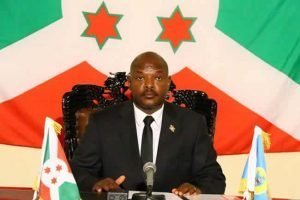
The government of Burundi has declared the British Broadcasting Corporation (BBC) persona none Grata and has taken its radio off the airwaves.
The head of the National Communication Council of the country, Nestor Bankumukunzi, said in a statement today, Friday: “the licence to operate the British Broadcasting Corporation (BBC) Radio Station is withdrawn.”
He stressed: “it is strictly forbidden for any Burundian or foreign journalist located in the national territory of Burundi to directly or indirectly provide information that can be broadcasted by BBC Radio.”
The government said that the decision was taken in light of an investigation published by the BBC in December, which alleged Burundi’s security services were running secret torture and detention sites to silence dissent.
Bankumukunzi said that the documentary had violated the law governing the press in the country.
Voice of America (VOA) is already temporarily banned in Burundi, which rights groups accused of having a repressive government under President Pierre Nkurunziza.
Burundi has been seized by civil unrest since 2015, when Nkurunziza announced his decision to seek a third term in office despite a two-term limit.
His subsequent election victory unleashed a crisis that led to hundreds of people being killed.
In 2018 changes to the constitution were approved that allowed him to potentially remain in power until 2034; he has, however, said he’ll step down in 2020.
In 2018, the government also ordered the UN human rights office to close its bureau in the country, after it published negative reports on the situation in the country.
President of the United States of America, Donald Trump, has threatened to shut the border with Mexico in the coming week, if the southern neighbour failed to prevent migrants from reaching and crossing the frontier.
“If Mexico doesn’t immediately stop ALL illegal immigration coming into the United States (though) our Southern Border, I will be CLOSING the Border, or large sections of the Border, in the coming week,’’ Trump said in a series of tweets.
He said that the U.S. was losing money to Mexico, “especially when you add in drug trafficking etc’’ and therefore “the Border closing would be a good thing!’’
He also slammed Mexico, saying “they just take our money and ‘talk.’’
In his campaign for the 2016 election, Trump attacked Mexico and even accused Mexicans of being rapists and murderers, in what was widely perceived as a racist attack.
However, he has toned down some of his comments towards the country since becoming president and as the sides negotiated a new trade deal to replace NAFTA, along with Canada.
Trump’s latest broadside comes as reports say a new caravan of migrants is working its way up from Central America to the U.S.
Most new arrivals in the U.S. are not Mexicans, but transit through that country.
Mexican President Andres Manuel Lopez Obrador on Thursday conceded there is a problem, even as he pointed out that his country was not responsible for the situation.
Trump has declared a national emergency on the southern border and is using the special powers in this pronouncement to tap funds to vastly expand a wall between the two countries.
The Code of Conduct Tribunal (CCT) has insisted that the suspended Chief Justice of Nigeria, Walter Onnoghen, has case to answer, dismissing his earlier no-case submission.
The Tribunal therefore, asked him to open his defence in respect of the six counts of false and non-declaration of assets preferred against him.
The three-man bench of the CCT led by Danladi Umar, which earlier took arguments of parties today, Friday, held that Onnoghen had case to answer and should enter his defence.
Contrary to the contention by Onnoghen’s legal team that the three witnesses called by the prosecution failed to give credible evidence to prove the case, the CCT held that the admission to the alleged offences by the embattled top judicial officer showed that there was a prima facie case against him.
Danladi Umar said that the defence was only trying to frustrate the punishment of the defendant for the offences.
The Chief Adegboyega Awomolo-led defence team promptly applied for the copy of the ruling to enable them to properly advise the defendant.
The tribunal chairman said it would be ready by Monday.
He adjourned till Monday for the suspended CJN to open his defence.
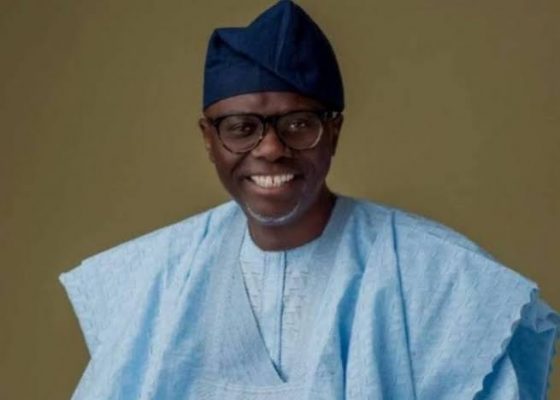
The National Commissioner of the Independent National Electoral Commission (INEC) in charge of Lagos, Ondo and Ogun states, Dr. Adekunle Ogunmola, has advised the Lagos State governor-elect, Babajide Sanwo-Olu to begin his tenure by reconciling with opponents in the last elections.
Dr. Adekunle Ogunmola, who presented the certificate of Return as governor-elect to Sanwo-Olu, asked the governor-elect to be magnanimous in victory, emphasizing the need for him and his deputy, Dr. Obafemi Hamzat to pursue reconciliation and close ranks with their opponents.
He reminded them that tolerance of opposition remains a key foundation of constitutional democracy even as he made it clear to them that electorates need to be served with good governance.
This was even as the state’s Resident Electoral Commissioner (REC), Sam Olumekun, described Sanwo-Olu’s victory as rancor-free and that international observers adjudged the Lagos governorship election as free, fair and credible.
Sam Olumekun however, lamented apathy among voters in some constituencies, with particularly reference to Eti-Osa Constituency 1, which recorded a four per cent voter turnout; a development he described as unprecedented.
He advised political parties, pressure groups, civil society organizations and religious leaders to partner with INEC in sensitizing and mobilizing voters for large turnout in future elections.
“The Lagosians have spoken and they spoke loudly with their votes. The task to move the state forward rests squarely on you and I urge you not to look at what happened during the campaign period. It is time for governance. I pray God be your guardian in this task.”
In his six-minute acceptance speech, Sanwo-Olu promised to lead an all-inclusive government, even as he extended a hand of fellowship to his opponents in the governorship race.
He expressed joy that his victory was not tainted by violence and bloodshed, stressing that the process was free and fair.
The governor-elect paid special tribute to President Muhammadu Buhari and APC National Leader, Asiwaju Bola Ahmed Tinubu, for displaying responsible leadership, which, he said, led to victory of APC in Lagos State.
“Our resolve to lead the state as governor and deputy governor is not about our personal welfare and that of our families, but a determination to build a state that all of us will be proud of. We will not disappoint Lagosians for the confidence reposed in us to lead on their behalf. We promise to lead a government that will be responsible and that will work for the greater majority of residents.
“Whatever happened during the campaign period belongs to the past. It’s time for reconciliation and the state must move forward. Therefore, we will not engage anyone or group based on their political affiliation, ethnic nationality or whether they voted for us or not, we are all Lagosians and we will run a government that will work for all.”
We use cookies on our website to give you the most relevant experience by remembering your preferences and repeat visits. By clicking “Accept”, you consent to the use of ALL the cookies.
This website uses cookies to improve your experience while you navigate through the website. Out of these, the cookies that are categorized as necessary are stored on your browser as they are essential for the working of basic functionalities of the website. We also use third-party cookies that help us analyze and understand how you use this website. These cookies will be stored in your browser only with your consent. You also have the option to opt-out of these cookies. But opting out of some of these cookies may affect your browsing experience.
Necessary cookies are absolutely essential for the website to function properly. This category only includes cookies that ensures basic functionalities and security features of the website. These cookies do not store any personal information.
Any cookies that may not be particularly necessary for the website to function and is used specifically to collect user personal data via analytics, ads, other embedded contents are termed as non-necessary cookies. It is mandatory to procure user consent prior to running these cookies on your website.



 All Progressives Congress House of Representatives members-elect from six states in Southwest Nigeria rose from a closed-door meeting at the Ibadan Business School, Bodija, on Friday and pledged to stand by the party’s decision on the House leadership structure.

 The government of Burundi has declared the British Broadcasting Corporation (BBC) persona none Grata and has taken its radio off the airwaves.

 The National Commissioner of the Independent National Electoral Commission (INEC) in charge of Lagos, Ondo and Ogun states, Dr. Adekunle Ogunmola, has advised the Lagos State governor-elect, Babajide Sanwo-Olu to begin his tenure by reconciling with opponents in the last elections.
