Presidential spokesman, Malam Garba Shehu has made it clear that President Muhammadu Buhari’s comment that anyone who dares to snatch ballot boxes during next weekend’s elections will be doing so for the last time was aimed at ending long history of savagery associated with elections in the country.
Garba Shehu, who spoke to news media today, Tuesday at the presidential villa, Abuja, recalled some past elections in parts of Nigeria, during which innocent voters lost their lives while ballot boxes were being snatched by armed thugs.
“Snatching ballot boxes often entails putting the lives of innocent Nigerians at risk. About 10 years ago, evidence was brought before an election tribunal from one of the states in North Central of the gruesome killing of 26 prospective voters by ballot box snatchers. Their modus operandi is well known. They storm election venues in commando style, overwhelm the law-enforcement agents and seize ballot boxes leaving a trail of death and injury.
“Anyone who dares to put the lives of innocent citizens at risk in their desperation to rig elections, must be prepared for the possibility of losing their own lives because our security agents will certainly not stand by, clap for them and watch them kill and maim.” He said that President Buhari had the safety and security of Nigerians uppermost in mind when he made the comment, and should be praised rather than criticised for issuing this stern warning to potential ballot box snatchers.
Garba Shehu expressed concern about those attacking the president’s comment, and their worry over the fate of anyone caught snatching ballot boxes. “This sounds like members of the opposition, specifically the Peoples Democratic Party, PDP who have perfected plans to rig the elections and to snatch ballot boxes. They can tell that President Buhari is not prepared to tolerate their antics this time around, and they are afraid. They have shown their intent.” The presidential spokesperson noted that no one had anything to fear from the President’s comments if their conscience and intentions are clear. “Let’s just have free and fair elections and no one need worry about anything.”
President Muhammadu Buhari has campaigned in this election exactly as he has governed since 2015, true to the values in which he has believed all his adult life: our security, a diversified economy and an administration free from the scourge of corruption and the sleazy mediocrity it fuels.
Buhari has not changed, and with good reason. Without these attributes, Nigeria will not know peace, prosperity or the rule of law: the only real foundations on which free and fair elections and genuine democracy can thrive. He is stubborn and resolute in defence of these values. This irritates quite a number in the elite, and especially those who, four years ago, thought that they could play the President and use his popularity to continue to steal and cheat the people.
These players have failed. They are angry but they have not yet given up. They have some unlikely allies. Our traditional friends in the US and Europe say they want nothing from Nigeria except free and fair elections. But if you look at what their representatives here actually do rather than what they say, the unmistakeable signs of a quite different agenda are plain to see.
It’s easy to forget where we were, a country falling apart, unable even to protect school girls and where corruption defined every aspect of so much of our public life and private business. Today our media ignore the revelations in a Milan court of how oil companies and fixers stuffed cash in suitcases and the nine-figure bank accounts of former PDP justice ministers and spy chiefs and Presidents. This failure goes beyond individuals or particular political parties, although it is true that our decline accelerated under the PDP after the end of military rule in 1999, a betrayal that Atiku Abubakar and many of his allies hope forlornly to revive and celebrate.
Our young people see only the devastation that has been visited upon them, too young to remember the vibrant rural economy that once gave us the wealth for the schools and hospitals we are only now beginning to revive.
They cannot imagine the rubber plantations where for decades Dunlop and Michelin made tyres for Nigeria and the world. The factories are long since closed. Our palm oil was once a world leader but it is only now, under this government, that we are reviving an industry on life support. We have timber, we have hardworking people – and yet we came to be importing even simple school desks and bedframes. We have so much of what we need for fertilisers, yet government after government preferred to let the plants we had already built go to waste for easy commissions on second-rate imports. Textiles used to employ thousands, and will do again, when we allow our talent fairly to compete on the international stage.
A major crude producer with four refineries that once delivered petroleum products for home consumption and export, Nigeria was reduced to importing petroleum products as if we were Burkina Faso or Bangladesh, not a leading member of OPEC. Our golden goose was starved. The military and the PDP took all the money, they didn’t pay oil partners what we owed and only now, after this government’s efforts, speaking plainly and finding real solutions, can we begin to grow exports that have stagnated for 30 years.
When our private banks collapsed (again) in 2009, the outstanding liabilities were N5.7 trillion. It is hard to imagine a sum of money, so vast, owed by so few, to so many. The list of decay is long. And yet this was the inherited culture of government – ‘to those that have, give more’ – that we have challenged, a culture where every declared reform was in fact a disguise to privatise profit and leave the rest of us with all the risk.
Nigeria has almost as many problems as we have people. But it also has all the resources to meet our needs, if they are properly managed and honestly marshalled. Think where we would be today, but for all the time wasted, the prosperity we would enjoy and the better partner we might have been to our friends in the region and further afield! Buhari is not a populist but he is popular because he is delivering on our most basic needs first.
Do our foreign friends simply not understand what is at stake, or do they actually want us to fail? We know we are not equal partners, and do not pretend to be so. In our own time in government, the US, the UK and the EU let us know subtly, and often not so subtly, what we should be doing on everything from currency reform to fuel deregulation and the import of toothpicks.
They have their own subsidies to protect key strategic interests, their farmers and steel plants, but condemn our own efforts to protect the poorest and most vulnerable from an unregulated market for food, transport and housing, or to create and protect space for new opportunities and innovation to flourish. This is not so much a question of policy, but integrity: we, at least, mean what we say. So many past governments in Nigeria did not.
Our transition has been difficult because Nigeria needs radical change, which we have been delivering, despite ingenious and often disingenuous resistance from vested interests and the business-as-usual brigade. Which begs the question: is there a difference between what suits Nigeria’s real national interest and what suits the interests of the Great Powers? The years of failure were characterised by hypocrisy and betrayal by our leaders, who were in turn easy targets for manipulation – much easier for foreign powers to manage than a government genuinely looking to repair and revive today so that we can build tomorrow. And tomorrow never dies.
I always knew that business-as-usual had a powerful self-interest in resisting CHANGE. I had hoped their tentacles did not stretch so far or so easily beyond our borders, that a good case, well made, would receive a fair hearing. In three and a half years in government, I have learned that decent argument and hard facts face stiff competition from vested interests that seem so easily to sway people who should know better. A convenient lie is not better than an uncomfortable truth.
Nowhere is this more clear than the contrived debate on the conduct of elections. Buhari’s commitment to the democratic process is a matter of record, time and again. All of the work to rebuild our public institutions, restore our values and recalibrate our future prospects can succeed only in a democracy in which the integrity of elections is sacrosanct.
Instead of judging Nigeria by our actions, it seems altogether too easy for foreign partners to be swayed by the expensive words of lobbyists. Riva Levinson has been hired by Bukola Saraki. She was trained by Paul Manafort and Roger Stone (both caught up in the probe into interference by foreign powers in the US elections in 2016) and guide earlier in her career to dictators like Siad Barre, unprincipled warlords like Jonas Savimbi, or frauds like Iraqi exile Ahmed Chalabi, the man who neo-conned the Bush White House. We are meant to be believe that Ms Levinson, like the others who are paid by one of the contestants, wants only to promote a free and fair race. And that it is only a coincidence that this language for hire is identical to what we hear from accredited diplomats!
By omission or commission, it appears it may actually suit our friends, deep down, below the pious words, to see Nigeria a basket case, begging bowl in hand, than the partner we could, should and will prove to be. And we have been here before. At the end of 1984, British diplomats predicted a coup against the then Buhari government, with whom London was quarrelling over everything from apartheid to economic policy (as we knew then, and as it turned out, Buhari was right). Glowing profiles of Ibrahim Babangida were prepared and telegrams of congratulation were drafted. Mrs Thatcher put the project on ice, at least for a few months, but it was not long before foreign powers concluded that their best interests would be served by people who told them everything they wanted to hear on democratisation and reform, but, as they could and should have known, meant precisely none of it. Nigeria lived through the consequences of this systemic deception. We lost so much in the 30 years after 1985, but nothing so precious as the loss of confidence in our values and what we as a nation could be.
In the 19th century, Lord Palmerston, Britain’s Prime Minister and one of the country’s most celebrated diplomats, observed that “nations have no permanent friends or allies, they only have permanent interests.” We have been delivering on a programme to restore the rule of law, to build democracy and strengthen security, to deal with corruption and to create opportunity in a new meritocracy. It is a platform that helps tackle violent extremism, illegal migration, trafficking and financial crime. These are the very issues that are central to the interests of our foreign friends, and we are producing results.
Nigeria will make its choice on Saturday. It has never before had a government that has more clearly demonstrated through words and actions its commitment to transparency and the rule of law, protecting good judges and decent public office-holders from the corruption of their peers. Voters are free to move forwards to a better future or back to the desperate past from which we are now beginning to emerge. Our election commission is independent and has all resources it needs to do its job. We should all be wise to the risks, including partial and premature announcements of unofficial results from unverifiable sources, especially when one party has already declared well in advance that it cannot lose unless there is rigging. There should be no interference from any quarter, including foreign powers who say one thing but do another – exactly the formula that their friends here have employed for years to bring us so close to despair.
*Abba Kyari is Chief of Staff to President Muhammadu Buhari
The ruling All Progressives Congress (APC) has complained that the list of presiding officers in the States and Local Government Areas published by the Independent National Electoral Commission (INEC) prior to the aborted February 16 elections contained names of mostly card carrying members of the opposition Peoples Democratic Party (PDP).
The party, in a communiqué signed by its national chairman, Adams Oshiomhole after an emergency meeting of it caucus in Abuja today, Monday, asked the electoral umpire to take steps to correct this anomaly to ensure fairness and credibility of the electoral process.
The Caucus expressed curiosity over the fact that certain leaders of the PDP had full knowledge of the plan to postpone the elections hours before INEC made the announcement.
The Caucus stressed the need for INEC to demonstrate its independence and neutrality beyond doubts in all of its activities before, during and after the period of elections as rescheduled.
It expressed deep regrets over the unfortunate death of some of the party’s members due to stampede as a result of overwhelming crowds during the party’s presidential campaigns in some states of the federation.
“Notwithstanding the disappointment over the postponement, the Caucus urged all APC members across the country to rise above this temporary setback,” the communique said.
The Caucus called on security agencies to ensure that those involved in violence, ballot box snatching, and falsification of election results faced the full weight of the law.
It charged members of the party to recommit themselves to working with re-doubled efforts for the victory of all its candidates in the February 23 and March 9 rescheduled dates for the elections.
It advised all APC members to immediately commence campaigns in line with the provisions of Section 99 (1) of the Electoral Act, which stated clearly that campaigns should stop 24 hours to the elections.
“Our party will therefore abide by the provisions of the law.”
The APC national caucus which is a statutory organ of the party, was chaired by President Muhammadu Buhari and had the Vice President and all the party’s former and serving governors as members.
Its membership also includes the party’s serving governors and members of its National Working Committee (NWC), among others.
Japanese carmaker, Honda is set to announce the closure of its only British car plant in 2022 with the loss of 3,500 jobs, a lawmaker said, in the latest blow to the UK car industry as Brexit approaches.
Honda built just over 160,000 vehicles at its Swindon factory in Southern England in 2018, where it makes the Civic and CV-R models. This accounted for a little more than 10 per cent of Britain’s total output of 1.52 million cars.
But it has struggled in Europe in recent years, and the industry faces a number of challenges including declining diesel demand and tougher regulations alongside the uncertainty over Britain’s departure from the EU, due in March.
A Conservative lawmaker for Swindon, who voted for Brexit in 2016, Justin Tomlinson, said that he had met with the business minister and representatives from Honda, who had confirmed the plans.
“They were due to make a statement tomorrow, it’s obviously broken early,” Tomlinson, lawmaker for North Swindon, said.
“This is not Brexit-related. It is a reflection of the global market. They are seeking to consolidate production in Japan.”
Honda said that it would not be providing any comment at this stage.
The Independent National Electoral Commission (INEC) has approved the resumption of political campaigns ahead of the rescheduled presidential and National Assembly elections slated for February 23.
A statement today, Monday by the National Commissioner and Chairman, Information and Voter Education Committee, Festus Okoye, said that the commission took the decision after reviewing its preparations for the elections, as well as consultations with political parties.
The campaigns are expected to end officially by midnight on Thursday, February 21, 2019.
“After consultations with political parties, the Commission has approved that campaigns by parties and candidates can resume forthwith and end by midnight of Thursday, 21st February, 2019.
“Media organisations are at liberty to accept, publish, broadcast and circulate campaign materials up till midnight of Thursday, 21st February, 2019. Political parties and their candidates are enjoined to abide by the extant laws governing campaigns.”
The commission also thanked Nigerians for their understanding regarding the rescheduling of the elections, just as it appealed to stakeholders to be “dispassionate and circumspect in their comments”.
“The Commission is focusing on the elections to be held on 23rd February and 9th March to ensure that they are free, fair and credible. We urge all Nigerians to participate fully in the elections, notwithstanding the disappointment,” the statement added.
A press conference on the updated preparations of the commission is scheduled for Tuesday, February 19, 2019 at the International Conference Centre in Abuja at 3pm.
National chairman of the ruling All Progressives Congress (APC), Adams Oshiohole has asked the chairman of the Independent National Election Commission (INEC), Professor Mahmood Yakubu to investigate state commissioners of the Commission over allegation making the round that they (the commissioners have been bribed with one million US Dollars to compromise the postponed elections.
Speaking at an emergency meeting of the APC Stakeholders at the party’s headquarters in Abuja today, Monday, Oshiomhole asked the INEC chairman “to move around state commissioners who have been compromised and become institutionalized and which may compromise the outcome of the results.”
The party chairman, who described as rubbish, INEC’s excuse about Nigeria’s population and challenges of moving materials around, insisted that INEC knew that the election was not going to hold and leaked the information to the main opposition party, adding that all early warning indicators showed that INEC had something up it sleeves.
He alleged that INEC is working with anti-democratic elements to frustrate free and fair elections.
Oshiomhole argued that INEC has no right to stop campaigns, insisting that voters need to be reminded as this might result in low voters turn out. He hinted that they are ready to go to court.
He made it clear that his party is going to write to INEC to explain if the card readers have been reconfigured and what is the guarantee that it would not fail, and why is it deploying only 4,000 card readers, instead of expected 176,000 card readers, with spares.
Oshimhole said that APC would not want staggered elections but elections that are conducted simultaneously across all pulling units.
He said that INEC needs to assure Nigerians that the samples of sensitive materials already in circulation will not compromise the process.
“We must not allow this shock affect our voters. We need to renew campaign and reassure the voters especially APC voters.”
The APC boss called on President Buhari to ensure that those who were involve in what he called ‘national sabotage’ are pushed, according to the rule of law.
“I am going to warn anybody who thinks, he has enough influence in his locality to lead a body of thugs to snatch boxes or to disturb the voting system that he would do it at the expense of his own life.”
These were the words of President Muhammadu Buhari at the emergency meeting of the All Progressives Congress (APC) Caucus in Abuja today, Monday, to review the postponement of the elections last week by the Independent National Electoral Commission (INEC).
President Buhari emphasized that he has ordered security agents to deal ruthlessly with party thugs that try to snatch ballot boxes, saying: “I do not expect anybody to make any disturbance. I have briefed the law enforcement agencies and the military to identify hot spots and flash points; they should be prepared to move. They too would have made their own arrangement as possible and resources provided as much as the country can afford it.
“And anybody who decides to snatch ballot boxes or lead thugs to disturb it (elections) , maybe that would be the last unlawful action he would take. I have directed the police and the military to be ruthless.
“We are not going to be blamed that we want to rig elections. I want Nigerians to be respected; let them vote whoever they want across the party. I’m not afraid …I have gone round all the 36 states and Abuja. I think I have gotten enough support across the country.”
Buhari expressed confidence in the support he and his ruling party had gathered across the country to ensure victory at polls at any time.
The President advised party agents to watch out for the party interests at the polling units in the Saturday rescheduled election, even as he directed security agencies to identify hot spots and be ready to move should they suspect any attempts to cause problems.
He insisted that there are no explanations for what the country went through in terms of the election postponement, adding: “I was told about the decision of INEC at quarter to 5am in the morning of the elections.
“INEC had all the time and resources, didn’t have to wait six hours to the elections to announced postponement.”Definitely, INEC must explain to Nigerians what happened, the constitution and the law protect INEC but they must not take us for granted.
“If we had failed to provide all what INEC wanted, then we would have been held responsible
“So at least, after the elections, we will have to go into details to find out what happened.”
Members of the Caucus observed a minute silence in honour of dead supporters at campaign venues across the country.
The meeting, which discussed prevailing national issues, following Saturday’s postponement of the Presidential and National Assembly elections was attended by members of the national working committee, governors, governorship candidates, ministers and other party and government functionaries.
The Kogi State Deputy Governor, Chief Simon Achuba, has announced the withdrawal of his police orderly and stoppage of impress (money for the upkeep of his office by his boss, Governor Yahaya Bello.
The deputy governor, who spoke to news men today in Lokoja, the state capital said that his security details were ordered to report to Government House on the 15 of this month for briefing at the time he was to travel home.
He said that when he got to the Government House, the Aid-De-Camp (ADC) to the Governor took them to SARS office to make statement, adding that they accused his ordely of gunrunning which he denied.
“As I’m speaking now they are under detention in Government House. I informed the Commissioner of Police on the situation but till now he has refused to take any action.
“I’m a member of the All Progressives Congress. I reported to the national leader of the APC. My impress has been stopped for no any reason by the Governor, Alhaji Yahaya Bello.
“I live as deputy governor in the house without security, I travelled home without police, my life is in danger.”
He said that his light and water has been caught off by the state government and he presently lives in darkness.
Achuba then called on the Inspector General of Police to call the state Commissioner of Police to order so that his security details can be restored back.
When the Commissioner of Police was contacted, he confirmed the story, saying the deputy governor contacted his office.
He promised to make arrangement for two police officers to be posted to his house, assuring that the issue will soon be resolved.
A popular American singer and actress, Jennifer Lopez has offered her boyfriend, Alex Rodriguez a luxury $24,000 (about N86 Million) watch for Valentine’s Day.
Lopez bought the blue and silver coloured timepiece, made by exclusive watchmakers Audemars Piguet, for her former baseball player beau to celebrate the most romantic day of the year.
Alex shared a snap of the gift on his Instagram Story, and wrote: “Thank you baby,” along with a heart eyes emoji.”
The Second Act star posted a series of sweet family snaps to commemorate Valentine’s Day, featuring Jennifer’s ten-year-old twins with Marc Anthony – Emme and Max – smiling next to Alex’s daughters with ex-wife Cynthia Scurtis, Natasha, 14, and Ella, 10.
“We’ll be here… So much love to give today and everyday!!! Happy Valentine’s Day everyone,’ she wrote in the caption alongside a photo of her and her beau relaxing in bed.
Jennifer has yet to reveal what the 43-year-old got her for the big day, but she did post a sweet video of her and Alex singing along in the car to a song from the 1987 movie, Dirty Dancing.
With the former sports star’s daughters in the back, the couple belted out the lyrics to (I’ve Had) The Time of My Life by Bill Medley and Jennifer Warnes while driving.
The pair, who recently celebrated their two-year anniversary, also had another reason to pop open the champagne, as it was reported they had bought a beachfront home in Malibu.
According to HotNewHipHop.com, Jennifer and Alex splashed out more than $6 million (£4.6 million) on the luxury home that was previously owned by Entourage actor Jeremy Piven.
The four bedrooms and four bathroom property features panoramic views of the coastline, and is spread over more than 4,404 square feet.
British Midland Regional Limited, which operates as Flybmi, has collapsed as a result of what is believed to be higher fuel costs and uncertainty caused by Britain’s upcoming departure from the European Union.
Just as the company has filed for administration, a British version of bankruptcy, thousands of passengers have been stranded throughout Europe
The airline said on its website yesterday, Saturday: “current trading and future prospects have also been seriously affected by the uncertainty created by the Brexit process, which has led to our inability to secure valuable flying contracts in Europe and a lack of confidence around bmi’s ability to continue flying between destinations in Europe.”
The airline thanked workers for their dedication and said “it is with a heavy heart that we have made this unavoidable announcement.”
The airline operated 17 jets on routes to 25 European cities. It employed 376 people in Britain, Germany, Sweden and Belgium and says it carried 522,000 passengers on 29,000 flights last year.
Pilots union chief Brian Strutton said the airline’s collapse came with no warning and “is devastating news for all employees.”
“Our immediate steps will be to support Flybmi pilots and explore with the directors and administrators whether their jobs can be saved.”
Britain is scheduled to leave the EU on March 29 but there are serious doubts about whether the British Parliament will approval the Brexit withdrawal deal that Prime Minister Theresa May negotiated with the EU. That is making it more difficult for businesses to plan for the separation.
Flybmi said all flights will be cancelled and advised passengers to seek refunds from credit card issuers, travel agents or travel insurance companies.
Passengers were told not to travel to the airport Sunday unless they had made arrangements directly with other airlines. Flybmi said it would not be rescheduling passengers on other airlines’ flights.
Many passengers were left stranded by the shutdown. Hannah Price told Sky News she was planning to return Monday to Britain from Brussels on Flybmi.
“Unfortunately for me, I was supposed to be flying home with them in less than 48 hours to Bristol. I don’t think that’s going to happen now,” she said.
The collapse will have a major impact on the Northern Ireland city of Derry, also known as Londonderry, which will lose its only air connection to London. Officials at the City of Derry Airport said they were urgently seeking a new carrier to keep the link open.
Flybmi was still seeking customers up until the day before its collapse, urging people in a tweet to book flights to Germany for a winter sports holiday.
We use cookies on our website to give you the most relevant experience by remembering your preferences and repeat visits. By clicking “Accept”, you consent to the use of ALL the cookies.
This website uses cookies to improve your experience while you navigate through the website. Out of these, the cookies that are categorized as necessary are stored on your browser as they are essential for the working of basic functionalities of the website. We also use third-party cookies that help us analyze and understand how you use this website. These cookies will be stored in your browser only with your consent. You also have the option to opt-out of these cookies. But opting out of some of these cookies may affect your browsing experience.
Necessary cookies are absolutely essential for the website to function properly. This category only includes cookies that ensures basic functionalities and security features of the website. These cookies do not store any personal information.
Any cookies that may not be particularly necessary for the website to function and is used specifically to collect user personal data via analytics, ads, other embedded contents are termed as non-necessary cookies. It is mandatory to procure user consent prior to running these cookies on your website.



 The ruling All Progressives Congress (APC) has complained that the list of presiding officers in the States and Local Government Areas published by the Independent National Electoral Commission (INEC) prior to the aborted February 16 elections contained names of mostly card carrying members of the opposition Peoples Democratic Party (PDP).
 Japanese carmaker, Honda is set to announce the closure of its only British car plant in 2022 with the loss of 3,500 jobs, a lawmaker said, in the latest blow to the UK car industry as Brexit approaches.
 National chairman of the ruling All Progressives Congress (APC), Adams Oshiohole has asked the chairman of the Independent National Election Commission (INEC), Professor Mahmood Yakubu to investigate state commissioners of the Commission over allegation making the round that they (the commissioners have been bribed with one million US Dollars to compromise the postponed elections.
 “I am going to warn anybody who thinks, he has enough influence in his locality to lead a body of thugs to snatch boxes or to disturb the voting system that he would do it at the expense of his own life.”
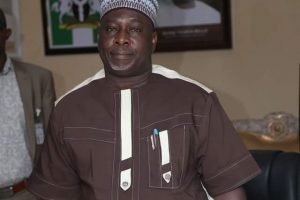 The Kogi State Deputy Governor, Chief Simon Achuba, has announced the withdrawal of his police orderly and stoppage of impress (money for the upkeep of his office by his boss, Governor Yahaya Bello.
 A popular American singer and actress, Jennifer Lopez has offered her boyfriend, Alex Rodriguez a luxury $24,000 (about N86 Million) watch for Valentine’s Day.
 British Midland Regional Limited, which operates as Flybmi, has collapsed as a result of what is believed to be higher fuel costs and uncertainty caused by Britain’s upcoming departure from the European Union.

Tomorrow Never Dies – By Abba Kyari
Buhari has not changed, and with good reason. Without these attributes, Nigeria will not know peace, prosperity or the rule of law: the only real foundations on which free and fair elections and genuine democracy can thrive. He is stubborn and resolute in defence of these values. This irritates quite a number in the elite, and especially those who, four years ago, thought that they could play the President and use his popularity to continue to steal and cheat the people.
These players have failed. They are angry but they have not yet given up. They have some unlikely allies. Our traditional friends in the US and Europe say they want nothing from Nigeria except free and fair elections. But if you look at what their representatives here actually do rather than what they say, the unmistakeable signs of a quite different agenda are plain to see.
It’s easy to forget where we were, a country falling apart, unable even to protect school girls and where corruption defined every aspect of so much of our public life and private business. Today our media ignore the revelations in a Milan court of how oil companies and fixers stuffed cash in suitcases and the nine-figure bank accounts of former PDP justice ministers and spy chiefs and Presidents. This failure goes beyond individuals or particular political parties, although it is true that our decline accelerated under the PDP after the end of military rule in 1999, a betrayal that Atiku Abubakar and many of his allies hope forlornly to revive and celebrate.
Our young people see only the devastation that has been visited upon them, too young to remember the vibrant rural economy that once gave us the wealth for the schools and hospitals we are only now beginning to revive.
They cannot imagine the rubber plantations where for decades Dunlop and Michelin made tyres for Nigeria and the world. The factories are long since closed. Our palm oil was once a world leader but it is only now, under this government, that we are reviving an industry on life support. We have timber, we have hardworking people – and yet we came to be importing even simple school desks and bedframes. We have so much of what we need for fertilisers, yet government after government preferred to let the plants we had already built go to waste for easy commissions on second-rate imports. Textiles used to employ thousands, and will do again, when we allow our talent fairly to compete on the international stage.
A major crude producer with four refineries that once delivered petroleum products for home consumption and export, Nigeria was reduced to importing petroleum products as if we were Burkina Faso or Bangladesh, not a leading member of OPEC. Our golden goose was starved. The military and the PDP took all the money, they didn’t pay oil partners what we owed and only now, after this government’s efforts, speaking plainly and finding real solutions, can we begin to grow exports that have stagnated for 30 years.
When our private banks collapsed (again) in 2009, the outstanding liabilities were N5.7 trillion. It is hard to imagine a sum of money, so vast, owed by so few, to so many. The list of decay is long. And yet this was the inherited culture of government – ‘to those that have, give more’ – that we have challenged, a culture where every declared reform was in fact a disguise to privatise profit and leave the rest of us with all the risk.
Nigeria has almost as many problems as we have people. But it also has all the resources to meet our needs, if they are properly managed and honestly marshalled. Think where we would be today, but for all the time wasted, the prosperity we would enjoy and the better partner we might have been to our friends in the region and further afield! Buhari is not a populist but he is popular because he is delivering on our most basic needs first.
Do our foreign friends simply not understand what is at stake, or do they actually want us to fail? We know we are not equal partners, and do not pretend to be so. In our own time in government, the US, the UK and the EU let us know subtly, and often not so subtly, what we should be doing on everything from currency reform to fuel deregulation and the import of toothpicks.
They have their own subsidies to protect key strategic interests, their farmers and steel plants, but condemn our own efforts to protect the poorest and most vulnerable from an unregulated market for food, transport and housing, or to create and protect space for new opportunities and innovation to flourish. This is not so much a question of policy, but integrity: we, at least, mean what we say. So many past governments in Nigeria did not.
Our transition has been difficult because Nigeria needs radical change, which we have been delivering, despite ingenious and often disingenuous resistance from vested interests and the business-as-usual brigade. Which begs the question: is there a difference between what suits Nigeria’s real national interest and what suits the interests of the Great Powers? The years of failure were characterised by hypocrisy and betrayal by our leaders, who were in turn easy targets for manipulation – much easier for foreign powers to manage than a government genuinely looking to repair and revive today so that we can build tomorrow. And tomorrow never dies.
I always knew that business-as-usual had a powerful self-interest in resisting CHANGE. I had hoped their tentacles did not stretch so far or so easily beyond our borders, that a good case, well made, would receive a fair hearing. In three and a half years in government, I have learned that decent argument and hard facts face stiff competition from vested interests that seem so easily to sway people who should know better. A convenient lie is not better than an uncomfortable truth.
Nowhere is this more clear than the contrived debate on the conduct of elections. Buhari’s commitment to the democratic process is a matter of record, time and again. All of the work to rebuild our public institutions, restore our values and recalibrate our future prospects can succeed only in a democracy in which the integrity of elections is sacrosanct.
Instead of judging Nigeria by our actions, it seems altogether too easy for foreign partners to be swayed by the expensive words of lobbyists. Riva Levinson has been hired by Bukola Saraki. She was trained by Paul Manafort and Roger Stone (both caught up in the probe into interference by foreign powers in the US elections in 2016) and guide earlier in her career to dictators like Siad Barre, unprincipled warlords like Jonas Savimbi, or frauds like Iraqi exile Ahmed Chalabi, the man who neo-conned the Bush White House. We are meant to be believe that Ms Levinson, like the others who are paid by one of the contestants, wants only to promote a free and fair race. And that it is only a coincidence that this language for hire is identical to what we hear from accredited diplomats!
By omission or commission, it appears it may actually suit our friends, deep down, below the pious words, to see Nigeria a basket case, begging bowl in hand, than the partner we could, should and will prove to be. And we have been here before. At the end of 1984, British diplomats predicted a coup against the then Buhari government, with whom London was quarrelling over everything from apartheid to economic policy (as we knew then, and as it turned out, Buhari was right). Glowing profiles of Ibrahim Babangida were prepared and telegrams of congratulation were drafted. Mrs Thatcher put the project on ice, at least for a few months, but it was not long before foreign powers concluded that their best interests would be served by people who told them everything they wanted to hear on democratisation and reform, but, as they could and should have known, meant precisely none of it. Nigeria lived through the consequences of this systemic deception. We lost so much in the 30 years after 1985, but nothing so precious as the loss of confidence in our values and what we as a nation could be.
In the 19th century, Lord Palmerston, Britain’s Prime Minister and one of the country’s most celebrated diplomats, observed that “nations have no permanent friends or allies, they only have permanent interests.” We have been delivering on a programme to restore the rule of law, to build democracy and strengthen security, to deal with corruption and to create opportunity in a new meritocracy. It is a platform that helps tackle violent extremism, illegal migration, trafficking and financial crime. These are the very issues that are central to the interests of our foreign friends, and we are producing results.
Nigeria will make its choice on Saturday. It has never before had a government that has more clearly demonstrated through words and actions its commitment to transparency and the rule of law, protecting good judges and decent public office-holders from the corruption of their peers. Voters are free to move forwards to a better future or back to the desperate past from which we are now beginning to emerge. Our election commission is independent and has all resources it needs to do its job. We should all be wise to the risks, including partial and premature announcements of unofficial results from unverifiable sources, especially when one party has already declared well in advance that it cannot lose unless there is rigging. There should be no interference from any quarter, including foreign powers who say one thing but do another – exactly the formula that their friends here have employed for years to bring us so close to despair.
*Abba Kyari is Chief of Staff to President Muhammadu Buhari
The article was first published by Herald