A group, Buhari Media Organisation (BMO), has described as embarrassing,the admittance by the Chief Judge of Nigeria, Justice Walter Onnoghen that he forgot to declare his assets at certain period during his public service. In a statement signed by the Chairman, Niyi Akinsiju and Cassidy Madueke, the Secretary, the group said that it is embarrassing for Justice Onnoghen to have admitted that he made a mistake, adding that a man who should know better than any law officer in the country, should appreciate that ignorance is not an excuse in law. It stressed thathat in saner climes, a chief justice of the country who had previously sat and oversaw cases of other public officials where they failed to declare their assets would have resigned honourably so as not to shame his exalted seat. “We are aware of the sentiments from various quarters on the arraignment of the CJN, but we are equally worried that there is a mindset in the country that sets certain people to be special. The Chief Justice of the Federation leads Nigerian’s third arm of government responsible for the application of the law, he of all people must lead by example, and thus where there is suspicion as to his conduct, it is only right that the law take its course with him.” “It is important to remind Nigerians that this Chief Justice is the same person who had, in a statement credited to him, said that wherever Nigerians saw corruption among Judges they should call it out. As long as he has nothing to hide then the law should be allowed to take its course, and this should be the mindset of all Nigerians.” “In fact, Justice Onnoghen is reported to have admitted to have forgotten to declare some of his assets. “This same Chief Justice has sat down on cases bearing on the declaration of assets by public officials, he had declared some wanting and set others free – like he did to the Senate President – so what is there if he subjects himself to the same procedure he has subjected others to. Moreover, for the sanctity of the profession and the respect for the judiciary, we would have expected that the Chief Justice step down after admitting to making such a profound mistake that casts doubt on his integrity and honesty.” The group said that the President Buhari administration was intent and determined to build stronger institutions and would not interfere in the matter. “The President does not have a hand in the matter, and would not ask that it should be withdrawn, neither would he endorse it. President Buhari believes that when institutions are tested and left to work independently, they are strengthened. And this is his position. “President Buhari at every point in time he lost an election, before his eventual victory in 2015, submitted himself to the courts and whatever they decided.” The group called on Nigerians to attune their minds to supporting the President’s anti-corruption war, and support institutions that were set up to purge the country of corruption in any form, especially in the public life. “Nigerians must not look at the anti-corruption fight from a partisan point of view but from one that seeks national development and restoring sanity to the country. “President Buhari has the political will to fight corruption and must be given all necessary support. He is the only President who has taken on the three arms of government where corruption was alleged, including his own Secretary to the Government of the Federation (SGF), who he did not spare but fired, and who is under investigation by the EFCC.” The group noted that the fact that top Nigerians were being investigated and prosecuted showed that the President was not sparing anyone, whether in high or in low places.
The new Inspector General of Police, AbubakarAdamu Mohammed has returned Frank Uba as the new Spokesman for the Nigeria Police Force. Mba, who was the former Police spokes person at national and Lagos State Command, is taking over from MoshoodJimoh, an acting Deputy Commissioner of Police who is being redeployed to other national assignment. A statement from the Force headquarters said that until his appointment, Frank was working at the Special Fraud Unit (SFU), Ikoyi- Lagos. The posting is with immediate effect. Frank Mba, an Assistant Commissioner of Police and a Lawyer, is an alumnus of the University of Lagos where he studied Law. He also has a Masters Degree in Law from the University of Dundee, Scotland- United Kingdom. A product of the Nigeria Police Academy, Kano where he had his initial police trainings, Frank is a graduate of the prestigious FBI National Academy, Quantico- USA. He also holds a Certificate in National and International Security from the Harvard University, USA. The statement said that Frank is an experienced communicator and image maker, saying that the new Inspector General of Police has charged him to bring his wealth of experience to bear in revamping the image of the Force, improving the relationship between the citizens and the police, bridging existing communication gap between the police and its stakeholders, and assisting the IGP in realizing his Mission and Vision for the Force and the nation. A passionate and versatile police officer who has worked in multiple police units and departments across the country, Frank has attended some of the finest Law Enforcement trainings, both within and outside Nigeria. These include:Countering Violent Extremism and Police Leadership Course at the International Law Enforcement Academy (ILEA), Roswell, New Mexico, USA (2018); Strategic Leadership and Command Course, Police Staff College, Jos (2017); Crisis and Disaster Management Course, Israel (2013); Managing the Media in Crisis Situations, School of Media and Communications, Pan Atlantic University, Lagos (2013); US-sponsored International Visitor Leadership Program, with special focus on International Crime Issues, Washington DC (2010); General Criminal Investigation Course at the International Law Enforcement Academy (ILEA), Botswana (2009); Middle Management Course on Global Peace Operations in Vicenza, Italy (2008); amongst others. He was a member of the Nigeria Police Contingent to the United Nations Peace-Keeping Mission in Liberia between 2006 and 2007, where he distinguished himself through a combination of hard work, professionalism, and discipline, thereby earning himself the prestigious UN Medal. He has since assumed duty as the Force Public Relations Officer (FPRO), Force Headquarters, Abuja.
Late Ambassador Ibrahim Isah | Photo credit: DailyPost
Nigeria’s Ambassador to Cote d’Ivoire, Ambassador Ibrahim Isah, was said to have slumped and died at the Polyclinique Internationale Sainte Anne-Marie (PISAM), where he had gone to see his doctors yesterday, Tuesday at about 7pm. Sources from the Nigerian Embassy at Deux Plateau, Abidjan, could not say the exact ailment that led to his death, but the Interim Chairman of Nigerian Community in Cote d’Ivoire, Musudi Akanfe, said that the entire embassy had been thrown into mourning over the death. “We are already in a mourning mood, we received this sad news with rude shock, we pray God to console the family and the Nigerian community,’’ he said. Speaking to NAN by telephone, the former President, Nigerian Youths in Cote d’Ivoire, Mr Bright Moses, described the death as `shocking and painful’. “He was a very lively and proactive diplomat, he listened to the plight of the Nigerian people in this country, this is very shocking,’’ he said. Isah, born in 1959 in Niger, held a bachelor’s degree in International Studies from Ahmadu Bello University, Zaria, and a Master’s degree in International Law and Diplomacy from the University of Lagos. He joined the Foreign Service in 1983 and was posted to Cote D’Ivoire in 2017. He served in different capacities in the ministry before his death.
The Nigerian National Petroleum Corporation (NNPC) has announced that the country earned 640.35 million dollars from the export of crude oil and gas for the month of October, 2018. The corporation, in its monthly Financial and Operation report for October 2018, said that the total export receipt of 640.35 million dollars recorded in October 2018 was higher than the 527.70 million dollars logged in September 2018. It added that the receipt showed 450.44 million dollars accrued from crude oil sale with gas and miscellaneous receipts standing at 173.92 million and 15.99 million dollars respectively. In the downstream sector, the report revealed that the Petroleum Products Marketing Company (PPMC), a downstream subsidiary of NNPC, posted a receipt of ₦231.33 billion from sales of white products in the month of October 2018 compared with ₦150.25 billion sold in September 2018. “Total revenues generated from the sales of white products for the period October 2017 to October 2018 stand at ₦2.684 trillion, where PMS contributed about 88.32 per cent of the total sales value of ₦2.371 trillion “To ensure continuous increase of PMS supply and effective distribution across the country, a total of 1.66 billion litres of petrol, translating to 55.50 milion liters/day, were supplied for the month under review,’’ it said The report further noted that out of the 1,066.88 million standard cubic feet of gas per day (mmscfd) of gas supplied to the domestic market in October 2018, about 627.33 mmscfd of gas representing 58.81 per cent was supplied to gas-fired power plants to generate an average power of about 2,349MW. This, it said when compared with the September 2018, was an average of 615 mmscfd supplied to generate 2,303MW. “The balance of 439.35 mmscfd or 41.19 per cent was supplied to other industries.’’ It said Similarly, the reported noted that for the period of October 2017 to October 2018 an average of 1,188.58 mmscfd of gas was supplied to the domestic market, comprising of an average of 744.06 mmscfd or (62.60 per cent) as gas supply to the power plants and 444.52 mmscfd or (37.40 per cent) as gas supply to industries. It added that about 3,096.18 mmscfd or 89.58 per cent of the export gas was sent to Nigerian Liquefied Natural Gas Company (NLNG) Bonny. On Pipeline vandalism, the Corporation raised an alarm on the increasing incidents of pipeline vandalism across the country. It said that in October its pipeline network suffered a 42.9 per cent increase in the incidents of vandalism compared to the previous month during the year. Giving a breakdown of the incidents of breaches in its infrastructure it said the corporation recorded 219 pipeline vandalised points in the month under review, compared to 125 incidents it suffered in September of the same year. It revealed that among the breaches, four vandalised pipeline points failed to be welded and one point was ruptured. The report stated that cases of vandalism of pipeline facilities were high along Ibadan-Ilorin and Aba-Enugu axis, accounting for 81 (40%) and 39 (18%) vandalized points respectively. It added that in spite the challenge posed by pipeline vandalism, the NNPC kept an eye on Premium Motor Spirit (PMS) stock level to ensure zero fuel queue across the nation.
It should be agreed that there are different ways of apprehending and describing the situation in Nigeria as the country draws near “Election 2019”, the general elections beginning on February 16, 2019. But I have chosen, naturally and unsurprisingly, an angle and a perspective informed by the burning interests of the working, toiling and poor masses of the country. This angle and this perspective, I believe, coincide with and describe the general position of the Nigerian Left. By “general position”, I mean an ideological – political position to which every tendency of the movement which considers itself both Left and Nigerian ought to subscribe. And, finally, and for the avoidance of doubt, readers are reminded that by the Nigerian Left I mean, in this historical period, the aggregate of Nigerian Marxists, socialists and radical democrats—where “radical” carries its original meaning, “from the roots”. The Nigerian situation as we approach “Elections 2019” can be sketched around five issues. Three of these are “problems of Nigeria” as summarized in my last published piece, Nigeria 2019: Hoping for another reprieve? (January 3, 2019). The fourth issue may be called the “power of incumbency”. The fifth is the problem of the Nigerian Left. The problem of the Nigerian Left forces itself into this exercise on account of its critical importance. This importance can be expressed as a proposition: Both the survival of Nigeria as a united country, de facto and de jure, and the concrete positive transformation of quality of life in it depend, in the immediate future, on what the Nigerian Left does—within and outside electoral politics. The Nigerian Left? Yes, the Nigerian Left—its current fractiousness and factionalism notwithstanding. There is simply no other historically–determined sociopolitical force to perform this task. In the article cited above, I summarized the “three problems of Nigeria” as: “Massive class exploitation and state robbery resulting in grinding mass poverty and misery; elitist understanding and practice of “democracy”, moral degeneracy and bankrupt governance ideas on the part of Nigeria’s ruling class; and the national question whose enormity and complexity not only the ruling class but also many progressives and liberals—and even Leftists—do not appreciate”. These three problems will, below, be taken up and briefly expanded. This will be followed by brief statements on the other two issues. All segments and factions of Nigeria’s ruling class—directly and through their ideologues—acknowledge the existence of “grinding mass poverty and misery”. It is simply impossible to ignore: they see it and breathe it on their way to and from their “paradise on earth”. But beyond corruption they blame the situation on the incompetence, mismanagement, insensitivity, neglect, selfishness and shortsightedness of rival political groups. They completely ignore class exploitation and reduce “state robbery” to only corruption. But class exploitation is rooted in a political economy—capitalism—whose most effective lubricant is corruption. And state robbery goes beyond “high-profile stealing” by state functionaries, which is punishable by the “law of the state” to what can be described as “armed robbery by the state,” itself. Armed robbery by the state? Yes, armed robbery by the state. For when the state goes beyond its development plans, beyond its budgets, beyond its propaganda and starts manipulating “discretionary powers” to seize what belongs to the working and toiling masses and goes beyond lies, blackmail and bribery, and begins to threaten protests with “law and order” measures—of which it has legal monopoly—what do you call this? Nigeria’s ruling class, as a class, cares little about democracy or its history. The doctrine to which it subscribes says that “democracy” only came to Nigeria 20 years ago, in 1999, that the first period of its young life, (1999-2015), was administered by the People’s Democratic Party (PDP), that PDP was succeeded in 2015 by the All Progressives Congress (APC). The legacy of that first period is a dominant subject of the present campaign. The manner of the 2015 transfer of power, though an important subject, seems to have been stepped down by mutual consent, as a subject, by all factions of the ruling class. Pursuing it will hurt all factions. Their theory and history of party organization start and end with PDP, APC, other ruling class parties of the Fourth Republic and the inspirations they claim they derive from ruling class parties of America and Western Europe. Nigeria’s ruling class, as a class, does not see the coming elections simply as a struggle between APC, PDP and other participating parties. Rather, it sees the contest as a battle involving the ruling class’ two power blocs and a number of political forces. These blocs and forces are seen as essentially ethnic, regional and religious. Put differently, Nigeria’s ruling class does not see APC, PDP and other ruling class parties as the highest political expressions of their class. Rather, it considers the power blocs and political forces as higher political expressions. If you cannot easily apprehend my use of “power blocs and political forces”, look at the formations described by the Nigerian media as “sociocultural” or “sociopolitical”: Arewa Consultative Forum (ACF), Northern Elders Forum (NEF), Afenifere, Ohanaeze, Middle-Belt Forum, etc. To examine my proposition, it is sufficient, for a start, to check out the current debate within the ruling class, through leading party and government functionaries and spokespersons of the sociocultural and sociopolitical groups on the movement of Nigeria’s presidency in 2023. You will see that from time to time these functionaries and spokespersons are compelled—for the avoidance of doubt—to come out openly on the ethnic, regional—and even and religious—dimensions of the struggle which the fractions and factions of their class are currently waging. In response to this debate and the reality informing it, the task of the Nigerian Left is two-fold: One: To resist closing its eyes to reality (what Nigeria is today) and seeing only its hopes for the future. Two: To come out clearly with its own position – and not to “moderate” the debate or support one side or another, or dismiss the debate as irrelevant or, worst of all, pretend not to hear the debate. It is in respect of this second task that I remind readers of the political proposition I have been offering for at least 25 years and which has currently assumed the name, Popular-democratic restructuring or Restructuring under popular-democracy. Some Leftist parties are participating in the coming elections. Some others are not participating because they are still consolidating. Yet others are not participating either because they were refused registration or have not applied for registration. And then, there are formations of the Nigerian Left that ideologically and politically reject registration as a condition for participating in political struggle. Although the result of all these is the current relatively small specific weight of the Nigerian Left in electoral politics, the situation we now have is a step forward beyond 2015. The next qualitative step is not the formation of new parties or groups, or renewed attempts to register those already in existence, but the establishment of a centre for coordination, ideological education, research, documentation and publicity. In general, the control of state power during elections by a group or groups participating in the contest or partisanly interested in who wins, is a factor in that contest. This is what is popularly called “power of incumbency”. But the relative weight of this factor varies from place to place, period to period and system to system. Even within the same space, the same system and the same period, the weight varies from regime to regime. What is obvious now is that the “power of incumbency” in “Election 2019” is very much stronger than it was in “Election 2015”, and perhaps strongest since “Election 1999”.
Madunagu, mathematician and journalist, wrote in from Calabar, Cross River State.
American pop singer and actress, Rihanna Fenty, has taken her father, Ronald Fenty, to court for stealing her ‘Fenty’ brand name to launch a business for himself. According to TMZ, Rihanna claims her father, recently started a talent development company in 2017 called Fenty Entertainment and he is profiting off the reputation she has created with Fenty. “Rihanna has already trademarked “Fenty” to use in a number of biz ventures, including her well-known Fenty Beauty line. “In the court documents, Rihanna says her father and a business partner falsely advertised themselves as her reps to solicit millions of dollars. “And tried to book her for 15 shows in Latin America in December 2017 for $15 mil … all without her authorisation.” TMZ explained that Rihanna claimed that her father even unsuccessfully tried to file a trademark for “Fenty” to use with resort boutique hotels. It added that the singer said she had sent multiple cease and desist letters to her father, ordering him to stop capitalizing off of her Fenty trademarks. He however ignored them and continued to make money off of Fenty Entertainment. “She is asking a judge to place an injunction on her dad using the name Fenty … and, of course, for damages. “We’ve reached out to Ronald for comment … so far, no word back,” TMZ said.
Acting Minister of Mines and Steel Development, Hon. Abubakar Bwari,
The Minister of Mines and Steel Development, Abubakar Bawa Bwari, has said that lack of external infrastructure is the reason why Ajaokuta Steel Company is yet to start operations,
The minister, who spoke to news men the three years’ accounts and stewardship of the ministry held in Abuja, yesterday, said that everything is in place and “we have our workers there that are maintaining the place. Ajaokuta is 98 percent completed; the remaining two percent has to do with external infrastructure. We need waterways. We need viable ports and so on. Government is putting all these things in place now.
“Even if it was completed 100% it would not be able to operate. If we are to bring in all the raw materials required from Itakpe, like the iron concentrate required, you need 750 trucks travelling each day to feed Ajaokuta. Imagine 750 trucks on Ajaokuta-Itakpe road daily. The road will be bad in one week.
“So, what we have done is that we have completed the road link from Ajaokuta, Itakpe Warri ports. For Baro, it will soon be commissioned. We are trying to fix the infrastructure that will make Ajaokuta work.”
He said that many investors have indicated interest in taking over Ajaokuta, including investors who want to fix those infrastructures, adding “Ajaokuta will work.”
The said that under President Muhammadu Buhari administration’s strategic interventions from 2016, the mining sector has witnessed a steady rise in its contribution to the nation’s GDP from 0.33% in 2015 to 0.6% in 2016.
“Overall, the revenue generated by the ministry from royalties and fees has improved from N2.08 billion in 2015 to N3.92 billion in 2017 and N2.97 billion as at October 2018. Limestone mining has continued to lead in royalties earned by government.”
He said that within the period under review, the Mining Cadastre Office (MCO) has realized the sum of N5.2 billion as revenue generated through processing and other licensing fees.
President Muhammadu Buhari has given a firm instruction to the new Acting Inspector General of Police, Adamu Mohammed, to address quickly the killing across the country, with the latest one in Sokoto, capital of Sokoto State.
The President asked the new police boss to also bring on board, joint operations that will rid the country of all forms of criminal activity.
The President, who described the bandit attacks in Gandi District of Rabah Local Government Council, Sokoto State, which reportedly claimed 30 people, in a statement by his spokesman, Garba Shehu, said that he was shocked and saddened by the latest violence which he described as “utterly evil, callous, reckless, thoughtless and reprehensible.”
He stressed that the persistent killing of innocent and defenceless villagers by murderous thugs is unacceptable, and that his government is leaving no stone unturned to track down these mass murderers and bring them to justice.
The President approved meetings between security and Defence officials from Nigeria and neighbouring Niger Republic for joint operations that will sweep the forests.
President Buhari assured the people of Sokoto and other areas affected by banditry that his administration’s commitment to security remains undiminished and that efforts are being made to improve intelligence gathering and rapid emergency response strategies.
“Let me reassure the people of Sokoto State and other parts of the country facing security challenges that no citizen will be abandoned to their fate. Security occupies the centre stage of my administration’s policies, and this commitment is being pursued with more vigour as we make efforts to provide more equipment to our security personnel to enable them perform the task effectively.”
Buhari consoled the families of the victims, even as he reassured the people that the criminals won’t be allowed to hold the citizens to ransom and that poverty is no excuse for any group to take up arms against innocent people and kill them in cold blood.
The President said that he will ensure the murderers, who are already in police custody, are speedily prosecuted in order to send a clear message that nobody will get away with such heinous crimes.
He called on state and local governments to stop their holier-than-thou attitude and ensure the mass mobilization of all citizens to assist security agents, noting that security is everybody’s business.
The Presidency has taken the opposition Peoples Democratic Party (PDP) to the cleaner over the various statements it issued and published in the media, with the latest that personalized attacks on President Muhammadu Buhari.
A statement by the senior special assistant to the President on medaia and publicity, Malam Garba Shehu, described what he called unnecessary attack on the administration as having crossed the line in a democracy, saying: “a call for disobedience to government is a call to anarchy and should not be called opposition politics.”
He said that because the PDP is heading to the elections in tatters, regretting that for the party to be seeking to bring down the roof on everyone is tragic, selfish and the height of desperation. Malam Garba Shehu, who said that the good thing is that these acts do not reflect the true feeling of citizens across the whole nation, said that is the PDP is sinking deeper and deeper into the oblivion.
“They are losing memberships in droves and their campaign is just a caricature of a proper campaign. It is high time Nigerians separated the chaff floating around in the air in the name of opposition from the crude and disgraceful invective being thrown personally at President Muhammadu Buhari.
“The problem of the opposition is that they are not talking about solutions. Rather, each of them, led in the pack by the PDP is an expert at counting problems. That is the reason why the voting population is coming around the Buhari-led All Progressive s Congress,APC.
“For years, the PDP had been a bastion of corruption and impunity and it is difficult for them to change from their rentier way if life in the nation’s affairs. But CHANGE has come, and has come to stay.”
President Buhari decorates the new IGP, Mohammed Adamu, inside the State House on Tuesday, January 15, 2019 | Credit: Aso Rock Photo
President Muhammadu Buhari has appointed Mr. Mohammed Adamu as the new Inspector General of Police.
This was disclosed on Tuesday after outgoing IGP, Ibrahim Idris, and Adamu met with the President inside the Presidential Villa in Abuja.
After the meeting, Adamu thanked President Buhari for appointing him and promised to restrategise to effectively tackle kidnapping and other security challenges in the country.
Mr Mohammed’s appointment finally brings to an end to the controversy surrounding the retirement of Mr Idris as there were speculations that President Buhari might extend his tenure.
Mohammed, who was the Assistant Inspector General of Police (AIG) at the National Institute of Policy and Strategic Studies (NIPSS), Kuru, Jos, Plateau State, until his appointment, hails from Nasarawa State.
He was born on November 9, 1961. He enlisted in the police in 1986. He has a bachelors degree in Geography.
He was a director of peacekeeping operations, a former police commissioner in Enugu and an AIG in charge of Zone 5 Benin, Edo State.
We use cookies on our website to give you the most relevant experience by remembering your preferences and repeat visits. By clicking “Accept”, you consent to the use of ALL the cookies.
This website uses cookies to improve your experience while you navigate through the website. Out of these, the cookies that are categorized as necessary are stored on your browser as they are essential for the working of basic functionalities of the website. We also use third-party cookies that help us analyze and understand how you use this website. These cookies will be stored in your browser only with your consent. You also have the option to opt-out of these cookies. But opting out of some of these cookies may affect your browsing experience.
Necessary cookies are absolutely essential for the website to function properly. This category only includes cookies that ensures basic functionalities and security features of the website. These cookies do not store any personal information.
Any cookies that may not be particularly necessary for the website to function and is used specifically to collect user personal data via analytics, ads, other embedded contents are termed as non-necessary cookies. It is mandatory to procure user consent prior to running these cookies on your website.



 The Nigerian National Petroleum Corporation (NNPC) has announced that the country earned 640.35 million dollars from the export of crude oil and gas for the month of October, 2018.
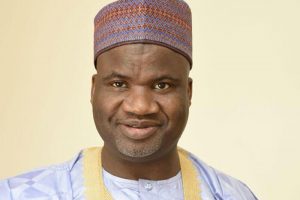




Nigeria: As 2019 Elections Draw Near, By Edwin Madunagu
The Nigerian situation as we approach “Elections 2019” can be sketched around five issues. Three of these are “problems of Nigeria” as summarized in my last published piece, Nigeria 2019: Hoping for another reprieve? (January 3, 2019). The fourth issue may be called the “power of incumbency”. The fifth is the problem of the Nigerian Left.
The problem of the Nigerian Left forces itself into this exercise on account of its critical importance. This importance can be expressed as a proposition: Both the survival of Nigeria as a united country, de facto and de jure, and the concrete positive transformation of quality of life in it depend, in the immediate future, on what the Nigerian Left does—within and outside electoral politics. The Nigerian Left? Yes, the Nigerian Left—its current fractiousness and factionalism notwithstanding. There is simply no other historically–determined sociopolitical force to perform this task.
In the article cited above, I summarized the “three problems of Nigeria” as: “Massive class exploitation and state robbery resulting in grinding mass poverty and misery; elitist understanding and practice of “democracy”, moral degeneracy and bankrupt governance ideas on the part of Nigeria’s ruling class; and the national question whose enormity and complexity not only the ruling class but also many progressives and liberals—and even Leftists—do not appreciate”. These three problems will, below, be taken up and briefly expanded. This will be followed by brief statements on the other two issues.
All segments and factions of Nigeria’s ruling class—directly and through their ideologues—acknowledge the existence of “grinding mass poverty and misery”. It is simply impossible to ignore: they see it and breathe it on their way to and from their “paradise on earth”. But beyond corruption they blame the situation on the incompetence, mismanagement, insensitivity, neglect, selfishness and shortsightedness of rival political groups. They completely ignore class exploitation and reduce “state robbery” to only corruption. But class exploitation is rooted in a political economy—capitalism—whose most effective lubricant is corruption. And state robbery goes beyond “high-profile stealing” by state functionaries, which is punishable by the “law of the state” to what can be described as “armed robbery by the state,” itself.
Armed robbery by the state? Yes, armed robbery by the state. For when the state goes beyond its development plans, beyond its budgets, beyond its propaganda and starts manipulating “discretionary powers” to seize what belongs to the working and toiling masses and goes beyond lies, blackmail and bribery, and begins to threaten protests with “law and order” measures—of which it has legal monopoly—what do you call this?
Nigeria’s ruling class, as a class, cares little about democracy or its history. The doctrine to which it subscribes says that “democracy” only came to Nigeria 20 years ago, in 1999, that the first period of its young life, (1999-2015), was administered by the People’s Democratic Party (PDP), that PDP was succeeded in 2015 by the All Progressives Congress (APC). The legacy of that first period is a dominant subject of the present campaign. The manner of the 2015 transfer of power, though an important subject, seems to have been stepped down by mutual consent, as a subject, by all factions of the ruling class. Pursuing it will hurt all factions. Their theory and history of party organization start and end with PDP, APC, other ruling class parties of the Fourth Republic and the inspirations they claim they derive from ruling class parties of America and Western Europe.
Nigeria’s ruling class, as a class, does not see the coming elections simply as a struggle between APC, PDP and other participating parties. Rather, it sees the contest as a battle involving the ruling class’ two power blocs and a number of political forces. These blocs and forces are seen as essentially ethnic, regional and religious. Put differently, Nigeria’s ruling class does not see APC, PDP and other ruling class parties as the highest political expressions of their class. Rather, it considers the power blocs and political forces as higher political expressions. If you cannot easily apprehend my use of “power blocs and political forces”, look at the formations described by the Nigerian media as “sociocultural” or “sociopolitical”: Arewa Consultative Forum (ACF), Northern Elders Forum (NEF), Afenifere, Ohanaeze, Middle-Belt Forum, etc.
To examine my proposition, it is sufficient, for a start, to check out the current debate within the ruling class, through leading party and government functionaries and spokespersons of the sociocultural and sociopolitical groups on the movement of Nigeria’s presidency in 2023. You will see that from time to time these functionaries and spokespersons are compelled—for the avoidance of doubt—to come out openly on the ethnic, regional—and even and religious—dimensions of the struggle which the fractions and factions of their class are currently waging.
In response to this debate and the reality informing it, the task of the Nigerian Left is two-fold: One: To resist closing its eyes to reality (what Nigeria is today) and seeing only its hopes for the future. Two: To come out clearly with its own position – and not to “moderate” the debate or support one side or another, or dismiss the debate as irrelevant or, worst of all, pretend not to hear the debate. It is in respect of this second task that I remind readers of the political proposition I have been offering for at least 25 years and which has currently assumed the name, Popular-democratic restructuring or Restructuring under popular-democracy.
Some Leftist parties are participating in the coming elections. Some others are not participating because they are still consolidating. Yet others are not participating either because they were refused registration or have not applied for registration. And then, there are formations of the Nigerian Left that ideologically and politically reject registration as a condition for participating in political struggle. Although the result of all these is the current relatively small specific weight of the Nigerian Left in electoral politics, the situation we now have is a step forward beyond 2015. The next qualitative step is not the formation of new parties or groups, or renewed attempts to register those already in existence, but the establishment of a centre for coordination, ideological education, research, documentation and publicity.
In general, the control of state power during elections by a group or groups participating in the contest or partisanly interested in who wins, is a factor in that contest. This is what is popularly called “power of incumbency”. But the relative weight of this factor varies from place to place, period to period and system to system. Even within the same space, the same system and the same period, the weight varies from regime to regime. What is obvious now is that the “power of incumbency” in “Election 2019” is very much stronger than it was in “Election 2015”, and perhaps strongest since “Election 1999”.
Madunagu, mathematician and journalist, wrote in from Calabar, Cross River State.