Ex Nigeria President, Olusegun Obasanjo has said that he had never said that he is neutral in the political build up to the 2019 Presidential election, saying that only a fool would sit on the fence.
In a statement today, Sunday, through his media aide, Kehinde Akinyemi, Obasanjo said that he wasn’t in support of President Buhari, adding: “it is disingenuous, if not malicious, for anyone to suggest that Chief Obasanjo was being neutral when he chose not to use the Owu Convention as a platform for political campaign but instead adopt a communal and familial approach in talking to members of his Owu family,” .
According to the statement: “for the records, and as accurately reported by some media organisations, what the former president said at the convention in Iwo was that while he would not impress any candidates on them, Nigerians should vote for credible candidates who will drive growth and development and make their lives better than it is now.”
It said that Obasanjo’s statement did not mean neutrality, adding: “only a fool will sit on the fence or be neutral when his or her country is being destroyed with incompetence, corruption, lack of focus, insecurity, nepotism, brazen impunity and denial of the obvious.”
The statement stressed that the former leader still stands in the best interest of Nigeria, even as Obasanjo is said to vow to continue to speak against poor governance and that nobody should manipulate his stance on the 2019 presidential election.
Former Nigeria military Head of State, General Ibrahim Badamosi Babangida has said that he has no regrets plotting a coup. He said that he was rather motivate by the consequences of the failure of a coup.
The former military head of state, in an interview with thecrestng.com, spoke about the July 29, 1966, saying that ‘the motivation was very simple.
“They succeeded in calling the January (1966) coup a sectional coup d’état where most of the people we revered were murdered, even in the military. People like (Brigadier Samuel) Ademulegun (and his wife), Brigadier Zakariya Maimalari, (Colonel Kur) Mohammed, and so on. To us, the young officers, these people were our role models. Then, politically, leaders like Sir Tafawa Balewa (Nigeria’s Prime Minister at the time), Sir Ahmadu Bello, the Sardauna of Sokoto (and Premier of the Northern Region), and Chief Ladoke Akintola, Premier of Western Nigeria, were killed.
“So, it was not unusual that, sometimes, we would go to organizations and we would sit down, and people would talk about what went wrong. The atmosphere was conducive for a revenge coup. The atmosphere was there because people were talking freely about the one-sidedness of the coup. Radio and television stations were reporting it. And one of your papers, I can’t remember its name now… It started from Ghana…”
Read the full interview below
What is the highest point of your life? At 77, what are the highs and the lows?
First, when I was commissioned into the Nigerian Army, a young officer from the Indian Military Academy, full of life, coming to provide service to the country.
Second, while providing the services to the country, you come across people, you meet people who operate either in defence of the country or in aiding people to provide for the safety of lives and properties in the country.
Then, when I was given a command during the war. The high point (in that) is that here was Major Babangida, and I had over 500 soldiers under me. Their lives, their welfare were dependent on me. So, you have to be concerned about how you make them have confidence in you that you are not going to lead them into a disastrous situation; you have to be concerned about how they will follow me to the war. I’m glad because I mingled with them, I trained and ate with them. We played together and they developed that confidence. And if they knew that we were going to war, fear was no longer in them because, as an officer, I was capable of doing what they could do. As an officer, I could do what a corporal could do. So, they just followed. That is a good point and it has been very successful.
How many of those people under your command then are still around you now?
Oh, they are quite a few. But most of them are very old now. You can’t even recognize them if you see them. There are very few alive.
Those who know you well say what you had going for you during your military career was that you have friends across the country and among all the tribes in Nigeria. They also attest that if you saw a person 20 years ago, and you meet him again, you will call him by his first name. How were you able to do that?
When we were growing up, one of the things they taught us to do was to create what we call ‘Unit bible’. In the unit bible, you have names of everybody – their names, their wives, their children, where they come from and so on. We, the young officers, competed amongst ourselves. Every officer knew everybody in his command. It was a sort of competition. So, it became part of us.
Let us go into more serious matters now. Many of your colleagues, including the late Benjamin Adekunle, regarded you as a political officer.
Fortunately for me, I never held any political office that time. In the military, there was a category of officers who were politically conscious and were always calculating, and ‘doing things’ in that direction…
When I say political office, what did you see during the military regime? We had ministers. We had governors. We still referred to them as political office holders. But after military intervention, a lot of interests began to manifest amongst us. We took a lot of interest in events in the country. But bearing in mind that we have to remain there for a long time, we also knew that we should be subservient to the democratically elected government. In our case, we made a lot of friends. I had a lot of intellectuals who were my friends. I mixed with them. We attended parties together; went to conferences together; attended seminars together; and that developed our interest in politics–at least mine. I never missed any opportunity to go to conferences to listen to people, get their own ideas, just to enlighten myself.
Is politics compatible with the military profession?
I think it is. Yes, it is. Compatible in the sense that the military is subordinate to a democratically elected government; so, we should be subservient to the civil authority. We were taught from the Defence Academy-that ours was to do and die, and not to reason.
Why I mentioned the term political officer was that you took part in most of the coups that place in this country. Right. What was the motivation? Starting from the first coup on January 15, 1966.
Well, starting with January 15, 1966, I was a young officer; I wouldn’t have been involved in the planning. But at the end of the day, when the coup happened, I was in Kaduna, and we participated very effectively in the execution and so on. What role you did you play in the execution? I commanded troops. I had troops. And, normally, we would go on duties, to protect vulnerable points–whether in Lagos, or Kaduna, or Ibadan, and the rest of them, so that nobody went to destroy them. They kept us within the environment. The coup headed by Dimka was such one that shook the country and the military in a way. How did you feel about that kind of… (Cuts in…) I remember that I had a senior colleague called Colonel Ibrahim Taiwo (who later became Military Governor of Kwara State and was assassinated during the Dimka coup of February 13, 1976). One day, we were travelling with him and he found us reading a book, How to stage a coup. That is the name of the book. I think he read it before, so, he said ‘Ibrahim, check chapter 23. Make sure you recite everything that is in it’.
What’s in the Chapter?
The chapter talks about the consequences of failure. He said, ‘Remember if it fails, you will die. The consequences are the death penalty, imprisonment.’ He said, study it, and make sure you know those things off-hand because if you plan it and fail, God help you.
But that never deterred you.
No, it doesn’t deter. Rather, you get motivated. You see yourself doing a job. You were trained to defend and protect your country and, so, you see yourself doing that same job. Things were not going right and you are there to correct them.
When you know that the consequence of failure is death, isn’t plotting a coup similar to suicide? No. That is guts.
1966 Revenge Coup: I Have No Regret.
July 29, 1966, was a turning point in the history of this country; that is talking about the counter-coup in which you played some roles. What were the specific roles you played and what motivated you?
The motivation was very simple. They succeeded in calling the January (1966) coup a sectional coup d’état where most of the people we revered were murdered, even in the military. People like (Brigadier Samuel) Ademulegun (and his wife), Brigadier Zakariya Maimalari, (Colonel Kur) Mohammed, and so on. To us, the young officers, these people were our role models. Then, politically, leaders like Sir Tafawa Balewa (Nigeria’s Prime Minister at the time), Sir Ahmadu Bello, the Sardauna of Sokoto (and Premier of the Northern Region), and Chief Ladoke Akintola, Premier of Western Nigeria, were killed. So, it was not unusual that, sometimes, we would go to organizations and we would sit down, and people would talk about what went wrong. The atmosphere was conducive for a revenge coup. The atmosphere was there because people were talking freely about the one-sidedness of the coup. Radio and television stations were reporting it. And one of your papers, I can’t remember its name now… It started from Ghana…
Was it Cyprian Ekwensi publishing it?
I can’t remember.
Was it West African Pilot?
Not West African Pilot. They showed the Sarduana shot down and that infuriated quite a lot of people (even us, the young officers). So, when the plot came, it didn’t take time to sit down and plan it. That was a revenge coup. That particular coup was considered the bloodiest in the history of coups in Africa… Because it went out of hand.
How did it go out of hand?
There was no control. The officers allowed things to go out of hand. Even other ranks were taking laws into their hands. It is unfortunate it happened. The coup also marked the turning point in the history of this country. Yes, it did. Do you have any regret taking part in it? No. Looking back now…
Looking back, what I will say is that the military didn’t get to understand the consequences of what was happening and that is probably why we had a longer period of military regime, 23 years. You are credited with the trait of identifying good people to work for you, both in the army and outside the army. But at the end of the day, some of those people appeared not to finish well with you. It is like they got used and dumped.
No. I think that will be unfair. I only had one problem. I put up the best brains to work with us in our regime. We knew we were limited in terms of economic knowledge, political knowledge and so on. And since we were working for this country, and we wanted the success of this country, we concluded that we needed the best brains; people who were known; people who had excelled in their own specific areas. Take for example, the economy. One of the best brains this country has ever had in economy is Professor Ojetunji Abayode. I got him and he was prepared to come. I used people to convince him and he agreed. I also knew at that time that I would have problems with the Nigerian Medical Association because they were giving everybody a headache. I brought in Professor Olikoye Ransome-Kuti because he knew them, He taught some of them and he was a firm believer in primary healthcare. I was in the Institute of Policy and Strategic Studies. He came and gave us a lecture about primary healthcare. I was a brigadier then, and I learnt more about taking care of people so that they would become useful. I invited him and he came. I told him we wanted him to join us. He said: “Me? Military? No!” I said ‘Look, I listened to you when I was at the Institute of Policy and Strategic Studies, and we all graded you fine. (Students there grade their lecturer). Now, I’m giving you the opportunity to practise what you wanted this country to do and you are saying you don’t want to do it. So, you don’t believe in what you are saying. You are just saying it to get people to pass exams! He said, ‘how did you know?’ I told him, ‘I was a member of that class you gave the lecture to’. He said he was going to talk to his wife. I said tell her that I don’t accept ‘no’ as an answer. He came back and said ‘Ok, Mr President, I will come along but you will give me free hand’. I said ‘I will give you the freest hand. I will give you anything I can support you with. You will get it and implement your vision for the sake of this country’. I told him too: I will also want to give you one task. I don’t want trouble with the Nigeria Medical Association. He looked at me and smiled, and said ‘Ok I assure you, we will put that behind us’. And he did.
Is that the reason he survived throughout because you didn’t change him?
No. Professor Kuti survived because he had convictions and the rest of the team supported him. And you find out that even the subsequent regimes used him. He believed in a thing and he wanted to get it done. Prof. Olikoye Ransome-Kuti was working in your government, his younger brother, Beko, was with the civil society group, Campaign for Democracy, and the legendary Fela was out there, a big torn in the flesh of the military.
How did you cope with this situation?
Yes. But Professor Olikoye Ransome-Kuti was a good man. He was a decent person. You would sit down with him, and you respect him for what he is, I didn’t have any problem whatsoever. You said you asked him and he said NO. Who were the other people who told you NO?
I think hardly any. There was Professor Godwin Ezekwe. He was in Science and Technology. We knew him because of my reading. He was the brain behind the Ogbunigwe bombs and the rest of them. I summoned him. I said ‘Professor, why don’t you come on board as Minister of Science and Technology? I want you to come and put into practice the knowledge you had during the war.’ He looked at me, and typically intellectual, he said ‘Well, the knowledge is very elementary; it is not complicated.’ I said yes, people like us in the military were not as intellectual as they were. But I was able to convince him to come on board. The Leader Nigeria Needs Now Many people have tried to characterise you as the way you handle government.
In an essay published in TheNEWS magazine many years back, as well as in Ayekooto, his column in The Tribune, the late Chief Bisi Onabanjo, former Governor of Ogun State, called you Maradona. Some people even say you use Niccolo Machiavelli as your bible. What were the books that influenced you most? You once described Chaka the Zulu as somebody you admired. Who are the other world Generals that influenced you most? Most of them are very recent; second world war Generals like Montgomery in England, Patton in America, and Rommel, in Germany.
When we were in the academy, we had to read about wars. We read about individuals and those were the people that inspired a lot of us. Everybody wanted to be a Montgomery. Everybody wanted to be a Rommel, and so on. And believe it or not, here you have great people but greatly misunderstood. I gave somebody an interview, a kind of roadmap on what I was thinking about the next Nigerian president. I said he should have the sagacity and eloquence of Zik; he must have the knowledge of Awo and he must have the charisma of Sardauna, Tafawa Balewa, I called them four-in-one; one man with four qualities. This is because you know them, you have seen them, you know what they stand for. So, if you have one man who has got these qualities, Nigeria would be better for it. Of course, I didn’t forget my boss OBJ (former President Olusegun Obasanjo). He is a passionate lover of this country. He doesn’t compromise on anything Nigeria. No matter the situation, OBJ is going to stand for Nigeria. You have had cause to disagree with him openly and he also has had cause to disagree with you. But anytime we disagree, we find a way of settling our quarrels. Either we go to Ota or we go to Abuja or somewhere, and talk over it, and it is gone.
Most Nigerians believe that you use Machiavelli’s The Prince a lot.
No, no, no. I read it a long time ago. Many Nigerians believe history gave you a golden opportunity to remain a hero forever in this country.
They believe you actually started very well. Then, you began your political programmes and you set a date for transition; then, you kept shifting the goal post, shifting, kept shifting until we found ourselves in June 12.
I think people who said that have not been fair to me because when we started the transition programme, I was in the media, I said we will be doing it step by step, by learning. Wherever we met a hiccup, we will stop, change it and move again. On this, I was honest with Nigerians. I told them that, and they would have judged me with what I said on that particular issue. But everybody wanted the military to just leave. But I did say it, that in the process of implementation, we may have a hiccup or mistake. And if we do, we would pause, correct it and then move on. Even the transition after the June 12, we gave a time span which again nobody was patient with. But we studied, we compared to either have a non-conventional election or a general election. And everybody said they wanted to see the country carry out a general election. And you can’t just have a general election within seven days. You have to plan for it. Again, if people allowed us, we said there would be a general election in this country. I think Abacha came in November. Nobody wanted to listen. Everybody was tired. I appreciate that. I appreciate it. Yes, people were bored and we envisaged it and we said it. We warned you in advance that if this happens, this is our next step.
And that led us to the famous June 12. June 12 is considered the freest and fairest election… And nobody want to give me a credit for it. The credit goes to you but the feeling is that you decided to throw it away. How come?
Everybody said so. I agree. Even my boss, OBJ, told me that. He said you had an opportunity and if that had gone through properly, history would have recorded it as your greatest achievement. But then, we discussed at length what could have transpired. Again this: I will always talk about the Nigerian mentality. I think we are always anxious. We are always in a hurry. We want things to get done in the fastest time possible time. I tried to go out and talk to the public on why we had to do this but we were overwhelmed with criticisms. Nobody wanted to listen. That is surprising because you demonstrated a lot of power.
At the height of your power, you said that you were not just in government, you also were in power. I’m surprised that anybody would have cowed you with criticism.
In fact, I took more criticisms as a military president than any other civilian president.
They were self-inflicted
No. I don’t think it was self-inflicted.
The reason I said so is you were the Commander-in-Chief and your word was law. If you had stood by that election, even at the risk of paying the supreme price, that election would have stayed but you…
No. It would have stayed but the consequences…
What were the consequences?
Maybe when I write my book you will see them.
But you have refused to write your memoir.
Why do you say so? I haven’t refused.
Have you started writing it? It is a work in progress.
It is in the works.
How soon is it likely to come out?
I will have time to finish it. It will be soon.
Abacha wanted to be Head of State at all cost Was it true that Abacha threatened you (that he too wanted to be Head of State) and that led to the annulment?
No, he couldn’t have threatened me, to be fair to him. But I knew he wanted that job at all cost. You will be reading it…
Just let us a little insight into those consequences that you were so afraid of that made you not to stand by an election that the whole world (in your words) gave you credit for organizing.
I have a conviction that if I get involved in building this environment, I wouldn’t like to be seen as having the environment destroyed. That’s number one. I wouldn’t be part of the destruction. So, I either make sure I remain with it, and belong there, or a circumstance will come and, eventually, I will leave. When I leave, if it gets destroyed, nobody will blame me.
Are you saying if you had declared the result, and gotten (M.K.O.) Abiola sworn in, there would have been war or what?
No. I wouldn’t declare the result if (Professor Humphrey) Nwosu declared the result. I knew deep into this that there were consequences which will not be fair to this country. I give an example: I took part in the management of PDP and I can’t disown them because I’m part of them. I made an input into its emergence, and if you say it is the worst thing that could ever happen to the country, I cannot in all conscience sit down and say it is because I participated in it. If the transition failed, and I knew it would have fallen down, nobody would have been bothered. They will say no. I will feel guilty like after all I spent the money but it collapsed. My conscience will never forgive me.
As Commander-in-Chief, you will be privy to some certain security reports than the other people knew about.
That’s true.
Was this force that was patently against the corporate existence of Nigeria external or internal? Was it a threat to your life or that of your friend (General Sani Abacha) who was to come in?
No, it was not a threat to my life but if it was a threat to my life, I have no problem. After all I have a bullet in me; there couldn’t have been any greater threat than that. But my fear was: what would the country end up becoming. Could the country be better? This was what we sought to establish. Could it better? If the answer is no, then, I take the blame because I should have put in place certain measures that will make it good. What we wanted was an enduring legacy.
Former Head of State, Sani Abacha Was the enemy internal or external? Or the evil was in the person who won the election?
I wouldn’t say the evil was in the person who won the election, after all he campaigned for it, people saw in him what he stood for, and therefore decided to vote for him. It was the finest hour in Nigerian political history where people voted anyhow; not ethnically, religiously and so on. That was the finest moment in our political history.
In one word, sir, would you say Abiola won that election? He was on the verge of winning that election. Did he win that election from what you saw?
From what I saw, he was on the verge of winning that election because by the time it was assumed that he won, officially, the official thing was not done. Results were still coming in, and it wasn’t declared. So, I think I would be deceiving myself if I say he has won.
You said it was the finest hour; yet, we couldn’t get it right; isn’t that pessimistic? To whom does this credit go? From what you have seen so far, you haven’t learnt a lesson from it?
The credit of not getting it right? You wouldn’t give me; so, I accepted that I will not be given that credit no matter what I say.
THE QUESTION BABANGIDA WON’T ANSWER On June 12, 2018, President Muhammed Buhari delivered what many people believed was a political knock-out when he conferred on Chief Moshood Abiola the highest honour in the land, GCFR. He also declared June 12 as Democracy Day. Many political pundits have interpreted that to mean an admittance of the fact that the man won the June 12, 1993 election and ought to have been president. How did you feel on that occasion? (Smiles…)
Am I permitted to say no comment?
But why no comment?
Permit me to say no comment.
Okay, as Your Excellency pleases. Okay sir, what about the letter you released in February, this year, where you advised President Muhammadu Buhari not to seek re-election because you believed it was time for a paradigm shift to accommodate a younger generation of leaders.
I have taken full responsibility for that.
But the drama that played out that day was something else. First, the letter was released by Kassim Afegbua; then, there was a denial by Your Excellency; then, a confirmation. Why that back and forth movement?
On this same issue, there was no back and forth. I will blame you guys in the media because the first thing one said, ‘IBB said Buhari is too old to be a president’, or some stupid headlines that will pitch me and the president at war. I don’t like war on things I didn’t say. But Generals are not afraid of war… Generals have common sense!
In the intervening hours, when Kassim was declared wanted by the Police High Command, what were the steps you took to ensure that the guy was not in danger?
I knew he wasn’t in danger.
But he was declared wanted.
No. No. He went and he gave an interview after going.
Before your letter, former President Olusegun Obasanjo had written a scathing letter to the President, also asking him not to seek second term. At the height of the herders/farmers clashes in Taraba, in which many people were slaughtered, General Theophilus Danjuma had come out to ask his people to rise up and defend themselves because the army was incapable or was reluctant to do defend them. Many Nigerians have added all these and concluded that you, retired Generals, had ganged up against President Buhari ahead of the 2019 general elections. How do you react to that?
Gang up? What gang-up? That is a media creation. It is media perception. It is easier for the media to add up things and conclude. I think what has happened is that after General Danjuma said what he said, after President Obasanjo released his letter, and perhaps, after my release too, the media simple added things up and came to the conclusion that there is a gang up. There is no gang up. It is media perception.
We just watched on TV the gale of defections rocking the National Assembly, with 14 senators defecting from the ruling APC to the PDP. As a former President and a major stakeholder in Project Nigeria, what do you make of this?
This is political dexterity. Political dexterity?
Can you kindly expatiate sir?
I call it political dexterity because there are no better words to describe it. This is political dexterity and I don’t think anybody should have any problems with that. I have nothing against it. I think it is good for democracy. If it is good for democracy, then, it is good for Nigeria. If people left APC to form R-APC, they must have a solid reason or reasons for doing that. If 12 Senators got to a point where they felt their continued stay in APC was not working and decided to leave, there is absolutely nothing wrong with that. Similarly, if the other two senators felt that their stay in APC was no longer worth their while and decided to join ADC (African Democratic Congress), they have not committed any crime. I think the development is good for democracy. Democracy is about choices; it is about the freedom to choose. In the democratic system that we practise, you can always disagree if you feel what you see in the system does not agree with your expectation.
The Federal government said oil marketers would be paid N236 billion out of N348 billion approved by the National Assembly as outstanding subsidy claims on Friday Dec. 14th.
The Chief Operating officer, Nigerian National Petroleum Corporation (NNPC) Downstream, Henry Ikem-Obih, who spoke to newsmen in Abuja today, Saturday said: “the Debt Management Office (DMO) will by next week, precisely on Dec. 14th, pay oil marketers first part of the subsidy arrears of N236 billion as agreed by both parties.
“We agreed that after the first tranche is paid, the marketers will form committee to work on details of how the next tranche will be paid in 2019 and the last paid in 2020.
“Government is fully committed to pay the first tranche as promised and will be paid through promissory note that will be issued by the DMO.’’
Ikem-Obih said that oil marketers equally owed government some debt which would not be deducted from the first tranche of payment.
He said that it was unfortunate that Depot and Petroleum Product Marketers Association of Nigeria (DAPPMAN) had issued a counter statement from what was agreed at the meeting held with all stakeholders on Thursday.
It will be recalled that stakeholders in the oil sector held a meeting at the ministry of Finance on Thursday and reached an agreement on how to pay outstanding subsidy claims to marketers.
DAPPMAN on Friday issued a counter statement saying that there was no agreement reached with government because it failed to reach legitimate demands of the association which was that the claims should be paid in cash instead of through the promissory notes.
He said that Independent Marketers Association, DAPPMAN, Major Oil Marketers (MOMAN), CBN, PPPRA, among others were part of the meeting.
“Government is committed to doing what we agreed on and that is why they get the first tranche by next week.
“We have told marketers that what government is doing now is honest and highly transparent,’’ he added.
Ikem-Obih urged Nigerians not to panic as the NNPC and all other stakeholders will ensure that there was no scarcity of the product throughout the yuletide season.
“Currently, we have 55 days of Premium Motor Spirit (PMS) storage in the country which translates to 2.8 million litres in volume and 90,000 metric tonnes of diesel.
“The 90,000 metric tonnes is supplied by NNPC and it’s subsidiary PPMC and we will continue to import,’’ he added
He said that apart from imported products, the Warri refinery had on Thursday started refining products and the Port Harcourt Refinery would soon kick off refining.
This, he said would continue to boost the quantity of product in the country.
In an interview, some marketers who spoke to News Agency of Nigeria (NAN) commended government and assured that they would support efforts towards ensuring smooth supply and distribution of petroleum products in the country.
Alhaji Aliyu Sa’id, Managing Director of AA Rano filling station said that national interest must be upheld and it would be wise for DAPMAN to give government a chance.
“We have enough products and we will not shut down for any reason, we do not want Nigerians to suffer during this period and that is why we are supporting government effort,’’ he said
Also, managing Director of AYM Shafa filling station, said that they would work to ensure that there was not scarcity of products in the country during the yuletide season.
“We will support government efforts to ensure smooth supply and distribution of products especially during the Christmas season,’’ he added.
NAN reports that other marketers who promised to ensure free flow of the product in the country include Obat oil PLC, ED Tonimas Nigeria Limited, among other.
Former President Olusegun Obasanjo has declared that he has no preferred candidate in the forthcoming general elections.
Obasanjo said he would not tell Nigerians to vote or not to vote for any particular candidate, but should vote wisely.
Obasanjo, who some people believed had decided to support Alhaji Atiku Abubakar, the presidential candidate of the Peoples Democratic Party (PDP), said he needed Nigerians to vote for a credible candidate.
He made the remarks at the 27th annual Owu National Convention, held in Iwo, Osun today, Saturday.
The former President, however, urged Nigerians to vote for credible candidates, who can liberate the country.
In his remark, Chairman, Supreme Council of Owu Obas, Oba Hammed Oyelude, said Owu, being the largest Yoruba speaking ethnic group in the South West, has been contributing to the development of Nigeria.
Hammed, who is the Olowu of Owu Kuta, said Royal Union of Owu People (ROUP) is not a political party, but must contribute to the policy direction of the country.
He called on Owu people to participate in politics, in order to have a say in the running of the affairs of the country and be able to contribute their quota.
Oyelude also called on sons and daughters of Owu to support and vote for any Owu indigene contesting for any political office.
The Peoples Democratic Party (PDP) has cried out, alleging that the Muhammadu Buhari government has been victimizing its Vice Presidential candidate in the 2019 election, Peter Obi, including the freezing of his bank account.
In a statement today, by the party’s spokesman, Kola Ologbondiyan, PDP decried the stoppage of transactions on all accounts belonging to Peter Obi, his wife, family members and their businesses by agencies of the Muhammadu Buhari administration.
“Since his nomination, Peter Obi, apart from facing series of failed attempts by the APC to destroy his reputation, has also continued to receive all manners of threats and blackmail, including threats to his life and those of his wife and children. “Having realized that the majority of Nigerians are rallying behind the duo of Atiku Abubakar and Peter Obi as the our Presidential and Vice Presidential candidates respectively, the Buhari Presidency and the All Progressives Congress (APC) have resorted to all manners of machinations, including smear campaigns and direct attacks on their persons and business concerns, in a bid to run them down.
“The Buhari Presidency is intimidated by Peter Obi’s resume, particularly, his general acceptance as epitome of fiscal responsibility, frugality and transparency in governance.
“Otherwise, why is the Presidency on a wild goose chase in investigating Peter Obi, who left office as Governor of Anambra state five years ago with a nationally acclaimed clean record, intact reputation for frugality, transparency, zero tolerance for corruption and leaving behind a huge saving of N75 billion naira in cash and investments; without owing any salaries, pensions, gratuities or even contractors for contracts executed.
“The fact remains that the Buhari Presidency and the APC are merely shadow boxing in their attacks on Atiku Abubakar and Peter Obi, as their records before Nigerians speak for them.
“All discerning Nigerians know that the reasons for an investigation on a man like Peter Obi, is a journey to no where aimed to stifle him of funds as well as attempt to distract our campaign and divert attention from the failures of the Buhari administration. It is ludicrous that President Buhari would continue to condone the looting of our treasuries by his party leaders and the cabal in his Presidency, which even, the First Lady had even alluded to, only to be using government agencies to attempt to blackmail our Presidential and vice Presidential candidates whose reputations stand clear before all Nigerians.
“The PPCO reminds President Buhari that neither he nor Vice President Yemi Osinbajo was in 2015, as candidates, harassed, attacked at the airport or subjected to blackmails, and wonder why they are now employing such tactics just because Nigerians have resolved to do away with them, come 2019.”
The Court of Appeal, Benin Division has granted the prayers of five prisoners, seeking the order of the court to direct the Independent National Electoral Commission (INEC) to include all prisoners in the voter register.
Justice S. Oseji, delivered the lead judgment, on behalf of Justice Helen Ogunwumiju.
The appeal was filed by five inmates on behalf of other inmates in Nigerian prisons. Those that filed the appeal are Victor Emenuwe, Onome Inaye, Kabiru Abu, Osagie Iyekekpolor and Modugu Odion.
The judgment affirmed the judgment granted by a Federal High Court in 2014 that prisoners can vote.
However, Oseji did not grant a declaration that INEC liaise with the Nigeria Prison Service to create a registration centre at various prisons across the country.
Speaking to newsmen after the judgment, Counsel to the appellant, President Aigbokhan of the Initiative for Rural Development, Information and Legal Advocacy (IRDILA), called on INEC to commence immediate registration of inmates across the country for them to participate in next year’s election.
Aigbokhan said that they would appeal some aspects of the decision of the Court of Appeal.
According to him: “prison inmates have their community: polling units should be located there.
“We believe they have a right to vote in an election so as to decide those who ultimately decide their future.
“When franchise is given to them, attention will be focused there. Their situation and health conditions will be improved.
“In 2014, the Federal High Court granted our prayers that prisoners can vote but narrowed it to the four applicants in the suit even though it was stated there that those applicants were representing other inmates.
“We went to the Court of Appeal and the court agreed that the judgement represented all inmates in the country. That INEC should with immediate effect collate the names of inmates and allow them to vote in 2019.
“The judgment disagreed that INEC should create polling units inside the prison. In 2015, the inmates were over 550,000.
“All INEC needs to do is to update their voter register and liaise with NGO as volunteers to help them. It is victory for Nigeria’s democracy.”
The National Sports Festival today, Friday, kicked off in the nation’s Federal Capital Territory (FCT), Abuja, with the minister, Malam Muhammad Musa Bello receiving Festival Touch at the Abuja City gate.
More than 11,000 athletes and officials have since arrived in the Federal Capital and converged at the National Stadium, where the minister described the games as one of the three promoters of national unity.
He said that the ideals of the games symbolized the national unity and oneness, adding that the FCT is being represented in the games by over 470 athletes who would be competing in 27 events.
Musa Bello said that the restoration of the game after six years in limbo, bears eloquent testimony to the commitment of the Change Agenda of the President Muhammadu Buhari to youth development.
He said that the President is very dedicated to providing a platform where the talents of the youths and that capacity of all Nigerians would be harnessed.
The Minister said that the FCT Administration has invested heavily on infrastructure and public transportation, making it possible for athletes to move from one sports arena to another without encountering undue traffic gridlock.
Musa Bello said that the full the complement of the railway coaches would be arriving in a few weeks time to make the already completed stations operational, including the stadium station just within a walking distance from the national stadium.
The FCT Minister enjoined participants at the event as well as the officials to imbibe the spirit of fair play in all the proceedings, noting that what matters at the end of the day is the bonds of friendship across the regions and the platform for cooperation and collaboration which in the end would strengthen national unity.
Musa Bello called private sector investors as well as sports agencies and organized private sector to come and invest in Abuja, even as he assured that the FCT Administration is working to build a capital city that would showcase Nigeria to the world and make Abuja the capital city of sports in Africa.
He said such features as centrality, good weather and natural/manmade drainage systems all favour Abuja as the next best destination for sporting activities, including the best set of sports facilities in the country and an assortment of hotels and hospitality outfits that can take in a huge number of athletes and visitors for any global event.
The minister of Youth and Sports Development, Barrister Solomon Selcap Dalung, congratulated all the states for their support and commitment to the success of the National Festival through sending strong delegations. He noted that the games were being revived by the present administration because it appreciates the role of sports as a unifying factor in the country.
The opening ceremony attracted many dignitaries such as the Secretary to the Government of the Federation, Barrister Boss Mustapha, Ministers, and sports enthusiasts from across the country. With its contingents of 470, FCT parades the 4th largest team, coming behind Lagos, Delta and Bayelsa.
The Prelate of the Methodist Church Nigeria, Most Rev. Samuel Uche, has advised Nigerians not to re-elect governors who owe workers’ salaries, pensions and gratuities of retirees.
Rev Uche, who gave the advice in a chat with newsmen today, Friday in Umuahia, capital of Abia State , said that such governors do not deserve to be re-elected in 2019.
“It is painful that some governors in Nigeria cannot pay their workers’ salaries as well as pensions and gratuities of the retirees. Such governors should endeavour to pay workers their salaries. They should also pay pensions and gratuities.
“If they fail to do so, they should not smell the Government House in 2019.”
The clergyman advised the electorate against selling their votes, saying:“people should not collect rice and sell their votes. Rather, they should elect credible people who will care for their well being.
“We should vote for the future of our children. We should not allow ourselves to be influenced by money.”
The cleric also charged security agencies to be fair and nonpartisan while discharging their duties during the polls.
A musical album, titled: ‘Black Times’ by Seun Kuti, son of late Afrobeats Maestro, Fela Kuti, has been selected for a Grammy Award.
Seun Kuti released the Black Time was released on March 2, 2018.
According to the Grammy Awards website, which published the list of the potential awardees, the nomination for ‘Best World Music Album’ recognizes “albums containing at least 51 percent playing time of new vocal or instrumental World Music recordings”.
Seun Kuti was nominated alongside Bombino (Deran), Fatoumata Diawara (Fenfo), Soweto Gospel Choir (Freedom) and Yiddish Glory (The Lost Songs of World War II) for Best World Music Album.
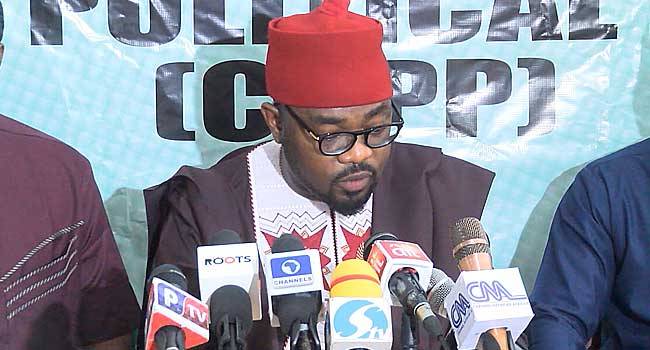
Coalition of United Political Parties (CUPP) has described the refusal of assent to the 2018 Electoral Act amendment Bill by President Muhammadu Buhari as an invitation to electoral anarchy.
In a statement today, Friday, CUPP spokesperson, Ikenga Ugochinyere, CUPP said that President Buhari had expectedly failed again to take advantage of the rare opportunity presented by the Electoral Act Amendment Bill to write his name as the President that signed the law that guaranteed electoral credibility in Nigeria.
“It is an act of clear desperation that the President had shown. For each of the four times the Electoral Amendment Bill was presented to him for assent, he waited until the last day of his constitutionally allowed 30 days. Nigerians should also be reminded that throughout the amendment process, President Buhari never made any suggestions or proposals to the National Assembly for the improvement of our electoral process but kept delaying and indulging in unnecessary hide and seek until this last minute.”
Ugochinyere said that signing the Electoral Amendment Bill into law, would have guaranteed the conduct of the freest and most credible election in Nigeria’s history even as he said that the refusal of presidential assent would present the conditions for violence in next year’s general elections.
According to him, the opposition will in the coming days, unveil the neutralization strategy to checkmate the APC government from the plot to steal the mandate of the Nigerian people in the February 2019 Presidential elections
“The opposition will apply Code 20, as enshrined in Section 20 of the Administration of Criminal Justice Act which allows citizens to perform policing duties of arrest. The section provides that “a private person may arrest a suspect in Nigeria, who in his presence, commits an offence or whom he reasonably suspects of having committed an offence for which the Police is entitled to arrest without a warrant. This Code is the effective counter measure to the stealing and rigging plot of the APC and President Buhari.”
The CUPP called on the INEC Chairman, Professor Mahmood Yakubu, to stand firm and resist all attempts to rig the 2019 general elections by reintroducing the incident forms and pre-loading the card reader machines with the details already generated through the controversial cash-for vote/Tradermoni policy supervised by Vice President Yemi Osinbajo.
The coalition parties also advised Professor Yakubu to insist on implementing all the innovations already successfully test run in the Ekiti and Osun elections which they said were only devalued by the involvement and interference of the Police and other security agencies in the electoral process.
We use cookies on our website to give you the most relevant experience by remembering your preferences and repeat visits. By clicking “Accept”, you consent to the use of ALL the cookies.
This website uses cookies to improve your experience while you navigate through the website. Out of these, the cookies that are categorized as necessary are stored on your browser as they are essential for the working of basic functionalities of the website. We also use third-party cookies that help us analyze and understand how you use this website. These cookies will be stored in your browser only with your consent. You also have the option to opt-out of these cookies. But opting out of some of these cookies may affect your browsing experience.
Necessary cookies are absolutely essential for the website to function properly. This category only includes cookies that ensures basic functionalities and security features of the website. These cookies do not store any personal information.
Any cookies that may not be particularly necessary for the website to function and is used specifically to collect user personal data via analytics, ads, other embedded contents are termed as non-necessary cookies. It is mandatory to procure user consent prior to running these cookies on your website.



 Former Nigeria military Head of State, General Ibrahim Badamosi Babangida has said that he has no regrets plotting a coup. He said that he was rather motivate by the consequences of the failure of a coup.
 The Federal government said oil marketers would be paid N236 billion out of N348 billion approved by the National Assembly as outstanding subsidy claims on Friday Dec. 14th.
 The Peoples Democratic Party (PDP) has cried out, alleging that the Muhammadu Buhari government has been victimizing its Vice Presidential candidate in the 2019 election, Peter Obi, including the freezing of his bank account.
 The Court of Appeal, Benin Division has granted the prayers of five prisoners, seeking the order of the court to direct the Independent National Electoral Commission (INEC) to include all prisoners in the voter register.
 The National Sports Festival today, Friday, kicked off in the nation’s Federal Capital Territory (FCT), Abuja, with the minister, Malam Muhammad Musa Bello receiving Festival Touch at the Abuja City gate.