Emmanuel Ogbeche of the Abuja Inquirer Newspaper has emerged as the new chairman of the Nigeria Union of Journalists (NUJ), the Federal Capital Territory *FCT) Council. Ogbeche defeated Hajiya Rafatu Salami of the Voice of Nigeria (VON) by 338 votes to 193.
Report has it that in the elections were still keely contested.
Candidates and their supporters had thronged the NUJ FCT Council Press Centre at Utako as from 8 a.m., with electioneering campaign and other related activities very intense.
In the race for other posts, Patrick Osadebamwen of Core TV News pulled 305 votes to defeat Osisam Ede who got 202 votes for the Vice-Chairman’s position even as Ochiaka Ugwu of People’s Daily newspaper became the new Secretary of the Council unopposed.
Dorcas Jonah of News Agency of Nigeria was returned unopposed as Financial Secretary of the Council while the position of Treasurer went to Aisha Kadala of Aso Radio who polled 254 votes to defeat the incumbent, Blessing Adewole of Kakaaki magazine with 240 votes.
Walter Ukaegbu of the Sun Newspapers was returned unopposed also as the Auditor of the Council.
NAN reports that the position of Assistant Secretary, which was not contested for at the elections, would be filled through a by-election at a later date.
The new members of the NUJ FCT Council Executive Committee have since taken their oath of office. [myad]
The United Nations Secretary General, Secretary-General, António Guterres, has described former President of the United States of America, George H.W. Bush, who died on Friday at age 94 as a leader with instinct for moderation.
In a condolence message today, Saturday, the UN Scribe, also described the former president as “a leader who served the United States with distinction and supported the United Nations with dedication.”
According to him, George Bush had a long history with the United Nations between 1971 and 1973, saying that he was United States’ Permanent Representative to the United Nations.
“In 2005, former UN Secretary-General, Kofi Annan, appointed him as Special Envoy for the South Asia Earthquake Disaster.
“George H. W. Bush worked productively with and through the United Nations.
“Across the years I was consistently impressed by his compassion, instinct for moderation and commitment to public service.
“At this time of loss, I extend my heartfelt condolences to his family, friends and the Government and people of the United States.”
Late George Bush, who was U.S. 41st president, was in office from 1989 to 1993, preceded by Ronald Reagan and was succeeded by Bill Clinton.
The Super Falcons of Nigeria have emerged as the champions of Africa for an amazing ninth time as they beat South Africa’s Bayana Bayana 4-3 in Women’s Africa Cup of Nations final at the Accra Sports Stadium.
The Super Falcons had to go through extra time and penalty shootouts to be able to edge out the sturbon opponent in a grueling match that was played today, Saturday.
Tockhukwu Oluehi was the hero for Nigeria, saving the last kick that denied the South Africans a chance to dethrone the Falcons.
The game had ended 0-0 after 120 minutes in Accra although both teams had decent chances to break the deadlock.
The Super Falcons were gifted a big chance late in the second half when goalkeeper Swart brought down Francisca Ordega in the box.The referee had no option but to point to the penalty spot.
Unfortunately, Asisat Oshoala who stepped up missed the spot-kick as the final dragged to extra time. The first clear chance at extra time was carved out by Nigeria.
Oshoala tried to redeem her image by going past her marker before releasing a shot that was scrambled away by Swart.
The South Africans also created chances of their own through Chrestinah Kgatlana and Linda Motlhalo but goalkeeper Oluehi disappointed them.
In the end, the lottery of penalty kicks was required to determine who wears the crown between Nigeria and South Africa.
The Super Falcons started on a wrong footing as Onome Ebi missed her first kick in the shootout.
However, Nigeria still won 4-3 with Ngozi Ebere, Rita Chikwelu, Chinwendu Ihezuo and Chinaza Uchendu converting the next four and Oluehi saving the decisive final kick.
Already, the Falcons have been promised $10,000 each if they win the 2018 AWCON and they would head to the female World Cup in France next year as African champions again.
In order to defeat terror, Nigeria needs a well thought out anti-terror plan and one thing that must be central to that plan is the buy in of the people because terror can only thrive where there is local support. Take that local support structure away and the terror architecture will collapse like a pack of cards.
Terrorists are themselves human beings. Terror groups depend on recruiting from the local communities to replenish their ranks or they cannot grow. The members of Boko Haram are not spirits and while there definitely is some foreign influence, the overwhelming number of their leadership and followers are members of the local population.
Central to our plans for defeating terror therefore must be to find out why young men in those communities are aggrieved enough to be alienated from Nigeria and attracted to the radical philosophy of Boko Haram and ISWAP. When we find out, we must prevent this alienation from occurring.
The key to answering this question is to look at the economy of Nigeria and how that economy is distributed.
Within Nigeria, the heartland of the terror insurgency is the Northeast, with Borno and Yobe states being the hardest hit. Surely, it cannot be a coincidence that the Northeast is also the most economically backward part of Nigeria with Borno and Yobe states worst affected.
Recently, someone called Nigerian youths “lazy”. Rightly, there was an uproar over that indecorous slandering of a whole generation, but that type of mentality exposes the mindset that has led to the alienating of huge swathes of our youth, especially in the Northeast.
When Nigerian youths feel that they are not valued as equal members of society that should have equal access to opportunity, they begin to take matters into their own hands.
When the leadership of a nation fail to provide positive avenues for the youth to assert their intelligence positively, then the youth will find negative uses to express their innate intelligences.
Lack of access to education is linked to poverty and poverty is undoubtedly an incubator for crime, terrorism or militancy.
On November 22, 2016, the United Nations Children’s Fund (UNICEF) revealed that a whopping 70% of children in Kebbi state are not in school. They also revealed that they do not have reliable figures for states such as Borno and Yobe, but the numbers may well be more. Even likely so.
In 2016, my running mate, former Governor Peter Obi, gave an Independence Day speech at The Platform event organised by Covenant Christian Centre in Lagos. It was an unforgettable Independence Day event which, according to Google analytics, was the most searched item in Nigeria on that day, besting even the President’s own speech.
Why was that speech so attractive to Nigerians? It is because Mr. Obi gave a detailed breakdown of the reality of governance in Nigeria today, which is one of a wasteful squandering of the riches that should have gone into the development of our youth.
And he is not alone in noticing this. Youth everywhere and especially in the Northeast are seeing this. The Nigerian government and the Nigerian elite are not offering them a way out of this dilemma. However, anti social groups, like Boko Haram and ISWAP, are exploiting their dissatisfaction with society and are offering our youth a utopian ideal which is in reality a dystopia.
These youth read about highly connected government officials who pilfer ₦200 million that was meant for Internally Displaced Persons, without so much as a slap on the wrists, they hear about suspected mega thieves who are returned by government, reinstated into the civil service, given promotions and armed guards and treated like royalty.
These events only deepen their alienation from society and affirm the twisted messages of groups like Boko Haram and ISWAP.
To defeat terrorism therefore, we need to arm our military and motivate them with good working conditions and terms of services, especially for the lower ranks who face the greatest risks and are the least paid. We need to demonstrate that when you fight for Nigeria, Nigeria will fight for you, but even more importantly, we must show that when you die in the services of Nigeria, your name and your survivors will be celebrated by the society that you died for.
We must also help our military win the hearts and minds of the people of the Northeast by empowering them to open soup kitchens where they give food to the hungry. We must encourage them to set up field hospitals where they treat the local population free of charge. Even something as giving each soldier a pocketful of sweets to handout to little children on the streets will help the military win the love and affection of the local population and turn their allegiance to our armed forces.
That is one part of the plan. The other part of the plan, which is even more important, is that we must starve Boko Haram and ISWAP of their recruiting tool by quickly and effectively restructuring Nigeria so that we have a society that allows for inclusiveness and social justice.
A very good first step is to go back in time to find out why an initially peaceful movement became violent. It all started with the extra judicial murder of their charismatic preacher and founder Ustaz Mohammed Yusuf.
In fact, the current leader of ISWAP, is Mohammed Yusuf’s son, Abu Musab al-Barnawi. It is clear that that act of extra judicially killing Mohammed Yusuf is one of the grudges that these groups have against the Nigerian state.
We must deprive Boko Haram of the means of claiming injustice as the rationale behind its insurgency by trying all those behind Mohammed Yusuf‘s extra judicial murder.
As Theodore Parker said, “The arc of the moral universe is long, but it bends towards justice”.
Just as we are satisfying this moral debt, as a nation, we must ensure that there is a fairer redistribution of the wealth of Nigeria amongst all Nigerians. Our budgeting system must be upended and we must have the political will to start spending more on capital expenditures than on recurrent expenditures.
We must curb waste in government by eliminating security votes and those wasteful spendings highlighted by Governor Peter Obi which include, but are not limited to, eliminating huge and expensive convoys, overseas medical treatment at public expense, reducing unnecessary travel and building people instead of building edifices.
We must learn from countries like Rwanda that has stabilised its society by statutorily reserving 30% of all legislative seats for women. As the late Kofi Annan said in 2006, “there is no tool for development more effective than the empowerment of women. No other policy is as likely to raise economic productivity, or to reduce infant and maternal mortality”.
When you empower a woman, you empower a family, a village, a community and eventually, a nation.
In our case, we can go further by reserving at least 35% of all legislative and executive positions for not just women, but also for our youth, at all levels of government, federal, states and local governments. We must convert our youths from onlookers to stakeholders.
They must see that it is easier for them to influence the direction of Nigeria by going into government or business than by going into crime or terror.
But above all, we must massively invest in education by building capacity, which must not just be limited to establishing more schools, but by training teachers. In a situation where we do not even have enough teachers, it is a mistake to sack the few that we have because they fail adhoc examinations. Instead, we must build their capacity to teach via training and continuous development.
It is impossible to have 70% of the children of a state outside the formal school system without having destabilising crime and terrorism such as we are currently having in Nigeria. And it will be a mistake to fight only the symptoms without fighting the cause.
We must accept the wisdom that a provision of equal opportunity and social justice is the panacea to almost all of the ills of society.
By reversing our budgeting ratio from 7-3 in favour of recurrent to 7-3 in favour of capital expenditure, we will create an atmosphere for jobs.
If we are building and rebuilding infrastructure, there will be jobs for our youth. They will have increased purchasing power, which will itself lead to further jobs flowing from the goods and services they patronise. They will keep their monies in banks, which will result in more liquidity with which the banks can then provide loans to more small and medium scale enterprises. The snowball effect is almost limitless.
Again, let me state that we have to make these changes to rescue our nation from the brink. Only last week, the World Bank revealed that in recent years, Nigeria “has underinvested in human capital and remains very low compared to others.”
If we do not address these negative indices, we will continue to totter, while nations that sufficiently invest in their youth make advances that we can only dream of.
These are the only ways we can decisively defeat terror and defeat it we must otherwise anarchy await us.
Atiku Abubakar, Waziri Adamawa, is the Presidential candidate of the Peoples Democratic Party.
Ahead of the 2019 general elections, a frontline Presidential contender on the platform of the Labour Party (LP), Sam Nwanti, has withdrawn from the presidential race in support of President Muhammadu Buhari re-election.
The American-based detective from Mbieri, in the Mbaitoli Council Area of Imo State dropped his ambition in an interactive session with newsmen in Owerri, the Imo State Capital today, Saturday.
Nwanti said that he withdrew from the race to boost the re-election bid of President Buhari in the 2019 elections, while he prepares for the 2023 presidential race.
“Today, I withdraw from contesting for the presidential race on the platform of Labour party and back to APC.
“I am back to APC to support President Buhari for his second term bid because he needs our support to get things aright once again. I will help All Progressives Congress and Buhari led administration fight corruption and as the only detective who is contesting in 2019, it may split the support of President Muhammadu Buhari.”
A factional group of the All Progressives Grand Alliance (APGA), calling itself the Authentic All Progressives Grand Alliance (AAPGA) has disowned Governor Willie Obiano of Anambra State, for endorsing the President Muhammadu Buhari for the 2019 elections without recourse to the leadership and members of the party. The group asked the governor to resign on the basis of what it called anti party activity.
The National chairman of the group, Chief Jerry Obasi, told reporters yesterday, Friday in Abuja that the governor has brought APGA to ridicule, odium and made it a laughing stock in the eyes of reasonable Nigerians.
He lamented that Governor Obiano endorsed President Buhari during a former president Goodluck Jonathan’s book lunch “My Transition Hours” in Abuja recently, despite APGA having retired General John Gbor as its presidential candidate for 2019 poll.
They accused the governor of breach of Article 22 (2D) of the party’s constitution deposited with the Independent National Electoral Commission (INEC).
Obasi said that the original and foundational ideology of APGA is that it should be inclusive and guarantee the rights of members to express themselves in line with democratic principles, even as he regretted that it is obvious from prevailing circumstances that the party has derailed and lost the moral compass that endeared it to marginalized Nigerians.
“There is urgent need therefore, for loyal and genuine members of the party to embark on a programme that would bring back the party to the original ideas. This programme would involve the reconciliation and unification of all those that fought through thick and thin to ensure that APGA serves the purpose of political emancipation of all oppressed people.”
He said that the new APGA intends to reach out to all those who have suffered injustice, impunity and deprivation with a view to refocusing the party in line with the original ideology and principles.
He also asked the National Chairman of APGA, Dr. Victor Ike Oye, to resign his position having failed to improve the fortunes and good image of the party.
“The complaints from Imo, Abia and Anambra State chapters of APGA, to mention but a few, detailing the exchange of bribes in foreign and local currencies, are too weighty to be swept under the carpet.”
Governor of the Central Bank of Nigeria (CBN), Godwin Emefiele has narrated how the apex bank navigated economic storm to take Nigeria out of the recession and heading to prosperity.
“Several economic and financial experts continually attempt to analyze and pre-empt the policy actions of the CBN. To the extent that these endeavours are based on rational expectations, we wholly welcome the effort.
“Notably, some of their conclusions are incongruent to ours. As I have always maintained, I am not surprised at this outcome since most of those analysts, unfortunately, rely on limited or utterly incorrect information.
“Let me reiterate that the CBN will always act in good faith, with the best available information and in cognizance of current economic conditions, to pursue price and financial system, stability, support job creation on a massive scale
and ensure a more inclusive growth in the economy.
The apex bank boss, who addressed the 2018 Bankers’ Annual Dinner in Lagos yesterday, November 30, said that after a wave of scathing criticism that trailed some of the CBN’s past policies, “many of these measures are today being widely applauded as brilliant and conscientious actions.”
Emefiele stressed that as policymakers, the apex bank’s perspectives are typically different from many talking heads, as its data, information sources and outlook remain superior.
“I therefore enjoin our critics to avoid being hasty in their condemnation of our policies. Some policies take time to bear fruit.”
The CBN boss went on explain the macroeconomic and geopolitical contexts in which the Central Bank and the nation have been operating, thus:
On the global scene, a number of recent developments have noticeably impacted outcomes and outlooks specially in emerging market economies including Nigerian. These include:
Rising global interest rate due to sustained tightening stance in advanced economies which consequently and unfortunately heightened fragilities, imbalances and vulnerabilities in emerging markets.
“The Fed fund rate was raised steadily to 2.25 percent in September 2018 with a promise for one more hike before the end of 2018 and three more in 2019.
“Similarly, the Bank of England raised its policy rate in August 2018 for the first time since 2008. Some emerging markets economies, including India, Indonesia, Mexico and Turkey have also raised interest rates in response to that shock;
ii. The consequent huge capital flow reversals in emerging markets that led to immense pressures on exchange rates, FX reserves, and sharp losses in the capital markets. Argentina, Brazil, South Africa, Turkey and Russia have already depreciated their currencies significantly due to this shock;
iii. Uneven fluctuations in the international prices of commodities including crude oil, gold, cocoa, etc.
After hitting $86 per barrel in October 2018, oil prices have dropped by over 30% as at November 25, 2018;
iv. Profound geopolitical and trade tensions (including between US and China, US and Iran, Russia and Western economies etc.) which are impacting the dynamics of global trade and consequently the flow of capital;
v. The rising incidence of protectionism, nationalism,
and anti-globalization especially in the western
hemisphere; and
vi. Uneven growth of the global economy
accompanied by a tepid short-term outlook.
What are the likely implications of these issues on Nigeria? And what steps can we take to avoid a repeat of the economic slowdown that occurred between 2016 and 2017? Given the structure of our economy, CBN’s attention is primary focused on three factors, including;
• One, rising trade tensions between the US and China could taper global growth, and by extension demand for commodities such as crude oil
• Second, how to ensure that Nigeria’s economy is insulated from the adverse consequences facing
emerging and frontier markets, due to rising rates in the United States.
• Third, what is the likely impact on the crude oil
market from the sharp rise in US oil production, which currently stands at 11.7m barrels per day and is likely to rise to over 14m barrels in 2 years?
As you may recall, Nigeria’s political-economy experienced significant challenges over the last few years revealing its structural deficiencies particularly with regards to its dependence on crude oil, as a major source of its revenue and foreign exchange, as well as over dependence of our people on imported items even when these goods could be produced locally. The 60 percent
decline in crude oil prices between 2015 and 2016
helped shape the trajectory of our economy, ultimately triggering the economic recession in Q1of 2016.
Road to Recovery
The country’s overdependence on crude oil for FX revenue meant that shocks in the oil market were transmitted entirely to the economy via the FX markets as manufacturers and traders who required forex to purchase their inputs as well as goods, were faced with a depleting supply of foreign exchange in the country. The impact of this decline on our reserves was evident in the rise in the value of the US Dollar relative to the Naira; and a rise in the Consumer Price Index due to the increase in the cost of imported inputs and goods.
In a bid to contain rising inflation and to cushion the impact of the drop in FX supply on the Nigerian economy, the Bank took three bold steps;
First, The CBN tightened money supply in order contain inflation while improving yields in local bonds, which attracted the attention of foreign investors. Second, we analyzed our import bill and encouraged manufacturers to consider local options in sourcing their raw materials, by
restricting access to foreign exchange on 41 items.
Third, the Investors and Exporters FX(I&E) window
was introduced, which allowed investors and exporters to purchase and sell foreign exchange at the prevailing market rate.
The impact of these three measures led to an increase in foreign exchange inflows into the country; Transactions in the I&E FX window reached $24 billion ($6 billion net inflows) in 2017 and Nigeria’s foreign exchange reserves rose to over $48billion at the end of May 2018 from $23bn
in October 2016 Foreign Exchange Reserves ($billion)
16. With improved availability of foreign exchange, the
exchange rate at the I&E FX window has remained stable over the past 12 months and the parallel market exchange rate premium has narrowed significantly. At the BDC segment, we saw a significant appreciation of the Naira from over NGN525/US$ in February 2017 to about NGN361/US$ today. Rates at the I&E window also appreciated from nearly NGN382/US$ in May 2017
to just over NGN360/US$.
NGN – USD Convergence Across the Various Markets
17. GDP: After five quarters of uninterrupted GDP contraction (beginning from 1st Quarter of 2016), the economy exited from the recession during the second quarter of 2017. The recovery has been sustained for five consecutive quarters. Though the pace of GDP growth slowed from 1.95 percent in the first quarter of 2018 to 1.50 percent in the second quarter, short-term outlook continued to strengthen with average growth projections of about 1.9 percent for 2018.
President Muhammadu Buhari has assured farmers affected by flood this year of adequate compensation.
In a message to Farmers’ Day 2018, held today, Saturday at Yenagoa, capital of Bayelsa State, organized by Nigeria AGIP Oil Company for farmers in Rivers, Bayelsa, Delta and Imo States, the President said that the economic prosperity of Nigeria lie on agriculture.
He acknowledged that floods are a natural phenomenon that man cannot control, even as he appealed to farmers not to be dispirited, but to rise to the challenges.
“Two weeks ago, the National Food Security Council met and we approved a compensation package for all flood impacted farmers and fishermen. I want to assure all flood affected farmers and fishermen that you will be helped.
“This government is with you in your time of need. As I speak to you now, the modalities for this compensation programme are being finalized and very soon, we shall start implementation.”
President Buhari commended the theme for the Farmers’ Day, which is, Youths, Agents of Agricultural Development in the Niger Delta, saying that farming is the bedrock of the Nigerian economy.
“Our future economic prosperity hinges to a large extent on how we modernize and expand our agriculture.”
Buhari acknowledged the space which youths occupy in the development of agriculture, adding: “youth account for some 62% of our population. This group, full of energy and drive, are the catalyst that will steer Nigeria in the direction that will make us realize our full potential.
“For many years, our God-given resources have been abandoned, under-utilized or mismanaged. This is very apparent in the field of agriculture. In the past three years, we aggressively pushed the agricultural agenda with special emphasis on youth empowerment.
“Across many value chains, we are supporting meaningful projects in partnership with private sector players. This is the only way Nigeria can feed itself in a sustainable manner. We are working very hard to enable the youths actively participate in this agricultural revolution, and I take this opportunity to congratulate you all on responding positively to this call.”
The President advised the youths to stay focused, reminding them that active participation is a patriotic duty that would result into creating millions of jobs for many generations to come.
“We cannot afford to remain a mono-product economy, relying only on oil as our mainstay. We cannot continue feeding ourselves with imported food when God has blessed us with all the bountiful resources we need to feed ourselves,” he said.
The President thanked farmers across the country for their resourcefulness, even as he said that the country is on course towards food self-sufficiency, adding that the importation of rice, maize, and other grains had significantly reduced.
He said that the Federal Government is working to revive the River Basin Authorities, in order to plan for lean times.
There are indications that the Rivers state governor, Nyesom Wike has declined the position of South South zonal coordinator of the Peoples Democratic Party (PDP) presidential campaign council to which he was recently appointed.
It was gathered that Governor Wike’s letter of resignation as Atiku’s campaign coordinator for the South South had been submitted to the national body of the party.
The PDP had in October named Senate President, Bukola Saraki, as Director-General of the Atiku Presidential Campaign Council along with prominent leaders of the party as zonal coordinators.
Announcing their appointment, the party’s national chairman, Uche Secondus, had said: “after due consultation with party stakeholders, PDP, under my leadership has approved the following as members of Atiku Presidential Campaign Council.”
Apart from the Senate president, Ayo Fayose, Aminu Tambuwal, Ibrahim Dankwambo, Samuel Ortom, Nyesom Wike and Dave Umahi were named as zonal coordinators.
While Governor Aminu Tambuwal was named as the Zonal Coordinator for NorthWest, Governor Ibrahim Dankwambo was appointed Zonal Coordinator for North-East, Governor Samuel Ortom for North-Central, Governor Dave Umahi for South-East, Nyesom Wike for South-South and former Governor Ayodele Fayose as Zonal Coordinator for the SouthWest.
Barely a month after, it was gathered that Wike is not comfortable with the way things are going in the campaign, especially lack of consultations of appropriate party leaders before vital decisions and appointments are made.
Supporters of the Presidential candidate of the Peoples Democratic Party (PDP), Atiku Abubakar are now jubilating that at last, he has been issued the long sought-after American visa to travel to that country.
It will be recalled that Atiku has not visited the US in 13 years fueling rumours that he has criminal charges to face in the country.
It was gathered that ex-President Olusegun Obasanjo played a major role in getting the American government to issue the visa to his former deputy with whom he has been at loggerheads with for almost 15 years.
Atiku’s row with the US authorities began after the FBI investigated a bribery scandal involving William Jefferson, former US congressman, in 2004.
The PDP Presidential flag bearer was accused of demanding a bribe of $500,000 to facilitate the award of contracts to two American telecommunication firms in Nigeria.
We use cookies on our website to give you the most relevant experience by remembering your preferences and repeat visits. By clicking “Accept”, you consent to the use of ALL the cookies.
This website uses cookies to improve your experience while you navigate through the website. Out of these, the cookies that are categorized as necessary are stored on your browser as they are essential for the working of basic functionalities of the website. We also use third-party cookies that help us analyze and understand how you use this website. These cookies will be stored in your browser only with your consent. You also have the option to opt-out of these cookies. But opting out of some of these cookies may affect your browsing experience.
Necessary cookies are absolutely essential for the website to function properly. This category only includes cookies that ensures basic functionalities and security features of the website. These cookies do not store any personal information.
Any cookies that may not be particularly necessary for the website to function and is used specifically to collect user personal data via analytics, ads, other embedded contents are termed as non-necessary cookies. It is mandatory to procure user consent prior to running these cookies on your website.


 Emmanuel Ogbeche of the Abuja Inquirer Newspaper has emerged as the new chairman of the Nigeria Union of Journalists (NUJ), the Federal Capital Territory *FCT) Council. Ogbeche defeated Hajiya Rafatu Salami of the Voice of Nigeria (VON) by 338 votes to 193.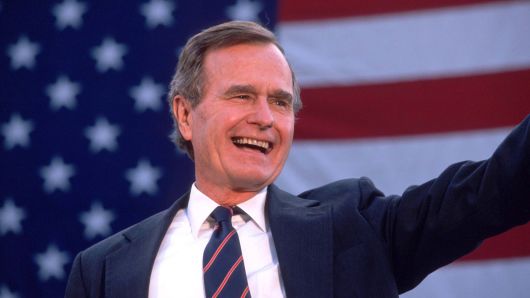
 The Super Falcons of Nigeria have emerged as the champions of Africa for an amazing ninth time as they beat South Africa’s Bayana Bayana 4-3 in Women’s Africa Cup of Nations final at the Accra Sports Stadium.

 President Muhammadu Buhari has assured farmers affected by flood this year of adequate compensation.
 Supporters of the Presidential candidate of the Peoples Democratic Party (PDP), Atiku Abubakar are now jubilating that at last, he has been issued the long sought-after American visa to travel to that country.
