Former President Goodluck Jonathan has blamed the Nigerian army for not doing enough to rescue the over 200 students of the Government Girls Secondary School in Chibok, Borno, who were abducted from their schools in 2014 by Boko Haram insurgents.
Speaking on the British Broadcasting Corporation (BBC) today, Friday, the former President said: “let me admit that yes, maybe they (the military) did their best but their best was not good enough for us to recover the girls. That I cannot say I am right or I am wrong. That does not mean I am trying to remove myself from any blame.
Dr. Jonathan made it clear that he is not to be blamed for the abduction since he was not a soldier or member of Boko Haram.
“I cannot take responsibility for the abduction, I don’t control Boko Haram. They are criminals. But as a President, of course you know it is not the President that goes to the field. You have security and intelligence officers that do the work.
“I may not be blamed for the action but I could be blamed that my security intelligence system was not strong enough to rescue the girls. If I as a politician could tell the whole world that my political ambition for any office is not worth the blood of a single Nigerian, how would I be happy that girls have been kidnapped? I am not that kind of character.”
He lamented the way the Chibok girls issue was politicized even as he wondered why the First Lady of the United States would take part in carrying a ‘Bring Back Our Girls’ placard.
“Immediately the Chibok issue came up, we expected Nigerians to be concerned about how to get these girls out. Within a couple of days, we saw people going to the US with ‘Bring Back Our Girls’ placards. How? Why? And of course, Mrs. Obama received one of those placards.”
The former President reiterated his concern over the supposed interference of President Barack Obama during the build-up to the 2015 general elections.
Jonathan questioned the rationale behind the visit of US Secretary of State, John Kerry, to Nigeria on the eve of the elections, adding that such an interference should not be swept under the carpet.
“The level of interference by the Obama government was very overwhelming. It is not as if I could not have won the election even with that. If by my own thinking and also the way other people looked at it, they go outside the normal diplomatic relationship, then it should be mentioned.
“Sending that person to Nigeria on the eve of elections even after Obama had issued a statement directing Nigerians to vote for the next chapter, that tells you something and we should not sweep these things under the carpet.
“If a foreign country whether African country or America interferes with our own elections, we should mention it.”
The Chief of Army Staff, Lieutenant General Tukur Yusuf Buratai has commanded field commanders to complement whatever approach they take in prosecuting the ongoing counter insurgency operations with offensive posture.
Buratai, who gave the command today, Friday in Maiduguri at the conclusion of the Fourth Quarter Chief of Army Conference, said that such posture is necessary to instill fear in the terrorists.
Buratai asked troops not to be deterred by the recent setbacks, especially at Metele, where the Boko Haram terrorists attacked troops of 157 Task Force Battalion, killed 23 of them and wounded 31 other others.
“Operational commanders at all levels must show leadership and inculcate such virtue in subordinate commanders.
“The recent unfortunate incidences involving our troops have given me great concern and should concern all of us.
“We have not focused on providing adequate force protection and our offensive posture has been below expectation.
According to him, the development of `super camps’ and more emphasis on functioning logistics bases will give us a more deliberate approach to achieving force protection and reducing our delivery of needed logistics to units in the field.
Senate Majority leader, Ahmed Lawal has warned the opposition Peoples Democratic Party (PDP), and its Presidential candidate, Atiku Abubakar to stop agitating over the delay in signing into law, the electoral Act by President Muhammadu Buhari.
“The President reserves the right to study it and not to be pressurized. I noticed that the PDP, in their meeting of yesterday, was saying the Presidency must sign the bill; was the bill passed by the PDP or the National Assembly? This kind of thing tells you a lot. I expect members of the National Assembly to be the ones talking and not PDP national chairman or other presidential candidates.”
Senator Ahmed, who fielded questions from news men today, Friday, at the Presidential Villa, Abuja, said that afterall, President Buhari has so far signed more bills than previous Presidents in this country.
“Previous government of President Jonathan didn’t sign much; they kept most of the bills sent by the National Assembly. So I want to give kudos to the President for ensuring that he looks into the bills before signing.”
He said that the President had twice sent back, the electoral bill, adding that it showed that the President is willing to sign the bill provided it meets certain conditions that will make our electoral processes better and saner.
“So, the President is studying this bill. It is not like you will send it to him and he will immediately sign. This is a sign that he is really interested in what we sent back to him. It is for him and his advisers to read through line by line and see how best the electoral process can be enhanced.
“I don’t think we have ran out of time; in fact, we still have the 2006 Electoral Act as amended that we used in 2015 for an election that was adjudged to be free, fair and an improved process.
“I will advise, even though I am not one of his advisers, that he goes through what has been sent to him line by line, understand whatever his advisers will tell him and of what we have sent will make the elections in 2019 better, then he signs.
“If however, he discovers some provisions that will bring contradictions and controversies, he can withhold assent. I’m not advocating that he withholds assent but if he does, that is his right. I want to tell you that the APC caucus in the National Assembly stands with Mr. President on this.”
The Senate leader recalled that the 2006 electoral act as amended, was used in the 2015 general elections, adding that the general elections in 2015 were free and fair?
“The processes were free and fair. So if we are not able to get this bill signed, we can still use the 2006 electoral act as amended and in fact we can even achieve better than we did in 2015. We can observed our deficiencies in 2015 elections using the same act and we can improve in the a administrative approach to the elections.
“So, I personally believe the president is doing what is right. Nobody should pushed or pressurize him into signing the bill; he needs to thoroughly read and then take a decision.
Operatives of the Economic and Financial Crimes Commission, EFCC have intercepted one Abbas Lakis, a Lebanese with undeclared sum of $2 million aboard Egypt airline at the Nnamdi Azikiwe International Airport, Abuja.
According to the EFCC, Lakis was picked up, following intelligence report that he had on him, undeclared huge sums of monies aboard the Egypt Airline bringing him from the Kano Airport en route Lebanon.
The agency said that at the point of arrest, a thorough search on his luggage led to uncovering of $2,104,936; £163, 740; 144,680 Euros.
Other currencies found on Lakis include 391,838 Saudi Arabian Riyals; 3,420 Swiss Franc; 435 Lira; 109,000 Lebanese Pounds; 10,135 UAE Dirhams; 10,000 Chinese Yuan and 10 Qatar riyal in his possession.
The anti corruption agency said that the Lebanese will be charged to court as soon as investigations are concluded
The Independent National Electoral Commission has said that names of 73 presidential candidates have been submitted for the 2019, even as the deadline for withdrawal and substitution of candidates for the election draws near.
The Chairman of INEC, Professor Mahmood Yakubu, who spoke today, Friday, at the opening ceremony of a two-day capacity building workshop for journalists in Abuja, said: “at the end of the period for the substitution and withdrawal of candidates for the presidential election, a total of 73 political parties have now filed their nominations.
“Even so, a few parties have nominated candidates below the mandatory age of 35 years as presidential and vice presidential candidates.
“We have drawn the attention of the parties concerned to the breach of the constitutional requirement ahead of the publication of the full list of presidential and vice presidential candidates for the 2019 General Elections.
“For National Assembly elections, a total of 1,848 candidates (1,615 males and 233 females) are vying for 109 Senatorial seats, while 4,635 candidates (4,066 males and 569 females) are competing for the 360 seats in the House of Representatives.”
The chairman also said that the full list of candidates and their political parties would be published for public information in line with the commission’s timetable and schedule of activities.
The commission had earlier announced receipt of 79 candidates as of the close of submission of nomination forms in October.
Chairman of the Independent National Electoral Commission (INEC), Mahmood Yakubu, has threatened to disqualify the presidential candidates of some political parties due to their age.
INEC Chairman, who spoke yesterday, Thursday at a capacity building for journalists in Abuja, said that the Commission discovered that some nominated candidates are below the mandatory age of thirty-five years for presidential and vice presidential candidates.
”A few parties have nominated candidates below the mandatory age of thirty-five (35) years for as presidential and vice presidential candidates,” he said.
“We have drawn the attention of the parties concerned to the breach of the constitutional requirement ahead of the publication of the full list of presidential and vice presidential candidates for the 2019 general elections.
“So far, INEC has successfully implemented seven out of the 14 activities strictly on schedule, including the conduct of party primaries for all elections and the processes of nomination of candidates.
“We did not, and will never, tolerate any breach of the strict timelines provided for in the timetable for the elections.
“At the end of the period for the substitution and withdrawal of candidates for the presidential election, a total of 73 political parties have now filed their nominations.
“Even so, a few parties have nominated candidates below the mandatory age of 35 years for as presidential and vice presidential candidates.
“We have drawn the attention of the parties concerned to the breach of the constitutional requirement ahead of the publication of the full list of presidential and vice presidential candidates for the 2019 general elections.
“For National Assembly elections, a total of 1,848 candidates (1,615 male and 233 female) are vying for 109 Senatorial seats while 4,635 candidates (4,066 male and 569 female) are competing for the 360 seats in the House of Representatives.
“Similarly, the full list of candidates and their political parties will be published for public information in line with the Commission’s timetable and schedule of activities.
“As for state elections, a total of 1,068 candidates, 980 male and 88 female, are contesting for 29 Governorship positions with 805 male and 263 female deputy governorship candidates.
“The commission is working on the list of candidates nominated by political parties for the 991 State Assembly constituencies as well as the 68 Area Council Chairmen and Councillors for the Federal Capital Territory, FCT.
“The full details will also be published for public information in line with our timetable and schedule of activities. Unfortunately, we have also witnessed some of the most acrimonious party primaries in our recent history.”
“Internal party democracy is still a source of concern to our electoral progress. So far, the Commission has been joined in 396 pending actions in various courts across the country arising from the conduct of party primaries and nomination of candidates by political parties.
“We have similarly received 302 requests for Certified True Copies, CTC, of documents, mainly our monitoring reports of party primaries and copies of personal particulars of candidates.
“These requests are obviously a prelude to more court actions. In addition, we have also received 52 petitions and protests from aggrieved party aspirants.
“The implication of these challenges is that as we prepare for the General Elections, we are also going to grapple with pre-election litigations.
“Parties that fail to respect the democratic process in selecting candidates during primary elections lose the moral right to complain about secondary elections,” he added.
The Permanent Secretary in the State House, Jalal Arabi has said that so far a total of N2.1 Billion out of the total allocation for the running of the Presidency in the 2018 Capital releases.
Jalal, who spoke today, Friday when members of the House Committee on Special Projects visited the State House as part of its oversight functions, emphasized that the N2.1 billion represents 61.2 percent of the amount released for the year.
According to him, the balance will be disbursed to the contractors as soon as they complete their jobs.
The permanent secretary told the visitors that he was hopeful that there would be additional releases before the end of the year to enable the Presidency pay contractors that have executed jobs awarded to them, or to commence work on critical projects yet to be started.
Jalal expressed his appreciation to the committee for their support towards improving service delivery in the State House
In his remarks, the Acting Chairman of the Committee, Ayodeji Joseph commended Jalal for the utilization of the releases so far.
He however wanted the Permanent Secretary to furnish the committee with the specifications of the security vehicles needed for use in the State House so that they can defend the appropriations in their constituencies.
The Acting Chairman, Economic and Financial Crimes Commission (EFCC), Ibrahim Magu, has said that the commission will embark on through investigation into the lingering case of Malabu Oil Scandal, and that those who are found to have hand in it will be prosecuted.
Ibrahim Magu, who spoke when he received some documents from the President of the Resource for Development Consulting, Dr. Don Hubert, yesterday, Thursday, at the EFCC Headquarters, Abuja, gave assurance that the commission will look critically into the matter.
“We shall constitute a committee to digest it so that investigation can be extended to all grey areas and charges brought or amended against the suspects accordingly”, he said.
Magu added that the EFCC was taking its time to investigate the scandal, so that “a water tight case” will be made before prosecution.
Hubert, an extractive industries analyst, analyzed the terms and conditions for the sale of the controversial Oil Prospecting Lease, OPL 245, otherwise known as Malabu Oil Block, to Shell and Eni.
In the report, Hubert, pointed out that at least one third of the value of the oil block, which comes from fiscal concessions in the 2011 Resolution Agreement, RA, between Nigeria and the operators of the block, essentially takes away oil profit from the government and the Nigerian people.
According to the Canada-based analyst, the organization has helped countries, rich in oil and gas to get a fair share of the revenue, analyze oil contracts and build economic models, ultimately forecast government revenue. “The 2011 RA will result in the loss of revenue to the Nigerian people and government to the tune of at least $4.5 billion”.
“The reason for the losses is the core relevant of a production sharing contract, the share of profit to the government has been removed from this particular deal,” he said, explaining further that “as it stands today, Nigeria will lose between $6 billion and N10 billion to the deal, which is now being investigated outside Nigeria”.
He explained that the result of their findings indicated an estimate minimum loss of $4.5billion as a result of the 2011 deal.
Chairman of HEDA Resource Centre, Olarewaju Suraju, a “corruption hunter” and one of the partners in the team that produced the findings on the OPL 245, commended the efforts of the EFCC in the fight against corruption.
Suraju who said they prepared the damning finding to enable the Nigerian government identify and punish the individuals and organizations involved in the oil scam explained that all hands must be on deck to stop further pillage of the nation’s oil revenue.
“It is the strong recommendation of HEDA and the partners that the OPL 245 license should be revoked and we now have both economic and legal basis to challenge the deal”, he said.
In 1844, the Revd Samuel Ajayi Crowther returned home to Yoruba land (now part of modern-day Nigeria). Twenty years earlier, he had been kidnapped and sold to European slave traders who were bound for the Americas. He was freed by an abolitionist naval patrol, and received by the Church Missionary Society. There, he found his calling.
Crowther made his voyage home to establish the first Anglican mission in Yoruba land. He came with the first Bibles translated into Yoruba and Hausa languages. He opened dialogue and discussion with those of other faiths. And his mission was a success: Crowther later became the first African Anglican bishop in Africa.
Today, Nigeria has the largest Christian population on the continent. The messages and teachings of Christianity are part of the fabric of each person’s life.
ALONG with the millions of Christians in Nigeria today, I believe in peace, tolerance, and reconciliation; in the institution of the family, the sanctity of marriage, and the honour of fidelity; in hope, compassion, and divine revelation.
Like Bishop Crowther, I am a descendant of Abraham; unlike him, I am a Muslim. I believe our two great religions can not only peacefully coexist but also flourish together. But Muslims and Christians must first turn to one another in compassion. For, as it says in Amos 3.3: “Do two walk together, unless they have agreed to meet?”
As they are People of the Book, I believe that there is far more that unites Muslims and Christians than divides them. In fact, I believe that the messages of the Bible are universal: available for anyone to exercise, and instructive to all.
We must resist the temptation to retreat into our communities, because, if we do, we can only look inwards. It is only when we mix that we can reach new and greater possibilities.
Whichever religion or religious denomination they choose to follow, Nigerians are devout. Anything that Nigerians believe will place impositions on their practice, and belief is therefore sure to cause widespread alarm.
And, unfortunately, there are those who seek to divide Nigerians — and our two great religions — and to do so for their own advantage.
I stand accused — paradoxically — of trying to Islamise Nigeria while also being accused by Boko Haram terrorists of being against Islam. My Vice-President is a devout man, a Christian pastor. He, too, is accused of selling out his religion, because of his support for me.
This is not the first time that I — nor, indeed, my Christian-Muslim evenly split cabinet — have been the subject of such nonsense. Fortunately, the facts speak differently from the words of those who seek to divide us from one another.
Since my administration has been in power, Boko Haram has been significantly and fatally degraded; I have befriended church leaders and church groups both within and outside our country; my Vice-President has addressed and opened dialogue with Muslims up and down our land.
In all things, we seek that which all well-meaning Christians and well-meaning Muslims must seek: to unite, respect, and never to divide. Does it not say “There is no compulsion in religion” (Qur’an 2.256)? Does it not say “Forbid him not: for he that is not against us is for us” (Luke 9.50)? This, surely, is the path that followers of both our two great religions must walk.
UNFORTUNATELY, those who wish us all to walk apart have recently found another focus for their efforts: the tragic clashes between nomadic herdsmen and settled farmers in the central regions of Nigeria.
For generations, herders have driven their cattle from the north to the centre of our country; they tend to be predominantly Muslim, although not exclusively. The farmers, in certain areas of central Nigeria, are predominantly Christian.
The causes of this conflict are not religious or theological, but temporal. At the heart of this discord is access to rural land, exacerbated both by climate change and population growth.
Sadly, there are some who seek to play fast and loose and so make others believe that these are not the facts. When religion is claimed as the cause — and by those who know that it is not — it only makes finding a resolution more difficult.
The government has taken action to mediate, to bring the two groups together in peace and unity. But we also need all parties to follow the teachings of the scriptures, and encourage reconciliation rather than cause division. As it is said: “Having eyes do you not see, and having ears do you not hear?” (Mark 8.18).
As our constitution codifies, politicising religion has no place in Nigeria; for it makes us turn away from one another; it makes us retreat into our communities and walk different paths.
I believe that there is a better way. To those who seek to divide, I still hold my hand out in brotherhood and forgiveness. I ask only that they stop, and instead encourage us to turn towards one another in love and compassion. Nigeria belongs to all of us. This is what I believe.
Muhammadu Buhari is President of the Federal Republic of Nigeria.
“When beggars die, there are no comets seen; the heavens themselves blaze forth the death of princes.”-Williams Shakespeare
The 17th century English poet and playwright, remarkably one of the greatest wordsmiths that ever lived, must have penned the enduring lines with the likes of the political gladiator, inimitable party administrator and aficionado, Chief (Dr) Anthony Akhakon Anenih, the Iyasele of Esanland, in mind.
Anenih’s demise on October 28, 2018, at the age of 85, together with the surfeit of profound tributes that have trailed it, perfectly fits into Shakespeare’s contemplation and summation of death in its nuances.
Indeed, the observance of burial rites for Anenih is, essentially, a celebration of his life and times; and, it reminds us of how our shared humanity is daily discounted and the compelling obligation to always be ready for our respective exit.
John Donne put it succinctly in his Meditation XV11: “Any man’s death diminishes me, because I am involved in mankind, and therefore never send to know for whom the bell tolls; it tolls for thee.” Anenih’s death diminishes me. It diminishes many others whose paths crossed his and whose lives he touched with his eleemosynary acts.
The Iyasele defined his eon with the magnitude of his humanity and politics, a trade that he plied for about four decades, until that luminous epoch came to an abrupt end on that fateful Lord’s day. But he left his indelible imprints clearly stamped on the nation’s political landscape both as a strategist and tactician par excellence. His political exertions were quite incredible so much so that his associates and those in the other camps had different perceptions of his persona.
To his admiring loyal followers, Anenih was a leader who could be relied upon to attend to their socio-political and economic frailties and needs. But those in the other camps, acting in cahoots with their satellites in the media, successfully hung on him “Mr. Fix it”, a sobriquet he somewhat deprecated because of its connotative usage. But the conspirators succeeded in using it to denote their preconceived negative imageries and narratives about him.
But providence gave him a second chance in 2015, after he survived an emergency open-heart surgery, to deploy the medium of his autobiography titled, “My Life and Nigerian Politics”, which was presented to the public in 2016, to clear some of the erroneous perceptions, misconceptions and misconstructions by members of the public about his politics, philosophy and persona. He used the occasion to announce his withdrawal from politics as there were no more points to prove, according to him.
That intersection, spanning three years, had also given him the opportunity to sort out so many other things, especially spiritual: rededicating his life to God, reconciling with those that he offended and those who offended him through unsolicited and unconditional forgiveness. A devout Catholic, it was very clear that he was prepared to meet with his creator, having run his race and completed his course.
But to be clear, Anenih had been somewhat prepared long time ago for his transition to the celestial realm as validated by his decision in 2001 to build his Mausoleum, his final resting place, where he would be interred upon his death, in his country home in Uromi. That is the place his remains will be buried today, Saturday, December 1, 2018, after a Funeral Mass at the St. Anthony Catholic Cathedral. The interment will be witnessed by members of his immediate family only.
A political icon, he remains a dependable leader, even in death, to his loyal political followers. To the best of his ability, he reciprocated their loyalty with greater loyalty and political rewards, which he selflessly dispensed. He was an apostle of “101 percent loyalty”; and, he was exemplary on that score.
Anenih was consistent and persistent to the end in the Peoples Democratic Party (PDP) even in the face of treachery by some associates. This was one of the attestations by former President Goodluck Jonathan at the Requiem Mass and a session of Tributes held on Tuesday, November 27, 2018, at the Ecumenical Centre in Abuja.
His voyage into the nation’s cloak-and-dagger politics began in 1979 as a member and, subsequently, Chairman of the National Party of Nigeria (NPN) in the old Bendel State. He was instrumental to the victory of Dr. Samuel Ogbemudia as governor in 1982. At the time, he had just retired as Commissioner of Police and was tending to his successful private businesses.
Anenih would later, in 1991, as National Chairman of the Social Democratic Party (SDP), work for the victory of Chief John Odigie-Oyegun as governor of Edo State. He repeated the same feat with the victory of Chief Lucky Igbinedion as governor in 1999 and 2003. But the 2007 governorship election in Edo marked the turning point. It was one of the very few political battles that he lost irretrievably.
It is important to underscore the pan-Nigerian outlook of Anenih’s politics, which made him detribalised. In 1982, he played a key role in the election of Alhaji Shehu Shagari as president for a second term, which was cut short by a military coup; in 1993, as National Chairman of the SDP, he led the presidential electioneering of the SDP that culminated in Chief MKO Abiola’s June 12 victory that was annulled.
Anenih’s role in the 1999, 2003, 2007 and 2011 presidential elections was writ large. It produced the victory of Chief Olusegun Obasanjo, Alhaji Umaru Musa Yar’Adua and Dr Goodluck Jonathan respectively. Some of his single-minded and surefooted assertions such as “there is no vacancy in Aso Rock” helped to reinforce his élan as a political strategist and tactician.
At the level of pragmatic administrative savoir faire, Anenih, as Minister of Works and Housing from 1999 to 2002, availed Edo State his influence in government by repairing the critical Benin by-pass that has since greatly helped to ease the perennial traffic gridlock in Benin City. He also repaired the Benin-Asaba road and the Benin-Warri road.
In recognition of his immense contribution to party administration and success of PDP-controlled federal government, he was conferred with the national honour of Commander of the Order of the Federal Republic (CFR). In death, he holds the records of being Chairman of the Board of Trustees of the PDP twice from 2004 to 2007 and from 2013 to 2015. He was also appointed twice as Chairman of the Board of Nigerian Ports Authority (NPA) from 2009 to 2011 and from 2012 to 2015.
A holder of many chieftaincy titles and honorary doctorate degrees from some Nigerian universities, the narrative of Anenih’s rise from grass to grace remains a source of inspiration to those who share with him similar socio-economic circumstances that he overcame in his quest for success in life, which God made possible through the right connection.
On the occasion of his 80thbirthday in Abuja in 2013, he told the quality audience that the late General Shehu Musa Yar’Adua was the person that God used to position him in Nigerian politics. He wept as he recognised and appreciated the presence of Hajia Binta, the wife of General Shehu Yar’Adua, at the venue of the birthday reception.
That was the soft side of the Anenih persona that was not known in its vastness to those who saw him as a tough-looking politician. Whereas, beneath the façade of his tough look, accentuated by his taciturn disposition, was a profound humanity that defined his life and act of philanthropy.
Perhaps, the most touching of his charity works remains his endowment in 2012 of the multi-million naira Geriatric Centre at the University College Hospital (UCH) Ibadan, the first of its kind on the African continent, for the treatment of senior citizens with age-related sicknesses. He continued to maintain, annually, the facility, until he passed on.
And as Chuk Palahniuk once said, “We all die. The goal isn’t to live forever; the goal is to create something that will.” His contemplation finds anchorage in Samuel Johnson’s rumination: “It matters not how a man dies, but how he lives. The act of dying is not of importance, it lasts so short a time.”
Chief Anthony Akhakon Anenih lived a good life. He lived for humanity. He lived for family. He lived for country and, above all, he lived for and honoured God with his substance. Adieu, great leader!
Ojeifo, Editor-in-Chief of The Congresswatch magazine, was media consultant to Chief Tony Anenih.
We use cookies on our website to give you the most relevant experience by remembering your preferences and repeat visits. By clicking “Accept”, you consent to the use of ALL the cookies.
This website uses cookies to improve your experience while you navigate through the website. Out of these, the cookies that are categorized as necessary are stored on your browser as they are essential for the working of basic functionalities of the website. We also use third-party cookies that help us analyze and understand how you use this website. These cookies will be stored in your browser only with your consent. You also have the option to opt-out of these cookies. But opting out of some of these cookies may affect your browsing experience.
Necessary cookies are absolutely essential for the website to function properly. This category only includes cookies that ensures basic functionalities and security features of the website. These cookies do not store any personal information.
Any cookies that may not be particularly necessary for the website to function and is used specifically to collect user personal data via analytics, ads, other embedded contents are termed as non-necessary cookies. It is mandatory to procure user consent prior to running these cookies on your website.


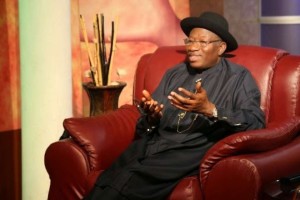 Former President Goodluck Jonathan has blamed the Nigerian army for not doing enough to rescue the over 200 students of the Government Girls Secondary School in Chibok, Borno, who were abducted from their schools in 2014 by Boko Haram insurgents.
 The Chief of Army Staff, Lieutenant General Tukur Yusuf Buratai has commanded field commanders to complement whatever approach they take in prosecuting the ongoing counter insurgency operations with offensive posture.
 Operatives of the Economic and Financial Crimes Commission, EFCC have intercepted one Abbas Lakis, a Lebanese with undeclared sum of $2 million aboard Egypt airline at the Nnamdi Azikiwe International Airport, Abuja.
 The Independent National Electoral Commission has said that names of 73 presidential candidates have been submitted for the 2019, even as the deadline for withdrawal and substitution of candidates for the election draws near.
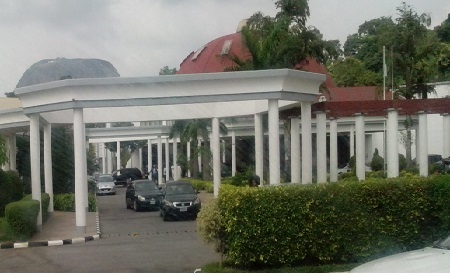 The Permanent Secretary in the State House, Jalal Arabi has said that so far a total of N2.1 Billion out of the total allocation for the running of the Presidency in the 2018 Capital releases.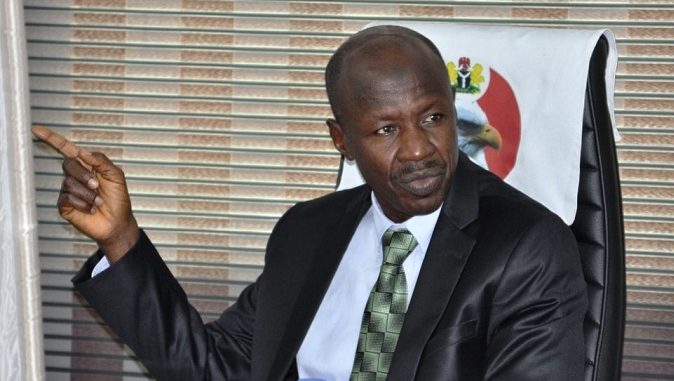



Nigerian Muslims, Christians Can Flourish Together, By Muhammadu Buhari
In 1844, the Revd Samuel Ajayi Crowther returned home to Yoruba land (now part of modern-day Nigeria). Twenty years earlier, he had been kidnapped and sold to European slave traders who were bound for the Americas. He was freed by an abolitionist naval patrol, and received by the Church Missionary Society. There, he found his calling.
Crowther made his voyage home to establish the first Anglican mission in Yoruba land. He came with the first Bibles translated into Yoruba and Hausa languages. He opened dialogue and discussion with those of other faiths. And his mission was a success: Crowther later became the first African Anglican bishop in Africa.
Today, Nigeria has the largest Christian population on the continent. The messages and teachings of Christianity are part of the fabric of each person’s life.
ALONG with the millions of Christians in Nigeria today, I believe in peace, tolerance, and reconciliation; in the institution of the family, the sanctity of marriage, and the honour of fidelity; in hope, compassion, and divine revelation.
Like Bishop Crowther, I am a descendant of Abraham; unlike him, I am a Muslim. I believe our two great religions can not only peacefully coexist but also flourish together. But Muslims and Christians must first turn to one another in compassion. For, as it says in Amos 3.3: “Do two walk together, unless they have agreed to meet?”
As they are People of the Book, I believe that there is far more that unites Muslims and Christians than divides them. In fact, I believe that the messages of the Bible are universal: available for anyone to exercise, and instructive to all.
We must resist the temptation to retreat into our communities, because, if we do, we can only look inwards. It is only when we mix that we can reach new and greater possibilities.
Whichever religion or religious denomination they choose to follow, Nigerians are devout. Anything that Nigerians believe will place impositions on their practice, and belief is therefore sure to cause widespread alarm.
And, unfortunately, there are those who seek to divide Nigerians — and our two great religions — and to do so for their own advantage.
I stand accused — paradoxically — of trying to Islamise Nigeria while also being accused by Boko Haram terrorists of being against Islam. My Vice-President is a devout man, a Christian pastor. He, too, is accused of selling out his religion, because of his support for me.
This is not the first time that I — nor, indeed, my Christian-Muslim evenly split cabinet — have been the subject of such nonsense. Fortunately, the facts speak differently from the words of those who seek to divide us from one another.
Since my administration has been in power, Boko Haram has been significantly and fatally degraded; I have befriended church leaders and church groups both within and outside our country; my Vice-President has addressed and opened dialogue with Muslims up and down our land.
In all things, we seek that which all well-meaning Christians and well-meaning Muslims must seek: to unite, respect, and never to divide. Does it not say “There is no compulsion in religion” (Qur’an 2.256)? Does it not say “Forbid him not: for he that is not against us is for us” (Luke 9.50)? This, surely, is the path that followers of both our two great religions must walk.
UNFORTUNATELY, those who wish us all to walk apart have recently found another focus for their efforts: the tragic clashes between nomadic herdsmen and settled farmers in the central regions of Nigeria.
For generations, herders have driven their cattle from the north to the centre of our country; they tend to be predominantly Muslim, although not exclusively. The farmers, in certain areas of central Nigeria, are predominantly Christian.
The causes of this conflict are not religious or theological, but temporal. At the heart of this discord is access to rural land, exacerbated both by climate change and population growth.
Sadly, there are some who seek to play fast and loose and so make others believe that these are not the facts. When religion is claimed as the cause — and by those who know that it is not — it only makes finding a resolution more difficult.
The government has taken action to mediate, to bring the two groups together in peace and unity. But we also need all parties to follow the teachings of the scriptures, and encourage reconciliation rather than cause division. As it is said: “Having eyes do you not see, and having ears do you not hear?” (Mark 8.18).
As our constitution codifies, politicising religion has no place in Nigeria; for it makes us turn away from one another; it makes us retreat into our communities and walk different paths.
I believe that there is a better way. To those who seek to divide, I still hold my hand out in brotherhood and forgiveness. I ask only that they stop, and instead encourage us to turn towards one another in love and compassion. Nigeria belongs to all of us. This is what I believe.