The Central Bank of Nigeria (CBN) has injected over $337 million into the inter- Bank forex market.
The apex bank also intervened in the Retail Secondary Market Sales (SMIS) to the tune of $337,333,646.85, in addition to the sum of CNY53,444,222.38 million in the spot and short tenored forwards of the inter-bank foreign exchange market.
The Bank’s Director in charge of Corporate Communications Department, Isaac Okorafor, said that the move is in furtherance of the bank’s commitment to ensuring adequate liquidity and stability in the inter-bank foreign exchange market.
It will be recalled that the apex bank had, on Thursday, injected the sum of $210 million in the inter-bank foreign exchange market.
Meanwhile, the naira maintained its steady rate against major currencies around the globe, exchanging for N362/$1 in the BDC segment of the market today, Friday.
Chinese investors have arrived in Abuja, the Nigeria’s federal capital, on a trade and investment visit. The visit is a follow up on the recent concluded Forum on China-Africa Cooperation (FOCAC).
The investors, under the canopy of Shandong Auto Parts Chamber of Commerce, made their first call on the minister of Federal Capital Territory (FCT), Malam Muhammad Musa Bello.
Welcoming the investors, the minister acknowledged the support of the Chinese government to the FCT Administration, especially in the areas of education, public utilities such as the physical construction of schools and transportation.
The President of the China Shandong Auto Parts Chamber of Commerce, and leader of the delegation, Zhou LiPing, said that China had a large market of auto parts, adding that they would like to partner with Nigeria to bring their products and services to the country.
Liping said that his organization has already acquired a space in Lagos for a large warehouse, adding that the volume of investment the group intends to bring to Nigeria is estimated to create over 10,000 jobs.
Former Chairman of the National Human Rights Commission (NHRC), Professor Chidi Odinkalu, has identified electoral violence, hate speech and political innumeracy as some of the major threats capable of undermining the 2019 general elections.
Odinkalu, a Senior Manager in Africa Programme, Open Society Justice Initiative as well as Chairman of the Advisory Board, Global Rights, spoke yesterday, Friday, as Guest Speaker at the Second Annual Conference of the Guild of Corporate Online Publishers (GOCOP) in Lagos.
He spoke on the theme of the Conference: “Fostering a Sustainable Economy, Credible Elections and Security in Nigeria – What Role for the Online Publisher?”
The professor of law, who is also Chair, Board of Directors, International Refugee Rights Initiative, admonished the media to step up its advocacy and enlightenment responsibilities towards ensuring that 2019 elections are conducted in a safe and secure environment void of these threats.
He listed other factors that may undermine the polls to include insecurity, especially with killings and abductions in many parts of the North, South East and South South; food insecurity accentuated by the killings and violence in the nation’s food basket states of Benue, Adamawa, Plateau among others; and the growing abuse of drugs (opiods), which he explained has a direct correlation with violence.
While sympathizing with journalists and the journalism profession in the 21st century, which he described as a “dangerous business, a risky venture”, he insisted that in spite of the obvious threats to the lives of journalists, media practitioners must never shy away from their primary duty of bringing public actors to account to the people.
According to Odinkalu, electoral violence has the capacity of casting huge slur on the electoral process such that the electorate are not only intimidated, the entire process is bullied and the outcome is mutilated.
He wondered that given the red flags and flashpoints of violence already recorded in the primary elections, the nation’s security apparatchik may have more than enough to chew in its duty of securing the nation.
He said: “With the armed forces now leading in security provisioning and deployed in all states of the country, security institutions are likely to be stretched very thin ahead of the 2019 elections. I do not wish to get into predictions of fields of violence in the 2019 elections but it would also be naïve, based on what we already know and have seen, to assume that the contest will be without major incidents.”
With elections holding in 36 states and 774 local government areas across 8,809 registration areas (wards) in a total of 119,973 polling units with an expected voting population of 84.2 million registered voters at a time the nation is almost at war with itself, Prof. Odinkalu said both the electorate and the security agencies need to collaborate, especially in intelligence sharing, so as to nip some premeditated violence in the bud.
According to him, the media, especially corporate online journalists, must take the lead in reporting the entire electoral process impartially and objectively as any attempt to engage in partisan reporting will throw up dire consequences that may consume the society, including the media itself.
He said Nigeria suffers a crisis of self-manufactured innumeracy, which makes it difficult to cast ballot, count ballot accurately and announce credible result.
He said: “Elections are about numbers because democracy is about counting. Every democracy is built on counting the people (demographics of census), counting the voters (elections) and counting and distributing the commonwealth (appropriations). In this way, numbers are supposed to make us honest. In Nigeria, however, we choose to subvert all of these processes of counting through manufactured political innumeracy.
“Predictably, Nigeria has a habit of historically innumerate counting, especially in elections. Our elections are more often than not problematic not because we don’t vote peacefully (we mostly do) but because we choose almost always to be rooked with counting. Like the auto assembly, our political innumeracy is born of a completely knocked down (CKD) process. It begins long before the vote. It has already begun with the party primary process with some State Governors manufacturing ghost numbers of turnout that were manifestly fictional.”
Other dignitaries at the conference included former Governor of Ogun State, Chief Segun Osoba, who was represented by the Executive Director of Diamond Awards for Media Excellence; Lanre Idowu; Chairman, Centre of Excellence in Multimedia Tech, Department of Mass Communication, University of Lagos, Prof. Ralph Akinfeleye; Prof. Leonard Shilgba; and erudite columnist, Akogun Tola Adeniyi, popularly known as Aba Saheed.
President Muhammadu Buhari has insisted that a peaceful and prosperous country is realizable with collective vision and shared effort of all the citizens.
The President, who received Tijjaniyya Shura Council at the Presidential Villa, Abuja yesterday, Friday, commended religious bodies and Nigerians for the encouragement shown to the administration through prayers.
He gave assurance that his government will continue to review its interventions and projections on security and the economy, with the hope of bringing peace and improved economy to all.
Buhari stressed that his government will work harder to improve on the gains recorded in securing the country from the onslaughts of terrorists and criminals, and ensuring that Nigerians enjoy a better livelihood by stabilizing the economy.
“I am grateful for the prayers and words of encouragement,’’ he said, “Nigeria’s unity is strong and must be sustained. It is instructive to note that Nigeria preceded all of us in age, and we must do our best to keep the country together.”
In his remarks, leader of the Tijjaniyya, Sheikh Ibrahim Sheikh Maihula, said that the desire of the members is to live in a country that is peaceful and economically vibrant.
“We will keep praying for you and members of your administration.”
Sheikh Maihula said that peace and economic prosperity were not negotiable for the unity of the country, urging the president to remain focused and steadfast in pursuing the policies he had outlined.
Information is scanty about the death, yesterday, of the former Sudanese military president, Abdulrahman Suwar Al-Dahab, which occurred in the Saudi Arabian capital, Riyadh.
,Sudan’s state news agency, SUNA which announced the death of the former Sudanese strong man, did not give the details of the death.
But he was said to have died in Riyadh Military Hospital.
Ex President Al-Dahab, came from being the country’s military officer, defence minister to lead a coup in 1985 for the overthrow of Jaafar Nimeiri, who had been president since 1969.
When late President Al-Dahab took power, he promised to hold elections in a year’s time, a pledge few people believed, in a country exhausted by civil war.
In 1986, the Africa’s largest country by land area held multiparty elections and a civilian government took office.
Sudan’s current president, Omar al-Bashir, who has been in power for nearly 30 years and is wanted by the International Criminal Court (ICC) for war crimes, has previously said he would step down in 2020 and has not explicitly stated his intention to run again.
Vice President Yemi Osinbajo speaks with a victim when he visited victims of flood in the Internally Displaced Persons (IDP) at Igbogene and that at St. John’s Parish in Bayelsa.. He was accompanied by the Governor of Bayelsa State, Henry Seriake Dickson and his deputy Rear, Admiral Gboribiogha Jonah and the Director General of NEMA, Engr. Mustapha Maihaja. Photo by Novo Isioro.
Chief Segun Osoba | File photo credit: Asebeafrica
Former Governor of Ogun State, Chief Segun Osoba has challenged members of the Guild Of Corporate Online Publishers (GOCOP) to sanitize the social media being used by untrained Nigerians to promote hate across the country.
Chief Osoba, who spoke as chairman of the Second Annual Conference of GOCOP in Lagos today, Friday, admitted that social media has brought what was thought to be tomorrow to today, but regretted that many Nigerians are abusing it and that it is manifesting in the shape of fake news and unverified information.
Chief Osoba, who was represented by the Executive Director of Diamond Award for Media Excellence, Chief Lanre Idowu noted that some bloggers are in the habit promoting mischief and blackmail.
All such negative aspects of the social media, the former Governor said, threaten the integrity of the online medium.
“It is a global concern that you need to continuously look into. How can we reduce the proclivity for this errant behaviour? How much training and retraining can you put together for your members and other online practitioners to ensure we do not allow the menace to grow?
“I am aware your association is made up of responsible journalists but all it takes for your reputation to be sullied is a handful of the deviant people, who have other objectives for their presence in the public sphere. Whilst I will be looking forward to the outcome of your deliberations, I note that when the subjects of discourse touch the economy, credible elections and security of our country, there is no doubt that there is a lot to chew upon.
“Precipitate publications on the economy without appropriate contextual analysis are not the forte of responsible journalism. Naked partisanship that downplays the views and positions of some candidates so as to promote our biases is not the way to build credibility for our news organisations or the electoral process.”
Chief Osoba stressed that the media have a major role to play as impartial arbiters that should present the issues, the candidates and their positions on these issues in a way that helps the public to make sense out of the contending views.
He said that it is good to get the news first but that it is better to get it right.
“Your association should drum this point into the hearing of your members for if there is a medium that has the greatest potential to stoke conflict through precipitate and unverified information, it is the online media.
“In a country with still a large population of the uneducated, we must be careful not to unwittingly stoke violent conflicts, stunt economic development and imperil the future of our people.
“I urge you to remain apostles of good journalism where facts remain sacred and informed commentary is free.
A top Nigerian Journalist and pioneer Editor-In-Chief of rested Newswatch Magazine, Dele Giwa, who was killed through letter bomb in 1986, was remembered today, Friday, at the second Annual Conference of the Guild Of Corporate Online Publishers (GOCOP).
The main guest speaker at the Conference, Professor Chidi Odinkalu reminded the audience that the late editor-in-chief was killed exactly on October 19, 32 years ago.
Professor Odinkalu asked the audience, all of who are media chiefs, for a minute silence for him and other Journalists that were killed in the course of their duty.
Dele Giwa was killed after he received a parcel bomb which detonated at his residence, then located at No. 25 Talabi street, Ikeja, Lagos state.
Sumonu Oladele “Baines” Giwa was born on 16 March 1947 to a poor family working in the palace of Oba Adesoji Aderemi, the Ooni of Ife. He worked with the New York Times as a news assistant for four years after which he relocated to Nigeria to work with Daily Times. Dele Giwa and fellow journalists Ray Ekpu, Dan Agbese and Yakubu Mohammed founded Newswatch in 1984, and the first edition was distributed on 28 January 1985. A 1989 description of the magazine said it “changed the format of print journalism in Nigeria [and] introduced bold, investigative formats to news reporting in Nigeria”. However, in the first few months of the administration of General Ibrahim Babangida, who took power in August 1985, the magazine was shamelessly flattering. It printed his face on the cover four times and even criticised “anyone who attempted to make life unpleasant for Babangida”. Later, the paper took a more hostile view of the Babangida regime. Personal life Giwa married an American nurse in 1974. His second marriage, to Florence Ita Giwa, lasted 10 months. He later married Olufunmilayo Olaniyan on 10 July 1984, and they were married until his death in 1986. Assassination Dele Giwa was killed by a mail bomb in his Lagos home on 19 October 1986. The assassination occurred two days after he had been interviewed by State Security Service (SSS) officials.In an off-the-record interview with airport journalists, Lt. Col. A.K Togun, the Deputy Director of the State Security Service SSS had claimed that on 9 October Dele Giwa and Alex Ibru had organised a media parley for media executives and the newly created SSS. Togun claimed that it was at this meeting that the SSS and the media executives reached a secret censorship agreement. Under this agreement, the media was to report any story with potential to embarrass the government to the SSS before they tried to publish same. Giwa had been invited by the SSS to their headquarters for the first time on 19 September 1986 after writing an article in which he described the newly introduced Second-Tier Foreign Exchange Market (SFEM) as “God’s experiment” and suggested that if SFEM failed, the people would will stone their leaders in the streets. Giwa was interviewed and his statement taken by two SSS operatives. He was later taken to meet with Lt Col Togun, the deputy director of the agency in his office. Togun is reported to have told Giwa that he found nothing offensive in the story as Giwa had also stated in the same story that he was hopeful that Babangida seemed determined to make SFEM work. According to Giwa’s neighbour and colleague, Ray Ekpu, on 16 October 1986, Giwa had been questioned over the telephone by Col Akilu of the Directorate of Military Intelligence (DMI) over an allegation that Dele had been heard speaking to some people about arms importation. SSS officials reportedly summoned Giwa to their headquarters again on 16 October 1986, and on the next day Ekpu accompanied him to the SSS headquarters for the interview. Lt. Col Togun accused Giwa and Newswatch of planning to write the “other side” of the story on Ebitu Ukiwe who was removed as Chief of the General staff, to General Babangida. The magazine had published a cover story titled, “Power Games: Ukiwe loses out”, in its edition of 20 October which was on sale on 13 October 1986. Togun also accused Giwa of planning to import arms into the country and of claiming to have promised that Newswatch would employ the suspended police public relations officer Alozie Ogugbuaja. Ogugbuaja claims that on 16 October 1986, a bomb was defused by the police bomb squad at his official residence in GRA, Ikeja, Lagos. Ogugbuaja also said that he suspected that his phone might have been bugged because Giwa and Ray Ekpu in one of their telephone conversations with him had indeed promised to employ him in Newswatch if the police dismissed him. Ray Ekpu also believed that their houses and phones may have been bugged because he did discuss employing Ogugbuaja in Newswatch with dele Giwa over the phone only; he said that he found two bugging devices in the cover of two books inside his study. Lt. Col. Togun while questioning Giwa had claimed that he wasn’t aware of the fact that Akilu had already questioned Giwa over the gun running allegations the day before, this was after Giwa had brought it to his attention. Giwa reported the interrogations to his friend Prince Tony Momoh who was then the Minister of Communications, Giwa had told Momoh that he feared for his life because of the weight of the accusations levelled against him. According to Ekpu, Momoh “dismissed it as a joke and said the security men just wanted to rattle him”; Momoh promised to look into the matter. On 18 October Giwa also spoke to Admiral Augustus Aikhomu, the Chief of General Staff who said he was familiar with the matter and also promised to look into it. Later on 18 October, a day before the bombing, a staff of the DMI had phoned Giwa’s house and asked for his office phone number from his wife Funmi. This same person from the DMI later called back to say he couldn’t reach Giwa at the office and then put Col Akilu on the line. Ekpu alleges that Akilu asked Giwa’s wife for driving directions to the house and when she asked him why he needed the directions he explained that he wanted to stop by the house on his way to Kano and he wasn’t very familiar with Ikeja, he also offered that the President’s ADC had something for Giwa, probably an invitation. According to Ekpu this didn’t come as a surprise because Giwa had received advance copies of some of the President’s speeches in the past through Akilu. On 19 October, Giwa phoned Akilu to ask why he had been calling his house the previous day, Akilu was alleged to have explained that he only wanted to tell Giwa that the matter had been resolved. Ekpu says Giwa replied Akilu that it wasn’t over and that he had already informed his lawyer, Chief Gani Fawehinmi to follow up on the matter. Akilu then told Giwa that there was no need for that, that it wasn’t a matter for lawyers and that he should consider the matter resolved. About 40 minutes after the telephone conversation with Akilu, a package was delivered to Giwa’s guard (the accounts of which vehicle was used to deliver the package vary). When Giwa received the package, he was with Kayode Soyinka the London Bureau Chief of Newswatch. The package exploded, mortally wounded Giwa and temporarily deafening Soyinka, who had excused himself to the rest room shortly before Giwa was supposed to have attempted opening the package. Giwa was rushed to the hospital where he eventually died from his wounds. Investigation, Litigation and Controversy On twenty October, the day after the bombing, the government convened a press conference presided over by Augustus Aikhomu. Before the press conference started, all press photographers, foreign journalists, and Nigerians that worked for foreign news media were ordered out. Those left behind were told that the briefing was “off the record” and Aikhomu would not be entertaining any questions. Aikhomu then went on to ask Ismaila Gwarzo, the Director of the SSS and Haliru Akilu to render their accounts of what had transpired between Dele Giwa and their agencies in the recent past. Gwarzo confirmed that the SSS had invited Giwa for questioning over allegations of gun running. Akilu on his part confirmed that he had called Giwa’s home on 18 October to ask for directions to the house so he could stop over to see Giwa while on his way to Kano through Ikeja airport. Akilu also said that he had wanted to visit Giwa at home to “prove a Hausa adage that if you visit someone in his house, you show him you are really a friend.” Ekpu claimed that he remembered Gwarzo saying that the killing was “quite embarrassing” and also that Tony Momoh had described it as “a clear case of assassination”; later he was quoted saying, “a special probe would serve no useful purpose”. Graffiti of the time implied a belief that the SSS had been responsible. In a newspaper interview years later in retirement, Chris Omeben who at the time was the Deputy Inspector General of Police (DIG) in charge of the Federal Investigation and Intelligence Bureau (FIIB) at Alagbon, on his part recalled that he was the second officer to have handled the case file after he had taken it over from his predecessor at the FIIB, Victor Pam. Omeben explained that he had done what any competent investigator would have done in unravelling the circumstances surrounding the death of Dele Giwa. He went on to say that he had examined the crime scene and found it suspicious that the toilet adjacent to the blast site which Kayode Soyinka alleged he was occupying when the explosion occurred had also suffered damage from the blast but Soyinka was left unscathed. Omeben described the force of the explosion to have been strong enough to blow out the steel bars over the toilet window (burglary protection), which in his own assessment made Soyinka’s story less convincing. Omeben also claims he requested to interview Dan Agbese, Ray Ekpu and Kayode Soyinka. Of the three, only Agbese turned up, he was later to find out that Soyinka had fled the country.However, Soyinka has come out to reply Omeben and accused him of spreading deliberate falsehood with his comments on him on his involvement with the parcel bomb incident. In an interview he granted The Nation newspaper of Lagos of Saturday, 19 January 2013, Soyinka strongly denied that he ran to the toilet when the bomb exploded. He said he did not know where Omeben got that false information from. When questioned, Soyinka requested to not be required to relive the experience again. Omeben also alleged that he was being pressured into naming Babangida and Akilu as suspects when he yet had no evidence linking them to the crime. Some of this pressure led to the formation of a special squad to investigate the case, the squad was headed by Assistant Commissioner of Police Abubakar Tsav. Omeben alleges that the then Inspector General of Police Gambo Jimeta has asked him to leave the case with the Tsav team out of anger at how messy the whole situation was getting. Omeben also spoke about certain “fixations” in the minds of the general public about the case, in his own words “…There is the tendency for people to make up their minds as to what they want to see or hear. It may not necessarily be the truth and once they are so fixated, every other thing that somebody else would say would not mean anything to them. Dele Giwa’s case suffered such a fixation”. In testimony that he gave on 3 July 2001 before the Justice Oputa led Human Rights Violations Investigations Commission (HRVIC), Tsav alleged that the government stonewalled his investigation into the assassination. Tsav claimed that he was not granted permission to question key actors involved, including Tunde Togun, Ismaila Gwarzo and Haliru Akilu. He also said that he had requested that the privileges of these officers be withdrawn so he could take their statements and conduct a search of their offices and residences for items of evidential value but this request was denied. Tsav averred that in his final report, he had concluded that there was enough circumstantial evidence to accuse the duo of Togun and Akilu of conspiracy to murder but still the government did not make these two officers available for interrogation or a voice identification as he had requested. Tsav claims that he handed the case file back to Chris Omeben. Tsav alleged that none of his recommendations were implemented, the case file was never returned to him and that there was no evidence that the case was transferred to another officer or agency. Tsav said he believed Giwa was killed because he believed Giwa was in “the way of some powerful forces”. After the investigation stalled, various conspiracy theories arose to explain why Giwa was killed. One of the most popular and still the most enduring has been the Gloria Okon connection. Gloria Okon was a Lady who was arrested in 1985 by the National Security Organization (NSO) at the Aminu Kano International airport on suspicion of drug smuggling. Soon after, the NSO alleged that she had died in custody, the government subsequently constituted a commission of inquiry to investigate the matter. Conspiracy theorists allege that Gloria Okon was a drug mule working for the wife of General Ibrahim Babangida who was then the Minister of Defence in the regime of General Muhammadu Buhari. The theorists allege that during interrogation by the NSO Okon had claimed that she worked for highly placed Nigerians, in particular Babangida’s wife. The theory goes on that Babangida spirited Okon out of detention to the United Kingdom, sold the public the ruse of a dead Gloria Okon and that Dele Giwa happened upon Okon on a trip to the UK where she told him her story. The story goes on that armed with this information, Giwa tried to blackmail the now Military President, Ibrahim Babangida and this was why he was killed. This blackmail theory might not be unconnected with the off-the-record interview that Lt Col A.K Togun gave to airport correspondents of the Guardian on 27 October 1986. In the interview, when asked about Dele Giwa’s killing and the suspicion in the public that he was killed by the government, Togun was quoted as saying “…one person cannot come out to blackmail us. I am an expert in blackmail. I can blackmail very well. I studied propaganda so no one person can come and blackmail us after an agreement…”. Togun’s statement was in the context of the secret agreement reached by Giwa and other media executives at the 9 October meeting, he seemed to accuse Giwa of reneging on the agreement leading to Giwa being invited for questioning on 16 October. Theorists also allege that Babangida’s drug running activities were brought to the attention of the Buhari-Idiagbon regime which led the regime to slate him for retirement on 1 October 1985. They also say that it was his impending retirement that inspired him to plan the coup that toppled Buhari in August 1985. Mr Soyinka is also alleged to have given conflicting accounts of the events to the Police and media outlets, he is also accused of fleeing the country while investigations were ongoing. To the accusation of fleeing the country, Soyinka has this to say in that his interview with The Nation (Saturday, 19 January 2013): “Dele was very close to his mother. He did not joke with her at all. It was an honour for me to have met her. The last time I saw her was at Dele’s burial in their village near Auchi, in Edo State. I was there live with my wife contrary to the erroneous story of Babangida’s government’s mischief makers who tried to deceive the Nigerian people in order to exonerate the government from the assassination of Dele Giwa, saying that I had fled the country. They deliberately spread all kinds of falsehood, ignoring even newspaper reports and pictures of myself and my wife in attendance at the burial. And mind you, how could I have fled the country? My wife and children were not in Nigeria with me when the bomb exploded, they had to take the next available flight to Nigeria to join me. Yet, Babangida’s men said I fled the country. And my family and I remained in the country throughout the whole period of the controversy and burial arrangement. We returned to London together through the former British Caledonian Airways, through Muritala Mohammed Airport. There was no way we could have left quietly. We were accompanied to and seen off at the airport by friends, including the Newswatch editors, and family. The airline people recognised us. Our two children were still small then. The air hostesses took them from us, played with them, and they were asking me if I was feeling better – knowing the trauma one must have been through in the past weeks, and took us straight and right inside the aircraft, even before checking in other passengers. Yet the Babangida men kept saying, even till today, that I fled the country. Can you imagine?” Giwa’s lawyer was also accused of prematurely accusing the government of Dele Giwa’s murder thereby truncating the investigation into the case, Newswatch Magazine in an edition of 5 November 1986 disowned Fawehimni. The subsequent court cases instituted by Fawehinmi against the government to enable him try the case as a private prosecutor after the Director of Public Prosecution, Mrs. Eniola Fadayomi had refused to prosecute based on the evidence available were mostly unsuccessful. An excerpt of the Judgement by the then Lagos State Chief Judge, Justice Candido Johnson reads thus “…Even if one considers the reasonableness of time, I would say that the incident that gave birth to the death of the late Dele Giwa is not only unique in its form but also complex and would require sufficient time to conduct detailed and balanced investigation, a report on which the appropriate authority would reasonably act. The timing here appears hasty and premature. It appears impulsive without giving reasonable time and chance for a detailed and balanced investigation into this sordid incident. In the circumstances and having regard to the review made above, it is my ruling that this (ex-parte) application is misconceived and it is therefore dismissed. Leave to apply for mandamus is hereby refused.” Fawehinmi went on to the Supreme Court and got a favourable judgement which enabled him go back to the Lagos State High Court, this judgement also mandated the Justice Candido to recuse himself from the case and appoint another judge to hear the case. On 23 February 1988, Justice Longe ruled that the two security officers, Lt. Col Tunde Togun and Col. Haliru Akilu could not be tried for the murder of Dele Giwa. In his ruling Justice Longe averred among other things that,”…the Attorney general did not oppose the objection raised by counsel to the ‘accused’ persons, Chief Rotimi Williams, on the ground that the information was filed by private prosecutor (Chief Gani Fawehinmi) when the information had not been completed and especially when the ‘INFORMATION IMPLICATED ONE OF THE PROSECUTION WITNESSES'(Kayode Soyinka)…the proof of evidence before the Court was mere HEARSAY…. Based on the evidence available before the court, it will be an abuse of the process of court to call the two security chiefs for trial. The information is therefore quashed accordingly.”[23] Kayode Soyinka was represented in court by Kayode Sofola SAN, representing the chambers of Kehinde Sofola SAN, that succeeded to getting the court to rule as frivolous the reference to Soyinka being “implicated”. The court also ordered that cost be paid Soyinka by the ‘accused’ persons. In 2001, General Ibrahim Babangida refused to testify before a national human rights commission about the Giwa murder. Babangida, Hakilu and Togun went to court and obtained an order restraining the commission from summoning them to appear before it. The Chairman of the commission commented that the commission had the power to issue arrest warrants for the trio but decided against this “in the over-all interest of national reconciliation”. In 2008 along with other activists such as Fela Anikulapo-Kuti and Ken Saro Wiwa, the Government of Nigeria named a street in the New Federal Capital Abuja after Dele Giwa.
Ambassador of the Kingdom of Saudi Arabia, Adnan Bin Mahmoud Bostaji, today, Thursday, presented his letter of credence to President Muhammadu Buhari at the Presidential Villa, Abuja, Nigeria’s Federal Capital Territory (FCT).
Others who also presented letters of credence are the Ambassadors of the Republic of Turkey, Ahmet Melih Ulueren, High Commissioner of the Peoples’ Republic of Bangladesh, E.M.D. Shameem Ahsan.
The President expressed gratitude in particular to the Saudi Arabian envoy for the support the Kingdom has given to Nigeria on security and economic issues.
He acknowledged that the immigration and logistic challenges encountered by pilgrims had been significantly smoothened, saying: “I have written a letter to His Majesty suggesting the creation of more bio-metric capturing centres so that Nigerians, who travel for Hajj in thousands, will find the experience easier.
“I appreciate His Majesty’s large-heartedness in accommodating pilgrims from all the over the world, and do extend our deep gratitude for all the hospitality.”
President Buhari said the economic and trade relations between Nigeria and Saudi Arabia had expanded over the years, describing the historical alliance between both countries as “nostalgic’’.
The President commended the growing trade relations with Turkey and the historical relevance of the country to the world, assuring the ambassador that His government will support efforts for a deeper and richer relationship.
He said Nigeria had a lot to learn from Bangladesh on agriculture, noting that the partnership had already started.
In his remarks, the Saudi Arabian Ambassador said his government had started work on increasing registration offices for pilgrims and easing the immigration processes.
“We are working on improving the offices. It is a very big project. We are looking at concluding immigration issues from the take-off points like Kano and Abuja so that pilgrims can arrive in Saudi Arabia and move straight to the mosque.”
He said Nigeria and Saudi Arabia share the same vision of ending terrorism and fighting corruption.
The High Commissioner of Bangladesh said his country’s population of 160 million people had largely remained “self-sufficient’’ in feeding, adding that the experience on self-reliance on agriculture can be shared with Nigeria.
The Turkish Ambassador congratulated President Buhari for Nigeria’s robust statement at the United Nation’s General Assembly (UNGA), which captured the burning issues of migration and need to restructure UN.
The Senate has approved the establishment of a Science and Technology University for the Federal Capital Territory (FCT).
The Senate’s approval of the Science and Technology University for the FCT is coming 17 months after the Federal Executive Council (FEC) had, at one of its weekly meetings in May 2017 approved the establishment of the specialised university in Abaji.
Presenting the report of the Committee on Tertiary Institutions and TETFUND today, Thursday, at plenary for the establishment of the university , its Chairman, Senator Jibrin Barau (APC Kano North), urged the Senate to receive and consider the report of the committee for the establishment of FCT University of Science and Technology (Est, etc) Bill, 2018.
He urged his colleagues to approve the establishment of the university because the location is central and will generate employment opportunities for the residents of Abaji and its environ.
Senator Philip Aduda (PDP FCT), who sponsored the bill for the establishment of the university, told newsmen after plenary that all was set for the take-off of the university by next academic session.
He disclosed that collaborative efforts were being made to get similar passage in the House of Representatives for the required presidential assent.
According to him, 500 hectares of land had already been provided for the university in Abaji Area Council of the FCT aside blocks of classrooms and equipment also put in place by FCTA.
“As the senator representing FCT and the sponsor of this bill, I’m very elated with its passage today in the Senate and happy to inform you that required concurrence from the House of Representatives will be carried out soonest for the awaiting presidential assent being a project conceived and approved by the federal government in May last year.”
We use cookies on our website to give you the most relevant experience by remembering your preferences and repeat visits. By clicking “Accept”, you consent to the use of ALL the cookies.
This website uses cookies to improve your experience while you navigate through the website. Out of these, the cookies that are categorized as necessary are stored on your browser as they are essential for the working of basic functionalities of the website. We also use third-party cookies that help us analyze and understand how you use this website. These cookies will be stored in your browser only with your consent. You also have the option to opt-out of these cookies. But opting out of some of these cookies may affect your browsing experience.
Necessary cookies are absolutely essential for the website to function properly. This category only includes cookies that ensures basic functionalities and security features of the website. These cookies do not store any personal information.
Any cookies that may not be particularly necessary for the website to function and is used specifically to collect user personal data via analytics, ads, other embedded contents are termed as non-necessary cookies. It is mandatory to procure user consent prior to running these cookies on your website.



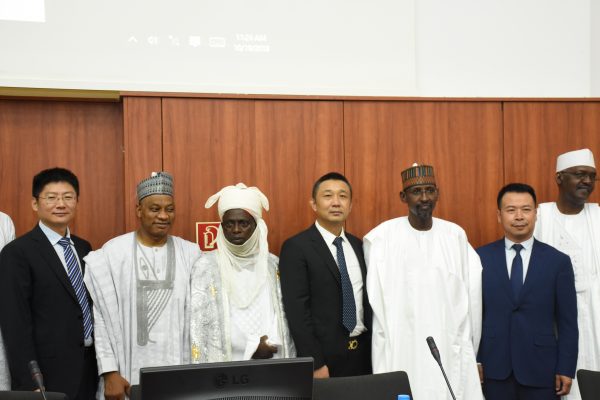 Chinese investors have arrived in Abuja, the Nigeria’s federal capital, on a trade and investment visit. The visit is a follow up on the recent concluded Forum on China-Africa Cooperation (FOCAC).
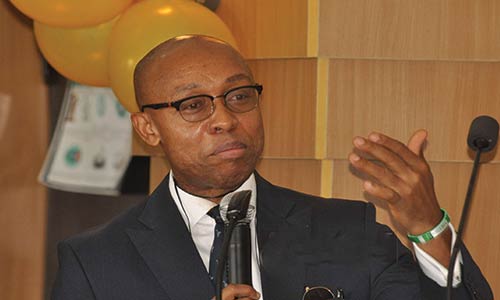 Former Chairman of the National Human Rights Commission (NHRC), Professor Chidi Odinkalu, has identified electoral violence, hate speech and political innumeracy as some of the major threats capable of undermining the 2019 general elections.
 President Muhammadu Buhari has insisted that a peaceful and prosperous country is realizable with collective vision and shared effort of all the citizens.
 Information is scanty about the death, yesterday, of the former Sudanese military president, Abdulrahman Suwar Al-Dahab, which occurred in the Saudi Arabian capital, Riyadh.
 Vice President Yemi Osinbajo speaks with a victim when he visited victims of flood in the Internally Displaced Persons (IDP) at Igbogene and that at St. John’s Parish in Bayelsa.. He was accompanied by the Governor of Bayelsa State, Henry Seriake Dickson and his deputy Rear, Admiral Gboribiogha Jonah and the Director General of NEMA, Engr. Mustapha Maihaja. Photo by Novo Isioro.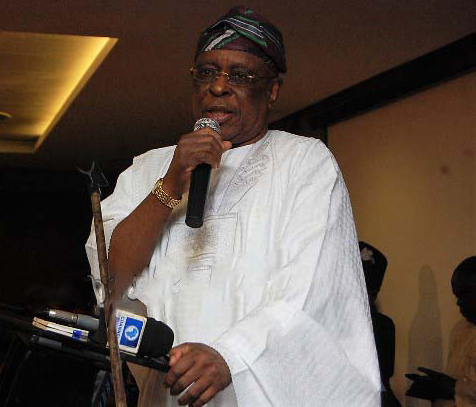

 Ambassador of the Kingdom of Saudi Arabia, Adnan Bin Mahmoud Bostaji, today, Thursday, presented his letter of credence to President Muhammadu Buhari at the Presidential Villa, Abuja, Nigeria’s Federal Capital Territory (FCT).
 The Senate has approved the establishment of a Science and Technology University for the Federal Capital Territory (FCT).
