Police have arrested a 43 year old Augustus Akpan after threatening to rape and rape the wife of a Presidential aspirant of the Peoples Democratic Party (PDP), Atiku Abubakar if he continued to campaign for the post.
The police, in a statement today, Wednesday, said that Augustus, from Edemaya village, Ikot Abasi local government area of Akwa Ibom State, had sent a text message to Atiku, who was former Nigeria’s Vice President, is threatening to rape and Atiku’s wife and daughter if he did not withdraw from the Presidential race.
The police released the exact words of the text messages as follows:
i. Text Message to Atiku Abubakar –
“Turaki Atiku, we are watching you and your family, we ask you right now to withdraw from the race for Presidency, we will kill, rape your wife and daughters. That your ambitious and black daughter Maryam who worked at CBN and left because we were going to mess her up. We will molest, rape, deform her and kill her. Your daughter Fatimah the former Commissioner of Health in Adamawa State, we have a lot of information about her. Also pictures of her naked body, we will mess your overly prostitute wife Jennifer up. We have a lot about. Let Buhari run against your against your PDP members. We know that you are bigger than all those candidates in PDP. That is why we need you to step down. We will blow your plane off from the sky and we will poison you and your family. Atiku Abubakar, take our words for granted and watch what will happen to your family before you. You are going to see what we will do to you and your family. We know where and where your children travel to. We have watched your daughter who is a strong supporter of her father (your daughter Maryam) at number 5, Buzi close and number 5, Lake Maracaibo close”.
ii.Text Message to Atiku’s wife –
“Jennifer. Tell your husband to step down. We will blow up his plane and kill all of you his family. We will rape you and all his daughters and also kill all of you out there. Do not underestimate us. We know your office at 13 Danube Street Maitama. We will blow up the place and rape all your step daughters that we know you don’t like already. Tell him to step down now and forget about running for the presidency’’
iii. Text Message to Atiku’s daughter, Rukaiya Atiku –
“Tell your dad to step down. He should forget about the Presidency. If he refuses, we will blow up his plane the Gulf Stream from the sky and also rape you and kill of his daughters. No amount of Police or protection will stop us. We know where all of you live in. We know number 5 Buzi close and number 5, Lake Maracaibo close. Try us and blood shall spread’’
The statement said that on the receipt of complaint of threat and intimidation from Atiku Abubakar, the suspect was trailed and eventually arrested by the Intelligence Response Team unit of the Inspector General of Police..
“The suspect, Augustus Akpan was arrested at toll-gate along Lagos-Ibadan express way, Lagos State, while on the run to escape arrest. During interrogation, he confessed to the crime and admitted that he resorted to the threat and intimidation when all efforts to extort money from the former vice president were unsuccessful.
“The suspect, Augustus Akpan also admitted in his confessional statement that he is a professional fraudster and not working for any political party, that his mention that ‘Let Buhari run against your against your PDP members’ in his threat message to the former vice president was merely to divert attention.
“The suspect is fluent in English, Ibibio, Russian and Portuguese languages respectively. The Phone and the SIM card he used for the threat and intimidation were recovered from him and were discovered to have been robbed by him from a lady (name withheld) who identified him as the person that robbed her few months back.
“The suspect, Augustus Akpan further confessed that he had threatened, defrauded and extorted huge sum of money in Naira and foreign currency from so many prominent personalities and their family members while posing as an Federal Bureau of Investigation (FBI) and Central Intelligence Agency (CIA) agent.”
The police said that items recovered for Augustus are Samsung (Galaxy S6 Edge +) Mobile Phone and the SIM Card used by the suspect to send the threat messages to Atiku his wife and Daughter.
It said that investigation is being concluded and that the suspect will be arraigned in court on completion of investigation.
Mother of Leah Sharibu, who was abducted by Boko Haram insurgents along with others students, Rebecca Sharibu, has dragged the Inspector General of Police (IGP) and the Attorney General of the Federation (AGF) for their alleged failure to ensure the release of her daughter, demanding N500 million damages.
Other plaintiffs in the suit dated September 19, 2018, are Mr. Daniel David Kadzai and Lift-Up-Now Incorporation, a non-governmental organization in the United States of America.
The suit was filed at the Federal High Court, Lagos and a copy made available to newsmen yesterday in Jos, the Plateau State capital. Among the prayers being sought by the plaintiffs are an order directing and mandating the defendants to secure the immediate and unconditional release of Leah from the custody of her captors, and an order compelling the defendants to employ every means in securing her release.
The plaintiffs are also seeking an order compelling the defendants to pay N500 million being compensation for the indignities and human deprivations suffered by the plaintiff as a result of the defendants’ dereliction of statutory duties in securing her release from her captors since February, 2018 till date.
According to the suit, the defendants may enter appearance personally or by a legal practitioner either by filing the appropriate processes in response at the registry of the court, where the summons was issued, or by sending them to that office by any methods allowed by these rules. It added that if the defendant does not respond within the stipulated time and at the appropriate place, order will be made and proceedings may be taken as the judge may think just and expedient.
In an affidavit supporting the application, the 3rd plaintiff and Executive Director of the Lift-Up-Now Incorporation, Dr. Adeniyi Ojutiku, solemnly swears that he has been informed by their lead counsel, Tayo Douglas Esq, that it is necessary in the circumstance to seek and obtain leave of the court to issue the originating summons on the defendants.
President Buhari speaks on fight against Tuberculosis
President Muhammadu Buhari has declared a total war against tuberculosis in Nigeria which he said will be eradicated with the support of international communities.
Buhari, who spoke today, Wednesday, at a High Level meeting on the theme: “United Against Tuberculosis: Global Action Against Global Threat” on the sidelines of the 73rd Session of the United Nations General Assembly in New York, expressed delight that the landmark event was taking place “at a period when the pain of the disease, and its dire consequences on the health and socio-economic development of many developing countries, is on the rise.”
The Nigerian leader appreciated the adoption of what he termed “the all-important Political Declaration on: “United to End Tuberculosis: An Urgent Global Response to a Global Epidemic,”saying that this is the first global forum with dedicated focus on worldwide tuberculosis pandemic.
TB has become a global challenge that requires consistent and an all-inclusive global strategy based on research and discovery of new drugs,” the Nigerian President stressed that “such efforts must also include mobilization of funds and global partnership of relevant stakeholders working together to frontally address the scourge.”
He said that the task before world leaders is to initiate a global response towards eradicating the disease especially in developing countries, where counter-measures are sometimes beyond the capacity of such nations.
He emphasized the need to develop new strategies that connect national responses with international finance and technical partnership to stop the ravaging disease.
“Nigeria welcomes the adoption of this Political Declaration, especially its relevant provisions which commit to provide diagnosis and treatment to 40 million people, including 3.5 million children between 2018 and 2022.
“The Declaration should also serve as a template for preventing TB for those most-at-risk, through rapid scale up of access to testing the infection, especially for the high-burdened countries.”
The Nigerian leader expressed confidence that other commitments made under this important document, including those on development of new vaccines, drugs and community-based health services, will further guarantee success in our collective fight against the disease.
Nigeria’s national TB eradication strategy, he noted, had long been structured to provide tailored quality services in terms of diagnosis, treatment and prevention, adding that “since assuming office in May 2015, we consistently increased budget appropriation for the health sector.”
He said that the budgetary increment was with a view to ensuring that we promote the well-being of our people through access to qualitative health care services,” adding that, “we are investing in research and development in our various public and specialized institutions.
The President said the national Action Plan on TB Eradication 2015-2020, which is being pursued with renewed vigour, is structured on five priorities namely: detection of TB in adults and children; improving treatment in specific geographic areas that are under-performing; integrating TB and HIV services; building capacity for diagnosing and treating drug resistant TB; and creating strong and sustainable systems to support these achievements.
Buhari stressed that private sector engagement for TB is also being stridently pursued as a robust Public-Private Mix (PPM), adding that the national strategic plan is geared towards meeting the overall aims of providing Nigerians with universal access to high quality, patient-centred prevention, as well as diagnosis and treatment services for Tuberculosis, TB/HIV and drug-resistance TB by 2020.
He said that the Nigerian government is exploring the possibility of establishing a financial institution dedicated to providing financial lifelines for free, comprehensive and qualitative medical treatments,” aimed at mitigating the “financial burden on victims and to also ensure that we continue to save lives and create favourable conditions for economic and social development.
He pledged his country’s resolve to address institutional and societal challenges through the enhancement of strong multi-sectoral mechanisms, even as he called on the global community to demonstrate renewed commitment to the Political Declaration on the eradication of TB.
Police Operatives have announced the arrest of three suspects for buying permanent voter’s card (PVC) and causing disturbance of public peace at Adewale Street, Alekuwodo area, Osogbo, Osun State.
The arrest, according to the police, was made by the Intelligence unit of Force Criminal Investigation and Intelligence Department (FCIID), the IGP Monitoring Unit as well as the Intelligence Response Team (IRT) of the Force and Osun Police Command deployed to gather intelligence, arrest and prosecute any person involved in electoral offences and other crime that is contrary to the electoral act 2011 as amended.
Those who were arrested today, Tuesday, according to the police are 60 year old Alhaji Fatai of Catholic Mission Road, Osogbo; 54 year old Sikiru Lawal of Mafowurosere Street, Jaleoyemi area, Osogbo and 54 year old Adekilekun Segun of Timehin Street, Isale-Osun, Osogbo.
“The three suspects were arrested at Adewale street, Alekuwodo area, Osogbo at one of the polling units where a re-run election is scheduled to take place on Thursday 27th September, 2018, while they were said to be soliciting to buy additional PVCs from one Olawale Kazeem of No. 4B, Adewale Street, Alekuwodo area, Osogbo and Azeez Sulaiman of No. 3A, Akinlade Street, Alekuwodo. It was gathered that when the duo declined to sell their PVC, they were allegedly attacked by the supporters of the suspects.
“However, timely intervention of the police operatives led to the arrest of the three suspects after they were attacked & wounded by the mob. However the wounded were taken to the Police Hospital for medical treatment and currently assisting the Police in investigation into the crime and the recovery of the PVCs alleged to have been bought from other people in Osun State. The outcome of the investigation will definitely be made public.”
The police assured the people of Osun State and other critical stakeholders of its renewed commitment and resolve to ensure adequate security for a free and fair re-run election as announced by INEC in Osun State.
The Force called on members of the public to desist from any action that may elicit violence as any person arrested will be made to face the full wrath of the law.
Saudi Arabia Ambassaor to Nigeria, Bin Mahmoud Bostaji
The Ambassador of the Kingdom of Saudi Arabia to Nigeria, Adnan Bin Mahmoud Bostaji has commended the growing cordial diplomatic relation that has existed between his country and Nigeria, especially, from 1960 when Nigeria attained Independence.
Speaking in Abuja, Nigeria, at a get-together with foreign diplomats and prominent Nigerians, including the minister of State for foreign Affairs, Khadijat Bukar Abba Ibrahim, to mark Saudi National Day, which was observed in Saudi Arabia on Sunday, September 23, Ambassador Bostaji said that his country was one of the first nations to engage in full diplomatic relation with Nigeria immediately after the Independence in 1960.
“Prior to that, relationship had existed in an informal way, dating back to hundreds of years when Muslim pilgrims embarked on tough journeys to the city of Mecca and Madinah for pilgrimage. At some points throughout the late 18th century, however, the relations shifted more towards formality when emissaries conveyed letters, gifts and messages on both sides from the Sultans and men in authority.”
Ambassador Bostaji recalled that the history of Saudi Arabia has been characterized by the dynamism, adaptability and resilience of its people, adding that over the years, the country had grown to be a global powerhouse in both energy and Islam, to which attention was accorded by the last United Nations Human Development index “as being in the first rank when it comes to a very high level of human development.”
He said that the country ranked 38th amongst the world’s nations even as he said that at the moment, Saudi Arabia houses no fewer than 50 public and private universities with students whose number cuts across both gender at almost equal proportion.
“Saudi Arabia is a responsible member of International Community and lives up to all its commitments in establishing global peace and security, as well as its respect for international norms and conventions, including respect for the sovereignty and territorial integrity of States, and non-interference in States’ internal affairs. It frowns at all kinds of terrorism and is globally active in combating it.”
President Buhari addressing UN General Assembly, 2018
President Muhammadu Buhari has expressed regrets that despite the annual debate on the issue of crises and threats to peace and security around the world, the situations are even getting worse.
Addressing the United Natons General Assembly today, Tuesday in New York, the United States of America, the Nigerian leader said: “regrettably, many of the crises and threats to peace and security around the world which we debated last year as we did over several previous years remain unresolved.
“In some cases, matters got worse. The continuing plight of the Rohingyas in Myanmar, the protracted Israeli/Palestinian conflict, the wars in Yemen, and Syria, and the fight against international and local terrorism such as Boko Haram and Al-Shabaab come to mind.
“The terrorist insurgencies we face, particularly in the Sahel and the Lake Chad Basin, are partly fuelled by local factors and dynamics, but now increasingly by the international Jihadi Movement, runaway fighters from Iraq and Syria and arms from the disintegration of Libya.
“In Myanmar, the carnage appears to have thankfully abated somewhat. We commend the United Nations for staying focused on the situation of the Rohingya people, to bring their suffering to an end, and hold to account the perpetrators of the atrocious crimes committed against innocent and vulnerable members of this community, including women, children and the old.”
President Buhari called on the international community to strengthen its resolve to combat ethnic and religious cleansing everywhere, adding that Nigeria supports the UN’s efforts in ensuring that the Rohingya refugees are allowed to return to their homes in Myanmar with security, protection, and guarantee of citizenship.
“We note the indication by the Government of Myanmar of its willingness to address these issues and we encourage them to do so expeditiously.”
The full text of President Buhari’s speech is reproduced here:
On behalf of the Government and people of Nigeria, I congratulate you, Madam President, on your well-deserved election as President of the 73rd General Assembly. As you embark on your assignment, I would like to assure you of Nigeria’s support in no less measure than that which we extended to your illustrious predecessor, His Excellency Mr. Miroslav Lajčák.
We appreciate the effective leadership he gave the 72nd Assembly with such dedication, commitment, and fairness to all member states. I also salute our distinguished Secretary-General, H.E. Mr. Antonio Guterres, who steered the affairs of the Secretariat with focused commitment to the collective United Nations pursuit of global peace and security, equity and justice, inclusiveness, women’s empowerment and human rights.
It is appropriate at this point to remember with deep sadness our late 7th Secretary- General Mr. Kofi Annan who passed away on the eve of his 82nd birthday. Kofi’s significant contributions to the work of our Organisation have been acknowledged in the well deserved tributes that poured in from around the world following his death.
We in Africa, while mourning the loss of this great son of ours and citizen of the world, take pride in the way he served humanity in a truly exemplary manner. He demonstrated, in his calm but determined manner, the virtues of compassion, dedication to the cause of justice, fairness and human rights. He was a visionary leader who inspired hope even in the face of the most daunting challenges. He devoted his entire life’s career to the UN and the pursuit of its ideals and goals. The world is indeed a better place thanks to his exemplary service.
During the past year, the world saw some positive results and encouraging signs from the bilateral and multilateral efforts of the international community to address conflicts, crises and threats to world peace. We particularly commend the efforts of the leaders of the United States, North Korea, and South Korea, to realise our shared goal of a nuclear free Korean Peninsula.
In this connection, we acknowledge the commitment to peace shown by President Donald Trump and Chairman Kim Jong-Un by initiating a historic Summit. We urge that they continue this positive engagement.
Regrettably, many of the crises and threats to peace and security around the world which we debated last year as we did over several previous years remain unresolved. In some cases, matters got worse. The continuing plight of the Rohingyas in Myanmar, the protracted Israeli/Palestinian conflict, the wars in Yemen, and Syria, and the fight against international and local terrorism such as Boko Haram and Al-Shabaab come to mind.
The terrorist insurgencies we face, particularly in the Sahel and the Lake Chad Basin, are partly fuelled by local factors and dynamics, but now increasingly by the international Jihadi Movement, runaway fighters from Iraq and Syria and arms from the disintegration of Libya.
In Myanmar, the carnage appears to have thankfully abated somewhat. We commend the United Nations for staying focussed on the situation of the Rohingya people, to bring their suffering to an end, and hold to account the perpetrators of the atrocious crimes committed against innocent and vulnerable members of this community, including women, children and the old.
The international community should strengthen its resolve to combat ethnic and religious cleansing everywhere. We support the UN’s efforts in ensuring that the Rohingya refugees are allowed to return to their homes in Myanmar with security, protection, and guarantee of citizenship. We note the indication by the Government of Myanmar of its willingness to address these issues and we encourage them to do so expeditiously.
In this context, Nigeria commends the Government and people of Bangladesh in particular and all other countries and organizations that have contributed to shouldering the burden of providing shelter and other vital assistance to the Rohingya Refugees.
The carnage and the worsening humanitarian situations in Syria and Yemen continue unabated. But the international community cannot afford to give up on the Syrian and Yemeni people. We must pursue all efforts to find peaceful negotiated political solutions to these wars which cannot be won by force of arms alone. Regarding Syria, we hope that the UN sponsored Geneva process and the Sochi initiative, led by Russia, Iran, and Turkey advance this objective.
The International community must keep up the pressure to encourage the parties to pursue the path of dialogue, negotiations and inclusiveness in resolving their sectarian divides and bringing to an end the immense human suffering in Syria as well as Yemen. We commend Turkey, Jordan, Greece, Germany, Italy and France for hosting the millions of the refugees fleeing these brutal conflicts.
The situation in the Middle East, grave as it has always been, is now worsened by developments since our last meeting. Nigeria continues to call on the Israelis and the Palestinians to make the necessary compromises in the interest of justice, peace and security, in line with our numerous UN resolutions and applicable international laws.
Unilateral, arbitrary and insensitive actions only prolong the conflict and undermine world peace and security. The deteriorating humanitarian situation in Gaza is an appalling result of unrestrained use of power. We urge both parties to re-engage in dialogue on the basis of relevant UN resolutions, the Madrid Principles, the Quartet Roadmap and the Arab Peace Initiative, among others.
Nigeria reaffirms its unwavering support for a just two-state solution, negotiated without intimidation and with Israel and Palestine existing side-by-side in peace and security.
The crises in the Middle East have deep roots and have remained unresolved for too long. Yet, we should not fall into self-defeating despair and conclude that they are not amenable to solution.
We should draw inspiration from the remarkable leadership that got Ethiopia and Eritrea to restore long-lost hope for peace between them, a remarkable show of statesmanship which has now galvanised neighbouring countries, including Djibouti and Somalia to push for peace in the sub-region. I believe that with hard work, commitment, and a disposition to compromise and necessary sacrifices, peace is achievable in the Middle East as well.
Most crises usually have a variety of festering causes and effects. It is the failure to address them early and effectively that lead to out- of- control conflicts. Addressing them includes national and international collective actions which positively impact on peoples and communities. Hence, ‘Making the United Nations relevant to all people: Global Leadership and Shared Responsibilities for Peaceful, Equitable and sustainable Societies’ which is the theme for this year’s General Assembly, is very apt indeed.
A topical consequence of the current conflicts around the world is the irregular migration of affected people from the Middle East, Afghanistan, and Africa to Europe. Irregular migration entails huge avoidable loss of human lives, puts strains on services in host countries and communities, and fuels anti- immigrant and racist sentiments in Europe. That is why we welcome the successful conclusion of the negotiations on the first-ever Global Compact for Safe, Orderly and Regular Migration, and we look forward to its adoption in Marrakech later this year. The aim is to protect the rights of migrants worldwide, while addressing the concerns of countries of ‘origin’, ‘transit’, or ‘destination’ alike.
Migration is a constant in human affairs. We in Africa are grateful to countries who treat migrants with compassion and humanity-notably Germany, Italy and France.
Irregular migration is not a consequence of conflicts alone, but of the effects of climate change and lack of opportunities at home. Climate Change remains one of the greatest challenges of our time. Very close to us at home, it is our lot in Nigeria, together with our neighbours around the Chad Basin, to live with the Climate change consequences of a drastically shrunk Lake Chad and the parching up of otherwise fertile arable lands.
The Lake was a major source of livelihood to more than 45 million inhabitants of the region. Its shrinking meant loss of livelihoods and they are now rendered poor and vulnerable to the activities of extremists and terrorist groups. The instability thus caused in the sub-region intensified internal displacements leading, among other consequences, to intense economic competition especially between farmers and herdsmen.
This is why we continue to call for a rededicated international engagement to accelerate the recovery efforts in the Lake Chad Basin to address the root causes of the conflicts in the region. What is required is continuous and robust UN cooperation with national Governments and sub-regional and regional organisations such as the Lake Chad Basin Commission, the Economic Community of West African States and the African Union, to enhance capacity in conflict prevention, conflict management and peace building.
With regard to the Lake Chad Basin plight, I extend our heartfelt appreciation to the United Nations, the Governments of Germany, Norway, the United States, Sweden, the United Kingdom, France and a host of other development partners for their laudable support in assisting us to address both the humanitarian challenges and the on-going stabilisation drive in the region.
Corruption within countries and illicit flow of funds across national boundaries have huge negative impact on the stability, peace, and economic prospects of millions in developing countries. Corruption significantly deprives national Governments of resources to provide meaningful livelihoods to their populations who are predominantly youths, thus giving rise to more irregular migration.
The fight against corruption, therefore, involves us all. It is in our collective interest to cooperate in tracking illicit financial flows, investigate and prosecute corrupt individuals and entities and repatriate such funds to their countries of origin.
Fighting corruption or resolving international conflicts, crises and wars; defeating terrorism and piracy; curbing arms trafficking and the proliferation of small arms and light weapons which fuel these conflicts, particularly in Africa; stemming irregular migration by addressing its root causes; and the many other global challenges we are faced with today can only be effectively addressed through multilateral cooperation and concerted action.
The only global institutional framework we have to address these challenges is the United Nations System. That is why we continue to call for the strengthening of the Organisation and making it more effective by speeding up the pace of progress towards its reform, including that of its principal organ, the Security Council. The reconstitution of the Council to make it more equitable and more representative of our global community is both a political and moral imperative.
We believe that a reformed Security Council with expanded membership in both the permanent and non-permanent categories, is in accord with prevailing international consensus and it is in our collective interest to do so. It is high time we stopped skirting round the issue and establish achievable benchmarks and time frames for these reforms.
I assure you all that in this advocacy, I am only reflecting Nigeria’s deep and abiding commitment to our Organisation and its founding principles and goals. From the date we joined in 1960, we have contributed our quota to the fulfilment of the mandate of the UN. We have been active participants in many Security Council and African Union authorised Peace Keeping operations around the world, beginning with the Democratic Republic of Congo operations in 1960.
Furthermore, Nigeria has always mobilised the required human and material resources to achieve set United Nations goals, including the recently adopted 2030 Agenda for Sustainable Development. We are resolute in complementing the efforts and examples of the United Nations to promote gender equality and youth empowerment as necessary pillars for sustainable development.
Without these, there can be neither enduring peace nor security. As we set and implement our national policies to achieve these goals, we, in the spirit of international solidarity, will readily cooperate with other nations seeking to achieve similar goals for their own populations to help ensure that no one is left behind.
The APC Campaign Council for the Osun Governorship Election has accused the Peoples Democratic Party (PDP) of looking desperately for short cut to victory which it lost in the last Saturday’s inconclusive Osun State governorship election.
The Chairman of the APC Campaign Council Media Committee, Alhaji Lai Mohammed, who, in a statement today, Tuesday, asked members of the party in the areas where the state’s election rerun will be held on Thursday to ignore what he called ‘the ranting of the PDP’ and turn out en-masse to vote for the ruling party, said that if the PDP chose to boycott Thursday’s rerun out of fear, the party’s right to do so will be respected.
”The PDP, after its failed mission to win Saturday’s election at all cost, is shopping for an illegal shortcut to victory by threatening a court action over an issue that has been settled. It’s a sheer waste of time. Let the PDP drop its pretension and get ready to be defeated in Thursday’s rerun. Alternatively, it can withdraw to save face.”
Lai Mohammed said that the threat by the PDP to challenge, in court, INEC’s declaration of last Saturday’s election as inconclusive is nothing but sheer bravado, especially as the opposition party is afraid of losing the rerun.
He said that the PDP may also have contrived the court threat as a way of distracting the APC and its members ahead of the rerun, calling that distraction strategy dead on arrival.
”The PDP knows that the so-called court challenge which it has threatened to mount will not fly, especially because the highest court in the land has already pronounced on the issue of whether or not INEC has the powers to declare an election inconclusive.
”The PDP is not unaware of the pronouncement of the Supreme Court in the case of James Abiodun Faleke Vs INEC and others, that INEC has the duty of conducting elections and that, besides the constitutional provisions, it is guided by the Electoral Act 2010 (as amended) and the Election Guidelines and Manual issued for its officials in accordance with the Act.”
There is a burgeoning fallacy in the camp of the opposition Peoples Democratic Party, PDP, which seems to have gained traction in the permutations and calculations for the 2019 presidential power politics: that just anyone that is fielded as presidential candidate will defeat incumbent president and presumptive candidate of the All Progressives Congress, APC, Muhammadu Buhari, in the scheduled February 16 election.
Such notion, perhaps, explicates the surfeit of presidential aspirants on the platform of the PDP. About twelve aspirants, including those who do not have the grits, have thrown their hats in the ring for the party’s ticket. Each aspirant believes that it would be quite easy to upstage the applecart of Buhari’s presidential candidature.
Their assumption is that having unraveled as a below-the-average president, Buhari is now, more than ever, vulnerable and beatable; and, for that reason, every one of them is feeding his sense of entitlement to the plum position. I beg to disagree: not just anyone can defeat Buhari. It will take an unprecedented political alliance, alignment and realignment of forces, much more than the kind that produced Buhari in 2015, to defeat him.
The “anyone-but-Goodluck Jonathan” narrative that galvanized and sustained the nationwide approbation of and momentum behind the Buhari candidature in 2015 will be impotent this time round. The “anyone-but-Buhari” proposition in 2019 will boomerang with a dastardly impact and further collateral damage to the opposition flanks.
Therefore, those jostling for the PDP ticket should mortify the sense of entitlement to the plum position; otherwise it will feed the element of disruptiveness in the nomination process and pile intense pressure on internal party cohesion that is sine qua non of success in the forthcoming presidential election.
Except the PDP plays smartly and acts sagaciously, it may just lose what appears to be a golden opportunity to reclaim the presidential power that it lost to the APC in 2015. Playing smartly entails running a smart presidential election that is single-minded; and, this is possible only when all the aspirants come together to support whoever wins the ticket at the primary election.
However, talking about whoever wins the ticket appears somewhat open-ended. The mind-set throws up an apprehension: what if the individual that wins the presidential ticket does not have what it takes to win the presidential election against a candidate like Buhari who has a traditional base of fanatical supporters in the northern part of the country? His supporters talk about a repository of at least ten million votes in the north. That may be mythical though, yet the opposition should not treat it dismissively.
Responding to the scenario supra, it is worth restating the necessity for the PDP to be on top of its game of numbers. The PDP must, therefore, act sagaciously in the matter of who becomes its presidential standard bearer. Sagacity entails that, by now, the PDP and its leadership must have done their due diligence and have, close to their chest, a clear idea on the trajectory to victory in the presidential election.
That trajectory should point to and exemplify the most psychologically-prepared, intellectually-balanced, politically-cosmopolitan, economically- knowledgeable, religiously-liberal, ethnically-blind, apostolically-nationalistic, nationally-acceptable and ruggedly-courageous individual among the aspirants that can fight the presidential battle to the finish. Such individual should be quietly and consensually promoted and supported to win the ticket of the party so that once he emerges, the instrumentality of the party would be quickly deployed to assure and reassure the others to back him as the party’s battle axe.
It is also important that the individual passes all the critical tests, including having confidence in his conviction as to his specific aspiration without manipulating the party’s political process to deliberately secure fall back positions in terms of strategic positioning for other elective offices. That sure-footedness is an essential ingredient that is required in the race for the presidential position. I make this observation against the backdrop of feelers that some of the presidential aspirants had used proxies to hold down senatorial and governorship tickets.
That action simply speaks volumes about their desperate and insatiable appetites for power and/or elective offices. Besides, the attitude portrays them as individuals who probably are interested in power just for the sake of it. But for the individuals who have remained consistently focused with their eyes on the ball of the presidency, and have earned for themselves the moniker of serial presidential contestant(s), they should be the ones to deserve consideration that is circumscribed within the strategic politics and capacities to defeat Buhari.
Their ability to provide effective and competent leadership should be considered. Their motivation to genuinely serve can be located in their consistent and persistent aspiration and, to that extent; they cannot be deemed to be accidental president(s). And talking about strategic politics, for instance, the PDP will do itself in if a southerner emerges as its presidential candidate at the primary election, sancta simplicitas.
The PDP will make an egregious mistake if someone who has support base in only a region of the country becomes its candidate. To mitigate this potential disaster, someone who is well-known both in the north and in the south of Nigeria and has pervasive political structure countrywide should be the candidate.
There is a proposition that in order to defeat Buhari, the PDP should pick its candidate from Buhari’s northwest zone. That would have been a perfect strategy to adopt if there is an aspirant in the zone that satisfies all the requirements, especially of national acceptability and political cosmopolitanism. Whereas, significantly, Governor Aminu Tambuwal and Senator Rabiu Kwakwanso are from the zone, the popularity of Kwakwanso in the zone, especially in Kano with huge registered voter population, puts him ahead of Tambuwal. But then, the question is: does Kwakwanso have any support base in the South?
The presidential aspiration of the Senate President, Bukola Saraki, looks appealing, especially to the elite and the business community in Nigeria, yet the fundamental question of ethnic identity, take it or leave it, discounts the magnitude of his aspiration. The question arises: how will the core north relate with the Yorubaness of Saraki, regardless of his aboriginal north central pedigree? His candidature will not be too difficult for the APC in the South and the entire north to attack. The core north will remind Saraki that he is not one of them.
Governor Ibrahim Dankwambo of Gombe state suffers from similar nationwide popularity and acceptability deficit as Tambuwal and Kwakwanso. The same thing applies to former Jigawa governor, Sule Lamido; former Sokoto state governor, Attahiru Bafarawa and former minister of special duties, Tanimu Turaki, SAN, all from the north west. Former senate president, David Mark, is also caught up in a similar conflictual north central identity crisis as Saraki. Mark’s predicament is worsened by his northern Christian identity.
A dispassionate profiling will, in the circumstance, throw up former vice president, Atiku Abubakar, whose antecedents and pedigree in national politics are writ large. His nationwide popularity and political structures are matters of fact. He is very well known in the north just as he is in the south. He is well prepared for the job, with an organic economic blueprint to take the nation out of the woods.
Besides, he is reputed for his ability to take on political fights without being shy. To his credit, he has clearly defined a governance philosophy that will drive his administration: restructuring. That is his essential social contract with Nigerians and the people will have a yardstick by which to hold him to account. There are other considerations that should sway the PDP’s ticket in Atiku’s direction. This third party endorsement of Wazirin Adamawa is a part of my pro bono advice to the PDP. Overall, the point is, all the aspirants are good for the party’s ticket, but Atiku, from the northeast zone, arguably, appears the best in the circumstance.
“I wish to use this opportunity to inform the general public that I have never sent any of my staff to collect any favour on my behalf or on behalf of my children and will never do so.”
Aisha Buhari, wife of President Muhammadu Buhari, who made this point known in a statement today, distancing herself from media report purporting illegal detention of her Aide De Camp (ADC), Chief Superintendent of Police (CSP) Sani Baban-Inna, over allegations of fraud, asked anyone that has been defrauded by Baban-Inna to get across to him to retrieve whatever he took from them.
“I wish to reiterate that I will not condone fraudulent behavior by any of my staff.”
The statement which was issued by her spokesman, Suleiman Haruna, said that the President’s wife did not personally order the detention of Sani Babn-Inna for dropping her name and defrauding unsuspecting officials and associates, adding that she has no hand in his arrest and detention.
According to the statement, CSP Sani Baban-Inna has been Aisha’s ADC since 2016 and has been associated with her ever since.
“To the utter dismay of Her Excellency, he has used the opportunity to defraud unsuspecting associates and officials as initial investigations have shown.
“The Nigeria Police Force, his employers arrested him to investigate the allegations leveled against him, this, being within their jurisdiction.
“She uses this opportunity to call on all those in positions of authority to rise above intimidation by their aides and deal with such attitudes as extortion by name-dropping, especially within the Presidency. As she always emphasizes, this government was voted into office based on the trust and confidence of the people.”
The Central Bank of Nigeria (CBN) has projected Nigeria’s economy to grow at 1.75 percent within this year, 2018.
The Committee said that the growth projection is anchored on continued stability in the foreign exchange market, sustained high price and production of oil and improved electricity supply.
In a communiqué issued at the end its 120th meeting in Abuja today, Tuesday, the Monetary Committee emphasised that the nation’s economy outlook for the year is positive, even as it said that the inflation outlook suggests a mild resurgence of inflationary pressure in the economy.
This, the Communiqué, signed by the CBN Governor, Godwin Emefiele, is traceable largely to cost-push factors, election related spending, amongst other domestic factors.
“The moderating factors to the outlook would include; improved power supply, increased expenditure on capital projects and improved security conditions, all of which may exert downward pressure on consumer prices in the near-term.”
The Committee said that it appraised the macroeconomic environment and noted that at its July meeting, modest stability had been achieved in key indicators, including inflation, exchange rate and external reserves.
“In particular, relative stability had returned to the foreign exchange market, buoyed by a robust level of external reserves with inflation trending downwards for the 18th consecutive month. These gains so far achieved appear to be under threat of reversal, following new data which provides evidence of weakening fundamentals.
“The Committee identified rising inflation and pressure on external reserves created by capital flow reversal as the current challenges to growth. It noted that inflationary pressures have started rebuilding and capital flow reversals have intensified as shown by the bearish trend in the equities market even though the exchange rate remains very stable.
“The Committee was concerned that the exit from recession may be under threat as the economy slowed to 1.95 and 1.50 per cent in Q1 and Q2 2018, respectively. The Committee noted that the slowdown emanated from the oil sector, with strong linkages to employment and growth in other key sectors of the economy. In this regard, the Committee urged government to take advantage of the current rising oil prices to rebuild fiscal buffers, strengthen government finances in the medium term and reverse the current trend ofdecline in output growth. The MPC also called on the fiscal authorities to intensify the implementation of the Economic Recovery and Growth Plan (ERGP)to stimulate economic activity, bridge the output gap and create employment.
“The Committee noted that disruptions to the food supply chain in major food producing states due to the combined effects of poor infrastructure, flooding and the on-going security challenges resulted in a rise in food prices, contributing to the uptick in headline inflation. The Committee was, however, optimistic that as harvests progress in the coming months, pressure on food prices would gradually recede, while growth enhancing measures would over the medium term have some moderating impact on food prices.
“The MPC expressed concern over the potential impact of liquidity injections from election related spending and increase in FAAC distributions which is rising in tandem with increase in oil receipts.
“The Committee was concerned with the rising level of non-performing loans in the banking system, traced mainly to the oil sector and urged the Bank to closely monitor and address the situation. It also expressed concern over the weak intermediation by Deposit Money Banks and its adverse impact on credit expansion and investment growth by the private sector.
“In view of the above developments, the MPC noted that the economy was still confronted with growth headwinds and inflationary pressures. It reiterated the need for synergy between monetary and fiscal policies as a viable option for macroeconomic stability. The Committee, therefore, identified two likely policy options as tightening or maintaining the status quo ante. Tightening would tame inflationary pressures, stem the reversal in portfolio capital, improve the external reserves position and maintain stability in the foreign exchange market. Conversely, the MPC felt that raising rates would further weaken growth as credit would become more expensive, NPLs would increase further, leading to a deceleration in output. In the Committee’s opinion, the upward adjustment would not only signal the Bank’s commitment to price stability but also its desire to maintain positive real interest rates.
“A decision to hold all policy parameters constant would sustain gradual improvements in output growth, maintain the current monetary policy stance and await a clearer understanding of the quantum and timing of liquidity injections into the economy before deciding on possible adjustments. The MPC, however, called on the government to fast track the implementation of the 2018 budget to help jumpstart the process of sustainable economic recovery, and to facilitatepassage of the Petroleum Industry Bill in order to increase the contribution of the sector to overall GDP.”
The Committee decided that in light of the above, by a vote of seven (7) members to retain the MPR at 14 per cent, even as three out of the seven members voted to raise the Cash Reserve Requirement (CRR) by 150 basis points.
“In summary, the MPC voted to:
Retain the MPR at 14 per cent;
Retain the asymmetric corridor of +200/-500 basis points around the
We use cookies on our website to give you the most relevant experience by remembering your preferences and repeat visits. By clicking “Accept”, you consent to the use of ALL the cookies.
This website uses cookies to improve your experience while you navigate through the website. Out of these, the cookies that are categorized as necessary are stored on your browser as they are essential for the working of basic functionalities of the website. We also use third-party cookies that help us analyze and understand how you use this website. These cookies will be stored in your browser only with your consent. You also have the option to opt-out of these cookies. But opting out of some of these cookies may affect your browsing experience.
Necessary cookies are absolutely essential for the website to function properly. This category only includes cookies that ensures basic functionalities and security features of the website. These cookies do not store any personal information.
Any cookies that may not be particularly necessary for the website to function and is used specifically to collect user personal data via analytics, ads, other embedded contents are termed as non-necessary cookies. It is mandatory to procure user consent prior to running these cookies on your website.


 Police have arrested a 43 year old Augustus Akpan after threatening to rape and rape the wife of a Presidential aspirant of the Peoples Democratic Party (PDP), Atiku Abubakar if he continued to campaign for the post.

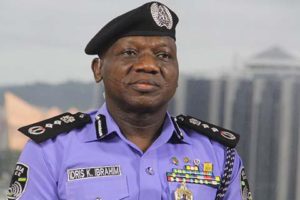




2019 Presidency: Not Just Anyone In PDP Can Defeat Buhari, By Sufuyan Ojeifo
Such notion, perhaps, explicates the surfeit of presidential aspirants on the platform of the PDP. About twelve aspirants, including those who do not have the grits, have thrown their hats in the ring for the party’s ticket. Each aspirant believes that it would be quite easy to upstage the applecart of Buhari’s presidential candidature.
Their assumption is that having unraveled as a below-the-average president, Buhari is now, more than ever, vulnerable and beatable; and, for that reason, every one of them is feeding his sense of entitlement to the plum position. I beg to disagree: not just anyone can defeat Buhari. It will take an unprecedented political alliance, alignment and realignment of forces, much more than the kind that produced Buhari in 2015, to defeat him.
The “anyone-but-Goodluck Jonathan” narrative that galvanized and sustained the nationwide approbation of and momentum behind the Buhari candidature in 2015 will be impotent this time round. The “anyone-but-Buhari” proposition in 2019 will boomerang with a dastardly impact and further collateral damage to the opposition flanks.
Therefore, those jostling for the PDP ticket should mortify the sense of entitlement to the plum position; otherwise it will feed the element of disruptiveness in the nomination process and pile intense pressure on internal party cohesion that is sine qua non of success in the forthcoming presidential election.
Except the PDP plays smartly and acts sagaciously, it may just lose what appears to be a golden opportunity to reclaim the presidential power that it lost to the APC in 2015. Playing smartly entails running a smart presidential election that is single-minded; and, this is possible only when all the aspirants come together to support whoever wins the ticket at the primary election.
However, talking about whoever wins the ticket appears somewhat open-ended. The mind-set throws up an apprehension: what if the individual that wins the presidential ticket does not have what it takes to win the presidential election against a candidate like Buhari who has a traditional base of fanatical supporters in the northern part of the country? His supporters talk about a repository of at least ten million votes in the north. That may be mythical though, yet the opposition should not treat it dismissively.
Responding to the scenario supra, it is worth restating the necessity for the PDP to be on top of its game of numbers. The PDP must, therefore, act sagaciously in the matter of who becomes its presidential standard bearer. Sagacity entails that, by now, the PDP and its leadership must have done their due diligence and have, close to their chest, a clear idea on the trajectory to victory in the presidential election.
That trajectory should point to and exemplify the most psychologically-prepared, intellectually-balanced, politically-cosmopolitan, economically- knowledgeable, religiously-liberal, ethnically-blind, apostolically-nationalistic, nationally-acceptable and ruggedly-courageous individual among the aspirants that can fight the presidential battle to the finish. Such individual should be quietly and consensually promoted and supported to win the ticket of the party so that once he emerges, the instrumentality of the party would be quickly deployed to assure and reassure the others to back him as the party’s battle axe.
It is also important that the individual passes all the critical tests, including having confidence in his conviction as to his specific aspiration without manipulating the party’s political process to deliberately secure fall back positions in terms of strategic positioning for other elective offices. That sure-footedness is an essential ingredient that is required in the race for the presidential position. I make this observation against the backdrop of feelers that some of the presidential aspirants had used proxies to hold down senatorial and governorship tickets.
That action simply speaks volumes about their desperate and insatiable appetites for power and/or elective offices. Besides, the attitude portrays them as individuals who probably are interested in power just for the sake of it. But for the individuals who have remained consistently focused with their eyes on the ball of the presidency, and have earned for themselves the moniker of serial presidential contestant(s), they should be the ones to deserve consideration that is circumscribed within the strategic politics and capacities to defeat Buhari.
Their ability to provide effective and competent leadership should be considered. Their motivation to genuinely serve can be located in their consistent and persistent aspiration and, to that extent; they cannot be deemed to be accidental president(s). And talking about strategic politics, for instance, the PDP will do itself in if a southerner emerges as its presidential candidate at the primary election, sancta simplicitas.
The PDP will make an egregious mistake if someone who has support base in only a region of the country becomes its candidate. To mitigate this potential disaster, someone who is well-known both in the north and in the south of Nigeria and has pervasive political structure countrywide should be the candidate.
There is a proposition that in order to defeat Buhari, the PDP should pick its candidate from Buhari’s northwest zone. That would have been a perfect strategy to adopt if there is an aspirant in the zone that satisfies all the requirements, especially of national acceptability and political cosmopolitanism. Whereas, significantly, Governor Aminu Tambuwal and Senator Rabiu Kwakwanso are from the zone, the popularity of Kwakwanso in the zone, especially in Kano with huge registered voter population, puts him ahead of Tambuwal. But then, the question is: does Kwakwanso have any support base in the South?
The presidential aspiration of the Senate President, Bukola Saraki, looks appealing, especially to the elite and the business community in Nigeria, yet the fundamental question of ethnic identity, take it or leave it, discounts the magnitude of his aspiration. The question arises: how will the core north relate with the Yorubaness of Saraki, regardless of his aboriginal north central pedigree? His candidature will not be too difficult for the APC in the South and the entire north to attack. The core north will remind Saraki that he is not one of them.
Governor Ibrahim Dankwambo of Gombe state suffers from similar nationwide popularity and acceptability deficit as Tambuwal and Kwakwanso. The same thing applies to former Jigawa governor, Sule Lamido; former Sokoto state governor, Attahiru Bafarawa and former minister of special duties, Tanimu Turaki, SAN, all from the north west. Former senate president, David Mark, is also caught up in a similar conflictual north central identity crisis as Saraki. Mark’s predicament is worsened by his northern Christian identity.
A dispassionate profiling will, in the circumstance, throw up former vice president, Atiku Abubakar, whose antecedents and pedigree in national politics are writ large. His nationwide popularity and political structures are matters of fact. He is very well known in the north just as he is in the south. He is well prepared for the job, with an organic economic blueprint to take the nation out of the woods.
Besides, he is reputed for his ability to take on political fights without being shy. To his credit, he has clearly defined a governance philosophy that will drive his administration: restructuring. That is his essential social contract with Nigerians and the people will have a yardstick by which to hold him to account. There are other considerations that should sway the PDP’s ticket in Atiku’s direction. This third party endorsement of Wazirin Adamawa is a part of my pro bono advice to the PDP. Overall, the point is, all the aspirants are good for the party’s ticket, but Atiku, from the northeast zone, arguably, appears the best in the circumstance.