
A lecturer in the sociology department of the University of Abuja, Professor Abubakar Umar Kari has rendered his support to the move being made in the National Assembly to make hate speech a criminal offence punishable with death.
He insisted that the full weight of the law should always be brought to bear on perpetrators of hate speech and their collaborators.
Professor Kari, who delivered a lecture, titled: Hate Speech, The Media And Nigeria’s Unity, at the State House Press Corps (SPHC) bi-annual retreat in Epe, Lagos today, Saturday commended the bill in the Senate, sponsored by Senator Aliyu Sabi Abdullahi, which provides for death by hanging for any person found guilty of any hate speech that results in the death of another person.
“I support the speedy passage of the bill and its immediate assent. South Africa promulgated the Promotion of Unfair Discrimination Act of 2000, while in Kenya, after the 2007 political crisis that led to the death of over 1000 people, they enacted a law on hate speech, the National Cohesion and Integration Act of 2008.
“Impunity against hate speech can be tackled if we begin to seriously enforce existing laws in that regard. For instance, the Criminal Code in Sections 42, 86 and 88 deals with aspects of hate speech. Also, the Cyber Crime Act among other things prohibits and pronounces punishment against, “….any written or printed material, any image or any other representation of ideas or theories, which advocates, promotes or incites hatred, discrimination or violence, against any individual, group of individuals, based on race, colour, descent or national or ethnic origin, as well as religion.”
The University Don is not comfortable that there is no provision against hate speech in the Code of Ethics of the Nigeria Union of Journalists (NUJ), saying that it is a serious abnomality that must be corrected forthwith.
“On the contrary, the Nigerian Press Organization`s Code of Conduct contains a clause that “prohibits journalists from any justification for, or incitement to, wars of aggression…hatred or discrimination, etc.” Still this can be made more explicit.”
Full text of the lecture is reproduced here:
In recent time the ugly and worrisome phenomenon of hate speech has engaged the attention of scholars, analysts, state and non-state actors, due to sudden and unprecedented upsurge in its occurrence, caliber and sheer number of people involved, and what hate speech actually portends and represents: it is a clear and present danger to peace, public safety and national unity.
But then, hate speech is really an old-age social problem, particularly within the realm of politics, because throughout history it has been used and deployed, more often by design, but also by default, for selfish – mainly political – ends. From the classical Greek and Roman civilizations to the Medieval period in Europe, and from the epoch of the Crusades through to that of Western colonization of Africa, Asia and Latin America, hate speech was occasionally employed to justify attacks and conquests, subjugation and persecution of peoples as well as other heinous actions against individuals and groups. In the same vein, the unspeakable terror visited on Jews, communists, Blacks, gypsies and other victims of Third Reich policy of extermination had been preceded by Hitler`s cynical and murderous profiling of them in arguably contemporary history`s worst manifestation of hate speech.
Everywhere and in all circumstances, hate speech pitches persons and groups often as “us” versus “them.” For a fragile polity such as Nigeria`s, which complex diversity seems forever a source of friction and which fate almost always hangs on the edge of a precipice, every dose and every moment of hate speech takes a huge toll on the social fabric of society. In the words of Ezeibe (2015), “…Nigeria`s background of intolerance provides ample grounds for the use of hate speech. Directly, it is hate speech and indirectly it is ethnic and religious intolerance that led to the surge in violence in the country.” Indeed, hate speech is a potent polarizing, divisive and centrifugal force; and an ill-wind that blows nobody any good.
Nigerian media, just like their counterparts elsewhere, have been complicit in the matter of hate speech in a number of ways: as veritable sources of offensive and toxic hate speech materials; as platforms and peddlers of same; and for encouraging, tolerating or being indifferent to something so atrocious. This is in spite of clear moral, social and legal issues associated with hate speech, and grave consequences the phenomenon easily elicits and instigates.
These are the issues treated in this brief presentation.
MEDIA AND HATE SPEECH: IMPLICATIONS FOR NATIONAL UNITY
Although we are always talking and worried about it, and have some idea what it is, there is no agreement about what actually constitutes hate speech. Its scope is wide and its meaning varies and changes in terms of time and space. This is because so many issues are involved, including but not limited to foul and offensive language, defamatory materials, inciting and unfair characterization and profiling of individuals and people, prejudicial, false or malicious claims, condemnatory or derogatory statements about others, etc
According to Neisser (1994:337), hate speech refers to all communication (whether verbal, written or symbolic) that insults a racial, ethnic and political group, whether by suggesting that they are inferior in some respect or by indicating that they are despised or not welcome for any other reason. To Adibe (2014), hate speech employs discriminatory epithets to insult and stigmatize others on the basis of race, ethnicity, gender, sexual orientation or other forms of group membership. It is any speech, gesture, conduct, writing or display which could incite people to violence or prejudicial action. However, the most comprehensive definition is by the United Nations Committee on the Elimination of Racial Discrimination (2013:4):
Hate speech includes (a) all dissemination of ideas based on racial or ethnic superiority or hatred, by whatever means (b) incitement to hatred, contempt or discrimination against members of a group on grounds of their race, colour, descent, or national or ethnic origin; (c) threats or incitement to violence against persons or groups on the grounds of (b) above; (d) expression of insults, ridicule or slander of persons or groups or justification for hatred.
The simple interpretation is that hate speech is any expression or picture or symbol that vilifies an identifiable group. If that is the case, then, Nigerian media, both print and broadcast, are full of them. Samples:
1. The media sometimes publish and broadcast stuff that borders on hate speech: news items and headlines that stereotype groups; feature stories that drip with prejudice and scapegoating; radio shows and audience-participatory programmes on topics and issues that easily provoke or precipitate exchange of insults and hatred, etc. Radio and television shows hosts sometimes actually encourage or even lead the way through their handling (or mishandling) of proceedings, nature of questions asked, how the questions are asked, choice of words, etc. In certain instances, the very choice of guests to discuss an issue is guaranteed to generate hate speech.
2. The always widely reported, explosive, unrestrained and reckless outbursts of controversial elements such as Femi Fani Kayode, Governor Ayo Fayose, Mujahid Asari Dokubo, Dr. Junaid Mohammed and the many self-styled ethnic, geo-ethnic, “socio-cultural” groups (Afenifere, Ohaneze Ndi`Igbo, Arewa Consultative Forum) and some clearly partisan, vocal clergy whose pronouncements are often laced with venom and only help to widen and deepen the national fissures. Unfortunately the media eagerly lap up whatever toxic messages these personalities spew, sometimes unedited.
3. Columnists are not left out. Their perspectives and takes on issues sometimes degenerate into hate speech. A prominent politician (now deceased) and newspaper columnist used very inciting and murderous characterization and stereotyping to describe one of the major ethnic groups as “the Tutsis of Nigeria” who are likely to end up sharing the same bloody fate with the Tutsis of Rwanda! In 1994 an estimated 800,000 Tutsis (including sympathetic Hutus) were massacred by the Hutus. Abubakar Siddique Mohammed (cited in Usman and Abba,1995:4) placed the blame on the doorstep of the media which, he claimed, ‘effectively propagated hate against the target groups, and helped in brainwashing militant Hutu youth, organized in militias, who carried out genocidal acts.” Many a column in Nigerian newspapers and magazines is a study in incitement and dangerous profiling.
4. Sponsored newspaper, radio and television adverts, reports and documentaries. For instance, the build-up to the 2015 elections was characterized by a deluge of divisive stuff in the media. The most notorious are “The Man Buhari” and “The Lion of Bourdillion,” two scathing television documentaries against Candidate Muhammadu Buhari and Bola Ahmed Tinubu and their supporters aired on the Nigerian Television Authority and Africa Independent Television.
5. In recent times the activities of the “Herdsmedia” are a real source of worry. These are media men and women that have made Fulani herders their bogeyman. Every act of violence and crime is blamed on the Fulani herdsmen regardless of evidence to the contrary. Gradually the frontier of the scapegoating in the mischievous lens of the herdsmedia is being stretched to profile every Fulani man as a mindless killer and destroyer.
HOW TO COUNTER HATE SPEECH
As argued by Vice President Osinbajo, hate speech – which he equated with terrorism – is a cankerworm ravaging the social fabric of society and a threat to peace, stability and national unity. It must be faced squarely through a multi-pronged approach, as follows;
a. Media practitioners should be educated and re-educated on media ethics (on matters of balance, fairness and objectivity), but also on matters of public good, public safety and national security. Our reporters, writers and editors must appreciate the fact that freedom of speech is not absolute, and that no individual, group or medium has any right to publish or print materials that incite, precipitate disquiet or lead to break down of law and order.
b. Journalists should be schooled in conflict-sensitive reporting and multi-cultural awareness. In particular, they must learn to avoid “us” against “them” reporting. They should exercise professional standards in articles they write, programmes aired and learn to speak to people without taking sides.
c. Hosts of radio and television shows should be specially trained to handle particularly sensitive and controversial issues and topics, without unduly getting involved, losing control of proceedings or encouraging or tolerating hate speech.
d. Media outfits should establish monitoring and evaluation units in newsrooms.
e. The full weight of the law should always be brought to bear on perpetrators of hate speech and their collaborators. I have observed that there is a bill in the senate, sponsored by Senator Aliyu Sabi Abdullahi, which provides for death by hanging for any person found guilty of any hate speech that results in the death of another person. I support the speedy passage of the bill and its immediate assent. South Africa promulgated the Promotion of Unfair Discrimination Act of 2000, while in Kenya, after the 2007 political crisis that led to the death of over 1000 people, they enacted a law on hate speech, the National Cohesion and Integration Act of 2008.
f. Impunity against hate speech can be tackled if we begin to seriously enforce existing laws in that regard. For instance, the Criminal Code in Sections 42, 86 and 88 deals with aspects of hate speech. Also, the Cyber Crime Act among other things prohibits and pronounces punishment against, “….any written or printed material, any image or any other representation of ideas or theories, which advocates, promotes or incites hatred, discrimination or violence, against any individual, group of individuals, based on race, colour, descent or national or ethnic origin, as well as religion.”
g. I have observed that there is no provision against hate speech in the Code of Ethics of the Nigeria Union of Journalists. That is a serious anomaly that must be corrected forthwith. On the contrary, the Nigerian Press Organization`s Code of Conduct contains a clause that “prohibits journalists from any justification for, or incitement to, wars of aggression…hatred or discrimination, etc.” Still this can be made more explicit.
CONCLUSION
Hate speech, like most other social problems that beset our country, thrives mainly because of the strange and inexplicable reluctance to tackle it decisively. But we cannot afford to fold our arms and watch as it continues to wreck havoc in the land, particularly as it attacks the basis of our national cohesion and existence as one, united people. It is increasingly being used as a weapon to raise ferment, incite and instigate instability, violence and cause confusion.
The media, which share part of the blame for the prevalence of hate speech, should be in the vanguard of the efforts to curb this menace. The task, however, is a huge one and requires the participation of all stakeholders.
Nollywood actress, Cossy Ojiakor has made it clear that any man who wants to marry her should be ready to take from her double of what he will give her Speaking to Vanguard in Lagos, Cossy said: “any man that wants me should be able to give and take. What you give you will receive double. “If you give slap you will receive double slaps. If you give love you will receive it in manifold and we, women, are natural spies. “There’s no place to hide and live double life.”
The National Broadcasting Commission (NBC), has fined DAAR Communications (owner of AIT/Raypower) N500,000 for broadcasting what have been termed hate items thereby violating the provisions of the Nigeria Broadcasting Code. NBC’s Head of Public Affair, Maimuna Jimada, in a statement today, Saturday in Abuja, said that comments made on Raypower’s programme “Political Platform” was against the broadcasting code. Mrs Jimada said that the organisation was sanctioned due to “provocative, inflammatory and divisive comments” by anchors of the political platform. She said the Commission on May 2, 2017, August 15, 2017 and February 2018, held meetings with staff of DAAR Communications to caution them on unprofessional manner of anchors of the programme. According to her, the Commission had charged the team handling the programme to be fair, and balance their reportage, saying that during the February 7 meeting, the Commission stressed the need to comply with the broadcasting code to avoid sanctions. “The Political Platform episode on July 24, was marked by sensational and heated expression of opinion by its anchors, who went on to make unproven and inciting allegations. “For avoidance of doubt, the Director-General drew the attention of DAAR Communications to the following provisions of the Nigeria Broadcasting Code: (1) Section 1.9.3: “A presenter/anchor shall not express his or her personal opinion in a programme. “Also Section 5.2.7: ‘A broadcaster shall, in using political material for news, avoid taking inflammatory and divisive matter in its provocative form and Section 5.2.5 stated that political broadcasts shall be in decent language.” Mrs Jimada reiterated that broadcasting stations should ensure that anchors of their programmes were properly informed and trained on the ethics of the profession as well as the provisions of the broadcasting code.
President Muhammadu Buhari has consoled the former Minister of Defence, retired General Aliyu Mohammed Gusau over the death of his wife, Hajiya Binta, stressing the importance of wives to men. In a condolence message on behalf of his family, the Government and people of Nigeria, President Buhari who said that the death of Hajiya Binta came to him as a great shock, explained: a wife occupies an important place in a man’s life, a bond so strong that we treat our wives like our own flesh and blood.” The President expressed sympathy to General Gusau “at this emotionally trying moment.” Death, the President said, is inevitable “and we are powerless against the will of God. No tears can wipe away our grief, the best tribute to the dead is to pray for them.” The President prayed to Allah to comfort General Gusau and members of his family and grant them the fortitude to bear this great loss even as he also pray for the soul of Hajiya Binta to rest in peace and for Allah to reward her good deeds with al- Jannah.
No fewer than 27 students of a secondary school have been confirmed to be pregnant for older men who are not their husbands, known as Sugar Daddies near Polokwane in South Africa. Report by the Limpopo education department said that the students blamed “blessers” (sugar daddies) for being responsible for about 30 pregnant girls at their school so far this year. The report said that furteen of the pregnant students are from Molautsi Secondary School. Department spokesman, Sam Makondo said that the high rate of pregnancies was worrying, adding: “it says to us that we should‚ all of us as various stakeholders in education‚ take a collective responsibility to raise more awareness inside and outside our schools to prevent more learners from this situation. “We think together we can make the necessary impact and our learners will be able to stay in school‚ focusing on their education and nothing else.” In an interview with the South African Broadcasting Corporation (SABC)‚ one of the pregnant pupils‚ who spoke on a condition of anonymity‚ said she was aware of the consequences of unprotected sex. She asserted that falling pregnant had not affected her studies. “I have passed my mid-year exams… I was taught about issues of (sex) education at school. I knew everything – I just decided not to prevent. My mom took me to the clinic to prevent and then I decided to do it my own way‚” she said. The school’s deputy principal‚ Joseph Phaleng‚ said a lack of parental guidance and substance abuse contributed to the rate of teen pregnancy.
President Muhammadu Buhari has lamented that the devastating floods sweeping across some states in Nigeria have caused setbacks to the food production efforts of his government.
In a message of sympathy to the people of Kebbi State on the flood disasters that destroyed farmlands and engendered considerable losses of crops and homes, Buhari said: “this sad news couldn’t have come at a worse time for this administration because of the role of Kebbi State farmers in supporting the government’s initiative to promote local rice production as part of efforts to reduce Nigeria’s dependence on importation of the commodity.
“This flood disaster represents a setback for the efforts to boost local rice production in the country, for which Kebbi State is playing a leading role.”
President Buhari said he was “highly touched by the sheer scale of the losses suffered by our hard working farmers in Kebbi State.”
He said that apart from creating job opportunities and decent incomes for the farmers, agriculture plays a key role in the economy of any country.
“When our farmers are hit by these kinds of large scale losses on account of natural disasters, the government should be genuinely concerned, especially as this unfortunate event occurred at a critical time when my administration is pursuing a policy to restore the primacy of agriculture in our national life.”
President Buhari advised the affected farmers not to despair, assuring them that they will not be forgotten by the federal government. He commended the state government led by Senator Abubakar Bagudu for the swift measures put into action to alleviate the hardship of the victims and equally directed emergency federal aid in support.
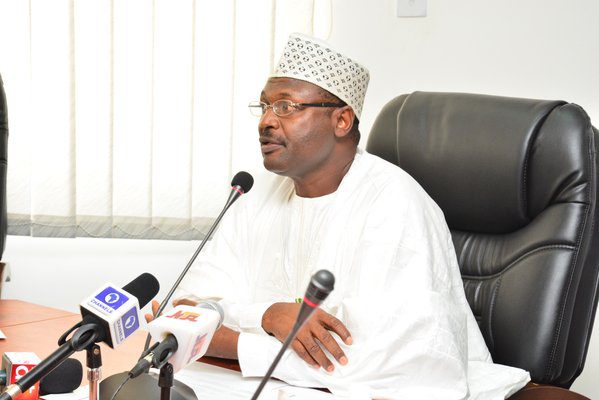
Chairman of the Independent National Electoral Commission (INEC), Professor Mahmood Yakubu has implored Nigerian media, especially social media to be impartial in their coverage of the 2019 general elections in the country.
“We implore you to resist the temptation of being used to fan the ember of ethno- religious crisis. It is our hope that we will continually count on the media to work with the Commission to deepen our democracy.”
Professor Mahmood spoke today, Saturday, at Epe, Lagos State at the bi-annual retreat of the State House Press Corps (SHPC) from the Aso Rock Presidential Villa, Abuja.
The INEC boss insisted that Nigeria, as one of the emerging democratic societies of the world must be supported, particularly by the media, to succeed.
He also asked the media to ensure that the political leaders entrench democratic principles and values in governance that would quicken national development. “This precisely must be the focus of electioneering campaigns.”
The full text of Professor Mahmood’s lecture, titled: COVERING ELECTIONEERING CAMPAIGNS is reproduced here:
It is my pleasure to be here today at this bi-annual retreat for State House Press Corps. I must say that this retreat is quite apt considering the topics we are to share. The political activities are already gathering momentum and very soon the electioneering campaigns will commence. In the run-up to 2019 General Elections, the Commission has come up with 2017-2021 Strategic Plan and Programme of Action as well as the time table of activities for the 2019 General elections. The timetable indicates that the commencement of campaigns by Political Parties for Presidential and National Assembly, and Governorship and State House Assembly are slated for 18th November 2018 and 1st December 2018 respectively. This demands accurate coverage of the political activities of the political class hence the wisdom in slating this topic for discussion is highly commendable because we are all working together to ensure that our democracy meets international best practices.
I want to use this unique opportunity to thank the organizers of this programme and also express the Commission’s gratitude for your cooperation in the democratic process of our nation. I must admit that as an Election Management Body, we have enjoyed good coverage by the media generally. This has been very helpful because the increasing public confidence we enjoy today could be partly attributed to the balanced coverage of electoral events. We appreciate deeply the fact that on some occasions we are called upon to explain our processes and procedures and answer questions from stakeholders on various platforms. This gesture has improved the image of the Commission and also enhanced our relationship with Nigerians who we are committed to serve.
All over the world, the media are known as the cornerstone of democracy because they play critical roles in proper functioning of democracy. In facilitating the full participation of the citizenry in democratic elections, the media are specifically saddled with the responsibility of:
• Educating voters on how to exercise their democratic rights;
• Reporting on election campaigns;
• Providing platforms for Political Parties and candidates to communicate their messages to the electorate;
• Providing a platform for public feedback, concerns, opinions and needs to the Political Parties and candidates, the Election Management Body (EMBs), government, and other electoral stakeholders, thus facilitating interactions on governance issues;
• Allowing Political Parties and candidates to debate with each other;
• Reporting results and monitoring vote counting;
• Scrutinizing the electoral process itself, including electoral management, in order to evaluate the fairness of the process, its efficiency and its probity;
• Providing information in a manner devoid of inflammatory language, and helping to prevent election-related violence.
Elections are not just about the right to vote. Knowledge of the voting process, information about Political Parties, candidates and their programmes are also crucial. Also required is the acquisition of the knowledge of how to vote. It is the sacred responsibility of the media to provide avenues and opportunities for citizens’ participation, political inclusion, and empowerment. The media should avail voters with adequate information about the electoral process and informed analysis on policies, Political Parties, and their candidates, to enable the citizens make informed choices. To fulfil this obligation, the media have the duty to subject the electoral process to scrutiny to provide public education on the activities of the EMB and other electoral stakeholders, in order to hold them to account.
According to a 2011 report on Media and Parliamentary Election in Egypt by the Cairo Institute for Human Rights Studies:
The media is the primary means through which public opinion is shaped and at times manipulated. Elections constitute a basic challenge to the media, putting its impartiality to test. The task of the media, especially national media outlets, is not and should not be to function as the mouthpiece of any government body or particular candidate. Its basic role is to enlighten and educate the public and act as a neutral, objective platform for free debate of all points of view.
In an increasing globalized world, the media have therefore become a powerful tool in determining the political agenda, even in the most advanced democracies of the world. More importantly, the media have become an active participant in the political process and policy decisions, in developing democracies. The ability of the media to shape public opinion by providing content and context to discourse has serious implications for the electoral process, with both positive and negative consequences.
THE MEDIA, DEMOCRACY AND DEMOCRATIC GOVERNANCE IN NIGERIA.
Chapter 11 section 22 of the 1999 Constitution of the Federal Republic of Nigeria (as amended) stipulates the obligation of the mass media as follows:
The press, radio, televisions and other agencies of the mass media shall at all times be free to uphold the fundamental objectives contained in this chapter and uphold the responsibility and accountability of the government to the people.
The obligation under this chapter on Fundamental Objectives and Directive Principles of State Policy is anchored on the premise articulated in section 14 that Nigeria is a State based on the principles of democracy and social justice governed by the belief that:
• Sovereignty belongs to the people of Nigeria whom government through the Constitution derives all its power and authority;
• That the security and welfare of the people shall be the primary purpose of the government; and
• The participation by the people in their government shall be ensured in accordance with the provisions of the Constitution.
It is therefore the duty of the media to act as the watchdog of the society, with the primary responsibility of protecting public interest against any abuse by those entrusted with power and resources of the State. Flowing from this, is a responsibility for the Nigerian media to create awareness to sensitize citizens about their rights and responsibilities by continually providing information on public and current affairs. The media should educate and empower the citizens to hold public officials accountable for their actions or inactions. By serving as a marketplace of ideas, playing diverse advocacy roles and providing platforms for the government, interest groups and individuals to push messages, the media must be constantly aware of its position as the Fourth Estate of the realm and the fourth pillar of democracy. This consciousness in turn strengthens democracy and promotes good governance and promotes the development of the society.
It is a common knowledge that in politics, mass communication is one of the most strategic means of winning hearts and minds of the electorates who are the determining factors and king makers in any democratic free, fair and credible election. Hence the primary role of the media to ensure continual flow of information, on elections, and sensitizing the public on their rights and responsibilities in elections, in no small measure gives the electorate the opportunity to make informed decisions
The vital role of the media as the watchdog of the democratic process especially during elections, is essential for the consolidation of democracy in the political space. Creating platforms for information dissemination and public enlightenment for electoral campaigns, public debates, and voter education is a pre-condition for free and fair elections.
COVERING ELECTIONEERING CAMPAIGNS AND THE MEDIA.
Elections in a nutshell is the process of choosing a candidate for elective position (Akinwalere 2015). It is a centerpiece of democracy and a mechanism through which the people exercise control of the destiny of their nation. Therefore, elections are people’s source of power.
Elections cannot have its full meaning without electioneering campaigns. Electioneering Campaign can be viewed as the entire or series of activities engaged in by persons who have agreed to submit themselves to elections, to influence the anticipated preference of the electorate positively. It is an avenue used by the political actors to sensitize the political community in relation to making the community consider them as potential and better representative of the people(lynn2009).
The media serve as a link between the political parties and the electorate. They play a major role during the election process and it is a known fact that through the broadcast and publications of campaign messages through news, interviews, speeches, documentaries, commentaries, advertisements, etc have the potential of influencing the decisions of the electorate who generally rely on the media during the electioneering period to provide the needed information for them to make informed decisions. Hence the media’s coverage and publication or broadcast of political campaign messages, influence the electorates’ decision either in favour or against a given political party or candidate.
Covering of Electioneering Campaigns in Nigeria is not new. The advent of the first radio transmission in 1933 and television in 1959, indicates that covering electioneering campaigns in Nigeria has come a long way. Today, we have over 200 hundred radio stations and 150 television channels owned by the Government, Communities and private individuals. This is apart from online publications and bloggers. From the statistics herein, one can say that electioneering campaigns have in recent times enjoyed more coverage than before. The arrival of the social media has in no small measure enhanced communication in the political community, albeit wrongly some times.
There is no doubt that election periods are most trying times for any media establishment ranging from ownership control of the outfit to the struggles for prime time. It puts its impartiality and objectivity to test. Past experiences have shown that some media organizations align themselves to one political party or another and become the mouth piece of the parties they are aligned to. Such actions do not give room for objectivity, fairness, and justice in discharging their responsibility to the public. This could be traced to the ownership of media outfits and their relationship with the political system. It is widely believed that media owners with political interests prevent their media outfits from adhering to fundamental principle of balance, fairness and objectivity (Edogbo 1999).
The need to give all Political Parties equal coverage is in agreement with the core value of the Commission as regards giving equal level playing field for all Political Parties. It is therefore expected that media establishments should ensure equity in the allocation of time especially during electioneering campaigns.
To enable the electorate have a full picture of electioneering campaigns, the reportage of the views of candidates and their political parties should be direct and in their own words rather than as interpreted by others. This will in no small measure assist the voters in making informed decisions.
Accessibility of all Political Parties and their candidates to media publicity is very crucial in electioneering campaigns. While some political parties can afford daily access to all media outfits, some cannot because of the cost of coverage. This is actually a threat to democracy. Our Social Corporate Responsibility should include enhancing the visibility of young and upcoming Political Parties in the political space by reducing the cost of publicity and coverage of electioneering campaigns.
One of the major concerns of the Commission is low turnout of voters in elections. Some of the reasons could be attributed to sensational reportage of electioneering campaigns. It is a fact that when the public is fed with hate speeches, blackmail, falsehood and news of imminent catastrophe by the political class through the campaign messages from the media, it heats up the polity and sends cold shivers to the fragile emotions of the electorate. It is a common sight to see people leave their original places of residence to either their home towns or leave the country entirely rather than staying back to cast their votes for the fear of being hurt on election days. The implication of this is that only a few determine the fate of a whole nation for a period of time.
Since electioneering campaigns in Nigeria has become a theatre of conflicting interests, the media should internalize the concept of public good in the discharge of their duties in the electoral process. The media should seek out the relevant truth in electioneering campaigns for the people. This includes interpreting campaigns in the light of the electoral needs of the people. The ordinary expectation therefore is that the media should focus on matters that portend serious consequences for the people and their political choices rather than relating unwholesome political advertisement especially during live electioneering campaigns which could lead to post election violence.
Equally the emergence of the new media has enhanced the dissemination of information tremendously. However, it has been observed that this outfit has created an unacceptable avenue for hate speeches, fake news and other forms of reporting likely to inflame passion and trigger crisis during campaigns and elections. It is our desire that this is subjected to open conversation amongst related agencies and stakeholders until a solution is found through structured and sustained engagements between the media and other stakeholders.
CONCLUSION.
I must say that as an Election Management Body (EMB), the conduct of free and fair election is our core mandate. Also the Commission is the organization on whose shoulders rests the largest responsibility of nurturing, sustaining and continuously deepening the norms and democratic values in Nigeria. I must tell you that the Commission has a department saddled with the responsibility of monitoring the activities of the political parties including their electioneering campaigns.
As you are aware, the Electoral Act provides campaign spending limits for candidates as follows:
• Presidential 1 billion naira only;
• Governorship 200 million naira only;
• Senatorial 40 million Naira only;
• House of Representatives 20 million Naira only;
• State House of Assembly 10 million Naira only;
• Chairmanship Area Council 10million Naira only
• Councillorship Area Council 1 million Naira only.
In addition, the Electoral Act stipulates that political parties must submit three types of Financial Reports as follows: –
• Annual Report
• Election Contribution Report
• Election Expenses Report.
The need for the regulations on spending limit is to create a level playing field and enable small and new political parties to be heard, prevent fund raising from unhealthy sources and increase accountability and transparency.
We also have a committee of all security agencies in the country i.e Inter-Agency Consultative Committee on Election Securities whose members also cover all electoral activities including electioneering campaigns and give accurate reports to the Commission.
It is important for me to say that we are carrying out these responsibilities conscientiously and improving our methodologies and standards from one election to the other. This Commission has conducted elections into 179 constituencies and since January this year, we have conducted 4 elections, majority of them by court order and one off cycle Gubernatorial election. We still have 5 bye elections into national and State Assembly constituencies to conduct, including 4 vacancies that occurred in less than 2 months (March-April 2018) and Osun State Gubernatorial election coming up on the 22nd of September, 2018.
As we approach the 2019 General elections, we enjoin the media to partner with the Commission in providing information on its plans for the elections. You are aware that the Commission commenced the Continuous Voters Registration exercise nationwide as part of its statutory duties. As at 13th July, 2018, a total number of 10,292,647 (5,620,401 males, 4,672,246 females) prospective voters had registered. We also have a large number of uncollected Permanent Voters Cards in our various offices. We appeal to you to use your networks and platforms to publicize this information and encourage the owners to come and pick them.
Whereas the Commission has improved with every election it has conducted so far, we are determined to make the 2019 General Elections our best election ever but we cannot do it alone. We need the support of all stakeholders. I wish to remind you that the role of the media in the forthcoming elections is challenging. Our expectation is that the media will set agenda for the political class and also play the role of peace building, to heal the cleavages that may have been raised from intense campaigns.
Indeed, Nigeria as one of the emerging democratic societies of the world must be supported to succeed, hence call on the media to ensure that our leaders entrench democratic principles and values in governance that would quicken national development. This precisely must be the focus of electioneering campaigns. We implore you to resist the temptation of being used to fan the ember of ethno- religious crisis. It is our hope that we will continually count on the media to work with the Commission to deepen our democracy.
President Muhammadu Buhari will depart Abuja tomorrow, Sunday for Lome, Republic of Togo, to participate in two high-level ECOWAS/ECCAS Summit.
A statement by senior special assistant to president on media and publicity, Malam Garba Shehu said that on arrival, the President will have an interactive session at the Nigerian embassy with the Nigerian community based in Togo.
He said that on Monday, President Buhari will attend the Joint ECOWAS/ECCAS Summit which will deliberate on common security threats to countries in West Africa and members of the Economic Community of Central African States (ECCAS) with a view to forging concerted strategies in tackling the menace of terrorism, trans-border crimes and other forms of violent extremism.
It recalled that President Buhari had expressed support for the proposed ECOWAS/ECCAS Summit when he received the current Chair of the ECOWAS Authority of Heads of State and Government, President Faure Gnassingbe of Togo on June 29, 2018 in Katsina.
According to him, “terrorism now transcends international boundaries, and no country can combat the scourge alone.”
The statement said that the Nigerian delegation will participate in a meeting on a Single Currency for ECOWAS with the deadline of 2020.
“Being the largest economy not only in West Africa but also on the continent, Nigeria’s leadership role in this sub-regional aspiration cannot be over-emphasised.”
According to the statement, President Buhari will join other leaders of the sub-region for the 53rd Ordinary Session of the ECOWAS Authority of Heads of State and Government, and will be dominated by the political and security situations in Guinea Bissau, Mali and Togo; institutional reforms of the ECOWAS Commission to enhance its effectiveness; illegal migration of Africans to Europe; and the worrisome violent clashes between herders and farmers, among other issues.
It said that at the end of the session, a new Chair of the ECOWAS Authority is expected to take over from the incumbent and host.
Among those who will accompany the President on the trip are Governors Ben Ayade and Abubakar Bello of Cross River and Niger States respectively. Others are Minister of Foreign Affairs, Geoffrey Onyeama; Minister of Defence, Mansur Dan-Ali; Minister of Finance, Kemi Adeosun; Minister of Interior, Abdulrahman Danbazau; and the Minister of Trade, Industry and Investment, Okechukwu Enelamah.
The National Security Adviser (NSA), Babagana Monguno; the Chief of Defence Staff (CDS), Gen. Abayomi Olonisakin; the Director General of the National Intelligence Agency (NIA), Ahmed Abubakar; and the Governor of the Central Bank of Nigeria (CBN), Godwin Emefiele, are also in the President’s delegation.
The presidency has appealed to millions supporters of President Muhammadu Buhari to halt political campaigns for the President in order not to run foul of the electoral laws of the country.
In a statement by the special adviser to the President on Media and publicity Femi Adesina, the presidency said it observed that some fervent supporters of President Buhari have begun what may be interpreted as political campaigns in their advocacies and advertisements in the mass media.
“We appreciate their enthusiasm, borne out of desire to garner support for an administration that is actuated by nothing else, other than service for motherland, but we hereby appeal for patience, so that the game can be played according to the rules. The Independent National Electoral Commission (INEC) has a timetable for political campaigns, and we urge committed supporters round the country (and beyond) to be mindful of such. There will be ample time ahead to trumpet the good works of the Buhari administration, and solicit re-election, all for the good of our country and her people.
“While a chronicle of the achievements of the administration is in order now, outright canvassing may amount to jumping the gun. We are an administration committed to due process and scrupulous respect for rules, law and order.
“We appreciate our massive supporters nationwide, and urge them to exercise restraint till the race commences officially as stipulated by law.”
National Chairman of the All Progressives Congress (APC), Comrade Adams Oshiomhole has described the Benue State Governor, Samuel Ortom who had just defected to the People’s Democratic Party (PDP) as a disaster to the APC. Oshiomhole who spoke to news men today, Friday at the APC national secretariat, said that Ortom was even an accidental candidate in the 2015 election. He said that he didn’t know the weakness of Governor Ortom until he intervened in the conflict between the governor and leaders of the party in Benue State,. He said that he could not successfully defend the weighty allegation leveled against the governor by the leaders of the party in the state. According to Oshiomhole, at the instance of the Governor, the National leadership of the party had arranged another meeting to bring north Gov. Ortom and party leaders in the state to a round table with the meeting scheduled to hold on Wednesday, July 24 only for the governor to turn governance to “nollywood”. “Within the last 48 hours we have watched the unfolding events in Benue State particularly the decision of Gov, Ortom to leave the party. Ordinarily, we would not have responded having already responded to the decision by the Publicity Secretary. “As you all recall, Gov. Ortom had said that the APC in Benue State gave him red card to leave our party and that they will not field him in the governorship election in 2018 and that because the door had been shut against him, he had no choice than to leave. Without going into investigations, we invited him to speak to us on the issues and we also invited our party leaders in Benue State to also brief us on what the issues were. “From the point of view of our leaders in Benue State, their position was clear that field Gov. Ortom On APC platform in 2019 can only lead to electoral defeat for a number of reasons. “They reminded us that inspite of the allocation accruing to Benue State, the bail our fund amount to over N20 billion and the huge sums of money collected from the Paris club refund, he was not paying salaries to Benue workers, including teachers, local government employees and civil servants. He owes some of the as much as 12months salaries. “So, the entire economy of Benue State that survives on civil servants salaries is to that effect compromised. What is not obvious is that those who live on rents paid by civil servants cannot collect their rents with which to survive, thereby having effect on the commercial live of the people. This explains a vicious circle of poverty in Benue State that has been deepened under Gov. Ortom. “These people have been arrested and are in police custody. If an appointee of a Governor is involved in a heinous crime, including killing that will be enough for a governor to worry about. Instead, he played up the ethnic dimension of criminality, even though some of those killed were killed not by Muslims, but Christian of Benue State origin, including those he employed. “These people have been in police custody, so, his attempt to explain away criminality by playing the ethnic card is unhelpful to what he should as governor to manage the situation better. After all, those in Benue State have always been there and his predecessors, including Suswam had found ways to manage these diversities. So, Ortom’s incapacity to manage it and even seek to make political capital of the death of Benue people is unfortunate. “It is important that Nigerians understand that the condemnable killings of two Reverend Fathers and some Christians in a church, those who have confessed to these crimes include people who have worked with Gov. Ortom an these killings were done few weeks after one of them was extremely critical during his sermon about the governance of the state and the style of governance of the Governor. “His price obviously was to pay with his dear life and not a few thought that the governor would celebrate that. I am not about to suggest that Gov, Ortom might have asked anybody to go and kill anyone, but that some of those involved in these killings are Benue State originated are Christians. “That is not to deny that some herdsmen have also been involved in the killings. But the responsibility of any government is not to seek to manipulate this, but to confront it. “There was also the fact that for three and half years that he has been in office, he cannot point to any concrete project that he has carried out. He cannot point to any major project that has been completed. “When we asked him these questions and allegations that why the Vice President and the President has visited other states to Commission projects, in Benue, they have only paid condolence visit. It is okay to lament the absence of federal presence, but what is the excuse for the absence of state projects in the state. “His argument is that he has diverted a lot of the resources to security issue. That raises the issue. Can you be spending N22 billion on security and the people are increasingly insecure? So if you accept that he spent money on security, it meant that he realizes that he has a responsibility to secure life and not pass the bulk. “So, I felt scandalized watching him saying he had to leave the APC because he did not feel secure. To be honest, I am relieved as National Chairman and the leadership of our party in Benue State are relieved that he has returned to where he came from. “So, we now have a clean platform to search for a credible Benue citizen that can provide the kind of leadership that the Benue State deserve and not one who seek to make political capital out of human graves and celebrating the death of his own people. “As a party, we condemn any life that has been wasted by criminals and we accept that government responsibility is to protect live and property. But I condemn anyone of us who seek to make political capital out of these killings because we have shared responsibility to protect their lives regardless of their religion or location. So, we are re lived that Ortom has returned. “When you look at it, he got our ticket on a platter of gold because he was never a participant in the building process of the party. He became a candidate by accident. The lesson to learn is that never again should people become candidates by accident.” On the allegation that he was being victimized for refusing to share state resources with the party leaders in the state, Oshiomhole said “If a governor confessed that he shared government money to party leaders, is that the reasons he will be re-elected? “Then if he has shared the government money with party leaders then the party leaders should try to keep in in office by guarantee him the ticket since he shared the money with them. If on the other hand he claimed that he refused to share the money, good therefore what have you done with the money? “You couldn’t pay the workers salaries with the money you refused to share, have you built more roads for the people of Benue state? What have you accomplished with this bailout fund and the Paris fund? “So let me assure that what I do promised, and please mark my word each time I speak, those negotiable and verifiable grievances we would address. And I said we won’t deny somebody ticket on account of a conflict between him and any other person if he is at home with his people, even yesterday I emphasized that. “When people say automatic ticket, does it guarantee automatic victory when people are against you? I said so. Because we didn’t give you departure ticket, so how are we going to gice you a return ticket? “So, I couldn’t assure gov Ortom that we will overrule the posution of our members and leaders in Benue state that come 2019 we will give him ticket. I wanted to simply cross chect with him in the allegations made against him and he was to come by Wednesday that is why he organised that drama. “And that tells you the quality of reasoning, with all due respect to Governor Ortom, how can you reduce governance to Nollywood, saying hen I wanted to go to Abuja to meet with the National Working Committee but my people have blocked the road that I will not go. When has it become a case that when a governor want to travel it is on the radio that he is travelling and this is the purpose.”
We use cookies on our website to give you the most relevant experience by remembering your preferences and repeat visits. By clicking “Accept”, you consent to the use of ALL the cookies.
This website uses cookies to improve your experience while you navigate through the website. Out of these, the cookies that are categorized as necessary are stored on your browser as they are essential for the working of basic functionalities of the website. We also use third-party cookies that help us analyze and understand how you use this website. These cookies will be stored in your browser only with your consent. You also have the option to opt-out of these cookies. But opting out of some of these cookies may affect your browsing experience.
Necessary cookies are absolutely essential for the website to function properly. This category only includes cookies that ensures basic functionalities and security features of the website. These cookies do not store any personal information.
Any cookies that may not be particularly necessary for the website to function and is used specifically to collect user personal data via analytics, ads, other embedded contents are termed as non-necessary cookies. It is mandatory to procure user consent prior to running these cookies on your website.

