President Muhammadu Buhari has said that Nigeria shares in the pains and difficulties of 12 children and their coach trapped in a cave for more than two weeks in cave in Thailand.
In a statement by his spokesman, Malam Garba Shehu today, Monday, the President said: “although Thailand is located thousands of miles away from us, we in Nigeria share the pains and difficulties of these trapped teenagers who face imminent danger to their lives.
”In a globalised world, the bond of our common humanity is getting stronger day by day.
“The way the international community responded with empathy and enthusiasm, is evidence that our common humanity is greater than our differences.
“When we perceive the victims as our own children, we are bound to identify with the trapped kids and be moved to action.”
President Buhari commended the Government of Thailand and international volunteers in the current efforts to rescue the children.
He said that Thailand has inspired other developing nations that, despite limited resources, a people can achieve success through their efforts towards emergency response.
President Buhari is greatly inspired by the response of the Thai government to the crisis; and the dedication and enthusiasm of the rescue teams.
Thirty-nine political parties have come together to work as a team, along with the main opposition, the Peoples Democratic Party (PDP) in the 2019 general elections under a common name of Coalition of United Political Parties (CUPP).
The CUPP, according to a Memorandum of Understanding (MoU) the parties signed today, Monday, at the Yar’Adua Centre in Abuja, is for the emergence of a single presidential candidate under a National Unity Government.
The communiqué which was read after the endorsement of the MoU, by Chief Tom Ikimi, said that the objective was to vote out the government of the All Progressive Congress (APC) and rebuild and redirect the nation’s economy and security.
The coalition agreed to zone all political offices to the six geopolitical zones of the country with the membership of the coalition directed to vote for only its candidates across all levels of elections.
CUPP agreed to ensure the advancement of the common interest of the group, as well as inclusiveness in the administration of the party affairs just at it, said its manifesto will be a covenant between it and the Nigerian people.
All 39 political party chairmen signed the MoU after it was read by Ikimi.
National Chairman of the PDP, Prince Uche Secondus, described the ceremony as a landmark event geared towards the rescue to the nation.
“We have all witnessed all forms of intimidation aimed at suffocating democracy in our land, frame-ups, arrests and total break down of law and order in some areas like Zamfara state where a Governor had to relinquish his chief Security officer status.
“Just last week, the APC conquest regime came up with Executive Order which all political watchers including civil society groups likened to Decree 2 of the military era.
“We know why they are doing this on the eve of a general election because they know the people have turned their back on them but they want to retain power at all cost including cowing us down.
“But we cannot be cowed. If our heroes past had been cowed down by these historic events I just highlighted above we would not have democracy or a nation today.
“We must stand up for the rule of law to prevail or posterity would judge us harshly.
“Our leaders were fearless and united and they rescued this country from draconian regimes in the past.
“By what we are doing today, fear has taken flight and spirit of God has taken over. We must stand up to defend our people.
“I, therefore, call on all of us to be strong, steadfast and courageous. Let’s chase out APC in our lives and form a National Government that will bring succour to our people.
“Let us be firm in our decisions anticipating that our enemies will come up with all form of intrigues and strategies to rig election but we call on the international community to watch happenings in our polity with an eagle eye to save democracy in our country.”
Chairman of the Reformed APC, Buba Galadima, said the coalition was an answer to the question about whether there exists in Nigeria people of courage and integrity “ to face the monster.”
He said if he were an adviser to President Buhari he would have advised him not to seek re-election, alerting that the APC has made plans to use public money for the coming election after accusing PDP of doing the same.
Galadima said: “My presence alone here signifies a lot. I’m highly delighted and elated by the presence of the cream de la cream of the Nigerian society seated here today.
“What we are about to do will send shivers not only to those on the other side of the coin but to the entire world. We are witnesses a significant event. Most diplomats and leaders of other countries of the world keep on wondering whether there are men and women of courage and integrity in this country that can face the monster.
“This significant event that we will be witnessing here very soon is the answer to the outside world and to Nigerians.
“Let me say since we made a declaration of the formation of the Reformed APC, we have received unprecedented messages of support, solidarity from all over the world and I am confident that should we put our acts together, should we tag together, if we are fair to ourselves, do things transparently and bring up one man or woman, we will save this country, we will provide a future for our children and grandchildren.
“But let me say before I conclude that this is not going to be a tea party, that the man we will be facing is a military general. But we know him and you that I know him.
“If I were him, if I were his adviser, I will advise him not to attempt to contest I have my reasons. If what I know, of what I have access to others know, I assure you that General Buhari not only will lose the election but he will lose his deposit
“My co-chairmen, because from the day we announced the formation of the R-APC, a lot of people of people received threats, a lot of people received gratifications, a lot of people received pressure from unsolicited quarters to persuade them to back out
“We are ready, prepared to take on this fight despite any deprivation, intimidation, even torture because this country belongs to all of us. We must together fight for this our right
“For my colleagues co-chairmen who are doing the sign the memorandum today, for some of them that will be looking for money, we have provided an envelope for them to make money because already they are thinking of setting aside public money which they accused others of using during elections for this purpose.
“They can use the big stick. You do know a desperate person can do anything. He can kill if he has powers, he can arrest detain. Whichever one they choose to do, we are prepared to lay down our lives for the sake of our country.”
In his remark, Chairman of African Democratic Congress (ADC) Prince Olagunsoye Oyinlola, congratulated the parties for coming together.
He said coalition which gave birth to APC had failed. He said that the disappointment was a wake-up call.
“I congratulate all of us for what is being achieved here today. A Memorandum of Understanding among more than 40 political parties in defence of democracy and its ideals is unprecedented in this country. It is a watershed in the quest to redirect the affairs of Nigeria.
“We all know that these are not the best of times for our country. The past three years have seen the people impoverished to the extent that the Brooklyn institute recently crowned Nigeria as the Poverty Capital of the world. Insecurity has become the new normal while the government is lost and continues to pass the buck in a most ridiculously unfortunate manner.
“When things like this happen, those of us who are the elite are hardly affected. Those who bear the brunt of misrule and its consequences are the helpless, ordinary people. Ironically, it is we the elite the same people look up to save them. That is why I see this initiative at rescuing our nation as an assignment from God which we must all carry out with all seriousness, honesty of purpose and patriotic commitment.
“As contained in the MOU, the Nigerian people saw the coming together of some political parties in the build-up to the 2015 elections. They had very high hopes that the vehicle called the All Progressives Congress would take them to the promised land. Regrettably, however, events of the past three years have shown that the hopes of the people in that arrangement were misplaced.
The APC failed – and tragically too. That disappointment is a wake-up call for us to do things differently now. And I am happy that from the very wordings of this MOU we are signing here today, the worst of cynics and critics would see clearly a determined resolve on our part to make Nigeria work.
“We are all here endorsing a commitment to working together in a CUPP to replace the present APC Federal Government with a new and acceptable National Unity Government in 2019.
“Beyond enthroning a new government, a key content of this agreement is a commitment to restructuring Nigeria into a true working and workable Federation.
“I plead that we respect the spirit and letter of this agreement in the overall interest of our nation and people. This coalition, I want to warn, is, to me, the last chance for us to rescue Nigeria.
“The patience of the long-suffering Nigerian people has been tasked and stretched to the very limit. I, therefore, plead that in conduct and comments, we must see that we give effects to what we have just endorsed.
“I have the firm belief that the spirit of a new Nigeria has just been born here today. And I congratulate all of us for making ourselves available as midwives of this dawn of a new era. We must not, however, rest until the set goals are achieved. It is only then we can look ourselves in the eye and say we have done well as leaders of our people and of our individual political parties.”
In his remark, Chairman of the Social Democratic Party (SDP), Chief Olu Falae, said the elders would monitor the implementation of the coalition MoU as they were more interested in the wellbeing of the country.
Former Chairman of the new PDP, Abubakar Baraje, apologised on behalf of his group for going “astray,” saying that having realized their mistakes, they decided to rush back home.
He expressed gratitude that the PDP has received them back to their home.
In a statement shortly after the event, Atiku described it as a watershed moment towards the consolidation of democracy, politics of purpose and citizens centered development in Nigeria. “I commend Prince Uche Secondus-led National Working Committee of our great party, the Peoples Democratic Party, and our National Executive Committee, for having the foresight to bring together Nigeria’s opposition parties under one big umbrella. “I wholeheartedly endorse this exercise and look forward to a spirit of collaboration amongst ourselves as we continue the campaign for the deliverance of Nigeria from the forces of retrogression, recession, division and blame games. “It might be a cliche, but it still remains true that unity is strength and that only team work can make the dream work. I refer to the dream of our Founding Fathers for an indivisible united country that is progressive and founded on unity and faith. “Much work needs to be done. Sadly, in the last three years, Nigeria has become the world head quarters of extreme poverty. We must thus rub our heads and minds together to ensure that by 2019, extreme poverty is on its way to becoming history even as we usher in extreme peace, progress and prosperity in its place. “Once again, I thank all those who made this epoch making event a reality. You have etched your names in the sands of time and Nigeria will be better off because of your actions.” [myad]
Malam Adamu Ciroma, who died last Thursday was a statesman of uncommon gifts and outstanding ability and accomplishments. His versatility was legion; a Civil Servant, Journalist, Banker, Administrator, Politician. He was Master of all Managerial Trades and Jack of None.
The late Mal. Adamu first came to the fore as a brilliant and industrious officer in the Northern Nigeria Civil Service which he joined after graduating with an Honours Degree in the renowned University of Ibadan. He rose rapidly by catching the eyes of his superiors whilst serving both in Kaduna and the provinces.
One incident marked him as a truly independent and fearless official. A private businessman dealing in Pilgrim Affairs appeared to want to keep some funds rightly belonging to the Northern Nigerian Government. The complication was that the man was very close to the Premier. Nobody wanted to tackle the problem. But Adamu took the matter head on, as it was on his schedule. His minutes to the Premier is preserved in the Archives in Arewa House, Kaduna.
“Hon. Premier, this money belongs neither to you nor to Alhaji X. It belongs to the people of the North”. In the interest of good manners usually associated with these columns I have refrained from identifying the man. In any case, he is dead now. Adamu’s Nigerian and expatriate superiors were horrified at his forthrightness. One of them asked: “Are you sure you want the premier to see this?” to which Adamu replied “Yes”. To cut the story short although the great man was slightly annoyed the money was swiftly returned to Government coffers. Thereafter Adamu became a minor celebrity, his minutes was the talk of town for several weeks.
His Civil Service career was not limited to the North. He had a stint in Lagos where he gathered valuable Federal experience before returning to the North and to one of his landmark achievements. A new newspaper, The New Nigerian, was set up by the Regional Government just before the bloody military take-over of Jan 15th 1966. The mood of the people in the North was that the paper should be run by Nigerians.
The Regime’s leadership of the Civil Service cast around far and wide for a suitable candidate who will spearhead the campaigns to publicise and protect the interests of the North. They picked on Adamu Ciroma. He was the first and the best Editor of the New Nigerian. He wrote powerful, thoughtful but always constructive editorials and articles. His command of English was uncommonly brilliant.
It was during this time, 1966 – 1967, that a group of enlightened young men, sensing that a vacuum was being created because the military leadership was hopelessly inexperienced and they were beginning to be surrounded by opportunists with dubious bona fides. This group decided to cohere and assist the governments with proposals and advice on running the country. Adamu Ciroma was usually their spokesman, such were his gifts of articulation and communication. It was during these heated debates that Mal. Adamu uttered one of his memorable dicta. He said the North must modernize and to modernize it must Westernize. This was a subject of discussion for months.
Unsurprisingly, the New Nigerian developed a love – hate relationship with the military governments with a few instances threatening to reach breaking point. Luckily Mal. Adamu survived and handed over to a carefully planned set of successors.
Having grown out of the New Nigerian the new Military Government of Murtala Muhammad appointed him as Governor of the Central Bank and good judges within the Bank still regard his tenure as one of the best in the Bank’s history. It was during his time in the CBN that knowledgeable people began to rate him as a possible future leader of the country.
He resigned from CBN and stood election in the Constituent Assembly that was the precursor to full blown political activity and democratic government.
It was during the proceedings amidst the severely tense Sharia debate that Adamu Ciroma announced to the assembly the North’s ‘’irreducible minimum’’ condition for a closure to the issue. After gathering support and making extensive contacts among Assembly members, Mal. Adamu built a formidable team and network to vie for the Presidency in 1979 when the military promised to hand over.
On the first day of the convention Adamu’s team was confident of the outcome. Evidently, those in control of the NPN Party machinery became aware that their preferred candidate was unsure of winning. We sat at the venue from 9am to 10pm without any announcement of when the convention would begin. The convention was adjourned without achieving anything that day. If the vote had been taken that day I fancy Adamu would have won the nomination. Late Samuel Ogbemudia subsequently told me that a distasteful amount of money was sourced from a major multi – national company and delegates were heavily bribed overnight and the result of balloting the following morrow put Adamu in third place. As the French say, Plus ca change… (the more things change, the more they are the same).
Nonetheless, Adamu Ciroma participated first as Secretary to the party and later a Minister of Industries and Steel, and later still as Minister of Finance and Minister of Agriculture. As I say he was master of all tasks entrusted to him.
When the military again took over the Government, Adamu was detained along with many Ministerial and Gubernatorial colleagues. He was completely exonerated and released early but the strain of incarceration left indelible injury on his psyche and outlook on life.
However, you can never keep a good man down. When the civilians returned for a second time President Obasanjo re-appointed Adamu again as Minister of Finance. He brought gusto and competence to his old job, but it was during his chancery at Finance he suffered a dreadful road accident which nearly cut short his political career and spent months on end in a German hospital. His recovery was slow and his face hideously disfigured.
Nonetheless when he resumed work, the difference in his performance was not noticeable. He retired honourably although still active in politics. As a man, Adamu Ciroma was forthright, easy to make friends and had a zest for life. All in all he was a man of good character. For leisure, he enjoyed his golf and was a fierce competitor.
Historians may recall that the 19th Century English Queen Victoria complained that one of her Prime Ministers, Gladstone, addressed her like he was addressing a public meeting. Frequently in conversation with Adamu Ciroma he would address even his closest acquaintances like he was addressing a public meeting, with his right index finger pointing severely at one! His tone was usually didactic and stentorian. A sage once said “Of all Nature’s gifts, the chief masterpiece was the ability to write well”. Adamu could write well. He could speak well. And he could listen attentively and patiently. This aristocracy of virtues made him stand out among his colleagues.
In his senior years he became deeply religious and generous almost to a fault. But he had no time for dilettantes and scroungers. Once a couple of young men approached him saying that they wanted to write a book about him so that future generations would remember him. His brusque reply: “I don’t want to be remembered.” Fortunately his wish will not be granted. Adamu Ciroma will be remembered for as long as the present generation lasts.
Boko Haram insurgents, today, Monday, took to their heels on sighting soldiers of operation Lafiya Dole in conjunction with the Civilian Joint Task Force (JTF), who were on clearance patrol at Mallam Matsari village, abandoning a female child in the process.
A statement by the Director of Public Relations of the Nigerian Army, Brigadier General Texas Chukwu, said that while efforts are being intensified to get the fleeing members of the Boko Haram insurgents, the following items were recovered in the operation: a. Three AK 47 rifle magazines.
b. One FN rifle magazine.
c. One dry cell battery.
d. One suicide vest.
e. One 36 hand grenade.
f. Two 9 volt batteries.
g. One pressure plate.
h. Wire for making Improvised Explosive Devices.
i. Two grinding machines.
The statement advised members of the public to report any suspicious activities or movements in their areas to the law enforcement agents.
The United Nations Children Education Fund (UNICEF) has commended the Nigerian Army and the government for releasing 183 children after being cleared of ties with Boko Haram insurgents in Maiduguri, capital of Borno State.
Reacting to the release of the children in a statement today, Monday, UNICEF representative in Nigeria, Mohamed Fall said: “these 8 girls and 175 boys are first and foremost victims of the ongoing conflict and their release is an important step on their long road to recovery.
“We will be working with the Borno State Ministry of Women Affairs and Social Development and partners to provide the children with all the assistance they need. I also want to commend the action taken by the military and the authorities; it demonstrates a clear commitment to better protect children affected by the conflict.”
Some of the teenage Boko Haram fighters handed over by the military to the UN for rehabilitation | Photo by Channelstv
After having been held in administrative custody, the children will receive medical attention and psychosocial support before the process of reuniting them with their families and reintegrating them into society begins.
Since 2017, UNICEF has supported the social and economic reintegration of more than 8,700 children released from armed groups, helping to trace their families, returning them to their communities, and offering them psychosocial support, education, vocational training and informal apprenticeships, and opportunities to improve livelihoods.
The exculpation of senate president, Dr. Bukola Saraki, last Friday, by the Supreme Court in the false asset declaration suit filed against him by the Economic and Financial Crimes Commission (EFCC) exemplifies the finality of judicial intercessions in the matter. As lawyers would say, the matter is now res judicata, meaning there has been a final judgment and it is, therefore, no longer subject to appeal.
In a unanimous judgment delivered by a panel of five justices, the apex court ruled on a “no case” submission by Saraki. His legal team led by Chief Kanu Agabi (SAN) had maintained at the Supreme Court in February, this year, that only an authorized person could tag a declaration of assets as false. The Supreme Court panel of justices consequently dismissed all corruption charges preferred against Saraki at the Code of Conduct Tribunal (CCT).
The verdict of the apex court has thus brought to an end his three-year tortuous prosecution. The judges concurred with one another in their rulings that other agencies took over the responsibility of CCT/Code of Conduct Bureau (CCB) when there was clearly no iota of evidence of wrongdoing by the senate president.
The finality of the Supreme Court’s verdict in the contemplation of its inherent powers in judicial processes, procedures and hierarchies of authority and decision-making is writ large. Nobody can challenge that finality in the circumstance of the malicious cloak-and-dagger politics that characterised Saraki’s alleged false assets declaration trial. In the same vein, the apex court’s infallibility can also not be challenged.
The Supreme Court had adumbrated its inherent powers in Adegoke Motors Limited v. Adesanya & another (1989) 3 NWLR (part 109) pg 250 @ 274 wherein it said: “We are final not because we are infallible; rather we are infallible because we are final.” A number of people, including Professor Itse Sagay (SAN), have expressed surprise at the judgment of the Supreme Court. Their surprise, as it were, comes to nothing in the face of this emphatic and magisterial assertion.
There is nothing Sagay and others can do to denigrate it. The moral conscience of the nation’s judiciary had spoken. The Supreme Court has always been avuncular in its disposition to the issues of natural justice, equity and good conscience in pragmatic terms, weighing the contending issues from the prism of public and national interests rather than playing to the gallery or engaging in judicial activism to impress or mollycoddle as the lower courts could do.
Assuming arguendo that the apex court had been fallible in its verdict on Saraki, his traducers, using the complainant, can follow the due process to call on the apex court to reverse itself. But that reason must be one of the limited reasons upon which the apex court can reverse itself to wit: if it is in the interest of justice to do so; if the original decision had been obtained by parties to the suit through dishonest and fraudulent means; and, where the decision was such that if allowed to subsist would have grave effects on the administration and delivery of justice.
P. Nnaemeka-Agu, Justice of the Supreme Court as he then was, said in his orbiter dictum while delivering judgment in Francis Asanya and the State (1991)SC. 43/1990, 3 NWLR (pt. 180) 4 SCNJ 1 (1991) 4 SC 42, that reasoning had been the guiding principle of the Supreme Court in respect of previous decisions of the Court. According to him, “Previous decisions of this Court are binding on this Court until overruled or departed from. Departing from previous decisions is not a matter to be lightly embarked upon. The court can only be persuaded to depart from previous decisions if the previous decisions were proved wrong given per incuriam, and perpetuating injustice.”
He had furthered averred: “This court respects precedent, even though it is not a court bound by precedent. It is, as here as in many other parts of the Commonwealth, essential for the certainty of the law that it should generally follow its previous decisions. But, as a court of ultimate resort, it need not do so when the interest of justice dictates otherwise. So it will not hold itself hamstrung by precedent when it has been shown that an established principle is beset with a substantial error such that to follow it will amount to furthering injustice.”
The verdict on Saraki is not in the least ambiguated to precipitate a contemplation to revisit it within any of the contexts supra. EFCC is an agency under the Presidency. Its actions and inactions can be moderated and questioned respectively by President Muhammadu Buhari. That was never done all through the prosecution. While Buharists would claim that the president acted correctly by not interfering in judiciary’s independence, those opposed to him would be quick to point a finger of guilt at him as the behind-the-scene instigator of the prosecution which bore the imprimatur of malicious and vengeful politics.
It is common knowledge that Saraki’s problem was caused by his audacity to contest for the position of senate president against the run of the decision of Buhari (read APC) to cede the position to the northeast zone and to guide it to the current senate leader, Ahmad Lawan, his preferred candidate. The opposition to Saraki did not vacillate in fighting back. It rolled out its prosecutorial arsenal against him in September 2015, just three months after stepping in the saddle.
That onslaught marked, in the main, the novel politics of the trial of a sitting senate president. From a plausible strategic point of view, the trial must have been intended or designed to upset the moral high ground of his senate presidency, expose his underbelly to collateral damage and force him to either resign or be removed from office. I believe the legal process was not intended to run through all the levels of court intercession. Saraki’s saving grace has been his solid support base in the senate that has consistently plunged the opposition’s planned strategic onslaughts into a quandary.
The opposition has always had Saraki’s successor in the wings. Unfortunately, Saraki has constantly been steps ahead, exactly the kind of edge he had when he was elected unopposed as senate president on June 9, 2015 while his opponents were at the International Conference Centre (ICC) in Abuja waiting for a meeting with the leadership of the party to agree on who should be the senate president. The Kwara-born political strategist knew that the election would be done on the floor of the senate at a sitting properly convened following the issuance of a presidential proclamation to that effect and not in the belly of the ICC.
It is interesting that President Buhari has identified with the victory of Saraki at the Supreme Court, albeit, some individuals, including a former deputy national publicity secretary of the APC, Timi Frank, had dismissed the gesture as hypocritical. I honestly believe that the trial of Saraki was an imprudent political venture that was anchored on weak prosecutorial and evidential grounds. The entire executive machine was revved into an action that would later amount to a mere dissipation of time and resources on the sides of both parties.
Fortunately for Saraki, his victory has raised the public relational, personal reputational and official integrity capital of his politics in the estimation of the public, thus reinforcing his political brand; while, conversely, the joke has been on the APC, Buhari and his presidency as the ultimate losers in the battle to damage Saraki. But whether his brand is popular is a moot point. Regardless, he is in a celebratory mood.
President Muhammadu Buhari is expected to commission the recently completed first Phase of the Abuja light rail project on Thursday, July 12 and would flag-off the railway services to begin operations of the rail services in the Federal Capital Territory (FCT).
A statement by the Chief Press Secretary in the FCT, Cosmas Uzodinma, said that the phase, which comprises Lots 1A and 3, is only an integral part of the six Lots which form the scope of the FCT railway system.
The statement said that the event would take place in the Abuja Metro Station, in the Central Business District – the flagship of the twelve completed railway stations under this package.
It said that the 45.245 kilometre standard gauge rail line running between the Dr. Nnamdi Azikiwe International Airport and the Abuja Metro Station is the first of its kind in West Africa.
It said that the project has been in the works for over 11 years and was completed by the Buhari government, adding that it was inherited at 63 percent completion.
This was even as the FCTA minister, Malam Muhammad Musa Bello has solicited the partnership of the Nigerian Railway Corporation to ensure a hitch free operation of the Abuja rail mass transit system.
At a meeting with officials of the Nigeria Railway Corporation (NRC), last week, the minister said that the administration would require the support, supervision and guidance of the regulators for a smooth take-off.
Malam Bello said that some skeletal staff have already been employed to start some of the operations, adding that the expertise and experience of NRC would also be indispensable.
“Based on your observations and your guidance, we will really appreciate support from you so that we start a skeletal thing as we don’t want a situation whereby Mr. President commissions the project on the 12th of July and we just shut up shop. We intend to run it from the Airport to the Central Business District gradually for the people to know about it and for us to go through the learning curve.”
The General Manager of NRC, Engineer Fidet Ohiria, pledged the support of the Corporation towards the successful running of the Abuja Light Rail Project.
He said that the services would include capacity building, personnel and certification.
The Nigeria National Petroleum Corporation (NNPC) has commenced investigation into two explosions that occurred on its pipelines at a village popularly called Pago in Paikoro local government areal of Niger State yesterday, Sunday 8. a statement by the Public Relations Officer of the Nigerian Civil Defence Commission (NCDC), Niger Sate Command, Ibrahim Yahaya, said the cause of the explosions are still uncertain but that experts from NNPC headquarters are already on the ground to find out the main cause of the incidence. The statement said the NSCDC and other sister agencies including the police, fire service among others have since cordoned off the entire village to avert human casualties and protection of properties. It confirmed that no life was lost after the search and rescue operations as at Sunday evening, adding that three persons who sustained severe injury at the scene of the burst pipeline have been evacuated to the hospital for comprehensive medical treatment. It said that some suspects have been arrested for attempting to scope fuel from the burst pipelines while some vehicles were also destroyed due to the inferno. “The NSCDC Niger state command wishes to warn citizens, including villagers and commuters along the axid of the explosion to stay away from the scene for now pending the return of normalcy to the affected areas. “Finally commuters along Minna Suleja road are advised to obey all traffic instructions at this period.”
Friday June 5, 1998, was a cool bright day. Before we left the Villa, the Press Corps was informed that the leader of the Palestinian Liberation Organisation, Yasser Arafat, would be making a brief stop-over at the Nnamdi Azikiwe International Airport, Abuja, enroute Morocco. And he was expected to hold a brief discussion with the General Sani Abacha. We were therefore expected to be at the airport to cover the event on Sunday, June 7. It was a topical assignment in view of Nigeria’s neutral position in the Middle East conflict. Besides, the rest of us were keen to meet Mr. Arafat, the man at the centre of the storm.
That Sunday morning, the Press Corps headed for the airport to await the arrival of Yasser Arafat. We did not have to wait for too long before the Palestinian leader arrived, accompanied by a very modest delegation. President Arafat and General Abacha immediately went into private discussion at the VIP lounge of the Presidential wing of the airport. The Press outside waited curiously for the possible outcome of the talks between the two leaders, a kind of joint press conference, on all issues involved in the Nigeria-Palestine relations.
After the meeting, which was very brief, there was no press conference. Rather, Yasser Arafat inspected a guard of honour mounted by a detachment of the 3 Guards Brigade of the Nigerian Army, and departed for Morocco. The whole airport ceremony lasted about two hours and we all returned to the Villa (Aso Rock).
Before leaving the Villa, I decided to cross-check with protocol officials if the Head of State would still be traveling to Burkina Faso to attend the OAU Summit, which was already at the Ministerial Session in Ouagadougou. The advance team of the Head of State’s entourage had already left on Friday night. I was to be in the main entourage expected to leave for Burkina Faso on Monday morning, after Abacha would have declared open an International Information Conference expected to begin in Abuja Monday June 8. The Federal Ministry of Information organized the conference. It was normal during General Abacha’s regime, that his movement was always kept topmost secret. As a matter of fact, those of us who used to travel with him would not know until few hours to our departure. So was our trip to Burkina Faso. They told me it was still on course.
With that assurance, I drove straight to NICON Hilton, Abuja where I had passed the previous night as a member of the Organizing Committee of the Information Conference. Six o’clock in the morning, Monday June 8, 1 1eft for the Villa, with my luggage to join the delegation to Burkina Faso for the OAU Summit. General Abacha was to head the Nigerian delegation. At the time I got to the Villa everything appeared quite normal. I met some of my colleagues who were also to be in the Head of State’s entourage to Burkina Faso. At 7 a.m. that fateful day, we all assembled at the Press Centre waiting for the necessary directives. However, when it got toeight o’clock, and no signal was forthcoming about our movement, we decided to go and have our breakfast and reconvene in the next one hour. At that point everything in the Villa still appeared normal. Various officials were seen in their duty posts doing their routine jobs.
From the Villa, I drove straight to my house, had a quick breakfast, and decided to go through NICON Hilton hotel to inform my colleagues in the Organizing Committee about the uncertainty of our trip. On getting to the hotel, I saw people standing in groups, discussing. But I did not give a thought to their attention. I imagined that some of them were delegates or participants at the conference. So I quickly dashed into my room, returned immediately to the Villa to join my colleagues, to wait for further developments.
On driving to the Villa gate, a new atmosphere had taken over. The first gate had been taken over by new set of security operatives. I was not familiar with virtually all of them, except one Major whose name I could not remember immediately. The Major knew me by name. He was fully in charge of the new security arrangement, dishing out instructions in a very uncompromising manner. Initially, I did not take it as anything very serious. As a well known person in the Villa, I was confident that my entrance was just a matter of time moreso when I was hanging my State House identity card around my neck. All my expectations were wrong as I was bluntly ordered to go back. All explanations and introductions on my mission to the Villa were helpless. The instruction was clear go back! go back! they shouted at all visitors. At that delay many cars had formed long queues. My immediate reaction was to seek the assistance of the Major, whom I had identified earlier, to save me from the tyranny of his men. Before I could approach him he shouted, “Ogbonnaya go back!” While I was still battling to wriggle out of what was seemingly a hopeless situation, I noticed a woman right behind me, almost hysterically screaming, that she had an early morning appointment with the First Lady, Mrs. Maryam Abacha. The woman apparently must be coming from the National Council of Women Societies from her dressing. My shock was the way she was instantly assaulted by those stern looking security operatives. At that point, I quickly got the message; I drove away from the scene as quickly as possible. Though my mind was everywhere but my immediate conclusion was that there was a coup because I could not imagine any other thing that could have caused such a high level of security alert. I therefore decided to drive straight to the International Conference Centre to alert my Director General on the latest development. He was attending the conference as a participant.
At the International Conference Centre, I saw some Ministers standing at the lobby in anticipation of the arrival of Abacha and his team. Immediately they saw me, they became very agitated, and almost simultaneously asked me, “is the C-ln-C already on his way?” I said, “no, I am not really sure he is coming. But let us hope he will still make it”. I knew, as a matter of fact, that I had not really provided them with the desired answer, but that was the much I could tell them. While they were still pondering on the uncertainty of my reply, I left and quickly walked into the hall where I met my Director-General, Alhaji Abdulrahaman Michika. He was already seated with other participants. I called him aside. “Sir, I don’t really know what is happening in the Villa. I suggest that you leave this place now!” Without betraying any emotion, he quickly asked me what was the situation in the Villa like, I told him all that I saw. I repeated my advice and that I had not been able to confirm what exactly was happening. I then made it clear to him that it was no longer safe for him to continue staying in the conference, and so should quietly take his leave. Alhaji Michika immediately went back to his table, took his pen and papers and followed me out of the hall.
The moment we were outside, I asked him if he came with his car. He said yes, but because of the extraordinary security arrangement put in place in anticipation of the arrival of the Head of State, it was difficult locating his driver. I then suggested that we should use my car which he obliged. I drove him straight to his house instead of the office. Both of us agreed that he should remain at home for the time being, while I promised to keep him informed about the development. This panic measure was as a result of the usual trauma which Radio Nigeria Management Staff often pass through each time there was a military coup d’‚tat in Nigeria. The first target usually is the FRCN Broadcasting House. The management and staff on duty usually pass through hell in the hands of the military boys in their desperate effort to gain entrance into the studios at record time for the usual “Fellow Nigerians” broadcast.
From my Director-General’s residence I decided to get to NICON Hilton Hotel to assess the situation there before heading back to the Villa. At the hotel the atmosphere was rather sombre. There were a few cluster of people; some of them who recognized me, rushed and demanded to know what was happening at the Villa. “Orji, is it true that there is a coup at the Villa?”, they asked. I said, “well I don’t know”. At that time, the BBC, CNN and International Media had begun to speculate on the confused situation.
From their countenance I could see they were not satisfied with my answer. They thought probably that I was withholding some information. But they never knew I had none. I felt very uncomfortable. As a reporter covering the State House, I was equally restless that I could not give a valid answer on what was happening on my beat. I recognized too that it was utterly wrong to depend on others for information about events unfolding in my beat. I instantly felt challenged to get back to the Villa. I was equally aware that such an adventure was fraught with a lot of risk. But that is the other side of journalism as a profession.
On getting back to the Villa, I decided to avoid the main gate because of the heavy security presence there. Instead, I used the maintenance gate through the Asokoro District. I was amazed that no single security man was there at the time. There was therefore no difficulty in passing through into Aso Rock. I drove my car to the Administrative Gate and parked there, and decided to walk. Initially everything had appeared normal in some parts of the Villa until I met a Body Guard (BG). I queried, “old boy wetin happen? Why una boys full everywhere?” It is easier to obtain information from other ranks with informal English. “Ah! Na wa oh! You no know say Baba don quench?”. The boy answered also in Pidgin English. “Which Baba?” I shouted. “Baba don die, Baba don quench just like that. Na so we see am,” the boy concluded, clutching a cigarette in his left hand. I still could not understand what he was saying. “Which Baba do you mean?”, I queried further. “Abacha don die! You no hear?” He shouted at me angrily. It was a very funny way of announcing the passage of a man who was feared and dreaded by all. I was nonetheless confused by its reality. My immediate reaction was that if truly General Abacha was dead, it meant the end of an era. What future does it hold for Nigeria? I pondered over the development as I advanced further into Aso Rock. As I moved down, the reality became evident. The environment was cold, cloudy with uncertainties among the faces I met.
They confirmed it was a reality. General Abacha was truly dead. All were in groups discussing it with fear and subdued silence.
I quickly reached for a telephone to relay the sad story to my Director-General who must be anxiously waiting to hear the latest. Moreso, I was still far away from my news deadline at 4 p.m. But I was disappointed to discover that all the telephone links to the Villa had been severed. There was no call coming in or going out, the Villa at that critical moment was almost totally isolated from the rest of humanity. It was a deliberate measure. When I could not get through on telephone, I decided to drive out fast to break the news. But on reaching the gate through which I had earlier entered, I discovered that some fierce looking soldiers who told me that nobody was allowed to go out or come in had effectively barricaded it. This was happening at about 9.30 a.m. I was helplessly trapped in the Villa from that time till about 5 p.m.when we conveyed the remains of General Abacha to Kano for burial.
I felt particularly disappointed that I could not break the news to anxious Nigerians early enough. It was even more embarrassing and certainly very disheartening to learn that some foreign broadcast stations like the BBC and CNN, which had no accredited correspondents in the Villa, were the first to break the news of General Abacha’s death. It did not entirely come to me as a surprise because the system we operate in Nigeria respects the foreign media more than the local ones. It is equally a well-known fact that most foreign media subscribe to policy makers in our country, who always feed them with first-hand information about any event or issue in the country. The foreign media organizations are no magicians. They pay for news sources especially in situations where they have no correspondents. The pay is usually so attractive that the source is efficient. Thus, generally, access to information in developing countries is fraught with discrimination against local media in preference to foreign ones.
That morning, June 8, 1998, Major Hamza Al-Mustapha, the Chief Security Officer to General Abacha, was said to have called key members of the Provincial Ruling Council (PRC) including strategic military commanders for an emergency meeting. We learnt he refused to disclose that Abacha was dead. At about 11a.m., members of the PRC had begun to arrive at Aso Rock for an emergency meeting. Most of the members were informed only on arrival for the meeting except the very powerful ones.
That day, Major Al-Mustapha looked very sharp and smartly dressed in his Army tracksuit and white canvas. The Major was simply too busy running from pillar to post, looking confident but certainly confused about the future without his boss. He was finally in charge, distributing orders to the rank and file to get the Aso Council Chambers ready for the meeting. We watched at a distance in utter disbelief of the turn of events. For Mustapha, the situation was a bleak one. The fear was a possible fall from grace to grass for a man who was dreaded and respected by both the lowly and the mighty. But that morning, he conjured such a pitiable image as he presided over the wreckage of a collapsed regime.
Emotions took over the whole environment. One of the female Ministers worsened the situation when she arrived the Villa by shouting and weeping openly. Nobody looked her way to console her as everybody was simply on his/her own. Cigarettes were a scarce commodity that morning, the only immediate source of reducing tension and grief. Most PRC members who were informed on arrival immediately asked for cigarettes, but none was easily available. Those who had some hoarded them jealously. Elsewhere in the Villa, a gloomy atmosphere, mingled with subdued excitement and relief pervaded. Flurry of activities were taking place at breathtaking speed two crucial meetings were in progress simultaneously. One was a meeting of Principal Officers in the Presidency and the venue was Aso Rock Wing of the Chief of General Staff. The other meeting of members of the Provincial Ruling Council (PRC) was shifted to Akinola Aguda House. The two meetings later merged at Aso Council Chambers for another crucial session. The joint session began at 2 p.m. and ended at 4.45 p.m. I imagined that the items on the agenda of that meeting were:
While the separate meetings were in progress, we in the Press Corps were held hostage. We had all the information but no means of communication. Hunger was also a problem. However, for the first time we were free to assess the regime openly and objectively. The open discussion and arguments centred on what Abacha did and did not do.
While the meeting at Aso Council Chambers was in session, Major Al-Mustapha sat in the chair at the entrance, holding a newspaper in his hands, which he occasionally glanced at. He looked rather relaxed after ensuring that every necessary arrangement had been put in place. He occasionally responded to our discussions with selected and reserved comments. His aides quoted him as saying that nobody would leave the Council Chambers unless a new Military Head of State was selected by the meeting. His fear, I learnt, was that a vacuum was dangerous before General Abacha’s burial later the same day. Mustapha declined all efforts by the few Pressmen around to narrate how General Abacha died. All efforts to bring him fully into our discussion also failed. Insiders at the “red carpet” revealed that shortly after Abacha died, Major Al-Mustapha took some strategic decisions that were of national significance. One of such decisions was the immediate evacuation of the condemned coup plotters in Jos Prison to a more secured place. The measure was probably to pre-empt any intention to summarily execute the plotters by possible overzealous forces.
From morning till 5 p.m., no official press statement on the death of General Abacha from any quarters was issued, even when the incident was already known all over the world. It was difficult to reconcile how such a major sad event could happen in the country and up till that time, nobody deemed it necessary to issue an official statement. We then decided to mount pressure on the then Minister of Information, Ikeobasi Mokelu, to make a pronouncement. It was after much pressure that an official statement was eventually issued. The press statement was five paragraphs in all, issued at about 5.25 p.m.
The atmosphere in the Villa then was overcast. On June 8 in Aso Rock, hierarchy of command collapsed. It was a day everybody was free. Shortly after the statement was issued, people began to troop towards the Red Carpet area (official residence of the Head of State). I immediately imagined that the body of the General might be Iying in state. I quickly followed, not certain if it was going to be possible to be allowed to have a glimpse of it.
However, on getting to the house, I quietly walked in and saw the body of General Abacha wrapped in white cloth and laid in a small private sitting room in the residence. And I said to myself, “vanity upon vanity”. His death to me was as dramatic as his ascendancy to power, equally evoking tragic memories of a nation that was unsafe of itself.
I returned to the Aso Council Chambers to wait for the outcome of the special session of the Provisional Ruling Council. The outcome of the meeting was all that the media was awaiting. The meeting was to answer the question “who succeeds Abacha?” But before long, the picture of who succeeds General Abacha began to emerge. Shortly after the meeting at Aso Council Chambers had ended, I saw General Abdulsalami Abubakar walk out of the meeting ahead of other senior military officers. This immediately conveyed the message that he had been chosen as the new leader. My conclusion was based on the tradition in the military, there is much respect for hierarchy and seniority. All other military officers and PRC members lined behind Abdulsalami, confirming the saying in the military that appointment supercedes rank. Besides, I watched and saw that he was dishing out orders which all complied to, even his seniors. He took control of the ad-hoc arrangement to convey the body of General Abacha to Kano for burial. He was seen giving orders to both high and low to arrange vehicles for movement to the airport.
The journey to Kano was already far behind schedule, given the fact that the burial must take place that same day in keeping with the Islamic injunction. We left Aso Rock for the airport at about 6 p.m.
It was indeed a big tragedy for the members of former first family as they packed their belongings to join the convoy which took the corpse of the once powerful General home. I wept when I saw Madam, Mrs. Abacha being helped into the waiting car. She stared at Aso Rock in tears, a most difficult and tragic way to say good-bye. Tears rolled freely from all gathered as Madam was driven out of the Villa with her husband’s corpse in front of her in a moving ambulance. The ambulance is normally one of the last vehicles in the usually long Presidential convoy. But on June 8, 1998, the ambulance was in the front with General Abacha’s corpse. All other vehicles lined behind in a day-light reversal of history. The ambulance drove through the IBB bye-pass connecting the airport link road as the entourage made its way to Nnamdi Azikiwe airport. I was surprised that there was instant jubilation by passersby. Taxi drivers lined up at major junctions shouting shame! shame!! as the convoy drove past. Men and women ran after the convoy in utter disbelief of the turn of events. Some other people formed queues in groups with green leaves in their hands singing solidarity songs in a loud tone that suggested liberation from bondage. It was a day in which my biro refused to write and the lines in my jotter went blank. The journalist in me was overtaken by emotions as most of us in the convoy found it difficult to speak to one another. We simply lacked the words or the topic for discussion as our minds went blank and our brains went asleep.
On our arrival at the airport, the body of General Abacha, which was still wrapped in white cloth was carried into the hold of the presidential aircraft, zero-zero one. There was no particular arrangement on who should be in the aircraft, except that members of the first family and some PRC members were given priority. I however noticed that most PRC members at the airport were not even keen in accompanying the corpse of the late General to Kano.
While the aircraft was being positioned, Madam and her children waited at the Presidential lounge with a cluster of relatives and very few associates. The usual crowd around the first family had begun to disappear. That day, it was as though the Abacha family was for the first time in many years on a lonely journey to an unknown destination, even though the aircraft was heading for Kano. It was incredible to imagine the Abachas without General Sani Abacha. As the saying goes, “when the big tree falls, all the birds will fly away”.
The aircraft ready, Madam and her children left the lounge with the heavy burden of making their last flight on the presidential jet, with the corpse of the former Head of State on board. Mrs. Abacha climbed into the aircraft in tears with measured steps. Her children joined too, then some few friends and relations.
Inside, the plane was taken over by grief, tears and open weeping. We had already boarded the aircraft and almost getting set to take-off when General Abubakar curiously asked, “where is the corpse?” He was told that it was kept in the hold. “No, no, no, bring it inside!” the General commanded. And it was brought in and kept few seats away from where I sat. As the journey progressed, whenever there was turbulence, the body would shake, exposing the legs, which were partially covered. I sat in that aircraft speechless. My reflections were on life, death, power, influence and the vanity of human desires.
Our flight to Kano was barely thirty minutes, but I felt it was more than two hours. The usual conversation and jokes in zero-zero one was overtaken by subdued silence, grief, pain and weeping. Everybody on board was on his own. I could imagine how other people’s mind worked at that sober period. But mine went into a comprehensive review of the Abacha era beginning from the night of November 16, 1993 when the General took over. Within my reflections, my mind was everywhere, the good, the bad, the very bad and the ugly. My mood was interrupted by a sudden announcement from the cockpit that we were few minutes away from Aminu Kano International Airport.
The situation on our arrival at Aminu Kano International Airport was rather chaotic. There was no precise arrangement to receive the corpse on arrival. Apparently, our arrival caught Kano and the people unaware. Apart from the first family, and few officials, everybody was expected to sort out his/her own transport arrangement out of the airport. Eventually I had to arrange for an airport taxi to convey me and two others to the private residence of the late Head of State. Unfortunately, there were few taxis at the airport. While this arrangement was on, the main convoy had left with the corpse. We therefore quickly hired a taxi at a high fare dictated by the driver, who was very rude and uncooperative. We were shocked that the driver showed little or no sympathy, but was rather quick to explain that he never benefited anything from the Abacha regime. In his view, his condition had even worsened. We discontinued the discussion as it was becoming volatile.
The Abacha family house on Gidado street, GRA, Kano is a modest twin duplex located in a rather small compound. By the time we arrived there, the place was already besieged by a large number of sympathizers struggling to gain entry. As there was no time to start identifying who was who, we were all being pushed by the security officials who had a very hectic time trying to contain the rapidly surging crowd. In the midst of the pushing. and kicking, I suddenly realised that the person who was being pushed against me was the highly respected Governor of Lagos State, Col. Buba Marwa. It therefore became clear to me that at that moment, everybody was regarded as equal, courtesy of the security at the gate. I was then encouraged to continue pushing, until I finally managed to squeeze myself inside the compound.
Inside the compound, I observed scanty presence of newsmen, because security was deadly. I also discovered that the grave was still being prepared, an indication that no proper arrangement was made. Earlier, the body of General Abacha was taken to Kano Central Mosque for prayers. From the Central Mosque, the body was laid on the floor of his private mosque just by the gate with two soldiers standing on guard. I peeped several times to assure myself that it was actually the former powerful Commander-in-Chief of the Armed Forces that was on the bare floor. One was expecting a more dignified presidential burial, with due respect to the modest way the Muslims conduct their burials. Even at a point, a soldier asked, “Why is there no burial party here?” I immediately wanted to know what burial party was all about. I was told that it was the usual twenty-one gun salute line-up of soldiers will give to a fallen officer as his last military respect. But before any of such arrangement could be made, the body of General Abacha had been lowered into the grave. There was certainly no fanfare in the burial, it was simple and brisk. In simple comparison, I had accompanied General Abacha himself to the burial of a top military officer and member of the Provisional Ruling Councils who had died sometime ago and was buried in Minna during his regime. I observed that all the procedures at that burial in all consideration was better managed, more respectful and dignified than that of the former Head of State, their difference in rank and position notwithstanding.
There were quite a number of very important personalities who witnessed the burial. But I particularly took notice of former Military President, General Ibrahim Babangida and his wife Mariam, who were seen talking with Mrs. Abacha, probably trying to console her. There were also some Emirs and other top Northern leaders who were able to make the trip at such short notice. At about 9.48 p.m. when Abacha’s grave was being covered with sand, a powerful businessman from one of the South Eastern States who was very prominent in Abacha’s campaign for self succession arrived and broke down weeping and wailing openly. Some faithful Muslims who dominated the burial reacted negatively to such an un-lslamic approach to the dead. They threatened to whisk the man out of the premises if he failed to comport himself. The businessman was among those who threatened to proceed on exile or commit suicide if General Abacha failed to become President.
As the burial ended at about 10.05p.m., we hurriedly left for Abuja. I expected that there could probably be some other ceremonies. But I was wrong as we left barely twenty minutes after the body had been interred. We arrived Abuja a few minutes to twelve midnight and drove straight to Aso Council Chambers in the Villa for the swearing-in of General Abdulsalami Abubakar as the new Head of State, Commander-in-Chief of the Nigeria Armed Forces.
The swearing-in ceremony was rather brief. It was preceded by a formal announcement by the Principal Secretary to the former Head of State, that General Abubakar had been appointed to succeed the late General Sani Abacha. General Abubakar was then invited to step forward and take the oath of office and allegiance at about 1.43 a.m. on June 9, 1998. That ceremony marked the end of the Abacha era.
After the oath-taking, General Abubakar signed the register to herald the beginning of the new era. That era ushered in a new dawn, a brighter future and hope for a sustainable democracy in Nigeria. The rest is now history. Back to the newsroom at 3 a.m., June 9, with series of events that had taken place in the past 24 hours, my diary was full. It was difficult to decide a headline for the 7 a.m. news bulletin. I do remember that, that morning, at the FRCN Network News studio there was a problem over which of the two important stories should come first; that Abacha was dead or Abubakar has been sworn-in as the new Head of State. Coverage of the events of that day without food and water was among my most challenging assignment.
*this are excerpts from the book, Inside Aso Rock, written by Orji Ogbonnaya, who for seven years, covered the State House for Radio Nigeria.
Kogi People’s Democratic Party (PDP) has warned against accepting into its fold, Senator Dino Melaye, representing Kogi West on the platform of All Progressives Congress (APC) as he has lost electoral values.
“He is seen as too controversial and his unacceptable behaviors are the serious negative views of the public against him. “He cannot win any election in a free and fair atmosphere and PDP should therefore not gamble with him as a candidate for now.
“He needs a serious reformation period which PDP Kogi state do not have the luxury of time to dispense.”
The leadership of PDP in the state under the apex leadership of two former governors of the state, Alhaji Ibrahim Idris, Captain Idris Wada, senator Tunde Ogbeha Alhaji Musa Ahmadu and host of other critical stakeholders have been struggling to rebrand a PDP that can recapture power from an aggressive none performing government of APC in the state.
The Kogi West Elders Forum (KWEF) of the party, through its chairman, Hon. Shaibu Momoh, at a meeting held in Lokoja, yesterday, 8th said that if Dino Melaye is allowed to contest in any free and fair election in the state now, he will be defeated.
The elders said that they will vehemently reject any attempt to make Dino an automatic senatorial candidiate
Some restructuring on House of Representatives, Governorship and state Houses of Assembly are on-going and imposition of a Senatorial candidate will cause a major derailment and unimaginable crises that PDP may not be able to overcome before the general election. The critical leaders are on ground and they understand this great danger and trap, hence their rejection of this Dino imposition”, he lamented
Speaking further, Momoh said
“Senator Dino Melaye is welcome to PDP as specified under the Constitution of the party. He is free to aspire to any position of his choice but must take cognisance of existing mutual arrangement. He will not be discriminated against in any form in the conduct of the affairs in the state. He should come into the party with genuine open mind and contribute meaningfully to the growth of the PDP like any other senior members of the party.”
We use cookies on our website to give you the most relevant experience by remembering your preferences and repeat visits. By clicking “Accept”, you consent to the use of ALL the cookies.
This website uses cookies to improve your experience while you navigate through the website. Out of these, the cookies that are categorized as necessary are stored on your browser as they are essential for the working of basic functionalities of the website. We also use third-party cookies that help us analyze and understand how you use this website. These cookies will be stored in your browser only with your consent. You also have the option to opt-out of these cookies. But opting out of some of these cookies may affect your browsing experience.
Necessary cookies are absolutely essential for the website to function properly. This category only includes cookies that ensures basic functionalities and security features of the website. These cookies do not store any personal information.
Any cookies that may not be particularly necessary for the website to function and is used specifically to collect user personal data via analytics, ads, other embedded contents are termed as non-necessary cookies. It is mandatory to procure user consent prior to running these cookies on your website.


 President Muhammadu Buhari has said that Nigeria shares in the pains and difficulties of 12 children and their coach trapped in a cave for more than two weeks in cave in Thailand.
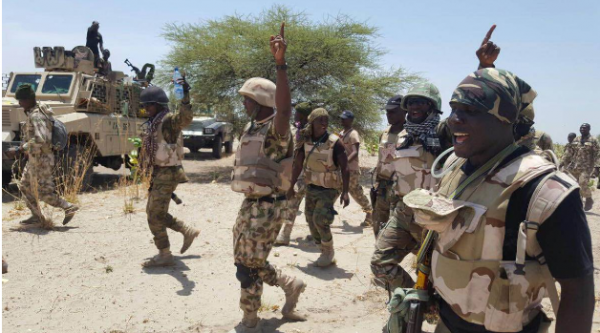 Boko Haram insurgents, today, Monday, took to their heels on sighting soldiers of operation Lafiya Dole in conjunction with the Civilian Joint Task Force (JTF), who were on clearance patrol at Mallam Matsari village, abandoning a female child in the process.
 The United Nations Children Education Fund (UNICEF) has commended the Nigerian Army and the government for releasing 183 children after being cleared of ties with Boko Haram insurgents in Maiduguri, capital of Borno State.

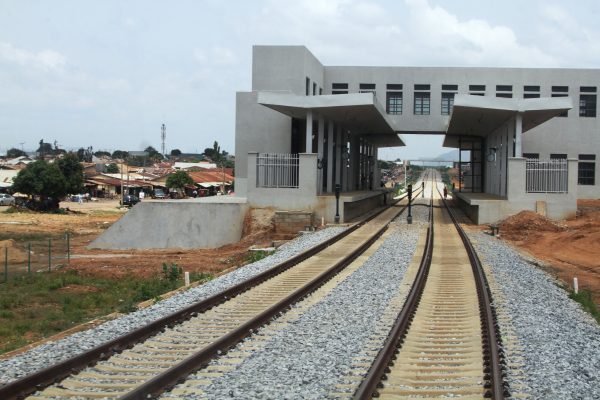 President Muhammadu Buhari is expected to commission the recently completed first Phase of the Abuja light rail project on Thursday, July 12 and would flag-off the railway services to begin operations of the rail services in the Federal Capital Territory (FCT).
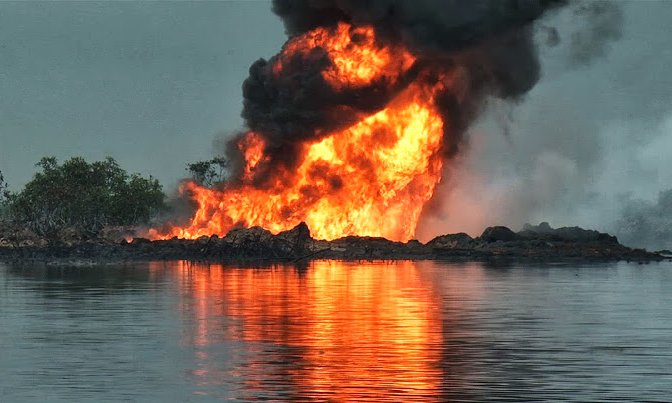 The Nigeria National Petroleum Corporation (NNPC) has commenced investigation into two explosions that occurred on its pipelines at a village popularly called Pago in Paikoro local government areal of Niger State yesterday, Sunday 8.
 Friday June 5, 1998, was a cool bright day. Before we left the Villa, the Press Corps was informed that the leader of the Palestinian Liberation Organisation, Yasser Arafat, would be making a brief stop-over at the Nnamdi Azikiwe International Airport, Abuja, enroute Morocco. And he was expected to hold a brief discussion with the General Sani Abacha. We were therefore expected to be at the airport to cover the event on Sunday, June 7. It was a topical assignment in view of Nigeria’s neutral position in the Middle East conflict. Besides, the rest of us were keen to meet Mr. Arafat, the man at the centre of the storm.


Adamu Ciroma, A Man Of Character, By Mamman Daura
Malam Adamu Ciroma, who died last Thursday was a statesman of uncommon gifts and outstanding ability and accomplishments. His versatility was legion; a Civil Servant, Journalist, Banker, Administrator, Politician. He was Master of all Managerial Trades and Jack of None.
The late Mal. Adamu first came to the fore as a brilliant and industrious officer in the Northern Nigeria Civil Service which he joined after graduating with an Honours Degree in the renowned University of Ibadan. He rose rapidly by catching the eyes of his superiors whilst serving both in Kaduna and the provinces.
One incident marked him as a truly independent and fearless official. A private businessman dealing in Pilgrim Affairs appeared to want to keep some funds rightly belonging to the Northern Nigerian Government. The complication was that the man was very close to the Premier. Nobody wanted to tackle the problem. But Adamu took the matter head on, as it was on his schedule. His minutes to the Premier is preserved in the Archives in Arewa House, Kaduna.
“Hon. Premier, this money belongs neither to you nor to Alhaji X. It belongs to the people of the North”. In the interest of good manners usually associated with these columns I have refrained from identifying the man. In any case, he is dead now. Adamu’s Nigerian and expatriate superiors were horrified at his forthrightness. One of them asked: “Are you sure you want the premier to see this?” to which Adamu replied “Yes”. To cut the story short although the great man was slightly annoyed the money was swiftly returned to Government coffers. Thereafter Adamu became a minor celebrity, his minutes was the talk of town for several weeks.
His Civil Service career was not limited to the North. He had a stint in Lagos where he gathered valuable Federal experience before returning to the North and to one of his landmark achievements. A new newspaper, The New Nigerian, was set up by the Regional Government just before the bloody military take-over of Jan 15th 1966. The mood of the people in the North was that the paper should be run by Nigerians.
The Regime’s leadership of the Civil Service cast around far and wide for a suitable candidate who will spearhead the campaigns to publicise and protect the interests of the North. They picked on Adamu Ciroma. He was the first and the best Editor of the New Nigerian. He wrote powerful, thoughtful but always constructive editorials and articles. His command of English was uncommonly brilliant.
It was during this time, 1966 – 1967, that a group of enlightened young men, sensing that a vacuum was being created because the military leadership was hopelessly inexperienced and they were beginning to be surrounded by opportunists with dubious bona fides. This group decided to cohere and assist the governments with proposals and advice on running the country. Adamu Ciroma was usually their spokesman, such were his gifts of articulation and communication. It was during these heated debates that Mal. Adamu uttered one of his memorable dicta. He said the North must modernize and to modernize it must Westernize. This was a subject of discussion for months.
Unsurprisingly, the New Nigerian developed a love – hate relationship with the military governments with a few instances threatening to reach breaking point. Luckily Mal. Adamu survived and handed over to a carefully planned set of successors.
Having grown out of the New Nigerian the new Military Government of Murtala Muhammad appointed him as Governor of the Central Bank and good judges within the Bank still regard his tenure as one of the best in the Bank’s history. It was during his time in the CBN that knowledgeable people began to rate him as a possible future leader of the country.
He resigned from CBN and stood election in the Constituent Assembly that was the precursor to full blown political activity and democratic government.
It was during the proceedings amidst the severely tense Sharia debate that Adamu Ciroma announced to the assembly the North’s ‘’irreducible minimum’’ condition for a closure to the issue. After gathering support and making extensive contacts among Assembly members, Mal. Adamu built a formidable team and network to vie for the Presidency in 1979 when the military promised to hand over.
On the first day of the convention Adamu’s team was confident of the outcome. Evidently, those in control of the NPN Party machinery became aware that their preferred candidate was unsure of winning. We sat at the venue from 9am to 10pm without any announcement of when the convention would begin. The convention was adjourned without achieving anything that day. If the vote had been taken that day I fancy Adamu would have won the nomination. Late Samuel Ogbemudia subsequently told me that a distasteful amount of money was sourced from a major multi – national company and delegates were heavily bribed overnight and the result of balloting the following morrow put Adamu in third place. As the French say, Plus ca change… (the more things change, the more they are the same).
Nonetheless, Adamu Ciroma participated first as Secretary to the party and later a Minister of Industries and Steel, and later still as Minister of Finance and Minister of Agriculture. As I say he was master of all tasks entrusted to him.
When the military again took over the Government, Adamu was detained along with many Ministerial and Gubernatorial colleagues. He was completely exonerated and released early but the strain of incarceration left indelible injury on his psyche and outlook on life.
However, you can never keep a good man down. When the civilians returned for a second time President Obasanjo re-appointed Adamu again as Minister of Finance. He brought gusto and competence to his old job, but it was during his chancery at Finance he suffered a dreadful road accident which nearly cut short his political career and spent months on end in a German hospital. His recovery was slow and his face hideously disfigured.
Nonetheless when he resumed work, the difference in his performance was not noticeable. He retired honourably although still active in politics. As a man, Adamu Ciroma was forthright, easy to make friends and had a zest for life. All in all he was a man of good character. For leisure, he enjoyed his golf and was a fierce competitor.
Historians may recall that the 19th Century English Queen Victoria complained that one of her Prime Ministers, Gladstone, addressed her like he was addressing a public meeting. Frequently in conversation with Adamu Ciroma he would address even his closest acquaintances like he was addressing a public meeting, with his right index finger pointing severely at one! His tone was usually didactic and stentorian. A sage once said “Of all Nature’s gifts, the chief masterpiece was the ability to write well”. Adamu could write well. He could speak well. And he could listen attentively and patiently. This aristocracy of virtues made him stand out among his colleagues.
In his senior years he became deeply religious and generous almost to a fault. But he had no time for dilettantes and scroungers. Once a couple of young men approached him saying that they wanted to write a book about him so that future generations would remember him. His brusque reply: “I don’t want to be remembered.” Fortunately his wish will not be granted. Adamu Ciroma will be remembered for as long as the present generation lasts.
May his soul rest in peace.