Governor Ahmed Usman Ododo of Kogi State has again, floored the governorship candidate of the Social Democratic Party (SDP) in the last year, November election, Muritala Yakubu Ajaka, as the Supreme Court, today, August 19, dismissed his application urging the court to await the outcome of his request for a full panel to hear an issue raised in his appeal. In his ruling, Justice Mohammed Garba, who presided over a five-member panel, noted that the issue in respect of which the appellants seek a full panel was a fraction of the entire appeal. Ajaka and his party are in an appeal marked: SC/CV/654/2024, praying to the apex Court to vacate the decisions of the lower Courts, both the judgment of the court of Appeal and that of the Kogi State election petition tribunal which upheld the victory of Ahmed Ododo of the All Progressives Congress in the state guber election. At the resumed hearing of the appeal, the lawyer who appeared for Ajaka and the SDP, Pius Akubo told the court that his client had written the Chief Justice of Nigeria for the constitution of a full panel of the court to hear issues raised in Paragraphs 4.28 and 4.29, in page 16 of the appellants’ brief of argument. Akubo said the appellants are by both paragraphs, praying the court to depart from previous decisions in determining their appeal. Lawyers to the respondents, Kanu Agabi for the Independent National Electoral Commission, Joseph Daudu for Ododo and Emmanuel Ukala for the APC, all described the application as unnecessary and urged the court, as presently constituted, to proceed to hear the appeal. Garba further noted that the issue was one out of the three issues raised in the appeal and the court, as presently constituted, could hear and determine the appeal. He called on Akubo to proceed with the hearing of the appeal. Akubo identified his briefs, adopted them and urged the court to allow the appeal, set aside the decision of the Court of Appeal and declare Ajaka as the duly elected governor of Kogi State. The respondents’ counsel, Agabi, Daudu and Ukala adopted their briefs and prayed the court to dismiss the appeal and affirm the judgment of the Court of Appeal. Justice Garba subsequently adjourned judgment till a date to be communicated to all parties involved.
The passage of the National Minimum Wage (Amendment) Bill 2024 by the National Assembly is now history. The Bill, which President Bola Ahmed Tinubu has already signed into law, amended the National Minimum Wage Act 2019 by increasing the Minimum Wage from 30,000 Naira to 70,000 Naira and reducing the time for periodic review of the National Minimum Wage from five years to three years. In passing the Bill, the National Assembly did what the time demanded. But no one is commenting on the parliament’s responsiveness in the prompt or speedy passage of the Bill. Isn’t it noteworthy that the lawmakers did what was expected and did it timeously? Given the flak that the National Assembly got over the passage of the Bill that brought back the old National Anthem, it is necessary to point this out. Of course, opinions are divided on the issue. Some people have asked: Why revert to the old National Anthem? Some also queried the speed with which the National Assembly passed the Bill, accusing the parliament of failing to subject it to a public hearing, one of the critical stages in lawmaking. But that accusation is unfair; it is like calling a dog a bad name to hang it because the Senate subjected the Bill to a Public Hearing. The Attorney-General of the Federation and Minister of Justice, Chief Lateef Fagbemi, and Senior Lawyer Mike Ozekhome participated in the Public Hearing. But those crucifying the National Assembly for what happened or did not happen missed or deliberately ignored that fact. Some critics didn’t even notice that it was an Executive Bill. The Nigeria Labour Congress also accused the Executive and the Legislature of prioritising the National Anthem over the welfare of workers for passing the Bill before the National Minimum Wage Bill. Senior Lawyer Femi Falana and some civil society organisations demanded that the National Minimum Wage Bill be passed at the same speed as the Bill to Provide for the National Anthem of Nigeria and Related Matters. Interestingly, the National Assembly was being pressured to speedily process a Minimum Wage Bill that was yet to be transmitted by the Executive. The lawmaking process has stages. A legislative proposal or a Bill passes through the First Reading, Second Reading, Public Hearing, Clause-by-clause consideration of the Bill at the Committee of the Whole, or Committee of Supplies if it is a money Bill, and finally, the Third Reading. Before the Bill is transmitted to the Executive for Presidential assent, the two Chambers – the Senate and the House of Representatives, must have reached concurrence. But the pressure was unnecessary. Even when negotiations and consultations were yet ongoing on the Minimum Wage, the President of the Senate, Godswill Obot Akpabio, had assured the nation of “speedy consideration and passage” of the new National Minimum Wage Bill whenever the proposal was presented to the National Assembly: “Let me assure you that we stand by this commitment. We cannot afford to fail the nation at this critical time,” Akpabio was quoted as saying in a message at a retreat held for some federal lawmakers in Abuja. The National Institute for Legislative and Democratic Studies organised the retreat. At the commencement of the Plenary on Tuesday, 23rd July 2024, the Senate President acknowledged the receipt of the new National Minimum Wage Bill transmitted by the President. On the same day, without delay, the Bill passed the necessary stages of the lawmaking process simultaneously in both Chambers. Falana, in his earlier statement on the National Anthem Bill, had urged that the Minimum Wage Bill be passed within 48 hours. But the Senate did even better. It passed the Bill within one hour. That was faster than the passage of the National Anthem Bill. However, the speedy passage of the Bill by the National Assembly was not because of the pressure mounted on it from outside. The National Assembly was determined to have the issue of National Minimum Wage concluded as early as possible. They decided not to proceed on their 2024 annual recess until the issue was concluded logically. Negotiations involving the government, labour, and the organised private sector were concluded at the tripartite committee level. Also, the President consulted other critical stakeholders, particularly the State Governors, to enhance consensus building. This made the job of lawmaking on the issue easier for the parliament. After all those negotiations and meeting of minds, all that was needed was a parliamentary seal. And this the lawmakers offered in the national interest. By passing the bill with dispatch, the federal lawmakers loudly stated that they care about the Nigerian workers. Bills may take several months or years to pass. Some are even passed across dispensations. Fair observers will acknowledge that since the inception of the Akpabio 10th Assembly, legislative proposals that directly impact people’s lives have received accelerated and expeditious consideration. This demonstrates that the 10th Assembly is people-centric. However, despite this people-oriented disposition, the National Assembly still faces a trust deficit arising from an unfair perception of the institution as a mere money guzzler. This perception didn’t start with the 10th Assembly; it is a baggage that its predecessors also carried. This age-long perception is that lawmakers are concerned only about what they can take for themselves. This explains why critics are constantly on alert for a whiff of scandal and an error of commission or omission by the institution. And when that appears, they swiftly cash in and feast on it. With this mindset, discussing any well-delivered aspect of its mandate, like the passage of the new National Minimum Wage Bill, becomes an aberration. At the inception of the 10th Assembly, Godswill Obot Akpabio, President of the Senate and Chairman of the National Assembly, promised that the Assembly would be a Peoples’ Parliament. Evidence abounds in the number and quality of the Bills since passed, as well as in its various legislative interventions, that this has been the case. The 10th Assembly will live by that promise always. ***Awoniyi, Media Aide to Senate President, wrote in from Abuja
Former governor of Cross River State, Donald Duke has said that quack Politicians have dominated the Nigeria political space thereby dimming the hope of the youths in the country. He lamented that Nigeria is suffering because of the calibre of politicians in the country. Duke, who spoke on the sidelines of the 2024 teens career conference titled ‘The power of music,’ organised by the Redeemed Christian Church of God (RCCG), in Abuja, emphasized that majority of Nigerian youths are no longer looking within the country for a better future but have turned their attention to other climes.
Duke stressed the need to eliminate quacks who see politics as a means of livelihood rather than a means of service. “Hope is an eternal, effervescent power to create hope in the young ones that their tomorrow will be better than today, just as their today ought to have been better than yesterday. “Politics could be the most elevating vocation, but a lot of quacks are involved in it right now, so they have brought it down to the lowest level. “When politics is right, it elevates everything; it elevates medicine; it elevates your livelihood; when we complain about the country not being good, it is the politician. “So, if you have the right politicians, we will have the right country; so, it is the most noble of vocations, but unfortunately full of quacks.” He said that the high inflation rate in the country is due to the cost of energy and tasked the political class with addressing the energy crisis by converting gas flaring to support the economy.
Former Nigeria’s President, Muhammadu Buhari has expressed sympathy to the former chairman of the Independent National Electoral Commission, (INEC), Professor Mahmud Jega over the death of his mother, Hajiya Hauwa Kulu Muhammadu Jega. She died yesterday evening, August 16, after a brief illness in Abuja. In a condolence message by his spokesman while in office, Malam Garba Shehu, the former president said: “there is no greater loss than that of a mother.” Buhari expressed deepest condolences for the passing of his “beloved mother,” and prayed: “may her soul rest in peace. “Please know that you and your family are in my thoughts and prayers. “I hope that you will find solace and comfort in the good deeds she left behind. “May All grant her Aljannul Firdaus.” Remains of the deceased were committed to mother earth today, August 17 in Abuja after a funeral prayer was held at the National Mosque in Abuja. She is survived by many children and grand children, including a renown journalist and former Editor-in-chief of Daily Trust newspaper, Malam Mahmud Jega, and former Executive Director of AMCON, Alhaji Abbas Jega, among others.
The Nigerian Content Development and Monitoring Board (NCDMB) and the Nigeria LNG Limited (NLNG) have commissioned the 10,000 Tons per annum galvanizing plant for Train 7 Project. The Commissioning, which was done today, August 16, at Daewoo Galvanising Plant at Abam-ama, Okrika, Rivers State, attracted the Executive Secretary of the NCDMB, Engr. Felix Omatsola Ogbe and Managing Director and Chief Executive Officer of NLNG, Dr. Philip Mshelbila. The project was constructed by Daewoo Engineeering Nigeria Limited, one of the engineering, procurement, and construction (EPC) contractors of the NLNG. The Galvanizing plant is one of the capacity development interventions for the Train 7 project and the establishment is sequel to NCDMB’s requirement that the execution of major EPC projects in the country must include the development of a legacy investment that will close a critical capacity gap in the oil and gas industry. The Executive Secretary lauded NLNG and Daewoo Engineering for responding positively to the Nigerian Content legacy requirement. He said that the commissioning of the hot deep galvanizing plant has increased Nigeria’s galvanizing capacity to over 180,000 Tons/annum, with other facilities established by Dorman-long Engineering, Sparkwest steel industries and African Industries Group. The facility will serve the Nigerian oil and gas industry and linkage sectors, including telecommunications, power and transport sectors that require galvanised materials. The importance of galvanizing, he explained, included corrosion protection, extended service life of steel materials, cost effectiveness and safety assurances. Ogbe said that the galvanizing plants and other strategic Nigerian Content investments could enjoy patronage from sister African countries courtesy of the Africa Continental Free Trade Agreement protocols, especially if the firms carry out intensive marketing and remain committed to quality standards and competitiveness. He said that the domiciliation of key industry capacities is contributing towards the attainment of the 70% Nigerian Content target by 2027 and “underscores the commitment of President Bola Tinubu’s Administration towards implementing pro-local production reforms that will bring about employment and economic prosperity.” The Managing Director of NLNG, Dr. Philip Mshelbila reiterated the company’s unwavering commitment to achieving its Nigerian Content objectives in its Train 7 Project on Bonny Island. According to Dr. Mshelbila, the protection of steel for durability is a significant application in the energy sector, bolstering the resilience of equipment against depletion and enhancing operational efficiency, reducing wastage from replacement costs, and prolonging the lifespan of relevant equipment. “The visit to the Daewoo Galvanising Plant is a further ‘show and tell’ of our compliance with the Nigerian Oil and Gas Industry Content Development (NOGICD) Act and, our sincere vision of being a globally competitive LNG company helping build a better Nigeria. “As we commission this facility, we are not only celebrating the expansion of our industrial capabilities but also reaffirming our unwavering commitment to contributing to the local economy and creating sustainable job opportunities for the local business environment.’ Represented by NLNG’s General Manager, External Relations and Sustainable Development, Andy Odeh, the Managing Director reported significant progress in the Train 7 Project reflecting the Company’s commitment to excellence. “We are proud to share the development of the Train 7 project, a groundbreaking initiative that sets new standards in the Nigerian oil and gas sector. Train 7 has achieved several notable milestones including the successful completion of key construction phases and the integration of advanced technologies that enhance our operational capabilities. “These accomplishments reflect our commitment to delivering substantial economic and social benefits to Nigeria.“Our dedication to Nigerian Content is evident in every facet of our operations. “From enhancing local capabilities and fostering technological innovation to creating sustainable opportunities for Nigerians, NLNG remains at the forefront of these efforts. “We at NLNG are determined to “Go Beyond Compliance” in line with our vision of helping to build a better Nigeria.” The industry executives alongside other executives of NLNG, NCDMB, Daewoo Construction and key stakeholders of the oil and gas industry undertook a tour of the plant.
Today is for reflection and spiritual nourishment. If you are searching for a sermon that inspires sober contemplation, consider the profound words of the renowned African author Ayi Kwei Armah: “The Beautiful Ones Are Not Yet Born.” This thought resonates deeply with our current reality; we are in desperate need of “the beautiful ones”—individuals of integrity and moral fortitude—in every segment of Nigeria. This value-laden phrase serves as a stark reminder to all humble readers, leaders, and followers that the ideal of moral and ethical purity remains elusive, even in the mosques and churches in Nigeria. We are outwardly religious, but apparently not spiritual! Our actions are antithetical to religious principles. The beauty of integrity and righteousness, which we long for in religion, seems always just out of reach—a distant aspiration rather than a reality, as evidenced by the shameful conduct of our leaders and managers of our collective patrimony. The message of “The Beautiful Ones Are Not Yet Born” resonate deeply as we consider the recent scandal involving the National Hajj Commission of Nigeria (NAHCON). Hajj, often referred to as the pilgrimage to Makkah and Madinah, is the fifth pillar of Islam, meant to be a pure act of worship, performed with the utmost integrity and sincerity by those who have the financial means and physical capability. Unfortunately, politicians have historically corrupted this sacred pillar under the guise of subsidy and assistance to pilgrims. The post of Chairman of the Hajj Board is often seen as lucrative across the board. But do we really need government subsidies and sponsorships for Hajj when Allah makes it obligatory only for those who have the means? The role of the government should be limited to coordination and travel facilitation—a role better suited for private sector Hajj operators. As the Quran states in Surah Al-Imran (3:97), “And Hajj (pilgrimage to Makkah) to the House (Ka’bah) is a duty that mankind owes to Allah, those who can afford the expenses (for one’s conveyance, provision, and residence).” This sacred obligation is not just a ritual but a deeply spiritual journey that every Muslim who is able must undertake. However, the recent scandal involving NAHCON has cast a dark shadow over this holy and supposedly incorruptible Hajj endeavor. The contrast between the actions of the current custodians of NAHCON and the exemplary leadership of Umar bin Abdulaziz, the revered eighth Umayyad Caliph, is striking. Umar bin Abdulaziz is often cited as a paragon of justice and humility, especially in his use of state assets and funds. It is said that he was so scrupulous in his management of public resources that he would not even use state oil in lamps for his personal activities. Instead, he would extinguish the state lamp and light his own when attending to personal matters, ensuring that no public asset was misused for private gain. This level of integrity and accountability is what is expected from those entrusted with the management of Hajj operations, yet the recent actions of NAHCON officials stand in stark contrast to this ideal. Recent reports reveal that the Executive Chairman of NAHCON, along with other top officials, is currently under investigation by the Economic and Financial Crimes Commission (EFCC) for the alleged mismanagement of the N90 billion 2024 Hajj subsidy. The EFCC has reportedly recovered a total of SR314,098 from these officials, a clear indication of financial malpractice at the highest levels of the Commission. The gravity of this scandal cannot be overstated. Hajj is a sacred duty, and the funds allocated for its organization are meant to facilitate the journey for millions of Muslims who place their trust in these institutions. Instead, these funds have been misappropriated by those entrusted with this sacred responsibility. The investigation also revealed that SR8,614,175.27, withdrawn from the N90 billion allocated by the Federal Government, remains unaccounted for by NAHCON. Furthermore, the probe uncovered past financial malpractices, including payments for non-existent study tours and services not rendered, further deepening the scandal. The corruption within NAHCON is not just a betrayal of public trust but a direct affront to the sanctity of Islam. The Prophet Muhammad (peace be upon him) emphasized the importance of honesty and integrity, particularly in matters of public trust. In a hadith narrated by Ibn Umar, the Prophet said: “When a man deceives those who trust him, his place is in Hell.” (Sahih Muslim). This scandal serves as a stark reminder of how easily even the most sacred institutions can be tainted by greed and corruption. It is a call to action for all Muslims to demand greater accountability and transparency from those who are entrusted with the organization of Hajj. Conclusion The actions of the NAHCON custodians are nothing short of shameful. They have corrupted the incorruptible, turning a sacred duty into a platform for personal gain. As Socrates once said, “He who is not contented with what he has, would not be contented with what he would like to have.” This quote underscores the insatiable greed that often leads to such moral decay. Similarly, the great Muslim philosopher Al-Ghazali warned, “The corruption of the worldly-minded is due to their greed for power and wealth.” These timeless words remind us of the dangers of allowing material desires to overshadow spiritual and ethical responsibilities. The ongoing investigation by the EFCC must be thorough and transparent, ensuring that those responsible are held accountable. Only then can the sanctity of the fifth pillar of Islam be restored, and the trust of the millions of Muslims who undertake this holy journey be regained. Dr. Lukman Raimi is an entrepreneurship educator, legal researcher, and advocate of good governance.
The House of Representatives has expressed concern and call for urgent drastic action to tackle the new epidemic, known as Mpox, which is said to have spread to 33 Nigerian States and the Federal Capital Territory (FCT)
The House Committee on Healthcare Services, that it is working in close collaboration with relevant health agencies and international partners to ensure a coordinated and effective response to the outbreak. Chairman of the Committee, Dennis Idahosa (APC, Edo), said: “the rising cases of Mpox in our country is a serious threat to public health. “We are fully committed to working with the NCDC, the Federal Ministry of Health and Social Welfare, and international partners to ensure that we take all necessary actions to curb this epidemic. “The safety and well-being of Nigerians is our top priority, and we urge everyone to adhere to the health guidelines provided.” The House promised to liaise with relevant Committees on Health to monitor the situation and collaborate with all relevant authorities to ensure effective management of the outbreak. “We urge all Nigerians to stay vigilant, follow health advisories, and cooperate with public health officials during this critical time.” This is coming even as the Coordinating Minister for Health and Social Welfare, Professor Muhammad Ali Pate, assured the public that the government has implemented a new mandate requiring all travelers to complete an online health declaration form before departing for the country. “This Mpox Clade 1 strain has caused fatalities in up to 10 percent of individuals who have fallen ill in previous outbreaks. The aim is to tackle and mitigate its impact by deploying measures similar to those used during the COVID-19 pandemic,” Professor Pate said. The Nigerian Centre for Disease Control and Prevention (NCDC) confirmed 39 cases of Mpox in the country, saying that though there is no death so far but that it had recorded the outbreak from 33 states and the Federal Capital Territory (FCT). The Director General of NCDC, Dr. Jide Idris, told newsmen that Bayelsa is leading the 33 states with five confirmed cases, while Cross River, Ogun and Lagos states all trailed behind with four confirmed cases. “The Nigeria Centre for Disease Control and Prevention has been closely monitoring several endemic diseases, including mPox which has been declared a Public Health Emergency of International / Continental Concern (PHEIC / PHECC) by both the WHO and the Africa Centers for Disease Control and Prevention, (ACDC). “In Nigeria, cumulatively, a total of 39 confirmed cases and zero deaths have been recorded across 33 States + FCT, from the beginning of the year 2024. Bayelsa with five cases,Cross River with four, Ogun with four, Lagos with four, Ondo with three and Ebonyi with three leading the pack. ”Noting the significant concern of the ease of cross-border transmission, this press conference is part of the effort to intensify our coordination and communication with stakeholders to manage the spread of the virus and prevent disease importation.” He said that so far, about 2,863 confirmed cases and 517 deaths across 13 African countries had been reported in 2024 alone.” According to him, this alarming increase is linked to a new strain of the Mpox virus which emerged in eastern Congo and has since been detected in Kenya, Rwanda, and Uganda. ”As part of the government’s ongoing efforts, we are intensified surveillance across Nigeria to swiftly detect and respond to any new cases. “This putting all port health services across all five international airports, ten seaports, and 51 land/foot crossing borders on high alert. “Diagnostic protocols according to the Integrated Disease Surveillance and Control, IDSR are now distributed to these locations and port health officers are on high alert and screening for suspected cases. “Some states have also been put on high alert including Lagos, Abuja, Enugu, Kano, Rivers, Cross-River, Akwa-Ibom, Adamawa, and Taraba. We are also conducting contact tracing and monitoring for confirmed cases to prevent further spread. “This will now also include declaration by travellers who have been to any of the countries where there is an ongoing outbreak of MPX in the last 90 days. Additionally, we continue to provide healthcare workers and the public with updated guidance on infection prevention and control measures and train SURGE staff as part of our preparedness and readiness for an MPX public health event. ”The NCDC is also notifying public and private hospitals about the MPX alert and sending a list of referral isolation/treatment centers across the 6 geopolitical zones and reference laboratory networks which includes NRL, CPHL, NIMR, LUTH, ACEGID, UNTH, UPTH. “We are also considering vaccination efforts for high-risk groups, as Nigeria expects to receive 10,000 doses of the Jynneos vaccine. “The Technical Working Group ,TWG remains committed to providing evidence-based guidance to inform the country’s next steps in safeguarding the health of Nigerians at national, state, and local government levels.” Idris described Mpox as a “rare viral zoonotic infectious disease (i.e., disease of animals transmitted from animals to humans) that is endemic in several African countries, including the tropical rainforests of Central and West Africa. “The exact reservoir of the virus is still unknown although rodents, squirrels and monkeys are suspected to play a part in transmission. “The Mpox virus can spread both from animal to human and from human to human. Animal-to-human transmission may occur by direct contact with the blood, body fluids, skin or mucosal lesions of infected animals (e.g., monkeys, squirrels, and rodents). “This can happen through a bite, scratch, handling of, or eating inadequately cooked or other products of infected bushmeat. ”Human-to-human (person-to-person) transmission occurs when a person comes into contact with the virus from an infected human, or materials contaminated with the virus such as clothing, beddings.” Speaking on the sign and symptoms of Mpox, the NCDC DG said that the “symptoms of the illness include fever, headache, body aches, weakness, swollen lymph nodes (glands) and a rash. “After about one to three days of fever, the rash erupts, beginning on the face and then spreading to the body with the face and palms/soles being mostly affected. They can also occur in and around the genitals which is why contact during sex is another mode of transmission.” On public advisory, he said: “To prevent the spread of Mpox, we strongly urge members of the public to adhere to proven infection prevention and control measures. These practices are essential in limiting the transmission of the Mpox virus.” He advised the public to take the following steps to prevent themselves from the dreaded disease: Avoid contact with animals that could harbour the virus, including sick or dead animals in areas where MPX has been confirmed; avoid contact with any material that has been in contact with a sick animal; avoid unnecessary physical contact with persons infected with MPX; and isolate potentially infected animals from other animals. Others include practice frequent handwashing with soap and water, especially after caring for or visiting sick people: ensure all animal food products are properly cooked before eating and adopt use of appropriate protective clothing and gloves while handling sick animals or their infected tissues and during slaughtering procedures. While advising the public to report all cases with the associated symptoms mentioned above to the nearest health facility for care, and/or call the NCDC toll-free line on 6232, Dr Idris said: “Nigeria government is making effort to make vaccine available to the public, especially the hotspot area. The vaccine has been shown to have a favorable safety profile.
Nigerian government has made it clear to a Chinese company, Zhongshan Fucheng Industrial Investment Co. Limited that it cannot use unorthodox means to strip the country of offshore assets, including Presidental Jets. Earlier reports have it that the Chinese company had approached the court over a revoked contract to manage a free-trade zone in Ogun State. The company claimed that the state government had failed to meet its obligations, leading to the revocation of the contract in 2016. The court, under such circumstance, ordered that three Nigeria’s Presidential jets should be seized. The jets are Dassault Falcon 7X, Boeing 737-7N6/BBJ, and an Airbus A330-243, that are stationed at Paris-Le Bourget and Basel-Mulhouse airports. Responding, the Nigerian Presidency said that the Chinese company misled the court and attempted to take over offshore assets of the country’s through subterfuge. In a statement today, August 15, Special Adviser to President Bola Tinubu on Information and Strategy, Bayo Onanuga, stressed that there was no any contractual obligations between the company and the Nigeria’s Federal Government. The statement, which said that the Attorney-General and Minister of Justice is working with the Ogun State government to quash the case, also accused the Chinese company of withholding vital information and misleading the Judicial Court in Paris. Onanuga said: “The Presidency is aware of the various failed attempts by a Chinese company, Zhongshan Fucheng Industrial Investment Co. Limited, to take over offshore assets of the Federal Government of Nigeria through subterfuge. “The Federal Government is not under any contractual obligation with the company. The case in which Zhongshan is trying to use every unorthodox means to strip our offshore assets is between the company and the Ogun State Government.
“The Federal Government is fully aware of efforts being made by the Ogun State Government to reach an amicable resolution on the matter. “It must be said without any equivocation that Zhongshan has no solid ground to demand restitution from the Ogun State Government based on the facts regarding the 2007 contract between the company and the State Government to manage a free-trade zone. “When the contract with Ogun State was revoked in 2015, the company had only erected a perimeter fence on the land earmarked for a free trade zone. While the Attorney-General of the Federation and Minister of Justice is working with the Ogun State Government on an amicable resolution, Zhongshan obtained two orders from the Judicial Court of Paris dated March 7, 2024, and August 12, 2024, without any notice being duly served on the Federal Government of Nigeria and Ogun State Government. “This arm-twisting tactic by the Chinese company is the latest in a long list of failed moves to attach Nigerian government-owned assets in foreign jurisdictions. “The material facts in the transaction between the Ogun State Government and Zhongshan point to another P&ID case in which unscrupulous and questionable individuals falsely present themselves as investors with the sole objective of undercutting and scamming Governments in Africa. “Undoubtedly, Zhongshan withheld vital information and misled the Judicial Court in Paris into attaching the Nigerian government’s presidential jets, which are on routine maintenance in France. The use and nature of the Presidential jets as assets of a Sovereign entity whose assets are protected by diplomatic immunity forbid any foreign Court from issuing an order against them. “We are convinced the Chinese company misled the Judicial Court of Paris regarding the use and nature of the assets it seeks to attach and did not fully disclose to the court as required by law. “This same Chinese company had tried to enforce its questionable judgment in the UK and USA but failed. “We want to assure Nigerians that the Federal Government is working with the Ogun State Government to discharge this frivolous order in Paris immediately.”
Executive Chairman of the National Hajj Commission of Nigeria (NAHCON), Malam Jalal Arabi, is being detained by the Economic and Financial Crimes Commission (EFCC) over alleged misappropriation, including the failure to account for 8,614,175.27 Saudi Riyals (SR). The EFCC) also has in its custody, the NAHCON secretary, Abdullahi Kontagora, over alleged N90 billion hajj subsidy fraud. President Bola Tinubu had approved N90 billion for the commission to subsidize the hajj cost of pilgrims in the just concluded 2024 Hajj in Saudi Arabia. A document by the anti-graft agency showed that a total of SR314,098 was recovered from the NAHCON chairman and other officials. The anti-graft agency said that its investigation revealed that from the N90 billion released for Hajj subsidy, Arabi, fraudulently overpaid himself and others the necessary operational cost. According to the document, the approved 2024 Hajj operational cost for the Chairman/CEO Commissioners, Secretary and Directors/Chief of Staff in the 2024 budget are stipulated as $4,250, $12,750, $3,825 and $15,300, respectively. “The chairman fraudulently overpaid himself, the commissioners, secretary and directors for the 2024 hajj operational cost,” the document said. “The chairman was entitled to SR15,929 but he got SR50,000; three commissioners who were meant to get SR 15,929 each received SR 40,000 each. The secretary got SR 30,000 instead of SR14,336. Directors/Chief of Staff received SR 30,000 instead of the SR2,550 they were entitled to. The total of SR314,098 were recovered from all of them.” Another document revealed that the sum of SR8,614,175.27 cash withdrawal out of the N90 billion released by the Federal Government to the commission is yet to be accounted for by NAHCON. “The sum of N90bn was released by the Federal Government of Nigeria to the National Hajj Commission to subsidise the 2024 Hajj Operations by the Federal Government of Nigeria,” the document stated. “The total sum of N1, 764,705,937.62 was deducted by the Central Bank of Nigeria as bank charges. “The sum of N88, 235,294,063.72 was subsequently converted into United States dollars at the rate of N1,416.13, which amounted to USD 62,307,164.48 and thereafter transferred into NAHCON British SAAB Account in Saudi Arabia. “The sum of USD 62,307,164.48 was converted to Saudi Riyal at the rate of N3,748, which amounted to the sum of SR 233,527,252.47. “That the opening balance of the IBAN-E track for 2024 Hajj activities was SR 19,813,810.89 and has an inflow of SR 485,000,000.00 from NAHCON with a closing balance of SR 78,985,266.03. “That the closing balance is inclusive of the SR20,637,908.23 refunded from the Ministry of Hajj and Umrah Saudi Arabia. “That the total sum of SR 22, 815,367.74 was withdrawn cash from the British SAAB account by one Abubakar Muhammed Lamin in Saudi Arabia during the 2024 Hajj operation. “The expected cash payment for services and allowances to staff and stakeholders is SR 14,905,910.47. “That the total sum of SR 8,614,175.27 cash withdrawal is yet to be accounted for by NAHCON.”
It has been confirmed that 16 persons have lost their lives, 3,936 houses and 2,744 hectres of farmlands destroyed to flood disaster as a result of torrential rainfalls since the commencement of the 2024 rainy season. Executive Secretary of the State Emergency Management Agency (SEMA), Dr. Haruna Mariga, who confirmed this in Dutse, the State capital, said that the disaster affected 10 local government areas. Dr. Haruna said that the deaths were as a result of building collapse, drowning and canoe mishaps. “The disaster resulted in 16 deaths with 3,936 persons displaced while 2,744 hectares of farmlands submerged.” He said that the situation might escalate due to the anticipated high volume of rainfall. He said that the agency had provided temporary shelter and distributed relief materials to the displaced persons to mitigate their sufferings. He listed the items to include rice, maize, maize grits, blankets, pasta and mats.
We use cookies on our website to give you the most relevant experience by remembering your preferences and repeat visits. By clicking “Accept”, you consent to the use of ALL the cookies.
This website uses cookies to improve your experience while you navigate through the website. Out of these, the cookies that are categorized as necessary are stored on your browser as they are essential for the working of basic functionalities of the website. We also use third-party cookies that help us analyze and understand how you use this website. These cookies will be stored in your browser only with your consent. You also have the option to opt-out of these cookies. But opting out of some of these cookies may affect your browsing experience.
Necessary cookies are absolutely essential for the website to function properly. This category only includes cookies that ensures basic functionalities and security features of the website. These cookies do not store any personal information.
Any cookies that may not be particularly necessary for the website to function and is used specifically to collect user personal data via analytics, ads, other embedded contents are termed as non-necessary cookies. It is mandatory to procure user consent prior to running these cookies on your website.





 “The Federal Government is fully aware of efforts being made by the Ogun State Government to reach an amicable resolution on the matter.



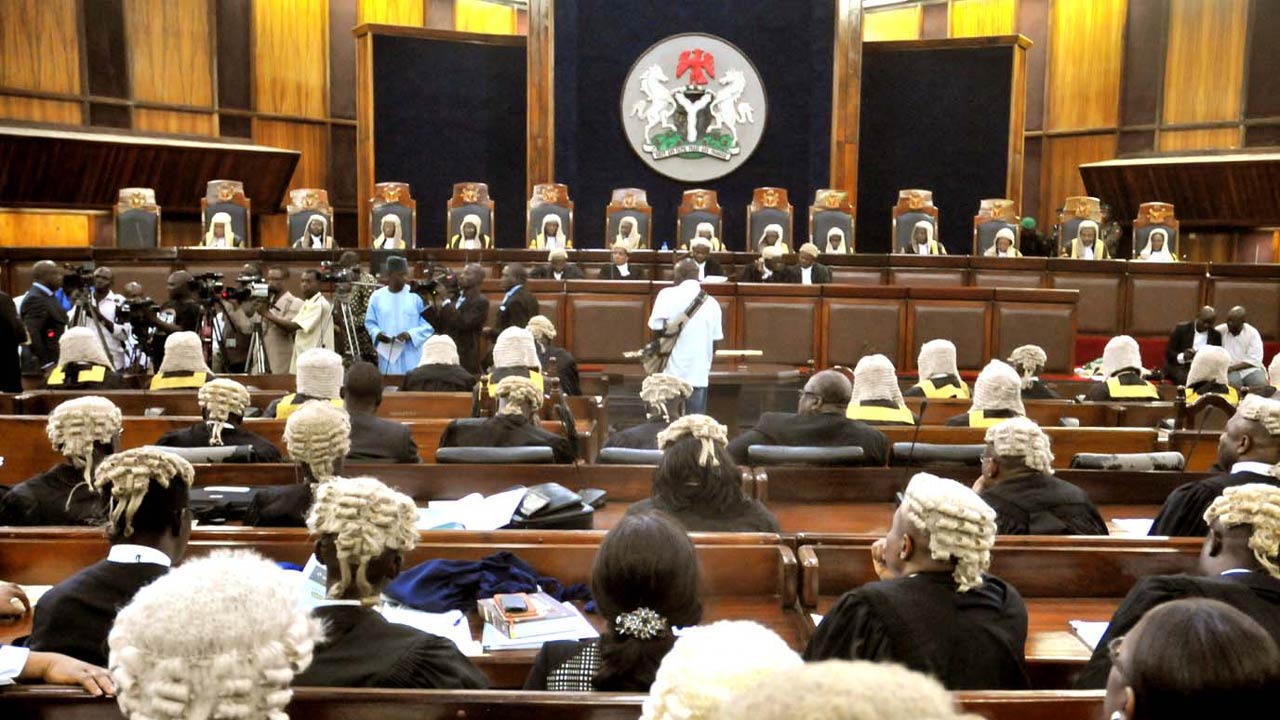
How National Assembly Passed Minimum Wage Bill, By Ola Awoniyi
The passage of the National Minimum Wage (Amendment) Bill 2024 by the National Assembly is now history. The Bill, which President Bola Ahmed Tinubu has already signed into law, amended the National Minimum Wage Act 2019 by increasing the Minimum Wage from 30,000 Naira to 70,000 Naira and reducing the time for periodic review of the National Minimum Wage from five years to three years.
In passing the Bill, the National Assembly did what the time demanded. But no one is commenting on the parliament’s responsiveness in the prompt or speedy passage of the Bill. Isn’t it noteworthy that the lawmakers did what was expected and did it timeously?
Given the flak that the National Assembly got over the passage of the Bill that brought back the old National Anthem, it is necessary to point this out. Of course, opinions are divided on the issue. Some people have asked: Why revert to the old National Anthem? Some also queried the speed with which the National Assembly passed the Bill, accusing the parliament of failing to subject it to a public hearing, one of the critical stages in lawmaking. But that accusation is unfair; it is like calling a dog a bad name to hang it because the Senate subjected the Bill to a Public Hearing. The Attorney-General of the Federation and Minister of Justice, Chief Lateef Fagbemi, and Senior Lawyer Mike Ozekhome participated in the Public Hearing. But those crucifying the National Assembly for what happened or did not happen missed or deliberately ignored that fact. Some critics didn’t even notice that it was an Executive Bill.
The Nigeria Labour Congress also accused the Executive and the Legislature of prioritising the National Anthem over the welfare of workers for passing the Bill before the National Minimum Wage Bill. Senior Lawyer Femi Falana and some civil society organisations demanded that the National Minimum Wage Bill be passed at the same speed as the Bill to Provide for the National Anthem of Nigeria and Related Matters. Interestingly, the National Assembly was being pressured to speedily process a Minimum Wage Bill that was yet to be transmitted by the Executive.
The lawmaking process has stages. A legislative proposal or a Bill passes through the First Reading, Second Reading, Public Hearing, Clause-by-clause consideration of the Bill at the Committee of the Whole, or Committee of Supplies if it is a money Bill, and finally, the Third Reading. Before the Bill is transmitted to the Executive for Presidential assent, the two Chambers – the Senate and the House of Representatives, must have reached concurrence.
But the pressure was unnecessary. Even when negotiations and consultations were yet ongoing on the Minimum Wage, the President of the Senate, Godswill Obot Akpabio, had assured the nation of “speedy consideration and passage” of the new National Minimum Wage Bill whenever the proposal was presented to the National Assembly:
“Let me assure you that we stand by this commitment. We cannot afford to fail the nation at this critical time,” Akpabio was quoted as saying in a message at a retreat held for some federal lawmakers in Abuja. The National Institute for Legislative and Democratic Studies organised the retreat.
At the commencement of the Plenary on Tuesday, 23rd July 2024, the Senate President acknowledged the receipt of the new National Minimum Wage Bill transmitted by the President. On the same day, without delay, the Bill passed the necessary stages of the lawmaking process simultaneously in both Chambers. Falana, in his earlier statement on the National Anthem Bill, had urged that the Minimum Wage Bill be passed within 48 hours. But the Senate did even better. It passed the Bill within one hour. That was faster than the passage of the National Anthem Bill.
However, the speedy passage of the Bill by the National Assembly was not because of the pressure mounted on it from outside. The National Assembly was determined to have the issue of National Minimum Wage concluded as early as possible. They decided not to proceed on their 2024 annual recess until the issue was concluded logically. Negotiations involving the government, labour, and the organised private sector were concluded at the tripartite committee level. Also, the President consulted other critical stakeholders, particularly the State Governors, to enhance consensus building. This made the job of lawmaking on the issue easier for the parliament. After all those negotiations and meeting of minds, all that was needed was a parliamentary seal. And this the lawmakers offered in the national interest.
By passing the bill with dispatch, the federal lawmakers loudly stated that they care about the Nigerian workers. Bills may take several months or years to pass. Some are even passed across dispensations.
Fair observers will acknowledge that since the inception of the Akpabio 10th Assembly, legislative proposals that directly impact people’s lives have received accelerated and expeditious consideration. This demonstrates that the 10th Assembly is people-centric.
However, despite this people-oriented disposition, the National Assembly still faces a trust deficit arising from an unfair perception of the institution as a mere money guzzler. This perception didn’t start with the 10th Assembly; it is a baggage that its predecessors also carried.
This age-long perception is that lawmakers are concerned only about what they can take for themselves. This explains why critics are constantly on alert for a whiff of scandal and an error of commission or omission by the institution. And when that appears, they swiftly cash in and feast on it. With this mindset, discussing any well-delivered aspect of its mandate, like the passage of the new National Minimum Wage Bill, becomes an aberration.
At the inception of the 10th Assembly, Godswill Obot Akpabio, President of the Senate and Chairman of the National Assembly, promised that the Assembly would be a Peoples’ Parliament. Evidence abounds in the number and quality of the Bills since passed, as well as in its various legislative interventions, that this has been the case. The 10th Assembly will live by that promise always.
***Awoniyi, Media Aide to Senate President, wrote in from Abuja