National Chairman of the Peoples Democratic Party (PDP),Prince Uche Secondus has asked the Minister of Information Alhaji Lai Mohammed, to meet him in court to prove that he is one of those who looted the nation’s treasury.
In a statement reacting to the minister’s list of Nigerians, mainly in the opposition PDP, Secondus emphasized that the minister will need to prove that he collected N200m from the purse of the National Security Adviser NSA as he alleged.
The PDP boss alleged that the agenda of the minister is to damage his (Secondus) reputation and distract him form serving his party, adding: “he has failed woefully.
“For the purposes of some gullible public, Prince Secondus never collected any money from the NSA under any guise.”
The All Progressives Congress (APC) led Federal Government has come up with the names of Nigerians, mainly in the opposition Peoples Democratic Party (PDP), including its national chairman, Uche Secondus and former Publicity Secretary of the party as some of those responsible for looting the nation’s treasury during the past administration
The nation’s Minister of Information and Culture Lai Mohammed, who released the names of the alleged looters in a statement today, Friday, said that the government was compelled to release the names of the looters by the opposition party whose leadership challenged the government to name those responsible for the looting.
“Well, I am sure they know that the treasury was looted dry under their watch. Yet they decided to grandstand. This shows the hollowness of their apology to Nigerians.”
The statement reads:
PDP CHAIRMAN UCHE SECONDUS – On the 19th of Feb 2015, he took N200 million only from the office of then NSA
2. Then PDP Financial Secretary – On the 24th of Oct 2014, he took N600 million only from the office of then NSA
3. Then National Publicity Secretary Olisah Metuh – On trial for collecting N1.4b from the office of then NSA
4. Dr. Raymond Dokpesi, Chairman of DAAR Communications – On trial for taking N2.1 billion from the office of then NSA
5. Former SSA to President Jonathan, Dudafa Waripamo-Owei- On trial over N830 million kept in accounts of four different companies
6 Former President Jonathan’s Cousin Robert Azibaola – On Thursday, a Federal High Court ruled that he has a case to answer for collecting $40 million from the office of then NSA
This list is just a tip of the iceberg, and the PDP is aware of this. We did not make these cases up. Many of these cases are in court and the records are available.
Some of the people on this list are seeking to plea bargain, and that is a fact.
We insist that Nigeria was looted blind under the watch of the PDP, and that the starting point in tendering an apology is for them to return the loot.
It’s like a robber admitting to stealing your car and apologizing, but then saying he will keep the car anyway. It doesn’t work that way.
The PDP is a hypocrite. And that reminds me of what English writer William Hazlitt said: ”The only vice that cannot be forgiven is hypocrisy. The repentance of a hypocrite is itself hypocrisy.”
We will not stop talking about the massive looting by the PDP. They brought Nigeria to this sorry pass. We are now looking around for loans to build infrastructure, and they ask us not to talk about it we will talk about it.
National leader of the ruling All Progressives Congress (APC), Asiwaju Bola Ahmed Tinubu has described the recent letter written by former President Olusegun Obasanjo to President Muhammadu Buhari as one of his ‘bad belle letters.’
Speaking today, at a Colloquium to mark his 66th birth day in Lagos, Asiwaju thanked Nigerians for being patient with President Buhari and the APC.
“But there is a clear understanding here; that the difference between us and them is like day and night. My grandmother used to ask me to write letters to her. Somebody is writing letters now, letter of politics these days. As if they have not been there before. Bad belle letters!”
Asiwaju is happy that President Buhari is changing the course of the ship wreckage, “the ship of this country that is headed in the wrong direction. To steer the ship back or anchor before redirecting it, which of course is necessary. And we started this journey. The voyage is on. The voyage of hope; the voyage that we are reclaiming Nigeria, we are retooling Nigeria, re-inventing Nigeria and re-directing Nigeria. It’s not an easy course to embark upon…
“For 16 years they looted the country and they say we shouldn’t talk about it, as if we should just go ahead and run our government. On our part, we have good leaders to salvage the situation and we have hope that we can do it. We must put all that is necessary in place, to stimulate the economy.”
Asiwaju Tinubu asked Nigerian not to take the apologies of the Peoples Democratic Party which he said are full of lies and falsifications because “they changed figures, they made fake promises and they say we shouldn’t talk about them.
“We have a nation to rescue; we have a good leader to emulate and we have hope. We have reduced the propensity for corruption. We must strengthen the pension plank to stimulate growth. I will submit a proposal on how we can stimulate the economy. We don’t have to pay for a house of N10 million in one day and with cash; we need mortgage. This would discourage corruption.
“We must articulate a programme and promise Nigerians once again that we have the audacity of hope to put Nigeria on the path of prosperity and banish poverty in the country.”
He commended President Buhari and Vice President Yemi Osinbajo for the good work they have been doing in the last three years,which has brought tremendous progress and development to the state.
“We have faced challenges in the last three years. We came in with a lot of hope and enthusiasm as APC leaders. We gave our people hope; we believed in Nigeria and in ourselves, thinking we can change Nigeria for good and we are still going to do it. Life is nothing without challenges. Our logo is broom bound together. This symbolizes a united Nigeria against terrorism, corruption and revival of the economy.
“I can see what the government is doing with the little resources at its disposal. This has been demonstrated in practical terms.
“What’s the lesson to all Nigerians: forget those parties; they won’t come back. We did not envisage that there would be so much challenges. So, we would report back to Nigerians about what we found on ground. We did not say that there would be no challenges, because even America is facing challenges. They have wasted our resources.”
“I do not enjoy speaking to you this bluntly when you have been gracious enough to invite me here…” – Bill Gates.
Mr. Bill Gates, Microsoft founder, friend of Nigeria and one of the richest men in the world was in Nigeria recently, but he ended up violating the official interpretation of “table manners” in Nigeria’s corridors of power. When you are a guest in people’s home, you don’t count their nine toes one by one. It is an essential part of African tradition and culture that when people host you in their homes, treat you with courtesy, open their doors to you, even if the dinner they serve you is the worst you have ever had, you are still required to say nice words. Mr Gates’ recent visit to Nigeria was like a special treat.
He had a special audience with the President. He was also a special guest at one of the most memorable weddings on the Nigerian social calendar: the wedding of Alhaji Aliko Dangote’s daughter to the son of a former Inspector General of Police, IGP Mohammed Abubakar – from Kano to Abuja, to Lagos. Mr. Gates was also invited as a Special Guest to the meeting of Nigeria’s National Economic Council, and was given the opportunity to make a speech and he simply proceeded to tell Nigerian leaders that they are not doing enough to help their people. This was a collection of Nigeria’s biggest men, the same guys who currently call the shots- so powerful they can demolish anybody’s house, lock anybody up and classify any critical statement as “hate speech.” In fact, one of these big men didn’t waste time in reminding Bill Gates of expected “table manners”.
The only problem is that Bill Gates chose to determine his own table manners. He did not come to Nigeria to “eat”. He is not a contractor; he is not looking for an oil bloc, and he obviously has no plans to take a Nigerian wife. He was in a manner of speaking, putting his mouth where his money is. “I have been coming here regularly since 2006”, Gates told his audience. He defined his bona fide further: The Bill and Melinda Gates Foundation has spent about $1.6 billion in Nigeria’s health sector trying to make the lives of Nigerians better – that’s more than 500 billion Naira and that’s Mr. Gates’ hard-earned money. His words: “…With the money I’d been lucky enough to earn at Microsoft, we started working toward a different goal: a healthy and productive life for everyone. That’s why I come to Nigeria, and that’s why Melinda and I will continue coming for as long as we are able. Our foundation’s biggest office in Africa is here. We have committed over $1.6 billion in Nigeria so far, and we plan to increase our commitment. We have strong relationships with the federal government, state governments, businesses, NGOs, and civil society organisations. We are eager to support you as you work to make Nigeria a global economic powerhouse that provides opportunity for all its citizens—as you strive to fulfil this country’s immense promise.”
Mr.. Gates’ speech was not just about “immense promise; it was also about the seeming reluctance of the Nigerian state to confront the hard facts and avoid the risks of failing to commit fully to the development of human capital in Nigeria. He took one good look at the Nigerian government’s “Economic Recovery and Growth Plan” and dismissed it on the grounds that it does little to develop human capital. He also believes that a lot more can be done to develop the health, agriculture and education sectors. I find the following particularly instructive: “This is the scenario we all want: Nigeria thrives because every Nigerian is able to thrive.” Gates didn’t talk about “some Nigerians” but “every Nigerian” – a country that is committed to the common good for the happiness of all. There is nothing strange or earth-shaking in what Mr. Gates has said. Nigerians say very much the same things every day on television, in seminars and workshops, and other fora. But the Bill Gates voice carries a strong and special resonance.
While it may difficult to transform Nigeria overnight, given the extent of the rot, the decline is worse because something has gone wrong with the nexus between leadership, democracy and public opinion in Nigeria. Those in the corridors of power, perhaps because of the triumph of politics over rationality, have resolved to filter everything through the lens of partisanship – religious, ethnic and political. Every critical opinion is dismissed as the opinion of “a wailing wailer” – not Bob Marley’s “Wailing Wailers” – no certainly not in that sense. The Nigerian “wailing wailer” is dismissed as a frustrated person, an irritant, claiming to know how best Nigeria should be run, because his or her party, Godfathers, kinsmen, associates or members of the same religious faith are no longer in power. Every contrary opinion is therefore dismissed as procured; every contribution is rejected except it comes as perfumed eulogy.
Mr Gates cannot be accused of ethnic bias, or religious or political partisanship. He would also feel insulted if he were to hear that some Nigerians have been saying that he is probably echoing the thoughts of some Nigerians, acting as their spokesperson. But “a wailing wailer”? May be yes. Among many Nigerians, the label “wailing wailer” has since been adopted as a badge of honour. There is even a twitter account – @WailersNG and an online newspaper that has since adopted the label as title and identity. The “wailing” citizens of Nigeria are, like Mr. Gates, frustrated with what Nigeria has become in the light of what it is capable of becoming, and the opportunities that have been missed. The people have expected change in their circumstances for so long, but change is so long in coming. Even when the change that the people were promised in 2015 has turned out to be a myth, they are like Mr. Gates still asking for change – real change. Nigerians like other human beings just want to be happy. They want a country that works. They want exactly all those basic things of life that Mr. Gates outlined in his speech: they want their needs to be addressed; they want their potentials to grow.
Mr Gates’ place in Nigeria is tied to his efforts in the health sector, to help the Nigerian people through their governments and other institutions to fulfil these expectations. And to that end, he has committed $1.6 billion from 2006 to date. To be sure, his speech is not quite a criticism of the Buhari administration. He may have cited the Buhari government’s Economic Recovery and Growth Plan (ERGP), but I think, in a sense, he may just have felt the same way about the Obasanjo government, the Yar’Adua eight-point agenda, the Goodluck Jonathan Transformation Agenda, and the efforts of the various state governments he has had cause to work with. He has offered us an informed commentary on the Nigerian state since 2006 as he has seen it. His speech is a comment on the leadership elite in Nigeria – he calls them out on the duty they owe their people and the need to do more in terms of policy thrust and execution. The speech is not about APC or PDP, APGA or SDP or 2019 – I don’t think he gives a damn about that – he is more concerned about the people and how this great country can fulfil its potential. I don’t even get the sense that he is attacking the Federal Government; he is in fact advising the Nigerian government at all levels and the leadership elite in every sector.
But there is a whiff of frustration and disappointment in that intervention. Having addressed the expanded National Economic Council and seeing how his statement was brusquely dismissed, Mr. Gates has since gone to CNN, to restate his position, just in case his original audience was hard of hearing: “As a partner in Nigeria, I am saying the current plan is inadequate. Nigeria has all these young people and the current quality and quantity of investment in these young generations: in health and education just isn’t good enough. So, I was very direct. If they can get health and education right, they will be an engine of growth not just for themselves but for all of Africa.”
What Mr. Gates says is perhaps as important as things he has left unspoken. He is an outsider, looking in, offering dispassionate advice. But as “a partner,” he probably knows Nigeria more than many of us claim to do. We have heard you, Mr Gates; definitely $1.6 billion is a lot of money. When Mr. Gates takes the newspapers and he reads that in Nigeria, rats have invaded the Nigerian President’s office, even if he considers this a tad bit bizarre, he is likely to wonder what impact the Gates Foundation’s investment in Nigeria’s health sector has been able to make. Don’t they realize health is important, if rats can invade their President’s office, what will be the fate of the ordinary Nigerians we are trying to help?
Mr Gates also obviously knows that corruption is a big problem in Nigeria as it is in other parts of the world, but when he reads or gets to hear that Nigerians have since added a new dimension to the art of corruption: pythons now swallowing millions of money, he cannot be blamed for wondering how much of his $1.6 billion may have been swallowed by rats and snakes, and whether indeed that explains why not much progress has been made. Over the years, in the course of visiting Nigeria, Mr. Gates must have observed the opulent lifestyle of Nigerian leaders. He probably has visited one or two private homes, or government houses, to see car garages full of exotic vehicles, some of them useful only for display, and he would surely wonder why anyone should live so conspicuously when Nigerian children are suffering from malnutrition, over 10 million of them are out of school and the ones that have had the benefit of education have no competitive skills. He must also, I believe, have held discussions with some of our highly placed persons, and be shocked by the inability of many of them to keep a long attention span on serious subjects or have an intelligent conversation.
In the world of the internet, he must have read or heard about the shocking wealth of some Nigerians, and wonder why these same Nigerians cannot join him, an outsider, to invest in human capital in Nigeria and Africa. He knows Aliko Dangote who is supporting philanthropic causes and touching lives. He probably also knows Tony Elumelu who is promoting Afro-optimism and developing entrepreneurship in 33 countries across Africa. But he probably has seen many more privileged Nigerians who can make a difference but who do not seem to care. He may have in fact attended one or two Nigerian “owambe” parties: he would have been shocked at the elaborate dressing of Nigerian women: the rich ones among them looking like they are decked in a million dollars per party, from “N40 million hair attachments” to designer make-up, shoes, jewelry, handbag and a haughty attitude on top. He must be similarly intrigued by our flowing agbada and babariga, and neck-beads and golden walking sticks, and the lavish parties we throw, in a country where the poor can barely feed or pay hospital bills. Hence: “Nigeria is one of the most dangerous places in the world to give birth…”, he announced.
Bill Gates’s core message is that Nigeria must get its priorities right, and make governance more people-oriented. If Nigeria must grow its potential and make its people happy, Nigerian leaders must develop a sustainable plan for progress, do more for their people and encourage youth development, promote transparency and accountability and reduce alienation. That certainly is not “hate speech.” It is so simple; it shouldn’t be too difficult to understand. We should listen, lest Mr. Gates finds a more deserving environment and turns his back on Nigeria. [myad]
Minister of the Federal Capital Territory (FCT), Malam Muhammad Musa Bello has given the Security Committee a marching order to go after kidnappers in the outskirts of the Territory and others who are engaged in insurgency and other crimes.
The minister, who spoke to newsmen shortly after the meeting of the comiittee at the conference chambers of the FCT, also mandated the committee to strengthen joint patrols and undertake other measures designed to curb these negative developments.
The Minister assured that all areas identified to be harbouring criminal elements, especially around the Mogadishu Cantonment in Asokoro, Kugbo and other flash points in the Territory, would be evacuated.
He promised that the Administration would precede all evacuations efforts with enough notices, publicity and stakeholder engagements as well as adopt the multi-stakeholder approach to checking these menaces.
The Committee noted that even though FCT has remained largely peaceful, the increase in small crimes has remained a source of worry even as the ministry assured that it is working hard to eliminate them.
The Minister expressed the gratitude of the Administration to all the security agencies as well as the FCT residents for their support and contributions to the maintenance of peace in the FCT.
Meanwhile, the minister, in his Easter message, asked the residents, especially Christians, to use the occasion to rededicate themselves to the virtues of love and service to the fatherland.
He said that the season offers the residents an opportunity to reflect on the life and teachings of the Lord Jesus Christ, as a pathway for peaceful coexistence and service to humanity.
He underscored the ideals of national unity and oneness on which the FCT was founded and urged residents to strive to demonstrate these values in their interaction with one another.
President Muhammadu Buhari has sounded a note of warning to political stakeholders to make sure they don’t tamper with the electoral process either before or during the 2019 general elections.
The President, in a message today marking Easter celebration said: “as we approach the period of campaigns, I appeal to our political actors and other stakeholders to resist any act that could mar the integrity of our electoral process.”
Buhari who congratulated Christians for Easter celebration at a time of great promise and hope for the nation, despite the challenges, expressed optimism that with God, the dark days of Nigeria’s elections being manipulated by violence and rigging by corrupt politicians and their agents are over.
“They are confined to the dustbin of history where they rightly belong. I remain committed to bequeathing a legacy of supremacy of the people’s will through the ballot box.”
He thanked God Dapchi schoolgirls were been safely released after 30 agonizing days in the hands of their abductors, and that they have been reunited with their families.
The President is optimistic that all others, including the Chibok girls who are still in captivity will be safely released unconditionally to their families even as he asked for continued pray for their safe return.
President Buhari said that he had recently given clear instructions to the security agencies to prioritize safety in schools in areas where the humanitarian and security situation are still dire, in addition to ensuring adequate protection of Internally Displaced Persons (IDPs).
He commended those who recognize and support his government’s unwavering efforts to prevent the spread of conflicts in various communities, check wanton criminality and the taking of innocent lives; unite the country; and steer the ship of state to a steady path of economic growth, job creation and development.
“While we enjoin law-abiding fellow compatriots to work for peace and social justice in our beloved country, let there be no doubt of our resolve to firmly resist others who may want to make cheap political capital out of current national security challenges.”
He recalled that his government’s programmes and policies in the last three years have resulted in bringing down the prices of staple crops, gradual improvement of road, rail and electricity infrastructure; and making Nigeria the preferred destination for investors.
“More than ever before, we are ready to consolidate on these gains and ensure that we improve the lot of our communities in the years ahead.”
He reminded Christians that Easter, which is aimed at marking the death and resurrection of Jesus Christ, represents the triumph of good over evil, and life over death, adding “it is also a time to show love, forgiveness, compassion and renewed hope in the Grace of God.
“The Holy Scripture affirms that happiness and fulfilment in life do not flow from acquiring the best things in life, but in being richer in a relationship with God and fellow human beings.
“Let us use the opportunity of this special season to deeply reflect on how every one of us can imbibe the profound teachings of Jesus Christ with renewed vigour.
“In so doing and by placing the joy, comfort and happiness of others above ours, we will make a statement that vices such as, hate speech, bigotry, corruption, banditry and terrorism have no place in our nation. We must do all it takes to love our neighbours and display increased spirit of tolerance and accommodation.” [myad]
Nigeria secret security services have called on the nation’s media practitioners and owners to cooperate with them towards attaining peace and unity amongst various communities in the country.
They said that the debate over the right to freedom of expression and the government’s efforts to ensure that the digital space and the mass media generally should not be taken as a playground for terrorism and destabilization.
At an interactive meeting with owners and decision makers in the media at the Aso Rock Presidential Villa, Abuja on Tuesday, the security agencies gave assurances that they would maintain a balance between openness and national security.
Those who spoke with the media owners are the Director-General of the Department of State Services (DSS), Lawal Daura; the Director-General of the National Intelligence Agency (NIA), Ambassador Ahmed Rufa’i Abubakar and the Chief of Defence Staff, General Gabriel Olonisakin.
They gave assurances that the security situation in the country was within the control of the government and that this can be helped where the media reduced sensation from their daily coverage.
“Our state of national security is not as bad as it is painted by the media.”
The heads of the agencies emphasized that sharing and coordination among security agencies and the media is essential to counter the ever-changing threats faced by the nation.
The Security chieftains expressed the particular worry that there are groups in the country with evil designs to disrupt the processes leading to the 2019 general elections in the hope of creating a stalemate.
They warned the media against the activities of some unregistered groups that have lately been active in trying to undermine critical institutions such the law-enforcement agencies and the Independent National Electoral Commission, INEC.
The security heads also called for closer cooperation from the media to prevent terrorists and radical ideologies directed from abroad from undermining the ongoing efforts to restore security in parts of the country facing the challenges of terrorism, economic sabotage, criminality, farmers-herdsmen clashes and the spread of illegal weapons.
In a special submission by the NIA, its Director-General recalled unsavoury developments of the last one year, which had put the agency in a negative limelight, but said that such developments were not peculiar to the Agency.
“Similar institutions across the world have passed through this phase. What is, however, important is for the right lessons to be learnt from these developments.
I see these challenges as impetus to reposition the Agency for effective service delivery in realization of its core mandate, as a critical component of our National Security Architecture,” he said.
Ambassador Abubakar appealed for media support to enable the agency to reform and remain focused on tackling the challenges of international nature facing the nation which included terrorism and violent extremism manifested in activities of Boko Haram (BH), ISIS, AQIM, Al Shabaab, Al Qaeda, Ansaru, among others.
He said the nation also faced threats from the human trafficking and illegal migration, smuggling, slavery, forced labour, prostitutions, drugs trafficking, activities of drug cartels and their networks, as well as trafficking in small arms and light weapons (SALW).
According to the DG, “Financial Crimes, identification of financial resources and properties suspected to be obtained by corrupt means belonging to Nigerians especially Politically Exposed Persons (PEPs); Herdsmen and Farmers clashes, cattle rustling etc; Piracy and Militancy, particularly in the Niger Delta: Oil theft, illegal oil bunkering, pipeline vandalism; and Cyber Crimes/ Cyber security: activities of online fraudsters, hacking etc. will henceforth receive priority attention.”
The intelligence and security chieftains also expressed the view that the Nigerian media has a role in securing Nigeria’s national interest.
This expected role of the press is in tandem with global best practices, particularly on issues that have bearing on national security.
They, therefore, invited the media “as partners to continue to be security conscious and exercise restraint in disseminating information that could expose the Services to ridicule or harm our National Security,” stressing that, “Prior consultation with appropriate members of the Intelligence Community is the best way to go.”
When the Governor of Central Bank of Nigeria Mr Godwin Emefiele was appointed on the 3rd of June, 2014 to head the apex bank it was obvious that he needs to think outside the box to salvage the nation’s financial sector.
This is given the numerous challenges that confronted the financial sector that time. For instance, as at May 20, 2014, stakeholders in the financial sector had expressed concern over the drop in fiscal buffers stating that the development had exposed the economy to weaknesses arising from both domestic and external shocks.
Nigeria’s reserves which are pivotal to defending the Nation’s currency opened the year at $34.4 billion and officially closed at $29.8 billion representing a 15.4% year on year drop. However, analysts believe the reserves are probably less than $20 billion if we net off currency swaps used by the CBN. But Emefiele upon resumption hit the ground running by introducing certain reforms in the Nigerian financial sector. Key among these reforms include pursuing gradual reduction in key interest rates to include unemployment rate in monetary policy decisions, maintain exchange rate stability and aggressively shore up foreign exchange reserves, and building sector-specific expertise in banking supervision to reflect loan concentration of the banking industry. The balance in reserves may have been worse had it not been for the CBN’s introduction of the managed float policy back in February 2015.
Others include, abolishing fees associated with limits on deposits and consider ongoing practice in which all fees associated with limits on withdrawals accrued to banks alone: introducing a broad spectrum of financial instruments to boost specific enterprise areas in agriculture, manufacturing, health, oil and gas. The policy placed restrictions on dollar transactions in Nigeria barring a list of 41 items from accessing the official window. The CBN also restricted deposit and withdrawal of forex by depositors from commercial banks.
Despite huge challenges which include fall in the global price of crude oil, Mr Emefiele, alongside his team of professionals at the CBN, has recorded notable milestones. Prominent among these achievements include Financial Systems Stability.
The CBN has successfully regulated the activities of Bureaux de Change (BDCs) to effectively scrutinize rent-seeking among the operators, depletion of the foreign reserves, unauthorized financial transactions, and dollarization of the economy, among others.
For instance, out of 130 BDCs sampled based on volume of purchase from banks, as at the time of the reforms, the bank found 121 BDCs, representing 93%, to be in breach of the objectives and provisions of its guidelines. Another notable milestone recorded by Emefiele and his team is in the area of banking supervision. In order to achieve the mandate of ensuring safety and soundness of the financial system, CBN conducted a Risk-based examination of all banks with High and Above Average Composite Risk Rating in the previous years.
Also on the list of CBN’s achievements include consumer protection. The bank has refunded over N4.01 billion to bank customers based on complaints resolved and directives communicated to them following the Consumer Compliance Examinations and a Spot-check conducted on the banks.
It concluded full deployment of the Consumer Complaint Management System CCMS with the migration of all banks to the live platform of the system. The giant strides recorded by the CBN under Emefiele cannot be complete without the mention of a revolution in the Gross External Reserves which rosé by 11.3 per cent to US$38.21 billion at end-November 2017 above the US$34.33 billion at end-October 2017.
The rise was attributed to receipts from Eurobond Proceeds, crude oil exports, foreign exchange purchases and third party receipts.
A breakdown of the external reserves by ownership showed that the share of the Federation reserve was US$2.39 billion 6.2%, Federal Government reserves US$10.31 billion (27.0%), and the CBN reserves, US$25.51 billion (66.8%) of the total reserves.
Consequent upon the reforms introduced by Mr Emefiele, Nigeria’s external reserves has now risen to $46 billion. The CBN spokesman, Mr Isaac Okoroafor confirmed this development recently to newsmen in Abuja.
According to the image maker, the reserves grew by about $3.2 billion between February and March 2018.He said that the reserves at the beginning of 2018 stood at $39.3 billion then rosé to $42.8 billion in February before hitting the new high of $46 billion.
Mr Okoroafor attributed the continued accretion to the country’s reserves to the bank’s effort at vigorously discouraging unnecessary importation and reducing the nation’s import bill, inflow from oil and non-oil exports, as well as the huge inflows through the investors and exporters’ window of the foreign exchange market.
Emefiele’s performance at CBN over the years indicates that he and his team have ensured stability in the sector, in spite of global and domestic challenges. Analysts are of the opinion that the bank under his watch is really on the right track to guaranteeing the soundness and stability of the Nigerian financial system. There is no doubt that Emefiele has made his mark financial management of this country. Right from his hay days as Managing Director/ Chief Executive Officer of Zenith Bank, Mr Emefiele has distinguished himself as a guru in growing financial institutions from the cradle, and also consolidating on the successes recorded there from.
Now saddled with the sacred responsibility of regulating the Nigerian economy as the governor of the CBN he has brought his experience to bear on the steady growth witnessed these past years in his office.
Joseph Orjime, a journalist and public affairs analyst, wrote in from Abuja.
As an intern attached to a court in Nigeria, I witnessed how female counsels were mandated by judges to indicate their marital status while announcing appearance as opposed to their male counterparts. The most painful part is the manner Judges ask the question and the derision (sure, from the male folks in courtroom). If the female counsel tries to evade the apparent embarrassment; the presiding Judge who often attempts to justify the practice would further ask ‘Miss or Mrs or would you prefer to be referred to as an Esquire?’ or ‘please let us know when you are available or off market, you never can tell there could be a prospective suitor …’ Expectedly the male counterparts are thrilled and always show gratitude by prolonging such conversation in a manner that massages their ego. Little wonder, some men expect women’s education to end in kitchen and the infamous “the other room”.
Years have passed and I still wear the shoes, I must have grown a thick skin to stand such discriminatory environment. Every morning, I announce appearance in court, ensuring that I mutter the suffix Miss after mentioning my name thus: J. I. Ugwu ‘MISS’. This is to prevent drama or the court being torn in two like I witnessed in some situations where female lawyers fruitlessly attempted to go against such discriminatory and debasing legal tradition. Slowly, culture and sentimental attachments to titles have made way to confuse the legal system. One wonders the essence of a female lawyer announcing appearance in court with ‘Miss’ or ‘Mrs’ titles or worst with ‘Esquire’, this is applicable to the male counterparts as only ‘Mr’ in exclusion of ‘Master’ is used, also male lawyers are not addressed with any feminine title as is the case when women are addressed as ‘Esquire’(a male title). Why can’t I for instance announce appearance as J. I. Ugwu with no title (esquire, miss or mrs)? If there is need to state such titles as Mr/Miss/Mrs, why don’t we use Mr or Ms respectively as both are neutral terms for each gender, and usually don’t arouse any sense of stereotype. For instance, there are many lawyers who are advanced in their biological age but remain unmarried by choice or circumstance, it may appear demeaning when only the female counterparts in such instance are consequently and constantly reminded of their marital status by the use of Miss or Mrs in an open court. A divorced female lawyer once left the courtroom feeling embarrassed after she literally made a public announcement of a failed marriage when she announced appearance. Immediately announcing her appearance, many colleagues passed notes across to her while others sent messages to her, asking ‘what happened?’
It’s ironic to think that the Court which is a Temple of Justice evokes such Gender neutrality. Clichés like “there are no women at the bar” or “gentleman on skirts” or “esquire” are popular; but these are common phrases or remarks from the age long discrimination against women in legal practice. It denies the female gender the right to be female and be a lawyer, it rips them off being a woman ‘Womanity’ or ‘Femininity’ or ‘Womanness.’ It suggests that a woman is incapable of being a lawyer, she has to first evolve into a man to be a lawyer. It goes further to say that being a man ‘Maness’ or ‘Mannity’ is a status to be attained before becoming a lawyer. The issue of discrimination is not just at the Bar but also at the Bench. It doesn’t augur well when a female judge is referred to as ‘He or Sir’. If the profession recognized the two genders and prescribed different dress codes (collars, bibs and trousers are for men while collarets, skirts and dresses are for women), then it can accommodate more in terms of announcing appearance in court.
Gender discrimination is commonly observed in various professions and has also remained a barrier to a large number of women from taking up prestigious and high ranking jobs in the workplace; the legal profession is not an exception. Before 1913, women in Britain were incapable of becoming lawyers due to their gender as they were not regarded as a “person” under Solicitors Act 1843. Indeed, for centuries women were denied access to the legal system, except for a passive role as the objects of cases brought and decided by men, based on legislation formulated and passed by men often without the contribution of women. The legal profession, it seems was strictly for men, and everything around it was tailored exclusively for men; it wasn’t envisioned that someday females who were considered mere chattels, will be so educated, learned and become lawyers.
The career routes for women remain different in the sense that socially and culturally they have other responsibilities to be taken alongside their career aspirations. As a result, their efforts seem to be watered down or remain just a dream. It would seem as though women continue to run away from active law practice because of the peculiar challenges they face in practice or the fact that professional women still have the primary responsibility of both housekeeping and child bearing. Even though women now contribute more to the labour force; it is still the case that women routinely perform a higher portion of household chores and spend time looking after children and husbands; the ability to strike a balance between career and family life is quite a challenge. Most times, women are being pushed into the shadow of their husbands and so she needs to work extra hard than her male contemporaries to extricate herself from this shadow. The case of Justice Jumbo Offor readily comes to mind as one out of many cases of hardship/struggle faced by women in their bid to become career women. She was dramatically denied a well deserved position for no fault of hers, other than being married and consequently altering her indigenship. Though Justice Ifeoma Jumbo Offor was eventually sworn in after petitions and protests by Human Right activist and media emphasizing that section 42 of Nigerian Constitution frowns at discrimination on the basis of sex, religion, or geographical location. One must note that swearing in Justice Ifeoma later than her mates remains a scar in her career experience cum progression and a potential discouragement to aspiring women.
Today, women in positions of authority in the profession whether as law professors, practicing lawyers , senior advocates , or judges, are still comparatively small in numbers; and the issue of whether as women they have any real power remains a moot point. For example, how many women called to Nigerian Bar each year are in courtroom practice? How many of those in active practice are partners in a firm? How many women have become Attorney General of States and the Federation? How many are Senior Advocates of Nigeria? How many of the elected executives of Nigerian Bar Association at the state and national levels are women? During my research, it was appalling to find that there has been only one female National chairman/president of the association since its inception which dates back to 1900, the case of poor female representation equally affects the association at state level. Out of over 475 Senior Advocates it’s worrisome to state that the women amongst them are approximately 20. Women who have come of age in the world career and Nigerian Bar Association should not be left behind. There is call on rethinking the role of women in Nigeria for a sane, less corrupt and lawful society.
The law perhaps has the foundation of discrimination. This is because women’s active participation in law making over the centuries has been comparatively low. The absence of women as active participants in institutions of the law means that women’s perceptions, women’s consciousness and women’s ideas about their reality have played a very little part in the creation of the systems and ideas of the law or in the view of the world reflected in the artifacts of the legal system’s decided cases. Dorothy Smith poignantly described the effect of women’s exclusion from the institutions that create our culture, including the institutions of the law and of politics as being one where the perspectives, concerns, interests of only one sex, one class and one race are represented as general. She further opines that where only one sex, one class and one race are directly or actively involved in producing, developing and debating its ideas and framing its laws, “a one-sided standpoint comes to be seen as natural, obvious and general. She goes on to remark that the consequences of women’s silence, absence and non-presence in the making of culture is that what is spoken or written and treated as universal is in fact partial, limited, located in a particular position and permeated by special interest and concerns. In law, as in rest of the culture, this has meant that “the means women have had available to them to think and make actionable their experience have been made for them and not by them”. Will the presence of women as actors in the legal system (law makers) change its one-sided representation of man’s reality as the only reality? At first a negative answer to the question seems a foregone conclusion especially by chauvinists.
Impressively, female law students and lawyers in the profession this century have received the same professional education and training as men. The success at qualifying and working as professionals has depended on her ability to manipulate the concepts and the processes of the system to “think like a lawyer”. Sadly, ‘thinking like lawyers also means thinking like men’. This has sometimes even been explicitly (if not unwittingly) acknowledged by those responsible for our education; a male professor once bestowed on a female student what he considered to be the ultimate compliment for her. “You think more like a man than any woman I have ever taught.”
Women often fall victims of such discriminatory compliments, not just at the level of law school, but throughout her professional career. A woman’s success in the profession still depends to a great extent on her excellence at using the male idioms. It is simply because the male idiom is still by and large the only one in which legal discourse is conducted. Such thoroughgoing socialization in the male norms of the profession has for years, made it unlikely that a woman could be highly successful in it by its term and also be an avowed feminist. Dorothy Smith again points out that women who succeed in a male-dominated system are those whose work cum style of work and conduct has met the approval of Judges who are mostly men. Her observation is accurate literally and figuratively of women lawyers because even women lawyers who believe in women’s equality can be caught up in the affirmation of the male vision of the world.
The current struggle in the fight against gender discrimination seeks to achieve a place in a man’s world for all; to develop a set of legislative reforms in order to place women in the same position as men and not to define the rights of women in relation to their special place in the social structure and in relation to the biological distinction between the two sexes and her vulnerability. Men usually have a wrong notion about women; some of them see women as not strong enough and tender hearted. This is perhaps why clients, including female clients, mostly prefer male lawyers to handle their cases. It however does not translate to mean that male lawyers are more brilliant, vocal and articulate than their female colleagues but exists on the premise of general perception of male superiority. More regrettable is the fact that some senior lawyers are often reluctant to recruit female lawyers or partner with them on the erroneous premise that they are less productive than their male counterparts. Big Firms prefer male lawyers who have not proven to be as brilliant as or more brilliant than their female counterparts. In the words of my learned senior Nkechi Obinwa, “if learning is a key to becoming a lawyer, to the female gender, it shows the male folk that having a womb did not take away their ability to learn. They discovered their potential, shattered the glass ceiling and earned their place in the practice of law.”
Despite these challenges, one takes solace in the dynamism of time. Just like every aspect of life, the legal profession is still evolving and I will not give up on it now or in the future for progress is sure. Gender diversity and gender sensitivity must be consciously and continuously promoted by Nigerian Bar Association in positions and appointments to give women the needed support, recognition and placement in leadership positions in different areas of legal practice. Women should be allowed to play prominent roles in the legal profession and every existing stereotypical ideology in the ethics of the profession should be erased to forge a gender-balanced legal profession.
Jennifer Ifunanya Ugwu is a Lawyer, wrote in from Abuja.
“We mean to hold our own. I have not become the King’s First Minister in order to preside over the liquidation of the British Empire,” said the indefatigable Prime Minister of Britain during World War 11, Winston Churchill, in 1942. But unfortunately, that was what he was compelled to do as recounted by Peter Clarke in his book titled: “The Last Thousand Days of the British Empire”.
In a rave review of the book, Allan Massie surmised that Churchill rightly dominated the book as he was shown, warts and all, from the drawing on the diaries of Alan Alanbooke and Sir Alec Cadogan, as “infuriating, often boring, sometimes wandering, arriving at meetings without having read his briefing papers, often unrealistic in his demands, hell to work with.”
Curiously, the more Churchill’s weaknesses were exposed, the more splendid he seemed. According to Massie, “If at times Alanbrooke and others wondered how they could win the war with him, they all knew it would have been impossible without him.” To be sure, Churchill, soldier, writer and politician, was one of Britain’s greatest heroes, particularly remembered for his indomitable spirit while leading Great Britain to victory in World War 11. Churchill wrote his war memoirs and titled the last volume: “Triumph and Tragedy”. He won the Nobel Prize in Literature in 1953 among other great accomplishments.
The review highlighted two tragedies. One was Churchill’s recognition that the price of defeating German’s Adolf Hitler was the subjection of Eastern Europe to Soviet rule, with Poland as the chief victim of victory in 1939; while the second tragedy was Churchill’s and Britain’s. In saving Europe and the world from Hitler by its refusal to negotiate in 1940; that prepared the way for the liquidation of the Empire.
Although British and American writers cum authors have projected diverse perspectives about Churchill’s persona in the context of his perceived strength and foibles, it is difficult to diminish his essential politics in Britain. When I got to the intersection of these two tragedies, Nigeria and President Muhammadu Buhari came to my mind, not in the sense of Churchill’s accomplishments in Britain but in the characterisation of his weaknesses through the perception of author Peter Clarke.
Whereas, the actions and inactions of Buhari in almost three years have questioned his promise to keep Nigeria together as an indivisible entity; whereas the call for restructuring provides an opportunity to negotiate and cure the mischief inherent in our rigged federation, Buhari is obviously not ready for negotiation as he does not see anything wrong with the existing federal structure. In his 2018 New Year national broadcast, Buhari had said “When all the aggregates of nationwide opinions are considered, my firm view is that our problems are more to do with process than structure.”
While shying away from negotiation, he is wittingly or unwittingly worsening the conditions that make negotiation imperative. Agitations for restructuring have continued unabated. The fault lines of ethnic nationalism, regional marginalization, bureaucratic and administrative nepotism, religious bigotry, inequitable distribution of financial resources and genocidal tendency by Fulani herdsmen and Boko Haram insurgents continue to weaken the basis of our federal structure and the chord of the nation’s fragile unity.
Buhari has unconscionably failed to stem the tidal waves of disintegration that are ominously buffeting our nation. Of all the elements, the most worrisome is the burgeoning genocide perpetrated by the Fulani herdsmen who are the president’s kinsmen. His obviously slow and shambolic response to the tragic happenstances has portrayed him as complicit. His body language had indicted him even before the Freudian slip that the people of Benue, where the herdsmen had killed 73 people in one fell swoop of madness, should learn to accommodate strangers.
As I read the review, I noticed that Buhari shares some of Churchill’s perceived weaknesses: infuriating, often boring, unrealistic in his demands. Buhari has infuriated many Nigerians with his administrative style that does not find connection with modern realities. He is not only aloof but also disappointingly too slow in driving governance for expeditious and tangible results. He said in defence of his tardiness that he would always reflect on historical antecedents before taking actions unlike when he was military head of state. But, unfortunately for him, Nigeria is passing through a critical defining eon.
Amid this affliction, Buhari is incapable of inspiring a bored citizenry with impactful extemporaneous or prepared speeches. He is obviously bereft of quotable quotes. His “I belong to everybody and I belong to nobody” line in his inauguration speech was not original to him. Eight former world leaders had used it before him and credit was not given to any of them.
Back to the genocide unleashed by the Fulani herdsmen on communities in Benue, Plateau and Taraba states. It would justifiably appear that the Christian population in the Middle Belt is targeted for extermination. The charge of ethnic cleansing has always been made against the Fulani over the years. What former Chief of Army Staff and one-time Minister of Defence, Lieutenant General Theophilus Danjuma, said about ethnic cleansing agenda in Taraba and other states was not new.
Perhaps what was new and which had inflicted collateral damage on the Buhari administration was the alleged collusion between the armed forces and the armed bandits (Fulani herdsmen). Danjuma, fearless general and Jukun leader, denied the armed forces of their acclaimed neutrality. Instructively, he delivered his punches right on Jukun land and in the intellectual conclave provided by the convocation of Taraba State University in Jalingo. Characteristically taciturn, Danjuma has enjoyed the reciprocal goodwill of successive administrations. He and Buhari have mutual respect for each other. The verdict in some political quarters is that Danjuma’s outburst is the most significant straw yet that has broken the back of Buhari’s camel.
It is immaterial to me the concerted effort some Hausa-Fulani intellectual rearguards and their southern accomplices have made to dismantle the essential philosophy that motivated Danjuma’s outburst. I care less if his outburst appears writ large as parochial, sectional or local. Attempts at deconstructing Danjuma with his past actions or inactions do not also resonate with me.
In fact, it gets to a point in the affairs of nation states when ethnic nationalities can decide to recoil into their shells to force negotiation or renegotiation of corporate existence. After all, if there are no ethnic components, there cannot be a nation-state. And when that time comes, there are always iconic figures who would dare to provide leadership. That is the essential ramification that Danjuma’s outburst has thrown up in the complex vortex of Nigeria’s power and political dynamics.
Apologists of the Buhari administration and the military are uncomfortable with Danjuma’s outburst. They have suggested that his outburst amounted to incitement, hate speech and even treason. That is neither here nor there. For a man who is a friend of this government to speak in the manner he spoke, it must be really bad. I can imagine the kind of intelligence at his disposal that formed the basis of vilification of the armed forces.
Former President Olusegun Obasanjo and former military president, General Ibrahim Babangida had taken the Buhari administration to task on a number of its foibles and failings. In fact, both had asked for a regime change in 2019 on account of apparent lack of capacity by Buhari to provide responsive and responsible leadership.
Danjuma did not call for a change of Buhari’s administration. He has only chosen to provide a leadership voice for his people before they are completely exterminated from the federation, which faces existential threats of imminent disintegration if influential Nigerians do not pull together to save Nigeria from Buhari and prevent a tailspin into the kind of conflagration that consumed Somalia and Rwanda.
His outburst remains a tonic to Buhari’s government to do the needful to save Nigeria from disintegration. Buhari is, in all of this, commendably running the oppositions’ gauntlet. However, will he, at the end, earn triumph or tragedy or both?
We use cookies on our website to give you the most relevant experience by remembering your preferences and repeat visits. By clicking “Accept”, you consent to the use of ALL the cookies.
This website uses cookies to improve your experience while you navigate through the website. Out of these, the cookies that are categorized as necessary are stored on your browser as they are essential for the working of basic functionalities of the website. We also use third-party cookies that help us analyze and understand how you use this website. These cookies will be stored in your browser only with your consent. You also have the option to opt-out of these cookies. But opting out of some of these cookies may affect your browsing experience.
Necessary cookies are absolutely essential for the website to function properly. This category only includes cookies that ensures basic functionalities and security features of the website. These cookies do not store any personal information.
Any cookies that may not be particularly necessary for the website to function and is used specifically to collect user personal data via analytics, ads, other embedded contents are termed as non-necessary cookies. It is mandatory to procure user consent prior to running these cookies on your website.



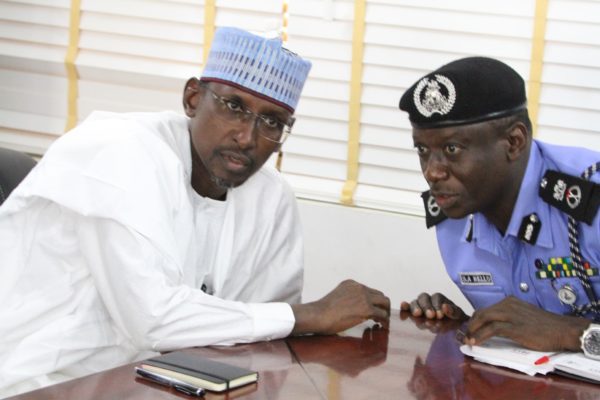 Minister of the Federal Capital Territory (FCT), Malam Muhammad Musa Bello has given the Security Committee a marching order to go after kidnappers in the outskirts of the Territory and others who are engaged in insurgency and other crimes.

 As an intern attached to a court in Nigeria, I witnessed how female counsels were mandated by judges to indicate their marital status while announcing appearance as opposed to their male counterparts. The most painful part is the manner Judges ask the question and the derision (sure, from the male folks in courtroom). If the female counsel tries to evade the apparent embarrassment; the presiding Judge who often attempts to justify the practice would further ask ‘Miss or Mrs or would you prefer to be referred to as an Esquire?’ or ‘please let us know when you are available or off market, you never can tell there could be a prospective suitor …’ Expectedly the male counterparts are thrilled and always show gratitude by prolonging such conversation in a manner that massages their ego. Little wonder, some men expect women’s education to end in kitchen and the infamous “the other room”.
 “We mean to hold our own. I have not become the King’s First Minister in order to preside over the liquidation of the British Empire,” said the indefatigable Prime Minister of Britain during World War 11, Winston Churchill, in 1942. But unfortunately, that was what he was compelled to do as recounted by Peter Clarke in his book titled: “The Last Thousand Days of the British Empire”.

Appraising Nigerian External Reserves Position, By Joseph Orjime
When the Governor of Central Bank of Nigeria Mr Godwin Emefiele was appointed on the 3rd of June, 2014 to head the apex bank it was obvious that he needs to think outside the box to salvage the nation’s financial sector.
This is given the numerous challenges that confronted the financial sector that time. For instance, as at May 20, 2014, stakeholders in the financial sector had expressed concern over the drop in fiscal buffers stating that the development had exposed the economy to weaknesses arising from both domestic and external shocks.
Nigeria’s reserves which are pivotal to defending the Nation’s currency opened the year at $34.4 billion and officially closed at $29.8 billion representing a 15.4% year on year drop. However, analysts believe the reserves are probably less than $20 billion if we net off currency swaps used by the CBN.
But Emefiele upon resumption hit the ground running by introducing certain reforms in the Nigerian financial sector. Key among these reforms include pursuing gradual reduction in key interest rates to include unemployment rate in monetary policy decisions, maintain exchange rate stability and aggressively shore up foreign exchange reserves, and building sector-specific expertise in banking supervision to reflect loan concentration of the banking industry. The balance in reserves may have been worse had it not been for the CBN’s introduction of the managed float policy back in February 2015.
Others include, abolishing fees associated with limits on deposits and consider ongoing practice in which all fees associated with limits on withdrawals accrued to banks alone: introducing a broad spectrum of financial instruments to boost specific enterprise areas in agriculture, manufacturing, health, oil and gas.
The policy placed restrictions on dollar transactions in Nigeria barring a list of 41 items from accessing the official window. The CBN also restricted deposit and withdrawal of forex by depositors from commercial banks.
Despite huge challenges which include fall in the global price of crude oil, Mr Emefiele, alongside his team of professionals at the CBN, has recorded notable milestones. Prominent among these achievements include Financial Systems Stability.
The CBN has successfully regulated the activities of Bureaux de Change (BDCs) to effectively scrutinize rent-seeking among the operators, depletion of the foreign reserves, unauthorized financial transactions, and dollarization of the economy, among others.
For instance, out of 130 BDCs sampled based on volume of purchase from banks, as at the time of the reforms, the bank found 121 BDCs, representing 93%, to be in breach of the objectives and provisions of its guidelines.
Another notable milestone recorded by Emefiele and his team is in the area of banking supervision. In order to achieve the mandate of ensuring safety and soundness of the financial system, CBN conducted a Risk-based examination of all banks with High and Above Average Composite Risk Rating in the previous years.
Also on the list of CBN’s achievements include consumer protection. The bank has refunded over N4.01 billion to bank customers based on complaints resolved and directives communicated to them following the Consumer Compliance Examinations and a Spot-check conducted on the banks.
It concluded full deployment of the Consumer Complaint Management System CCMS with the migration of all banks to the live platform of the system.
The giant strides recorded by the CBN under Emefiele cannot be complete without the mention of a revolution in the Gross External Reserves which rosé by 11.3 per cent to US$38.21 billion at end-November 2017 above the US$34.33 billion at end-October 2017.
The rise was attributed to receipts from Eurobond Proceeds, crude oil exports, foreign exchange purchases and third party receipts.
A breakdown of the external reserves by ownership showed that the share of the Federation reserve was US$2.39 billion 6.2%, Federal Government reserves US$10.31 billion (27.0%), and the CBN reserves, US$25.51 billion (66.8%) of the total reserves.
Consequent upon the reforms introduced by Mr Emefiele, Nigeria’s external reserves has now risen to $46 billion. The CBN spokesman, Mr Isaac Okoroafor confirmed this development recently to newsmen in Abuja.
According to the image maker, the reserves grew by about $3.2 billion between February and March 2018.He said that the reserves at the beginning of 2018 stood at $39.3 billion then rosé to $42.8 billion in February before hitting the new high of $46 billion.
Mr Okoroafor attributed the continued accretion to the country’s reserves to the bank’s effort at vigorously discouraging unnecessary importation and reducing the nation’s import bill, inflow from oil and non-oil exports, as well as the huge inflows through the investors and exporters’ window of the foreign exchange market.
Emefiele’s performance at CBN over the years indicates that he and his team have ensured stability in the sector, in spite of global and domestic challenges.
Analysts are of the opinion that the bank under his watch is really on the right track to guaranteeing the soundness and stability of the Nigerian financial system.
There is no doubt that Emefiele has made his mark financial management of this country. Right from his hay days as Managing Director/ Chief Executive Officer of Zenith Bank, Mr Emefiele has distinguished himself as a guru in growing financial institutions from the cradle, and also consolidating on the successes recorded there from.
Now saddled with the sacred responsibility of regulating the Nigerian economy as the governor of the CBN he has brought his experience to bear on the steady growth witnessed these past years in his office.
Joseph Orjime, a journalist and public affairs analyst, wrote in from Abuja.