FCT MInister, Muhammed Musa Bello and some official
As the Minister of the Federal Capital Territory (FCT), a position he took-over on the 11th of November, 2015, Mallam Muhammad Musa Bello has proven, beyond doubt, to be a vanguard for President Muhammadu Buhari’s Change Agenda. Since inception, he has excelled in his job which includes but not limited to completion of on-going or abandoned critical infrastructural projects that positively impact on the life and economy of the city, zero tolerance to corruption, security of life and property, respect for extant rules and general improvement in services. Abuja used to be littered with abandoned projects made up of highways, byways and other social amenities as a result of incomplete works or absence of finishing touches. Many connecting arterials were incomplete, including ramps, pedestrian bridges, tangent roads, loops and interchanges. Today, most of these projects have been completed. Having succeeded greatly in this direction within two years, Bello is shifting focus to the satellite towns and area councils where many rural infrastructural facilities as well as urban renewal projects are aggressively being pursued. For instance, the Inner Southern Express Way Bridge has been opened for public use, connecting AYA, Apo Roundabout, the Murtala Muhammed Way and Aso drive. This has made it easy for motorists to access Abuja’s main business district. The contract has been awarded for the Villa Roundabout Bridge project, a major component of the Outer Northern Expressway (ONEX). Also the B6 and B12 Roads otherwise known as Constitution and Independence Avenues are ongoing. The roads which traverse the World Trade Centre and the Diplomatic Zones hold the key to the economic and social vibrancy of the FCT and it is hoped that completion of the roads will enable land owners develop their plots and bring out the skyline of the city centre. Motorists coming from the Nnamdi Azikiwe International Airport can now travel in dual mode straight through the Churchgate building without the detour which used to make driving clumsy. Works on the roads were very skeletal since 2011 because of paltry budgetary provisions. But recently the administration cleared a backlog of payments owed the company handling the project. The 15km Apo Karshi Road awarded by the former administration but abandoned has been revisited to aid commuters from Mararaba, Nyanya and Karu axis. The Federal Executive Council (FEC) approved the sum of N2.6bn for massive construction of road infrastructure within the satellite town of Karu Phase 2, Abuja, a project expected to open up the area for the development of affordable housing for low income earners, boost economic activities, create jobs and ensure slum upgrade. The Kuje-Gwagwalada road project, Katampe District, Phase 2 projects are also ongoing. Documents obtained from the media department of the FCTA showed that the transparency followed all the awarded contracts. It showed that the sum of N57.6 billion have been paid to contractors handling various projects in the Federal Capital Territory in the areas of infrastructure, water provision and railway construction as well as health, education and environmental sanitation services. 627 indigenous contractors owed N100 million and below, with matured bills and for which provisions were made in the statutory budget were paid the sum of N6.9b in the last quarter of 2016. Another N3.3b billion was paid to 403 other contractors with similar bills in the first quarter of 2017. The sum of N7.009 billion was released to contractors handling the Abuja Light Rail project. From the last quarter of 2016 to the first quarter of 2017, the number of liabilities came down to less than 50 per cent. Pensioners’ outstanding arrears have been paid up-to-date with the release of N2.3 billion. The sum of N2.4 billion of its obligation to on-going counterpart projects has been offset, while the school feeding programme has been re-invigorated with the sum of N980 million. Funding for these payments was mobilized through transparent, diligent and judicious management of funds without leakages in the system. It is good news that Abuja residents will soon begin to ride light train, a project that has reached 98 percent completion. This will relieve public transportation within the city. The Muhammad Bello administration met the project packages at below 70 and 50 percent respectively, but drove the projects to 98 percent completion. Further investigations showed that the Federal Executive Council has also given approval of the contract for award of Phase 2 of Abuja Rail Mass Transit (Lot 1B), provision of engineering infrastructure to Jahi District, award for the construction of the Right-Hand Service Carriageway of Outer Northern Expressway, among others. Furthermore, there is no gainsaying the fact that street lighting has improved within the city with all the challenges inherited. The FCTA achieved this feat with the procurement of over 25 standby generating sets as backup power source. Additionally, the detailing of security guards to these installations to avert vandalization is a good option. On land administration, there has been tremendous progress. Over 1000 copies of Certificates of Occupancy (Cs of O) have been cleared. Similarly, the operations of all FCTA departments central to the land administration have been reorganized and harmonized while the FCT Land Use and Allocation Committee has been reconstituted in line with the provision of the Land Use Act. It has streamlined various cases of multiple layouts, revoked titles on wrongfully allocated Green Areas while machinery has been set in motion to calm the anxieties of beneficiaries of approved mass housing projects by giving them bankable personal titles. In the housing sector, the Bello-led FCTA has commissioned over 300 housing units in Capital Estate in Kaba District along Kubwa Express Road. The project was executed by Abuja Property Development Company Ltd. (APDC). It is for low income earners such that with as low as 6, 12 or 16 Million Naira, young, middle or higher level officers could subscribe to houses that fit their income after an initial modest down-payment. And beyond the commissioning of the already completed houses, the administration has broken new grounds for the second and third phases of this estate development initiative. The APDC has employed over 700 construction professionals and artisans for the projects. The administration is reviving selected rural settlements. The indigenous settlements include Jikwoyi, Dutse-Alhaji, Gwagwalada and some Kuje communities. It submitted proposals which were acceptable to African Development (ADB) and UN-Habitat. Under the arrangement, FCT is shopping for a $300 million syndicated loan by both institutions at an interest rate of between 1 to 1.5 percent. The facility would be channelled to address the dearth of modern infrastructure to benefit over one million people. A man with human feelings, Bello came into office when staff of the FCT Area Councils were protesting months of unpaid salaries by the immediate past Area Council administrations. However, though salaries and wages of area councils are not the responsibility of the FCT administration, the minister intervened by releasing the sum of N1.9 billion as bailout to the councils to settle these arrears of salaries. The administration commissioned a fleet of 25 buses for staff transportation with a view to cushioning the effect of recession on its staff. The administration has sustained prompt payment of salaries and allowances as well as stepped up trainings and capacity building with promotion exercise timely conducted. To ensure adequate water supply for FCT residents, the FCTA look on to the Chinese NEXIM Bank for a $450 million loan for the extension of water supply to areas like Lugbe and neighbouring communities. Contractors handling various projects for FCT Water Board have returned to work following recent payments of outstanding liabilities owed them by the former FCT administrations. The board realized over N1.5 billion in Internally Generated Revenue (IGR) in 2016 alone. Achievements of the Board include introduction of payment metering system and the completion of 1.2MW solar power project in collaboration with the Japanese International Cooperation Agency (JICA), a project that has reduced the cost of energy needed to power the water treatments plants. Huge emphasis is being placed on environmental sanitation. The FCT minister launched the FCT Household and Community Sanitation Exercise Scheme in the area councils and satellite towns to effectively mobilize the communities to keep their surroundings clean. The administration also undertook drastic measures to recover huge debt owed Abuja Environmental Protection Board (AEPB) and to ensure they carried out their statutory duties in a more proactive manner. Out of the nearly N9 billion owed the agency, the administration has been able to recover more than N2 billion from a recovery rate that was less than N100 million before. The result is that refuse contractors are timely paid. On beautification of Abuja, a boulevard of flowers and ornamental trees describes the future of the Umaru Musa Yar’adua (Airport) Expressway when the plan of the FCTA will come to fruition. The FCT minister ordered the Abuja Metropolitan Management Council to transform the highway into a modern driveway in line with what obtains in other great cities of the world. National monuments are to be added to the highway including a new city-gate which will be located a couple of kilometres off the Bill Clinton Bridge. It will be recalled that the FCTA, in collaboration with the Office of the Vice President organized a Nationwide MSME Clinic pursuant to the current administration’s commitment to facilitate the rapid growth of the sector in the FCT and the country at large. MSME generates 48 percent of our Gross Domestic Product (GDP) and employs about 33 million of the nation’s workforce. FCTA has provided credit facilities ranging from N70, 000 to N2 Million to budding entrepreneurs as well as offered services such as business advisory, capacity building, assistance and workspaces among others with the target to create 10,000 jobs by 2020, thereby reducing unemployment at the rate of 11.8 percent as well as extreme poverty in the city. Again, the administration through the Abuja Enterprise Agency has affectively keyed into the federal government’s Micro, Small and Medium Enterprises Development Fund (MSMEDF) under which it has accessed its own allotment of N2 billion being disbursed to successful applicants. Under the fund, the FCTA has established 2150 different enterprises and promoted 250 cooperative societies resulting into empowerment of more than 4500 residents. Also, the administration is properly utilizing its schemes such as “One Village One Product” (OVOP) and “Youth Mobile”, to reach out to the youths and women. Minister Muhammad Bello has the political will to do more for the FCT. Recently, he swore in his mandate secretaries who are equivalent to state commissioners. This move heralded the commencement of the next phase of his administration’s developmental initiative. Areas of future focus would be massive investments in infrastructure in the satellite towns and rural areas, in education, in health and in making Abuja a smart city. The appointees have been tutored on the direction and priorities of the administration, as well as the public service rules and government procurement guidelines, in line with the Federal government’s zero tolerance for corruption. Bello has done excellently in FCTA, a clear indication of his ability to handle a state government or a higher federal position in Nigeria. I am sure that President Buhari has recognized this selfless, dedicated and God-fearing patriot whose service should be prolonged in the FCT administration and beyond.
Ajah, an advocate of humanity, peace and good governance can be reached on: mobahawwah@yahoo.co.uk. [myad]
Report reaching us indicates that three tiers of government in nigeria: Federal, states and localg governments shared a total sum of N5.9 trillion from the Federation Account in 2017 despite the economic recession during the period. There are 36 states and 774 local government councils. The report showed that while the Federal Government and its agencies received a total sum of NN2.5 trillion the other two tiers of government shared N3.3 trillion. The total allocation of N3.3 trillion to States and their Local Government Councils is N700 billion above the N2.6 trillion they received in the previous year of 2016. In its annual detailed investigative report with a table of figures, the Economic Confidential Magazine said that among the state recipients, Lagos is ranked first as the highest recipient of gross allocation with a total sum of N201 billion in the twelve months of 2017. It is followed by Akwa State N197 billion, Rivers N178 billion, Delta State N175 billion and Kano State N143 billion. The five states cornered over a quarter (25%) of the total allocation for the States and local government councils in Nigeria. Among the 10 highest recipients from the Federation Account are Bayelsa State which got N138 billion; followed by Katsina State N103 billion, Oyo State N101 billion, Kaduna State N98 billion and Borno State N92 billion. The lowest recipients are Gombe and Ebonyi States that got N57 billion each followed by Ekiti and Nasarawa State N59 billion each and Kwara N61 billion. The report showed that Edo and Ondo which are oil-producing states got N75 billion and N85 billion respectively while another state in the South-South, Cross River State merely received N68 billion. The Magazine gathered that factors that influence allocations to states and local government councils from the Federation Account include: Population, Derivation, Land mass, Terrain, Revenue Effort, School Enrolments, Health Facilities, Water Supply and Equality of the beneficiaries. [myad]
It was always predictable that, given his notoriety on that score, it was a matter of time for former President Olusegun Obasanjo to resume his pastime of undermining his military and civilian successors, by making President Muhammadu Buhari his latest victim. Amusingly, the rabble Obasanjo rouses on such occasions has dignified his deplorable tactics as a sort of distinction. If only they could critically dissect the man. There is this latent personality complex of striving never to be outshone or exceeded by any Nigerian living or dead. Hence, at the slightest prospect of being threatened, Obasanjo comes charging.
Obasanjo’s dismissal of Buhari’s performance is a vivid example. On the alert that African Union was to honour the Nigerian President as the Champion of Anti-Corruption in Africa the following day, Obasanjo came out with his diatribe in the mistaken belief that the great honour for Buhari and, indeed, Nigeria would be diminished if not rubbished by his comments. Unfortunately for him, African Union sustained its honour on Nigeria, much to the credit Muhammadu Buhari as the President under whose tenure Nigeria became rebranded, to the envy of Obasanjo. Every timing and content of Obasanjo’s verbal assault on his military and civilian successors is noteworthy for exposing Obasanjo’s self-exaggeration and case study in hypocrisy. He is on record in some of his books as rating himself above every Nigerian (civilian or military), who ever served at high level – Nnamdi Azikiwe, Obafemi Awolowo, Aminu Kano, Waziri Ibrahim, General Yakubu Gowon, Brigadier Benjamin Adekunle, General Alani Akinrinade, General Alabi Isama, General Buhari, General Ibrahim Babangida (IBB), General Sani Abacha (as military rulers), former Vice President Atiku Abubakar, President Umaru Yar’Adua, President Goodluck Jonathan and, now, President Buhari. General Abdulsalami Abubakar escaped Obasanjo’s bad tongue only because he released him (Obasanjo) from jail and heeded northern Generals who imposed Obasanjo on Nigeria as an elected President. Obasanjo kept off IBB since the day the former military President, in a rejoinder to Obasanjo, openly served him notice that “Henceforth, it will be fire for fire.” Obasanjo got the coded message.
Very disturbingly and unknown to Nigerians is the fact that, contrary to the impression that Obasanjo, in his criticisms, is motivated by public service or altruism, he goes to town specifically when he fails to run the show from outside for an incumbent head of government or get appointments for his cronies. Former President Jonathan conceded, almost virtual running of his government to Obasanjo up to the time a memo written by Obasanjo recommending removal of six appointees from federal boards, to be replaced by six of his cronies, got leaked to Nigerian Tribune newspaper. Obasanjo initially denied authorship of the memo. Somehow, Nigeria Police foolishly arraigned Nigeria Tribune and its reporter for alleged sedition. Nigerian Tribune then had to republish the memo with Obasanjo’s full signature. That was the end of the matter, as the police had to withdraw the charges till today.
In the current anti-Buhari misadventure by Obasanjo, how many Nigerians took notice that, amid the euphoria on Buhari’s victory, Obasanjo, in his arrogance of Mr. Know All, dispatched two volumes of policies President Buhari must implement during his current tenure? Who was elected President of Nigeria in 2015? Buhari or Obasanjo? Obasanjo’s major weakness of feeling superior to everybody is the cause of his running down contemporaries. Apparently, Buhari kept Obasanjo’s policies in the shelf, a derision, which embittered Obasanjo. Hence his frustration. “I said it from the beginning that Buhari is not strong on economy.” Who then displays his Ph.D in Economics? Obasanjo. Here was a man, so arrogant and power-drunk that he openly dismissed the advisers he had just sworn in that as much as they might advise, he, President Obasanjo, was not bound to take their advice. The same man imposing total policy directive on a President yet to be sworn in.
The same deplorable tactics by Obasanjo did not work on late President Yar’Adua, not the least because he rejected Obasanjo’s attempt to run the government for him, but he also cancelled Obasanjo’s hurried investment of a whopping half a billion dollars in African Finance Corporation a fortnight before handing over to Yar’Adua. That investment was without the approval of the National Assembly. The late President Yar’Adua also queried an expenditure of $16 billion by Obasanjo’s administration purportedly on power supply with, according to Yar’Adua, “…nothing to show for it.” It is a question of character and hypocrisy. Who ever ran Obasanjo’s administrations for him? Who ever nominated public office holders for Obasanjo throughout his tenure? Who imposed policies on Obasanjo? Indeed, on his first day in office in 1999, Obasanjo expressed thanks to all those who helped him but instantly requested all of them to keep away. If so, why must he aim to run government for others?
Former President Obasanjo is the cheapest critic in Nigeria as he merely echoes claims of the innocent public. Obasanjo was not bold enough to specify Lawal Musa Daura (DG, Department of State Services) and Mamman Daura, a veteran journalist, as the major focus of the charge of nepotism against Buhari. Admittedly, Mamman Daura is a nephew, but Lawal Daura (DG, DSS), might just be Buhari’s townsman. Is that, therefore, peculiar to President Buhari or Nigeria or even Africa? What, anyway, was the record under Obasanjo or former President Goodluck Jonathan? During Obasanjo’s tenure, his daughter, Iyabo Obasanjo Bello, was Ogun State commissioner for health. Iyabo was also elected senator from Ogun Central, her father’s constituency. Above all, only the collapse of Obasanjo’s third term agenda cost his daughter the governorship of Ogun State for which she specially formed the Iyaniwura Foundation. Most remarkably, Obasanjo removed the serving Director-General of DSS to make way for Ogun State and fellow Egba, Colonel Kayode Are (retd). Obasanjo, therefore, owes Nigerians the difference between him and President Buhari, a task which should have been performed the very minute today’s journalists collected Obasanjo’s infamous letter.
Former President Jonathan similarly removed the Director-General of DSS he inherited and replaced him with his South South fellow indigene, Ita Ekpenyong. Why was there no complaint of nepotism? Much is being made of the influence Mamman Daura wields inside Aso Rock. A nephew of President Buhari? So what? At least, Mamman Daura is a Nigerian, who (whatever his blood ties with Buhari) has a constitutional right to serve in any government of this country. Who did Obasanjo import to wield influence on his administration for eight years? A former Mayor of Atlanta, Georgia in United States. An American inside the innermost chamber of Nigerian government? Would a Nigerian have been ever-privileged to access similar level of governance in the United States? Still under Obasanjo, a lavish marriage for another American acquaintance was celebrated inside Aso Rock. If such waste of Nigeria’s resources were to take place in Aso Rock for Buhari’s foreign acquaintance today, Obasanjo would have led the criticisms.
Allegation of nepotism in today’s politics? Only hypocrites, opportunists, the mischievous and the ignorant feed fat on such meal, all in the fraud of championing public morality.
In the United States, seeming nepotism is mere routine for an incumbent President. The 1960 episode of the much-loved John Kennedy appointing his immediate younger brother, Robert Kennedy, as attorney-general may be too far behind. Today, President Donald Trump has around him in the White House wielding great influence daughter, as special adviser, and son-in-law, Jared Kushner, designated as special adviser but virtually more powerful on all Middle East matters than Secretary of State, Rex Tillerson. Before making mince meat of Donald Trump, let it be known that Trump merely followed his predecessors, like Bill Clinton, who appointed his wife, Hilary Clinton, as head of a health review task force. The appointment was legally challenged but the court ruled the appointment was no nepotism. Under President George Bush Junior’s administration, Secretary of State Colin Powell’s son, Michael Powell, was appointed Chairman of Federal Electoral Commission. Nepotism? Obasanjo and co-travellers should read Adam Bellow’s book, In Praise of Nepotism Presidency.
A major achievement of President Buhari is that he has restored civility and harmony to the Presidency, such that Vice President Yemi Osinbajo, himself a loyal and contented human being, was publicly appreciated by Buhari as “my brother.” Nigerians have not been treated to the crude illegality of manipulation of the Constitution in a futile attempt to humiliate an innocent man out of office. Obasanjo made allegation of financial crime of round tripping against unspecified members of Buhari’s administration. That can’t be true. If, however, he has the facts, Obasanjo has the duty to convey such to the EFCC Chairman. Lest we forget, pace of governance is inexcusably (repeat, inexcusably) slow. It should never again take seven months to announce, screen and swear in ministers. Equally the eventual dismissal of a doubly indicted SGF (by the Senate and Vice-President Osinbajo review committee) should not have been triggered only by the Maina controversy. Such slow pace or vacillation throws Buhari into avoidable frying pan of controversy
Should Buhari contest in 2019? That is his personal decision. Elections as well as the performances of a leader all over the world are determined by the electorate, who, in Nigeria’s case, run into multiple scores of millions. One man, in his arrogance, must not be allowed to appropriate such voting power to himself. Elections are either won or lost. When a man, who, towards the end of an eight-year term, plotted to rule for life (a treason offence) now arrogates to himself the moral of determining the political fate of a fellow citizen, we shouldn’t take him seriously. Buhari or Jonathan? There is no regret for Jonathan’s exit, in view of scandalous revelations. I endorsed Buhari since 2002 for the yeoman’s job, which he commenced less than three years ago. I am satisfied.
How time changes and how people change. Time changes so much that people change along with it, and in the process, easily forget their foot marks. It is very interesting to note that Reuben Abati who was special adviser on media and publicity to the former Nigerian President, Dr. Goodluck Jonathan, has changed the dance-steps according to the ‘talking drum’ by joining in analyzing the controversial 13-page statement of the former two-term President, Olusegun Obasanjo, which he wrote on President Muhammadu Buhari and the government he runs. Abati was so explicit in his analysis of Obasanjo’s statement that one could not fault him. As a matter of fact, his treatise was a clear eye opener to even those who have been part and parcel of the democracy we have been practicing all the while. When I read the write-up of Abati, two things came to my mind: that this is the same man who virtually insulted the same Obasanjo in 2014 when Obasanjo took his boss, the then President Jonathan to the cleaner, and two; that Abati was now justifying the reason for his former boss, Jonathan to be held solely responsible for the financial and security atrocities committed by the men and women around him. I totally agree, by the provisions of the constitution he avidly quoted, that under the system of government in practice, virtually nothing happens without the knowledge of the President or supposedly so, and that is what is supposed to be the standard practice. The question is if Abati knew all these powers of President in 2014 or before then, why should he return the Obasanjo’s similar attack on Jonathan, in more vitriolic way and even vulgar language then? There was no name Abati did not call Obasanjo that time, to the extent that I began to fear for his life, especially, when he would return to his home, where Obasanjo holds sway. Sometime in December 10, 2013, Abati, in response to one of those scatting Obasanjo’s letters to the then President Jonathan, described such letter as “self-serving, hypocritical, malicious, indecent, and very disrespectful of the highest office in the land.” The argument put forward by Abati this time, which is true of course, that Obasanjo was just exercising his constitutional right (of free speech), went contrary to the mood and manner in which he practically insulted the same Obasanjo at the time it didn’t serve his interest and the interest of his boss then. The other point by Abati that nothing is done in the system we are operating without the directive and knowledge of the President is clearly a direct indictment of his erstwhile boss, Dr. Jonathan, against whose government so many of his aides have so far been arrested, detained and being prosecuted by the present Buhari government. What Abati was simply saying is that President Buhari should have arrested ex President Jonathan for all the financial atrocities and other bad manners of governance which his aides committed. He even made an inference that if the head is not always held responsible for the sins of the aides, time would come when people would refuse or fear to take public appointment for the fear that when the chips are down, they would be punished by the next government for simply carrying out the directives of the head. Even at that, in a saner clime, if the President with such powers gives directive to a good person he appoints, to do things that would be judged later as amounting to corruption, such person should have the courage to say no or resign. But, trust Nigerians, they would, just like Abati, shift blames and say that they followed directive. Too lame an argument! In fact, there seems to be something which all the commentators in favour of Obasanjo’s recent letter deliberately or ignorantly failed to address; the fact that whatever Obasanjo accused Jonathan of, whatever he accused late Umar Yar’adua of, whatever he accused Buhari of, he too fully practiced it when he was President. Is it incompetence, which came in form of his failure to address the nation’s power project and even ignoring of many dilapidated roads in the Southeast, South South and his Southwest at the time the nation’s economy was buoyant? Is it condoning of what he called the cabal which sucked Nigeria of over N16 Billion for the power project that didn’t see the light of the day and he couldn’t take any action against the cabal? Is it nepotism and favouratism in which he lined his government with people, most of who were his tribesmen and women? Is it mismanagement of the nation’s resources, diversion of billions of funds and open stealing, a.k.a corruption? It is to everybody’s knowledge that billions of naira and dollars were stashed away by men and women in his government for the purpose of, among others, campaign for his third-term agenda, which fell flat on its face, thanks to vigilant citizens? Was it because there was no “Obasanjo” to write such fact-of-of-the-matter or bullish letter to the then President Olusegun Obasanjo? So, if the same Obasanjo is now seeing the mote in the eyes of other leaders like him (even when he has the same mote fully covering his eyes) and everybody is hailing him as the best patriot Nigeria had ever had, pray, where is our sense of sanity and rationality? What make Obasanjo and his team of supporters think that what he could not do in office as President for eight years and for which he went home in peace, other leaders, much more, Buhari should do it in three years. And that since Buhari cannot do it, he should get out of the way, even when he himself wanted to continue to third term with such very poor showing? As a matter of fact, I am not against Obasanjo and what he said, but I seriously object to his idea of painting every other leader black thereby presenting himself as the saint, when actually, he is worst than those he accuses. And, for God sake, I feel ashamed to see our respected intellectuals like Abati, Professor Farouk Kperogi and others falling over one another to align with Obasanjo on issues they very well know that he himself (Obasanjo) was seriously guilty of at the time he was on the hot seat. The veneration of Obasanjo today by our respected intellectuals, without having a recourse or reference to or comparism with his eight-year reign, obviously questions their level of rationale reasoning, against the background of what obviously is preconceived prejudice either on ethnic, religious, regional and or materialistic basis. I’m not usually worried when people like Governor Ayodele Fayose, Femi Fani-Kayode, Reno Omokri and their likes attack President Buhari and the APC because, for crying out loud, they are just playing the game of opposition in whichever way they deem fit, but to think of those who earn postgraduate degrees or for that matter, Doctorate degrees (PhD), obtained after obviously, myriad of researches and or defences, arguing issues from the prejudicial angle, beats my imagination. I’m particularly worried that Abati, who came down very hard on Obasanjo when it was his boss that was the subject of the attack, has now turned a good boy to the attacker of his boss, simply because he is out of the system. I thought, Abati would not allow the sentiment, of his recent encounter with the Buhari government, to becloud his sense of judgment, but he has just done that. He did that losing sight of the honourable thing he ought to have done at the time he was being directed to do what he thought was against his honour and personal conviction- resign. Indeed, what Abati was saying was that if a father sends his son to go and steal money from the neighbour, the father should be arrested and prosecuted when the child is caught red handed, with the money he stole…and the son be left to go. Beg your pardon! For all I care, Obasanjo, irrespective of what his new found hero-worshippers may say, is not and cannot be better than Buhari in all departments of governance. That is the fact that no one can take away from me and those who reason rationally. It doesn’t really matter what happens to Buhari now or later. If by my stand you prefer to tag me as supporter of President Buhari, then I am also at liberty to tag you as a soldier of corruption fighting back. As soldier, you are either recruited knowingly or unknowingly; directly or bamboozled into it through intellectual enslavement, or even through the sense of vendetta. That is to say that in a matter such as we have, you either belong to the group in support of the fight against corruption that had long defined the nation’s political space and public service ethos or you belong to the fierce corruption fighting back army: no one can be in the middle. Some, including Obasanjo, Abati, Kperogi, Fayose, Fani-Kayode, Omokri, Balarabe Musa, Junaidu Mohammed and a host of others, including their foot soldiers, may pretend that they are neutral, patriotic and awakened by sheer love of the country, the bottom line is that everyone is bias, depending from which angle each person speaks! After all, we all are speaking from the prism of love for this country and its peoples. Obasanjo doesn’t love this country more than me; neither do I love the country more than Kperogi. But, we all need to be fairly fair because conflict is a product of everyone not agreeing with everyone’s views.
The letter by former President Olusegun Obasanjo asking President Muhammad Buhari not to contest the 2019 election is one of the most misinterpreted missives in the Nigerian political climate. Again, it shows that much as the polity has been awash with political tricks and subterfuges, that only few could discern the deeper meaning of each political development aside the mob approach and its literal application. When Prof. Wole Soyinka wrote his popular play, Death and the Kings Horseman, his major worry was that the context would be lost in the lazy conclusion that its thematic agenda was to exemplify a clash in culture whereas it’s deeper meaning lies in the implication of having a man failing to stand in the gap for his people. When the former President fired what he thought was a missile against the current president, unlike Soyinka, he was pleased that Nigerians have as usual failed to read between the lines to understand the contextual collocation of the missive, what informed its authorship and why it drew the conclusion it did. For starters, let us compare the letter Obasanjo wrote to then President Goodluck Jonathan and with the one he sent to Buhari. In the case of the former, Obasanjo made it clear that he was withdrawing his support for Jonathan. But in the case of Buhari, he did not stop at saying he was withdrawimg his support, but went further to advance the counsel that the president should not contest in 2019. The reason for this, is not far-fetched, In the case of Jonathan, Obasanjo knew that his withdrawal of support is synonymous to the defeat of Jonathan as Jonathan apart from the motley cheer crowd restricted to his part of the country, had no structures to put him in clear lead without the support from Obasanjo and his retired military king-making class. He knew that all he had to do was to personify the disaffection with the then existing order and all other things would fall into place; and that was exactly what happened! But in the case of Buhari, he knew he had to go beyond that because the determining factors go beyond Obasanjo and the clique. The support base for Buhari lies with masses and the down trodden. His strength did not emanate from an elite endorsement but rather the elites endorse him for fear of the masses. This, Obasanjo unobtrusively admits when he offered the advice that Buhari should not contest Read between the lines: if Obasanjo was sure that Buhari could be defeated by the mere expression of disapproval or discontent by the clique he represents, he would not have wasted his ink beyond telling him he is no longer with him or even if he had wanted to say something beyond that, would have warned of the consequences of the embarking on that course of action. But we see an appeal neatly tucked in a letter of hostility. The reason for this is simple. Obasanjo knows that the greatest political force in Nigeria today remains PMB and that as far as followership and massive support are concerned, that the current President of Nigeria has no equal. Even before he became president, Buhari has amassed a cult like followership especially in the northern part of the country that till date has not been rivaled by any. In the all the elections he contested, he has never polled less than six million and this is above the voting population in some regions of the country. This was what made him the beautiful bride of the 2014/2015 coalition that threw him up as the presidential candidate of the APC because leaders of the coalition reasoned that with him, they have at least 10 million votes en bloc. After Buhari became president, his acceptance by the Northern population has soared as he has been able to handle the problem of insurgent which the immediate past administration proved incapable of handling. He has also mobilized funds in a presidential initiative to rebuild the North eastern part of the country. All these have made him more popular in the region. President Buhari has also not rested on his oats but has moved to strike further advantages in places where he was thought not to be welcome. He gave choice positions in his cabinet to people from the South east and started the construction of the second Niger Bridge. The result of the last governorship election in Anambra State has shown that the APC has become the alternative party in the South east pushing away the PDP to a third place position. Further than that, the APC through Buhari has raised new sets of leaders in the South South like Rotimi Amaechi and Adams Oshiomhole who are no push overs in the politics of the area and are only biding their time to deliver. In the South west, the retention of Vice President Yemi Osinbajo and his intelligent interventions on national issues has made the zone impenetrable to other political forces and has reinforced the alliance with the Tinubu political camp. Old man Obasanjo realized all these and he knew that the only thing that can stop Buhari is Buhari himself that was why unlike Jonathan, he did not dare him to contest but says ‘please don’t.’ The fact is, Buhari has remained the quintessential man of the people whose turf is beyond the conspiracy of a few elites.
Okanga wrote this piece from Agila, Benue State. [myad]
More than a week after President Olusegun Obasanjo released his state of the nation commentary and devastating assessment of the Buhari administration, it has remained the main subject in the public arena in Nigeria. It is a measure of the stature, influence and capacity of the elder statesman that whenever he intervenes as he has done, he sets the tone for public debate and the country’s future political direction. I have already commented at length on the appropriateness, timeliness, depth, brutal honesty and shortcoming of that statement on both television and radio, more than twice, but there is an additional aspect that the statement further throws up, namely the nature and extent of presidential powers to wit: should Obasanjo blame Buhari? It is common practice in Nigeria for political commentators, either on the streets or in formal situations to make excuses for Presidents, either serving or retired. You are likely to hear statements such as: “The President is a good man, it is just that he is surrounded by bad advisers and ministers”, or something like “Buhari is not the problem, the problem is that he has been hijacked by a cabal, or as the view was once expressed – “a cabal is now in charge!” The powers, style and limitations of the President are hardly ever placed in proper context. Proponents of the positivism of Presidential powers always speak in terms of “Good President, bad aides” in the Nigerian Presidential system, contrary to the norm that the buck stops at the President’s table. President Obasanjo’s various assessments of sitting administrations adopt a different orientation. He holds the President personally responsible for the performance or non-performance of his government. In his recent statement on the Buhari administration, he thus characteristically accused President Buhari of nepotism, lack of understanding of the internal dynamics of Nigerian politics, blame-passing, condoning of misconduct and outright incompetence. He more or less ascribes to the President of Nigeria the powers and the responsibility to provide leadership and ensure good governance. In his view, in areas where the President lacks capacity, it is his duty to recruit competent persons to assist him and where and when he fails, he is still the one to be held responsible. The underlying principle in Obasanjo’s statement is that those to whom power is bequeathed must be accountable for the exercise of such power. In his only reference to advisers in his intervention, Obasanjo uses the word “so-called advisers.” It is most unfortunate that in the various responses from government and its agents to the Obasanjo statement, there has been no attempt to take on Obasanjo on the issues. He has been called names by hired voices, or system sycophants, and all he got from the Minister of Information was an acknowledgement note and a patronizing “Baba-is-a-patriot”, tepid climb-down, without a word of defence on the substantial question about how the incumbent President has abdicated responsibility and failed the leadership test. For me, there are a number of projected questions: Can a President actually be held responsible for the failings of the government he heads? Should the blame for an administration’s failures be heaped on the head of a past government and its officials? Who can be held liable in the circumstance – a cabal, former Ministers, or those exercising delegated authority? For whereas Obasanjo holds every President accountable, I have heard persons claim that he has no moral right to do so. It is even alleged that President Buhari cannot be questioned because he is answerable only to the people whose sovereignty he personifies. President Obasanjo, by heaping the blame and the responsibility, on the head of President Muhammadu Buhari is drawing attention to the full extent of the ascribed and inherent powers of the President under the Constitution. The Nigerian Constitution in letter and spirit makes the Nigerian President an Emperor with near-absolute powers. There may be checks and balances on his powers here and there, in terms of his having recourse to the National Assembly on certain issues and having to make consultations, but in totality, the Constitution confers on him a kingly prerogative, especially on matters of policy and its execution. His powers are extensive and expansive. Under Section 5(1) of the Constitution, he is empowered to either exercise his powers directly or to delegate. His relationship with those to whom he delegates authority is akin to that between an agent and a disclosed principal. Section 5(1) is instructive: “Subject to the provisions of this Constitution, the executive powers of the Federation – (a) shall be vested in the President and may, subject as aforesaid and to the provisions of any law made by the National assembly, be exercised by him either directly or through the Vice-President or Ministers of the Government of the Federation or other officers in the public service of the Federation; and Section 148(1) adds: “The President may, in his discretion, assign to Vice-President or any Minister of the government of the Federation responsibility for any business of the Government of the Federation, including the administration of any department of government.” It stands to reason therefore that whatever is done by those agents, lawfully and within the bounds of Presidential approval, are within the scope of the responsibility of the President. In other words, the President cannot pass the buck. So, is it right to say Buhari is a good man, but the problem is the cabal? Or to hold heads of MDAs liable for acts that were carried out with Presidential authority and approval? The President is the custodian of the social contract with the people as defined in Section 14, and where there is a failure of consideration in this regard, the government is deemed not only to have lost legitimacy, the President is deemed to have failed. This is a key point in Obasanjo’s statement, which makes it notably different from similar interventions by him in the past. The term or the group known as “cabal” is unknown to the Nigerian Constitution but the Constitution knows the President. Section 148 also recognizes that Ministers are appointees of the President, exercising delegated authority. This is why the National Assembly cannot impeach Ministers; they can only be sanctioned or relieved of their duties by their appointor, namely the President. Where the conduct of any government official is in question, it is important to establish whether or not such a person acted beyond the scope of the approval or directive given or whether or not such was ratified by the President. However, no public official is allowed under the law to carry out an unlawful directive, where such happens, such a person is personally liable. In practical terms, this has been a source of problem. Nigerian Presidents function like Emperors. How many appointees can stand in front of a President and query his authority, or turn down his directive? I align with the definition of responsibility in Obasanjo’s review of the exercise of presidential authority. For instance, there are cases in court against Ministers and advisers who served under the Jonathan administration over matters such as the spending of security votes and sale of oil blocks, but to what extent can they be held responsible for obeying presidential directives? Today, in President Buhari’s Aso Villa, the Chief of Staff in particular has been accused within the public domain of many things. Does anyone really believe that a Chief of Staff can act on his own without Presidential backing and not lose his job? When the matter of MTN’s underpayment of sanctions sum came up and the penalty sum was allegedly reviewed downwards after some consideration, the MTN Executive that was involved was sanctioned, and Nigerians asked that certain government officials should similarly be sanctioned, but to date, nothing has happened. Could that have been the case without the President’s knowledge? In the more recent controversial case of Abdulrasheed Maina, the Attorney General of the Federation, Abubakar Malami who was accused of protecting a man who had been sacked from service on the grounds of embezzlement, pilfering and corruption, had said that he acted with the knowledge and approval of the President. Can he possibly in the future be called to account for his action even when he was carrying out a Presidential directive, apparent or otherwise? Afterall, his explanation was further confirmed from the statement of the Head of Service to the Federation who said when the issue came up, she notified the President of the likely backlash. When the National Assembly summons a prominent government official and he or she refuses to honour the invitation, can it be assumed that any Presidential appointee can be so dismissive of the legislature without Presidential concurrence? When recently there was a face-off between the Department of State Security, the National Intelligence Agency and the EFCC, with the intelligence agencies insisting that they or their former bosses cannot be questioned by the EFCC, could they have gotten away with it without Presidential approval? It is noteworthy that the intelligence agencies report directly to the President and take directives from him. They relate to other departments of government only on a need-to-know basis. There is also that other matter between Dr Ibe Kachikwu and NNPC GMD, Kanti Baru, with the latter insisting that he had Presidential approval. Can either party be arrested in the future for “alleged corruption” in the light of the revelation by the Vice President, then acting as President, that he only gave “non-financial approvals?” Our point therefore is that everything in our Presidential democracy revolves around the President. Whereas the Constitution, upholding the separation of powers, vests the authority of the other two tiers of government: the legislature (Section 4) and the judiciary (Section 6) in institutions, the 1999 Constitution vests executive authority not in any institution, but the person of the President. The Presidency is not a collegiate; technically, even the Vice President has no powers. He can only function to the extent of powers delegated to him by the President, and even the very limited powers assigned to him can only be exercised under presidential directive. This is partly why when President Buhari went on a medical vacation and Vice President Osinbajo acted as President, there were persons who accused him of becoming ambitious and trying to seize Presidential powers even when he had been granted delegated authority. The second time the President travelled, the Vice President was directed to act only as a co-ordinator! The President is granted immunity from prosecution; while in office, he is regarded as a Messiah, such that even the powers of the National Assembly to impeach him in the event of “gross misconduct” or “incapacitation” are difficult to execute. More than at any other time, the Buhari administration has further problematized the extent of the powers of a President by calling to question virtually every act and directive under the preceding Jonathan administration. If a President gave a directive and it was lawfully carried out, without the agent going on a frolic of his own, and without any willful act of criminality, should such agents become the target of a witch-hunt? By stretching the matter in this direction, the Buhari administration may have created the basis for the growth of a political culture based on vendetta and the source of its own lack of vibrancy. This probably explains why under this administration, delegated authority is being exercised with so much fear. The Ministers and heads of parastatals and agencies are so scared because they imagine that even when they carry out directives, they may be held liable tomorrow by a different government. Already, they are being told that they are the problem and not the President. Why shouldn’t a future government arrest and detain them and tell them that the execution of a Presidential directive is no protection? They may ultimately end up as victims of their current triumphalism. By demonizing former public officials, and undermining the powers of a past President to exercise power and authority through legitimate and lawful delegation, the Buhari administration may unwittingly make public service unattractive and set a disturbing precedent. Be sure, however that the Nigerian public in the future will still argue that “Baba is a good man, it was the cabal that caused his problems.” Good intentions alone do not guarantee good leadership: this is the underlying moral of the Obasanjo statement. Whether or not he can mount the high horse to say this is beyond the purview of this present commentary. But here is the long-term challenge: Can a President who has been given so much powers under the Constitution be allowed to abdicate responsibility? Section 5(1) and Section 148, and other relevant sections of the 1999 Constitution on Presidential powers present grey areas that throw up jurisprudential questions that should be clarified and resolved. It is an issue on which Nigerians must make a value judgment: do we need to preserve the status quo or is there a need to review the extent of Presidential powers? There are two ways forward: a constitutional amendment of Presidential powers to make Presidents more accountable, more institution-based and less omnipotent, or a resolution of the dilemma through the jurisprudence of our courts.
Senior Special Assistant to President Muhammadu Buhari on National Assembly matters (Senate), Senator Ita Enang has given reason why the President did not rush to react to the herdsmen/farmers’ clashes in Benue state that had resulted into deaths of many. The Presidential aide, who briefed Buhari Project Group, made up of Buhari Media Support group and other Buhari/Osinbajo coalition groups, on issues that have been misinterpreted by some sections of Nigerians, said the President waited to have the full report about the situation before going public. “There were allegations of herdsmen being infiltrated by insurgents to cause the mayhem in Benue state; there were other allegations that foreigners from neighbouring countries were part of it. So, the President had to get the clear picture of what was actually going on.” Senator said that it is not true that President Buhari did not do anything or did very little while the killings were being perpetrated in Benue, adding: “the President preferred to do more and talk less.” He referred to a letter which the President wrote to the Senate in reponse to the Seante’s earlier letter demanding to know what he had done so far on the issue of Benue killings. Senator Enang said also that it is wrong to continue to blame the President on the issue of land for grazing or cattle colonies in the states of the federation, adding that by the provisions of the land act of 1978, which are reflected in the constitution, that have not been amended, the President has no power over land. He said that even though the constitution spelt out the fact that state and local governments should provide land for, among others, grazing, but that President Buhari only appealed to governors to implement such constitutional provisions. “In a federal system of government we are practicing, there are certain things that the President cannot do, and that is why he is being cautious so that the same people that are accusing him now of not doing those things would not also blow grammar if he does them.” The explanation, he said, became necessary so as to enable the support groups to carry the message down to the grass roots as the nation prepares for the 2019 general elections. Earlier, the chairman of Buhari Media Support Group (BMSG), Austin Braimoh also enumerated the achievements of the Buhari’s government on security, economic, educational and other sectors to warrant his continuity in office beyond 2019 to complete them.
Fellow Nigerians, I’m sure this must have been a very interesting week for you like it has been for me. I spent the first few days attending the Inauguration ceremony for the brand new President of the Republic of Liberia, former World Footballer, George Opong Weah and his Vice President, Senator Jewel Howard Taylor. I must say I was greatly inspired by what I saw in Liberia, a country which is like another home for me. About ten years ago, I received one of the greatest honours in the country when I was “gowned” and made a Chief with the powerful title, The Kiazolu of The Grand Cape Mount County. I’m eternally grateful to the Council of Traditional Chiefs of Liberia for such privilege. Interestingly, one of the dignitaries at my “gowning ceremony” then is now the new Vice President, Senator Jewel Taylor.
I met many African leaders in Monronvia, including Ghanaian President, Nana Akufo-Addo, former Presidents, Jerry John Rawlings and John Dramani Mahama. Of course, our one and only indefatigable President Emeritus, General Olusegun Okikiolakan Aremu Obasanjo (Rtd.) was fully on ground. The Governor of Oyo State, Senator Abiola Ajimobi and his wife, Mrs Florence Ajimobi, stayed in the same hotel with the Ovation team which included the Editor, Michael Effiong. Naturally, the Boulevard Palace Hotel, where we stayed, became a Mecca of sorts. It was the place everyone wanted to be accommodated in but this was well nigh impossible.
It was while in Monrovia, that I read former President Obasanjo’s bazooka of a letter to our dear President, Major General Muhammadu Buhari (Rtd.), and the impact and reverberation of what can almost be described as an atomic bomb is still being felt at home and even in far flung places. The letter did not come as a total surprise to some of us. It was in fact long awaited and sooner expected. Baba’s letter was much more longer and extremely detailed than the one I wrote to President Buhari about three weeks earlier, but we shared some things in common. The verdict out there on the streets is that the ruling Party, APC, has performed far below expectations and cannot, and should not, in good conscience, seek another term in office, under the current leadership of President Buhari. The other major challenge for the President has been his health which became very worrisome for several months last year. Miraculously, the President resurrected and returned triumphantly to power after some of his vociferous critics had written him off. But what is not known, is if he has enough stamina to cope with the rigours of running a country as complex and complicated as Nigeria, never mind the rigorous campaigning that must precede an attempt at a second term. Obasanjo amplified this particular issue, repeatedly, in his latest missive. The long and short of the matter is that Obasanjo believes that Buhari should not contest again.
Many have argued that it is undemocratic to ask Buhari not to contest when the Nigerian Constitution expressly allows him. But there is no big deal if the same people that supported him in the past are now advising him to save himself from the stress of campaigning again. The advice can easily be ignored since it is not enforceable. Let me confess that I thoroughly enjoyed Obasanjo’s letter. Wow, if Baba was not a soldier, he would have been a journalist. I’m not surprised that he is an accomplished author to boot.
But as much as I enjoyed this letter, which I’ve read repeatedly since it was released, I’m not so sure about Baba’s thesis, or hypothesis, on the issue of a third force.
I have no doubt in my mind that Nigeria truly requires a serious political Party with impeccable ideology. This was my dream in 2010, when I decided to join the Presidential race which I eventually contested in 2011. My idea was simply that Nigeria deserves better Parties than the ones on parade right now. I decided to join the Labour Party for that purpose. Little did I realise the naivety in that decision. First, I did not know that the Nigerian Labour Congress had no direct control or influence over the Labour Party. Just imagine a party with all Nigerian workers as bona fide and fee-paying members. This dream was truncated because no such thing existed and I had to try my luck elsewhere. I joined the National Conscience Party and won the Presidential Primary after a stiff contest. I eventually contested as a Presidential candidate in 2011 but lost resoundingly. But despite this loss, I gained two things, experience and exposure. It is based on that experience that I wish to plead with the conveners of the third force to be very careful.
Politics is a game of numbers and figures. It is not for the faint-hearted. I’m almost certain that no major force apart from PDP can sack Buhari and, or, APC from power next year. It is an established fact that only two dominant Parties are viable in most countries of the world. There are a few exceptions here and there, but they belong in the realm of magic and miracle. A quintessential example of how tough it is for a third force to emerge and succeed is Donald Trump who had to hijack the Republican Party in the United States to get a formidable ticket. I believe that it is too late in the day, with elections coming next year, to build a third Party, or movement, of force, or whatever to compete against APC or PDP.
I understand where Obasanjo’s problem lies. He can neither join APC nor PDP now. Both political Parties currently harbour some of his sworn enemies, or people he doesn’t fancy at all. If he would have any influence or relevance, he would have to seek and work with other Parties except those two. But I must sound a note of caution urgently. As much as I’m not a fan of PDP, I don’t see any other Party that can unseat APC right now, unless that Party addresses all its internal conflicts and presents a united front. Truth hurts but we must swallow that bitter pill. If Baba has virtually foreclosed Buhari coming back next year, he must be ready to accept whatever or whoever PDP throws up. It is not possible to eat your cake and still have it. Nigeria has finally reached a cul-de-sac so soon again after the exit of PDP.
It is important to note that most of the names being bandied as potential aspirants and candidates are not likely to be able to tackle Buhari readily and easily. PDP would have to get its act together. Over-ambitious members would have to bury their vaunting ambitions and make the huge sacrifice to rescue Nigeria by seeking the best candidates at all levels. APC can also spring a surprise by dropping Buhari peacefully and give their ticket to any of the younger and cerebral elements. The job of the President these days cannot be treated as business as usual. No country, least of all a developing one, can afford to run on cruise control or auto pilot. That is more or less how we have operated these past years. The President of Africa’s greatest country must be able to stand shoulder to shoulder with world leaders and speak their language, discuss business, talk foreign affairs, understand diplomacy, and so on. Exchanging the baton of backwardness every four-years can no longer work to our advantage. Nigeria is too big to be handled and handed to those without requisite preparation for the new world order.
I believe the third force can checkmate the traditional politicians while working slowly and steadily on building a new coalition of like minds. The death knell of APC was sounded when it chose to welcome every Tom, Dick and Harry into its fold, but it had no choice if it wanted to win elections. I also suppose that is an essential aspect of democracy. However, what APC lacked was the will to consign the chaff, flotsam and jetsam to the rubbish heap. On the contrary, they were promoted to vantage positions. Truth seems to be that the good candidates would not win elections in the near future without the assistance of bad guys. The immediate priority of APC and PDP should be how to save Nigeria from the monumental tragedy of ineffective leaders. I really do not care which Party gives us the next President but I care about the quality of leadership. If care is not taken and a third force fails to align to one of the existing Parties, the third force may act as a spoiler by chipping away at some of the votes a creditable, credible opposition Party would have garnered. A good example is the 1979 scenario where the combined force of UPN and NPP would have torpedoed the abysmal and woeful NPN which Obasanjo bequeathed to Nigeria. Clearly, this does not augur well for Nigeria.
I hope someone is listening to my patriotic sermon…
TIME TO END OUR MILITARY MENTALITY
I was happy to watch President Donald Trump’s speech in Davos yesterday on CNN. I was very impressed about how he spoke eloquently and convincingly about the new ease of doing business in America today. I saw a man who was very serious about creating jobs at home, by all means necessary. As a businessman himself, he obviously understands the rudiments of running business and creating opportunities for job seekers. That should be the priority of all governments, but I’m not sure Nigeria is ready to treat our investors as the kings they are in reality.
I was shocked to read the latest harassment of one of our business icons, Dr Mike Adenuga, on social media yesterday. According to the widely circulated reports, Dr. Adenuga’s company is owing the Federal Government some huge sums of money running into billions of naira. It was not stated how members of the House of Representatives arrived at their figure, but they claimed they’ve summoned Dr Adenuga to appear before them several times but he refused. The tone and anger displayed by the committee members probing the alleged infractions sounded more like vendetta than genuine interest in getting whatever amount his companies are allegedly owing, back to government coffers. One of them went downright personal when he said Adenuga is not the only billionaire in Nigeria and he cannot disrespect them. My view is that unlike public service where you may call for the Minister or Agency head, you cannot do the same for a private company, particularly where the individual is not an executive Chairman. There are appropriate officers of a company to deal with such matters. Asking Adenuga to come personally demonstrates not only a lack of understanding of corporate nuances but also unseriousness, even arrogance, by our legislators who appear not to have done their homework.
Furthermore, if the Honourable House members have concluded their investigations and findings, are they the ones to prosecute and judge at the same time? The allegations they make are matters which are either for the civil or criminal courts. Their powers are limited. Therefore, why can’t they refer the matter to the appropriate authorities instead of this unnecessary grandstanding. If we continue to humiliate all our great and visionary business men and women publicly by trial in the court of public opinion rather than the Court of Law, who would be left standing? I agree that matters of this nature should be investigated, but not in this barefaced gra gra manner.
Dr Adenuga is undoubtedly one of our hardest working businessmen. He has provided employment for thousands of Nigeria. We all know him to be reclusive in nature and he does not partake in the orgy of ostentation that some of our politicians are known for. He is shy to a fault and is hardly seen in public. Such an institution deserves some respect and protection. If he collapses, God forbid, many thousands of Nigerian families will suffer. We should try to find means of helping people like Adenuga to stay afloat for the sake of our youths. Before our very eyes, Etisalat ran into troubled waters and could not swim afloat. The same must not be allowed to happen to Glo. Once in a while we must eat yam because of palm-oil or eat palm-oil because of yam. No man is perfect in life but we can help to make people perfect, out of love, genuine concern and even the selfish interest of the nation that is already in its death throes from businesses being mortally wounded.
May the tribes of Adenuga increase and may God bless Nigeria mightily through them…
Governor Nasir Ahmed el-Rufai of Kaduna state, has made it clear that President Muhammadu Buhari is not desperate for power for the purpose of personal gains and that he is willing to give it up if that is what is needed to make Nigeria progress.
Governor El-Rufai who spoke on on Channels Television programme regarding the recommendations of the All Progressives Congress (APC) committee on restructuring, said: “President Buhari is not concerned about his personal power, he is concerned about Nigeria making progress.
“If giving up power will make Nigeria progress, he will give all of it up. Not just part of it but all of it. This is the real Buhari that many people don’t know.”
He stressed that he had known and worked with Buhari long enough to know his position on many issues.
On the recommendation of the committee for devolution of power, Governor el-Rufai said that President Buhari was excited when the report was presented, adding “he (Buhari) was very pleased and he said he fully supports what we have done and that he is looking forward to the party officially transmitting it to him for his necessary action,” el-Rufai said.
Devolution of power is the statutory delegation of powers from the central government of a sovereign state to govern at a sub-national level, such as a regional or local level. Devolved territories have the power to make legislation relevant to the area.
The governor said that the president is fully aware of the implications of the provision and is excited about it.
He said that the committee’s recommendation is in the interest of Nigeria, saying that the committee took into consideration the opinion of the youth, women and the vulnerable.
“It is the most comprehensive review of this subject matter ever in Nigeria’s history,” he said.
“APC true federalism committee differs from other confabs in at least two ways; first, previous confabs were conclaves of the elite.
“The government picks who goes there, they decide who participates, and it is mostly old people with a sprinkle of a few women. Our committee opened the space for everyone.
“More than one-third of the membership of our committee were women. More than a quarter of the membership were young people, below the age of 40.
“It was a very broad range of consultation. Many opposition figures have expressed support for the report. We have proposed more than 20 alterations to the constitution. Everything we did is in the best interest of Nigeria.
“So, this is the first time that a platform has been given to young people and women and those that are vulnerable to give their voices to what shape of the federation they want to see.
“Because old people like me, 50, 60, 70 cannot define the future for Nigerian youth below the age of 40. What young women and our people see is completely different from what old people see.”
Speaking on former President Olusegun Obasanjo’s “letter-bomb” to Buhari, asking the president not to seek re-election, el-Rufai said he has not read it because of its length.
He, however, said Obasanjo was entitled to his opinion, adding that he “absolutely” supports Buhari’s second term bid.
“I have not. It is too long. I am very busy but I get the gist of it. President Obasanjo is Nigerian, he is a patriot and he is entitled to his opinion just like every other Nigeria.
“The presidency has issued a response, the party has issued a response and that closes the matter. We are moving on. I do not have any doubt in my mind that we are going to win the next elections. Not only in the centre but we are going to preserve our 24 states and even more.
“I believe that President Buhari is the one that will advance the interest of Nigeria and the stability of the country.” [myad]
Expert in charge of the Nigerian National Bureau of Statistics (NBS), Yemi Kale, has said that his organisation has no statistical record of the seven million new jobs which some ministers in the Federal cabinet claimed were recently created. Yemi Kale, who is the Statistician General of the Federation and Chief Executive Officer of the NBS said that the Bureau has no data to back up the claim the minister of Labour and Productivity, Chris Ngige and the minister of Agriculture, Audu Ogbeh that the government has created over seven million jobs recently. Speaking on GatefieldTV programme #ConversationswithAbangMercy, Yemi Kale said: “We don’t have the data anyway, that data of is 6 or 7 million, we don’t have that. I can’t comment on what other data users or data producers say but I can comment on what we produce here as the official source of data. “We have not produced any data on job creation, we produced data on people that were unemployed at the particular time and that is what we are sticking to.” According to Kale, the NBS is not interested in politics, saying: “We don’t do politics at the NBS, the National Bureau of Statistics is the official source of data. Our law does not allow us to be countered. The law says very clearly that NBS is the official source of Nigerian data. “Everybody else can have their opinion, they can do their own computations if they want to but when it comes to national data, the authoritative source, the custodian of all data is the NBS. “So, we don’t comment on what other people even ministers say as far as data is concerned. Our data is for evidence-based policy and decision making and that is what we do.” [myad]
We use cookies on our website to give you the most relevant experience by remembering your preferences and repeat visits. By clicking “Accept”, you consent to the use of ALL the cookies.
This website uses cookies to improve your experience while you navigate through the website. Out of these, the cookies that are categorized as necessary are stored on your browser as they are essential for the working of basic functionalities of the website. We also use third-party cookies that help us analyze and understand how you use this website. These cookies will be stored in your browser only with your consent. You also have the option to opt-out of these cookies. But opting out of some of these cookies may affect your browsing experience.
Necessary cookies are absolutely essential for the website to function properly. This category only includes cookies that ensures basic functionalities and security features of the website. These cookies do not store any personal information.
Any cookies that may not be particularly necessary for the website to function and is used specifically to collect user personal data via analytics, ads, other embedded contents are termed as non-necessary cookies. It is mandatory to procure user consent prior to running these cookies on your website.




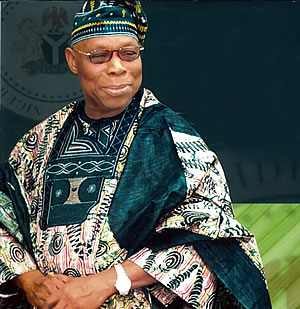 It was always predictable that, given his notoriety on that score, it was a matter of time for former President Olusegun Obasanjo to resume his pastime of undermining his military and civilian successors, by making President Muhammadu Buhari his latest victim. Amusingly, the rabble Obasanjo rouses on such occasions has dignified his deplorable tactics as a sort of distinction. If only they could critically dissect the man. There is this latent personality complex of striving never to be outshone or exceeded by any Nigerian living or dead. Hence, at the slightest prospect of being threatened, Obasanjo comes charging.


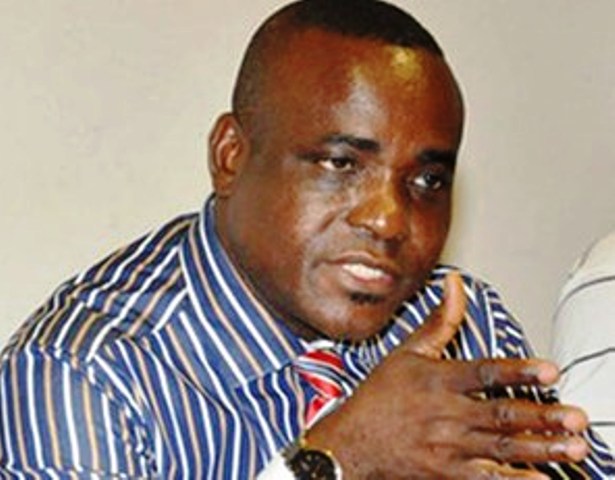




Musa Bello, Vanguard For Buhari’s Change Agenda In FCT, By Muhammad Ajah
As the Minister of the Federal Capital Territory (FCT), a position he took-over on the 11th of November, 2015, Mallam Muhammad Musa Bello has proven, beyond doubt, to be a vanguard for President Muhammadu Buhari’s Change Agenda.
Since inception, he has excelled in his job which includes but not limited to completion of on-going or abandoned critical infrastructural projects that positively impact on the life and economy of the city, zero tolerance to corruption, security of life and property, respect for extant rules and general improvement in services.
Abuja used to be littered with abandoned projects made up of highways, byways and other social amenities as a result of incomplete works or absence of finishing touches. Many connecting arterials were incomplete, including ramps, pedestrian bridges, tangent roads, loops and interchanges. Today, most of these projects have been completed. Having succeeded greatly in this direction within two years, Bello is shifting focus to the satellite towns and area councils where many rural infrastructural facilities as well as urban renewal projects are aggressively being pursued.
For instance, the Inner Southern Express Way Bridge has been opened for public use, connecting AYA, Apo Roundabout, the Murtala Muhammed Way and Aso drive. This has made it easy for motorists to access Abuja’s main business district. The contract has been awarded for the Villa Roundabout Bridge project, a major component of the Outer Northern Expressway (ONEX). Also the B6 and B12 Roads otherwise known as Constitution and Independence Avenues are ongoing. The roads which traverse the World Trade Centre and the Diplomatic Zones hold the key to the economic and social vibrancy of the FCT and it is hoped that completion of the roads will enable land owners develop their plots and bring out the skyline of the city centre.
Motorists coming from the Nnamdi Azikiwe International Airport can now travel in dual mode straight through the Churchgate building without the detour which used to make driving clumsy. Works on the roads were very skeletal since 2011 because of paltry budgetary provisions. But recently the administration cleared a backlog of payments owed the company handling the project. The 15km Apo Karshi Road awarded by the former administration but abandoned has been revisited to aid commuters from Mararaba, Nyanya and Karu axis.
The Federal Executive Council (FEC) approved the sum of N2.6bn for massive construction of road infrastructure within the satellite town of Karu Phase 2, Abuja, a project expected to open up the area for the development of affordable housing for low income earners, boost economic activities, create jobs and ensure slum upgrade. The Kuje-Gwagwalada road project, Katampe District, Phase 2 projects are also ongoing.
Documents obtained from the media department of the FCTA showed that the transparency followed all the awarded contracts. It showed that the sum of N57.6 billion have been paid to contractors handling various projects in the Federal Capital Territory in the areas of infrastructure, water provision and railway construction as well as health, education and environmental sanitation services. 627 indigenous contractors owed N100 million and below, with matured bills and for which provisions were made in the statutory budget were paid the sum of N6.9b in the last quarter of 2016. Another N3.3b billion was paid to 403 other contractors with similar bills in the first quarter of 2017. The sum of N7.009 billion was released to contractors handling the Abuja Light Rail project.
From the last quarter of 2016 to the first quarter of 2017, the number of liabilities came down to less than 50 per cent. Pensioners’ outstanding arrears have been paid up-to-date with the release of N2.3 billion. The sum of N2.4 billion of its obligation to on-going counterpart projects has been offset, while the school feeding programme has been re-invigorated with the sum of N980 million. Funding for these payments was mobilized through transparent, diligent and judicious management of funds without leakages in the system.
It is good news that Abuja residents will soon begin to ride light train, a project that has reached 98 percent completion. This will relieve public transportation within the city. The Muhammad Bello administration met the project packages at below 70 and 50 percent respectively, but drove the projects to 98 percent completion. Further investigations showed that the Federal Executive Council has also given approval of the contract for award of Phase 2 of Abuja Rail Mass Transit (Lot 1B), provision of engineering infrastructure to Jahi District, award for the construction of the Right-Hand Service Carriageway of Outer Northern Expressway, among others.
Furthermore, there is no gainsaying the fact that street lighting has improved within the city with all the challenges inherited. The FCTA achieved this feat with the procurement of over 25 standby generating sets as backup power source. Additionally, the detailing of security guards to these installations to avert vandalization is a good option.
On land administration, there has been tremendous progress. Over 1000 copies of Certificates of Occupancy (Cs of O) have been cleared. Similarly, the operations of all FCTA departments central to the land administration have been reorganized and harmonized while the FCT Land Use and Allocation Committee has been reconstituted in line with the provision of the Land Use Act. It has streamlined various cases of multiple layouts, revoked titles on wrongfully allocated Green Areas while machinery has been set in motion to calm the anxieties of beneficiaries of approved mass housing projects by giving them bankable personal titles.
In the housing sector, the Bello-led FCTA has commissioned over 300 housing units in Capital Estate in Kaba District along Kubwa Express Road. The project was executed by Abuja Property Development Company Ltd. (APDC). It is for low income earners such that with as low as 6, 12 or 16 Million Naira, young, middle or higher level officers could subscribe to houses that fit their income after an initial modest down-payment. And beyond the commissioning of the already completed houses, the administration has broken new grounds for the second and third phases of this estate development initiative. The APDC has employed over 700 construction professionals and artisans for the projects.
The administration is reviving selected rural settlements. The indigenous settlements include Jikwoyi, Dutse-Alhaji, Gwagwalada and some Kuje communities. It submitted proposals which were acceptable to African Development (ADB) and UN-Habitat. Under the arrangement, FCT is shopping for a $300 million syndicated loan by both institutions at an interest rate of between 1 to 1.5 percent. The facility would be channelled to address the dearth of modern infrastructure to benefit over one million people.
A man with human feelings, Bello came into office when staff of the FCT Area Councils were protesting months of unpaid salaries by the immediate past Area Council administrations. However, though salaries and wages of area councils are not the responsibility of the FCT administration, the minister intervened by releasing the sum of N1.9 billion as bailout to the councils to settle these arrears of salaries. The administration commissioned a fleet of 25 buses for staff transportation with a view to cushioning the effect of recession on its staff. The administration has sustained prompt payment of salaries and allowances as well as stepped up trainings and capacity building with promotion exercise timely conducted.
To ensure adequate water supply for FCT residents, the FCTA look on to the Chinese NEXIM Bank for a $450 million loan for the extension of water supply to areas like Lugbe and neighbouring communities. Contractors handling various projects for FCT Water Board have returned to work following recent payments of outstanding liabilities owed them by the former FCT administrations. The board realized over N1.5 billion in Internally Generated Revenue (IGR) in 2016 alone. Achievements of the Board include introduction of payment metering system and the completion of 1.2MW solar power project in collaboration with the Japanese International Cooperation Agency (JICA), a project that has reduced the cost of energy needed to power the water treatments plants.
Huge emphasis is being placed on environmental sanitation. The FCT minister launched the FCT Household and Community Sanitation Exercise Scheme in the area councils and satellite towns to effectively mobilize the communities to keep their surroundings clean. The administration also undertook drastic measures to recover huge debt owed Abuja Environmental Protection Board (AEPB) and to ensure they carried out their statutory duties in a more proactive manner. Out of the nearly N9 billion owed the agency, the administration has been able to recover more than N2 billion from a recovery rate that was less than N100 million before. The result is that refuse contractors are timely paid.
On beautification of Abuja, a boulevard of flowers and ornamental trees describes the future of the Umaru Musa Yar’adua (Airport) Expressway when the plan of the FCTA will come to fruition. The FCT minister ordered the Abuja Metropolitan Management Council to transform the highway into a modern driveway in line with what obtains in other great cities of the world. National monuments are to be added to the highway including a new city-gate which will be located a couple of kilometres off the Bill Clinton Bridge.
It will be recalled that the FCTA, in collaboration with the Office of the Vice President organized a Nationwide MSME Clinic pursuant to the current administration’s commitment to facilitate the rapid growth of the sector in the FCT and the country at large. MSME generates 48 percent of our Gross Domestic Product (GDP) and employs about 33 million of the nation’s workforce. FCTA has provided credit facilities ranging from N70, 000 to N2 Million to budding entrepreneurs as well as offered services such as business advisory, capacity building, assistance and workspaces among others with the target to create 10,000 jobs by 2020, thereby reducing unemployment at the rate of 11.8 percent as well as extreme poverty in the city.
Again, the administration through the Abuja Enterprise Agency has affectively keyed into the federal government’s Micro, Small and Medium Enterprises Development Fund (MSMEDF) under which it has accessed its own allotment of N2 billion being disbursed to successful applicants. Under the fund, the FCTA has established 2150 different enterprises and promoted 250 cooperative societies resulting into empowerment of more than 4500 residents. Also, the administration is properly utilizing its schemes such as “One Village One Product” (OVOP) and “Youth Mobile”, to reach out to the youths and women.
Minister Muhammad Bello has the political will to do more for the FCT. Recently, he swore in his mandate secretaries who are equivalent to state commissioners. This move heralded the commencement of the next phase of his administration’s developmental initiative. Areas of future focus would be massive investments in infrastructure in the satellite towns and rural areas, in education, in health and in making Abuja a smart city.
The appointees have been tutored on the direction and priorities of the administration, as well as the public service rules and government procurement guidelines, in line with the Federal government’s zero tolerance for corruption.
Bello has done excellently in FCTA, a clear indication of his ability to handle a state government or a higher federal position in Nigeria. I am sure that President Buhari has recognized this selfless, dedicated and God-fearing patriot whose service should be prolonged in the FCT administration and beyond.
Ajah, an advocate of humanity, peace and good governance can be reached on: mobahawwah@yahoo.co.uk. [myad]