No fewer than eight Chinese nationals have been arrested by the Mining Marshals, an elite security outfit crafted from the Nigeria Security and Civil Defence Corps (NSCDC) for alleged illegal mining activities in Lokpaukwu community, Umuchieze, in Umunneochi Local Government Area of Abia State. The Marshals who are tasked with ridding the mining sector of illegal operators also arrested and arainged a Nigerian in the same location and together with the Chinese Nationals are being detained in the Kuje Correctional Center, in the Federal Capital Territory (FCT). The Mining Marshals, codenamed: “Operation Hayakin Kogo,” is the brainchild of the Minister of Solid Minerals Development, Dr. Dele Alake. Information reaching us at Greenbarge Reporters online newspaper said that the trial of the suspects began yesterday, July 11, before Justice J.K Omotosho of the Federal High Court, Abuja. The prosecution had filed a 3-count charge, bordering on mining without lawful authority, obstruction of lawful mining operations amongst others. The defendants include SHEN YONGCHAN, MO BAIXIAN, XIAO BIN, HUANG XU FA, MA BINGLI, YANG JIAN, LI PEIYIN, QUE WENYONG, HIYK EDWARD DESMOND, and WANDA COMPANY LIMITED. After the pleas and arguments from both sides, the defendants were remanded at Kuje Correctional Centre until the adjourned date for the continuation of the trial. The Mining Marshals, led by ACC John Onoja, comprise a 2,570-strong force dedicated to eliminating the nefarious activities of criminal syndicates in mining areas across the country.
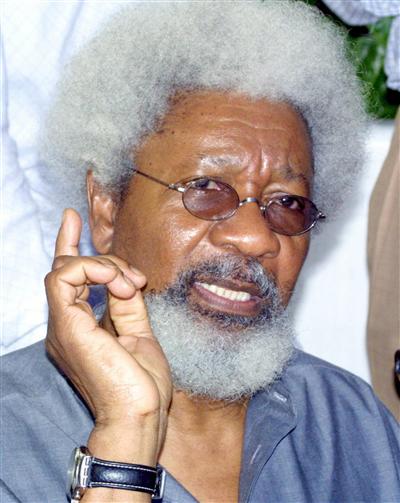
President Bola Tinubu has looked back at the dark days of military rule in Nigeria and acknowledged the pivotal roles played by Professor Wole Soyinka, a Noble Laureate who turns 90 tomorrow, July 13. In a message congratulating the library giant of the world, President Tinubu said: “today, I join the world to celebrate his profound influence on generations of writers, scholars, and activists who have been inspired by his work. “I celebrate him for giving us the spark to fight and confront military dictators in our country.” President Tinubu described Professor Wole Soyinka as Nigeria’s literary colossus and global icon. Giving his full name as “Professor Akinwande Oluwole Babatunde Soyinka,” Tinubu acknowledged that the Professor is a globally celebrated playwright, novelist, poet, essayist, actor, singer, composer, and documentarian. “He is also a foremost advocate of good governance and of a fair and just society. “He won the Nobel Prize for literature in 1986 – the first African to win the Prize in that category. “The Nobel Prize Laureate is a recipient of many other reputable awards, such as the Benson Medal from the Royal Society of Literature; Academy of Achievement Golden Plate Award; Anisfield-Wolf Book Award, (Lifetime Achievement); and the Europe Theatre Prize – (Special Prize).” President Tinubu stressed that Professor Soyinka is one of the finest minds of his generation; conforming to the highest standards of human enlightenment, but unyielding to injustice, oppression and base impulses. He emphasized that the Professor is also one of Nigeria’s living repositories of history, knowledge, and courage, even as he commends him for his valiant efforts in the trenches for the nation’s future both as a pro-democracy champion and as a trenchant voice against corruption and maladministration over several decades. “Our paths crossed during our just struggle for the enthronement of democracy in Nigeria following the annulment of June 12, 1993 presidential election. When faced with a trial in absentia and death sentence by the military regime at home, he galvanized opposition in exile through NALICON and NADECO. His global stature made him the face of our struggle to validate June 12 and restore democracy in Nigeria.” Tinubu went on to rename and dedicate the National Theatre in Iganmu, Surulere, Lagos to The Wole Soyinka Centre for Culture and the Creative Arts. He wishes Professor Soyinka many more years in good health and creative fulfilment as a global force for change.
The Central Bank of Nigeria (CBN) has announced the sale of US $122,671,000.00 to 46 authorised dealers in its determination to promote stability and reduce market volatility in the foreign exchange market. A statement by the Bank’s Director in charge of Financial Markets, Dr. Omolara Duke, said that of the total sale, US $67,500,000.00 was sold to 27 Authorised Dealers, while the sum of US$2.5 million was bought from one Authorised Dealer on July 10. The statement said that the range of the bid for the July 10, 2024 sales was N1,480.0/US$-N1,500.0/US$, while the value date for the payments, going by the settlement cycle of two days is July 12, 2024. It said that on July 11, 2024, the sum of US$55,171, 000 was sold to 19 Authorised Dealers at N1,540.0/US$, and that no FX was purchased. The statement said that the value date for the payments of the spot sale is July 15, 2024, adding that all Authorised Dealers should ensure that foreign exchange purchases from the CBN are used exclusively for trade-backed transactions, which should be reported within 72 hours. Ehile reiterating that the CBN supplies foreign exchange to the Foreign Exchange (FX) market to improve liquidity through FX spot sales to Authorized Dealers using two-way quotes, it assured that the Bank will continue to ensure stability in the FX market.
Kogi State Governor, Ahmed Usman Ododo has said that the judgment of the Court of Appeal sitting in Abuja yesterday, July 11, upholding his election, has shamed those who do not respect the will of God and the electorates. Reacting to the judgment, which affirmed that he truly won the election, Usman Ododo thanked the people of the State for their support and expressed appreciation to the judiciary for the swift and expeditious manner with which it dealt with the appeal. Spokesperson to the governor, Ismaila Isah, quoted him as saying that the court has demonstrated that the mandate freely given to him by the people of the state cannot be upturned by persons who do not agree with the will of God and the majority of the people of Kogi state. “I give thanks to God for seeing us through this phase of the court processes and I thank the people of Kogi state for uniting behind our administration and the steps we are taking to serve our people with the best of our ability. “The judgement of the Appeal Court reaffirms the fact that the November 2023 Governorship election in Kogi State was free, fair, peaceful, and credible. “By the grace of God, our administration has become the symbol of peace and unity in our state and we are committed to serving our people on the basis of equity and inclusion. “I thank the judiciary for staying true to its independence with this judgement of the Appeal Court that has reaffirmed the earlier decision of the Tribunal which is a clear testament that the mandate freely given to us by the people of Kogi State was done in the best interest of our state.” He called on opposition politicians in the state to join him in advancing the development of the state, stressing that the judgement of the court should now lay to rest the argument over the result of the 2023 governorship election and unite the people for the development of the state irrespective of political differences. The Appeal Court had yesterday, July 11, upheld the May 27 decision of the Kogi State governorship election petition tribunal which upheld the election of Usman Ododo of the All Progressives Congress (APC) as the duly elected Governor of Kogi State, having scored 446,237 votes in the November 11, 2023 Governorship election in the state. The Appeal Court, in a unanimous decision, dismissed all grounds of appeals filed by candidates of the Social Democratic Party (SDP), the Action Alliance (AA) and the Peoples Redemption Party (PRP) for being incompetent and for lacking in merit.
Stakeholders in the telecommunications industry have expressed fear that the Federal Government’s plan to deploy 90,000 kilometers of fibre optic cables across the country will face several obstacles, especially from state governments, that might truncate the project. According to them, without addressing the current issue of Right of Way charges, multiple taxation and levies, which are under the control of state governments, the project, which is to be implemented through a Special Purpose Vehicle (SPV) would be an exercise in futility. The stakeholders spoke during the Sixth Edition of the Policy Implementation Assisted Forum (PIAFO) in Lagos, which was a focus on Nigeria’s renewed strategic agenda for digital economy. They stressed the need to ensure the successful implementation of the project which was announced recently by the Federal Government to complement existing connectivity for universal access to the internet across Nigeria and provide the Nigerian digital economy with the backbone infrastructure it needed. Presenting a paper on the topic, ‘Harmonizing Nigeria’s Fibre Deployment Strategies for Effective Implementation’, Executive Director of Broadbased Communications, Chidi Ibisi, said that while the government’s SPV initiative is a good plan that could help the country bridge its current digital infrastructure gap, the government would need to address current challenges. “The issues of high cost of Right of Way (RoW), destruction of fiber by road construction companies and vandals all need to be addressed for this new SPV initiative to be successful.” Highlighting some of the challenges telecom operators face when deploying infrastructure, the Group Chief Operating Officer of WTES Projects Limited, Chidi Ajuzie, said that the biggest challenge to fibre cable laying in Nigeria is the informal RoW by hoodlums in states. “For states, a formal right of way is set and some states are adopting it but the informal side of the right of way is where the complexity has come today. “If I’m trying to lay fibre in some communities here in Lagos, the first thing that happens is the so-called land owners (omo onile) come out and a different set of people will keep coming from one street to another and they charge you. How do we achieve adequate broadband infrastructure in this kind of situation?” According to the Chairman of the Association of Licensed Telecommunications Operators of Nigeria (ALTON) Engr. Gbenga Adebayo, for the 90,000 kilometres fibre project to succeed, the state governments have to take ownership. “For the project to succeed, I think the governments at sub-nationals should take ownership. This issue of state governments seeing right of way as IGR should be a thing of the past. We can’t talk about the digital economy on one side and the government is seeing those who provide the services as sources of revenue. “The government has always come up with good policies, but the implantation, particularly when they are tested far afield, is the biggest problem. Governors will go to Abuja and say ‘in my state, I will give the right of way free of charge.’ “When you go to such a state, they may give you the right of way for zero or one Naira, but they will give you developmental levy, education levy, state impact levy, ecosystem levy. When you add all of these together, it is more than the right of way charges. So, who is playing who?” Making vital contributions at the forum, Dr. Ayotunde Coker, the Chief Executive Officer of Open Access Data Centre (OADC) stressed the need for the fibre project to be executed by the private sector even as the World Bank is expected to fund it with up to $3 billion. He said: “the World Bank can put money into the government but it needs private sector partnerships as the execution engine and that’s what we’ve been pushing in Africa. “The key thing is that when the World Bank puts the money in, it should engage the private sector, figure out the policies that it needs to do and enable the private sector to execute them effectively and make it as open as possible. With that, they can achieve what they are trying to achieve.” He stressed that for the success of the project, Nigeria should learn lessons of what didn’t work in the past, to achieve the new broadband penetration targets with the fibre range that is required. “Meaningful broadband is what we need, rather than just a huge set of megabits per second implementation. We need superhighway fibres. We need the distribution of these backbone that allows us then to fan out.” He urged state governors to be part of the project by providing an enabling environment for infrastructure roll-out, adding: “if you are a state governor and didn’t participate in it, the state won’t grow and it’s going to impact your state.” Earlier in his opening address, the convener of PIAFo, Omobayo Azeez, said that the conference was to create a midpoint dialogue platform for digital economy stakeholders across both the public and private divides to brainstorm, exchange perspectives, clear grey areas, harmonize thoughts and create a sense of collective responsibility towards accelerating our collective prosperity through technical efficiency. The event focused on Nigeria’s renewed strategic agenda for digital economy. According to him, the new digital economy blueprint of the federal government does not only sustain existing policy directions and targets, “it also challenges us on the possibilities of attaining new frontiers with a view to “Accelerating Our Collective Prosperity through Technical Efficiency” which is the theme of the summit.
A three-man panel of the appeal court has agreed with the Governorship election tribunal that witnesses brought by the candidate of the Social Democratic Party (SDP), Alhaji Muritala Ajaka were incompetent. According to the appeal court, which affirmed the election of the candidate of the All Progressives Congress (APC), Alhaji Ahmed Usman Ododo, the statements of such incompetent witnesses did not accompany the petition in line with electoral laws. The court also held that the issue of alleged certificate forgery against Ododo ought to have commenced at a Federal High Court. Subsequently, the appeal Court held that the appellant could not prove its case “beyond reasonable doubt,” thereby upholding Ododo’s election. The appellate court backed the verdict of the electoral Tribunal which had dismissed the petition filed by Ajaka. The Independent National Electoral Commission (INEC) had declared Usman Ododo, as the winner of the keenly contested November 11, 2023 Kogi State Governorship Election. The state Returning Officer, Professor Johnson Urama, who is the Deputy Vice-Chancellor (Academics) of the University of Nigeria, Nsukka, announced Ododo as the winner at 10:23 pm on Sunday, November 12, 2023. According to the announced results, Ododo polled 446,237 votes, to beat his closest rival, Murtala Ajaka of the Social Democratic Party (SDP), who scored 259,052, while Dino Melaye of the Peoples Democratic Party (PDP) polled 46,362 votes. However, the petitioners approached the tribunal seeking an overturn of the election results and an order directing INEC to conduct a fresh election in about five LGAs. Arguments at the tribunal Ajaka’s legal team led by Joseph Okutepa(SAN) had challenged the poll on the grounds of alleged forgery, voting and non-compliance to the Electoral Act. The petitioner called 25 witnesses from the five Local Government Areas including Adavi, and Okene LGAs, and they challenged the results from the disputed polling units. The petitioners also alleged that over-voting occurred in 5 local government areas of Kogi state including Adavi, Okene, Okeyi, and LGAs. However, the APC legal team led by Emmanuel Ukala challenged the competence of the witnesses presented by the petitioner, adding that their statements were not filed along with the petition. Counsel for INEC, Kanu Agabi (SAN) maintained that the witnesses presented by the petitioner were incompetent because “they are not the makers” of the electoral documents submitted as exhibits. The tribunal dismissed the petition and affirmed the election of Ododo while holding that the petitioner could not prove that the governor presented a forged certificate, among other things. Parties now approached the appeal court seeking favourable judgements for their clients.
Leaders of the two leading labour unions in Nigeria, the Nigeria Labour Congress (NLC) and Trade Union Congress (TUC) held a meeting with President Bola Tinubu today, July 11, at the Presidential Villa, Abuja over the unresolved new minimum wage for the workers in the country. Rising from the meeting, the NLC President, Comrade Ajaero and TUC President, Comrade Festus Osifo, congratulated the President over the supreme Court ruling on the autonomy for the local governments in the country. Said NLC President: “I have to congratulate you on the issue of local government autonomy. “We have been in the streets protesting for local government autonomy. “Now that there is light at the end of the tunnel, it will amount to ungratefulness if we fail to commend you.” On the minimum wage issue, the NLC President stressed the need for an upward adjustment of the minimum wage. “Between living wage and minimum wage, we need to find a balance. Things are difficult for the Nigerian worker.” The TUC President, Comrade Osifo, also congratulated the President, saying: “we commend you on the landmark judgement of the Supreme Court. “History will not forget what has happened today. With this judgement, we believe Nigeria will make progress.” He told President Tinubu that inflation has adversely affected the value of the naira and that the measures initiated by the government to address the rising cost of food and transportation need to be started immediately to give citizens relief. He said that the rollout of Compressed Natural Gas (CNG) powered buses will help in checking the high cost of transportation, while the recent directive on the suspension of duty on certain food imports will bring down the prices of food items, if properly implemented. This was even as the President acknowledged that Nigerian workers deserve improved welfare, better wages, as well as safe and enhanced working conditions as the driving force of the nation. He said that he is concerned about the welfare of Nigerian workers and that his administration is prioritizing their concerns. “I pay attention to everything around me. A happy worker is a productive worker. And society depends on the productivity of the happy worker.” The President called for realistic expectations as regards the minimum wage question, stating: “You have to cut your coat according to available cloth. Before we can finalize on the minimum wage process, we have to look at the structure. “Why must we adjust wages every five years? Why not two? Why not three years? What is a problem today, can be eased up tomorrow. There is much dynamism to this process if we are not myopic in our approaches. We can take a surgical approach that is based on pragmatism and a deep understanding of all factors.” Further talks were adjourned until next week to allow for wider consultation with all stakeholders.
President William Ruto of Kenya, has sacked all his cabinet secretaries and Attorney General, Justin Muturi in response to youth-led anti-government protests. Cabinet Secretary, Musalia Mudavadi, who is also Foreign Affairs Cabinet Secretary, is the only one spared. In a televised announcement today, July 11, President Ruto said: “upon reflection, listening keenly to what the people of Kenya have said and after a holistic appraisal of the performance of my Cabinet and its achievements and challenges, I have, in line with the powers given to me by Article 152 (1) and 152(5)(b) of the Constitution and Section 12 of the Office of the Attorney-General Act, decided to dismiss with immediate effect all the Cabinet Secretaries and the Attorney-General from the Cabinet of the Republic of Kenya except the Prime Cabinet Secretary and Cabinet Secretary for Foreign and Diaspora Affairs.’ The President said that he would involve other political stakeholders in the process of reconstituting his Cabinet. He said that in the meantime, government operations will continue under the leadership of Principal Secretaries and other relevant officials. President William Ruto chaired a Cabinet meeting today morning to take stock of the nationwide youth protests that have left a trail of death and destruction. “I will immediately engage in extensive consultations across different sectors and political formations, with the aim of setting up a broad-based government that will assist me in accelerating and expediting the necessary, urgent and irreversible, implementation of radical programmes to deal with the burden of debt, raising domestic resources, expanding job opportunities, eliminate wastage and unnecessary duplication of a multiplicity of government agencies and slay the dragon of corruption consequently making the government lean, inexpensive, effective and efficient.” Ruto announced plans for a “broad-based political arrangement,” giving credence to the notion that he may be considering co-opting Raila Odinga’s Orange Democratic Movement (ODM) into his beleaguered Kenya Kwanza administration. The President is reportedly toying with the possibility of a “government of national unity” with opposition figures in his administration as part of his way out of the current political crisis, triggered by protesting youths who have cornered him and demanded a major shake-up of his government. It would not be the first time that Kenya has had a government of national unity. When the late President Mwai Kibaki lost the 2005 referendum to the No camp led by his then Roads minister, Raila Odinga, he responded by sacking his entire cabinet. When he reconstituted it two weeks later, Odinga and his Liberal Democratic Party (LDP) members were left out.
“Following the results of the referendum, it has become necessary for me, as President of the Republic, to reorganise my government to make it more cohesive and better able to serve the people of Kenya,” Kibaki had said. “I have directed that the Offices of all Ministers and all Assistant Ministers become vacant. Consequently, the occupants of the said offices cease to hold their respective offices with immediate effect.” Source: The Nation.
President Bola Tinubu has confirmed the move by his government to restructure Nigeria and its economy by legitimate means. Reacting to the historic judgment today, July 11, by the Supreme Court, returning the autonomy of Local Government Councils in the country to them, the President said: “this judgement stands as a resounding affirmation that we can use legitimate means of redress to restructure our country and restructure our economy to make Nigeria a better place to live in and a fairer society for all of our people. “My administration instituted this suit because of our unwavering belief that our people must have relief and today’s judgement will ensure that it will be only those local officials elected by the people that will control the resources of the people.” President Tinubu regretted that the provision of some essential amenities and public goods, such as the construction and maintenance of certain roads, streets, street lighting, drains, parks, gardens, open spaces, and other residual responsibilities, including community security, has tottered owing to the emasculation of local governments. The President said that the decision of the Supreme Court to uphold the constitutional rights and ideals of local governments as regards financial autonomy, and other salient principles, is of historic significance and further reinforces the effort to enhance Nigeria’s true federal fabric for the development of the entire nation. He commended the Attorney-General of the Federation and Minister of Justice, Lateef Fagbemi (SAN) for his diligence and patriotic effort on this important assignment. The President said that his administration remains committed to protecting the principles of the charter governing citizens, institutions of government, arms, and tiers of government in furtherance of building an efficient and performance-driven governance system that works for every Nigerian. Tinubu said that a fundamental challenge to the nation’s advancement over the years has been ineffective local government administration, as governance at the critical cellular level of socio-political configuration is nearly absent. He said that the onus is now on local council leaders to ensure that the broad spectrum of Nigerians living at that level are satisfied that they are benefitting from people-oriented service delivery. “The Renewed Hope Agenda is about the people of this country, at all levels, irrespective of faith, tribe, gender, political affiliation, or any other artificial line they say exists between us. This country belongs to all of us. By virtue of this judgement, our people – especially the poor – will be able to hold their local leaders to account for their actions and inactions. “What is sent to local government accounts will be known, and services must now be provided without excuses.”
The Nigeria’s House of Representatives is not happy with the National Hajj Commission of Nigeria (NAHCON) and the Federal Capital Territory Pilgrim Welfare Board over what it described as “poor services” rendered to, and mismanagement of pilgrims during the just concluded 2024 Hajj operations in the Kingdom of Saudi Arabia. The House, after a motion of urgent public Importance , resolved to investigate the two bodies charged with taking care of the welfare of the pilgrims. The motion was adopted today, July 11, after a member, representing Bauten/Kayama federal constituency of Kwara state, Mohammed Umar Bio, moved it. He described Hajj exercise as an important pillar of Islam which needs proper handling, but expressed disappointment over the way NAHCON as a regulator, handled it.
He regretted that the Commission could not give good and satisfying services to the over 50,000 pilgrims that traveled for the 2024 pilgrimage. According to him, NAHCON did not take care of pilgrims properly, especially in Makka and Muna, despite the N90 Billion made available by the Federal Government for the smooth execution of the annual pilgrimage. He called on his colleagues to condemn the performance of NAHCON and FCT Pilgrims’ Welfare Board and to set up a committee to investigate the Commission. Contributing to the motion, Ali Isa Jessy, from Gombe state, said that NAHCON was established after the Nigerian pilgrimage act with the sole purpose of supervising, coordinating and providing accommodation for pilgrims, including medical care, as well as other basic needs of the Nigerian pilgrims in the holy land. He said that pilgrims in this year spent over eight million naira without being properly taken care of, even as he lamented that even VIPs spent over twenty million naira to travel but were not given tents in the Holy land, resulting in many of them sleeping in the open. Ali Isa suggested that an ad-hoc committee should be set up to investigate the commission, “which claimed to have spent over N40 billion for this year’s hajj with no tangible satisfaction to the pilgrims.” The Lawmaker said that he has already sponsored a bill to amend the NAHCON act, with the power to conduct hajj operations given to States for proper handling. The motion was subsequently referred to an ad-hoc committee, to be constituted, for proper investigation into the matter.
We use cookies on our website to give you the most relevant experience by remembering your preferences and repeat visits. By clicking “Accept”, you consent to the use of ALL the cookies.
This website uses cookies to improve your experience while you navigate through the website. Out of these, the cookies that are categorized as necessary are stored on your browser as they are essential for the working of basic functionalities of the website. We also use third-party cookies that help us analyze and understand how you use this website. These cookies will be stored in your browser only with your consent. You also have the option to opt-out of these cookies. But opting out of some of these cookies may affect your browsing experience.
Necessary cookies are absolutely essential for the website to function properly. This category only includes cookies that ensures basic functionalities and security features of the website. These cookies do not store any personal information.
Any cookies that may not be particularly necessary for the website to function and is used specifically to collect user personal data via analytics, ads, other embedded contents are termed as non-necessary cookies. It is mandatory to procure user consent prior to running these cookies on your website.