The Federal Capital Territory Administration (FCTA) has taken steps to embark on aggressive internal revenue generation. One of the steps is the appointment and confirmation of Chairman and Chief Executive Officer for Internal Revenue Service (IRS), in the person of Malam Abdullahi Oteh Attah. His appointment was confirmed by the Federal House of Representatives. Abdullahi Oteh Attah is a 1978 Accountancy graduate of the Ahmadu Bello University, Zaria. Born in January 15, 1952, he hails from Doma in Nasarawa State, Nigeria. He qualified as a chartered accountant in 1987 and comes to the agency with a very impressive pedigree. He was General Manager Finance, NITEL, 1996 and later founding member of Economic and Financial Crimes Commission, EFCC – 2003. He was also former special adviser to the Chairman of the Federal Inland Revenue Service, FIRS and a Director in the same organisation – 2010 until his retirement in 2013. Attah is currently a member of the governing council of the Federal University, Lafia, Nasarawa State. He is married and blessed with children. Speaking at an interactive session of the FCT Executive Council with Area Council Chairmen, heads of security agencies and traditional rulers, the FCT minister, Malam Muhammad Musa Bello, said that the confirmation of Abdullahi Oteh is the right way towards boosting the revenue profile of the capital territory. He said that IRS would also provide fund for the implementation of projects that would make life meaningful for the residents. He said that the session was convened to build strong partnership between the various stakeholders and the FCT leadership. The Minister assured the officials that the Administration is working to ensure early preparation of the 2018 budget “FCT administration is desirous of ensuring that the benefits of governance are felt at the grassroots. This is why the focus of the second half of this Administration would centre on education, health facilities, rural infrastructure among others.” Malam Bello said that FCT would soon recruit 300 teachers to bridge the gap created by various retirements and other sources of manpower attrition in the sector. [myad]
A 40 year old graduate of the Nasarawa State University, Alhaji Awwal Musa Ijakoro has been appointed to mount the throne of Sarki Bwari in the Federal Capital Territory (FCT), which his father, Alhaji Muhammad Musa Ijakoro occupied until he died on August 29 this year. The appointment of the new Sarki Bwari has been approved by the minister of the Federal Capital Territory Administration Malam Muhammad Musa Bello, under the relevant sections of the FCT Chiefs (Appointment and Deposition) Act, 1997 and in accordance with established customs and traditions of the Bwari Chiefdom. The nomination of Alhaji Awwal Musa Ijakoro was endorsed by the Bwari Kingmakers. Alhaji Awwal Musa Ijakoro was born in Bwari on June 9, 1977. He did his primary and secondary education in Suleja and Kwali respectively. He holds a Diploma in Public Administration from the University of Abuja and a B.Sc Public Administration from Nasarawa State University, Keffi. Until his appointment to the throne of Sarkin Bwari, he was the Chiroman Bwari. Commenting on the appointment, the minister said that the exalted traditional office of Sarkin Bwari demands high sense of responsibility, maturity and commitment. He implored Alhaji Awwal Musa Ijakoro to strive to uphold those virtues at all times even as he asked all stakeholders, particularly the people of Bwari Chiefdom to live in peace with each other. [myad]
When Vice President Yemi Osinbajo of Nigeria and Vice President Jusuf Kalla of Indonesia met today, Tuesday, on the sidelines of the Extractive Industries Transparency Initiative (EITI) Beneficial Ownership Transparency Conference in Jakarta, Indonesia, bilateral talks ensued. Photo by Novo Isioro. [myad]
President Muhamadu Buhar has cautioned ECOWAS member countries to tread carefully in pushing for a single currency in the sub-region by 2020. He drew attention to the countries in the sub region to challenges faced by the European Union in realising the same goal. President Buhari, in a speech at the 4th Meeting of the Presidential Task Force on the ECOWAS Currency Programme, said the necessary economic fundamentals among countries continue to differ over the years, making it more difficult to pull through with the project by 2020. “Nigeria advises that we proceed cautiously with the integration agenda, taking into consideration the above concerns and the lessons currently unfolding in the European Union. To that end, Nigeria will caution against any position that pushes for a fast-track approach to monetary union, while neglecting fundamentals and other pertinent issues.” President Buhari said that some of the obstacles to realising the roadmap for the implementation of a single currency include diverse and uncertain macro–economic fundamentals of many countries, unrealistic inflation targeting based on flexible exchange rate regime and inconsistency with the African Monetary Co-operation Programme. The President said domestic issues in ECOWAS member countries relating to their constitutions and dependence on aids continue to affect the framework for implementing the single currency in the sub-region “Although the ECOWAS Commission has anchored its pursuit of the new impetus to monetary integration on the information presented to the Heads of State which were the basis for their recommendations, we are concerned that we have not properly articulated and analyzed a comprehensive picture of the state of preparedness of individual countries for monetary integration in ECOWAS by 2020. “In previous meetings, we had specifically raised observations on the state of preparedness of the member states, the credibility of the union if anchored on watered down criteria, and the continuing disparities between macroeconomic conditions in ECOWAS countries, amongst others. And I would like to reiterate this concerns.’’ The President told the Heads of State that the conditions that pushed Nigeria into withdrawing from the process in the past had not changed. “Nigeria had earlier withdrawn from the process because its key questions and concerns were ignored and till date, none of the issues has come up as an agenda issue to be considered by the Taskforce. Consequently, the Roadmap which did not involve widespread consultation with national stakeholders is not sufficiently inclusive.” Going forward with the project, President Buhari suggested a thorough review of the convergence roadmap and the constitution of an expert committee on each of the subject areas to come up with acceptable time frame, defined cost and funding sources identified. “This should also consider stakeholders such as the Ministries of Finance, Customs, Parliamentary groups, Tax Authorities, Immigration authorities to achieve comprehensiveness.” The President said that there should be a push towards ratification and domestication of legal instruments and related protocols, while fiscal, trade and monetary policies and statistical systems, which had not gone far, could be harmonized. President Buhari noted that the West African Economic and Monetary Union (UEMOA) countries should make a presentation on a clear roadmap towards delinking from the French Treasury. He advised an examination of the African Union position on the same issue, which the African Central Bank Governors, in line with the African Union programme of monetary convergence, recommended a convergence deadline of 2034 for the establishment of Regional Central Banks in all sub-regions. In his remarks, the President of the ECOWAS Commission, Marcel Alain de Souza, said the single currency for the West African sub-region was a laudable and historical project, but regretted that it had taken too long to be actualized. The President said the creation of a Central Bank for the West Coast would accelerate the process. He said that Nigeria constitutes more than 70 percent of the GDP of the West African region, with a population of 180 million, and would play a significant role in facilitating the process of realising a single currency for the sub-region.[myad]
Minister of the Federal Capital Territory (FCT) Malam Muhammad Musa Bello has given those who converted Nyanya Market into residential accommodation, quit notice and an order for the area to be reverted to market. The minister who spoke when he received report from the Ministerial Taskforce on Traffic Decongestion and Environmental Sanitation along the Nyanya–Karu–Karshi road, frowned at the ugly development whereby structures in the Nyanya market initially meant for market stalls were converted into residential accommodation. He said that the situation had been responsible for the spill-over of illegal squatters stalls on the Nyanya interchange thereby rendering the road almost impassable during peak hours. Muhammad Bello announced the extension of the tenure of the task team by three months, and charged them to work with other relevant security agencies in the FCT to enforce the return of the area to its original design as market. The minister commended the taskforce for what it has achieved so far, especially the reduction of gridlock on the road, improvement on sanitation, drop in crime and almost zero record of death through accident on the road. He called on the traditional rulers, community leaders and traders’ union to sustain the positive partnership even as he charged the Abuja Metropolitan Management Council (AMMC) and The Satellite Town Development Department to ensure that the road does not return to its dark days of gridlock and filth. The Taskforce Chairman, retired Major General Emmanuel Nienge, appreciated the level of support and cooperation the team received from the traders and residents who he noted, showed their satisfaction with the human face of the Taskforce. [myad]
“I hear say our Sai Baba don return from Turkey” “Did you hope that he would stay there permanently? He went for the D-8 meeting, and he is bound to return.” “D-8 meeting. I have been thinking about it. We are supposed to be a secular country but internationally, we have continued to engage with Muslim countries. We belong to the Organisation of Islamic Countries (OIC) and also the D-8. Internationally, we are effectively a Muslim country.” “I don’t think so. In international diplomacy, it is not a sin for a country to engage at all possible levels. Nigeria is the most strategic country in Africa with its population and economy. We have a responsibility to be everywhere in the world, and make our presence felt.” “Which presence? There are at least 48 Turkish companies doing business in Nigeria: schools and hospitals and et cetera. How many Nigerian businesses can you point to in Turkey?” “We have our footballers scoring goals in Turkey.” “You are not okay.” “We have our girls too. Nigerian girls are the most impactful diplomats in the world. They catch the men where it matters most from Turkey to Italy to London to Washington, back to home. What this government has not been able to do through diplomacy, our girls in diaspora are filling the gap, by grabbing the international community by the balls. I hear our girls are hot and famous.” “You are talking nonsense. You are holding women responsible for Nigeria’s problems”. “Emi ke? God forbid.” “So what was that all about?” “He-eerr. I am just saying that Nigerian leaders should stop junketing all over the world like a yo-yo, and stop passing that on as performance whereas there is nothing to it. The President of Nigeria must have the courage to act, and take decisions that will move the country forward. I am, in fact, surprised Baba went to the D-8 summit with his wife and children.” “Are you okay? Baba Bubu has not done anything wrong by giving Mummy a treat.” “I have not said he has done anything wrong. But he be like say Baba sef don dey enjoy this thing. He promised oh. Baba promise. But Baba don dey enjoy so tey, him forget promise.” “The President is a human being. You people forget that. You keep talking about promise. What promise, I ask?” “Change.” “Meaning?” “Change” “Nobody ever promised you change.” “Tinubu did. The party did. Baba did.” “My friend, go and sit down. You don’t know what is called change. The real change is that President Muhammadu Buhari is today President of Nigeria and he has every right to do as he wishes.” “No. He can’t” “You are a fool. Okay, he can do what he likes for example in the other room. And change does not begin with him. It begins with you. Comment on that.” “We are not happy with what is going on. The party is confused. The APC is divided all the way down the middle. The President is no longer with us. He has been hijacked by persons who don’t even belong to the party.” “You have not commented on the other room” “Which other room? Is this supposed to be a serious conversation? I don’t care what President Buhari does in his other room. I just want him to stand up like a man and run Nigeria. There are too many contradictions. His government is tearing itself apart and it is not funny at all because it gets worse everyday.” “You can’t blame Baba. It is those people’s juju. The demons in Aso Villa have grown new wings and we can all see that.” “Wait a moment. You are talking about the spiritual side of Aso Villa. I am in fact surprised that the President has not been able to return to his office since his staff told us rats had taken over his office.” “I hear the rats are still there. Ogbologbo rats. No-nonsense-rats. Come-and-catch-me rats. The President’s main office remains under lock and key.” “So why are we blaming Baba, then? Nigeria is certainly the only country in the world where the President has to vacate his office for rats and the rats have continued to exercise sovereignty rights for more than two months.” “This thing is not ordinary. Una no wan listen.” “Nothing is ordinary anymore in this country, my brother. Everything just be like anyhow.” “You say?” “I say, this their change don begin change my head. Make man talk true, even if truth kill man. Look at it now. This same government just reinstated Abdulrasheed Maina, a former pensions boss, who was declared wanted by the EFCC. He was even promoted. Then two days later, they say he has been sacked because the President wants some investigations. How?” “What do you mean how?” “I mean a government must have a mind of its own, and act decisively. No government should run on ad–hoc fuel. Is Maina a patriot or a villain? We don’t know. A serious government must be able to take a stand and stand by it. They should stop playing games with our minds. Must you reinstate a man, give him new hopes and a new lease of life and then turn him adrift?” “Hey, hold on. Are you defending Maina?’ “No. I am condemning cluelessness. Extreme cluelessness. I ask you: where is the report of the investigations on the alleged abuse of the office of the Secretary to the Government of the Federation?” “You are referring to the grass-cutters affair? Please pardon me for a moment. It is a lot for me. Grass-cutters. Rats. Lions. Hyenas. Too many animals in this holy of holies, we live now obviously in a kingdom of animals, governed by dancing pythons and smiling crocodiles.” “Speak for yourself” “I speak what the spirit says. And I prophesy that there is truth in the words of the Holy Spirit. E just be like say we don enter One Chance.” “May be that’s why people are beginning to commit suicide. For the first time in Nigerian history, ordinary people are just committing suicide here and there. I feel like writing a book to be titled: Nigeria: The Years of Suicide.” “Fine. And I your friend will write another book immediately and title it: Makobami: the writer who committed suicide writing about suicide.” “You don’t get it. One man committed suicide after his wife gave birth to triplets. He had not been paid for eleven months!” “Hen hen. Is that why he should die? Some other Nigerians would have turned that into a business opportunity. Is it easy to shoot three in one? I ask you. With all your gra-gra, can you shoot three at once? If people don’t lend themselves sense in this country, they will die before death comes calling. I tell my close friends. I tell them, this thing will pass. This change that has turned to poison in some people’s mouths, it will also pass.” “What of the people who just parked their vehicles and jumped into the lagoon in Lagos? You think Nigerians will be happy again?” “Yes, I believe Nigerians will be happy again.” “But I hear government is borrowing money” “Yes, because people you know stole the money. Still, Nigeria will rise again.” “I think the problem is more than that. I hear the people who claim to have common sense have been told to shut up” “Common sense is not common. Those who claim to have it may just be doing business. Common sense died in this country long ago.” “Who is protecting this country, then?” “Ordinary people. They should just allow us to speak.” “It is their country too” “Who?” “The people who don’t want us to speak” “It is not their country. They had the audacity to lie to us. They claimed they would bring change and transform Nigeria. They promised to kill corruption. They have done the opposite of what they proposed.” “Can you stop now? I am in Abuja to have fun not to get into trouble, this man.” “You must have the courage to speak up. We, the voters’ card carrying Nigerians are angry. We want change.” “You wanted change. You got it. What other change are you asking for?” “Change” “Go and sit down and stop mouthing empty slogans“ “You must go and talk to Asiwaju” “I am not going to talk to anybody.” “I mean they shut down the man’s TVC and Radio Continental.” ‘I didn’t hear that.’ “I hear they even want to withdraw his Villa pass” “I didn’t hear that” “I hear the columnists in his newspaper can no longer write freely” “I didn’t hear that.” “In fact, I hear that it is now a sin to speak freely and that’s why Atiku is now suddenly silent.” “I didn’t hear that.” “I hear that Baba Buhari will win the win 2019 election, whether people like you like it or not.” “I didn’t hear that” “What do you ever hear? I am a street guy. I hear things. Are you in this country at all?” “Good for you” “But are you aware by any chance that Senator Isa Misau is fighting the Inspector General of Police Ibrahim Idris?. “I have not paid attention to the story: something about the IGP befriending two female officers? How is that a problem? “ “It is unprofessional and unethical. But there is also a charge of corrupt self-enrichment.” “Charges against who? The IG or the Misau?” “Misau” “Misau or the IG? Stop worrying yourself my friend. I am trying to discuss national matters you are focusing on the Inspector General of Police. Who is he?” “I am just thinking right now, may be we should discuss issues that will not get us into trouble.” “Our job is to get into trouble with our ideas.” “God forbid. My mouth will not take me to detention cell.” “Don’t’ worry. If the IG impregnates a female police officer, it is a matter of espirit de corps. Senator Misau should know that.” “But the money” “Which money? Everything is espirit de corps” “Have you taken something?” “Take what? I am saying this is not America. The Inspector General of Police grabs a police woman and proves himself to be a man and you are blowing whistle like a eunuch: is this America? I beg.” “You are mixing things up. You don’t get it.” “I get everything. Nothing is going to change. This is Nigeria. Nothing ever changes in real terms. Do you get it? This is Nigeria.” “Can we talk about something else, please, to ease your depression? I see you talk like you are depressed.” “Me? I am not depressed oh. Nobody can kill the beetle.” “One of your favourite artists, Toyin Aimakhu-Abraham lost her dad.” “That’s sad. My condolences.” “Asa, the musician, has disclosed that she lost her virginity at 28.” “Wow. 28! She is an absolute genius and a darling. Did she disclose the identity of the victim?” “No. But I hear 2Face now gives advice on sex; he recommends the use of condoms” “That is our Saul on the road to Damascus. We should make 2Face the next Pope.” “13 Southern Nigerian Governors and 3 deputies met in Lagos yesterday.” “A meeting of strange bed fellows holding talks, saying nothing.” “The Federal Government has decided to confiscate funds in all bank accounts that are not linked to BVNs” “That is a thief-thief policy. They are asking for more suicides.” “I hear George Weah is in Nigeria to see Pastor Temitope Joshua ahead of the Presidential election rerun in Liberia.” “I see. Liberia certainly needs a miracle.” “Cristiano Ronaldo has won the FIFA best player award, beating Messi and Neymar.” “I don’t watch football…sorry. I am too busy watching Nigeria.” “Maina has been sacked.” “I heard that. Nice chess.” [myad]
Nigeria is blessed with all the major raw materials needed for the production of iron and steel including 3 billion tonnes of iron ore, 3 billion tonnes of coal and limestone in excess of 700 million tones and 187 billion SCF of natural gas.
Meanwhile, the annual estimated per capita consumption of iron and steel in Nigeria has increased from 5 kg in 1968 to 130 kg in 2015 (Uzondu, 2016).
Planning for the Nigerian steel sector started in 1958, but 50 years after, the country is yet to establish a stable iron and steel sector despite huge investment of over $ 7 billion.
The Ajaokuta Steel Company (ASC) failed to take off while Delta Steel Company (DSC) and the three government-owned inland/satellite rolling mills in Oshogbo, Jos and Kastina are moribund, working under low capacity utilization. According to Agbu, the reasons for the poor performance of the Nigerian steel sector include inadequate funding, poor planning and implementation and political influences.
Until recently, the nation’s steel requirement was met since independence by imports from western nations particularly US, Great Britain, Germany, Japan and recently, by relatively cheap and sub-standard steel from some Asian nations. The country is now spending a large portion of her foreign exchange for the importation of steel products, while still investing heavily in the domestic production of steel. This is double jeopardy.
The privatization that was carried out in 2004 – 2005 did not revive the sector, but rather transformed the companies to private monopolies. Because the two integrated iron and steel companies in Nigeria (ASC and DSC) are unable to produce billets for the 20 steel rolling mills in the country, the sector is dependent on imported billets. But due to the high cost of billet importation, many steel companies are unable to function. The few steel companies that is operational though at low capacities, is now dependent on recycling of scrap iron and steel obtained mostly from municipal solid wastes.
Over the years, so much had been said about resuscitating the moribund Ajaokuta Steel Rolling Mill, ASRM, but little has been done in terms of giving the place a human face. The steel is still comatose despite the fact that about $7 billion has been sunk into the plant since 1979 in a bid to get it up and running. The moribund state of the steel has been a source of worry to well-meaning Nigerians who are calling on the federal government to summon the political will and determination it requires in getting the plant back on its feet. The journey to a befitting steel plant in the country actually began at independence in 1960 when prominent leaders saw the need to produce steel locally to spur the nation’s industrial growth. However, not much was done about the policy until late 1979 when the global contract was signed by the then General Olusegun Obasanjo-led military government for the construction of the Ajaokuta Steel plant, located in the present Kogi State, with actual implementation of the idea commencing by the Shehu Shagari administration in the early 80’s. The ASRM was designed to be the driving force of Nigeria’s technological advancement. The construction of the plant began under the administration of Alhaji Shehu Shagari in 1979 and was commissioned in 1983 when the project had achieved about 95 percent completion rate.
At that time, light, billets, wire rod, medium section and structural mills were in operations. It was planned then that profits generated would provide the needed funds for the completion of the remaining 5 percent of the plant. Unfortunately, after President Shagari’s removal from office in 1983, the plant was abandoned while most of its engineers trained in Russia to work in the plant, left to join other companies and some retired.
Typical of every Nigerian project, it was stalled as government officials, especially during the military era, got bogged down with the international politics between the Western bloc and the then Soviet Union on the viability and desirability of owning an integrated steel plant by a third world country. A public affairs analyst, Isah Mohammed, in one of his write-ups, said that the four mills in the ASRM between 1985 and 1987 started optimal production, but regrettably, international politics played a devastating blow to the dream of steel development in the country which led to shut-down of the steel complex.
He went further to say that since then, successive governments had made some efforts in reviving the ailing industry, but to no avail due to lack of political will. The administration of former President Olusegun Obasanjo, despite criticisms from steel-workers and labour leaders, concessioned it to the Global System Steel Holdings Limited, GSHL in 2005, with yet another disastrous outcome. The deal collapsed as the firm failed to meet inherent contractual obligations. Workers of the company engaged GIHL in a protracted showdown over labour matters. The allegation that the Indian company was running the firm aground rather than re-invigorating it compelled the federal government to cancel the transaction in 2007. On realizing that GSHL was breaching the concession deal, former President Umaru Yar’Adua terminated the agreement in 2008 and set up an interim management committee to oversee it because the concession company was trading in iron ore and making huge sums of money without showing commitments to revitalizing the company.
However, GIHL did not go down without a fight. It headed for the London Court of International Arbitration and got some relief. One of the reprieves was that it should take over the Nigeria Iron Ore Mining Company – the raw material feeder to the steel company − to complete its tenure agreement with Nigeria.
Perhaps, this embarrassing state of the plant was the reason the House of Representatives in recent time directed it’s Committees on Steel, Privatization and Commercialization and Justice to investigate the concession and failure of the Ajaokuta Steel Rolling Mill, following the controversy and non-performance of the steel from inception. The House also expressed worry that the comatose nature of the industry had made the country to rely on the importation of iron and steel from other countries, thus spending about N1.3trn on capital flight in 2012 alone. The lower chamber expressed concern that the employment potentials of the project had not been fully exploited, adding that the steel was capable of generating over 15, 000 direct employment. The House lamented that similar companies like Mittal Steel of India conceived about the same period with Ajaokuta were currently working at full capacity while Ajaokuta had been dogged by controversy. It further revealed that failure of the ASRM, despite the injection of an estimated $20billion from inception to date, has become a huge embarrassment.
The committees were mandated to probe the concession and failure of the ASMR and report back to the House for further legislative action. Under the Jonathan administration, the federal government set aside N3.921 billion in the 2014 budget for the salaries of the idle workers and other recurrent expenditure at the Ajaokuta Steel Rolling Mill. A total of N4.58 billion was budgeted for the workers in 2012.
It has also been estimated that $1 billion is needed to bring the plant back on stream. Former Minister of Mines and Steel Development, Musa Sada, explained that government-owned steel construction company would also perform optimally when there are provisions for auxiliary support infrastructure. He hinted that Ajaokuta project lacked critical infrastructure like rail track between its premises and the seaport for conveyance of needed raw materials and finished products.
Experts have reiterated that the plant is not obsolete, but is yet to have the operating control fixed. They, therefore, urged the federal government to muster the political will to put the company to use, as it has the potential to generate 15,000 direct employment, even as 500, 000 Nigerians could also be indirectly engaged. These experts further canvassed that in this era of insecurity, agitation for secession and other social vices confronting the nation, making the company functional will be a way of solving the problems. They explained that over 74 percent of global steel companies have adopted the blast furnace mode of steel production and noted that the insinuation that the blast furnace technology has become obsolete was a tissue of lies and stressed that the technology remained the best source of steel-making all over the world till date.
Comrade Salihu Otori, said the Iron and Steel Senior Staff Association of Nigeria, ISSSAN, would probably resist any attempt by government to scrap the plant, adding that the new policy was induced by western countries, who do not want Nigeria to succeed.
It is unimaginable that at this age and time, Nigeria is still importing slabs, roofing sheets, simple agricultural tools such as hoes, cutlasses, glassware etc from other developing countries, thus enriching other countries. This has to stop if the country must attain its target as an industrial giant. Surprisingly, the country is now paying dearly for neglecting the plant that would have been the envy of other industrial plants the world over. Experts are nonetheless of the view that what is required in reviving the Ajaokuta plant is adequate funding and maintenance. They cited the steel plant in Ukraine that is over 105 years old and still working perfectly with minimal maintenance.
There is no point dilly-dallying on whether to inject more funds into the plant or not. The ideal thing is to carry out a detailed feasibility study to know what it will cost to get the place operational. Whether government likes it or not, the ASRM remains one of the Nigeria’s heritages that must not be allowed to die prematurely.
Spending billions yearly in the name of paying idle workers’ wages and other entitlements is just ridiculous. Since the concession federal government entered with the Indian company failed, it is now left for the government to take a step further in ensuring that the country’s priceless asset is back on track. The Ajaokuta steel investment, which has the potential to provide about 15,000 jobs, offers the best bet for the take-off of Nigeria’s industrial age. What is required now is for the House Committees on Steel, Privatization and Commercialization and Justice should get to the root of this protracted controversy that has hampered the plant over the years. It should not be like other investigations that were swept under the carpet.
However, political pundits have concluded that our core-northern elites (North West and East) are forces restraining the revival of Ajaokuta steel company, these elites will not envisage North-central (i.e Kogi state, the seat of ASC) outshining them in terms of economic dominance and infrastructural development. To me, if this is the case, that idea is retrogressive, backwards-thinking, parochial civilism and primitively endogenous.
If only the President is sincere with diversification of the economy, it is highly expectant as part of his change mantra, to summon the political will and rare courage in reactivating the steel company.
Experts say that at optimal production level, the steel plant at Itakpe can generate over two million jobs for youths if properly funded. Imagine many cottage industries that will make use of the by-products from the steel mill. This is one sure way this government can create jobs for the teeming unemployed youths being used to perpetrate crimes.
The surest means of creating jobs in developing countries like ours is true technological initiative and advancement which often leads to industrial revolution.
The melodious ‘hymn’ about restructuring that resonated through our nation’s political wavelengths, playing in a very high key has gradually morphed into a decrescendo mode and chances are that in no distance time, may fade further into the graveyard of abandoned discourse which of course, is our regular trademark as a nation. Either way, if by luck it survives this forced holiday, it may have to remain on life support, enjoying the same fate that has befallen Agricultural science as a subject in our nation’s secondary schools. This, I will come back to if time and space permits. The recent happening that points to this progressive fading and dysfunctional sabbatical via inaction is occasioned by so many reasons; Chiefly, the ‘defocus button’ of our political deconstructionists who plays the self- imposed agenda-setting role on our space using the media has been pressed. Hence, we have suddenly moved from discussing the need for the nation to be restructured to the hub on the resultant effects of our nation not being restructured. These effects turned subjects of discussion includes but not limited to; Youths restiveness, operation python dance, operation crocodile smiles, Fulani herdsmen ceaseless killing of innocent Nigerians as well as mindless agitation of dismembering the nation called Nigeria by some groups. All these have now taken over the front burner of our nation’s political discourse thereby relegating the root cause to the background. I advanced the above position after an objectified appraisal of this topical issue tagged; restructuring, looking at its current proponents, their intentions, demands, operational matrix and our environmental dynamics as a nation-state. Another point to remember is our utter lack in the ‘needed will’; political, social, economic and even cultural. It has evidently manifested that both the masses and government are lacking in the needed will to push for the actualization of restructuring. This absence has created a disconnect, leading to a communication gully between the masses and the government. And until this gully of disconnect is filled, clamour for restructuring will continue to be willing tools in the hands of the ‘political capitalists’ which they will use when they want and drop when they wish. it is important at this point to stress that the need for restructuring this nation should be compared with, and likened to, the indispensability and inseparability of the blood from the body. For this reason, I thank the true proponents but at the time, point out that the process seems hijacked, the purpose muddled up with some personal and selfish ambitions of some groups masquerading as agitators and echoing public interest as their propeller. Very regrettably also, the media that is supposed to moderate this debate and amplify this call for true federalism has deliberately undermined or circumvented the needed guide. Some of the media practitioners have visibly ‘jumped into the arena’ using subjective reportage, thereby abandoning their social responsibility role of educating the people on issues of national importance. The above misfortune has presented this all-important discourse as nothing but a platform for the dissemination of information, misinformation, disinformation and outright exchange of ignorance in some cases.
Consequently, the ‘false proponents’ has used the gap so created to set the process that will help the call for restructuring share the same fate, body, and soul with Agricultural Science, a subject in our secondary schools as mentioned above.
Adding context to this discourse, my eldest brother was taught, back in the mid-1970s the basic problems affecting agriculture in Nigeria. These challenges he clearly scripted one after the other. But to my utmost shock, in the early 1990s, in the first week of my journey to Senior Secondary School, I was also greeted with these same litanies of problems bedeviling agriculture in Nigeria. When I compared notes with what my brother had in the 70’s, I discovered that all were replicated, meaning that none has been solved. And those problems discovered over four decades ago are still affecting agriculture in our country till date. I see this call for restructuring descend towards the same direction if urgent steps are not taken. But also pray that our children will not one day join us in discussing this same issue. Instructively also, people have complained that the nation is currently structured and stands in an inverted pyramid shape with more power concentrated at the top and the base not formidable enough making collapse inevitable if fundamental steps are not taken. A position I completely agreed with. But, to the false proponents of restructuring, this is the good news and the joy of being a Nigerian. This is a country where we nurture little challenges to make it grow and turn to a ‘political advantage’ of the sort to some individuals. So, don’t be surprised that come 2019, ‘ I will push for restructuring’ will become a campaign promise that will form the political manifestos of some aspirants even when they are doing next to nothing about it presently. In contrast, one discovers that the above comes to play because the masses allowed it. Majority of Nigerians view their relationships with these leaders as ‘’remote control /television set’ form of arrangement. They, allow the leaders to very mechanically manufacture issues, brand it ‘national interest’ then use it as a springboard to signposting their personal dreams and advance their political visibility. Immediately they achieve their needed needs, they switch off. Call for restructuring is but a screaming example. Put differently, our challenge as a nation is more of leadership than restructuring. A proof to this fact is that when our leaders are blessed with political positions they preach unity and oneness and when they fall out of favour, they swap topic too to; marginalization, repositioning, re-engineering and restructuring of the nation. What these portend is that the seating position and stomach infrastructure determine what they present or view as issues of national importance.
In the same light, some commentators have argued that devolution of power at the centre has become inevitable as most of the items contained in the exclusive list should serve their best purpose when handled by the states and the local government. The padding of the exclusive list of activities has made ‘Abuja’ appear as a general surrounded by many lieutenants instead of the order way around. But certainly, the above arrangement is to the advantage of some and they are willing to spend a fortune making sure that this mush talked devolution of power remains a rhetoric or mere academic exercise. Why? .the simple truth is that to them, Abuja remains the proverbial ‘Vice Chancellors list (VC List)’ during the inglorious admission racketeering days back in the 1990s ‘Abuja’ means different things to different people; our Governors, the certified politicians as well as novitiates and as such, they will never support that call for power devolution based on their personal interests or when they do, they will want it in their own terms and conditions. To some state Governors that have remained clueless on how to increase their state’s internally generated revenue(IGR), they believe that with ‘Abuja’ intact and FAAC still dripping, their administration is financially secured and their government cruising in an auto-drive mode.
In like manner, for the politicians that have been outsmarted at the state levels, Abuja remains the ‘wilderness of consolation and a desert of hope’.For those that lost a fortune vying for one political position or the other in their states, Abuja is the source where that sweet and gentle message ‘weep not child’ can only be muffled from via political appointments. Marked by the above fact, my view about Abuja effigy as it stands is that unbundling it of its powers through restructuring will require the strength of a bulldozer. But in the same vein, let the masses be reminded also that achieving something worthwhile requires ceaseless effort, resourcefulness, and ingenuity. However, while I strongly believe in the unity of Nigeria as an individual, the truth must be told to the effect that the whole gamut of restiveness of youths, whether in the Southeast, South-south, North or Southwest, and resurgence demand for the dissolution of Nigeria stem from mindless exclusion, injustice, and economic deprivation. Correspondingly also, the template to solve these problems is already there: the Report of the 2014 National Conference. The holistic implementation of that report is germane to the survival of the Nigerian which is right now in its most fragile state since the end of the civil war. In addition to the above, going back to the regional system as some commentators have clamoured may also be an option. So let government and the masses transcend calls for restructuring as a mere discourse but take drastic steps that will help transform Nigeria into a nation of our dreams. Jerome-Mario, wrote via jeromeutomi@yahoo.com
Former two-term Jigawa state governor, Sule Lamido has written to his party, the Peoples Democratic Party (PDP), signifying his intention to run for the office of President in the 2019 Presidential election. This was even as he said: “the PDP will, and must lead the nation back into a bright, progressive, and innovative future.” He wants PDP to take over power in 2019 to reposition the country and bring it back to its path of recovery. Sule Lamido, in the letter of intent to the PDP leadership, lamented that the nation has departed from the dreams of its founding fathers. “Today, 57 years after the independence of our dear country, can we in all sincerity claim to have achieved the dream of our founding fathers? Where did we fail and from where did we begin to fail? Nigeria with its natural endowment and human capacity cannot be forgiven for being otherwise. We cannot even demonstrate our ability and capacity to meet domestic, regional and global challenges which currently seems to overwhelm us. “The PDP will and must lead the nation back into a bright, progressive, and innovative future.” Sule Lamido said that the PDP must rekindle in Nigeria a new hope, a nation of united people with a common and assured destiny. “To the world, Nigeria must demonstrate our confidence, tenacity in our ability and capability to address our domestic regional and global challenges that confront us. “It is against this background that I offer myself to vie for the office of the president of the Federal Republic of Nigeria in 2019 if my party finds me worthy to fly its flag.” The Presidential hopeful said that the PDP has enough talents to salvage the nations from its current woes, adding: “I am no means claiming to be the only capable material; any PDP member given the trust and support can fly our flag, and I expect that many more aspirants will express the desire to run. My hope and prayer is that at the end of all the process which I hope will be open, fair transparent and credible, is to give Nigeria in 2019, a candidate who will lead the party and Nigeria. “This is because there is no alternative to PDP in 2019, it will be a defining moment in the Nigerian political evolution.” Lamido said while the clamour for restructuring rages, the most important aspects of addressing the Nigerian economy by creating prosperity will make the debate less emotional and sentimental. He said: “Our imperfect union as a federation should not be an excuse for our legendary failure which appears to have found vent in the call for restructuring, a union of multi-ethnic multi-lingual and multi-religious can certainly task the best of human capacities, but that is precisely the challenge and how to work on it and build a nation of people of a common destiny, and this is where the PDP must raise to the challenge. “The starting point is where the PDP began in 1998 and critical to it is creating an open environment in which every Nigerian must not only been seen to be, but must be an equal stakeholder and therefore restoring trust and faith in our shared union and this PDP was able to achieve in its first four years.” Governor Ayo Fayose of Ekiti State was the first to declare his interest in the 2019 presidential election on the platform of the PDP. But the party has repeatedly said the ticket has been zoned to the North. Fayose is from the South of the country[myad]
The Central Bank of Nigeria (CBN) has again, injected the sum of $195 million into the inter-bank Foreign Exchange Market. Figures obtained from the Bank indicate that the CBN offered $100 million to authorized dealers in the wholesale segment of the market, while the Small and Medium Enterprises (SMEs) segment received the sum of $50 million. Those requiring foreign exchange for invisibles such as tuition fees, medical payments and Basic Travel Allowance (BTA), among others, were allocated the sum of $45 million. The apex Bank’s Acting Director in charge of Corporate Communications, Mr. Isaac Okorafor, confirmed the figures and said that the Bank is confident that the level of transparency it had entrenched in the market would help the Naira to sustain its steady run against the dollar and other major currencies around the world. “The market will remain very stable as long as every player sticks to the forex guidelines.” It will be recalled that the CBN, last week, intervened in the various segments of the Forex market with the sum of $195 million. Meanwhile, the naira continued to maintain its stability in the FOREX market, exchanging at an average of N360 to a Dollar in the BDC segment of the market on Monday, October 23.[myad]
We use cookies on our website to give you the most relevant experience by remembering your preferences and repeat visits. By clicking “Accept”, you consent to the use of ALL the cookies.
This website uses cookies to improve your experience while you navigate through the website. Out of these, the cookies that are categorized as necessary are stored on your browser as they are essential for the working of basic functionalities of the website. We also use third-party cookies that help us analyze and understand how you use this website. These cookies will be stored in your browser only with your consent. You also have the option to opt-out of these cookies. But opting out of some of these cookies may affect your browsing experience.
Necessary cookies are absolutely essential for the website to function properly. This category only includes cookies that ensures basic functionalities and security features of the website. These cookies do not store any personal information.
Any cookies that may not be particularly necessary for the website to function and is used specifically to collect user personal data via analytics, ads, other embedded contents are termed as non-necessary cookies. It is mandatory to procure user consent prior to running these cookies on your website.



 The Federal Capital Territory Administration (FCTA) has taken steps to embark on aggressive internal revenue generation.

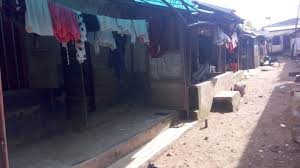 Minister of the Federal Capital Territory (FCT) Malam Muhammad Musa Bello has given those who converted Nyanya Market into residential accommodation, quit notice and an order for the area to be reverted to market.
 The Central Bank of Nigeria (CBN) has again, injected the sum of $195 million into the inter-bank Foreign Exchange Market.

Challenges And Prospects Of Reviving Ajaokuta Steel Company, By Usman Abdulfatai
Nigeria is blessed with all the major raw materials needed for the production of iron and steel including 3 billion tonnes of iron ore, 3 billion tonnes of coal and limestone in excess of 700 million tones and 187 billion SCF of natural gas.
Meanwhile, the annual estimated per capita consumption of iron and steel in Nigeria has increased from 5 kg in 1968 to 130 kg in 2015 (Uzondu, 2016).
Planning for the Nigerian steel sector started in 1958, but 50 years after, the country is yet to establish a stable iron and steel sector despite huge investment of over $ 7 billion.
The Ajaokuta Steel Company (ASC) failed to take off while Delta Steel Company (DSC) and the three government-owned inland/satellite rolling mills in Oshogbo, Jos and Kastina are moribund, working under low capacity utilization. According to Agbu, the reasons for the poor performance of the Nigerian steel sector include inadequate funding, poor planning and implementation and political influences.
Until recently, the nation’s steel requirement was met since independence by imports from western nations particularly US, Great Britain, Germany, Japan and recently, by relatively cheap and sub-standard steel from some Asian nations. The country is now spending a large portion of her foreign exchange for the importation of steel products, while still investing heavily in the domestic production of steel. This is double jeopardy.
The privatization that was carried out in 2004 – 2005 did not revive the sector, but rather transformed the companies to private monopolies. Because the two integrated iron and steel companies in Nigeria (ASC and DSC) are unable to produce billets for the 20 steel rolling mills in the country, the sector is dependent on imported billets. But due to the high cost of billet importation, many steel companies are unable to function. The few steel companies that is operational though at low capacities, is now dependent on recycling of scrap iron and steel obtained mostly from municipal solid wastes.
Over the years, so much had been said about resuscitating the moribund Ajaokuta Steel Rolling Mill, ASRM, but little has been done in terms of giving the place a human face. The steel is still comatose despite the fact that about $7 billion has been sunk into the plant since 1979 in a bid to get it up and running. The moribund state of the steel has been a source of worry to well-meaning Nigerians who are calling on the federal government to summon the political will and determination it requires in getting the plant back on its feet. The journey to a befitting steel plant in the country actually began at independence in 1960 when prominent leaders saw the need to produce steel locally to spur the nation’s industrial growth. However, not much was done about the policy until late 1979 when the global contract was signed by the then General Olusegun Obasanjo-led military government for the construction of the Ajaokuta Steel plant, located in the present Kogi State, with actual implementation of the idea commencing by the Shehu Shagari administration in the early 80’s. The ASRM was designed to be the driving force of Nigeria’s technological advancement. The construction of the plant began under the administration of Alhaji Shehu Shagari in 1979 and was commissioned in 1983 when the project had achieved about 95 percent completion rate.
At that time, light, billets, wire rod, medium section and structural mills were in operations. It was planned then that profits generated would provide the needed funds for the completion of the remaining 5 percent of the plant. Unfortunately, after President Shagari’s removal from office in 1983, the plant was abandoned while most of its engineers trained in Russia to work in the plant, left to join other companies and some retired.
Typical of every Nigerian project, it was stalled as government officials, especially during the military era, got bogged down with the international politics between the Western bloc and the then Soviet Union on the viability and desirability of owning an integrated steel plant by a third world country. A public affairs analyst, Isah Mohammed, in one of his write-ups, said that the four mills in the ASRM between 1985 and 1987 started optimal production, but regrettably, international politics played a devastating blow to the dream of steel development in the country which led to shut-down of the steel complex.
He went further to say that since then, successive governments had made some efforts in reviving the ailing industry, but to no avail due to lack of political will. The administration of former President Olusegun Obasanjo, despite criticisms from steel-workers and labour leaders, concessioned it to the Global System Steel Holdings Limited, GSHL in 2005, with yet another disastrous outcome. The deal collapsed as the firm failed to meet inherent contractual obligations. Workers of the company engaged GIHL in a protracted showdown over labour matters. The allegation that the Indian company was running the firm aground rather than re-invigorating it compelled the federal government to cancel the transaction in 2007. On realizing that GSHL was breaching the concession deal, former President Umaru Yar’Adua terminated the agreement in 2008 and set up an interim management committee to oversee it because the concession company was trading in iron ore and making huge sums of money without showing commitments to revitalizing the company.
However, GIHL did not go down without a fight. It headed for the London Court of International Arbitration and got some relief. One of the reprieves was that it should take over the Nigeria Iron Ore Mining Company – the raw material feeder to the steel company − to complete its tenure agreement with Nigeria.
Perhaps, this embarrassing state of the plant was the reason the House of Representatives in recent time directed it’s Committees on Steel, Privatization and Commercialization and Justice to investigate the concession and failure of the Ajaokuta Steel Rolling Mill, following the controversy and non-performance of the steel from inception. The House also expressed worry that the comatose nature of the industry had made the country to rely on the importation of iron and steel from other countries, thus spending about N1.3trn on capital flight in 2012 alone.
The lower chamber expressed concern that the employment potentials of the project had not been fully exploited, adding that the steel was capable of generating over 15, 000 direct employment. The House lamented that similar companies like Mittal Steel of India conceived about the same period with Ajaokuta were currently working at full capacity while Ajaokuta had been dogged by controversy. It further revealed that failure of the ASRM, despite the injection of an estimated $20billion from inception to date, has become a huge embarrassment.
The committees were mandated to probe the concession and failure of the ASMR and report back to the House for further legislative action. Under the Jonathan administration, the federal government set aside N3.921 billion in the 2014 budget for the salaries of the idle workers and other recurrent expenditure at the Ajaokuta Steel Rolling Mill. A total of N4.58 billion was budgeted for the workers in 2012.
It has also been estimated that $1 billion is needed to bring the plant back on stream. Former Minister of Mines and Steel Development, Musa Sada, explained that government-owned steel construction company would also perform optimally when there are provisions for auxiliary support infrastructure. He hinted that Ajaokuta project lacked critical infrastructure like rail track between its premises and the seaport for conveyance of needed raw materials and finished products.
Experts have reiterated that the plant is not obsolete, but is yet to have the operating control fixed. They, therefore, urged the federal government to muster the political will to put the company to use, as it has the potential to generate 15,000 direct employment, even as 500, 000 Nigerians could also be indirectly engaged. These experts further canvassed that in this era of insecurity, agitation for secession and other social vices confronting the nation, making the company functional will be a way of solving the problems. They explained that over 74 percent of global steel companies have adopted the blast furnace mode of steel production and noted that the insinuation that the blast furnace technology has become obsolete was a tissue of lies and stressed that the technology remained the best source of steel-making all over the world till date.
Comrade Salihu Otori, said the Iron and Steel Senior Staff Association of Nigeria, ISSSAN, would probably resist any attempt by government to scrap the plant, adding that the new policy was induced by western countries, who do not want Nigeria to succeed.
It is unimaginable that at this age and time, Nigeria is still importing slabs, roofing sheets, simple agricultural tools such as hoes, cutlasses, glassware etc from other developing countries, thus enriching other countries. This has to stop if the country must attain its target as an industrial giant.
Surprisingly, the country is now paying dearly for neglecting the plant that would have been the envy of other industrial plants the world over. Experts are nonetheless of the view that what is required in reviving the Ajaokuta plant is adequate funding and maintenance. They cited the steel plant in Ukraine that is over 105 years old and still working perfectly with minimal maintenance.
Spending billions yearly in the name of paying idle workers’ wages and other entitlements is just ridiculous. Since the concession federal government entered with the Indian company failed, it is now left for the government to take a step further in ensuring that the country’s priceless asset is back on track. The Ajaokuta steel investment, which has the potential to provide about 15,000 jobs, offers the best bet for the take-off of Nigeria’s industrial age. What is required now is for the House Committees on Steel, Privatization and Commercialization and Justice should get to the root of this protracted controversy that has hampered the plant over the years. It should not be like other investigations that were swept under the carpet.
However, political pundits have concluded that our core-northern elites (North West and East) are forces restraining the revival of Ajaokuta steel company, these elites will not envisage North-central (i.e Kogi state, the seat of ASC) outshining them in terms of economic dominance and infrastructural development. To me, if this is the case, that idea is retrogressive, backwards-thinking, parochial civilism and primitively endogenous.
Experts say that at optimal production level, the steel plant at Itakpe can generate over two million jobs for youths if properly funded. Imagine many cottage industries that will make use of the by-products from the steel mill. This is one sure way this government can create jobs for the teeming unemployed youths being used to perpetrate crimes.
The surest means of creating jobs in developing countries like ours is true technological initiative and advancement which often leads to industrial revolution.
Usman Abdulfatai wrote in from Ado Ekiti and can be reached via: prof.abdulfataiusman@gmail.com
[myad]