A former United States Ambassador to Nigeria, John Campbell, has wondered how the former President Goodluck Jonathan’s wife, Patience, accumulated a whooping $35 Million when she was virtually a civil servant before he husband became President. In a piece he wrote on Friday, ‘Nigerian President Buhari’s Sisyphean Efforts’, and posted on Council on Foreign Relations’ website, Campbell could not imagine how Patience Jonathan became wealthy having spent most of her life as a civil servant. The ex-US envoy said: “Patience Jonathan as the first lady was flamboyant, arrogant, and widely disliked. She has yet to be convicted of a crime. However, it is curious how a person who spent most of her career in public service could accumulate an acknowledged $35 million in a poor country.” The Economic and Financial Crimes Commission (EFCC) is currently investigating Jonathan’s wife and has frozen four bank accounts belonging to her, while some property belonging to her have been seized. Among other actions taken by the EFCC was the freezing of Jonathan’s $35m. The former first lady also claimed that the EFCC had frozen bank accounts belonging to some of her relatives, including that of her late mother, and accused the anti-graft agency of waging a “psychological war” against her for supporting Jonathan’s re-election bid in 2015. Speaking on President Muhammadu Buhari’s anti-corruption fight, Campbell said, “There is pushback against President Buhari’s anti-corruption campaign, especially among the opposition Peoples Democratic Party. Some claim that Buhari is using the EFCC to go after his political enemies. In the predominately Christian parts of the country, there are also murmurs that the anti-corruption campaign is part of a Muslim effort against Christians. “The Committee on Public Petitions in the House of Representatives has issued a warrant for the arrest of Magu(EFCC boss) because of his failure to appear before them with respect to a petition by Patience Jonathan. The committee’s move appears to be led by southern, Christian, PDP representatives.” According to him, there is a tradition in Nigeria of presidents using the EFCC and other anti-corruption agencies against their political enemies. “While it is true that under President Buhari, most of the high-profile investigations have been of PDP former officials in the Jonathan administration who are predominately Christian, these people were also, of course, in positions where they could loot public funds. Further, Christians dominated the Jonathan government, though the EFCC has also investigated Sambo Dasuki, Jonathan’s Muslim national security adviser, who remains under house arrest,” Campbell noted.[myad]
Successive administrations in Nigeria, including the current one claim to promote transparency and accountability by following due process in financial dealings and public procurements. Nevertheless, governments at all levels avoid strict compliance with standard norms and regulations when actions are taken for both economic and political exigencies. The confusion and power struggle between the then President Olusegun Obasanjo and erstwhile Vice President Atiku Abubakar, though political, were fuelled on allegations of non-compliance to due process over activities of agencies under the purview of Atiku, including PTDF. Court cases afterwards merely favoured the former Vice President. Every tier of government engages in financial dealing outside the legal requirement using different nomenclatures and suspicious regulations to justify the indiscretions. For instance, a security vote is one of the conduit pipes used by various top public officers to avoid being accountable to anyone. Even the Public Procurement law provides exceptions to disclosures on sensitive security issues and requirements. During the previous administration, not only President Goodluck Jonathan, but most governors used security votes extensively for security and other various activities including funding of political campaigns. In the recently published book “An Encounter with the Spymaster,” this writer disclosed categorically that “the movement of large cash in local and foreign currencies by the two major political parties, APC and PDP, to win primaries and general elections in 2015 were discovered by security and anti-corruption agencies but tactically suppressed to avoid embarrassing outcries that could tarnish the electoral processes and rubbish the image of the country. Few senior journalists, especially some members of Faculty of Bureau Chiefs and Editors where a highly respected investigative Editor, Yusuf Alli is the Dean, are aware of some of the details and culpability of the parties.” Therefore, at the national level, one of the major institutions that have been indirectly involved in funding sensitive and classified operations whether for security or other exigencies is the Nigeria National Petroleum Corporation (NNPC). The media trial and court cases against the former Minister of Petroleum, Diezani Alison-Madueke on allegations levelled against her by the Economic and Financial Crimes Commission (EFCC) are clear examples. The fear of past incident recently reared its ugly head as the current Petroleum Minister of State, Dr. Emmanuel Ibe Kachikwu in a memo leaked to the media, informed President Muhammadu Buhari that the Group Managing Director (GMD) of NNPC, Mr Maikanti Baru, was disrespectful to him. He also allegedly accused the NNPC boss of awarding contracts worth over $25bn without the approval of the board of the corporation. The contents of the memo are not only embarrassing but damning because it would easily rubbish the integrity of the current administration of President Muhammadu Buhari and its hyped anti-corruption campaigns. While the two men on the brawl, Kachikwu and Baru are first class materials in all sense from their academic accomplishments as well as their experiences in the oil sector, there seem to be missing narratives on the altercation. Apart from the allegations of insubordination, lopsided appointments and awards of contracts without the consent of NNPC board by Dr. Baru, there are also documents seen by Economic Confidential indicating that the Act setting up the Corporation, statutorily mandates the GMD to report directly to the Substantive Minister of Petroleum Resources, which in this case, is President Muhammadu Buhari. Another document, a correspondence from Bureau of Public Procurement (BPP) to the NNPC dated June 26, 2015 states in part that: “The [NNPC] Governing Board is responsible for approval of the work programmes, corporate contract plans and budget while the [NNPC] Tenders Board is responsible for approval of day to day procurement implementation.” Since the emergence of President Buhari, appointments of top Group Executive Directors (GED) were made by Kachikwu. An online platform, DailyNigerian, reports that “Among the seven Chief Operating Officers (COO/GEDs) currently working under Baru, five were actually appointed by Dr Kachikwu, three of whom came along with him from the International Oil Companies (IOCs).” Mr Kachikwu actually brought in Babatunde Adeniran (COO Ventures), Anibor Kragha (COO Refineries) and Henry Ikem-Obih (COO Downstream) from outside while Isa Inuwa (COO Corporate Services) and Bello Rabiu were sourced from within. Chidi Momah, who is still Secretary of the Corporation, was also hired by Mr Kachikwu. While the majority of top officers appointed into NNPC by Kachikwu during his days as the GMD are from Southern Nigeria, Baru is alleged to have done the same by ensuring that his recent reorganisation of the management staff of the oil corporation favours the North. When this writer wrote an article on a disagreement between Kachikwu and current Minister of Transport, Rotimi Amaechi in July 2016 over projects in NigerDelta (Link: https://goo.gl/V1cMjM), the Petroleum Minister of State should have since realised that in an intense political clime, one must tread consciously and cautiously. Attempts to crucify Maikanti Baru over some alleged decisions in NNPC may not likely fly because it would seem to be an attack against the Presidency. Media reports so far have indicated that Dr. Baru is reputed to have unfettered access to the substantive Petroleum Minister who is President and commander in chief than most cabinet members. It could, therefore, be extremely difficult for the GMD NNPC to have taken any unilateral decision without the consent and authorization from the highest office in the land. Whether the actions taken are right or wrong only the court can determine. Meanwhile, in an exigency, due process can be ignored to justify the Machiavellian principle of “the ends justify the means” on security votes and oil contracts for national interests.
President Muhammadu Buhari has congratulated the Super Eagles on their victory over the Chipolopolo of Zambia at the Godswill Akpabio International Stadium, Uyo, Akwa Ibom State. The President, who described the hard-earned victory as “very sweet, soothing and a 57th Independence Anniversary gift to the nation,” commended the nation’s senior men’s football team for the feat of making Nigeria the first African country to qualify for Russia 2018 FIFA World Cup tournament, with a match left to play. He joined millions of football-loving Nigerians in rejoicing with the players and their coaching crew, even as he called on Nigerians to apply the values of perseverance, resilience, discipline, hard work and team-spirit which propelled the footballers to excel since the beginning of the qualifying matches, to all sectors of national life. The President promised that the Federal Government will continue to support the team within available resources so that the nation will maximise the unifying potentials of sports in general and football in particular. He advised the entire team and Nigerian Football Federation (NFF) officials to remain steadfast and focused when they begin preparations for the global football fiesta in order to make Nigeria proud. President Buhari called on public and private organisations as well as well-meaning Nigerians to continue to assist the Super Eagles as the team heads for a sixth appearance at the summit of football competition. The President also appreciated the government of Akwa Ibom State for the invaluable support it has been rendering to the football team, describing it as worthy of emulation. [myad]
Nigeria has booked a ticket to the 2018 World Cup in Russia as the nation’s senior football team, the Super Eagles, today in Uyo, capital of Akwa Ibom State, defeated the Chipolopolo of Zambia 1-0. The sweat-soaked game was played at the Godswill Akpabio International Stadium, Uyo. With this victory, Nigeria has emerged the 12th team in the world to qualify for the World Cup. During the rensed match before a reasonable number of cheering football fan, the Eagles struggled to keep possession of the ball due to the poor condition of the pitch, even as the Zambians fought back with counter attacks. In the 23rd minute, there was scare for Nigeria when a goal was ruled offside. Augustine Mulenga was a thorn in the flesh of the Super Eagles defender. In the 65th minute, Alex Iwobi was introduced to unlock the defensive with his creativity. It was a cagey affair with little to separate both teams until the 73rd minute when Alex Iwobi broke the deadlock seven minutes after he was introduced by Genet Rohr. The fans went wild in jubilation, dancing singing and jumping. The game was not over as the Zambians kept piling pressure on the Super Eagles. While the Nigerians fans cheered them on, the Zambian fans also raised their voices to cheer their team. Despite the pressure from the Zambians, the Nigerian held on to the lone goal. Nigeria will be going to the World Cup for the sixth time and will hope to do better than the previous performances by getting past the round of 16.[myad]
The General Overseer of Living Faith Church Worldwide, Bishop David Oyedepo, has narrated how he escaped what looked like a “potential plane crash” alongside those travelling with him. Oyedepo spoke at the ‘Breakthrough Service’ of his church, also known as Winner’s Chapel, at the church’s world headquarters in Ota, Ogun State and broadcast to all the zonal centres of the church in Ota and Lagos. The Bishop told the congregation that the aircraft plunged into crisis mid-air, but that God took control and landed the plane. “There was a mid-air crisis, there was serious turbulence, but there was no apprehension. Jesus took control. He landed the plane safely. “And we were just celebrating the faithfulness of God.” Although he did not disclose where he was going or coming from when the incident happened, a source said that he might have been returning from London. The Bishop said he would give the details of the incident at a thanksgiving service later on. After sharing the testimony, the bishop led the congregation to sing a thanksgiving chorus.
Following the closure of the border by the government of Cameroon against the other countries of the world, over 300 different nationals are said to have been stranded at Mfum, the Nigeria-Cameroon border. The closure of the border by the Cameroonian authorities may not be unconnected with the political struggle in the country, where the English speaking people of Southern Cameroon are calling for a separate country as a result of marginalisation by the Francophone speaking north. The people of South Cameroon had threatened to declare a sovereign state on October 1, a situation that may have prompted the authorities of Cameroon to restrict the movement of people to and from the country. A team of journalists on a fact finding visit to Mfum border observed that several people including traders, students and other passengers who wanted to cross the border on both sides were stranded. Some of those who spoke on the situation described the development as inhuman and very frustrating. A student of higher institute of Business Management and Technology, Boyah, Alele Precious Ezinne, who said she was returning to Cameroon from Nigeria decried the hardship posed by the border closure. She said that they have spent over a week waiting for the border to be re-opened and complained that most of them did not understand the reason for the closure. Some of them said they were facing challenges of feeding and paying their hotel bills as they have spent all they had on them. They called on the authorities concerned to take steps to re-open the border so that they can reconnect with their families and carry out their legitimate businesses. A house wife, Caroline Lerin, with her two children said she was travelling from Nigeria through Cameroon to Gabon to join her husband after spending the holiday with her children in Nigeria. She said she had gone through difficulties with her children and called for urgent steps to re-open the border. Some of the traders said they may incur great loses as their goods may go bad, adding that they were not sure when the border will be re-open. The priest in charge of Saint Peter’s Catholic Church, Ikom, Very Reverend Father James Mgbado, who has been harbouring some of those stranded said most of them who came into Nigeria could no longer cross over due to the closure of the border. He said the church also played host to some stranded Congolese who crossed from Cameroon to Nigeria as a result of the crisis in Cameroon, adding that about seven persons were still under his care, out of over thirty people that were there. Father James Mgbado said the church also haboured some tourists from Argentina who were on transit to Cameroon and that the church continues to play its role, giving people hope in spite of the challenges. The priest said the church is the house of God and a place of refuge for humanity, adding that the church remains a place of succour for those in need. Source: Saturday Tribune. [myad]
The 76 top adviser to Pope Francis and Vatican Treasurer, Cardinal George Pell is facing a Magistrate’s court cases which police described as “historical sexual offences.’
Cardinal George Pell, who is the most Senior Roman Catholic Official to face such accusations, did not speak as he was escorted to and from Melbourne Magistrates’ Court by police through a group of media, protesters and supporters. He was not required to enter a plea.
Australian police said that in June this year, Cardinal Pell was summoned to appear on charges of “historical sexual offences’’ from multiple complainants.
Details of the charges have not been made public.
Cardinal Pell’s lawyers have said at a previous hearing that he would plead not guilty to all charges. He is not required to enter a formal plea until a magistrate determines whether there is cause for a full trial.
At a 20-minute hearing, the magistrate said that the matter should return on March 5 for a committal hearing to determine whether it should proceed to a full trial.
The magistrate set aside four weeks for the committal hearing.
Cardinal Pell is on a leave of absence from his Vatican role as Pope Francis’ economy minister, which he started in 2014.
The pontiff has said he would not comment on the case until it is over.
Former Deputy National Chairman of the Peoples Democratic Party (PDP), Chief Bode George has made it clear that the party now needed a rescue and redemption to be able to face the 2019 general elections with confidence.
Chief Bode George, who addressed members of the party in Lagos today, Friday, said: “our party needs a rescue. Our party needs redemption. Our party deserves a balanced, experienced, tested, trusted and faithful hand. Our party needs a team player and a unifying leadership. Our party needs stability. Our party needs a patriotic emblem, a standard bearer un-detained by tribal fixity.”
The PDP Chieftain promised to mend fences between aggrieved members of the party and heal old wounds if he is elected as national chairman. He promised to resuscitate the dream and principles of the PDP founding fathers as enshrined in the constitution of the party.
“I have learned the ropes and I have been guided by the collective wisdom of our leaders across our great nation. I fully understand the precepts, the mechanisms and the constitution of our party.
“I know the tradition, the culture, the guiding ethos and the normative patterns that our leaders have built and nurtured for so many years. If elected, I am willing and ready to work with everyone regardless of personal differences to mend the broken places, to heal the ancient wounds, to reconcile the feuding factions and ultimately ensure that we strengthen our collective brotherhood and speak with one voice to regain victory in 2019.
“I will never compromise our foundational principles of justice, fairness and equity as enshrined in the constitution of our party. We will equally accord all our governors and legislators at both state and national levels the necessary pride of place and honour in this new dawn. We will protect their interests and help to enhance their effectiveness.
“If I am given the privilege to serve, I will never play the role of an overlord. I will serve with dignity and diligence. I will respect the mighty and the low without discrimination. Together, we will remove impunity. Together, we will restore discipline and fair play. We will always insist on internal democracy.”
Former Nigerian President, Dr. Goodluck Jonathan has expressed regret that the United Nations (UN) has now been turned into a platform where nations come to quarrel and display their might, instead of its statutory role, as a forum for unity and world peace.
In an address he delivered at the Rhodes Forum’s Dialogue of Civilizations (DOC) on a theme: ‘Multipolarity And Dialogue in Regional And Global Development: Imagining Possible Futures,’ the former Nigerian President said: “as presently constituted, the UN is portrayed as a platform where nations come to quarrel and display their might, instead of its statutory role, as a forum for unity and world peace.”
Dr. Jonathan suggested that the Security Council of the United Nations must be democratized, in view of new global realities, in the interest of peace, even as he expressed appreciation to the Rhodes Forum for stepping in to fill the gap, with programmes that promote understanding, unity and equality.
He insisted however that for the world to experience sustainable peace, effective leadership must come from the UN which he described as flagship of global organisations.
“The UN that would inspire this kind of leadership should ensure equity, with leading nations and power centres representing different regions of the world, sitting at the Security Council as permanent members.”
The full text of the address is reproduced here:
Protocol
Let me first commend Rhodes Forum for advancing the philosophy of Dialogue of Civilisations (DOC) in this past 15 years. I also wish to thank the Forum for inviting me to share my ideas with this highly intellectual discussants at this year’s programme, taking place in Greece; a nation deservedly recognised as the cradle of Western civilisation, birthplace of the Olympic Games, as well as democracy.
2. I consider the theme for this year’s Summit, ‘Multipolarity and Dialogue in Regional and Global Developments: Imagining Possible Futures’ quite pertinent, in view of the prevailing dynamics in global politics. It is a topic suitable for interrogation by academicians, civil society, technocrats and politicians, in order to provide a clear direction for the world, as it seeks the path to sustainable peace and development.
3. I will leave the theoretical concepts of historical global power formations for my co-discussants who are in the academia, so that I can quickly share with you what I consider as practical issues that are critical to advancing peace in the world.
I will also share with you what I did with my fellow African leaders to bring peace (in Africa) at the continental, sub-continental and national levels.
4. Even then, I have to state that at different times, the world has witnessed various power configurations which started in the modern world as a multipolar arrangement that became bipolar after WWII. It eventually morphed into a Unipolar sphere of influence after the collapse of the Soviet Union about two decades ago, before other power centres emerged in the 21st Century to define what we have now as the return of the Multipolar formation.
5. That the world needs peace is a declaration no one ever contests, given what the absence of peace portends. That the only road to a peaceful world is through dialogue is also incontrovertible. What then raises a valid contention is the argument over the steps taken by leaders towards realising peace. Are they the right or wrong steps?
6. At the end of World War II, 51 nations came together to form the United Nations on 24 October, 1945. The UN Security Council was also formed the same day. The UN was set up principally as a replacement for the ineffective League of Nations, in order to prevent another world war and guarantee world peace.
7. In terms of carrying out the mandate of preventing a Third World War, we could say the UN has done exceptionally well up to this moment. However, we cannot say the same thing over its mandate of ensuring world Peace as it is obvious that the UN has not achieved much in this regard. From 1945, when 51 nations came together and now that the UN has 193 member states, the world has not known real peace.
8. Late Fela Anikulapo-Kuti, a Nigerian philosopher and musician of international repute, tried to rebrand the UN in his own way, by calling it ‘Disunited Nations.’ He might have exaggerated. Nonetheless, his grouse was that nations, going through bitter conflicts were all members of the UN. Yet, the global body, primarily set up to guarantee world peace, appears not to have been able to muster the required will power, to resolve those issues that cause conflicts, for decades.
8. Over time, since the establishment of the UN, the world has seen conflicts within and among nations of catastrophic and tragic dimensions, without the global body living up to its billing to provide far-reaching solutions. For instance, the East Asia and the Korean Peninsula have not known real peace for 60 years because South and North Korea have remained technically at war since the Korean War (1950-1953) after the warring sides failed to sign any armistice.
10. We have similar situations between India and Pakistan, and in the unending Middle East crisis, which is at the heart of endless bloodletting in the zone. There was also the Rwandan genocide as well as the specific cases of Bosnia, Somalia, and Darfur in Sudan, which unravelled with so much bloodshed.
In each case, the UN was helpless in resolving the conflicts. The ongoing wars in Syria, Iraq, distressing Rohingya dilemma in Myanmar, as well as threat of conflicts and wars in other parts of the world, are all signs that the UN is failing the world.
11. Below the influence of the Super Powers are other power centres and regional blocs like the European Union, the Arab League, Association of South East Asian Nations (ASEAN), Organisation of American States (OAS), African Union (AU), the Southern African Development Co-ordination Conference (SADCC) and the Economic Community of West African States (ECOWAS). There is no doubt that all these groups have been pivotal to peace and economic development in the countries within their authority. However, they have apparently been helpless, in view of disputes between nations within their fold and those outside their influence. This is where the role of a reorganised UN, the one that inspires trust among these blocs and all nations, is most required.
12. The truth is that despite decades of efforts at the multinational level towards ensuring peace, the world has remained mired in developmental challenges that question man’s ability to govern, collaborate, unite and make this world better. Those are challenges of poverty, healthcare, inequality and conflicts. This is because the world has not matched this zeal for organisation with a corresponding gusto for trust, good faith and the conscience for productive engagements, negotiations and dialogue.
13. I believe in the UN as an effective global body that should lead the quest for the peace we desire. I am also convinced that for the organisation to bring about world peace, the UN method and approach to dialogue must be reviewed. It is important that all member nations of the UN must have faith in the organisation, and believe that it is fair and representative enough to protect them. The Security Council which is the most powerful UN organ, with “primary responsibility for the maintenance of international peace and security”, cannot inspire that confidence, because of the way it is presently configured.
14. The present situation where one nation, out of 193 nations, can upturn the decision of the Security Council, has not been helpful in galvanising the confidence and mutuality, necessary to bring peace to the world. If anything, the system, which has remained unreviewed in over half a century, has been more effective in opening new frontiers for conflicts, rather than providing answers to the ones it sought to resolve.
15. The UN dialogue method must, therefore, change.
16. The Security Council of the United Nations must be democratised, in view of new global realities, in the interest of peace. As presently constituted, the UN is portrayed as a platform where nations come to quarrel and display their might, instead of its statutory role, as a forum for unity and world peace.
I appreciate organisations such as the Rhodes Forum for stepping in to fill the gap, with programmes that promote understanding, unity, and equality.
17. However, for the world to experience sustainable peace, effective leadership must come from the UN, the flagship of global organisations. The UN that would inspire this kind of leadership should ensure equity, with leading nations and power centres representing different regions of the world, sitting at the Security Council as permanent members.
18. In Africa, the restructuring of the Organisation of African Unity (OAU) to African Union (AU), coupled with the formation of the regional blocks such as the Common Market for Eastern and Southern Africa (COMESA), ECOWAS and SADCC has helped reduce conflicts significantly. This has given the continent a glimmer of hope in the way it applies dialogue as an instrument of regional peace and development.
19. In West Africa where I come from, ECOWAS and my nation Nigeria has resolved, as well as prevented, many conflicts and stabilised and strengthened democracy in many countries in the sub-region. Some of the countries we were able to stabilise are Liberia, Sierra Leone, Niger, Cote D’Ivoire, Mali, Guinea Bissau, Burkina Faso and The Gambia. We were able to achieve this because of intense and purposeful dialogue.
20. In ECOWAS, we have not only adopted dialogue as a productive means of resolving political conflicts and violence, but have also moved many steps towards economic integration. I believe that successes have been recorded in this regard with the policy on free movement of persons and goods, similar to what obtains within the EU countries. We were able to achieve all these through a process of sincere dialogue.
21. When I was in office as President, I championed the cause for good governance, transparent elections, and peaceful power transfers, because I also believed that at the heart of the dialogue for a more peaceful world, is the need to cultivate a culture of democracy and good governance at the national levels. This is a good way to reduce local tensions that could blossom into global crisis.
22. Dialogue is a formula that serves any community well, in preventing or resolving conflicts. In Nigeria, through a process of dialogue, we arrived at an amnesty programme that brought an end to the crisis in the Niger Delta, an oil-rich region in my country that accounts for all the oil wells that remain the mainstay of Nigeria’s economy.
23. Sometime in 2014, I had a thought in my mind. Nigeria is easily the most ethnically and religiously heterogeneous society in Africa, and one of the most diverse nations in the world.
Many times, these different ethnic groups are pulling in diverse directions that as a leader, you may experience genuine fears that the center may not hold.
24. At that time, I asked myself, how can I as President, help build a more harmonious union in Nigeria. One based on the words of our National Anthem which end with ‘to build a nation where peace and justice shall reign’.
25. To address this I convened a National Conference where the various ethnic groups and other stakeholders deliberated for five months on the future of the country. They had the mandate to discuss and advise the Government on all matters pertaining to our nationhood, except the sovereignty of the country.
26. On Thursday, August 21, 2014, I received the report. Our general elections came up six months after the national conference. The confidence and national goodwill the conference inspired, helped bring down the tension during and after the general elections. It was a confidence boosting outcome, despite the predictions by some international bodies that Nigeria was going to disintegrate in 2015.
27. There is one important point people often overlook whenever the issue of global peace arises. There can be no peace at the global level if there is no peace in the heart, conscience and character of leaders of nations.
28. I spoke recently at another event about my belief that the best leadership flows from inspiration and not from power or force of arms. Conscience based leadership build nations and ensure peace while ego based leadership throws nations into conflicts and chaos.
29. In closing, I have to make one thing clear: irrespective of centres of control, it is only genuine dialogue that can bring peace to the world. A peaceful world will reduce financial crises, armed conflicts, terrorism, unchecked migration, religious conflicts and secessionist agitations.
30. It is obvious that investments thrive, and economies grow better in peaceful environments, leading to improvement in education and other social investments and reduction in poverty.
31. The advocacy by the Rhodes Forum and similar organisations is exceedingly important because they provide neutral platforms for advice on global issues. However, for the world to experience a lasting peace, there must be fairness, equity, and justice in the UN Security Council.
32. I say this because I envision smaller or hitherto less powerful nations acquiring new capacities and capabilities, in this age of technology’s boundless potentials, with which they may even challenge the Super Powers for relevance. Only a democratised United Nations where every nation, or power bloc truly commits to processes for sustainable peace, could eliminate the possibility of such apocalypse.
33. So when I am asked to proffer solutions for achieving global peace and sustainable development, I will say that the answer lies in genuine dialogue. This entails negotiations, hard bargaining, inclusivity, persuasion and confidence building.
President Muhammadu Buhari has expressed sympathy for the Nigerian judiciary for poor funding and inadequate infrastructure that have caused problems in the administration of justice in the country. The President, who hosted a delegation of the judicial arm of government at the Presidential Villa, Abuja today, Friday said that his government decided to increase the budget of the Judiciary in view of the role it plays. “We are not unmindful of the daunting challenges faced by the judiciary in the areas of infrastructure and funding. This informed our decision to increase the judiciary’s budget in the 2017 fiscal year which we are committed to sustain. I have asked the Attorney General to take up this matter with the salaries and wages commission for advice to the President.” President Buhari regretted the congestion in prisons across the country which he described as a national scandal. He insisted that such situation must be addressed immediately through a new approach so as to save the country from further embarrassment. “We need a new approach to prisons decongestion. It is a national scandal that many prisons are overcrowded by up to 90 percent. Urgent new measures should be put in place to speedily decongest prisons not only in the interest of justice but to save cost for prisons maintenance and enhance the welfare of prisoners.” The President said that the Minister of Justice and Attorney General of the Federation had since requested that courts should be established within prisons to address the problem of logistics associated with the movement of suspects to courts during trial. “My Attorney General is advocating establishment of courts inside the prisons to speed up decongestion. The logistical problem of transporting prisoners from prisons to courts means a difficult period for suspected detainees. This is really bad”[myad]
We use cookies on our website to give you the most relevant experience by remembering your preferences and repeat visits. By clicking “Accept”, you consent to the use of ALL the cookies.
This website uses cookies to improve your experience while you navigate through the website. Out of these, the cookies that are categorized as necessary are stored on your browser as they are essential for the working of basic functionalities of the website. We also use third-party cookies that help us analyze and understand how you use this website. These cookies will be stored in your browser only with your consent. You also have the option to opt-out of these cookies. But opting out of some of these cookies may affect your browsing experience.
Necessary cookies are absolutely essential for the website to function properly. This category only includes cookies that ensures basic functionalities and security features of the website. These cookies do not store any personal information.
Any cookies that may not be particularly necessary for the website to function and is used specifically to collect user personal data via analytics, ads, other embedded contents are termed as non-necessary cookies. It is mandatory to procure user consent prior to running these cookies on your website.


 A former United States Ambassador to Nigeria, John Campbell, has wondered how the former President Goodluck Jonathan’s wife, Patience, accumulated a whooping $35 Million when she was virtually a civil servant before he husband became President.
 President Muhammadu Buhari has congratulated the Super Eagles on their victory over the Chipolopolo of Zambia at the Godswill Akpabio International Stadium, Uyo, Akwa Ibom State.
 Nigeria has booked a ticket to the 2018 World Cup in Russia as the nation’s senior football team, the Super Eagles, today in Uyo, capital of Akwa Ibom State, defeated the Chipolopolo of Zambia 1-0.


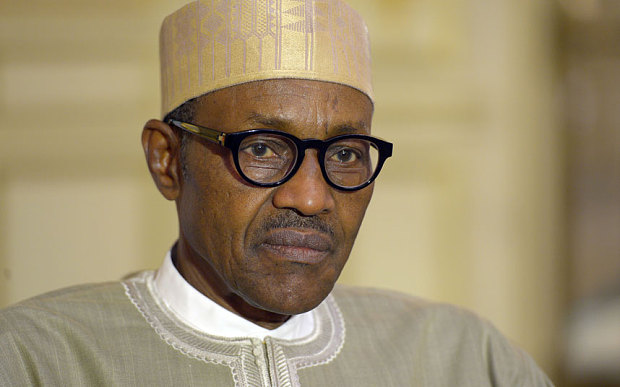 President Muhammadu Buhari has expressed sympathy for the Nigerian judiciary for poor funding and inadequate infrastructure that have caused problems in the administration of justice in the country.

Due Process: Between Security Votes And Oil Contracts, By Yushau A. Shuaib
Successive administrations in Nigeria, including the current one claim to promote transparency and accountability by following due process in financial dealings and public procurements. Nevertheless, governments at all levels avoid strict compliance with standard norms and regulations when actions are taken for both economic and political exigencies.
The confusion and power struggle between the then President Olusegun Obasanjo and erstwhile Vice President Atiku Abubakar, though political, were fuelled on allegations of non-compliance to due process over activities of agencies under the purview of Atiku, including PTDF. Court cases afterwards merely favoured the former Vice President.
Every tier of government engages in financial dealing outside the legal requirement using different nomenclatures and suspicious regulations to justify the indiscretions. For instance, a security vote is one of the conduit pipes used by various top public officers to avoid being accountable to anyone. Even the Public Procurement law provides exceptions to disclosures on sensitive security issues and requirements.
During the previous administration, not only President Goodluck Jonathan, but most governors used security votes extensively for security and other various activities including funding of political campaigns.
In the recently published book “An Encounter with the Spymaster,” this writer disclosed categorically that “the movement of large cash in local and foreign currencies by the two major political parties, APC and PDP, to win primaries and general elections in 2015 were discovered by security and anti-corruption agencies but tactically suppressed to avoid embarrassing outcries that could tarnish the electoral processes and rubbish the image of the country. Few senior journalists, especially some members of Faculty of Bureau Chiefs and Editors where a highly respected investigative Editor, Yusuf Alli is the Dean, are aware of some of the details and culpability of the parties.”
Therefore, at the national level, one of the major institutions that have been indirectly involved in funding sensitive and classified operations whether for security or other exigencies is the Nigeria National Petroleum Corporation (NNPC). The media trial and court cases against the former Minister of Petroleum, Diezani Alison-Madueke on allegations levelled against her by the Economic and Financial Crimes Commission (EFCC) are clear examples.
The fear of past incident recently reared its ugly head as the current Petroleum Minister of State, Dr. Emmanuel Ibe Kachikwu in a memo leaked to the media, informed President Muhammadu Buhari that the Group Managing Director (GMD) of NNPC, Mr Maikanti Baru, was disrespectful to him. He also allegedly accused the NNPC boss of awarding contracts worth over $25bn without the approval of the board of the corporation.
The contents of the memo are not only embarrassing but damning because it would easily rubbish the integrity of the current administration of President Muhammadu Buhari and its hyped anti-corruption campaigns.
While the two men on the brawl, Kachikwu and Baru are first class materials in all sense from their academic accomplishments as well as their experiences in the oil sector, there seem to be missing narratives on the altercation.
Apart from the allegations of insubordination, lopsided appointments and awards of contracts without the consent of NNPC board by Dr. Baru, there are also documents seen by Economic Confidential indicating that the Act setting up the Corporation, statutorily mandates the GMD to report directly to the Substantive Minister of Petroleum Resources, which in this case, is President Muhammadu Buhari.
Another document, a correspondence from Bureau of Public Procurement (BPP) to the NNPC dated June 26, 2015 states in part that: “The [NNPC] Governing Board is responsible for approval of the work programmes, corporate contract plans and budget while the [NNPC] Tenders Board is responsible for approval of day to day procurement implementation.”
Since the emergence of President Buhari, appointments of top Group Executive Directors (GED) were made by Kachikwu. An online platform, DailyNigerian, reports that “Among the seven Chief Operating Officers (COO/GEDs) currently working under Baru, five were actually appointed by Dr Kachikwu, three of whom came along with him from the International Oil Companies (IOCs).”
Mr Kachikwu actually brought in Babatunde Adeniran (COO Ventures), Anibor Kragha (COO Refineries) and Henry Ikem-Obih (COO Downstream) from outside while Isa Inuwa (COO Corporate Services) and Bello Rabiu were sourced from within. Chidi Momah, who is still Secretary of the Corporation, was also hired by Mr Kachikwu.
While the majority of top officers appointed into NNPC by Kachikwu during his days as the GMD are from Southern Nigeria, Baru is alleged to have done the same by ensuring that his recent reorganisation of the management staff of the oil corporation favours the North.
When this writer wrote an article on a disagreement between Kachikwu and current Minister of Transport, Rotimi Amaechi in July 2016 over projects in NigerDelta (Link: https://goo.gl/V1cMjM), the Petroleum Minister of State should have since realised that in an intense political clime, one must tread consciously and cautiously. Attempts to crucify Maikanti Baru over some alleged decisions in NNPC may not likely fly because it would seem to be an attack against the Presidency. Media reports so far have indicated that Dr. Baru is reputed to have unfettered access to the substantive Petroleum Minister who is President and commander in chief than most cabinet members. It could, therefore, be extremely difficult for the GMD NNPC to have taken any unilateral decision without the consent and authorization from the highest office in the land. Whether the actions taken are right or wrong only the court can determine.
Meanwhile, in an exigency, due process can be ignored to justify the Machiavellian principle of “the ends justify the means” on security votes and oil contracts for national interests.
Yushau A. Shuaib, PRNigeria Publisher
www.YAShuaib.com
yashuaib@yahoo.com[myad]