President Muhammadu Buhari has advised the family, friends and associate of Senator Mahmud Kanti-Bello, who died today after a brief illness, to honour his memory by continually upholding the values of honesty and accountability, which served as his reference point throughout his public service. In a condolence message today, President Buhari described the deceased as a very outspoken and courageous patriot, who worked hard to ensure that all levels of government in the country were responsible and accountable. The President commended the effective representation of Katsina Central Constituency/Daura Senatorial zone from 2003-2011 by the late Senator, adding that also his commitment to the unity of Nigeria will be long remembered and honoured. “It will continue to serve as inspiration to many others.” Buhari sent his heartfelt condolences to the Kanti-Bello family as well as the government and people of Katsina State even as he also commiserates with the Senate over the loss of the Senator who he said was once the Senate Chief Whip. The President prayed to Allah to comfort all who mourn him and grant his soul eternal rest. [myad]
A socio-political group has reminded the Southern Leaders Forum (SLF) and others agitating for the restructuring of Nigeria that President Muhammadu Buhari cannot single-handedly cause the restructuring. “We want to remind the SLF and their likes that it is not the responsibility of the Presidency to initiate the process of any discourse on constitutional changes within the democratic framework, as the forum has insinuated.” In a statement, the group, The Buhari Media Support Group (BMSG) said that the National Assembly is the institution with the constitutional powers to address the grievances of Nigerians on such issues. The group advised those agitating for restructuring to should channel their demands through the law making arm. It said that the National Assembly had even commenced the process of constitution amendment and noted that the law makers had said that the issue of restructuring had not been foreclosed. The statement which was signed by the group’s Chairman and Secretary, Austin Braimoh and Cassidy Madueke respectively, it further advised the agitators to concentrate their efforts on getting their elected representatives to table and pursue their demands according to constitutional procedures. With specific reference to the Southern Leaders Forum, the Buhari Media Support Group frowned at their description of Nigeria as a failed state on account of its alleged unitary statues. “As elders and leaders of thought who confirmed that they spent most of their lives fighting for the unity of the country and promoting a new dialogue for a better, just, inclusive and peaceful country, they should not wear the togas of agitation or utter statements capable of generating ill-feelings and social disorder.” The group advised members of the SLF group, many of who held policy making positions in previous governments, to desist from describing Nigeria as a country that had not attained nationhood. “If they had done what they were supposed to do when they were in government, Nigeria would not have found itself in the mess that President Buhari is working assiduously to clean up today.”[myad]
The Corps Marshal of the Federal Road Safety Corps (FRSC), Dr. Boboye Oyeyemi has approved the deployment of 33,000 personnel, both regular and special marshals, to address wrong road usage by motorists which results in high number of Road Traffic Crashes (RTCs) during festivities and ensure a downward trend in the number of RTCs. This is part of the measures taken to improve vehicular movement and to mitigate against crashes during the Eid-El-Kabir celebration coming up on Friday. The Corps Public Education Officer, Bisi Kazeem said that the operation will focus on traffic control, excessive speeding, dangerous driving/overtaking, clearance of road obstructions, seatbelt use violation, zero tolerance for use of phone while driving, lane indiscipline and route violation among others as these have been identified as reoccurring factors of RTCs. In a statement the Spokesman, said that the 2017 Eid-El-Kabir Sallah Special patrol operation is scheduled to commence from 31 August to 6 September, and that personnel have been briefed appropriately to perform their duties which include public enlightenment,traffic calming, traffic control, enforcement and rescue services. “For ease of operation and prompt rescue services, 859 patrol vans, 106 ambulances, 267 motorbikes and 22 towtrucks have been deployed to cover critical routes and crash prone areas.” According to Bisi Kazeem, the Corps Marshal, Dr. Boboye Oyeyemi reminded Nigerians that the holiday is for celebration with family members and loved ones, especially for the Muslim faithfuls. “In this regard, motorists are advised to bear in mind the need to adhere to stipulated traffic rules and regulations to and fro their travel destinations as over 200 mobile courts will be set up to prosecute erring offenders.” Kazeem advised the motoring public to practice safe road use culture and give their maximum cooperation to FRSC personnel for the desired success. He also called on the general public to notify FRSC in the event of an emergency through its emergency line 0700-CALL-FRSC (0700-22553772) or toll free number 122 for prompt response as road safety is a shared responsibility. “The Corps Marshal wishes Nigerians happy Eid-El-Kabir celebration and assured them that personnel will be on ground 24hours, while Road Side Clinics and Ambulance points across the country will be open to emergencies. He also thanked all military and paramilitary agencies for their sustained support as they have equally been placed on standby for effective collaboration.”[myad]
Vice President Yemi Osinbajo has made it clear that agriculture “is that well-known but abandoned pathway to our economic diversification and national prosperity.” Commissioning the Edo State fertiliser and chemical Company Limited NPK Fertiliser plant today in Auchi, Professor Osinbajo said that the fundamental constraint to optimizing agriculture is access to inputs, fertilizer being a fundamental input. “On the average, a Nigerian farmer uses 13kg per hectare of fertilizer compared with world average of 100kg per hectare. “This explains why Mr. President negotiated the December 2016 Fertilizer initiative, working with the Moroccan King, aimed at achieving local production of 1 million metric tons of NPK fertilizer for 2017 wet season farming. Reducing costs and delivering finished products at N5000-5500 per bag (formerly between N8-9,000 sometimes N13,000. “This, again, is an enterprise that will create at least 500 direct jobs and several more indirect jobs. It will bring us closer to self-sufficiency in fertilizer production and, perhaps most importantly, boost food production and reduce food prices, ultimately enhancing food security in Nigeria. “To the extent that it makes import unnecessary, this plant will also help us to conserve our hard earned foreign exchange. And to crown it all, I am happy to learn of the plan for a gradual extension of this project so as to steadily boost its output.” The Vice President congratulated the state governor, Godwin Obaseki who made the plant an integral part of’s plan to support and actualize the job creation and food security objectives of President Muhammadu Buhari, especially the NPK fertilizer initiative. “Not only will this boost the local economy, it will also impact the national economy in a significant way. It is therefore a gift from Edo State to our great country.” Osinbajo said that the Buhari administration had taken private enterprise very seriously, adding that government resources cannot bring about the rapid roll out it needs, especially in the areas of infrastructure and industrial development. “It is the private sector that can do so. We are therefore committed to making it easy for businessmen to invest and do business everywhere in Nigeria. “This accounts for the Presidential Enabling Business Council set up by President Muhammadu Buhari, GCFR, the work of which was fortified by the Executive Order No. 1, which I executed on May 18, 2017, on the promotion of transparency and efficiency in the business environment and facilitation of the ease of doing business. “This efficiency and transparency drive is not a challenge to the Federal Government and its officials alone. “Every State and Local Government must be involved in the effort to ensure that private businesses thrive and create employment opportunity for our growing youth population. “By harnessing private capital and the great entrepreneurial spirit of Nigerians, I believe we can seriously leverage government resources and accelerate economic development. “Let me therefore commend the Edo State Government for this partnership with WACOT, already well known Afro processing company. Barely 3 weeks ago, I was in their rice milling plant in Kebbi State. Your Excellency, I am therefore very happy to commission this plant, which will further assist us to realise our potentials in this area.” [myad]
I have followed with keen interest the controversy over the announcement of cut-off marks for Nigeria’s admission processes for the 2017/2018 session, with many commentators and the general public insisting that it is unwise, insensitive and retrogressive, to reduce the cut off mark for admissions into our tertiary institutions: 120 for universities, 100 for polytechnics and monotechnics, and a tentative 110 for Innovative Enterprise Institutions (IEIs). Whereas the complaint has been that there is a dumbing down and lowering of standards, which is of course an obvious reaction, I argue that there is need for a better understanding of the context in which the decision was taken in the hope that this would shed some light on this controversial matter. I write as a reporter and as a stakeholder who attended the 2017/2018 Policy Meeting on plans and modalities for the conduct of admissions into tertiary institutions in Nigeria at the Andrews Otutu Obaseki Auditorium, National Judicial Institute in Abuja, on August 22. The meeting started on Sunday, August 20, 2017. On Monday, August 21, there was a special session for admissions officers of all tertiary institutions in Nigeria. There are 524 tertiary institutions in Nigeria (minus the IEIs) and every institution was represented on Monday and again on Tuesday, when a special policy session was held and decisions were taken at a combined session of Registrars and Vice Chancellors, Provosts and Rectors. The Obaseki Auditorium was filled up at this meeting, which was attended by over 1, 600 stakeholders in the education sector. In other words, it was a meeting of stakeholders and the decisions were decisions taken by all tertiary institutions in Nigeria. It is therefore wrong to accuse JAMB or report that it is JAMB that is fixing cut-off marks for university admissions. I recall that at the meeting, when we were about to go into the policy making session, the Minister of Education had to excuse himself on the ground that he had other commitments; all JAMB officials were also asked to leave the hall. The JAMB Registrar explained that he wanted the heads of tertiary institutions to be the ones to take the decisions, not JAMB, not the Minister, and he didn’t want either the Minister or his own staff in attendance so nobody would turn around to accuse JAMB or the Ministry of Education of imposing decisions on the tertiary institutions. There were other stakeholders in attendance, the heads of the National University Commission (NUC), TETFUND, the National Board for Technical Education (NBTE), National Commission for Colleges of Education (NCCE), NECO, NYSC and the West African Examinations Council (WAEC) – all as observers. The heads of IEIs stayed away from this particular meeting because they had earlier informed JAMB that the heads of other tertiary institutions are in the habit of out-voting and outnumbering them at policy meetings and they would rather have their own separate meeting to serve their own interests. I concluded, there and then, that students’ admission into tertiary institutions in Nigeria has become big business and politics, with stiff competition between public and private institutions. This clarification is necessary because as I see it, some of the participants in that meeting have since gone on a holier-than-thou expedition to distance themselves from it. At the meeting, the JAMB Registrar repeatedly pointed out that the University of Ibadan had made it clear that its cut-off mark would never go below 200. There are other universities like that, including the University of Nigeria, Nsukka, and the University of Ilorin. I am surprised however that there has been so much uncomfortable hypocrisy from some universities that attended the meeting. The Vice Chancellor and the Registrar of the Afe Babalola University, Ado-Ekiti were both in attendance and the former spoke enthusiastically in support of the decisions. Yes, the ABUAD VC was there, but curiously, his employer, the proprietor and founder of the Afe Babalola University was the first person to denounce the decisions. We should take special notice however, of the intervention of the Vice Chancellor of the Tai Solarin University of Education, Professor Oluyemisi Obilade, and Professor Femi Mimiko. Out of over 1, 600 participants at a policy meeting, only two persons are standing up to report the truth? The objectives of that policy meeting were inter alia, to brief the Degree, National Certificate in Education and National Diploma-awarding institutions on the plans and modalities for the conduct of the 2017/2018 admissions exercise, introduce the Central Admissions Processing System (CAPS), seek the cooperation and understanding of stakeholders, discuss and agree on submissions of estimated intakes and compliance with the current prescribed quota from the NUC, NCCE, and NBTE, adherence to institutional/programmes cut off marks, compliance with entry requirements, procedure for selection of candidates who may not be admitted at their first choice institutions, adherence to admissions schedule as approved at the Policy meeting and implementation of the science-arts ratio. These issues were tabled, discussed, voted upon and decisions were taken. The states and private tertiary institutions were exempted from the last criteria, to be determined by their proprietors. It is important to understand the three main backgrounds to this policy meeting. At a similar policy meeting held on June 2, 2016, the various stakeholders at this same 2017 meeting, had adopted 180 as the minimum cut-off mark for admissions to all tertiary institutions in Nigeria. The regulator’s subsequent discovery is that most of the tertiary institutions did not respect this decision. They admitted students who scored below 180 and never reported same to JAMB; they introduced all kinds of back-door schemes and programmes under which admissions were offered. In effect, the admissions process into Nigerian tertiary institutions was compromised; standards were violated. JAMB therefore decided that every institution must declare a lowest cut off point for its programmes and that every admission must be properly reported and documented, and brought to the notice of the regulator in order to enforce standards and have accurate statistics for educational planning. I got the impression for example, that some higher institutions must have been admitting all kinds of persons who did not have basic qualifications and never passed through the central admissions body. It is curious, isn’t it, that the same schools that voted for 180 in 2016, are now asking for 120, 110 and 100? Secondly, the evidence was provided to the effect that many tertiary institutions do not respect the admission quota in line with the Federal Character prescribed by the Constitution. Most universities simply admit students from their catchment areas and ignore students from other parts of the country. Bayero University, to cite a notable example, admits over 50% of its students from Kano state, and yet it is a Federal University. Even when students from other parts of the country who apply to such universities have high, qualifying scores, they are ignored. Thus, every year, many qualified students from different parts of the country are left stranded. They miss the opportunity to go to university not because they are not qualified, but because they have been shut out by the politicization of education in Nigeria. To correct this mischief, JAMB has now created a second tier admissions platform called the Central Admissions Processing System (CAPS). It is an admissions-market where students who have been rejected by their first choices can seek alternatives, where JAMB can help rejected candidates seek other offers, and every institution can go in search of qualified candidates who may have been rejected elsewhere. This is to help increase the admissions ratio in the country, reduce the politicization of admissions, check the exodus of Nigerian students to foreign universities, create more opportunities and ensure greater equity. The only ouster clause in this arrangement is that at the end of the day, the candidate is free to reject any offer that he or she does not find acceptable, and that has no limit whatsoever. JAMB in its explanation further recognized that ordinarily, a school certificate result should be enough requirement for admission to tertiary institutions as is the case in many countries of the world. In order to raise standards, Nigeria has a system whereby secondary school graduates still have to sit for UTME conducted by JAMB and Post-UTME, further testing conducted by the tertiary institutions, and confront other unwritten hurdles. The higher education seeker in Nigeria is thus taken through greater rigour than similar applicants elsewhere. In 2016, the Policy Meeting on Admissions had banned further conduct of the Post-UTME to reduce the burden faced by Nigerian students. At the 2017 meeting however, the Minister of Education, Mallam Adamu Adamu lifted the ban, noting that the tertiary institutions deserve the independence they have always asked for over their admissions process. Indeed, this was the main point of the August 22 meeting. Tertiary institutions in Nigeria are the ones to determine their own admissions process. Cut off marks are to be fixed by the Senate of each institution, not JAMB. What JAMB has created through the CAPS is an open market that empowers admission-seekers, promotes healthy competition and provides an avenue for students to raise queries when they feel they may have been short-changed. The insistence on reporting is to aid transparency and data collection, we were told. If this works, in no time, every tertiary institution will establish its own brand equity. As is the case elsewhere, the labour market in Nigeria will soon begin to differentiate between the students who graduated from a school that admits with 100 over 400 marks and another school whose cut off mark is as high as 250, in the same manner in which there is a marked difference in the UK between a graduate of Metropolitan University and a graduate of the Universities of Oxford and Cambridge. This differentiation in quality and standards is perhaps long-needed in the Nigerian education market. That is as far as the meeting went, and the report of what I saw and heard. My real concern, and a probable justification for the outcry over the reduction of cut–off marks below the average score is, however, traceable to the fact that Nigeria’s education system is now terribly commercialized and unequal. The law of supply and demand is probably at the root of the politics of cut-off marks. We have more than 524 institutions looking not for students but customers! Ordinarily, most students want to attend elite schools and the Federal institutions, which charge subsidized fees. For instance, Federal Universities charge as low as N35, 000, the state universities about N150, 000-N200, 000, and the private universities as much as N750, 000. The competition for space in the schools with lower fees is much higher, often leaving the ones with expensive school fees with fewer applicants. While the more economically attractive schools can afford to have high cut off marks, it is not impossible that lower cut-off marks would attract more students to the less patronized schools! The implication is not far to seek. Beyond the policy meeting of August 22, and all expressed good intentions, and regardless of the choice of the stakeholders, therefore, JAMB’s next and biggest challenge, in my view, is to ensure that market forces do not ultimately subvert quality and standards in the tertiary education sector. It is also up to parents to determine the kind of school that they want their children to attend, and for every institution to choose between mediocrity and excellence. [myad]
Former Secretary to the Anambra State Government regarded as a “dark horse” Oseloka Obaze has defeated two other aspirants at the just concluded primary election of the Peoples’ Democratic Party (PDP) for the forthcoming governorship election in the state. Obaze, who polled a total of 672 votes today, Monday, will face the candidate of the All Progressives Congress (APC), Tony Nwoye, who also defeated a popular politician, Senator Andy Ubah. Nwoye is currently a member of the Federal House of Representatives. The PDP candidate, according to the result of the primary, defeated his closest rival, Alex Obi-Ogbolu. He got 190 votes while Ifeanyi Ubah, coming third candidate, polled 94 votes. Six aspirants had indicated interest to battle for the Anambra PDP governorship ticket, but three others – Stella Oduah, John Emeka and Linda Ikpeazu, dropped before the process began. Earlier before the election, some of the aspirants alleged that the list of delegates to participate in the election had been hijacked. They called on the PDP Delegate Appeal Panel, led by Governor Dave Umahi of Ebonyi State to look into the matter. Source: Channels TV[myad]
Vice President Yemi Osinbajo has assured Nigerians that by the time the Buhari administration concluded discussions with the government of the United States of America, Nigerians, including ex petroleum minister, Diezani Alison-Maduek, who have stashed the country’s wealth in the foreign land would have no place to hide. Professor Osinbajo, who disclosed this when he received in audience, a US Congressional Delegation to the Presidential Villa, Abuja, said that Nigerian government has reached out to the Donald Trump’s government on this. “We have made moves to the US government to step up its assistance in ensuring that corrupt Nigerian officials don’t get a safe haven abroad for their loots. Vice President Osinbajo stressed that both countries are working on a prompt repatriation of the funds. “We have reached out to the US government with respect to helping with repatriation of proceeds of crime and proceeds of corruption.’’ Prof. Osinbajo expressed appreciation for the support given by the US so far, adding that the Buhari administration regarded corruption as an existential threat that must be dealt with at its root. “We have worked quite closely with the US government on repatriation of funds; we have seen some results.” He added that the Federal Government is hoping for more improvement in the process. “We think that this is very important because what tends to happen with corrupt public officials is that if they are able to find a safe haven for the proceeds of their criminality, not only are they encouraged as individuals but there is the general feeling that if I am able to get the proceeds out of the country I might just get away with it, “This is one of the reasons why we have taken several actions to ensure that we are able to deal with it because some of the major dislocations in the economy are on account of the problems that we have seen with corruption.” Professor Osinbajo said that the Buhari presidency’s strategy which he said, is one of the most effective ways of fighting corruption, is to ensure that these proceeds are unsafe and for people to know that they would be found out and they would be punished for it “and we would seize whatever profit they had gain.” On the return of the Chibok girls, the Vice President said: “it is an issue in the front burner for us all the time, there is no question of not continuing to negotiate and looking for the girls.” He expressed gratitude to God for the hope that the girls are still alive and would be released, adding: “negotiations are continuing and government would keep looking for the opportunity to bring them back.” The Vice President thanked the US government for its recent decision to sell Super Tucano aircrafts to Nigeria to aid its fight against insurgency in the North-East. Meanwhile, Senator Christopher Coons, who led the delegation said that the visit was to reaffirm the relationship between Nigeria and the United States. “The US has an enduring enthusiasm and partnership with Nigeria.” Other members of the Congressional delegation include, Senator Gary Peters, Senator Jeff Merkley, Senator Michael Bennet, Representatives Lisa Blunt Rochester, Terri Sewell, Charlie Dent, Barbara Lee and Frederica Wilson. They were accompanied by the US Ambassador to Nigeria, Stuart Symington. [myad]
In one of the moves by the President Muhammadu Buhari government to stop importation of fertiliser, Vice President Yemi Osinbajo, is scheduled to commission tomorrow, August 29, the Edo State Fertilizer and Chemical Company Limited (ESFCCL) located in Auchi, Edo State. The Fertilizer plant was rehabilitated by WACOT Limited in collaboration with the Edo State Government, under the leadership of Governor Godwin Obaseki. The Presidential Fertilizer Initiative (PFI) which was launched by President Buhari in 2016, is part of the administration’s drive towards achieving food self-sufficiency and economic diversification through agriculture, to which WACOT Limited has been contributing. It would be recalled that the Vice President recently commissioned the multi-billion naira WACOT Rice Mill in Argungu, Kebbi State. The objective of the Presidential Fertilizer Initiative is to ‘disrupt’ the importation of blended NPK fertilizer, by directly negotiating discounted contracts for procuring core raw materials, locally blending same and selling NPK fertilizer to farmers at a significantly lower price. The rejuvenation of the Edo State fertilizer plant is an integral part of Governor Obaseki’s Accelerated Agriculture Initiative designed to support and actualize the job creation and food sustainability vision of the Buhari’s administration, through Public Private Partnership (PPP). According to the Governor the company will not only enhance the state’s socio-economic status but will also create an avenue for the youths to leverage on the expertise of major players in the Agricultural sector. The Edo State fertilizer plant, managed by WACOT Limited, will benefit from the bilateral cooperation between the Governments of Nigeria and Morocco, which has already resulted in the revitalization of 11 fertilizer blending plants across the country. Speaking while inspecting the Edo State fertilizer plant, Governor Obaseki commended WACOT Limited and used the opportunity to reiterate his administration’s commitment towards helping to achieve the Federal Government’s agricultural self-sufficiency drive for the country. This was even as the Group Managing Director of TGI Group, the parent company of WACOT Limited, Rahul Savara, said that the plant has been optimized for both physical and compound blending and that it is ready for operation. Speaking on the Group’s involvement in the Agricultural sector, Savara said: “we are firm believers in this administration’s vision of attaining food self-sufficiency. Therefore we will continue to invest in the agricultural sector significantly, with interventions targeted at the various agricultural value chains.” Also the Managing Director of WACOT Limited, Mr. Ujwal Senapati, said: “we will continue to deliver quality agricultural inputs at affordable prices, and in the near future, we will be producing crop-specific fertilizer for a diverse range of crops locally”. WACOT Limited is a market leader in agro-processing, manufacturing, and distribution of certified agricultural inputs including seeds, fertilizer, pesticides among others.[myad]
President Muhammadu Buhari has hailed the national female basketball team, D’Tigress, for winning the 2017 FIBA Women’s AfroBasket tournament in Mali and qualified for the 2018 FIBA Women’s Basketball World Cup in Spain. President Buhari, in a statement by his spokesman, Femi Adesina, extolled the heroic performance of the victorious D’Tigress over their Senegalese counterpart in the final of the 2017 FIBA Women’s AfroBasket tournament yesterday, Sunday. The President acknowledge that the players displayed uncommon strength, confidence, skill and dexterity, leading to their victory of the defending champions. He advised members of the team and their handlers to remain focused and be dedicated even as they prepare for greater glory to Nigeria at the forthcoming FIBA World Cup. The President assured the team, its managers and the Nigeria Basketball Federation of his support and that of the Federal Government to ensure that they excel against other top competitors in Spain.[myad]
The Minister of Interior, Lt Gen. (Rtd) Abdulrahman Bello Dambazau, has, on behalf of the federal government, declared September 1st and 4th as public holidays to mark Id-el-Kabir Celebration. The minister, in a statement issued by the Director in the Office of the Permanent Secretary, Dr Rufa’i Kawu Attahiru, warned against hate speech which he said would not be tolerated. The minister emphasised that henceforth, government would deal with perpetrators of hate speech according to the law, adding that the government would continue to foster peaceful coexistence, national cohesion and stability in its march towards actualizing the full potential of Nigeria. General Dambazau called on all Nigerians to join hands with the Government of President Muhammadu Buhari in its avowed determination to build a peaceful and harmonious country where the rights of every citizen are protected and guaranteed as enshrined in the Constitution of the Federal Republic of Nigeria. The Minister assured the citizens of their safety in all parts of the country and that security agencies have been directed to maintain the peace and protect lives and property. He congratulated Muslim faithful and all Nigerians to use the occasion to pray for peace, unity, prosperity and the stability of the country’s democracy even as he wished all Nigerians a most rewarding and Happy Id-el-Kabir celebration.[myad]
We use cookies on our website to give you the most relevant experience by remembering your preferences and repeat visits. By clicking “Accept”, you consent to the use of ALL the cookies.
This website uses cookies to improve your experience while you navigate through the website. Out of these, the cookies that are categorized as necessary are stored on your browser as they are essential for the working of basic functionalities of the website. We also use third-party cookies that help us analyze and understand how you use this website. These cookies will be stored in your browser only with your consent. You also have the option to opt-out of these cookies. But opting out of some of these cookies may affect your browsing experience.
Necessary cookies are absolutely essential for the website to function properly. This category only includes cookies that ensures basic functionalities and security features of the website. These cookies do not store any personal information.
Any cookies that may not be particularly necessary for the website to function and is used specifically to collect user personal data via analytics, ads, other embedded contents are termed as non-necessary cookies. It is mandatory to procure user consent prior to running these cookies on your website.



 A socio-political group has reminded the Southern Leaders Forum (SLF) and others agitating for the restructuring of Nigeria that President Muhammadu Buhari cannot single-handedly cause the restructuring.
 [myad]
 The Corps Marshal of the Federal Road Safety Corps (FRSC), Dr. Boboye Oyeyemi has approved the deployment of 33,000 personnel, both regular and special marshals, to address wrong road usage by motorists which results in high number of Road Traffic Crashes (RTCs) during festivities and ensure a downward trend in the number of RTCs.
 Vice President Yemi Osinbajo has made it clear that agriculture “is that well-known but abandoned pathway to our economic diversification and national prosperity.”

 Vice President Yemi Osinbajo has assured Nigerians that by the time the Buhari administration concluded discussions with the government of the United States of America, Nigerians, including ex petroleum minister, Diezani Alison-Maduek, who have stashed the country’s wealth in the foreign land would have no place to hide.
 President Muhammadu Buhari has hailed the national female basketball team, D’Tigress, for winning the 2017 FIBA Women’s AfroBasket tournament in Mali and qualified for the 2018 FIBA Women’s Basketball World Cup in Spain.
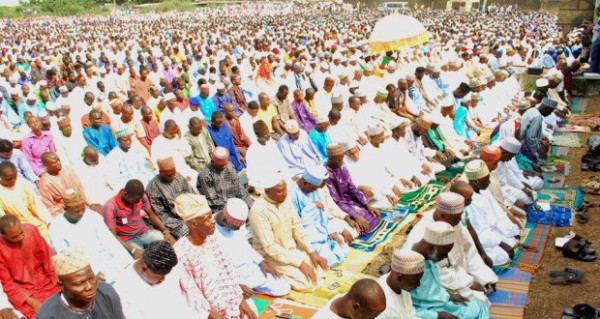 The Minister of Interior, Lt Gen. (Rtd) Abdulrahman Bello Dambazau, has, on behalf of the federal government, declared
