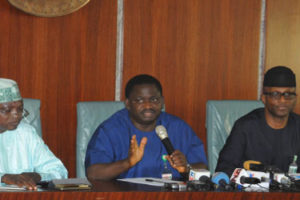
The federal, states and local governments today, Tuesday, shared a total of N652 billion for the month of July at the monthly meeting of Federal Accounts Allocation Committee (FAAC).
According to the Accountant General of the Federation, Ahmed Idris, the figure comprised of both mineral and non-mineral revenue, adding that the gross statutory revenue of N570.5 billion received for the month of June was more than the N317.5 billion in the previous month by N253 billion.
Idris said that the gross revenue available from Value Added Tax (VAT) was N81.6 billion as against N79.9 billion distributed in May, indicating an increase of N1.6 billion.
He also said the Excess Crude Account (ECA) stood at 2.303 billion dollars while the Petroleum Profit Tax (PPT) was 68 million dollars.
He said that non-mineral revenue increased by N181.2 billion from N157.5 billion in May to N338.8 billion in June.
Giving the breakdown on what was distributed to the three tiers of government, he said the Federal Government got N286.5 billion, States N178.6 billion and Local Governments got N134.9 billion.
He said that N29.8 billion was shared to oil producing states as their 13 per cent derivation for the month, while cost of collection and Federal Inland Revenue Service (FIRS) refund stood at N22.1 billion.
According to him, there was a decrease in the average price of crude oil from 55.18 dollars per barrel to 50.27 dollars per barrel.
He said a significant decrease in export volume by 3.20 million barrels resulted in decreased revenue from export sales for the federation by 183.68 million dollars.
Idris said that Lagos state has been identified as an oil producing state and that the relevant agencies to quantify the amount of crude produced by the state and what was accruable to the state would get to it.
The Chairman, Commissioners of Finance Forum, Mahmood Yunuusa of Adamawa State, said states were working hard to ensure that they diversify their inflows.
“We are determined to see that in the next one year we reduce our dependence on what comes from the center and whatever comes from the center will be dedicated to projects.” [myad]
Acting President Yemi Osinbajo will tomorrow, Wednesday, swear-in two ministers, Professor Stephen Ocheni from Kogi State and Alhaji Hassan Suleiman from Gombe State, who were screened and confirmed by the Senate on May 3, this year.
The two ministers were nominated by President Muhammadu Buhari to replace late minister of State for labour and employment, Barrister James Ocholi, from Kogi State. He died along with his wife and children on Kaduna-Abuja road. Alhaji Hassan Suleiman also replaced former minister of Environment, Hajiya Amina J. Mohammed who was appointed and had since resumed at the United Nations in New York, the US, as Deputy Secretary-General.
Senior Special Assistant in the Presidency, in charge of Acting President Yemi Osinbajo’s media and publicity, Laolu Akande, in a tweet today, said that the two ministers would be sworn-in before the commencement of the Federal Executive Council (FEC) meeting.
Professor Ocheni was the Dean of the Faculty of management sciences at the Kogi state university, Anyigba. He was a professor of public sector accounting and Dean, Faculty of management sciences. He was born at Uwowo, Igalamela/Odolu Local Government Area of Kogi State on 25th June 1959. Alhaji Hassan Suleiman was chairman of Gombe State Congress for Progressive Change (CPC). [myad]
The Central Bank of Nigeria’s Monetary Policy Committee, rose from a meeting today, Tuesday, expressing concern over the increasing fiscal deficit estimated at N2.51 trillion in the first half of 2017 and the crowding out effect of high government borrowing.
The committee, in a communiqué issued after the meeting said that while urging fiscal restraint to check the growing deficit, it however welcomed the proposal by government to issue sovereign-backed promissory notes of about N3.4 trillion for the settlement of accumulated local debt and contractors arrears.
The Committee advised the Management of the Bank to monitor the release process of the promissory notes to avoid an excessive injection of liquidity into the system thereby offsetting the gains so far achieved in inflation and exchange rate stability.
The full content of the communiqué is reproduced here:
Background
The Monetary Policy Committee met on the 24th and 25th of July 2017, against the backdrop of a relatively improving global economy. However, protectionism in trade and immigration; fragilities in the financial markets, remain the key risks to global economic stability.
On the domestic front, the economy is on a path to moderate recovery with a positive short- to medium-term outlook, premised largely on fiscal stimulus and a stable naira exchange rate. Inflation expectations also appear sufficiently anchored with the current stance of monetary policy.
In attendance were 8 out of 12 members of the Committee. The Committee examined the global and domestic economic and financial environments in the first half of 2017 and the outlook for the rest of the year.
External Developments
The momentum witnessed in the global economy in Q1 2017 continued through the second quarter, driven by a generally accommodative monetary policy stance in most advanced economies, moderation in energy prices and improved global demand. The emerging markets and developing economies, are experiencing positive spillovers from somewhat improved commodity prices and developments in the advanced economies. The growth prospects for this group of countries in 2017 are expected to rise to about 4.6 per cent from 4.3 per cent in 2016.
Complemented by the momentum in other blocks and a potential positive prospect for expansion in world trade, the IMF in its July edition of the World Economic Outlook (WEO) projected global output growth in 2017 at 3.5 per cent from 3.1 per cent in 2016.
The MPC, however, noted some headwinds confronting the optimistic outlook to global growth arising mainly from receding market expectations of expansionary U.S. fiscal policy, weaker than expected growth in the U.K due to difficult BREXIT negotiations and geo-political risks associated with the forthcoming German general elections. In addition, the Committee noted the downward trend in global inflation after earlier indications of an uptick as the U.S. continues to build up inventories in shale oil, while emerging economies such as Brazil, Russia and South Africa witness strong economic headwinds leading to sharp downturn in output.
Domestic Output Developments
Data from the National Bureau of Statistics (NBS) showed that the contraction in the economy moderated to 0.52 per cent in Q1 2017 from 1.30 per cent in Q4 2016. The data further revealed that fifteen economic activities recorded positive growth in Q1 2017, showing strong signs of recovery. The Purchasing Managers Index (PMI) for manufacturing and non-manufacturing activities stood at 52.9 and 54.2 index points in May and June 2017, respectively from 52.7 and 52.5 index points in May 2017, indicating an expansion for the third consecutive month. Similarly, the Composite Index of Economic Activities (CIEA) rose from 55.85 to 59.50 index points between April and June 2017. The Committee noted the continuous positive effects of improved foreign exchange management on the performance of manufacturing and other economic activities. Non-oil real GDP grew by 0.72 per cent in Q1 2017, reflecting growth in the agricultural sector by 0.77 per cent in the same period. Provisional data also showed that the external sector remained resilient in Q2 2017, as the overall Balance of Payments (BOP) position recorded a surplus of US$0.65 billion, equivalent to 0.8 per cent of GDP. The Committee hopes that the implementation of the 2017 budget and the Economic Recovery & Growth Plan (ERGP) will further strengthen growth and stimulate employment.
Developments in Money and Prices
The Committee noted that money supply (M2) contracted by 7.33 per cent in June 2017, annualized to a contraction of 14.66 per cent, in contrast to the provisional growth benchmark of 10.29 per cent expansion for 2017. The development in M2 reflected a contraction of 7.45 per cent in net foreign assets (NFA) in June 2017. Similarly, M1 contracted by 7.98 and 10.70 per cent in May and June 2017, respectively, consistent with the directive of the MPC that expansion in narrow money should be controlled. On the other hand, net domestic credit (NDC) grew modestly by 1.02 per cent in June 2017, (annualized at 2.04 per cent), driven mainly by net credit to government, which grew by 5.91 per cent. Credit to the private sector, however, declined relative to end-December 2016 by 0.02 per cent. The MPC noted the widening fiscal deficit of N2.51 trillion in the first half of 2017 and the growing level of government indebtedness and expressed concern about the likely crowding out effect on private sector investment. The constrained growth in the monetary aggregates provides evidence of weak financial intermediation in the banking system arising from the constraints imposed by developments in the macroeconomy.
Headline inflation (year-on-year) declined for the fifth consecutive month in June 2017, to 16.10 per cent from 16.25 per cent in May, and 18.72 per cent in January 2017. Core inflation moderated to 12.50 per cent in June from 13.00 per cent in May 2017 while the food index rose marginally to 19.91 per cent in June from 19.27 per cent in May 2017. This development was traced to intermittent attacks by herdsmen on farming communities, sporadic terrorist attacks in the North-East and other seasonal farming effects. The Committee was particularly concerned about the unabating pressure from food inflation but hopeful that the situation will dampen in the third quarter as harvests begin to manifest.
The Committee also attributed the moderation in inflation to be partly due to the effects of the relative stability in the foreign exchange market, stemming from improved management, which promoted increased inflows. Against this backdrop, the Committee reiterated its commitment to sustain and deepen flexibility in the foreign exchange market to further enhance foreign exchange flow in the economy. The Committee, however, noted the protracted effects of high energy and transportation costs as well as other infrastructural constraints on consumer price developments and expressed hope that government will fast-track its reform agenda to address these legacy issues. The Committee noted that while responding to the current tight monetary policy stance, inflation still had a strong base effect which is expected to wane by August 2017.
Money market interest rates moved in tandem with the high level of liquidity in the banking system. The interbank call rate opened at 16.13 per cent on May 25, 2017 and closed at 4.43 per cent on June 29, 2017. However, the average inter-bank call rate during the period stood at 12.49 per cent. The movement in the net liquidity position reflected the effects of OMO, foreign exchange interventions, statutory allocation to state and local governments, and maturity of CBN Bills.
The Committee noted the improvements in the equities segment of the capital market as the All-Share Index (ASI) rose by 33.33 per cent from 25,516.34 on March 31, 2017, to 34,020.37 on July 21, 2017. Similarly, Market Capitalization (MC) rose by 32.84 per cent from N8.83 trillion to N11.73 trillion during the same period. Relative to end-December 2016, capital market indices rose by 26.59 and 26.81 per cent, respectively, reflecting growing investor confidence due to improvements in foreign exchange management. The Committee however, noted the seeming bubble in the capital market and cautioned on the utilization of the inflows.
Total foreign exchange inflows through the Central Bank of Nigeria (CBN) increased by 35.41 per cent in June 2017 compared with the previous month. Total outflows, on the other hand, decreased by 12.73 per cent during the same period, as a result of reduced CBN intervention in the interbank foreign exchange market, which also reduced TSA (dollar) payments balances by 61.4 per cent in the period under review. The positive net flows resulted in an improvement of gross external reserves to $30.30 billion at end-June 2017, compared with $29.81 billion at end-May 2017.
The Committee noted the emerging convergence between the bureau-de-change (BDC) and Nigeria Autonomous Foreign Exchange (NAFEX) segment rates and the stability of the average naira exchange rate at the inter-bank segment of the foreign exchange market during the review period.
2.0. Overall Outlook and Risks
Available forecasts of key macroeconomic indicators point to a fragile economic recovery in the second quarter of the year. The Committee cautioned that this recovery could relapse in a more protracted recession if strong and bold monetary and fiscal policies are not activated immediately to sustain it. Thus, the expected fiscal stimulus and non-oil federal receipts, as well as improvements in economy-wide non-oil exports, especially agriculture, manufacturing, services and light industries, all expected to drive the growth impetus for the rest of the year must be pursued relentlessly. The Committee expects that timely implementation of the 2017 Budget, improved management of foreign exchange, as well as security gains across the country, especially, in the Niger Delta and North Eastern axis, should be firmly anchored, to enhance confidence and sustainability of economic recovery.
The Committee identified the downside risks to this outlook to include weak financial intermediation, poorly targeted fiscal stimulus and absence of structural programme implementation.
3.0. The Considerations of the Committee
Notwithstanding the improved outlook for growth, the Committee assessed the implications of the uncertainties arising from the continued normalization of monetary policy by the US Fed and the implications of a strong dollar, the weak recovery of commodity prices, and the uncertainty of US fiscal policy. The Committee similarly evaluated other challenges confronting the domestic economy and the opportunities for achieving economic growth and price stability in 2017.
The Committee expressed satisfaction with the gradual but consistent decline in inflationary pressures in the domestic economy, noting its substantial base effect, continuous improvements in the naira exchange rate across all segments of the foreign exchange market, and considerable signs of improved investments inflows. The Committee welcomed the move by the fiscal authorities to engage the services of asset-tracing experts to investigate the tax payment status of 150 firms and individuals in an effort to close some of the loopholes in tax collection, towards improving government revenue. However, the Committee expressed concern about the slow implementation of the 2017 Budget and called on the relevant authorities to ensure timely implementation, especially, of the capital portion in order to realize the objectives of the Economic Recovery and Growth Plan.
The MPC believes that at this point, developments in the macroeconomy suggest two policy options for the Committee: to hold or to ease the stance of monetary policy.
Against the backdrop of the outlook for the domestic and global economy; the enthusiasm around the base-effect which reduced inflationary pressures and the continuous relative stability in the naira exchange rate, there is need to maintain cautious optimism, given the potential ramification of a major deviation from the existing policy path. The Committee is not unmindful of the high cost of capital and its implications on the still ailing economy, which arguably necessitates an accommodating monetary policy stance. The MPC also noted the liquidity surfeit in the banking system and the continuous weakness in financial intermediation, but agreed on the need to support growth without jeopardizing price stability or upsetting other recovering macroeconomic indicators, particularly the relative stability in the foreign exchange market.
The MPC thinks that easing at this point would signal the Committee’s sensitivity to growth and employment concerns by encouraging the flow of credit to the real economy. It would also promote policy consistency and credibility of its decisions. Also, the Committee observed that easing at this time would reduce the cost of debt service, which is actually crowding out government expenditure. The risks to easing however, would show in terms of upstaging the modest stability achieved in the foreign exchange market, the possible exit of foreign portfolio investors as well as a resurgence of inflation following the intensified implementation of the 2017 budget in the course of the year. The Committee also reasoned that easing would further pull the real interest rate down into negative territory.
The argument for holding is largely premised on the need to safeguard the stability achieved in the foreign exchange market, and to allow time for past policies to work through the economy. Specifically, the MPC considered the high banking system liquidity level; the need to continue to attract foreign investment inflow to support the foreign exchange market and economic activity; the expansive outlook for fiscal policy in the rest of the year; the prospective election related spending which could cause a jump in system liquidity, etc.
The MPC expressed concern over the increasing fiscal deficit estimated at N2.51 trillion in the first half of 2017 and the crowding out effect of high government borrowing. While urging fiscal restraint to check the growing deficit, the Committee welcomed the proposal by government to issue sovereign-backed promissory notes of about N3.4 trillion for the settlement of accumulated local debt and contractors arrears. The Committee, however, advised the Management of the Bank to monitor the release process of the promissory notes to avoid an excessive injection of liquidity into the system thereby offsetting the gains so far achieved in inflation and exchange rate stability.
On the outlook for financial system stability, the Committee noted that, in spite of the resilience of the banking sector, the prolonged weak macroeconomic environment has continued to impact negatively on the sector’s stability. The MPC reiterated its call on the Bank to sustain its intensive surveillance of deposit money banks’ activities for the purpose of promptly identifying and addressing vulnerabilities. The Committee also called on the DMBs to support economic recovery and growth by extending reasonably priced credit to the private sector.
4.0. The Committee’s Decisions
In consideration of the headwinds confronting the domestic economy and the uncertainties in the global environment, the Committee decided by a vote of 6 to 2 to retain the Monetary Policy Rate (MPR) at 14.0 per cent alongside all other policy parameters. Consequently, 6 members voted to retain the MPR and all other parameters at their current levels while two members voted to ease the stance of monetary policy. In summary, the MPC decided to:
(i) Retain the MPR at 14 per cent;
(ii) Retain the CRR at 22.5 per cent;
(iii) Retain the Liquidity Ratio at 30.00 per cent; and
(iv) Retain the Asymmetric corridor at +200 and -500 basis points around the MPR. [myad]
“While we describe ourselves as Excellencies, distinguished and honorable, the vast majority of our people would in their most polite moments, say that they see neither excellence nor much honour in our own lives.”
Acting President Yemi Osinbajo made this conclusion today, Tuesday, when he spoke at the opening of the 16th Commonwealth Speakers and Presiding Officers Conference in African Region at the ECOWAS Parliamentary Complex in Abuja, Nigeria.
According to Professor Osinbajo, in Africa and the developing World, the angst and cynicism of the populace is worse, even as he said that conflicts, corruption, weak institutions have ensured that the largest numbers of the poor and deprived come from the African continent.
“And there is unanimity of opinion that it is the failure of leadership. So while we speak of our legislative halls as hallowed chambers, our courts as temples of justice, and the executive villas as corridors of power, all suggestive of grand but isolated institutions. The reality for the majority of our peoples is the misery of the slums and the indignities of powerlessness.
“So, while we describe ourselves as Excellencies, distinguished and honorable the vast majority our people would in their most polite moments say that they see neither excellence nor much honour in their own lives.”
The Nigerian leader reminded the African parliamentarians that the leadership positions they all occupy today, are a short lease that providence and the electorate have given to them to shape the present and determine the future of millions and the generations that will be born to them.
He stressed that it would be foolish for them to think that it is an occasion for self-aggrandizement or the pursuit of selfish interests, adding that the responsibility that privilege and power place upon them is for them to do thier utmost to change the current bleak narratives and projections for their nations and the world.
He made it clear that poverty, hunger and disease can truly become history by the pursuing those legislative and executive options that target education, food security, healthcare for all.
The Acting President acknowledged that the National Assembly and the executive have shown that when they work together, they can make the quantum leaps in bettering the lives and livelihoods of the people.
“In the last two years, Nigeria which is the largest producer of rice in West Africa and the second largest importer of rice in the world has changed that story. Our rice import bill in 2014 was N1biilion a month.
“Today, by a combination of progressive legislative appropriation to agriculture and providing single digit credit under our anchor borrowers programme for the purchase of the right fertilizer quality and other inputs and credit, many rice farmers moved from getting yields of 3.5 metric tons per hectare to 7.5 metric tons per hectare.
“Importation of rice has dropped by over 80 percent and we will be self-sufficient in rice production by the end of 2018. We have empowered the rural farmers, over 1.43 million rice farmers alone.
“Again because we chose to work together the National Assembly at the request of the Executive appropriated N500 billion about $3 billion for the largest social investments programme in sub-Saharan Africa.
“The fund allows us to engage 500,000 young graduates in our N-Power scheme, to give cash transfers to a million of the poorest in our society, to extend microcredit to a Million market women, artisans, and small businesses. It enables us to begin a social housing fund in the sum of N1 trillion with government putting in N100 billion annually. The fund will provide finance on a counterpart basis for developers and create mortgage facilities that will ultimately enable anyone to pay aboutN30,000 a month to own a home.
“The executive and the legislature in the worst days of the Boko Haram tragedyalso worked together to ensure that adequate provision was made for the military including prompt passing of virements when initially budgeted funds ran short. We decimated the Boko Haram as a fighting force, and ensured that they control no part of Nigerian territory.”
Professor Osinbajo had earlier taken a swipe at the Nigerian media, which he said is in the habit of concocting imaginary rift between the executive and the legislature and making breaking news out of it.
“On a lighter note, I don’t know the experience, of presiding officers from other nations present, of the portrayals by the press of the relationship between the executive and the legislature.
“Here in Nigeria, what makes the news is the conflict between the executive and the legislature. The more dramatic the alleged conflict the more newsworthy. There’s something about rumours of us wrangling and quarrelling that always seems to catch and hold the attention of our friends in the traditional and social media.
“If you closely follow the news here for example, you will regularly be confronted – especially in recent weeks – by ‘Exclusive’ and ‘Breaking News’reportingof several different stories of conflict between the executive and the legislature.
“A particularly intriguing report said “Acting President threatens National Assembly leadership!
“Now anyone who sees the combined size of the distinguished Senate President and the Rt. Hon. Speaker compared to mine must know that it would be a suicide mission to threaten either of these two gentlemen let alone both of them.” [myad]
Ekiti State governor, Ayodele Fayose, who has been in the forefront, campaigning that President Muhammadu Buhari was dead, has surrendered to the reality. The governor, whose name was missing in the list of governors that are scheduled to fly to London to visit Buhari tonight said:”I wish the President quick recovery.” Reacting to his name missing in the lost of governors compiled by the Nigerian Governors’ Forum, on the visit to the President, Fayose said: “the PDP governors or governors travelling (to visit President Buhari) are competent and responsible enough to represent the (Governors’) Forum.” [myad]
The Nigerian Governors’ Forum (NGF) has dropped governor Ayodele Fayose of Ekiti State from a group of governors that are expected to take off tonight to London on a visit to recuperating President Muhammadu Buhari. Briefing news men today at the Presidential Villa, Abuja, the Presidency’s spokesmen: Femi Adesina, Garba Shehu and Laolu Akande would not know why the name of governor Fayose was not included in the list. Curious news men asked the trio why governor Fayose who has been vocal on this issue not on the delegation of those going to visit the President to which the spokesmen responded: “the selection was by the governors forum and you will see that the delegation is headed by governor Yari who is chairman of that forum. So that question should go to the forum.” They gave the names of those who made the list as the governor of Zamfara State, who is the chairman of the governors forum: the governors of Ebonyi state, Dave Umahi; Kano state, Umar Abdullahi Ganduje; Borno state, Kassim Shettima; Benue state, Samuel Ortom; Akwa Ibom state, Udom Emmanuel and Oyo state, Abiola Ajumobi. The spokesmen said that the delegation would leave by tonight and arrive the U.K. early morning of tomorrow (Wednesday), adding that they would have meeting with Buhari by 3 pm tomorrow (Wednesday). They said that this visit is a follow-up to the one made on Sunday by governors Rochas Okorocha of Imo state, Tanko Al-Makura of Nasarawa state, Nasir El-Rufai of Kaduna state, Yahaya Bello of Kogi state and the leadership of the ruling All Progressives Congress (APC). The spokesmen said that the series of visits are for goodwill “and there is nothing more than that. I believe Nigerians in various position have yearned to go and meet the president and at some point, this obviously has not been permitted. As a cultural people, we visit people leaving hospital and I’m sure the president himself will be delighted to see people coming from the six geo-political zones to convey the goodwill of Nigerians. The spokesmen explained that the governors who visited the President on Sunday did so purely as APC governors, whereas the one being undertaken now cut across party lines. On why none of the spokesmen was on the entourage to London, they said: “probably we will be saving money. Let me tell you, you know I have respects for photographers. We all do and the cameraman, Bayo Omoboriwo is on the flight which is more important than us being there. They say a picture conveys more than a thousand words: Bayo will be there and I think it will be more beneficial to Nigerians than if the Special Adviser was on that trip without a cameraman.” On whether the ministers designate are going to be sworn in soon, they said: “the ministers will be sworn in soon; sooner than you think it will happen.” On whether there will be cabinet reshufflement when he returns, the Presidential spokesmen said that the President is the head of the government and that he has the prerogative to reshuffle the cabinet: “so nobody can speak for him on that.” [myad]
“What’s gwan inna wa cwantry?” “What language is that?” “English of course.” “Sounds like Creole to me. Why don’t you just talk straight?” “Nobody talks straight in this country anymore.” “I still talk straight. I can’t start twisting my tongue because some people have lost it.” “Okay, I was asking what is going on in our country?” “Is that a direct question or a sly comment?” “Just answer the question” “What I know is that we are now truly, a country of hyenas, jackals and small animals. A big animal kingdom, but when the First Lady Aisha Buhari drew attention to this, recently, we all started screaming that she was rather condescending but right now, with what I am seeing and hearing, I believe she will be vindicated in the long run.” “I see.” “We, the people are obviously the small animals. In an animal kingdom, the bigger animals do what they like with the smaller ones, and they dare not complain.” “But you still haven’t answered my question” “My friend, why must I always be the one to tell you what is going on in this country? When you want to be mischievous, that is when you ask funny questions. Are we not in this country together? Don’t you listen to the news like everyone else? So, why should I become your newspaper and internet combined. Stop it. But for just this last time, I will use my church mind to tell you that the latest development is photography as a tool of governance. Some APC Governors and party leaders just visited President Muhammadu Buhari in London. They had lunch with him and took photographs.” “I know about that. I actually saw the photos too. But the whole thing doesn’t look straight to me.” “It doesn’t look crooked to me either. People have been complaining that the President of Nigeria is missing in action and they need to know that he is still alive. So, they provide a photograph of him having lunch with his party members and loyalists. How is that a problem for you? We should be glad that the President is getting well.” “Who took the photograph?” “We are in a digital age. Anybody at all could have taken the photograph?” “You can’t just ask anybody to take the President’s photograph. It is either you have a media crew on ground, who will take both still and motion pictures, that is photos and videos, or you invite the media, both local and foreign to capture the scene.” “Who says that is the only way to cover a Presidential occasion?” “Everything a President does is supposed to be properly documented.” “What is your problem? They showed us the President having lunch with his guests. And there was another photograph taken by the guests.” “Where are the establishment shots, and the video, and the audio?” “Those people didn’t go there to establish anything. They went to do eye-service!” “You don’t get it. Rather than just show the President and his guests at the dining table, they should have shown us the President welcoming his guests, chatting with them, and NTA should have shown us an actual video as part of the nine o’clock Network News. And what kind of lunch was that? It looked like they just placed a bunch of banana in front of the President and some fruits in front of the guests. I checked the table carefully; every drink there is like anything from a Nigerian fridge. And not even a small stain of oil on the table.” “You were looking for stains on the table as proof that the lunch actually took place? Did that look like a bukateria to you? Hen? Obviously, the only thing you are used to is gbegiri and amala kind of lunch. When big men eat, they don’t litter and stain their clothes and the table the way small animals like you do. And their mouths don’t drop oil. If that happens, there would be stewards to clean things up.” “You are assuming some big men have table manners. You don’t know anything. They should show us the video then, and more useful photographs. And why didn’t the party leaders travel with the President’s media team and the Minister of Information? All these dem say, dem say, Okorocha told me. All of a sudden Okorocha has become the Minister of Information. You think if they asked Alhaji Lai Mohammed to also come and eat in London, he will say he is busy?” “I see your problem is that some people had lunch with the President.” “Someone in fact told me that the picture looks very familiar.” “You may need to prove that.” “Okay, Mrs Buhari also went to London to visit her husband. Where are the photographs of her own visit? Why didn’t they show a picture of her sitting with the President?” “You are a foolish man. You want photos of the President and his wife, sitting together in za ozza room? Candidly, tell me you are asking for photographs from the Presidential ozza room? You are sick. No President takes pictures in that other room.” “Donald Trump will gladly take a picture anywhere. You don’t get my point” “I get your point. You are just another wailing wailer, a merchant of lies and a mischief-maker. We know your type.” “I am only trying to help. When you set out to tackle disinformation, you look out for pitfalls that can create doubt and you deliver a sucker-punch to shut people up. You don’t address an issue by creating more doubts. I am talking strategy. All of this would also have been more convincing if it was the picture of Acting President Osinbajo having dinner or breakfast with the President in London that they showed us.” “The acting President didn’t go to London to eat. He went for serious business to consult with his boss. And what if he was fasting at the time?” “He could have posed for a photo-op with his boss.” “He was in a hurry. He rushed to London and rushed out to attend Council meeting on a Wednesday.” “In a hurry to take a photograph to allay the anxiety of Nigerians?” “People like you would still have said the photograph looked familiar.” “Nigerians are not convinced. They would probably have given Mrs. Buhari and the Acting President the benefit of the doubt but they won’t believe what an APC Governor says. Okorocha ke?”. “Oh ye descendants of Shimei!” “Shimei? Who is Shimei?” “You are a Christian and you have never heard of Shimei?” “No” “Okay, just continue you hear. Just make sure you don’t lose your head in the process. Just because we are in a democracy, you think you can be questioning everything. Oh ye descendants of Shimei in Nigeria, beware…beware!” “I have an idea.” “Yes?” “See, I think the government can still score a master-stroke, if they arrange for Femi Fani-Kayode and Governor Ayo Fayose to also go to London and have lunch with the President. People are likely to believe the two of them. Fayose will then use his own mouth to inform Nigerians that he made a mistake when he said the President was on life-support and Fani-Kayode will recant and both of them will apologize.” “Clap for yourself. I see you truly consider yourself a political strategist. So if you are working for President Buhari you will actually invite those two Yorubas to lunch with the President while he is on a medical vacation that is making everyone anxious.” “Why not? The President is the President of everybody. He is the President of all Nigerians not 95%. And if you are concerned about those two being Yoruba, we can have a Federal character representation. They can invite Nnamdi Kanu from the East and Alhaji Balarabe Musa from the North. Lunch in London with Baba, an organized event covered by the media.” “Nnamdi Kanu! Did you say Nnamdi Kanu? Are you on some kind of medication?” “If the objective is to prove to Nigerians that the President is not bed-ridden, he should have lunch with people Nigerians are likely to believe.” “So if Fani-Kayode, Fayose and Nnamdi Kanu return from London and they decide to say something else, who will bear the risk? Or they turn down the invitation on the grounds that it is a calculated attempt by the Nigerian state to blackmail and poison them, who will defend the Nigerian state?” “You are giving the dog a bad name” “Then it means you know nothing about politics.” “I am not joking. I can even add one more person to the list, how about the Catholic priest, Ejike Mbaka who claims he has been hearing cries falling like rains in Aso Rock?” “If Fr. Mbaka saw visions of cries and rains, he probably saw the floods that are now ravaging the country from South to North. But keep adding people. You can even add Hushpuppi, Maheeda and Bobrisky. But I bet you will also be the first to complain that they are using Nigerian or-yer-l money to have lunch in London.” “In that case, let them just do a London edition of the Presidential Media Chat.” “Nobody is going to do any media chat. Nigerians must learn to trust their government for once. When you go into government, people treat you anyhow.” “It is our government. We have the right to ask questions. You can’t keep rejecting everything that I suggest. Okay, let the Nigerian High Commission in London organize a Town Hall meeting between President Buhari and Nigerians in the UK. That is a cost-effective way of correcting impressions. Nigerians want to be sure that their President is well, alive and fit. This thing is not rocket science and I trust our brothers and sisters in diaspora to report the truth. ” “You want to sabotage the President. You want him to interact with PDP members in diaspora.” “I never mentioned PDP. There are APC members in the UK too and there are persons who have no political affiliation. Anyway, when is Baba coming back?” “When his doctors say so or according to Governor Okorocha, in two weeks‘ time.” “But the Constitution is very clear. It says…” “Forget about the Constitution. This is national politics, stability and security. We don’t care what the Constitution says. Be careful, when Baba returns Insha Allah, something will definitely be done about all you hyenas, jackals and small, small animals disturbing this government. Insha Allah.” “Stop bragging. There should be room in this your kingdom for all animals please. Nobody should intimidate anybody. That is why I am happy that the House of Representatives is now considering the Not-Too-Young-To-Run Bill. They have reduced the minimum age for eligibility for the office of President to 35.” “Thirty-five. I don’t have a problem with that.” “You shouldn’t. The only problem is that you are a fascist. But there should be other bills: a Too-Old-To-Run bill that will prevent Aso Rock from being turned into an Old People’s Home and a bill that says the minimum qualification for anybody seeking any office, from councilor to President should be a university degree or its equivalent.” “What has a university degree got to do with politics and governance?” “Everything” “Some of the worst people in this country are university graduates. So?” “You just keep disagreeing with everything. Okay, are you aware that some people are now saying Nigeria is now definitely on auto-pilot?” “Nigeria is not on auto-pilot. Professor Osinbajo is in charge and all of you wishing us evil, just know that there will be serious consequences.” “What consequences? Threats. Threats. Threats. Government cannot continue to threaten the people. It is just so sad that civil society and the Nigerian media have been badly compromised. Where are the intellectuals of old, the professional activists, the pro-democracy coalition; they are all so quiet. I believe they are quiet out of shame and regret.” “Nobody is ashamed. That is strategy. I am surprised you can’t even identify strategy. You think this government will wait and fold its arms and allow all of you to start sounding like paid enemies?” “You and your people should just realize that this is a democracy, and that someday, tomorrow will come and the people will remember.” “Hey, sorry hen, wailing wailer. I see the thing is paining you. For your information, Baba will win again in 2019.” [myad]
President Muhammadu Buhari has expressed his eagerness to return to Nigeria and resume his duty as soon as his doctors clear him to do so. In a letter he wrote and sent to his counterpart, the President of Guinea, Alpha Conde, Buhari said: “as soon as doctors advise, I shall return to my duties and continue serving the Nigerian people who elected me and are daily praying for my recovery.” The letter, which Buhari sent to thank the Guineanian leader for organising nationwide prayers last week by Guineans for his recovery and good health, was dated July 24, 2017. President Buhari, who had earlier made a phone call to Conde, who is the current Chairman of the Assemblies of Heads of State and Government of the African Union, said: “I thank you for your kind and thoughtful action in organizing nationwide prayers for my good health. It is a gesture that I will forever cherish and treasure. “Your Excellency will be pleased to hear that I am making good progress, and as soon as doctors advise, I shall return to my duties and continue serving the Nigerian people who elected me and are daily praying for my recovery.” In an earlier letter, President Buhari had also accepted his nomination as leader of the “2018 AU Theme on the Fight Against Corruption”, which came from African leaders at the 29th Session of the Assembly of Heads of State and Government of the AU in Addis Ababa, Ethiopia, on July 4, 2017. “While thanking you for the kind words and for the nomination,” the President wrote to Conde: “I wish to express my readiness to accept this new important role and to reiterate my commitment to contribute towards our collective efforts to strengthen good governance and development on the continent. I, therefore, look forward to working closely with you in the realization of this objective.” [myad]
Acting President Yemi Osinbajo has drawn the attention of the countries in Africa to the reality of a future where demand for and revenues from oil would drop sharply. According to him, almost every major oil importing country today has embarked on an aggressive non-fossil fuel alternative programme, saying: “China, Japan, and some Scandinavian states have already set dates within the next 10 to 15 years to produce and use only electric vehicles. The zero oil days are clearly around the corner. Professor Osinbajo spoke today, Monday, at the Extra-Ordinary Session of the Council Of Ministers of African Petroleum Producers Organisation (APPO) in Abuja. He recalled that over the last three years or so, oil-producing countries across the world have experienced the full impact of the drop in oil prices, with significant negative impact on government revenues and budgets, and on the value of even national currencies. He said: “this volatility has triggered much soul-searching, and governments are being compelled to ask themselves difficult but necessary questions about the present and the future. The full text of the Acting President’s speech is reproduced here: It gives me very special pleasure to be here at this Extra-Ordinary Session of the Council of Ministers of the African Petroleum Producers Organisation (APPO). This session holds at a very significant time for our continent and our countries. A time when we as a continent and indeed the rest of the world, are witnessing volatility in the petroleum market, and by implication, our local economies. The centrality of the hydrocarbon industry to the economies of our countries is self-evident. This is reflected in the revenue inflows that account for a significant percentage of our budgets and have become one of the, if not the primary sub-structures upon which economic planning is based, and from which economic development and growth are generated. Over the last three years or so, oil-producing countries across the world have experienced the full impact of the drop in oil prices, with significant negative impact on government revenues and budgets, and on the value of even national currencies. This volatility has triggered much soul-searching, and governments are being compelled to ask themselves difficult but necessary questions about the present and the future. Besides, the reality of a future where demand for and revenues from oil drop sharply, is already upon us. Almost every major oil importing country today has embarked on an aggressive non-fossil fuel alternative programme; China, Japan, and some Scandinavian states have already set dates within the next 10 to 15 years to produce and use only electric vehicles. The zero oil days are clearly around the corner. I think the point has been very eloquently made by the Honourable Minister for Petroleum Resources of Nigeria, Dr. Ibe Kachikwu. It is therefore heartwarming that, after thirty years of service to Member-Countries and its existence, this Organisation has recognised the need to fashion out and implement a bold programme of reforms. Nigeria shares this objective and fully supports the reform process that will enable APPO rise up fully and adapt to the changing realities of the global oil industry, and the global economic order. Indeed there can be no better time than now, for the reform that APPO has embarked upon, a reform to restructure its operations, and its interaction with the world, while continuing to deliver service to its members. Let me state that the reform is in the right direction and it certainly follows global trends. Our government revenues and export bases are in dire need of diversification, away from the dangerous dependence on natural resources that we have seen in the past. But also the paradox is inescapable that we need oil to get out of our dependency on oil. So the capacity to add value to the crude oil that we extract is crucial. The whole range of petrochemical enterprise remains a largely untapped option for growing industrial opportunities, creating jobs and increasing our chances of delivering on our national and continental commitments to inclusive growth. We must leverage our oil resources to fund and to support our ambition to create economies fit and ready for the 21st century. In Nigeria we’re pursuing a series of reforms along these lines, combining executive and legislative actions to create a sector that is more efficient, more transparent, and more attractive to domestic and foreign investments. We are also making progress in fine-tuning and implementing our local content policy – and that, I must say, is one area that is critical to the future of APPO. Indeed that was one of the reasons why APPO was created; to provide a platform that will support and empower African countries to build and exploit local capacity and technology to the fullest. We know, of course, that the prosperity of Africa ultimately lies in its human resources and talent, and not in anything we extract from the earth. But as the world begins to move in the direction of alternative and clean energy, the reform of APPO should factor in these new realities, and aim to reposition the Organisation as a clear leader in this regard. We must convince ourselves of the imperative of investing today’s fossil fuel revenues in the clean energy technologies that are already defining today and tomorrow. Technology and innovation still remain a challenge to developing countries and in particular APPO Member-Countries, and this of course negatively impacts efficiency and competitiveness. I believe that your reforms must address these challenges and proffer solutions in the form of knowledge sharing, technology sharing and technology development. But peculiar to our member-countries is the challenge of ensuring that our technology-efficient ideas take into account our growing population of young people who need jobs. In order words, we must pay attention to the threat that technology takes away jobs and we must create the necessary balance so that the youth bulge that we experience is actually a demographic dividend and not a deterrent or any kind of disadvantage. Permit me to mention a matter of immediate concern. Around the world today, we are increasingly seeing crude oil – often of untraceable origins – funding the activities of terrorist groups and other purveyors of violence and conflict. Many of these groups constitute a threat or a potential threat to the safety and security in many of our member states. APPO reforms therefore need to build the capacity to maintain a reliable statistical database, and to deploy technology to track every molecule of crude oil extracted from our territories. This is an important step, not only for global security, but also for fiscal transparency, accountability, and of course the required levels of international collaboration and cooperation that an organization like APPO is well-placed to muster. In closing, let me use this opportunity to announce that from February 2018, Nigeria would host, annually, a world-class International Petroleum Summit here in Abuja. This represents our contribution to the quest for a sustainable platform for global industry players to come to Africa in the interest of the oil industry. It is now my pleasure to unveil the logo of the NIGERIAN INTERNATIONAL PETROLEUM SUMMIT (NIPS), and to invite you and industry players and your national institutions to be our guests in 2018. I am going to unveil it electronically. It is now my very special pleasure to declare this Extra-Ordinary Session of the Council of Ministers of APPO open. I wish you all very fruitful deliberations and I urge you to please enjoy Nigeria’s warm hospitality. Long live APPO. Long live the Federal Republic of Nigeria. Long live all member-countries of APPO. [myad]
A renowned social critic,Charly boy Oputa has thrown a question to his fellow Igbo in the South East, saying: “who would be our leaders when the South-east is infested with political power-grabbers, 419ers, mindless criminals and looters of our commonwealth and resources?” Charly boy, who was reacting to the agitation for the manifestation of the Republic of Biafra, said: “instead of Biafra, we should channel our energies and abilities towards developing the South-east to become the economic hub of Nigeria. Igbo nation and my people are great but for us to move forward we must kill our individualistic tendencies and come together to do great things. “The fall of Biafra after the genocide, starvation, and immense suffering of my people should teach us something. I believe the failure of the Igbo nation is the fault of the people, her so-called elites and decision-makers. “Why have we not poured our energy, capacity and ability into making the South-east the Dubai of the nation as well as the engine room of the Nigerian economy? Who would be our leaders when the South-east is infested with political power-grabbers, 419ers, mindless criminals and looters of our commonwealth and resources? Need I mention names? “Our problem is the lack of men of integrity and a progressive mindset. We lack the right kind of leadership that will fight for the interest of the people. Let it be clear to all that the sufferings and poverty of the people of the South-east are also the sufferings and poverty of the peoples of the other geopolitical zones in Nigeria, including my northern brothers. “Even the nascent anti-corruption fight in the country has seen all tribe accordingly represented. It is therefore retrospectively insane to begin to think that a people with a problem would suddenly be relieved when they are attached with a tag#BIAFRA; Abegi. “Therefore, I insist that our mumu don do because the failure of leadership is evident in our agitator fairness, justice and equality for every Nigerian not just for every Igbo man. And so the mind of the typical Igbo leader needs a revolution so that it can be realigned for the interest of the people rather than the interest of a few.” Oputa spoke with The Sun newspaper today, Monday, in an interview.
We use cookies on our website to give you the most relevant experience by remembering your preferences and repeat visits. By clicking “Accept”, you consent to the use of ALL the cookies.
This website uses cookies to improve your experience while you navigate through the website. Out of these, the cookies that are categorized as necessary are stored on your browser as they are essential for the working of basic functionalities of the website. We also use third-party cookies that help us analyze and understand how you use this website. These cookies will be stored in your browser only with your consent. You also have the option to opt-out of these cookies. But opting out of some of these cookies may affect your browsing experience.
Necessary cookies are absolutely essential for the website to function properly. This category only includes cookies that ensures basic functionalities and security features of the website. These cookies do not store any personal information.
Any cookies that may not be particularly necessary for the website to function and is used specifically to collect user personal data via analytics, ads, other embedded contents are termed as non-necessary cookies. It is mandatory to procure user consent prior to running these cookies on your website.



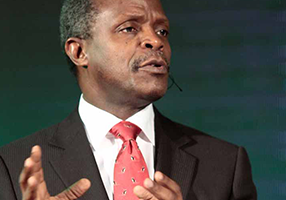

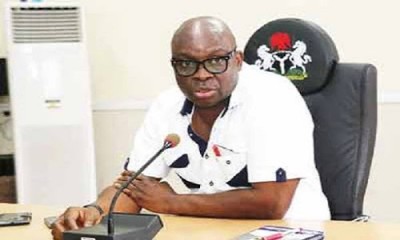 Ekiti State governor, Ayodele Fayose, who has been in the forefront, campaigning that President Muhammadu Buhari was dead, has surrendered to the reality.