Home Blog Page 1521

Fed Govt Regularizes Dichotomy Of Degree/HND Holders, Places Them On Same Salary

Interior Minister. Abdulrahman Dambazau (Rtd)

The Federal Government has approved the regularization of the dichotomy between holders of University degrees and Higher National Diploma (HND) in all the Services.

This followed the meeting of the Civil Defence, Fire, Immigration and Prisons Board (CDFIPB), on July 11, chaired by the Minister of Interior, retired Lieutenant General Abdulrahman Dambazau.

A statement from the Permanent Secretary of the ministry, Abubakar Magaji, said: “The Board has directed that all officers with HND to be upgraded to COMPASS 08, which is the salary Grade Level for holders of degree certificates at entry point. While the nomenclature for the HND holders will start with the rank of Senior Inspector, the Degree holders are with the rank of Assistant Superintendent II.”

The Board also approved the commencement of the 2017 promotion exercise for all the Services with effect from July 17, while the establishment of the Institute of Domestic Security, aimed at strengthening inter-agency cooperation among other functions was also approved by the Board to boost internal security mechanism in the country.

The government has also approved the re-organization of the Nigeria Immigration Service, in line with the provision of the Immigration Act which stipulates the establishment of the Directorate of Immigration.

The directorates, which would each be headed by a Deputy Comptroller-General, include human resources management; finance and accounts; planning, research and statistics; passport and other travel documents; investigation and compliance; border management; migration as well as visa and residency.

The Minister said that the President Muhammadu Buhari led administration places a high premium on the welfare of its workforce.

He called on the personnel in the Services to reciprocate such gesture through improved performance and dedication to duty, in line with the Executive Order on the Ease of Doing Business to revamp the economy. [myad]


PDP: A Lifeline From The Supreme Court, By Reuben Abati

On Wednesday, July 12, the Supreme Court saved our democracy and the People’s Democratic Party (PDP). It did with its ruling in the matter between Ali Modu Sheriff and Ahmed Makarfi, to determine who among the two is the authentic Chairman of the PDP. The Supreme Court of Nigeria practically threw the party a lifeline. Since it lost the 2015 Presidential election, the former ruling party, the same party that one fellow in a moment of megalomania promised us would rule Nigeria forever, has never been the same. Some people have said the party could not manage victory well but it definitely found it difficult to manage defeat. The PDP went into the 2015 general elections utterly divided among its ranks.

Five Governors and their supporters had left the party, the point at which the defeat began, to join a coalition that became the All Progressives Congress (APC) and from outside, the departed malcontents threw stones at their former party and swore to destroy it, if only to teach those remaining behind a lesson. The lack of internal democracy within the PDP, and the arrogance of remaining members further created a situation whereby some Governors became over-powerful and unpopular candidates were imposed at the grassroots level. Discontent spread.

The thinking that the power of incumbency and financial muscle could make a difference merely worsened the situation. Founding fathers of the party, who were confronted with a new breed of party panjandrums, became either aloof or they simply left the party, or they soon conferred on themselves the self-serving titles of statesmen. The party thus practically sabotaged itself from within and therefore lacked the strength to stop a rampaging opposition that was determined to win the election by exploiting the weaknesses of the then ruling party.

The PDP never quite recovered from all that after May 2015, and in the midst of that confusion, a certain Ali Modu Sheriff emerged to fill the gap. Modu Sheriff became the party’s albatross in a manner of speaking. Handpicked to complete the term of the former Chairman of the party, Ahmed Muazu, who had changed the game by presiding over a ruling party that lost an important election, Sheriff soon became ambitious and wanted to stay on as Chairman. Matters came to a head on May 21, 2016 in Port Harcourt at the National Convention of the party.

Sheriff, at the time, enjoyed the support of two vocal Governors of the party, Nyesom Wike of Rivers and Ayo Fayose of Ekiti state. A party convention in Nigeria can be treacherous, divisive and unpredictable.  And so it was in Port Harcourt. Sheriff’s ambition did not receive popular support, even the two Governors who had championed his cause abandoned him, and the National Convention decided to appoint a National Caretaker Committee led by former Kaduna State Governor, Senator Ahmed Makarfi.

Ali Modu Sheriff went to court, and more litigations followed, as the PDP became divided into the Sheriff faction and the Makarfi faction, with both factions struggling to assert themselves. This struggle for supremacy in the courts and within the rank and file did further damage to the party. More members of the party defected to the ruling APC, or to some other new parties, other members of the party’s Board of Trustees threatened to retire or did so, some other members announced that the party had lost its soul and they had become non-aligned until further notice. The PDP once boasted that it was the largest political party in Africa and it indeed held on to power in Nigeria for 17 years, but the concatenation of misfortunes and internal wrangling that had befallen it turned it into a sinking vessel and one by one, those who once swore by the party began to jump ship. In the tussle between the two factions, however, it was obvious that the Makarfi faction had more followers, and hence the widespread narrative was that if the Sheriff faction won the battle at the Supreme Court, the PDP should be considered dead.

In that sense, the apex court saved the PDP. But it stood on solid grounds by upholding the Constitution of the party, which declares the National Convention the highest organ of the party and the decisions taken therein supreme. On July 12, the Supreme Court held that the May 21, 2016 National Convention of the PDP in Port Harcourt was validly constituted and the decisions taken there were binding. In effect, the Appeal Court in Port Harcourt arrived at its judgement per incuriam by ruling in favour of the Sheriff faction. Bode Rhodes-Vivour, JSC who delivered the unanimous judgement on behalf of his colleagues, added further, obiter as it were, that Sheriff was guilty of “forum shopping and displayed an infantile desperation to cling to power at all cost”.

While the technical ground for this ruling is jurisprudentially sound, in our view there is in the ruling a tinge of judicial activism that should not be overlooked, the pedagogy of which needs not delay this commentary, other than to say that in a situation such as ours where the rule of law has become a victim of politics, power and vendetta, the activism of the judex is important for modulating and preserving the social order.

The matter is like this: with the possum-ization of the PDP, the largest opposition party in Nigeria after May 2015, opposition party politics had been crippled in Nigeria. Every democracy thrives on the basis of the quality of opposition politics and the contestation of ideas within the public sphere.  Since the APC assumed power and office, it has managed to suppress this vital ingredient of the democratic process.

It is so bad that the traditional media is now so afraid, it can no longer fully serve its purpose, the social media which used to be so vibrant now speaks in whispers, media owners were the first to be reminded of the ghosts in their cupboards, and with members and associates of the former ruling party being hounded up and down, the more pragmatic ones have since defected to the ruling party to buy protection. The PDP has been branded a thieving party, but anyone who crosses to the other side is immediately a saint, with all their likely sins forgiven, forgotten and overlooked. By judicially resurrecting the PDP, the Supreme Court has given our country and our democracy an opportunity to have a strong and virile opposition, ahead of the 2019 elections.

But that is also precisely why the real matter is not about this Supreme Court ruling, but what the PDP does with the lifeline that it has been given. It is instructive that the Ali Modu Sheriff faction, save for one or two members boycotted the court on July 12. Truth be told, Modu Sheriff lost the game, long time ago, the moment he was abandoned by Wike and Fayose, the two Governors who originally backed him but who obviously have their own game and aces up their sleeves. Beyond July 12 and the Supreme Court, the game should no longer be about individual ambitions.

The PDP needs to go through a healing process. There are many members of the party who may in fact still be totally indifferent and there are others that left who may be pleased that their original party now has a second chance. It is dangerous for a party to have indifferent members such as the PDP had for close to three years. The urgent task is not to start another quarrel with the Sheriff group (the faction having been eliminated judicially); the task at hand is to unify the party and ensure reconciliation and to bring into the fold, all aggrieved persons who are willing to return.

This should include the aggrieved and alienated founding fathers and former trustees of the party. Nigeria needs a strong opposition party and only the PDP can fill that vacuum. It may not have the experience but it can learn.  That learning process must begin with a rigorous, intellect-driven understudying of the achievements and failures of the present ruling party, the APC. The APC as an opposition party thrived on propaganda and the politics of aggressive abuse. The PDP in transforming into an effective opposition party must engage the ruling party at the level of vision, policies and programmes and not be drawn into the trap of vacuous emotionalism. With the example of the APC, Nigerians by now must have seen through the limits of that kind of politics.  Every political party wants power; the PDP now has a golden chance to prove that it can be a viable party in or out of power.

A national convention of the party must be held quickly, and the main purpose should be to heal the wounds within the party. When Ahmed Makarfi was made Chairman of the National Caretaker Committee in May 2016, he and his team were given three months. In August 2016, a National Executive Committee meeting, tagged a mini-convention was held at which their tenure was extended by one year till August 2017.  Unless another NEC meeting is summoned and an extension granted, the Makarfi committee has just one month to go.

If he would act in good faith, and occupy a higher moral ground, Makarfi should not seek any further extension. Following the Supreme Court ruling, he should in the coming weeks organize meetings of the Board of Trustees, the NEC of the party and hold consultations and ensure that the ground is prepared for a party convention that restores the party. By restoration, I mean, every step must be taken to quickly review the party’s Constitution. It is an old process, aborted by feuding stakeholders, particularly the Governors who wanted to seize control of the party.

A new Constitution of the PDP must ensure internal democracy by introducing new reforms. The party failed because it failed to reform and renew itself.  The recommended consultations should be targeted at rallying the party base at the grassroots level. At a point, the party’s rank and file at the grassroots became disillusioned. In many states, the party kith and kin do not in fact understand why the party hierarchy in Abuja suddenly collapsed. They need to be reassured and every step must be taken to ensure that the party’s next Convention does not result in another round of litigations.

The net effect of the July 12 Supreme Court ruling is that the PDP has a chance to be whole again and to rise like the Phoenix from its ashes. With the party’s recent victory in the by-election in Osun West, and elsewhere, it seems clear that the Nigerian electorate have not yet forgotten the PDP.  July 12 must have been a sad day for the APC, the incumbent ruling party whose members are already staging their own dress rehearsal for an impending crisis. [myad]

Alleluya, My Father Is 70, D’Banj Hails, Celebrates

Dbanj and dad

Legendary pop musician, Adedapo Oyebanji, popularly known as D’banj rolled out talking drums today, Wednesday to celebrate his father’s 70th birthday.

In a twitter post, D’banj enthusiastically wrote:  “And to the Real Kokomaster, my perfect Role Model, my father Celebrating 70 years of Grace. I Love you dad!

“Wow! that Bible big O!!”

He was apparently reacting to the big Bible gifted the father.

Besides the tweets, he also took to his instagram page to say: “And to the Real kokomaster, the one and only, my king, my perfect Role Model, my mentor, my Pastor, my father.

“Without you, I wouldn’t be here nor even be rooted with the right Foundation knowing Christ is the way, truth and life. Thanks for the best Gift ever and for bringing this Fine Boy to this world. OoooSssHhhEee. Love you dad, General on check one time Salute.”

The Kokomaster welcome a baby boy recently. [myad]

How Court Judgments Were Being Written In Aso Villa – Senate Leader

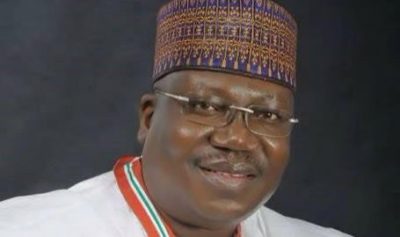
Senate Leader Ahmed_LawanThe Senate Majority Leader, Ahmed Lawan has alleged that most court rulings during the administration of former President Goodluck Jonathan were written in the Presidential Villa, Abuja.
Senator Lawan, a member of the All Progressives Congress (APC), who was reacting to the Supreme Court ruling which affirmed former Kaduna State Governor, Ahmed Makarfi as the national chairman of the People’s Democratic Party (PDP), said that the ruling by the apex court was an indication that the President Muhammadu Buhari’s government believed in separation of powers.

Senator Lawan said that in spite of the ruling, the former ruling party will continue to remain in “Diaspora,” adding: “Nigerians overwhelmingly and massively took out PDP from the running of this country and PDP will remain in Diaspora. All the same.

“We want to congratulate Nigerians for the kind of judgment that the Supreme Court gave under this administration.

“During PDP administration, most of the court judgments were written in the villa. This goes to show that this administration believes in separation of powers and believes that our judiciary should remain and continue to be free in what they do.” [myad]

Paparazzi Swarm Osinbajo In Aso Rock On Buhari

AG PRESIDENT OSINBAJO PRESIDES OVER FEC 0A&B. Acting President Yemi Osinbajo brief State House Press on his visit to the President Muhammadu Buhari in London before the Federal Executive Council Meeting at the State House in Abuja. PHOTO; SUNDAY AGHAEZE/STATE HOUSE. JULY 12 2017

Nigeria’s version of Paparazzi, the inquisitive media men and women covering the Presidential Villa, accosted Acting President Yemi Osinbajo today, Wednesday, on his way to preside over the weekly meeting of the Federal Executive Council (FEC) with barrel of questions, on his few hours trip to London to see ailing President Muhammadu Buhari. And they got him talking.

PDP Is Party That Gave Nigeria Largest Economy In Africa, Ex President Jonathan Boasts

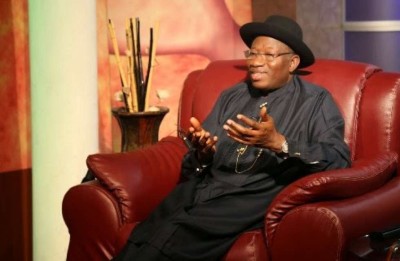
Jonathan at AITFormer President Goodluck Jonathan has described the Peoples Democratic Party (PDP) as a party that gave Nigeria the largest economy in Africa even as he asked Nigeria to appreciate it.
Jonathan, who was reacting to the Supreme Court ruling that confirmed ex-Kaduna State Governor, Ahmed Makarfi as the national chairman of the PDP, remarked: “the party that gave Nigeria the largest economy in Africa is a party whose heart is large enough to find a place for all Nigerians.”

The former President, in a congratulatory message on his Facebook page, said that though there are issues with some individuals but that the Supreme Court ruling signifies “no winners no vanquish.”

He advised Makarfi to run an all-inclusive policy, even as he begged those who decamped to other parties due to the leadership crisis to return.

“I congratulate my political party, the Peoples Democratic Party, on the successful resolution of its leadership crisis by the Supreme Court of Nigeria.

“I believe in our jurists. We may have issues with some individuals but the Nigerian judiciary deserves our respect and commendation. They have served this country well.

“Today’s verdict is a judgment where there are no winners or losers. It is a verdict that will bring our party together. We should all thank the Supreme Court of the Federal Republic of Nigeria.

“As I congratulate the Ahmed Makarfi led Caretaker Committee, I want to strongly urge them not to see this as a victory of a section of the party, but as a moral victory of constitutionality over arbitrariness.

“Thus, they must take inspiration from General Yakubu Gowon and declare a ‘no victor and no vanquished policy’.

“As a senior member of the party, I hereby call on all those who left the party because of its leadership issues to return to their natural home and build the PDP.

“The PDP is an inclusive vehicle not an exclusive one. We see Nigerians as human beings deserving of the rule of law, separation of powers and a free market economy that provides a level playing ground for all.

 “I thank God for this day of Justice and may God bless Nigeria. GEJ.” [myad]

Crime By President Is Enormous, Court Rules; Jails Ex Brazilian President 10 Years For Corruption

Photo By: Houston Public Media

“The president of the republic has enormous responsibilities. As such, his culpability is also enormous when he commits crimes.

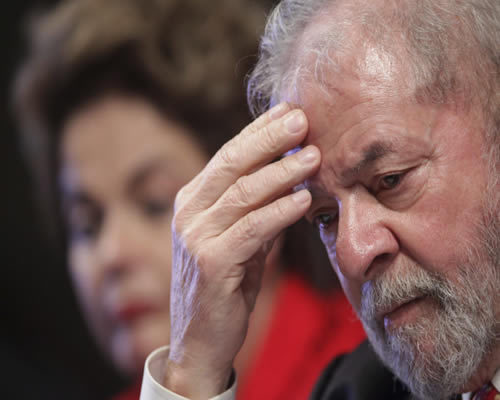
This was the reasoning by the Judge of a court in Brazil, Sergio Moro, who found the country’s former president, Luiz da Silva, guilty of corruption and money laundering and sentenced him to almost 10 years in prison. The verdict came as a shocking reversal of fortune for da Silva who wielded far-reaching influence across Latin America for several years.

He was the President of the largest country in South America from 2003 to 2010.

The judge said that da Silva’s actions were part of a “scheme of systemic corruption” in Petrobras.

Mr. da Silva, was convicted for receiving $1.1 million, alongside his wife, in improvement and expenses from a construction company in exchange for contracts from the state-owned oil company, Petrobras.

The scandal alongside several others led to Mr. da Silva’s successor, Dilma Rousseff, being impeached from office by the country’s senate last year.

He has dismissed the allegation as a “farce” and has announced he would run for the country’s presidential election next year.

Though Mr. da Silva can appeal the conviction, it will, however, pose a serious obstacle for a possible political comeback..

Mr. da Silva’s conviction is a continuation of the move by the country’s judiciary to purge the country’s political class of corruption.

Last month, the incumbent president, Michel Temer, was also charged with corruption.

,Source: The New York Times. [myad]

Kogi Teachers Protest Over Transfer Of Primary Education Funding To Local Govts

The Kogi State chapter of the Nigeria Union of Teachers, NUT, has staged a protest over the handing over of teachers’ salaries and allowances to Local Government councils.

NUT officials from all the 21 local government areas in the state gathered at the state secretariat of the union in Lokoja, carrying banners and placards, part of which read: “Kogi NUT says No! to funding of primary education by local government councils, they have no capacity to pay primary school teachers,” “Save Primary education from imminent collapse,” “we say No to the dark era of nonpayment of salaries,” among others

Addressing the news men during the protest match, the state chairman of the union, Comrade Suleiman Abdullahi said the NUT is not against the granting of autonomy to local governments, but that their grudge is that their salaries and allowances should not be handed over to the councils.

He said that the national headquarters of the union has taken the matter before the National Assembly to either handover basic education teachers’ emolument to Universal Basic Education Commission, UBEC, at Abuja or to state governments, as experience has proved that local councils would not pay teachers.

The NUT chairman referred the National Assembly to a Supreme Court ruling contained in the Nigerian Law Reports of 6th May 2002, which held that administering of UBE was the responsibility of state governments and that local councils only come in as participants. [myad]

Presidency Doles Out N1. 6 Billion To 15 Flood Ravaged States

Flood 1The Presidency has asked the minister of Finance, Kemi Adeosun, to release the sum of N1.6 billion to 15 states of Nigeria that were ravaged by floods.

According to Femi Adesina, Special Adviser to President Muhammadu Buhari on Media and Publicity, the move is to help cushion the effects of the disaster on Nigerians.
Adesina, who was briefing news men State shortly after the Federal Executive Council (FEC) meeting, presided over by Acting President Yemi Osinbajo at the Presidential Villa, Abuja, said that the money would be taken from thr Federal Governent’s Ecological Account in thr Central Bank of Nigeria (CBN).
He said that the Minister of Finance has been directed to release the money to the National Emergency Management Agency (NEMA) for onward distribution to the affected states.
The states to benefit from the federal government’s largesse are: Ekiti, Kwara, Lagos, Bayelsa, Enugu, Sokoto, Ebonyi Akwa Ibom, Osun, Kebbi, Niger, Abia, Oyo, Plateau and Edo.

The Party Is Over, By Sufuyan Ojeifo

Sufuyan Ojeifo
Sufuyan Ojeifo

This piece shares title with a 1960 Argentine drama film directed by Leopoldo Torre Nilsson, which depicts the political corruption in Argentina in the 1930s, a period referred to as the “Infamous Decade.”  The decade, which began in 1930 with the coup against President Hipolito Yrigoyen by Jose Felix Uriburu, culminated in the ascension to power of Juan Peron after the military coup of 1943.
The decade was marked by rural mass movements, worsened by the 1929 Great Depression, which had decimated rural landowners and pushed the country in the direction of import substitution industrialisation. Another coup was executed in 1943 due to popular discontent in response to the poor economic results of the policy.
Tagged the “Revolution of ‘43,” the coup was masterminded by the Grupo de Oficiales Unidos (GOU), the nationalist faction of the Armed Forces, against the acting president Ramon Castilo, hence putting an end to the “Infamous Decade.”
Electoral fraud, persecution of political opposition leaders and government corruption characterised the period, against the backdrop of the Great Depression, which was a severe global economic depression that lasted until 1941, presenting the longest, deepest and most pervasive depression in the 20th century.
There is, indeed, a similitude between the Argentina’s debacle under reference and Nigeria’s current experience.  Nigeria slid into recession last year.
The All Progressives Congress (APC)-controlled federal government is yet unable to get the country out of it. A national leader of the party, Asiwaju Ahmed Bola Tinubu, in March this year, advised the federal government to ease the monetary policy in order to stimulate the economy.
In a paper to course participants at the National Defence College in Abuja, titled: “Strategic Leadership: My Personal Theory and Practice,” Tinubu explained that the monetary policy must be consistent with the environmental needs of our domestic requirements. He had argued that too much is tied down and advised the federal government to spend itself out of this recession; and that it cannot do that by consistently stifling the banks of liquidity.
Has government heeded Tinubu’s advice?
How significantly has government intervened to push up market demand by undertaking public works?
Only N350 billion has reportedly been released for capital projects.
What is the percentage of that in the 2017 budget of N7.4 trillion?  And what is the level of performance of the N350b released vis-à-vis the implementation of the projects to which the release is tied?
Besides, how many Nigerians have been employed or financially empowered through this intervention for capital projects development?
How many local companies which depend on locally-sourced raw materials are factored into this special intervention package? Or is it another opportunity for foreign construction companies to make easy money and repatriate the same to their home countries?
I am not an economist.
I do not understand the plethora of economic concepts, principles and terminologies or jargons, which economy experts daily deploy to explain how our economy is working. We are so easily bamboozled by statistics, especially from the National Bureau of Statistics (NBS). The NBS’ verdict is that Nigeria is the largest economy on the Africa continent and the 26th in the world with its rebased Gross Domestic Product (GDP), which, as of April 2014, stood at US$509.97 billion (N80.2 trillion).
But my attitude towards economic development, which refers to the problems of under-developed countries, is very simple: let us see how well the masses are faring.
How has the rebased GDP transformed our economy and the various aspects of our nation, especially the lives of the individual citizens?  How has it attacked widespread absolute poverty?  How has it reduced inequalities and removed the sceptre of unemployment?  That, in spite of the “biggest economy’ status, Nigeria still slid into recession is evidence of how superficial and vulnerable the economy is to absorb shocks both at the micro and macro levels.
Businesses are collapsing on daily basis.  Prices of goods and services are consistently going up.  Purchasing power of citizens is ebbing away.  Job losses have become daily occurrences. The number of people earning money is decreasing. The gap between the rich and the poor has grown much wider. A vast majority of Nigerians are under financial pressure and unable to meet their basic needs. There is pain on the faces of the people and anguish in their hearts.
The scenario painted supra is symptomatic of leadership failure and economic upheaval.  In pre-1999 Nigeria, such a scenario would have provided an objective condition for leadership overthrow.  But post-1999 Nigeria is averse to that. The democratic foundations have been laid and there is evident commitment by all to nurture the building of democratic structures in the land.
Validation: Nigerians stringently condemned, some months ago, the statement by the Chief of Army Staff, Lt. General Tukur Buratai, hinting at an unholy relationship between members of the political class and high-ranking soldiers. Although, the impression created was that of a possible coup in the offing, Nigerians ferociously kicked against it, anyhow. Defence Headquarters also reined in to debunk the coup rumour.
Now, assuming, just for the purpose of argument, that coup has now become impossible in Nigeria, what is the APC-controlled federal government doing to avert the looming tsunami of people power in the 2019 general election?
The people are disenchanted.  The APC government has not been able to fulfill up to 10 percent of its campaign promises; and, instead of meaningfully engaging the people through cogent explanations, not Lai Mohammed’s chicanery, it is living in self-denial.
I can safely vouchsafe that on the balance of probability, the Nigerian people should not expect anything spectacularly different from the current half-measure offerings before 2019, judging by the lingering lacklustre performance of the APC government.
The president, Muhammadu Buhari, is out of action due to ill-health. The Secretary to the Government of the Federation, Babachir Lawal, is on suspension due to a contract scam.  Two of the critical positions in government are, unfortunately, encumbered.
Some cabals in the presidency, rather than support the acting president, to prudently set its priority right by focusing on “the economy, stupid” in this recession period so as to turn things round for the betterment of Nigerians, are fighting dirty to survive the cloak-and-dagger politics in furtherance of their enlightened self-interests.
Why should the Presidency and the National Assembly, for instance, be flexing muscles on whether or not Ibrahim Magu would remain chair of the Economic and Financial Crimes Commission (EFCC)?  There is no harmony between the executive and the legislative arms.  The administration is on a free course to immolation.
It is, indeed, inopportune that the APC government has, up until now, been its own opposition.  Its elected leaders can decide to shut down their government.  That is their problem. As far as I am concerned, the APC party is over.  And this assertion is reinforced by the July 12, 2017 Supreme Court judgment resolving the leadership tussle of the Peoples Democratic Party (PDP) in favour of the Senator Ahmed Makarfi faction.
I welcome resilient Nigerians to a robust and focused oppositional politics that we expect the PDP to play.  For us, the voter cards, the power to decide our destiny, are firmly in our hands, and with the cards, we should put an end to this mumbo-jumbo that the APC has foisted on us since 2015.  We should heed the lines of Willie Nelson’s song “The Party is over”  to “Turn out the lights…” We should allow God to use us to save Nigeria-through our votes in 2019.

Ojeifo, an Abuja-based journalist, contributed this piece via ojwonderngr@yahoo.com

[myad]

Advertisement ADVERTORIAL
WP2Social Auto Publish Powered By : XYZScripts.com