The African Public Relations Association (APRA) has expressed condolences to the Public Relations Society of Malawi (PRSM, an institutional member of APRA), the government and citizens of the Republic of Malawi over the plane crash that claimed the lives of the Vice President of Malawi, Dr. Saulos Chilima and nine others on June 10, 2024. In a condolence letter issued by the Secretary General of the APRA, Dr. Omoniyi Ibietan, dated June 11, and addressed to Benson Linje, the President of PRSM, the continental association described the incident as a “huge loss, not only to the people of Malawi but to the African continent.” The letter reads: “We write to express our profound shock and sadness at the tragic plane crash that caused the death of H.E. Dr. Saulos Chilima, the Vice President of Malawi, and nine others on Monday, June 10, 2024. On behalf of the African Public Relations Association (APRA), we extend our heartfelt condolences to you, our colleagues in the Public Relations Society of Malawi, and the great people of Malawi. “As always and especially this time of national mourning, we stand in solidarity with the people of Malawi. We share in the pain and the grief at tending this huge loss, not only to the people of Malawi but to the African continent.” “The Council and all members (institutional, corporate and individual) of APRA offer heartfelt sympathies and will continue to remember the great people of Malawi in our entreaties.” APRA prayed that the memories of the departed would bring strength and that the support of friends, colleagues, compatriots, other pan-Africanists and lovers around the world will help to bring PRSM and the people of Malawi comfort on the incident. APRA also prayed that the families, friends and loved ones of the deceased find strength and be comforted over this tragedy. “Please rest assured that, as we mourn the passing of these distinguished personalities and individuals, we also celebrate their lives and contributions to the Republic of Malawi and our dear continent. May their souls rest in peace.”
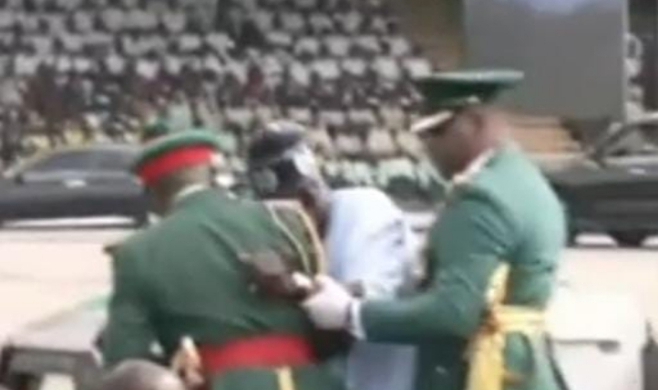
President Bola Tinubu has written off those who made noise about his fall at the Eagle Square while climbing a vehicle to inspect Democracy Day parade yesterday, June 12. While reacting to the trending video clip of his fall, the President said: “Early this morning, I had a swagger, and it’s on social media. “They were confused about whether I was doing Buga or Babariga, but it is a day to celebrate democracy while doing ‘Idobale’ (a Yoruba word meaning bowing or prostration) for the day. “I am a traditionally Yoruba boy, and I did my Idobale.” A Pesidential spokesperson, Bayo Onanuga had earlier yesterday, said that President Tinubu is not a Superman. “He is human like all of us.” Onanuga recalled that President Biden of the United States of America has had several slips in the last three years. Even the younger Barack Obama slipped while President. Political leaders are human. Also yesterday former Vice President Atiku Abubakar sympathised with President Tinubu. “Slipping should not detract from the import of Democracy Day celebration. “I sincerely sympathise with President Bola Tinubu, @officialABAT, over this unfortunate incident as he was set to review the parade on Democracy Day. I do hope that all is well with him. -AA” Atiku tweeted.
The President of Nigeria, Bola Ahmed Tinubu had a heavy fall today, June 12, in Abuja while attempting to mount the rostrum in the midst of several aides and security personnel. Footage of the incident, which has since gone viral on social media, showed the President missed the steps and fell across the open vehicle where he was supposed to stand to review the marchpass of military and paramilitary teams, in celebration of the Democracy Day at Eagle Square. President Tinubu had earlier in the day, delivered a speech to mark the Day. Responding to the incident at the Eagles Square, Special Adviser to the President on Social Media, Dada Olusegun, said that there is nothing to worry about. Olusegum, through the social media admitted that “Mr. President missed his step while climbing into the truck at the June 12 Democracy Day celebration and tripped. It was a mild misstep. He immediately went on with the ceremonial rounds. No issues.”
The Governor of Osun State, Senator Ademola Adeleke has described election rigging as war that must be fought to ensure the evolution of true democracy in Nigeria. According to him, it is only free and fair elections that can be taken as the lifeline of virile democracy, even as he acknowledged the sacrifices and struggles that paved the way for the civil rule that we currently enjoy. In a statement today, June 12, to commemorate Democracy Day, Governor Adeleke called on politicians in the country to submit themselves to upholding the tenets of democracy by respecting the will of the people. He advised the political class to recommit themselves to strengthen the country’s electoral system to deliver credible elections and ensure that the will of the people is not subverted. “The best homage we can pay to our democratic heroes is for us to continue to uphold the basic tenets of democracy, including free and fair elections and observance of rule of law. “We cannot on one hand, celebrate democracy day and on the other hand, undermine the democratic tenets. You cannot be applauding the great memories of the late Bashorun Abiola and at the same time be working against free and fair elections. “I call on leaders locally and nationally to re-dedicate ourselves to democratic ideals. The will of the people freely expressed must be accepted by genuine democrats. Our electoral system must be strengthened to deliver credible elections. “Under no circumstances should the will of the people be subverted. “Free and fair elections are the lifeline of any virile democracy. “Politicians must grow to know and accept that power flows from the people. Rigging elections is an act of war against democracy. Genuine democrats accept electoral verdicts as a mark of respect for the voters, the ultimate holder of sovereignty. “That’s what I did in 2018 when I was denied victory. “If there is any lesson June 12 every year is to teach us, it is that democracy thrives when electoral candidates bow to people’s will. We must stop being autocratic in democratic garb. “If you are rejected at an election, take it in good faith and prepare for the next round of election. “After all, Abraham Lincoln failed several polls before his eventual emergence as American president.”
President Bola Tinubu has alerted Nigerians about some people who he said are determined to truncate the democracy being practiced in the country in the past 25 years. In a broadcast to the nation today, June 12, to mark the Democracy Day, Tinubu acknowledged that no matter how complicated democracy may be, it is the best form of governance in the long run. He said however: “we must also be aware that there are those among us who will try to exploit current challenges to undermine, if not destroy, this democracy for which so much has already been given. “These people do this not to make things better but to subject all other people and things to their control and dominance until the point that, if you are not counted among their elite, then your life will be small and no longer owned by you. “This is the great battle of our day and the major reason we specially celebrate this Democracy day.” The President stressed that democracy is more than a historic fact, but that it is a living, breathing reality. According to him, the true meaning of this day is not to focus solely on the great deeds of the past that have brought us to this point. “Yes, we pay eternal honour to those who laid down their lives, sacrificing everything to pave the way for the nation. “I stand uniquely placed in this regard. I was among those who took the risk to midwife the birth of our democracy. I am now a direct and obvious beneficiary of the fruits of those historic efforts.” Read below, the full text of President Tinubu’s Democracy Day speech: “My fellow Nigerians, let me begin by congratulating all of us for witnessing the celebration of another Democracy Day today, the 12th day of June 2024. This year also marks our nation’s 25 years of uninterrupted democratic governance. “On this day, 31 years ago, we entered our rites of passage to becoming a true and enduring democratic society. “Going through this passage was hard and dangerous. During the fateful six years that followed, we fought and struggled for our natural rights as human beings put on this earth by the divine hand of our Creator. “We lost great heroes and heroines along the way. In this struggle, the winner of the June 12, 1993 presidential election, Chief MKO Abiola, the most significant symbol of our democratic struggle, his wife, Kudirat, General Shehu Musa Yar’Adua and Pa Alfred Rewane, among others sacrificed their very lives. “They bravely surrendered their futures so that our nation might have a better one. “Let us honour the memories of Chief Anthony Enahoro, Chief Abraham Adesanya, Commodore Dan Suleiman, Chief Arthur Nwankwo, Chief Chukwuemeka Ezeife, Admiral Ndubuisi Kanu, Chief Frank Kokori, Chief Bola Ige, Chief Adekunle Ajasin, Chief Ganiyu Dawodu, Chief Ayo Fasanmi, Chief Gani Fawehinmi, Chief Olabiyi Durojaiye, Dr. Beko Ransome-Kuti, Chima Ubani, and others who have transited to the higher realm. “The sacrifices of General Alani Akinrinade, Professor Bolaji Akinyemi, Professor Wole Soyinka, Chief Ralph Obioha, Chief Cornelius Adebayo, among many others, should never be forgotten. For at least six years, they bore the pains and difficulties of life in exile. “While the exiled pro-democracy activists kept the fire burning, their comrades at home sustained the pressure on the military brass hats. Among the latter are Olisa Agbakoba, Femi Falana, Abdul Oroh, Senator Shehu Sani, Governor Uba Sani, Chief Olu Falae, and other National Democratic Coalition leaders such as Chief Ayo Adebanjo and Chief Ayo Opadokun. “The sacrifices they made, and the precious gift brought about by their selfless devotion can never be repaid. Neither shall it be forgotten. “We could not have won the battle against military dictatorship without the irrepressible Nigerian journalists who mounted the barricades along with the pro-democracy activists. We celebrate them today, along with their media establishments such as The Punch, Guardian, National Concord, Tribune, The News/Tempo, and TELL Magazines. Military authorities proscribed these media establishments and jailed their journalists for standing for free speech and civil liberties. “Despite the lethal might of the military government, what appeared to be high and unyielding walls of dictatorship came tumbling down. The dismal fortress exists no longer. “The power of an idea, the power of the people proved more potent than all the guns and munitions, and the threats of the strongmen. “The nation exited the yoke of military rule in 1999 to become the most populous democracy on African soil, the beacon of democratic self-determination for the black race and one of the largest democracies in the world. “This change stands as a pivotal moment in human history. From this change, we shall never turn, nor shall the annals of mankind’s progress forget the sublime meaning of this great moment. “Today, 25 years later, we celebrate the silver anniversary of our journey in democracy. “We have steadied the course. “Democracy is neither a foreign nor abstract concept devoid of real-life meaning for us. Neither can we afford to reduce or minimalise it to being nothing but the mere holding of periodic elections where one candidate and party outdo another. “While elections attract dramatic attention, they are but one aspect of democracy. Democracy is a way of life that encompasses a broad outlook of which elections are but a part. As such, a nation can have elections without being democratic. But a nation cannot be truly democratic without holding elections. “That we have established a tradition of holding transparent, open, and fair elections gives credence to our democratic bearing. That we have experienced peaceful transitions of government affirms our democratic temperament. “Fellow Nigerians, true democracy shines its light into the daily lives of the people who live under its nurturing wings. It affords us the freedom and liberty to think as we want, live where we want and pursue whatever legitimate endeavour that suits us. “Democracy does not assume some false or forced unity of opinion. In fact, democracy assumes that conflicting ideas and differing opinions shall be the order of the day. Given the diversity and variety of the human experience, there must be diverse perspectives and viewpoints. “What democracy demands is that we do not resolve differences through force and repression. But we make allowance for the legitimacy of views that differ from our own. “Where other forms of government impose against the will of the people, democracy aims to make leaders sufficiently humble that they conduct themselves as servants of the common good, not as viceroys of the narrow interests of the mighty. “My dear compatriots, Nigeria faced a decision of untold gravity twenty-five years ago: Whether to veer toward a better destination or continue aimlessly in the fog of dictatorship. “We made the right choice then. We must continue with that choice now. “As Nigerians, we must remind ourselves that no matter how complicated democracy may be, it is the best form of governance in the long run. We must also be aware that there are those among us who will try to exploit current challenges to undermine, if not destroy, this democracy for which so much has already been given. “These people do this not to make things better but to subject all other people and things to their control and dominance until the point that, if you are not counted among their elite, then your life will be small and no longer owned by you. “This is the great battle of our day and the major reason we specially celebrate this Democracy day. “Fellow Nigerians, our Democracy is more than a historic fact. It is a living, breathing reality. “The true meaning of this day is not to focus solely on the great deeds of the past that have brought us to this point. “Yes, we pay eternal honour to those who laid down their lives, sacrificing everything to pave the way for the nation. “I stand uniquely placed in this regard. I was among those who took the risk to midwife the birth of our democracy. I am now a direct and obvious beneficiary of the fruits of those historic efforts. “As president of this nation, I am morally and constitutionally bound to preserve this precious form of governance. I vow to do my utmost best to protect your rights, freedoms, and liberties as citizens of Nigeria. “Even more than that, I pledge to do whatever is necessary to cement democracy as our way of life. “Although the challenges are steep and multiple, I am grateful to lead Nigeria at this moment in her history and point in her democratic journey. “I come before you also to declare that our most important work remains before us. This real test has never been whether we would rise to challenge the slings of misfortune and grievous pain of dictatorship. “The real test is whether we shall lower our guards as the shadow of despotism and its evident physical danger fade. “I say to you here and now that as we celebrate the enshrinement of our political democracy, let us commit ourselves to the fulfilment of its equally important counterpart, the realisation of our economic democracy. “I understand the economic difficulties we face as a nation. “Our economy has been in desperate need of reform for decades. It has been unbalanced because it was built on the flawed foundation of over-reliance on revenues from the exploitation of oil. “The reforms we have initiated are intended to create a stronger, better foundation for future growth. There is no doubt the reforms have occasioned hardship. Yet, they are necessary repairs required to fix the economy over the long run so that everyone has access to economic opportunity, fair pay and compensation for his endeavour and labour. “As we continue to reform the economy, I shall always listen to the people and will never turn my back on you. “In this spirit, we have negotiated in good faith and with open arms with organized labour on a new national minimum wage. We shall soon send an executive bill to the National Assembly to enshrine what has been agreed upon as part of our law for the next five years or less. “In the face of labour’s call for a national strike, we did not seek to oppress or crack down on the workers as a dictatorial government would have done. We chose the path of cooperation over conflict. “No one was arrested or threatened. Instead, the labour leadership was invited to break bread and negotiate toward a good-faith resolution. “Reasoned discussion and principled compromise are hallmarks of democracy. These themes shall continue to animate my policies and interaction with the constituent parts of our political economy. “I take on this vital task without fear or favour and I commit myself to this work until we have built a Nigeria where no man is oppressed. “In the end, our national greatness will not be achieved by travelling the easy road. It can only be achieved by taking the right one. “The words of the American President Franklin Roosevelt certainly ring true: “There are many ways of going forward. But only one way of standing still”! “We dare not slumber lest the good things awaiting our immediate future pass us by. We dare not plant our feet in idle standstill in the middle of the intersection of hope and despair. “We know the proper way forward and we shall take it! “The initial rays of a brighter tomorrow now appear on the early horizon. An abundant future and our capacity to achieve that future lie within our reach. Democracy and the institutions it begets offer to take us to our profound destination. “Let us board this progressive train together. Together, let us move Nigeria forward. “Let’s continue to keep the fire of democracy burning. Let’s keep the torch lit for generations to come.”
In a landmark ruling on Tuesday, June 11, 2024, the Federal High Court sitting in Abuja has sentenced Mariam Suleiman, CEO of Famzhi Interbiz Ltd, to five years in prison for defrauding investors of over N2 billion.
Justice Inyang Ekwo delivered the judgment, finding Suleiman and her company guilty on multiple counts of conspiracy and operating an illegal investment scheme.
Justice Ekwo sentenced Suleiman to three years for conspiracy and two years for illegal investment operations, with both sentences to run concurrently.
The court also ordered the liquidation of Famzhi Interbiz Ltd, directing that the proceeds from asset sales be used to compensate defrauded investors.
Despite her denial, the court concluded that the prosecution’s unchallenged evidence conclusively proved the illegal activities of Suleiman and her company.
According to report reaching us at Greenbarge Reporters online newspaper, the legal battle leading to the verdict began in the year 2020 when the EFCC received petitions from the Forum of Famzhi Investors, alleging criminal misappropriation and money laundering, orchestrated against them by the management of Famzhi Interbiz Investment Company. Part of the statement from the leading judge, Justice Inyang Ekwo read: “Famzhi in connivance with its staff, intentionally defrauded the Investors that runs in billions in naira, in which they used to acquire properties in Abuja ” The judge said that Famzhi Interbiz management and its staff conspired without authorization and lured unsuspecting public to invest in their company, and that the act is punishable by law. He said that the law prohibits investments that are made for participatory interests. He said that such acts were done without prior registration with the Security and Exchange Commission by the company. Despite attempts by the defendant’s legal team to challenge the jail pronouncement and the forfeiture through appeals, the court stood firm and pointed to the failure to substantiate legitimate acquisition of the assets in question. The court concluded that the defendants obviously lured the Investors to invest more than two billion naira into the company when it was obvious that the company is not incorporated. The court said that the provision in the law is imprisonment for between three and seven years. It finally sentenced the first defendant three years imprisonment on the first count and three years on the second count, totalling six years imprisonment, which are to run concurrently. The properties of the company will be forfeited and handed to Federal Republic of Nigeria, sold and the proceeds given as refund to Investors.
The Department of State Services (DSS) has confirmed that there is plan by those it described as “disgruntled elements” to stage violent protest across the country tomorrow, June 12, which is the Democracy Day. The secret security outfit therefore warned such elements to desist from such plan because officers of the security agencies are ready to perform their duties. In a statement today, June 11, spokesperson of the DSS, Dr. Peter Afunanya, said that the service will not tolerate any form of violence or breakdown of law and order. “The Attention of the Department of State Security Service, DSS, has been drawn to plans by certain individuals and groups to stage physical protests in some parts of the country on 12th June, 2024. “The protests are designed with sinister objectives to coincide with the Democracy Day Celebration. “While citizens may have the rights of assembly and expression, such freedoms should not be used to undermine public safety and national security. “The determination by some non-state actors to incite mass disaffection through demonstrations that may turn violent will not be tolerated. However, it is instructive to note that violent demonstrations are at variance with the peaceful disposition of the Federal Government to amicably address all contentions including the minimum wage. Citizens are, therefore, called upon to resist any persuasions to be lawless or cause disorder and anarchy in the nation. “Displeased persons are rather encouraged to appropriately channel their grievances through the right channels and procedures. “Consequently, the DSS reaffirms its unequivocal position to protect the country from inimical acts being orchestrated by disgruntled groups to cause a breakdown of law and order. “It will also sustain collaboration with all relevant stakeholders, including sister security agencies, to maintain the peace as well as protect lives and property across the nation. Law abiding citizens are enjoined to go about their businesses without fear.”
Presidential candidate of the main opposition People’s Democratic Party (PDP) in the 2023 elections in Nigeria, Atiku Abubakar has blamed opposition for the failure of democracy in the country. He said: “today, the failings of the opposition parties to uphold the functionality of their existence is the major threat to our democracy.” In his message today, June 11, to mark the nation’s Democracy Day coming up tomorrow, June 12, Atiku emphasized that the opposition political parties are more guilty than the ruling party for the seeming lack of capacity to come together and galvanize a coalition that will retire the ruling party and articulate a plan of good governance that will earn the conviction of Nigerians. “The earlier they realise that the fortunes of Nigeria lies in their forging a coalition, the better it will be for our country and the people.” Atiku, who is the former Nigeria’s Vice President, insisted however that there is no substitute to democracy as a form of government. “Whereas our current democratic dispensation is a quarter of a century old, it will not be out of place to pay tributes to the sacrifices made by many patriots, chiefly among them Basorun MKO Abiola and his beloved wife, Alhaja (Mrs) Kudirat Abiola, Tafida Shehu Yar’Adua and Alfred Rewane, among many others. “The historical timeline of the struggle that birthed this democracy is abundant with a series of coalitions and alliances amongst the political leaderships of that era to flush away the vestiges of military and dictatorial governance in order to return power to the people. “It is commendable that for 25 years, we have witnessed an uninterrupted season of electoral politics. It is an unprecedented epoch in our history. “It is worthy of celebration and commendation must go to the people of our great country. I must also congratulate the political class for having embraced the rectitude of nurturing a democracy, as well as the civil society. It is important that all stakeholders continue to do their bit to ensure the sustainability of our democracy. “But our democracy is not yet virile if it continually fails to deliver the promises of prosperity and liberty to the people. “However, the past nine years has thrown up a regime of extreme hardship manifested in excruciating poverty and unprecedented levels of violence and insecurity upon our people. Sadly, the ruling All Progressives Congress is to blame for bringing forth this dawn of gloom.”
The Nigeria National Petroleum Company (NNPC Limited) has made another move to monetize Nigeria’s vast natural gas resources, signing what is called a Project Development Agreement (PDA) with Golar LNG for the deployment of a Floating Liquefied Natural Gas (LNG) offshore Niger Delta, Nigeria. The signing ceremony, according to a statement by the Chief spokesperson of the NNPC Ltd, Olufemi Soneye, took place yesterday, June 10 June, and was attended by the Chief Financial Officer, Umar Ajiya; Executive Vice President, Gas Power & New Energy, Olalekan Ogunleye and Executive Vice President, Upstream, Mrs. Oritsemeyiwa Eyesan from the NNPC Ltd side, while the Golar LNG team was led by Karl Fredrik Staubo (CEO). The statement said that PDA is another major milestone achievement towards ensuring gas commercialization through deployment of an FLNG Facility in Nigeria. Soneye said that the agreement is aimed at monetizing vast proven gas reserves from shallow water resources offshore Nigeria. “The PDA also outlines the monetization plan that will utilize approximately 400-500mmscf/d and produce LNG, LPG and Condensate. “The Partners, NNPC Limited and Golar LNG have both expressed their commitment to achieve Final Investment Decision (FID) before end of Q4, 2024 and first gas by 2027. “Golar LNG Limited is a renowned independent owner and operator of LNG infrastructure, including carriers, floating storage and regasification units (FSRUs), and floating liquefaction (FLNG) vessels.”
The Malawian President, Lazarus Chakwera has formally announced the death of the Vice President, Saulos Chilima and nine others in a plane crash yesterday, June 10. Addressing the nation today, June 11, President Lazarus Chakwera said that words could not describe how heartbreaking he is. He said that he could not imagine how much pain and anguish Malawians must be feeling at this time, “as well as how much pain and anguish you all will be feeling in the coming days and weeks as we mourn this terrible loss.” The president said that former first lady Shanil Dzimbiri was also on the plane with seven other passengers and three military crew members onboard. The President said that he was formally informed by the head of Malawi’s armed forces that the plane, which was declared missing yesterday had been found. He said that the wreckage of the plane had been located and that there was no survivor. The President said that the crashed plane was found near a hill “completely destroyed” and that everyone onboard killed on impact. The plane was declared missing yesterday, leading to serious searches that lasted throughout the night before it was discovered that it crashed with all occupants found dead. The small military plane conveying Chilima and others was travelling in a bad weather in a mountainous region in the north of the country.
We use cookies on our website to give you the most relevant experience by remembering your preferences and repeat visits. By clicking “Accept”, you consent to the use of ALL the cookies.
This website uses cookies to improve your experience while you navigate through the website. Out of these, the cookies that are categorized as necessary are stored on your browser as they are essential for the working of basic functionalities of the website. We also use third-party cookies that help us analyze and understand how you use this website. These cookies will be stored in your browser only with your consent. You also have the option to opt-out of these cookies. But opting out of some of these cookies may affect your browsing experience.
Necessary cookies are absolutely essential for the website to function properly. This category only includes cookies that ensures basic functionalities and security features of the website. These cookies do not store any personal information.
Any cookies that may not be particularly necessary for the website to function and is used specifically to collect user personal data via analytics, ads, other embedded contents are termed as non-necessary cookies. It is mandatory to procure user consent prior to running these cookies on your website.