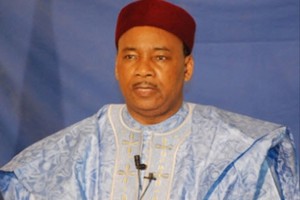
President Mahamadou Issoufou of Niger Republic has caused his scheduled visit to President Muhammadu Buhari to be postponed because of some domestic engagements.
The President of the Republic of Niger, who would have been in Nigeria tomorrow, Friday to observe Friday Jum’at prayer with his Nigerian counterpart and also hold talks with him, pleaded that the visit be temporarily put off as he will attend to another domestic engagement.
A statement by the special adviser to President Buhari on media and publicity, Femi Adesina said that all arrangements have been concluded for President Buhari to receive his Nigerien counterpart and his delegation at the forecourt of the Presidential Villa and attend the Jum’at prayers together as well as lunch, before the last-minute postponement.
Adesina said that a new date for the visit will be announced in due course. [myad]
When Mr. Femi Adesina, Special Adviser on Media and Publicity to President Muhammadu Buhari, explained why he has not followed my footsteps at the public presentation of my book, ‘Against The Run of Play’, last Friday in Lagos, I had a feeling that he might be speaking too soon. Going by feelers from Aso Rock, the real drama of the health challenge of President Buhari may have just started. And I feel very sorry for Mr Adesina because there is no manual for managing the media for a sick president; especially under the political climate in which we operate with all the mix of religion and ethnicity. Tomorrow marks exactly seven years that President Yar’Adua died and, as it has been a tradition since May 2011, I usually coordinate a memorial advert for those of us who were his principal officers in remembrance of him. It is also a period when we reflect on what might have been. Against the background that President Buhari, for the third week in a row, skipped the Federal Executive Council (FEC) meeting yesterday, the rumour mill is already on overdrive while parallels are already being drawn to the Yar’Adua saga. On Monday, Chief Bisi Akande, former Osun State Governor and founding National Chairman of the All Progressives Congress (APC), issued a loaded statement. “The health of the leader is intricately intertwined with the health of the nation. It is more so in a delicately fragile Union of Nations called Nigeria” wrote Akande who claimed to have wept when he couldn’t see President Buhari at the wedding of his grandson in Kaduna last Saturday. Although Chief Akande attributed the health challenge to “corruption fighting back”, whatever that may mean, the point is that President Buhari’s capacity to govern has been severely diminished and the agitation for him to either take another medical vacation or resign would be more strident in the coming days and weeks, especially if he does not resume work. That then explains why the idea of a second term that some people within the administration are now canvassing, is not only silly, it is very provocative. But it is also understandable. In a piece I did when President Buhari went on his elastic vacation in February, I borrowed from the embedded lessons in the book, “When Illness Strikes The Leaders: Dilemma of The Captive King” to examine the implications of what is happening in Nigeria right now. According to Jerrold Post and Robert Robins, “the ailing or aging leader and his close advisers can become locked in a fatal embrace, each dependent upon the other for survival: a captive king and his captive court. “In the absence of clear rules for determining when a leader is disabled and should be replaced and how a successor will be chosen, illness in high office can be highly destabilizing”. I consider it very sad that Nigeria would be going through another traumatic season like this on account of the health of the president. But we have to take Mrs Aisha Buhari’s word that her husband is not in any immediate danger. While we will come back to this issue another day, it is comforting that the handlers of President Buhari have managed the Aso Rock end of the situation very well thus far, given what I hear these days. I hope it stays that way. OF HACKERS AND PIRATES My web portal, olusegunadeniyi.com is loaded today. From the transcript of what President Buhari’s spokesman, Mr Femi Adesina said at my book presentation to that of his immediate predecessor, Dr Reuben Abati, there are revealing insights for readers. I thank both of them for attending the book presentation. On the web portal, there is also the speech by former Head of State, General Abdulsalami Abubakar who, as chair of the occasion, arrived 10 minutes before the scheduled time of 10am to meet Chief Emeka Anyaoku, Mr Remi Makanjuola and several other members of their generation who were more disciplined and had to be kept waiting for almost an hour before we started the event. On the website also is the book review by Dr Okey Ikechukwu. It also contains the addresses of the bookshops/places where the books can be purchased. Meanwhile, I have been overwhelmed by the kind words and messages of solidarity, following the hacking and free distribution of my book, ‘Against The Run of Play’.
While I thank all the people who have taken it upon themselves to fight the infringement on my intellectual property in the social media, and I have seen several efforts, I want to make two things clear. One, this battle is not about me. Two, given where I am coming from, I am not so much bothered by what happened. Perhaps, I should explain that. I wrote my first book, ‘Before The Verdict’, in 1991 as a fresh reporter with The Guardian on Sunday. I collected the CVs of the 23 presidential aspirants in both the Social Democratic Party (SDP) and National Republican Convention (NRC) which I then used to write their profiles. In my naivety, I imagined that members of the two political parties would find it useful before making their choices. I expended all my savings on it yet at the end, only one person paid for a copy: Mrs Ireti Kingibe. I am not sure any other person read the book. Following the disqualification of the 23 presidential aspirants, I updated the book with the reports of the primaries that led to their disqualification and titled it ‘Fortress on Quicksand’. I printed about a thousand copies which I hawked around. The only person I can remember who gave me any money after collecting two copies of the book is Dr Ibrahim Datti Ahmed, one of the disqualified SDP presidential aspirants at the time. A year later, I wrote “POLITRICKS: National Assembly under Military Dictatorship”. Despite the fact that the book captured the entire debate on the June 12, 1993 presidential election as well as all the drama preceding it, I got no feedback that any of the people who took the copies, free of charge, read it. Yet, that did not deter me from writing, in August 1997, “Abiola’s Travails” to mark his 60th birthday at a time the winner of the annulled June 12, 1993 presidential election was in detention. For that effort, only the then Chairman of PUNCH newspaper, Chief Ajibola Ogunsola gave me any financial support. That in itself is very instructive since I was at the time a staff of Abiola’s Concord newspapers. In all those efforts, what motivated me was to tell the background stories of the political developments at the time even when it was not financially rewarding. But by the time I got married in December 1998, I had to come to terms with the fact that I no longer had any money to waste on books that I was not sure people were reading. However, early in 2005, then as the editor of Sunday THISDAY, I wrote a column about those goading President Olusegun Obasanjo to seek a third term in office. Many of them were involved in the late General Sani Abacha’s controversial transition programme that was designed to end with his adoption and I named names. The responses I got to the piece suggested that majority of Nigerians had forgotten. That was the inspiration for yet another book: The Last 100 Days of Abacha. Before I started, I sent a mail to Nobel Laureate, Prof Wole Soyinka that I was writing a book on Abacha and I would want him to present it for me. Days turned to weeks and I didn’t hear from him. Then, one day, I got a mail from him saying he would be in the country within two weeks and that he would like to see the manuscript. I had not even written a single line! I went to Vanguard, PUNCH and Daily Times where I spent days using their libraries after which I wrote the draft. On completion, I sent it to Reuben Abati to help me look at. He called to say that he enjoyed it and that he would write a comment which I could use any way I liked. Without solicitation, that was how Reuben wrote what I turned to the Foreword while Col Abubakar Dangiwa Umar (rtd) wrote the Postscript. The book sold out within weeks despite the price tags of N8,000 for paperback and N15,000 for the hardback editions. It was the first financially rewarding book I wrote. The next book of course was “Power, Politics and Death”. Even though the online edition was hacked from Day One and was being circulated free, I still made some good money from the sales and we actually printed a second edition. In 2012 and 2013, I worked on The Verbatim Report (The Inside Story of the Fuel Subsidy Scam). It took me more than one year to complete but at the end, I put the book on my website for free download. It is one of the most extensive works on our oil and gas industry. It is about 800 pages. Interested readers can still download it free on my web portal just like the Abacha book which is also there for free download. I have gone to this length to let readers know that my motivation for writing has always been to tell compelling stories that would be read while monetary consideration is secondary. However, as I stated in the statement I released on Sunday, I am more worried, especially for those in Nollywood, who are practically at the mercy of hackers and pirates.
When creative people in both the arts and sciences cannot be guaranteed the legitimate benefits of their sweat and investments, they lose the incentive to take the risk to create and innovate. And when that happens, the whole society loses.
I thank all the individuals and groups who have taken it upon themselves to fight not only for me but against the theft of intellectual property that is now becoming rampant in our country.
The Institute of Change Management International (ICMI) has offered direct membership to interested professionals across all sectors of the business community, government establishments, agencies and institutions even as it flagged off an initiative aimed at building change management capacity across all sectors through the development of the change management competences in the country.
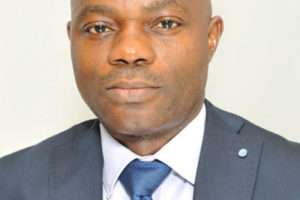
The Registrar of the Institute, Joseph Anetor, in a statement, said that the Institute is set up to regulate, train and certify practitioners in the practice of organizational change management. It is registered by the Corporate Affairs Commission and approved by the Federal Ministry of Education.
Anetor, a human resource expert said that the institute was established as a critical intervention and response to the urgent need for a more professional and impactful change management practices in organizations.
He said that getting businesses to run smoothly and the team aligned to the business strategy require a radical re-assessment of current change management practices in organizations in order to achieve desirable business outcomes.
“Any change programme that does not take due cognizance of the people element is doomed to fail.”
Anetor advised interested career minded professionals to take advantage of this window to become certified as the speed of growth of any professional in any organisation is defined by his or her ability to anticipate and manage change successfully.
“This is what differentiates the high-flying employees who consistently deliver strong results.” Anetor said that details are available at www.icming.org. [myad]
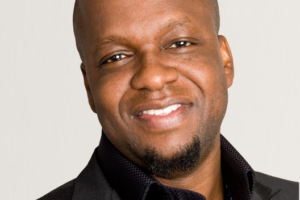
The Global Initiative for Peace, Love and Care (GIPLC) has launched a new initiative Project known as ‘Touch a life.’ The GIPLC, which will cater for about 1,000 patient in three states over three weeks, kicked off on April 25. It will end on May 17. Founder and Chairman of Taleveras, and past recipient of a Dr. Martin Luther King Legacy Award for Philanthropy and International Service, Igho Sanomi, said that the organization, which was founded in 2006 to cater for orphans and vulnerable children in Nigeria, launched the project as part of his birthday celebrations and to commemorate the GIPLC’s 11th anniversary. He said that the 1,000 identified vulnerable Nigerians in Abuja, Delta and Benue States will receive financial support to subsidize and assist their medical bills. He added that visits will also be made to patients to follow up on their progress. According to him, full professional team of GIPLC staff, doctors and nurses have been deployed to ensure the desired impact is met and lives are touched and saved. “Supporting the work of the GIPLC is something I have done for many years, in many ways. This year I wanted to do something which would help even more of the vulnerable people who have been at the core of the GIPLC activities. This unique initiative seeks to touch the lives of the most needy members of our communities at a time when they need it the most. This is something I believe in wholeheartedly and to which I am pleased to have been able to lend my support.” the GIPLC Co-ordinator, Nuhu Kwajafa, said: “We give God all the glory for His blessings and the capacity and the will, for people like Igho Sanomi to give back to those in need. We pray that by this gesture, ICS II will endear others to do same, so we may sustain this practice on a yearly basis. Ultimately, the goal is to stimulate the mobilisation of resources and raise awareness on the plight of those living in especially difficult circumstances. GIPLC will coordinate and share this experience daily. God bless you all.” Project “TOUCH A LIFE TODAY” visited Ughelli General Hospital and Kiagbodo General Hospital in Delta state on 2nd May 2017. So far 131 patients, including children, women and men had their medical bills subsidized. [myad]
The Presidency has confirmed that President Muhammadu Buhari is not always comfortable whenever any of his aides attacks journalists, whether such aide is right or not.
According to the Senior Special Assistant to the President on media and publicity, Malam Garba Shehu in an interview with some newsmen at the Aso Rock Presidential Villa, it is the wish of the President to allow journalists practice their profession without any hindrance.
“President used to rebuke officials of the government that use excessive power on journalists. He is not always happy with such thing.”
Garba Shehu said that in the history of Nigeria, journalists had never enjoyed freedom to express themselves than in the present Buhari government, adding that no journalist has been arrested or detained and no media house has been shut down in the two years Buhari has been in charge.
The presidential spokesman appealed to newsmen however, to join Buhari in cleansing the country of the Augean stables, including corruption, insecurity, economic saboteurs and all other vices, which the press is set out to combat in the first place. [myad]
Against the background of the fear that most farmers don’t pay back the loans they take from banks, the Central Bank of Nigeria (CBN) has confirmed that many farmers who accessed under its Anchor Borrowers’ Programme (ABP) have commenced repaying their loans.
Details of the loan disbursement and repayment obtained from the apex Bank indicate that as at March 31 this year, a total sum of N33.34 billion had been released through 12 Participating Finance Institutions in respect of 146,557 farmers across twenty-one (21) States cultivating over 180,018 hectres of land.
Out of the total amount of N33.34 billion released to date, about N15.137 billion disbursed to 73,941 Kebbi State farmers have fallen due for repayment with N7.119 billion representing 47 per cent, repaid and returned to CBN.
Meanwhile, the balance of N18.203 billion of the 12 months tenured loans released to farmers in the other twenty (20) states for two cropping (wet and dry) seasons have not fallen due for repayment. However, farmers in other benefiting states have also commenced the repayment to the tune of N1.238 billion which is already with the CBN.
Efforts are currently being made by the participating state governments to ensure that all outstanding loans are repaid by the farmers as soon as they are due before commencement of the next dry season cultivation. This is to enable the CBN extend similar gestures to farmers in other states which have indicated interest in the participating in the Anchor Borrowers Programme.
Six commodities namely: rice, wheat, maize, soya beans, cotton and fish have also been cultivated by the farmers with appreciable yields achieved with Kebbi state alone accounting for about two million metric tons of rice out of estimated four million metric tons so far realized under programme alone nationwide. [myad]
A group, known as the Benue Concerned Citizens has raised eyebrow over the more than tow month detention without trial of immediate past governor of the state, Dr. Gabriel Suswam by the Department of State Security (DSS).
In a statement in Abuja today, Wednesday, the group, which is a coalition of lawyers, political and pro-democracy activists and other professionals, condemned the continued incarceration Suswam and made to have limited access to only his wife.
Hon. Tim Nyor, who spoke on behalf of the group, appealed to Nigerians of conscience and particularly the security agencies, civil society organizations, international community and political authorities of the country to prevail on the DSS to either release former governor Suswam or immediately charge him before a Court of law for trial.
The group said that Suswam, a two-term Governor of Benue State, a former two-term member of the House of Representatives, a National Merit Award Honoree (CON), a lawyer and responsible Nigerian, who honoured an invitation by the DSS on February 25 has been in detention since then in what it called ‘facilities of the secret police,.’
“He has been denied access to medical attention and treatment for two months and we fear that his health is at risk.
“As a constitutional democracy, the Nigerian state must always act within the provisions of the law no matter the attraction to do otherwise. In this instance, the 1999 constitution of the federal republic of Nigeria as amended is very clear that nobody shall be detained for more than 48 hours without being charged to court.
“It is unconstitutional therefore that he has been kept incommunicado for over two month. This is illegal, unconstitutional, immoral, and unethical. The fundamental human rights of this Benue leader, Rt Hon Gabriel Suswam have been grossly abused. This brazen violation of the constitutional provisions by the DSS in this case must stop forthwith. We demand the unconditional release of this Benue leader.”
The rest of the text of the press briefing reads thus:
“We join other people of conscience, legal authorities, human rights advocates and pro-democracy activists to call on the DSS to immediately release from detention this national figure or charge him accordingly before a court of competent jurisdiction in accordance with the law.
“We make bold to say that even if the DSS were to charge him to court, Dr Gabriel Suswam needs to receive medical attention to be strong enough to face trial just as he needs time to meet his lawyers to prepare for defense, both of which he cannot effectively do well in detention.
“We particularly call on the political authorities, especially the National Assembly to wade into this matter and save him from harassment, intimidation and humiliation from the state. We equally call on the international community to come to our rescue by impressing on the Nigerian authorities to stop forthwith the abuse of the fundamental human right of Suswam by his continued detention without trial.
“Propelled by the words of Desmond Tutu, “if you are neutral in situations of injustice, you have chosen the side of the oppressor; if an elephant has its feet on the tail of a mouse and you say you are neutral, the mouse will not appreciate your neutrality” we must speak out. We are not against the law but we must resist all forms of democratic aberrations and injustice. We are governed by laws and statutes and they must be fully respected.
“We are further perturbed and most embittered by statements emanating from the DSS at his last court appearance, where he challenged his continued detention, where petitions from the Benue state government alleged that his release would make Benue State ungovernable.
“We decry the conspiratorial complicities of governments and government institutions in matters of security and personal freedom. If a man of Suswam’s stature and accomplishment can be so unlawfully incarcerated without trial for two months, one then wonders the fate of the common Nigerian. We must remain guided and guarded by the core tenets of democracy, justice and fairness, and this must be seen to be applicable to this situation. The greater Benue security challenge remains the rampaging Fulani herdsmen invasion of our lands and not the political persecution of a peaceful ex-governor perpetrated and orchestrated from distant but obvious places.
“It is unjust, unconstitutional and immoral that he is been made to serve a prison term even before trial by his continued detention. It is regrettable that he is made to serve this grave injustice after serving meritoriously as governor. Is it a crime for someone to serve his fatherland as a democratically elected governor. Why cause this untold pain to the former governor. Who is afraid of Dr. Gabriel Suswam presence in the nation’s political space. Who and why does anyone want to keep him permanently behind bars in such an unwholesome manner.” [myad]
As part of measures aimed at strengthening the war against the scourge of poliomyelitis, threat of flood in the imminent rainy season and protecting the environment, the Federal Capital Territory Administration (FCTA) has declared its intention to collaborate and work closely with the National Orientation Agency (NOA) to combat the three challenges.
Minister of the Federal Capital Territory (FCT), Malam Muhammad Musa Bello who spoke today, Wednesday when he received the FCT Director of the NOA in his office, acknowledged the support of the Agency to his administration, even as he said that the administration requires the services of the agency to sensitize the residents of Abuja.
The minister expressed his readiness to leverage on the very wide network of the NOA in the fight against polio following the warning from experts that FCT was at a high risk of its re-emergence.
He pointed out that the vulnerability of Abuja is based on the fact that it is a major hub for travelers as well as a safe haven for people affected by insurgency and militancy across the country.
“We will also collaborate with the NOA in other important areas which include a sustained campaign on the protection of the sanctity of lives, especially that of children against harmful traditions, the environment and preservation of the Abuja Master-plan”, the Minister said.
“As you know more than I do, change and being able to inculcate the spirit of change in individuals and communities is a very difficult task and governance at any level cannot really achieve its full potentials if you do not carry the governed along.
“Over the last one year or so, we’ve tried to strengthen institutions and the capacities of those that man the institutions so that we truly deliver on our mandates. In trying to do so, the greatest challenges I and my team are faced with is, being able to reorient people to do what is right.” [myad]
Senior Special Assistant to Vice President Yemi Osinbajo on media and publicity, Laolu Akande, has announced that the Osinbajo’s committee report is ready for submission to President Muhammadu Buhari on Monday, May 8.
In a statement today, Wednesday, Akande said that the three-man Presidential Investigative Committee was set up by President Buhari to inquire into the Discovery of Foreign and Local Currencies by the Economic and Financial Crimes Commission (EFCC) at Osbourne Towers, Ikoyi, Lagos and the Allegations of Due Process Violations in the Award of Contracts under the Presidential Initiative on the North East (PINE).
The committee, he said: “is completing its assignment today (Wednesday) and is scheduled to present its reports to the President on Monday, May 8, 2017.”
The top government officials being investigated are the Secretary to the Government of the Federation (SGF), Babachir David Lawal and the National Inteligence Agency (NIA), Ayo Oke. They have been on suspension. [myad]
Vice President Yemi Osinbajo has come up with what he called “four things that we think if we get right can completely turn things around for Nigeria and set us on a path of real growth with jobs.”
The Vice President, who spoke at a programme organized by the Covenant Christian Centre called The Platform on a theme: “We Can See The Light At The End Of The Tunnel’’ said that there are good news in various sectors of the Nigerian economy even s he pointed to the direction that the economy is going.
He recalled that only recently, President Muhammadu Buhari launched the Economic Recovery and Growth Plan, saying that the plan is built on the Strategic Implementation Plan for the implementation of the 2016 budget.
“The plan has 4 key execution priorities. That is four things that we think if we get right can completely turn things around for Nigeria and set us on a path of real growth with jobs.
The full text of his speech enumerated the four things thus:
“1. Stabilizing the Macroeconomic Environment.
Delivering Agricultural and Food Security.
Energy Sufficiency i.e. Adequacy of Power and Petroleum products, improving Transportation Infrastructure.
Driving industrialization through small and medium scale enterprises, and-PLUS- delivering an effective social investment programme.
So we think that these 4 items and of course including the Social Investment Programme can do the trick.
Let me tell you the good news in some of these areas.
AGRICULTURE
Take agriculture. As part of our plan to fully implement the diversification of our economy, we expected at least three major results, the first is that we would not have to depend on one source of revenue. In the past few years we depended solely on oil for revenues. But most of the revenues from oil was used to import items we either could make or grow. Food and refined petroleum products consumed most of our foreign exchange revenues.
So when in 2016 oil price crashed and in our case we lost almost 60% of production because of militancy in the Niger Delta, we were hit by triple crisis: no foreign exchange, so exchange rate went up, also prices of imported items including food increased because of the exchange rate. Many factories could not access foreign exchange so that meant in some cases higher prices of their products and shut downs.
So for us focusing on agriculture was key, two reasons. Agriculture and the whole agro-allied value chain is clearly the fastest way of creating jobs and lifting millions out of poverty. The majority of Nigerians are actually poor subsistence farmers. We decided that to move them out of poverty we will provide the right inputs, improved seedlings, and fertilizer and equipment so they could multiply their yield and make more money .
Through the CBN’s Anchor Borrowers programme, we were able to provide financing for many hundreds of thousands of farmers. Taking rice as an example, local production has almost tripled. We are now producing about 5 million tons. We were importing over 580,000 tons in 2015 and by 2016 we were importing only 58,000 tons. A major problem before now was being able to mill rice paddy. Government has now supplied 200 mills of various sizes for cooperatives ( in addition to private sector efforts)
If all goes well we could be producing all our rice by the end of 2018 and if we are able to do so, it means that the substantial amount that we spend on importing rice will be saved.
How did this happen? We provided improved rice seedlings to the farmers and then just teaching very simple farming practices that improves yield. Both Kebbi State government and IITA and Jigawa state also ( among others) have run excellent rice seed improvement programmes that have been of tremendous benefit.
Also using our disaggregated soil maps we were able to provide the NPK formulation or simply fertilizer for each soil type in the different States. Before now there was no map and fertilizers were just given indiscriminately. So, using that and applying the right fertilizers to the right area our yields went up from 2 tons per hectare to 4.5 to 5 tons per hectare and we have achieved 9 tons per hectare in some states.
So for the same acreage because of better inputs and farming practices the farmer can make more money, get out of poverty and is able to make a decent living and the country is more prosperous.
What we are trying to do for Wheat production is that we are trying to be self-sufficient in wheat production but that hasn’t been as successful as rice, the target is 300,000 tons now & 2.5 m consumption in another 2-3 years with improved seedlings. (For Sorghum, we are no 2 in the world.)
Maize is one area we would have done much better but we have not done enough because of army worm which destroyed a lot of maize across the country. The point is that we have simply not done enough in terms of maize production. A lot of maize that would have been grown here in the South West is not produced. Here in Lagos and in many parts of the South West where you can grow maize, enough has not been, especially when you consider the fact that the growth of the poultry sector is hinged on maize production.
Grain production generally has gone up and has become extremely lucrative. We have huge grain exports going on from Nigeria to the countries on our Northern borders and even threatening the availability of grain for local consumption. The most active markets for grains are Dawano market in Kano, Maigatari in Jigawa, Leila market in Sokoto.
All of these markets are where people come in from northern borders of Nigeria to buy grains. Now why has that become the case? It was because when our currency became weak, it meant that it was cheaper to export, now we are exporting more, that is one of the advantages of having a currency that is devalued. But when you are exporting more you must produce more.
The next phase of our agricultural push is in plantations of tree crops, Cocoa, Cashew, Shea-butter, Coconut oil… (coconut oil expensive, l litre is N7000), the list also includes Sesame seed, Soya bean, Pineapples and Banana. For Cassava – we are now looking at Ethanol and Starch which are in high demand, including Sugar-cane.
This year there was a major revolution in the fertilizer sector. Things improved dramatically because the Presidential Fertilizer Initiative came up with a design to solve the problem once and for all. The Ministry of Agriculture produced a soil map for the country that determined the pattern of fertilizer distribution and this helped a great deal.
Also, the Federal government provided a concessionary working capital loan for Nigerian-based blending plants to enable them produce fertilizer locally. The thing with fertilizer is that a substantial quantity of what you need to blend is available locally which is why we struck the deal with the Moroccan government. We now have a government-to-government arrangement facilitated and driven by private sector players. Nigeria signed an agreement with Morocco for the importation of phosphate at a concessionary price and getting potash from Europe.
We are now able to use our own blending plants to produce fertilizer at a very cheap rate, as a matter of fact we are able to deliver fertilizer around N4,500, almost half of what it used to be.
But more importantly, there is a whole industry around fertilizer production. We are now using warehouses in the sea ports, we are transporting fertilizer via the railway and we hope that we are able to produce 500,000 metric tons of blended NPK for raining season farming and another 500,000 for the dry season farming. The initiative has so far created 50,000 direct jobs and over 120,000 indirect jobs.
CBN
In stabilizing, the macro-economic environment we have focused on aligning fiscal with monetary policy and nudging the CBN towards the objective of more market determined exchange rates. We are also working on replacing the 41 items not valid for foreign exchange with a more trade policy-driven restrictions taking into account those items that are required and locally unavailable raw materials.
SUPPORT FOR STATES
As of 2015 when we assumed office 2/3 of States had been owing salaries for months. We began a systematic scheme of support for States in three phases and only recently paid 25% of Paris Club refunds a debt owed to States since 2005.
All of these interventions were able to ensure that the States survive the recession and workers can continue to earn their pay and support their families.
Now there are all manner of arguments about what the Federal Government has done for the states, there are those who say ‘don’t give them anything,’ there are those who say that the support should come with some preconditions. What we did was to stipulate some pre-conditions for providing the support. We believe that states constitute the nation and once the states are disadvantaged as they were, the whole economy suffers and that reflects on the performance of the economy. So we tried very hard to see that the states meet some preconditions before the bailouts and some of the other supports were given.
INFLATION
Inflation has slowed down, thankfully, here we are down by 1 per cent, there are of course several issues, several conditions why we experienced the kind of inflation that we experienced. Economists say it was cost-push while others said it was cost push inflation on account of rising exchange rate. But we hope that we will be able to slow down as we implement some of the policies.
INTEREST RATES & INTERVETION FUNDS
Interest rates remain high and there has been some criticisms around it, but the truth of the matter is that we may not be able to do much about it. But we think that what we are trying to do now which is using some of our interventions in the critical sectors might be what will mitigate the situation now.
So, we are trying to get intervention fund for agriculture through the BOA, for SMEs through the BOI. We also started the Development Bank of Nigeria which is the main vehicle for intervention banks. But bringing down the interest rates of course will involve borrowing less from the domestic market, at the moment we are borrowing substantially from the domestic market.
FISCAL DISCIPLINE
We have rationalized public expenditure by ensuring fiscal discipline. By rigorously ensuring that all workers, 60% so far are registered on the IPPIs electronic payroll and personnel information system we have removed 58,350 ghost workers from the payroll and saved N92.47 billion between January 2016 and April 2017. By rationalizing overhead expenditure we have saved N15b on travels, N1 billion on sitting allowances and honorariums and 1 billion on meals and refreshments.
ANTI-CORRUPTION
The focus on good governance and anti-corruption is a fundamental doctrine of the government. From the campaigns till now the President has repeatedly said that corruption is an existential problem for Nigeria. We die as a nation or corruption dies. Because corruption in our nation is systemic, cutting across society’s pillars and arms of government, it would have been naive to expect that it would be easy.
Indeed corruption has been boldly fighting back through well established and well-funded entities and even sometimes through government institutions. But let me just say that we are determined and resolved to defend the nation systematically and deliberately against all forms of corruption and the reason is that if there is any one issue that has continuously ensured that our country does not make the kind of progress that it should make, it is corruption.
INDUSTRIALIZATION, MSMES, EASE OF DOING BUSINESS
In driving industrialization and focusing on MSMEs, our focus has largely being on creating an enabling environment for doing business in Nigeria. That is crucial. We need private capital to give our economy the push it needs. This is the abiding philosophy of our economic recovery and growth plan. There is no way that government can ever provide all the resources that is needed to build infrastructure for our economy, so we need a lot of domestic investment.
For instance we have an investment in Refinery that is the largest single line refinery in the world with 650,000 barrel per day capacity, and fertilizer plant. All of these and a subsea pipeline cost almost 12 billion dollars. We are trying to attract the huge investments in the oil sector and in petrochemicals; we are seeing more investment activity in the oil sector with the resolution of the joint venture cash calls issues with the IOC’s that we were able to achieve. It is clear that we are gradually attracting some foreign investments into the economy.
Another plank of that policy is what the president described in his budget speech – growing what we eat and using what we make, in other words, made in Nigeria. It is and like I said, that is the major plank of our economic recovery and growth plan. For instance, the president has directed that the Army and other of our forces patronize local boot makers.
Not too long ago we were in Aba for an MSME clinic and the sheer number of Nigerians producing good boots for our military was amazing but there are three or four major makers of such items, so when the implementation of our Made-in-Nigeria policy gets down, they will benefit immensely from it.
In terms of industrial infrastructure we are focusing on improving existing Special Economic Zones, and establishing new ones. We have set aside N50billon for this purpose in the 2017 budget for the existing free trade zones. The existing zones are:
– Lekki Free Trade Zone, Lekki
– Ogun Guangdong Free Trade Zone, Igbesa
– Calabar Free Trade Zone
– Kano Free Trade Zone
And Model Zone Sites are
– Ibom City and Deep Sea Port, Akwa Ibom State
– Enyimba City, Aba, Abia State
China Eximbank and Afreximbank have announced an initial financing commitment of $1bn that is available for our pilots and other Special Economic Zones in Nigeria.
The plan is to accelerate the implementation of the National Industrial Revolution Plan NIRP through the special economic zones. The zones will focus on priority sectors to generate jobs, promote exports, boost growth and upgrade skills with an objective of creating 1.5 million jobs by 2020.
PEBEC & THE 60-DAY ACTION PLAN THAT ENDED RECENTLY
On February 21, 2017, the Presidential Enabling Business Environment Council (PEBEC) launched a 60-Day National Action Plan on Ease of Doing Business. The president had earlier constituted the council and asked me to chair it. The whole idea was for us to concentrate our efforts on making it easier for business to be done in Nigeria and you might know that we became a poor 169 out of 190 in the ranking for ease of doing business in the world.
So, on a weekly basis we track progress on what we set out to do. The implementation period of the Plan ended on Friday, April 21, 2017. The Plan which was implemented by the Ministries, Departments and Agencies (MDAs), Lagos and Kano Governments, the National Assembly and affected private sector stakeholders, committed to a set of quick wins across eight priority areas – Starting a Business, Dealing with Construction Permits, Getting Electricity, Registering Property, Paying Taxes, Trading Across Borders, Getting Credit, and Entry & Exit of People.
On April 24th, the PEBEC released a Report Card with an overall completion rate of 70%, with 15 of the original 22 initiatives completed and a further 10+ reforms completed outside of the formally announced Plan.
PROGRESS IN BUSINESS REGISTRATION
I will just point out some areas where progress have been made. In starting a business, the Corporate Affairs Commission (CAC) has implemented reforms that have made the process of business registration easier and faster through automation, including – free online search of company names, consolidated application forms from 7 to 1, document upload for e-submission, and integrated CAC and FIRS portal for stamp duties payment. The CAC portal and servers are being migrated to a private company Main One to give 99% uptime within the next 30 days.
PROGRESS IN ENTRY AND EXIT OF PERSONS & OTHERS
On the Entry & Exit of People indicator, i.e. The ease of coming into Nigeria and leaving through our airports, completed reforms include the Simplified Visa-on-Arrival process, and the consolidation of immigration, custom forms to one single form of 15 questions when leaving the country. We have also tried to do some infrastructural improvements at the Abuja airport and FAAN is now commencing work on the Lagos Airport.
On trading across borders, some of the completed reforms include reduction in import documentation requirements from 14 to 8, and export documents have reduced from 10 to 7.
Also we have the Palletisation of imports so that they are easier to be inspected, advanced cargo manifests, and scheduling of Joint Physical Examination anchored by the Nigerian Customs Service (NCS).
The next phase of our reforms is anchored on three pillars:
Deepening existing reforms;
Initiating sub-national reforms, which will culminate in the sub-national ranking of all 36 states and the FCT I 2018;
Introduction of a new reform area “Trading within Nigeria”, which will push initiatives aimed at improving business processes and regulations within Nigeria, and ease the movement of goods within the country.
The PEBEC secretariat, EBES, is holding a “Hackathon” bringing together computer programmers and other technology developers to develop an M&E solution for tracking reforms and getting public feedback. So we want to develop an app that can enable the public to complain directly about government agencies that are making doing business difficult. The app should also be capable of administering a public survey to ascertain those reforms that small and medium scale business consider to be priorities.
MSME CLINICS TURNING AGENCIES INTO BUSINESS FACILITATORS NOT OBSTACLES
In addition we have been conducting MSMES clinics across the country. Many MSMEs complain about the difficulties of getting help from government agencies responsible for one approval or the other relevant for their businesses.
So we decided to launch the clinics letting government agencies know that they are to be facilitators of business not obstacles. So we have been taking the government agencies, NAFDAC, SON, CAC, BOI, NEPC, to various states for these clinics. There, small business owners meet with government agencies, ask questions and deal with problems on the spot where possible. I have been to Aba, Sokoto on the clinics and will be in Jos this week and we are taking all of the agencies involved to meet the MSMES.
DIGITAL INDUSTRY & INNOVATION TECHNOLOGY PROGRESS
Growing the digital industry and innovation has been a priority for the government. After the very successful Aso Villa Demo Day which saw 30 of the best of over 4000 innovators emerge, the presidency in collaboration with the World Bank through the GEM programme has through a competitive process selected 81 innovators who have been given funds for their businesses. The World Bank set aside N756.3 million for the project. We are also promoting innovation hubs in 6 geo-political Zones. The hubs are essentially to provide training for a wide range of technology related skills, empowering youths for entrepreneurship and employment.
POWER
Power is key, if there is a single reform that can fundamentally change the narrative on the Nigerian economy it would be power. One thing that is clear is that we are very focused on trying to deal with the issue of power.
By and large, the major problem has been that the private sector players have not been able to invest in the critical areas of metering, and others that guarantee improvement in the sector but the problem is much complicated than that. They complain that the reason why they cannot make enough money is that they do not have a cost-effective tariff. We have a situation where there is illiquidity in the chain, meaning that there isn’t enough money to service the chain.
The Federal Executive Council had on the 1st of March 2017 approved a N701Bn CBN Facility as a payment guarantee for Nigeria Bulk Electricity Trading company to guarantee payments to the Power sector and in turn improve Power supply. This fund will be provided to NBET at a 10% interest per annum; the Federal Ministry of Finance would in turn guarantee the repayment of the principal and interests.
At the meeting, the FEC also approved that FGN continue discussions with the World Bank Group (WBG) with the objective of securing financial support of $2.5 billion for the power sector. After discussions with the WBG, the Power Sector Recovery Implementation Program was created.
The January 2017 invoice is now due. Indicative data presented by NBET indicates that NBET intends to pay a flat-rate of 80% of the January-2017 generation invoice. This is a good signal, representing the FGN keeping to its word.
REFINED PETROLEUM
Refined petroleum products is crucial, at the moment we spend 30% of our foreign exchange to import refined products but we are working around that and we hope that by the end of 2018 we should have attained self sufficiency in refined products.
CONCLUSION
Finally let me say again that we live in a great country and you and I are at a perfect moment in the history of our country. The opportunities are limitless. Added to that we have easily some of the best talented people anywhere in the world.
Our population is young and vibrant, they are bolder, more creative, more entrepreneurial than the youths of any other country in our region, and have competed and beaten the best in the world.
So what do we have to fear? This generation must not allow the failures of the past to hold it down or become an excuse for your own failure. Every generation has a responsibility to take life, opportunities and challenges as they find them and go ahead and do great things. You here are not leaders of the future, the future is already here.” [myad]
We use cookies on our website to give you the most relevant experience by remembering your preferences and repeat visits. By clicking “Accept”, you consent to the use of ALL the cookies.
This website uses cookies to improve your experience while you navigate through the website. Out of these, the cookies that are categorized as necessary are stored on your browser as they are essential for the working of basic functionalities of the website. We also use third-party cookies that help us analyze and understand how you use this website. These cookies will be stored in your browser only with your consent. You also have the option to opt-out of these cookies. But opting out of some of these cookies may affect your browsing experience.
Necessary cookies are absolutely essential for the website to function properly. This category only includes cookies that ensures basic functionalities and security features of the website. These cookies do not store any personal information.
Any cookies that may not be particularly necessary for the website to function and is used specifically to collect user personal data via analytics, ads, other embedded contents are termed as non-necessary cookies. It is mandatory to procure user consent prior to running these cookies on your website.


 The Global Initiative for Peace, Love and Care (GIPLC) has launched a new initiative Project known as ‘Touch a life.’ The GIPLC, which will cater for about 1,000 patient in three states over three weeks, kicked off on April 25. It will end on May 17.