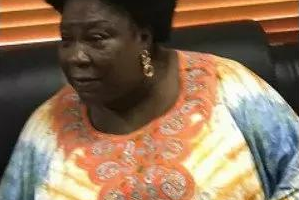
On March 24, one Ms Taiwo Titilayo Momoh, attempted suicide at the Third Mainland Bridge, Lagos. Both the police and concerned citizens rescued her from killing herself. The said Ms Momoh was arraigned on April 21, at the Ebute Meta Chief Magistrate Court on a one-count charge to wit: “That you, Titilayo Momoh on the 24th day of March 2017 at about 10.00 hours at the Third Mainland Bridge, Lagos did attempt to commit suicide by jumping into the river and thereby committed an offence under Section 235 C.17, Vol. 3 of the Criminal law of Lagos State 2015.” The accused person has since been granted bail in the sum of N500, 000, with two sureties in like sum. She is also required to undergo psychiatric evaluation. Her case has been adjourned till June 2017.
The Attorney General and Commissioner for Justice, Lagos State is hereby invited to take special notice of this case and to enter a nolle prosequi to ensure its discontinuance. The exercise of the power of nolle prosequi as spelled out in Sections 174(1) and 211 of the 1999 Constitution has been a subject of much debate. This is in spite of the Supreme Court’s position in The State vs Ilori, due to the tendency of some AGs to abuse such powers. But there is not a scintilla of doubt in my mind that by discontinuing the Titilayo Momoh case, the AG Lagos would have acted “in the public interest, the interests of justice and the need to prevent the abuse of legal process.” I state this with due regard to the right of the court to be seized of the matter in question, attempted suicide being an offence in the statutes. The key issue, nonetheless, is that there are related matters of public interest, beyond legalism.
Section 235 of the Criminal Law of Lagos State under which Ms Titilayo Momoh has been charged for non-fatal suicidal behaviour is in pari materia with Section 326 and 327 of the Penal Code and Criminal Codes respectively. The Criminal Code states expressly: “Any person who attempts to kill himself is guilty of a misdemeanor, and is liable to imprisonment for one year.” Thus in letter and spirit, the extant law on pari-suicide in Nigeria criminalizes the act. The only problem is that the law sounds like the law that is applied to the act of coup making.
If you plot a coup and you succeed, you get away with it, but if you make the mistake of failing, you find yourself in very serious trouble. The extant law on suicide deals with you if you fail, but the same law is helpless if you succeed. The only difference is that whereas a coup is an act of treason against the state, suicide is a coup against the self. Government exists because there is a society composed of people, living people who are happy to be alive and contribute their own quota to society. When people begin to kill themselves at will, and at the slightest provocation, the responsibility of government should be to inquire into the causes of such demolition of the right to life, and therefore make amends – so the cause of being-ness and the welfare of the people can be better addressed.
For this reason, the Nigerian legislature, including the State Houses of Assembly, should take a second look at the extant law on attempted suicide. In truth, the law has been rarely applied, the last publicized application being the case instituted against certain persons by the Nigeria Railway Corporation (NRC) in 2013, persons who had formed the habit of travelling on the rooftop of trains, instead of buying tickets and taking proper seats. The NRC took some of those persons to court for attempting suicide. They ended up getting a slap on the wrist, they were asked to pay fines. It must have been obvious to the court that these were not suicidal cases, but persons who just wanted a free ride on the train, and could only do so from the roof.
The arraignment of Titilayo Momoh is however a serious matter. If she goes to trial, she could in fact be convicted, since hers is a clearly straightforward case. She had confessed with her own mouth that she wanted to die because she had too many financial debts to pay, a Bureau de Change also swindled her, she sought help from everywhere, including her church but nobody was willing to help her, and so, she decided to end it all. When she was rescued from jumping into the Lagoon, everyone sympathized with her. She suddenly got the help that society had previously denied her. She returned to her textile shop, and was beginning to pick up the pieces of her life again, only for the police to invoke the law and take her to court.
Her arraignment exposes the problems with the law. She now probably wishes she had actually committed suicide. The legal matter she is now battling with, could throw her into even greater debt: paying lawyers, sorting out logistics, and as the wheel of law still grinds slowly, she could experience worse depression. The same travails that drove her to the edge of the cliff have not been made any lighter. The other thing to note is that the relevant statutes in gender terms refer to “himself”. Can we possibly interpret the law strictly and literally and insist that the law on suicide only has the male gender in mind? So why is Titilayo, “herself”, being charged when the law says “himself”? I know what the canons of the rule of interpretation say, and how gender-insensitive the phrasing of the law is, so, may be I need not stretch this further. But another reasonable response by a common man to the Titilayo Momoh case would be to ask why she is the only one being targeted.
In the first quarter of 2017 alone, there were more attempted suicide and suicide cases than there were in the whole of 2016, and the figures keep increasing. Ms Momoh was rescued the same week alongside one Abigail Ogunyinka, who actually jumped into the Lagoon and was fished out by divers. In Mazamaza another woman, Emerald, was also rescued after she had jumped. Much earlier, Tiwa Savage’s husband, Tee Billz, was dissuaded by friends and concerned persons from jumping into the Lagoon. There have also been persons who succeeded in their suicide efforts and can no longer be reached by the long arms of the arm. There was Dr Allwell Oji, and reported cases from Ogun state (25), Ebonyi (10), Delta (4), Oyo (4), Kano (6), the latest case being that of a University of Lagos young undergraduate who killed herself after she was accused of stealing make up kit worth N2, 000 (the current equivalent of $5 or $6!).
The court of law is not under any strict obligation to embark on a hunting expedition for cases by itself and it is no defence in law to play the victim by asking why the neighbor who committed the same offence has not been charged to court: the court deals only with what is duly brought before it. But even if there is a case to answer, Ms Momoh, the accused in the present case is likely to wonder why she is the only special target for litigation. Research on para-suicide informs us that persons who failed in the first attempt are at a high risk of a second attempt. By seeking to put failed suicide attempters to trial, is government encouraging all such persons to succeed by all means? The shaming and trial of such persons may even drive them underground, away from public places where the attempt may be noticed and stopped.
It is partly for this and other reasons, principally the recognition that persons who attempt suicide need help rather than vilification, and that prevention is better than cure, that many countries of the world have de-criminalized suicide attempts. The latest country to do so is India. In 1961, the British who offered us the common law origin of our own law on suicide attempts de-criminalized non-fatal suicidal behaviour. Other countries where suicide attempt is no longer a crime include Egypt, Botswana, Cameroon, Angola, South Africa, Eritrea, Zambia and Zimbabwe.
The World Health Organization recognizes depression as the leading cause of suicide in the world. Globally, more than 300 million people are suffering from depression and related disability. The Nigeria Medical Association (NMA) has also disclosed that 90% of reported suicide cases in Nigeria are traceable to depression. At the Lagos University Teaching Hospital, 10% of all referrals are attempted suicides. This year, WHO chose as the theme for the World Health Day on April 7: “Depression, let’s talk”. Persons suffering from depression are advised and encouraged to talk about their problems within the community and seek help from existing institutions and from professional counselors including psychologists, psychiatrists, mental hospitals and sociologists. Depression is a form of mental psychosis, attributed to such existential issues as drug abuse, alcohol abuse, sadness, low self-esteem, poverty, marital crisis, indebtedness, loss of a loved one, and so on.
In Nigeria and other African countries where mental ill-health is regarded as lunacy simpliciter, most persons who are depressed find it difficult to talk about it. Any form of mental ill-health in Nigeria is still covered by the colonial law, called the Lunacy Act, 1958. That law dehumanizes anybody that requires mental healthcare. A Mental Health Policy 1991 has tried to state the basic principles in line with international conventions, but the Act of 1958 remains the enabling law. Since 2003, three attempts have been made to introduce a Mental Health Bill, but each time it was tabled, the National Assembly did not consider it important enough.
Further, there are just about eight mental health hospitals in Nigeria, some psychiatric units in major hospitals, and less than 150 professional psychiatrists to a population of nearly 200 million. Similarly there are no enough psychiatric nurses or professional counselors. Out of the few psychiatrists we have in the country, some have since left the profession to go into politics. The hospitals are poorly staffed, poorly equipped and poorly referenced in popular culture and conversation. And at the few mental hospitals that we even have, those who are expected to help other people are busy fighting among themselves – the internal politics at the Neuro-Psychiatric Hospital in Uselu, Benin City for example is worse than the politics of Nigeria! As it were, anybody who is depressed in Nigeria is at the risk of suicide. “Lunacy” is a taboo subject, and yet the people face more problems daily that require mental health counseling.
The sudden increase in attempted suicide cases in our country should provide the needed impetus for review and introspection, not the vilification of persons who are already society’s victims. It is even surprising that The Lagos State Police Command will choose to scapegoat Titilayo Momoh and take her to court. In 2016, Ms Dolapo Badmos, the Lagos State Police PRO (as she then was) had announced that the police was not interested in taking any person who attempted suicide to court out of the recognition that such persons needed help. In line with this, the Lagos Police Command set up a special unit to patrol the bridges in Lagos, to prevent people from jumping into the rivers.
The Lagos State Government also set up an Aquatic Rescue Unit, and it is this unit that helped in rescuing at least two reported cases between January and March 2017. Two hotlines have also since been announced to assist persons in need of urgent help (08062106493, 08092106493). Is it likely that the Lagos State Government in collaboration with the police, and civil society groups has taken these preventive and emergency rescue steps in order to capture persons who attempt suicide so the courts can have cases to handle? If true, it is ill-advised because this will neither reduce cases of suicide, nor prevent people from committing suicide. Governments at all levels should “talk about depression” and help the people – through good governance – to reduce the number of people seeking to die at the slightest emotional provocation.
Titilayo Momoh’s place is not in the court-room. She should be set free and assisted. The extant laws on attempted suicide should be revised. Para-suicide should be de-criminalized and de-penalized. I do not include in this appeal however, all such attempted suicides related to terrorism or incidental to other expressly criminal activities. [myad]
Prophet T.B. Joshua has announced his intention to leave Nigeria and relocate his ministry to the nation of Israel very soon.
Joshua, who spoke at a multi-national audience during his church service said that he had just returned from the ‘Holy Land’ where he held meetings with three prominent Israeli mayors of Jerusalem, Tiberias and the Jordan Valley.
He said that the three mayors offered both land and facilities in an area around the biblical site of the Sea of Galilee for him to organize meetings for international pilgrims.
“This is where my Father in Heaven came from – it’s non-negotiable,” Joshua explained, adding that it was not a decision he undertook lightly.
“It’s the best place for you to meet Prophet T.B. Joshua. After your healing, blessing and deliverance, you can move around all the spiritual monuments which will establish your faith.”
Joshua said that his decision to leave was not connected to the “persecution” he endured during his ministry even as he hoped that the move would help people to appreciate what his ministry had been contributing to both the local economy and Nigeria’s international image.
“This is the most persecuted ministry in the world. Who are the people persecuting the ministry? My people, Africa,” Joshua bluntly stated, adding that this ‘treatment’ had led him into a life of virtual isolation.
“That is why I choose to live a lonely life. If you want to see me, come to this church. I don’t go out. It has not been easy – because I don’t know who is a friend or who is an enemy. If you learn T.B. Joshua is not around, I am in a revival. I live in the church here. I don’t have a house outside.
“Anytime you pray, remember Africa in prayer,” the cleric solemnly continued to an audience which included over 3,000 foreign nationals who flew into Nigeria to attend the church service.
“Many heroes and great people have been chased out of Africa. There are many geniuses in the Western world who are originally from Africa.”
The cleric pointed to the example of heavyweight boxing champion Anthony Joshua who was allegedly turned down by Nigerian sporting authorities when he wanted to represent the country.
“What happened to me from the beginning of my ministry is enough to chase me out of this country – but I am still in your midst. Upon the persecution and hatred – I decided to follow the path of love. You show hatred; I show love. When I go for a revival, you will see the stadium full but I am not carried away by that. I leave where I’m celebrated to live where I’m persecuted.” [myad]
President Muhammadu Buhari has expressed appreciation to Nigerian workers for the maturity they have shown in the face of the economic recession the nation has been going through.
The President, who assured the workers of speedy passage of the new National Minimum Wage to cushion the effect of the recession, in his May Day message to the workers, said: “in the face of these inevitable challenges, you have shown maturity and understanding in spite of the situation in which we found ourselves.
“I strongly salute your great sense of patriotism and loyalty to the country.”
President Buhari said: “I am happy to inform you that Government will give expeditious consideration to the proposal contained in the Technical Committee’s Report which was submitted to it on April 6, 2017.
“Government will take necessary steps to implement the final recommendation of the Main Government/Labour Committee as it relates to the setting up the new National Minimum Wage Committee and the needed palliatives.
“This is in order to reduce the discomfort currently being experienced by the Nigerian working class.
“I want to assure you that government will continue to do all at its disposal to better the lots of all Nigerians and more importantly to provide a commensurate welfare for all Nigerian workers.”
Buhari said that he is aware that the economic recession had huge implication for the conduct of industrial relations and noted that this arose from the fact that the economic recession by its nature was characterised by a substantial risk of the vicious circles of low-productivity.
He said that others are mass retrenchment of workers and closure of workplaces due to high cost of doing business, unregulated subcontracting and outsourcing with its consequences on welfare of workers among others.
The President appealed for effective deployment of labour relations, an amalgamated approach that would be used in creating a conducive work environment that would attract foreign investment for wealth creation.
“Therefore, I call on the organised labour to continue to partner with this administration by resorting to social dialogue as an indispensable tool for conflict resolution
“Today, we stand in solitary with workers all over the world to commemorate this historic Day which marked a turning point in the economies of the nations and the welfare of the working class.”
He commended the organized labour for their support and encouragement to the administration’s fight against corruption which was the bane of sustainable economic development.
“My commitment to fight against corruption is total and irreversible. We must fight corruption before it destroys us.
“As a matter of fact, the workers should be in the forefront of activities in the realization of the Whistle-Blowing Policy of this Administration.” [myad]
Kogi State Governor, Yahaya Bello appears to have faulted the Ngeria Police for arresting and parading the administrator of Ijumu local government area of the state, Taofiq Isah in the alleged assassination attempt on Senator Dino Melaye.
The governor said, in a statement by his media director, Kinsley Fanwo: “we shall wait for next actions by the Police in this matter and will be watching to make sure the Police adheres strictly to the rule of law at all stages.
“We shall ensure that the embattled Administrator is afforded every facility to prove his innocence of these serious allegations and return home to his family and his duties.”
The governor went on: “we have seen the reports in the media of the parading in Abuja of suspects in the alleged assassination attempt on Senator Dino Melaye by the Nigerian Police Force.
“One of the paraded suspects, Alhaji Taofiq Isah, is the serving Administrator of Ijumu Local Government of Kogi State.
“The Kogi State Government has been aware of the arrest and detention of the Ijumu Local Government Administrator and others in connection with the case for about six days now.
“However, we are taken aback by the accompanying statement of the Police during the parade which appear to indicate that there is now evidence to show that there was a real assassination attempt on Senator Dino Melaye, and that Alhaji Isah is somehow complicit in it.
“For the avoidance of doubt, the Kogi State Government under Governor Yahaya Bello has bound itself to zero tolerance for corruption, violent politics and all forms of criminality.”
He said that his government has spent a huge chunk of its resources and nearly all its time since assuming office fighting crimes and criminals to a standstill.
“The public can therefore rest in the assurance that there will be no hiding place within the Administration or in Kogi State for that matter, for anyone who, for any reason whatsoever, resorts to the old and discredited ways of crime and violence in politics which we inherited and have since dismantled.” [myad]
Gombe State Governor, Ibrahim Dankwambo, has assured the state’s civil servants that his government would implement the proposed N56, 000 national minimum wage, if the federal government approves it.
Dankwambo gave the assurance at the commemoration of 2017 Workers’ Day in Gombe today, Monday.
The governor, who was represented by his deputy, Charles Iliya, said: “as soon as the Federal Government approves the new minimum wage, our administration will implement it within the limit of our resources.”
He called on the Nigeria Labour Congress (NLC) and Nigerians to be resilient and support government efforts aimed at moving the country out of current economic recession.
“Our administration accords top priority to the welfare of civil servants whose selfless service contributed immensely to the socio-economy development of our dear state,.”
The state chairman of the NLC, Aliyu Kamara, appealed to the Federal Government to as a matter of urgency, approve the new minimum wage which was submitted by the technical committee.
He said that approval of the new minimum wage is necessary, considering the current economic recession and the attendant high cost of goods and services in the country.
Kamara also appealed to state government to consider all issues presented to it during the interactive session held between labour leaders and government. [myad]
Telecommunications giant, MTN has sacked no fewer than 280 of its employees in Nigeria, including about 200 permanent employees and about 80 contract staff across various cadres, ranging from new graduates to senior managers.
It was gathered that many of the affected workers have spent 15 years with the company, having joined MTN after it opened office in Nigeria in 2001.
It was learnt that the sacked workers were given a severance of 75 percent of their gross monthly income multiplied by the number of years with the company.
“Given that the company is about 16 years old in Nigeria, the severance package brought pain and discontent among the affected staff,” a source said.
“With the payoff structure, senior managers with 15 years of service were left with about N15 million. Most of the staff got less than N5 million.”
The source said the company introduced the voluntary severance scheme, VSS, to provide a window for one week in April, for persons who have served in MTN for five years and above to take up.
The 280 who decided to leave under the VSS were to be paid the equivalent of their three weeks gross salary for every year they worked with MTN.
“What it means is that if one worked in MTN for five years, one would be paid three weeks of their gross salaries times five,” the source added.
MTN, a few weeks ago, paid additional N30 billion fine to Nigerian government.
Lawyer to the Indigenous People of Biafra (IPOB), Barrister Maxwell Opara, has said that he and other notable Igbo leaders had to plead with the leader of the IPOB, Nnamdi Kanu before he agreed to sign his bail.
The human rights activist said that Nnamdi kanu refused to accept his bail initially but they begged him to accept it because of his health.
He wrote in a message he shared on his twitter handle: “Kanu refused to sign his bail. He said he won’t go unless his co-accused are released.
“We had to beg him, his co-accused had to beg to go because he is really sick. We told him it is a man who is alive that can fight for self determination.”
The lawyer said that some of the bail conditions given to Nnamdi kanu are against his rights.
“Some of those bail conditions given to Nnamdi Kanu go against the principle of fundamental human rights.
“I’m not his direct counsel but I’m sure my colleague will change that in court soon. The struggle continues.”
Nnamdi Kanu was last Tuseday granted bail by a Federal High Court in Abuja led by Justice Binta Nyako.
He, however, met his bail condition, and land left Kuje, Abuja, later in the week. [myad]
A Pentecostal Bishop, Rt. Rev. Seun Adeoye, has warned that should anything happen to President Muhammadu Buhari, Nigeria will fall into wrong hands that will turn it into their private estate.
The cleric, who spoke during the 1st Episcopal Honours and Gallantry Awards held at Sufficient Grace and Truth Ministry, Rehoboth Arena, Okinni, Osun State therefore called on Nigerians to double their prayers for the quick recovery of the President.
Saying that only God can sustain the President’s health, Bishop Adeoye said: “I see trouble should anything go wrong with President Buhari. So, we need to pray for his quick recovery from this ailment. Buhari must not die; Buhari must live and that should be our prayers.
“If Buhari is not the President, we will be faced with more lies and propaganda where we are going to be made to call black white. Rule of law will turn to be rule of fear and democracy will be replaced by despotism, favoritism and god-fatherism.
“We cannot allow Nigeria to be in the hand of any of the present leaders. None of them can be the captain of this ship; they will run it aground with their arrogance and selfish agenda.
“They will rob, strip us unclad and put us in perpetual bondage as slaves. So, I enjoin all of us to pray for the President Buhari to get well quickly.” [myad]
“The truth however is that where the monthly wage of a worker is as low as N18,000.00 under the current economic situation, workers with the least inclination to steal public funds become vulnerable. Therefore our campaign for a living wage is one of the best insurance against corruption in the public service.”
The President of the Nigeria Labour Congress (NLC) Comrade Ayuba Philibus Wabba made these observations today while addressing workers at the May Day celebration.
Wabba said tha one of the things that were expected to come out of the palliative committee was a technical committee that would prepare the preliminaries for setting up of a tripartite committee to negotiate a New National Minimum Wage.
He recalled that the NLC and the Trade Union Congress (TUC) had submitted a written demand for N56,000.00 new minimum wage in 2016, even before the May increase in fuel prices which had triggered huge increases in cost of transportation and the attendant spiral increases in costs of most consumer items and services across the value chains. the NLC boss said that the technical committee has recently submitted its report to government, even as he called on government without any further delay, to constitute the tripartite minimum wage negotiating committee with a time lag, to submit a new minimum wage for the Nigerian workers.
“As we had mentioned in many of our recent public presentations, for the on-going fight against corruption to be won on a sustainable basis, civil servants must be paid appropriate wages.”
Here is the full text of the speech of Wabba for the 2017 May Day:
Protocols:
It is with a deep sense of humility and keen sense of duty and history that I stand before you today in commemoration of yet another May Day. Last year’s May Day, I and my colleagues stood before you to deliver an address on the theme: “The Working Class and the Quest for Socio-Economic Revival”. Then, we spoke against the background of biting challenges in the polity and the expression of optimism that the new political dispensation under the APC government of President Muhammadu Buhari would bring about a positive change in the lives of Nigerians, as promised in the party’s campaign slogan of “change”.
Comrades, our Chief Guest of Honour and distinguished invited guests, in the last twelve months since our last May Day, we have since run into full recession that has wreaked untold havoc on the nation’s economy and brought indescribable pain on the Nigerian citizenry, especially, Nigerian workers and the poor masses of our people.
The on-going recession has affected and provoked all manners of reaction and responses from various sectors of the economy including organised labour.
Choice of this Year’s Theme
We have as theme for this year’s May Day “Labour Relations in Economic Recession: An Appraisal.” We were propelled to choosing this theme to enable us have a moment of reflection on how we, members of organised labour whose main reason for existence is the defence of the rights, privileges and aspirations of the working class and pensioners, have fared in defending these rights, of our class from being eroded.
Comrades, no doubt the challenges in the past twelve months are very daunting; it takes some courage to stand and pose such an obvious unpalatable assessment before you our members who have borne the vicious brunt of the ravaging recession in the last twelve months and more.
As workers in this Eagle Square and in the various venues around the country where this May Day is being commemorated today know so well, the immediate consequences of the recession on our economy have included crippling budget short-falls, massive devaluations of the Naira, shortage of foreign currencies, a steep rise in inflation, job losses, non-regular payment of workers and pension entitlements and significant drop in social spending and capital expenditure; all of which have combined to make life very miserable for the majority of our people. Nigeria and UN Human Development Index 2016.
The dire situation of our country is graphically captured in the recently released United Nations Development Programme (UNDP) Human Development Index (HDI) for 2016. This is a composite statistic of life expectancy, education and per capita income indicators used to rank countries in four areas of human development. For the second consecutive year, we have been ranked 152nd out of 188 countries for which these human development indices were compiled. With an average life expectancy of 54.5 years, Nigeria has one of the lowest life expectancies in the world, as we are ahead of just 8 other countries.
In the area of infant and maternal health, the United Nations Children’s Emergency Fund, (UNICEF), found that “Every single day, Nigeria losses about 2,300 children under five and 145 women of childbearing age. This makes our country the second largest contributor to the under-five and maternal mortality in the world.
In terms of education, the huge population of out-of-school kids presently put at 10.5 million remains an unbeatable embarrassment. According to the Nation, the World Federation of Teachers, in 2016 categorised Nigeria as among the 10 countries accounting for majority of children denied access to education.
Government’s Economic Recovery and Growth Plan
Precisely on March 7, 2017, President Buhari launched the government’s Economic Recovery and Growth Plan 2017-2020. We acknowledge the effort of the government so far. We also take special notice of government’s economic recovery blueprint, a comprehensive and detailed piece of work. We call for its timely and judicious implementation so that it does not suffer the fate of previous blueprints.
It is our view, however, that what is needed is a return to comprehensive planning with clear articulation of sectoral priorities and projects. It is only through this mechanism that we can ensure growth and true development that would be job creating and poverty eradicating. Given the critical and important role railway development can play in stimulating and facilitating economic development in a country as vast as ours, we applaud the efforts of government in investment in rail infrastructure. We need to emphasize, however, that the full benefits of these investments can only be reaped if provisions are made for minimum thresholds of local labour and other inputs that must be engaged in the design and building of these systems. In this regard, urgent steps should be taken to unleash the full potential of the Ajaokuta Steel project, the output of which ought to provide the raw material for the tracks and rolling stock associated with railway development.
It is equally pertinent to note that the Maritime Sector of any nation is key to national development and economic recovery in Nigeria. Therefore, it is paramount that the government should develop the maritime infrastructure, especially the access roads to our Ports and remove all the bottlenecks in order to ease the cost of doing business in Nigerian Ports.
The Challenge of De-Industrialisation
We are gravely concerned about the continuing rate of de-industrialisation in our economy. In particular, manufacturing continues to decline faced with the challenge of inadequate power supply, high cost of credit, inadequate foreign exchange supply and depreciating value of the naira. This trend needs to be reversed with a focus on key areas of the economy such as automobile, textile, petrochemical, agro allied, refineries, fertilizer and pharmaceutical industries. Other areas with great potential for growth and development include building materials, milling, paper and paper products, solid minerals, iron and steel and boat building, etc.
State of Education
Our Educational Sector has continued to decline as a result of poor funding and crisis caused by government’s penchant for not honouring collective agreements. The persistent industrial actions by the unions in the university setting, over the years, is traceable to the characteristic habit of government in reneging on agreements that it freely entered into with the unions. Today, tens of thousands of Nigerian youth are going to other shores- in Africa and beyond to pursue their university education. The foreign exchange the country loses to this venture is considerably high. The problem of underfunding in our education system is such that we have in all the 57 years of independence not been able to, as a nation, meet the UNESCO target of spending 26% of our annual budget on education.
This problem cuts across all tiers of government. As I speak today, the Central Bank of Nigeria is in custody of billions of Naira, funds representing the Federal Government’s share of the Universal Basic Education Fund, which state governments are expected to draw from by paying their own counterpart funding. Majority of the states have failed to benefit from this fund for 2017 because they have not provided the required matching funds. This is the state of things as far as funding and provision of necessary infrastructure for our education system is concerned. The huge progress that has been made in Asia, and in the advanced countries of the world, are due to the investment these countries have made in developing their human resources; in the education of their youth and adult population. Unless we change our attitude and pay more attention through adequate funding of our education and research institutions, we will not be able to move from our state of underdevelopment.
State of Health Care Delivery in Nigeria
It is a well-known fact that our healthcare delivery system in the country is in a state of shambles. Poor funding by all tiers of government and corruption in the healthcare system are some of the reasons responsible for this state of things.
The 2016 UNDP Human Development Index on healthcare for the country has only exposed the deep rot in the system, which has to be comprehensively addressed, will entail the commitment of the Nigerian government to put massive funding at the disposal of the healthcare delivery system to among other things upgrade infrastructure and procure modern healthcare technology and equipment for our hospitals and primary and secondary healthcare facilities.
The Minister of State for Health was quoted on the 14 of October, 2016, during the commissioning of a healthcare facility in Jalingo, Taraba State, that Nigerians spend over $1 billion annually on medical treatments abroad. This capital flight and medical tourism, in which both the rich and the poor alike are forced to seek medical treatment abroad for their illnesses, even for the most basic ones that can easily be treated in properly functioning healthcare facilities in the country. The Nigeria government must work to ensure that it meets the Africa Union’s Ministers of Health minimum benchmark/threshold of at least 15% annual budget for healthcare.
As a developing society, the government of Nigeria must consider the health of its people as one of its biggest responsibilities. If government is able to address the incidences of corruption, and underfunding, a lot of mileage can be covered in addressing the problems of the sector.
Pension and State of Pension Administration
In the last 12 months, we have witnessed serious deterioration in the administration of pension in the country. The incidences of MDAs and other employers withholding deductions from workers’ salaries and not remitting same to their Pension Fund Administrators (PFAs); cases of workers leaving public service and having to wait for up to 15-18 months for their pension issues to be processed; and non-payment for those who are already pensioners – especially by state governments are some of the problems bedevilling the pension system currently in the country.
Many state governments have used the excuse of the current recession to stall and delay their workers from joining the Contributory Pension Scheme (CPS). Despite all the hitches associated with the CPS, its benefits far outweigh the demerits. A critical factor here is that it is funded, and the funds once paid into the Retirement Savings Accounts (RSAs) of workers, are protected from the general mismanagement and misappropriation that we see at virtually all levels of governance.
We wish to use this May Day to call on the Federal Government to prevail on its MDAs and the Ministry of Finance and Accountant General’s office to promptly remit all outstanding deductions to the respective PFAs of workers. Furthermore, we wish to again restate the point we have made over and over again that the over N6 trillion that has accrued in the pension fund since the coming into effect of the 2004 pension reforms is not free money, nor are the funds, government’s. We will resist efforts to remove the stringent conditions attached to their investment.
Protecting and Defending Workers Right in the Last 12 Months
As leaders of the Nigerian Labour Congress and industrial unions, we have spent the last twelve months since our last commemoration here in Eagle Square in May 2016, fighting a series of battles to protect and defend workers’ rights. This ranged from public sector workers struggles with state governments, majority of whom were not prepared to prioritize payment of workers’ salaries and pensions in the various state civil services. We fought against retrenchment in both the public and private sectors of the economy; we fought for firms and manufacturers to get foreign exchange allocation to keep our factories from closing, and our jobs moved to other shores, and countries in the sub-region. Within this period, we fought against the steep increase in the price of fuel; and we fought against corruption and for good governance.
Struggle Against Increase in Price of Petrol
Comrades, distinguished invited guests, soon after our May Day celebration last year, the Federal Government increased the pump price of fuel from N86 a litre to N145 a litre. The uncompromising disposition of the Federal Government cheered on by state governors forced us to embark on a nation-wide strike.
In spite of the challenges encountered during the struggle, we stood by our tradition of defending workers’ rights and interests. Petroleum products price increase has been a recurring decimal for the past two decades or more and the argument has been the same. We continue to wonder why as a country we cannot refine our products locally for domestic use and even for export, which in the long-run would create a chain of benefits. The full implementation of the all the palliative measures to cushion the effect of the increase in fuel price as recommended by the technical committee is still being awaited. We call on the government to expedite action on the implementation of the recommendations.
Struggle for a New Minimum Wage
One of the things that were expected to come out of the palliative committee was a technical committee that would prepare the preliminaries for setting up of a tripartite committee to negotiate a New National Minimum Wage. Comrades will recall that the NLC and our TUC counterpart had submitted a written demand for N56,000.00 new minimum wage in 2016, even before the May increase in fuel prices which had triggered huge increases in cost of transportation and the attendant spiral increases in costs of most consumer items and services across the value chains. The technical committee has recently submitted its report to government, and we call on government without any further delay to constitute the tripartite minimum wage negotiating committee with a time lag, to submit a new minimum wage for the Nigerian workers.
As we had mentioned in many of our recent public presentations, for the on-going fight against corruption to be won on a sustainable basis, civil servants must be paid appropriate wages. While not making excuses for those engaged in corrupt practices or the corruption pandemic in our system, the truth however is that where the monthly wage of a worker is as low as N18,000.00 under the current economic situation, workers with the least inclination to steal public funds become vulnerable. Therefore our campaign for a living wage is one of the best insurance against corruption in the public service.
Plight of Federal Civil Servants
The challenge of non-payment of promotion arrears in Federal Ministries, Departments and Agencies, which has accumulated into billions of Naira need to be urgently addressed.
Also, of concern is the issue of training and retraining of workers, which is essential in enhancing productivity. It is a known fact, that Agriculture can become the main stay of Nigeria’s economy; therefore, the attention given to the sector by the present administration is commendable. We call on the government to implement the long awaited hazards allowance for Agric. and Allied Workers.
Fight Against Corruption and For Good Governance
In furtherance of our campaign for good governance and struggle against corruption in the country, the Congress in collaboration with our TUC counterpart held protest rallies simultaneously in Abuja and Lagos on February 9, 2017. This was the second of such rallies since we took over the mantle of leadership of congress in March 2015.
During the February rally, we drew attention to President Buhari’s 12-point covenant with Nigerians on corruption and good governance during the presidential campaigns of 2015 and the need for his administration to follow-up on their implementation.
We have maintained our historic commitment to the fight against corruption in our country because we are clear that our lack of development is largely attributable to the level of corruption in our polity. We call on the National Assembly to speedily promulgate the whistleblower bill, which the Executive Arm of government informed Nigerians last December, was before the National Assembly. The successes the policy had garnered in the last five months of its announcement with billions of Naira already recovered on account of this is testimony that it is a right strategy in the fight against corruption.
However, as our members experiences at Federal Medical Centre, Owerri and in a number of tertiary institutions have shown, unless an iron-cast protection is guaranteed by legislation, corrupt public officers who are exposed, can seek to victimize those who exposed them. In the Federal Medical Centre’s case, the indicted Medical Director, Dr. Angela Uwakwem, is threatening those who exposed her, and withholding paying their three months’ salaries and denying them promotion.
The fight against corruption needs to be embraced by all Nigerians. As a TV hostess, Adeola Fayehun, of the Keeping it Real TV Series, has recently stated, Nigerians need to act, they need to get angry over the disclosures and discoveries of huge amounts of cash in Naira and foreign currencies that the Economic and Financial Crimes Commission is unearthing from the most unlikely or hidden places. This is because these amounts stolen by these people could, as she says, “transform our hospitals and equip them” into first class medical centres; these amounts could transform our tertiary institutions of higher learning into world class institutions; build standard hostels, world class libraries, cafeterias, and make us do away with crowded and dirty hostel accommodations. With the amounts being stolen from our common treasury, our roads shouldn’t be death traps, full of potholes, as we clearly have the capacity, financially, to construct well-paved roads!
For us, there is the need to strengthen the fight against corruption and make it holistic and speedy enough for Nigerians to reap the benefits by deploying the recovered looted funds into meaningful development ventures. We call on the National Assembly to expeditiously pass into law the two Executive Bills that we consider critical to make the fight against corruption effective, as follow; “The Special Criminal Courts Bill”, which was submitted to the National Assembly last years; and the “Whistle Blowers and Witness Protection Bill”, meant to protest whistle blowers and witnesses from injury, death, economic sabotage, job termination, etc.
Struggle for Local Government Autonomy
In the last several weeks, our comrades in the National Union of Local Government Employees (NULGE) have traversed all nooks and crannies of the country in a renewed campaign for Local Government Autonomy as an independent tier of government. We fully endorse and commend the nation-wide campaign by NULGE to free local governments from the strangle-hold of governors, who have been holding democracy hostage in the local governments within their respective states. We urge the National and State Assemblies to ensure that the constitutional amendment scales through this time around to free our local governments.
On the Aviation Sector
The recent pronouncement by the federal government to concession four of our most viable Airports call for caution. Our aviation sector unions have raised serious concerns about issues of security, fate of thousands of workers and pensioners in the employment of FAAN and other aviation agencies. They also raised concerns about the experience of existing concessions/privatization like those with Bi-Courtney Aviation Services, owners and managers of MMA2 – which owes FAAN about N3.8 billion, even as FAAN by its obligation continues to provide services such as aviation security, fire cover, rentals, marshallers, electricity, water and other sundry services. Government should also withdraw/cancel concessions in all FAAN revenue generation points, to allow for public accountability and transparency. As patriots, we as Nigerian workers are categorically and unequivocally opposed to any move to concession and privatize our Airports!
Revival of National Carrier
We had hoped that the current administration would prioritize the refloating of a national airline; given its obvious numerous advantages to our nation with the highest number of airline patrons across the African continent. It is unbelievable that a country of over 180 million people cannot boast of a national carrier despite the many reasons why we should be doing so.
For reasons of enhancing our tourism potentials, within and outside the country, adding to our gross domestic earnings, serving as National heritage, boosting our international air transportation system, serving as catalyst for deserved international charge and reciprocity given several unutilized routes across the world, to mention just a few reasons why it is necessary to have a national carrier. The experience of many of the private airlines that have gone under clearly demonstrates that, that route is not an alternative to a proper reflecting of national carrier by the Nigerian government.
State of Electoral Reforms
In our last May Day address, we talked about unfinished reforms in the electoral system. Since then we have had elections, a number of which had been inconclusive largely because politicians did everything to subvert the electoral processes for individual and party gains. President Buhari within the period appointed the Senator Nnamani Committee on electoral reforms; and the Senate passed the recent amendment to the 2010 Electoral Act.
We appreciate the Senate’s positive amendments to allow for electronic voting, including the use of Smart Card Readers, and providing for legislation on the death of a candidate before completion of elections, which aptly takes care of the confusion that arose from the last November elections in Kogi State.
We further appreciate the Senate for criminalizing electoral offences for falsification of results. This is a welcome development, as the recent indictment of about 202 INEC officials for accepting gratification in the last elections is a national shame that should be checked.
However, we believe that its work has not been far-reaching enough in view of the dire challenges still confronting the nation in the electoral process and the subsisting robust recommendations of the Uwais Electoral Reform Committee Report.
There is need for the establishment of an Electoral Crimes Commission for a holistic apprehension of electoral crimes and checking the unprecedented mayhem and violence that have continued to be blight on the nation’s electoral process. There is also the need for appropriate amendments to ensure that the process of determining election petitions, including appeals must be concluded before the swearing in of elected officials to save public funds in the hands of those with illegal mandates and the anxiety and graft that go with such uncertainties.
It is our hope that the Senator Nnamani Panel set up by President Buhari will come up with the above and other salient recommendations from the Justice Uwais Committee before it, and that the current administration would work for their legislation and implementation in time for the 2019 general elections.
INEC Preparations
We call on INEC to take a cue from the 2015 elections, which was acclaimed to be the most credible, fair and free process in our electoral history, to strengthen its preparations towards subsequent elections including the 2019 general elections by proper adaptation to technology given the challenges of e-voting and the use of Smart Card Readers. The electoral body must also perfect its logistics arrangements to ensure that electoral materials are delivered on time, commence the continuous voters registration exercise, intensify voters’ education and stakeholder’s consultations for adequate enlightenment of the citizenry.
Security and Chibok Girls
We shall use this celebration to congratulate the government and people of Nigeria on the successes recorded in the fight against terrorism and the gradual return of normalcy to the North-East of Nigeria, and the return of peace to the Niger-Delta region.
However, the victory over Boko Haram cannot be complete without the rescue unharmed of the girls. It has been three years since they were abducted in painful and complicitous circumstances.
Owing to the effort of this government, 81 of these girls have been reunited with their families or in secure locations pursuing their education. However, 195 are said to still be in captivity. We therefore, call on the government, especially Mr. President to step up the process of the rescue of the remaining girls in captivity. No demand can be said to be too much for their freedom.
Senate-Executive Face Off
Never in our recent history has a government gained so much goodwill and acceptance by the citizenry in the face of excruciating economic crisis. This seeming benevolence of the people has failed to propel the government to move faster in governance and implementing some of its policies. This unfortunate state of affairs has been partly attributed to the acrimonious relationship between the Executive and the National Assembly, especially the Senate. This ought not to be, as the ruling party, APC, controls the federal government and has a majority in the hallow chambers.
For this lack of synergy between both arms of government, the 2017 budget remains comatose in the Senate, and the screening of 27 Commissioners of INEC kept at abeyance. The implication of not passing the budget almost five months into the year translates into delay in delivering on infrastructural and political development, and will negatively impact on preparations on the electoral body in conducting upcoming elections. Though the contention has been the rejection by the Senate of the Acting EFCC Chairman, Mr. Ibrahim Magu, twice for confirmation and the insistence of the Federal government on his appointment, some have hinted on other motives for this bad blood. Based on facts in the public domain, the position of both arms of government is wrong-headed and does not warrant holding the nation to ransom.
While the point has been made by the Senate, we find it rather unwarranted for it to play politics with the issue and refuse to carry out its statutory functions. We call on the Senate and the Federal government to bury the hatchet to expedite the passing of the budget and the screening of the electoral officers in the interest of the nation. We also urge the APC as the ruling party to get its act together and wade into this face-off with a view to giving sustainable traction to implementation of government policies.
For democracy to work there must be synergy in the work of the three arms of government through meaningful consultations, constant communication and collaboration for the common good of the Nigerian people.
Migration Crisis
We have an ongoing migration crisis where our youth take unimaginable risks travelling from Nigeria and other West African countries across harsh terrains in the Sahara Desert and through the Mediterranean Sea upon reaching Libya in their quest for greener pastures in Europe. In the process there is a recent report of a thriving slave market on migrants of African descent, including Nigerians, passing through Libya to Europe for work. The African migrants are sold for ridiculous amounts and are held in ransom for up to 3 or more months to engage in forced labour and sexual exploitation. While mass graves have been discovered in the desert, 3,777 persons had died in 2015, 600 were officially recorded last year to have lost their lives.
Given that over 90% of our youth who undertake these hazardous and precarious journeys do so for economic reasons, our various layers of government from local government, to state and federal must see the degrading treatment of our nationals by other nations as a compelling challenge to fix our country and our economy, so that the much sought after jobs and decent living can be provided here in our country, and in the African continent. This is why we will continue to ask our various governments to deliver on their electoral promise to create millions of jobs for our teeming youthful population.
We similarly call on our government, that it must do more to impress it on other nations that our citizens must be treated with dignity, if they have to be repatriated home from destination countries. A recent feature in the Daily Trust (24th April, 2017) puts the estimated number of Nigerians in various detention camps, waiting to be deported at over 10,000.
In the same vein, we need to do more as a nation to convince the African Union to take a tougher collective stand against the maltreatment of African migrants by their European Union counterparts.
On our part as organised labour, we are taking up these issues with our counterparts in Europe and elsewhere where these inhuman treatments of our people are manifest. We have also taken it upon ourselves to start an awareness programme among our youths against the unreal belief that there is a greener pasture out there in Europe and America – that we need to necessarily work together to make our governments caring and accountable.
This is the unfortunate and ugly side of the current neo-liberal globalization in the world today: while capital is free and can be moved from one part of the world to another within minutes, labour is restricted and chained. As neo-liberal globalization also concentrates an unbelievable amount of wealth in the hands of the tiny one per cent (1%) of the population in developed (and developing) countries, this has engendered an upswing of negative nationalism in the developed societies of Europe and North America. As Nigerians, and as Africans, we as organized labour must endeavour to get our governments to protect our citizens from the double jeopardy of hostility in their home countries, while they work to take over our economies, and preventing it from working in our interest.
Xenophobic Attacks
Since our last May Day, we have witnessed at least two incidences of xenophobic attacks on Nigerians and other Africans in South Africa – in December last year and in February this year. While condemning this brother on brother attack on Nigerians, Zimbabweans, Zambians, Malawians, Sudanese and other Africans, we had called on the South African government to go beyond condemning the attacks, and investigate, prosecute and punish persons or groups that might have played any role in the mindless attacks on fellow Africans. We had contended that such a firm action would send a message that those who instigate and/or participate in xenophobic attacks would not go unpunished. Subsequently, a delegation of our National Assembly went to South Africa to do an on the spot assessment of the situation, and met with their South Africa counterparts, government officials, the Nigeria Union of South Africa and the former President of South Africa, Thabo Mbeki (who had lived in Nigeria for over 3 years in the late 70s). We hope that the Nigerian government will study their report and follow up with necessary communication with the South African government to ensure that the ugly incidences of attacking fellow Africans for their unfulfilled economic aspirations and expectations are brought to an end.
We equally, on that occasion last February called on African governments to demonstrate responsive, responsible and accountable stewardship to their people as ways to mitigate the growing frustration and despondency among the ordinary people of our countries.
Recently too there have been disturbing cases of mob attacks on Africans and Nigerians in India. African diplomatic missions must firmly condemn such attacks, and let the Indian government know that if these attacks are not checked, there will be repercussions. Our government needs to come up with a swift response mechanism against any foreign government that violates the fundamental human rights of Nigerians in any part of the world.
Unwavering Support for the Cause of Western Sahara
The Nigeria Labour Congress has over the years being unshaking in its support for the independence of Western Sahara. We have in the past, had delegations to the liberated territories of Western Sahara led by a previous President and ranking officers of Congress. Since our last May Day, an important development in the Western Saharan struggle for total independence has been the return to the African Union (AU) by Morocco, which left the then Organization of African Unity (OAU) about thirty years ago in protest over the admission of Western Sahara as an independent African state into the OAU.
Morocco currently illegally colonises two thirds of the territory of Western Sahara, against the wishes of the Saharawi people. This is with the complicity and support of the United States of America and France. Now that Morocco has decided to return to the AU, Nigeria must work with other member states of the AU to get Morocco to accept the independence of the Saharawi Democratic Republic (SADR) and pull out from the occupied territories. President Buhari, during his first coming as Nigerian Head of State, stood for social justice on Western Sahara, and opposed Moroccan colonialism of a fellow African country. Thirty years afterwards, we call on the Buhari government to remain steadfast in support of the independence struggle of the Saharawi people.
Cuba: We stand with our Cuban Comrades!
On this May Day, we extend our solidarity greetings to the people of Cuba. We continue to salute the resilience and perseverance of the Cuban people. Even in the face of decades of economic blockade, military threats and isolationism, Cuba was able to stand the test of time and the Cuban human spirit triumphed over its mighty neighbour, the United States of America, which, for over five decades tried to bully the Cuban people to submission.
We must never forget the sacrifices that Cuba made in the fight against colonialism, global imperialism and the evils of apartheid in countries like Algeria, Angola, Ethiopia, Guinea Bissau, Mozambique and South Africa. And a couple years ago, Cuba again demonstrated divine solidarity by sending thousands of doctors including other medical personnel to combat the Ebola virus in the affected countries of Sierra Leone, Liberia and Guinea. These achievements were realized under the revolutionary leadership of Fidel Castro. The legendry Fidel Castro left the world stage at the ripe age of 90 a few months back. This is the 1st May Day being celebrated since his death. Our Castro embodied the greatness and the gallantry of the Cuban people.
We call on the Nigerian government, African nations and the international community to continue to support Cuba and intensify pressure on the United States to fully lift the economic embargo on the Cuban people. They must ensure that the momentum of achievements of the Obama administration in opening up diplomatic ties and encouraging minimal exchanges and transactions with Cuba is not truncated by the Trump administration, but propelled to greater heights for complete removal of the unjust economic sanctions.
Cameroon
On this May Day, we must remember the struggle of workers in neighbouring countries. Lawyers and teachers as well as other organisations in civil society have been on strike and street protests for over 6 months protesting against horrendous human rights violations perpetrated by the government on the English speaking people of North West and South West regions of the country. For this, government has arrested a number of persons including lawyers, teachers, members of Parliament, students and other activists, who have been languishing in jail under the most horrible and inhuman conditions. The crisis has also witnessed the cutting off of internet services as well as several politically-motivated killings, assassinations, maiming and torture of trade unionists and other activists considered opponents to the government’s systematic discrimination and dehumanization policies against the English speaking regions of the country. To escape this brutality of the state, hundreds of activists have been compelled to flee the country and go into exile in several countries including Nigeria.
We join trade unions and other civil society organisations, to call on the Cameroun government to stop this wanton arrests and detentions, demilitarize the English speaking regions of North West and South West and restore their internet access, and accede to demands to hold a Constitutional referendum that will determine the form of government best suited to the two systems of Anglophone and Francophone inherited in the country based on historical circumstances. We further urge the Nigerian government to work with other neighbouring countries as well as African Union to bring an end to the crisis and bring about peaceful resolution of this avoidable crisis.
Going back to the Theme of this Year’s May Day
Before concluding the speech, we need to go back to the theme of the celebration and reflect on what it entails for us as Leaders and cadres of the Labour Movement. As we all already know, Labour relations in times of economic crisis are often turbulent. We have had continuing crisis of non-payment of wages, allowances and pensions almost across board. Even with two bailouts by the Federal Government and Paris Club loan refunds to states, as at this May Day, about 12 state governments still owe their civil servants several months of unpaid wages, pensions and gratuity.
We have no doubt that the debtor states have deliberately sought not to prioritize payment of workers’ salaries and entitlements. Reports have indicated recently that part of the problem of state is that of obtaining loans that tied the states to debt bondage. Cutting down on cost of governance and keeping security vote at not more than 5% of the state’s revenue, will go a long way in making resources available to address the current situations in most states.
Conclusion
For the working class, pensioners and their families across the world, no day can be greater than today. For us in Nigeria, the observance of May 1 as a national holiday did not come easy. Barely six months in office in 1980, the progressive governors of old Kano and Kaduna States, the late Mallam Abubakr Rimi and Mallam Barabe Musa declared May 1 as a public holiday. This patriotic initiative propelled the Federal Government under Alhaji Shehu Shagari to declare May 1, 1981 a national public holiday. We must therefore, continue to pay tributes to these visionary leaders as we celebrate this year’s workers day.
This address cannot be complete without saluting the courage, resilience and patriotism of Nigerian workers who have borne the burden of the profligacy and sins of the unrepentant ruling elites. But enough is enough, as there is a saying that for every good story, there is an end.
Distinguished guests, Comrades, permit me to conclude this address by paying tribute to our founding fathers who bequeathed to us this marvelous vehicle of struggle for the liberation of the oppressed workers of the world and of the Nigerian nation. We pay tribute to all the leaders of our movement from Pa Imoudu, our Labour Leader No 1, to all those who have led our movement at the National NLC level, and at affiliate levels, and at State Council levels, etc. On this May Day, we commit and dedicate ourselves to the service and cause of working class movement.
Dare to struggle! Dare to win!! Victory is ours!! Aluta Continua!!! Thank you very much. [myad]
The Central Bank of Nigeria (CBN) is believed to have concluded plans to commence another round of forex injections into the invisibles segment of the market thereby strengthening Naira against Dollars. This is coming as the inter-bank forex market resumes tomorrow, Tuesday after the Workers’ Day holiday.
Industry experts are of the view that the rate of forex liquidity being pumped into the system by the CBN will lead to a depreciation of the dollar against the naira.
The CBN Acting Director of Corporate Communications, Isaac Okorafor, in a chat with news men at the weekend, confirmed moves by the apex Bank to inject more foreign exchange into the inter-bank segment of the market.
He said that this would be in line with the commitment of the apex bank Governor, Godwin Emefiele, to ensure that those who had legitimate need for foreign exchange are guaranteed access to it.
Okorafor said that the actions of the bank are in sync with its mandate of safeguarding the value of the local tender, stressing that CBN remained determined to achieve a convergence of the rates in the interbank and Bureau de Change segments.
With the latest policies of the CBN, which cater specifically for SMEs, exporters and importers, market analysts are of the strong view that the Naira will firm up against other major currencies when trading commences this week.
Speaking at the weekend, a frontline entrepreneur, Tony Elumelu said that global investors are excited about the forex policies of the CBN, which he said, had brought predictability to the forex market.
It will be recalled that the CBN recently issued a forex policy statement establishing special windows for Small and Medium Enterprises (SMEs) to enable SMEs import eligible finished and semi-finished items not exceeding $20,000 for an enterprise per quarter. The Bank also established an “Investors’ & Exporters’ FX Window” aimed at encouraging foreign investors in the country’s forex market. [myad]
We use cookies on our website to give you the most relevant experience by remembering your preferences and repeat visits. By clicking “Accept”, you consent to the use of ALL the cookies.
This website uses cookies to improve your experience while you navigate through the website. Out of these, the cookies that are categorized as necessary are stored on your browser as they are essential for the working of basic functionalities of the website. We also use third-party cookies that help us analyze and understand how you use this website. These cookies will be stored in your browser only with your consent. You also have the option to opt-out of these cookies. But opting out of some of these cookies may affect your browsing experience.
Necessary cookies are absolutely essential for the website to function properly. This category only includes cookies that ensures basic functionalities and security features of the website. These cookies do not store any personal information.
Any cookies that may not be particularly necessary for the website to function and is used specifically to collect user personal data via analytics, ads, other embedded contents are termed as non-necessary cookies. It is mandatory to procure user consent prior to running these cookies on your website.