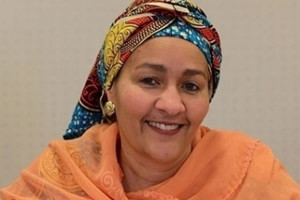
The immediate past Nigerian minister of environment, Hajiya Amina Mohammed has won an award as African Woman In Politics and Public Office.
This is even as the Gambia’s Minister of Women Affairs and Overseer in the Vice President’s Office, Fatoumatta Jallow-Tambajan, won the African Woman of Year award.
The awards were conferred by New African Woman magazine’s Woman of the Year Award at the ceremony that took place at a glitzy Gala Dinner at the Terrou-Bi hotel in the Senegalese capital, Dakar last night.
The Awards, now in the second edition, recognize, celebrate and honour African women who have made exceptional impact and change in their countries or communities in the past 12 months. Hajiya Amina Mohammed, who is now deputy secretary general of the United Nations in New York, the United States of America, has played key roles in both the current Sustainable Development Goals (SDGs) and the Millennium Development Goals (MDGs), on how both agendas impact Africa – more so its women. Winners were selected by a special panel of judges from 68 shortlisted candidates across 12 categories.
The Award for Women in Health, Science and Technology went to Namibia’s Dr Helena Ndume – a pioneering ophthalmologist and cataract surgeon, who has to date, performed over 35,000 sight-restoring surgeries on Namibians, completely free of charge. Morocco saw serial entrepreneur Salwa Idrissi Akhannouch, take home the New African woman Award in Business. Zimbabwean philathropists and educationist Tsitsi Masiyiwa, received the New African Woman Award in Education for her work with Higherlife Foundation – a not for profit organisation she runs and offers scholarships to orphaned and vulnerable children to give them a better chance in education. Over 250,000 children have benefited from the work of Higherlife Foundation. The much-talked about New African Woman on the Rise (The Next Generation) – a category which received the most nominations – went to the Kenyan girls rights activist and UN Women youth advisor Vivian Onano. The New African Woman in Civil Society was given to Chief Theresa Kachindamoto, who annulled over 300 child marriages in her village in Malawi, a feat that played an important role in forcing the government to ban child marriages in the country all together. Other winners were Nigeria’s Joan Okorodudu (New African Woman In The Arts & Culture) for her services to raising the profile of African models and fashion; Mali’s Binta Touré Ndoye (New African Woman – in Finance); Amira Yahyaoui of Tunisia (New African Woman in Media) and the former African Union Commissioner Agriculture and Rural Development Tumusiime Rhoda Peace from Uganda, is the New African Woman in Agriculture for pushing the importance of food security and adding value chain to African goods while she was at the AU. The New African Woman in Sport went to the Senegal’s Fatma Samoura – the world football body’s Secretary General – a position she was appointed to in 2016, becoming the first African woman to hold the post. The New African Woman Awards is followed by a Forum today, 13 April, under the theme Changing The Game. [myad]
ExxonMobil, has indicated an interest to make fresh investment in the country’s power sector, making it the second IOC to declare such an intention this year.
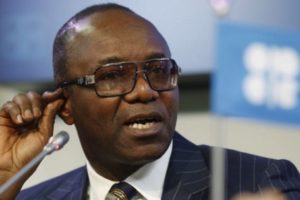
The oil giant made this known while playing host to the Minister of State for Petroleum Resources, Dr. Ibe Kachikwu.
A statement by the ministry said ExxonMobil is currently building a power plant in Qua Iboe in Akwa Ibom State.
In January, Eni signed a Memorandum of Understanding with the Nigerian National Petroleum Corporation (NNPC) to build a power plant in the country, as well as refurbish the Port Harcourt refinery in Rivers State.
The Ministry said that ExxonMobil recognized the partnership with Nigeria and the work of the Federal Government to ensure the development and growth of the oil and gas sector.
The ministry said ExxonMobil reiterated its commitment to help deliver power to Nigeria and support its gas commercialization programme.
The Minister of State for Petroleum Resources, Dr. Ibe Kachikwu, has taken his campaign for International Oil Companies (IOCs) operating in Nigeria to deepen their investments in the country to ExxonMobil in Texas, the United States of America.
A statement from the ministry today, Wednesday in Abuja, said that the minister met with top executives of ExxonMobil at its headquarters in Irving Texas, where he requested that they consider investing in refining of petroleum products in Nigeria.
Kachikwu said that the major IOCs operating in Nigeria needed to invest in building signature refineries to be run on a joint venture basis with the government.
He said that ExxonMobil has had an enduring partnership with Nigeria, and should deepen its commitment to develop the country’s oil and gas industry, especially in domestic refining of petroleum products. [myad]
Chief Press Secretary to the Chairman of the Independent National Electoral Commission (INEC), Rotimi Oyekanmi has described Governor Nyeson Wike of Rivers State as a liar and asked Nigerians to ignore him.
The Chief Press Secretary, who was reacting to comment by Governor Wike, that INEC is not ready for 2019 elections, asked Nigerians not to take Wike seriously.
Wike had said that INEC lacked the Nigerians’ trust, insisting that the commission was only deceiving Nigerians and spending the country’s money.
“If we want to get election right in this country, INEC must say where the card readers do not work, elections should be held the next day.
“Nigeria should provide the funds. We should not do the wrong thing because of fund. Some argue that this thing is also done in advanced countries, but they forget that those places have established institutions and there is trust also. Here, there is no institution and there is no trust.
“In 2019, let me tell you, and mark this day, INEC is not prepared for any election. What they are doing is a jamboree to make sure that they are spending money. They can’t deceive me,” Wike had said.
But, Rotimi said: “the Rivers State Governor is entitled to his opinion and I think Nigerians know him too well to take him seriously on any issue of national importance.”
“But as far as INEC is concerned, our preparation for the 2019 general elections is on course. Stakeholders have just validated our Strategic Plan. The Federal Government recently appointed 27 Resident Electoral Commissioners and the Senate, thank God, has also just passed the amendments to the Electoral Act.
“We have the Anambra State governorship election to conduct later this year. Besides, the re-organization of the commission is being carried out. So, we are on course and cannot be distracted.”
“Senate has acted in its own wisdom to say ‘No, we don’t want him’, and we can say, ‘This is our candidate… we like the gentleman and we want him to continue.’”
These were the views as expressed by Vice President Yemi Osinbajo, a professor of law, at an interaction with news men at the Presidential Villa, Abuja.
He made it clear that there is no plan to drop the acting chairman of the Economic and Financial Crime Commission (EFCC), Ibrahim Magu, even after the Senate had rejected his nomination for the job on two occasions.
The Vice President stressed that the Senate lacked the powers to determine which appointee of the president should go, saying: “the President reserves the right to say, ‘this is who I want.’ I’m fully in support of Magu as the EFCC chairman just as the president is.”
He said that the constitution gives the president the powers to appoint certain heads of government agencies, including the head of the anti-corruption agency, with or without parliament approvals.
“It is up to the senate to make their judgment, and it is up to us what we want to do. If our candidate is rejected, we can represent him. No law says we can’t represent him.” [myad]
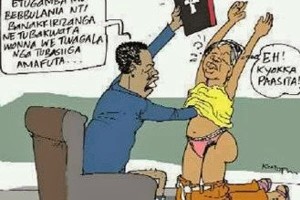
A 48-year-old clearing agent, Francis Stephen, has accused his wife of sleeping around with her pastor and his younger brother.
He said: “My wife is sleeping with her pastor. When I got to know of it, I confronted her and she confessed to me.”
Francis told a Customary Court in Lagos while responding to a request by his wife, Ogechi, for the dissolution of their 13-year-old marriage that apart from having sex with her pastor, she was also cheating on him by sleeping around also with his younger brother.
The man also accused his wife of being violent, saying: “there was a day we had disagreement. She picked up a stone and broke the windscreen of my car.”
He said that Ogechi ran away with their children to her village when he told her that he would drag her to his family to confess.
“Last year, my wife absconded with our children to her village without my consent, she later sent me a message that she had gotten to her family in Imo and that she is no longer interested in the marriage.
“The children have stopped school since last term because my wife refused to bring them back to Lagos.
“One of my children who was due to write common entrance missed it.
“Her brother called me and told me that I should come and take the children that if I leave them for my wife, they may die of starvation.
“Please grant me the custody of my children because my wife is not working, she cannot take care of them, she just wants to punish me by denying me access to them,” he said.
Francis begged the court not to grant his wife’s wish for the dissolution of their marriage, saying that he still loves her and the children will need a mother to live with.
The petitioner, Mrs. Ogechi Stephen, had approached the court seeking to end her 13-year-old marriage over frequent beatings and drunkenness.
She said that her husband beat her on slightest provocation, adding: “he always beat me during heated argument. I live every minute of my life in fear. Our marriage has been turbulent and fraught with fights and quarrels. There is no peace of mind.
“There was a day my husband threatened to pour fuel on me. As he was bringing the fuel towards me, I quickly ran for my dear life. There was a night he was inciting incantation calling demonic power to kill me.”
The 42-year-old house wife said that her husband drinks and smokes heavily.
“My husband drinks to stupor and smokes, after which he usually loses self-control,” she told the court.
The mother of four said that her husband packed her belonging to her village claiming that he was no longer interested in the union.
She begged the court to dissolve the union, saying that she was no longer in love with Stephen.
The court president, Adegboyega Omilola, adjourned the case to June 6, for further hearing.
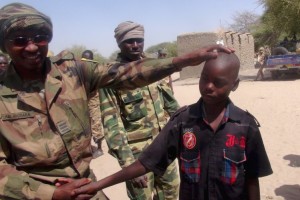
The United Nations Children Education Funds (UNICEF) has argued that children being used as ‘suicide bombers’ by members of Boko Haram around the Lake Chad area are ‘victims’ and not perpetrators.
This is even as it announced that the number of such children in suicide attacks’ has surged to 27 in the first quarter of 2017, compared to nine over the same period last year,UNICEF said in a new report released today.
A statement from UNICEF quoted Regional Director for West and Central Africa of the body, Marie-Pierre Poirier, as saying: “these children are victims, not perpetrators. Forcing or deceiving them into committing such horrific acts is reprehensible.”
The statement said that for no fault of theirs, girls, boys and even infants have been viewed with increasing fear at markets and checkpoints, where they are thought to carry explosives.
The statement said that in interviews, many children who have been associated with Boko Haram report that they keep their experience secret because they fear the stigmatization and even violent reprisals from their community.
“Some are compelled to bear their horrors in silence as they remove themselves from other groups for fear they might be ousted and stigmatized.
On the increase in the children used as suicide bombers, UNICEF said: “in the first three months of this year, the number of children used in bomb attacks is nearly the same as the whole of last year – this is the worst possible use of children in conflict.”
It said that the increase reflects an alarming tactic by the insurgents, adding that so far, 117 children have been used to carry out bomb attacks in public places across Nigeria, Chad, Niger and Cameroon since 2014: four in 2014, 56 in 2015, 30 in 2016 and 27 only in the first three months of 2017. Girls have been used in the vast majority of these attacks.
UNICEF then called on parties to the conflict to commit to the following actions to protect children in the region.
End grave violations against children by Boko Haram including the recruitment and use of children in armed conflict as so-called ‘suicide bombers’.
Move children from a military to civilian environment as quickly as possible. Children who have been taken into custody solely for their alleged or actual association to armed groups should be immediately handed-over to civilian authorities for reintegration and support. Handover protocols should be in place in each of the four countries for children encountered during military operations.
Provide care and protection for separated and unaccompanied children. All children affected by the crisis need psychosocial support and safe spaces to recover. [myad]
The Economic and Financial Crimes Commission (EFCC) has gone haywire, discovering various denominations of currencies, hidden by unknown people across the country.
The latest one was the discovering of a large sum of money in a house in Ikoyi, Lagos today, Wednesday.
According to the EFCC, operatives from Lagos Zone,, the operatives uncovered about $38 million, N23 million and £27,000 from the apartment.
This was even as the Commission recovered €547,730 and £21,090 as well as N5,648,500 from a Bureau de Change operator in Balogun Market, Lagos two days earlier.
Also six days before then, the EFCC recovered N449, 000, 860 hidden in an abandoned shop also in Lagos. [myad]
The Central Bank of Nigeria (CBN) has released additional $250 million on 7 to 30-day forwards for agriculture, airline, petroleum products and raw materials.
The Bank also called for bids for wholesale spot for $100 million for Basic/Personal Travelling Allowance, medicals and tuition fees.
Confirming this today, Wednesday, the CBN’s Acting Director of Corporate Communications, Mr. Isaac Okorafor, said that the Bank has also commenced heavy injections into the spot market in addition to the settlement of requests for wholesale spot bids for invisibles like school fees, medicals and personal travel allowance.
It will be recalled that earlier this week, the apex Bank had disbursed $20,000 each to the Bureau De Change (BDC) operators in two tranches of $10,000 each, which according to Mr. Okorafor underscores the commitment of the Bank to ensure liquidity in the foreign exchange market. [myad]
To educate means to train the mind, to build character and develop ability. Education is responsible for the transfer of skills, values and benefits from one generation to another; it is probably the most important aspect of human development and the key to successful living. Since women are responsible for child upbringing in the society, it follows that education should begin with them; and they should transfer such education to children, especially girls, to ensure the continuity of the cycle. Good education makes girls better mothers, good home keepers and efficient leaders.
Girl-child education has always been negatively affected by cultural and religious misconceptions. Female education is seen as wasteful because culturally, women are seen as being confined to domestic chores and procreation. This is in contrast to boys, who are seen as bread winners and custodians of the family lineage. In most cases, while making the choice of sending a child to school due to limited resources in the family, it is the boy that is chosen. Girls are often sent out to work, trade or hawk at a tender age to generate additional income for the family, exposing them to many dangers.
Even when allowed to attend school, girls are vulnerable in many ways; at puberty, they may skip school for days when observing their monthly period due to lack of water and sanitation at school. They may also be forced to leave school due to harassment by teachers or fellow students, or even early pregnancy. School distance sometimes also contributes to girls dropping out of school.
According to a UNICEF report, the number of out of school girls is very high, with proportion of girls to boys in school ranging from 1 girl to 2 boys and even 1 to 3 boys in some states and zones; North Central and North West present the worst national scenarios. Girls’ access to basic education especially in the northern states is very low, with only twenty percent of women in North West and North East attending school; current female literacy rate for ages 15 and above in the country is put at 59.4 percent which is less than male literacy rate of 74.4 percent.
Some cultures believe that no matter the level of education a girl attains in life, once she gets married to another family, she answers their name, thereby glorifying their status. In most villages of northern Nigeria, educating a girl is not considered a priority, as most of them are married out early. In fact, early marriage affects every eighth girl. One in seven girls are said to give birth by age seventeen. The easiest justification for this practice is that it serves as a strategy for reducing burden on the family. But in reality, among other problems, early marriage accords northern Nigeria with having the highest number of Vesico-Vaginal Fistula (VVF) cases.
Religious misconception is another militating factor, making many parents to believe that formal education is not meant for girls. It is assumed that the primary responsibility for which they were created is domestic chores. In most cultures, school is seen as a distraction, especially in places where women and girls are the home makers who must stay at home to cook, clean, take care of the children and the sick. These women also fetch water, sometimes from long distances, for drinking, washing, sanitation, and cooking for the entire family. This in many cases has a direct effect on their health.
It is also assumed that staying for many years in school might cause a girl not to marry on time. Suitors also have their issues with educated girls; they believe that education makes women to look down on men. This reason dissuades many parents from sending their girls to school; they believe once a girl has her first monthly period then she should be in her husbands house.
Poverty and unemployment are determinants of girl child education. Girls are denied the opportunity to develop their talents and contribute to the society and nation building, because parents consider them as agents for generating income for the family; the expectation on girls input into the family income is very high.
For girls that have grown to be mothers, they do not accept this state of affairs; they want a better deal for their daughters and they believe that education is the road to this better deal. That explains the effort that has been going on in favour of girl-child education. Both from government, the development sector and the voluntary sector. In the end, the outcome expected is an improvement in the number of girls that receive education.
Wife of the president Mrs. Aisha Buhari as any other mother has been an advocate of girl-child education all her life. She has been involved in the campaign for this fundamental right to be upheld so that the pain women and girls go through in life can be alleviated. Primarily, she sees awareness creation among mothers as the first step of the campaign.
One of the important things she did, was to advocate for the girl child education bill by the National Assembly and urged women across the country to come together to make it a reality. Mrs. Buhari has maintained that no Nigerian girl child would be left in her campaign to fight illiteracy.
She advocates directly, as well as through community and religious leaders, drawing attention to the significant difference education makes in women’s lives including knowledge of their rights and privileges, opportunities, issues of nutrition, basic health care, self-awareness, health-screening, both for them and their immediate families.
Mrs. Buhari has also been advocating on the importance of employing female teachers in grassroots areas because they would encourage parents to allow girls have access to education at least up to secondary school level. Whenever she had the opportunity, she had encouraged young girls to actualize their dreams of having a bright future not only through marriage, but also through education.
For out of school girls and those hawking on the streets, Mrs. Buhari has organized and promoted training programmes on skill acquisition, after which they are empowered with funds or tools to start their businesses for socio economic reliance. Skills acquisition training is very important as it enables them boost their confidence and empowers them to be in charge of their lives and to be good mothers. To the community, it reduces poverty, and increases wealth creation.
For those girls that have left school and are having difficulty continuing their education, Mrs. Buhari is making special arrangement for them to be tutored so that they can reattempt qualifying examinations and move on and graduate. There are many girls staying at home, either married or unmarried that desire an additional chance but are restrained by lack of means or simply lack the confidence to reattempt failed examinations.
Without clean water, girls will continue to miss school, therefore, she has been advocating for the provision of clean and safe water, especially in hard to reach communities, so that women and girls, who bear the burden of fetching water will be relieved. In order to show example, she had provided bore holes and tube wells across the country, so that these can be utilized and girls can remain in school and be freed from this burden.
Girl child education is the best investment for development, as it has multi-dimensional impact; for illiteracy, child and maternal mortality, disease and poverty to be overcome in our society, therefore, girls must be given equal access to education and must be provided with relevant skills to establish and run their own businesses.
Aisha Bunu writes from the Office of the Wife of the President. [myad]
We use cookies on our website to give you the most relevant experience by remembering your preferences and repeat visits. By clicking “Accept”, you consent to the use of ALL the cookies.
This website uses cookies to improve your experience while you navigate through the website. Out of these, the cookies that are categorized as necessary are stored on your browser as they are essential for the working of basic functionalities of the website. We also use third-party cookies that help us analyze and understand how you use this website. These cookies will be stored in your browser only with your consent. You also have the option to opt-out of these cookies. But opting out of some of these cookies may affect your browsing experience.
Necessary cookies are absolutely essential for the website to function properly. This category only includes cookies that ensures basic functionalities and security features of the website. These cookies do not store any personal information.
Any cookies that may not be particularly necessary for the website to function and is used specifically to collect user personal data via analytics, ads, other embedded contents are termed as non-necessary cookies. It is mandatory to procure user consent prior to running these cookies on your website.