The National Leader of the All Progressives Congress (APC), Asiwaju Bola Tinubu, has said that the end of Boko Haram has come with the taking over of Sambisa Forest by the conquerors soldiers
In a statement today, Sunday by his media office, Tinubu congratulated the nation, President Muhammadu Buhari and the Nigerian troops for the last Friday’s onslaught on the insurgents when the army’s Operation Lafiya Dole troops finally entered and seized Boko Haram’s Camp Zero located in the heart of Sambisa Forest.
While commending the troops for their bravery and resilience, Tinubu urged Nigerians to spare a moment to pray for the soldiers, who, he said, had given the nation a wonderful Christmas gift by crushing the terrorists.
He urged the soldiers to consolidate on the victory by finishing the fight with the rescue of the abducted Chibok schoolgirls.
The statement read partly, “I congratulate the nation, President Buhari and the army for crushing Boko Haram in their last stronghold of Sambisa Forest. I congratulate the troops of Operation Lafiya Dole for their bravery and resilience. They have given the nation a most wonderful Christmas gift.
“I know the insurgents were engaged in their last desperate acts and merely clutching to their last straw. Now they have been put down. Terror will have no place in our land. The end is here.
“I commend the troops. I thank them again for their courage and bravery. It’s time to finish the job and locate and liberate the remaining Chibok schoolgirls abducted from their school in 2014.
“As we sink ourselves in the Christmas celebration, let us remember to pray for the troops. Let us remember that for them, there was no Christmas.
“Let us also spare a thought for the Internally Displaced Persons. We must support them and give them hope.” [myad]
One of the gallant soldiers, who just returned to Maiduguri from the liberated forest, has narrated the story of how they finally conquered the notorious Sambisa Forest from Boko Haram insurgents.
The soldiers who spoke to news men on condition of anonymity said: “it took months of planning and mapping because of the size, difficult weather and other factors in the Sambisa Forest.”
He said that the operation was carried out day and night, adding that one of the major factors that delayed the takeover of the insurgents’ hideout was the thousands of people, including those living in villages around the vast forest that were being held as human shield by the Boko Haram leaders.
“The 151 Battalion of the Nigerian Army advanced into Sambisa through the Banki-Darul Jamal axis, the 27 Battalion advanced through Mafa, the 152 Battalion advanced through Pulka, while the 222 Battalion approached the dreaded forest through the Maiduguri axis.
“When mine detectors cleared the way, troops moved in to confront the insurgents, who were equally well armed with sophisticated fighting equipment.
“Hundreds of Boko Haram captives, including men, women and children have been freed and taken to safety. All I can tell you is that no big Boko Haram commander is alive in the Sambisa; we are in control of the forest.”
It was gathered that the 4,200 troops were deployed to the Sambisa Forest through various fronts, including Ngurosoye, Konduga/Aulari, Bama, Fulka and Damboa.
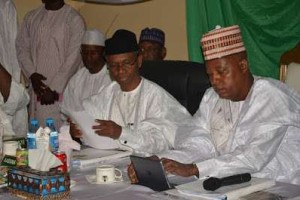
Governors of Jigawa, Kano, Yobe, Adamawa, Borno, Katsina, Kaduna and Sokoto states have assured President Muhammadu Buhari that the whole country is behind him in his efforts to secure the country and make it safe for all.
They are of the view that there cannot be any meaningful development without security.
The governors, who joined some of their colleagues from South-East, South-South, South-West and North Central states who made earlier calls to commend the President on the conquest of Sambisa Forest from Boko Haram said that Nigerians and the wolrd are celebrating the feat.
They congratulated the President and the leadership of the armed forces for the takeover of the Sambisa Forest from the Boko Haram terrorists even as they paid tributes to the brave servicemen and women who made supreme sacrifices in the liberation of the Sambisa Forest and hoped that their services will never be forgotten.
They advised the President to mobilize all resources, both human and material, to sustain the gains made so far in the fight against terrorism and economic sabotage, adding that the attainments of the armed forces under his leadership was something that was never in doubt at the time of his election in 2015.
The Governors called on the United Nations, the United States, the European Union, the rich countries of Asia, the Mideast and international aid and donor agencies, to raise their support to Nigeria in order to quicken the pace of the resettlement and rehabilitation of the millions of Internally Displaced Persons (IDPs) in camps across the country. [myad]
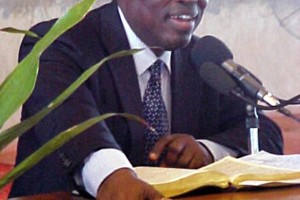
The General Superintendent of the Deeper Life Bible Church, Pastor William Kumuyi, has said that God would grant President Muhammad Buhari the solution to the numerous challenges facing the country. Kumuyi who spoke to news men today, Sunday, when he played host to the Speaker, Lagos State House of Assembly, Mudashiru Obasa, who led some members of the Assembly on a courtesy visit to the church’s December Convention said: “we talk of the hours of recession, difficulty, distress and all that, but God is granting us His promises. “We are not going to carry over our problems. We pray and believe that the Lord will answer. “As you will see, as we get to the New Year, there is no carryover of our problems. “God will give solutions to the problems of our lives, families, communities, the state and our nation.” The pastor said that with prayer and faith in God, the country would get out of all its challenges, including the economic recession. The founder of the church said that God created “us and wants everything to be sufficient for everybody.” While, addressing the congregation of thousands of worshippers, Speaker Obasa urged all Christians to show love to their neighbours, and that the state is committed to fight unemployment among the youth. He said that the newly created Employment Trust Fund would help reduce joblessness by providing soft loan with little interest for enterprising people of Lagos state. “We must go beyond religious demarcation and show ourselves that we are brothers and sisters. “Let us love one another. We should extend hands of fellowship to our neighbours.” Obasa, who urged churches to pray for the state and nation, said the state was passionate to give good governance and improve the economy of the state for the benefit of all. He expressed delight over the warmth reception accorded his team by the leadership of the church. The speaker; the Deputy Majority Leader of the House, Muyiwa Jimoh; and the Chairman, House Committee on the Environment, Dayo Saka-Fafunmi, were among the team. Funmilayo Tejuosho, the Chairman, House Committee on Judiciary, Human Rights, Petitions and Lagos State Independent Electoral Commission, among others government functionaries also made the list. The four-day nationwide convention, which started on December 23 and expected to end on December 26, is tagged: “Power for the Present Hour.” It is taking place at the Deeper Life Conference Centre Km 42, Lagos/Ibadan Expressway. [myad]
President Muhammadu Buhari has expressed confidence in the rising political profile of the Speaker of the House of Representatives, Hon. Yakubu Dogara, who he said always put Nigeria’s interest above every other thing.
The President, in a statement to mark the Speaker’s 50th birthday anniversary today, Sunday, emphasized that he was impressed with Dogara’s rising political career and his leadership style at his relatively young age.
According to Buhari, the Speaker’s performance has reinforced his confidence in the country’s youth, saying: “with Dogara’s performance as Speaker, fears that the country’s younger politicians have been pushed into background are unfounded.”
The President said that his administration would always encourage the younger generation, adding that he was optimistic of closer working relationship with the legislature in order to fast track the implementation of critically important national policies and programmes. [myad]
A group known as Network for Sustainable Development and Empowerment (NSDE) has asked people of the Southern Borno to continue to pray for quick solution to the challenges facing the area.
In a goodwill message marking Christmas and New Year Festivities, the group said: “we know the military is battling Boko Haram to a standstill and we appreciate and commend the troops for their efforts.”
The message which contained in a statement issued by retired Brigadier General David Shaljaba further said: “we however know that the challenges now include rehabilitation and care for the Internally Displaced Persons”.
“We urge you all to remain prayerful and steadfast as the authorities continue to make efforts to support our people towards total recovery from the effects of insurgency.
“It is also our prayer that the Almighty Lord will continue to ease our pains and give us succor as government and nongovernmental organizations work towards solving the problems.
We wish all our people Merry Christmas and prosperous New Year.” [myad]
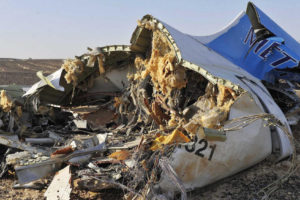
A Russian military transport plane which went off the radar en route to Syria has crashed into the Black Sea.
Rescue helicopters have discovered the Tu-154 carrying members of the famous Alexandrov Ensemble army choir.
Ongoing investigations confirmed that 92 people were on board the Tupolev transport plane which included 84 passengers and eight crew members.
Cause of the tragic incident has not been ascertained but reports say it went missing over the Black Sea shortly after refueling at an airport near Sochi. [myad]
Christma (Old English: Cr+stesmæsse, meaning “Christ’s Mass”) is an annual festival commemorating the birth of Jesus Christ, observed mostly on December 25 as a religious and cultural celebration among billions of people around the world.
A feast central to the Christian liturgical year, it is prepared for by the season of Advent or the Nativity Fast and initiates the season of Christmastide, which historically in the West lasts 12 days and culminates on Twelfth Night; in some traditions, Christmastide includes an Octave.
The traditional Christmas narrative, the Nativity of Jesus, delineated in the New Testament says that Jesus was born in Bethlehem, in accordance with messianic prophecies; when Joseph and Mary arrived in the city, the inn had no room and so they were offered a stable where the Christ Child was soon born, with angels proclaiming this news to shepherds who then disseminated the message furthermore.
Christmas Day, a public holiday in many of the world’s nations, is celebrated religiously by the vast majority of Christians, as well as culturally by a number of non-Christian people, and is an integral part of the holiday season, while some Christian groups reject the celebration.
In several countries, celebrating Christmas Eve on December 24 has the main focus rather than December 25, with gift-giving and sharing a traditional meal with the family. Although the month and date of Jesus’ birth are unknown, by the early-to-mid 4th century the Western Christian Church had placed Christmas on December 25, a date which was later adopted in the East. Today, most Christians celebrate on December 25 in the Gregorian calendar, which has been adopted almost universally in the civil calendars used in countries throughout the world. Kids from RCCG The Life Centre Abuja during the 2016 Christmas Carol Service at the Nicon Luxury Hotel Abuja 11Dec2016 However, some Eastern Christian Churches celebrate Christmas on the December 25 of the older Julian calendar, which currently corresponds to January 7 in the Gregorian calendar, the day after the Western Christian Church celebrates the Epiphany.
This is not a disagreement over the date of Christmas as such, but rather a preference of which calendar should be used to determine the day that is December 25. In the Council of Tours of 567, the Church, with its desire to be universal, “declared the 12 days between Christmas and Epiphany to be one unified festal cycle”, thus giving significance to both the Western and Eastern dates of Christmas.
Moreover, for Christians, the belief that God came into the world in the form of man to atone for the sins of humanity, rather than the exact birth date, is considered to be the primary purpose in celebrating Christmas. Although it is not known why December 25 became a date of celebration, there are several factors that may have influenced the choice.
December 25 was the date the Romans marked as the winter solstice, and Jesus was identified with the Sun based on an Old Testament verse. The date is exactly nine months following Annunciation, when the conception of Jesus is celebrated. Finally, the Romans had a series of pagan festivals near the end of the year, so Christmas may have been scheduled at this time to appropriate, or compete with, one or more of these festivals.
The celebratory customs associated in various countries with Christmas have a mix of pre-Christian, Christian, and secular themes and origins. Popular modern customs of the holiday include gift giving, completing an Advent calendar or Advent wreath, Christmas music and caroling, lighting a Christingle, an exchange of Christmas cards, church services, a special meal, and the display of various Christmas decorations, including Christmas trees, Christmas lights, nativity scenes, garlands, wreaths, mistletoe, and holly.
In addition, several closely related and often interchangeable figures, known as Santa Claus, Father Christmas, Saint Nicholas, and Christkind, are associated with bringing gifts to children during the Christmas season and have their own body of traditions and lore. Because gift-giving and many other aspects of the Christmas festival involve heightened economic activity, the holiday has become a significant event and a key sales period for retailers and businesses. The economic impact of Christmas has grown steadily over the past few centuries in many regions of the world. In addition to “Christmas”, the holiday has been known by various other names throughout its history.
The Anglo-Saxons referred to the feast as “midwinter”, or, more rarely, as Ntiuiteð (from Latin nt+vits below). “Nativity”, meaning “birth”, is from Latin nt+vits. In Old English, G–ola (Yule) referred to the period corresponding to December and January, which was eventually equated with Christian Christmas. “Noel” (or “Nowel”) entered English in the late 14th century and is from the Old French noël or naël, itself ultimately from the Latin ntlis (di–s), “birth (day)”. Nativity of Jesus The canonical gospels of Luke and Matthew both describe Jesus as being born in Bethlehem in Judea, to a virgin mother.
In the Gospel of Luke account, Joseph and Mary travel from Nazareth to Bethlehem for the census, and Jesus is born there and laid in a manger. It says that angels proclaimed him a savior for all people, and shepherds came to adore him. In the Matthew account, magi follow a star to Bethlehem to bring gifts to Jesus, born the king of the Jews. King Herod orders the massacre of all the boys less than two years old in Bethlehem, but the family flees to Egypt and later settles in Nazareth. The earliest known Christian festivals were attempts to celebrate Jewish holidays, especially Passover, according to the local calendar.
Modern scholars refer to such holidays as “Quartodecmials” because Passover is dated as 14 Nisan on the Jewish calendar. All the major events of the life of Jesus were celebrated in this festival, including his conception, birth, and passion. In the Greek-speaking areas of the Roman Empire, the Macedonian calendar was used. In these areas, the Quartodecimal was celebrated on April 6. In Latin-speaking areas, the Quartodecimal was March 25.
The significance of the Quartodecimal declined after 165, when Pope Soter moved celebration of the Resurrection to a Sunday, thereby creating Easter. This put celebration of the passion on Good Friday, and thus moved it away from the Quartodecimal.
The Christian ecclesiastical calendar contains many remnants of pre-Christian festivals. Although the dating as December 25 predates pagan influence, the later development of Christmas as a festival includes elements of the Roman feast of the Saturnalia and the birthday of Mithra as described in the Roman cult of Mithraism.
Choice of December 25 date In the 3rd century, the date of birth of Jesus was the subject of both great interest and great uncertainly. Around AD 200, Clement of Alexandria wrote: “There are those who have determined not only the year of our Lord’s birth, but also the day; and they say that it took place in the 28th year of Augustus, and in the 25th day of [the Egyptian month] Pachon [May 20] … And treating of His Passion, with very great accuracy, some say that it took place in the 16th year of Tiberius, on the 25th of Phamenoth [March 21]; and others on the 25th of Pharmuthi [April 21] and others say that on the 19th of Pharmuthi [April 15] the Savior suffered. Further, others say that He was born on the 24th or 25th of Pharmuthi [April 20 or 21]. In other writing of this time, May 20, April 18 or 19, March 25, January 2, November 17, and November 20 are all suggested.
Various factors contributed to the selection of December 25 as a date of celebration: it was the date of the winter solstice on the Roman calendar; it was about nine months after March 25, the date of the vernal equinox and a date linked to the conception of Jesus; and it was the date of a Roman pagan festival in honor of the Sun god Sol Invictus. Solstice date December 25 was the date of the winter solstice on the Roman calendar.
Jesus chose to be born on the shortest day of the year for symbolic reasons, according to an early sermon by Augustine: “Hence it is that He was born on the day which is the shortest in our earthly reckoning and from which subsequent days begin to increase in length. He, therefore, who bent low and lifted us up chose the shortest day, yet the one whence light begins to increase.” Linking Jesus to the Sun was supported by various Biblical passages. Jesus was considered to be the “Sun of righteousness” prophesied by Malachi. John describes him as “the light of the world.”
The history of religions hypothesis The rival “History of Religions” hypothesis suggests that the Church selected the December 25th date to appropriate festivities held by the Romans in honor of the Sun god Sol Invictus. This feast was established by Aurelian in 274. An explicit expression of this theory appears in an annotation of uncertain date added to a manuscript of a work by 12th-century Syrian bishop Jacob Bar-Salibi.
The scribe who added it wrote: “It was a custom of the Pagans to celebrate on the same 25 December the birthday of the Sun, at which they kindled lights in token of festivity. In these solemnities and revelries the Christians also took part. Accordingly when the doctors of the Church perceived that the Christians had a leaning to this festival, they took counsel and resolved that the true Nativity should be solemnised on that day.”
In 1743, German Protestant Paul Ernst Jablonski argued Christmas was placed on December 25 to correspond with the Roman solar holiday Dies Natalis Solis Invicti and was therefore a “paganization” that debased the true church. It has been argued that, on the contrary, the Emperor Aurelian, who in 274 instituted the holiday of the Dies Natalis Solis Invicti, did so partly as an attempt to give a pagan significance to a date already important for Christians in Rome. Introduction of feast As Christmas was unknown to the early Christian writers, it must have been introduced sometime after 300. Irenaeus and Tertullian omit it from their lists of feasts, and Origen writes that in the Scriptures sinners alone, not saints, celebrate their birthday. Arnobius can still ridicule the “birthdays” of the gods.
The first recorded Christmas celebration was in Rome in 336. The feast was introduced to the Eastern Roman Empire after the death of Emperor Valens, who favored the Arian heresy, in 378. In 245, Origen of Alexandria, writing about Leviticus 12:1-8 , commented that Scripture mentions only sinners as celebrating their birthdays, namely Pharaoh, who then had his chief baker hanged (Genesis 40:20–22 ), and Herod, who then had John the Baptist beheaded (Mark 6:21–27 ), and mentions saints as cursing the day of their birth, namely Jeremiah (Jeremiah 20:14–15 ) and Job (Job 3:1–16 ).
In 303, Arnobius ridiculed the idea of celebrating the birthdays of gods, a passage cited as evidence that Arnobius was unaware of any nativity celebration. Since Christmas does not celebrate Christ’s birth “as God” but “as man”, this does not necessarily show that Christmas was not a feast at this time.
Relation to concurrent celebrations Many popular customs associated with Christmas developed independently of the commemoration of Jesus’ birth, with certain elements having origins in pre-Christian festivals that were celebrated around the winter solstice by pagan populations who were later converted to Christianity. These elements, including the Yule log from Yule and gift giving from Saturnalia, became syncretized into Christmas over the centuries.
The prevailing atmosphere of Christmas has also continually evolved since the holiday’s inception, ranging from a sometimes raucous, drunken, carnival-like state in the Middle Ages, to a tamer family-oriented and children-centered theme introduced in a 19th-century transformation. Additionally, the celebration of Christmas was banned on more than one occasion within certain Protestant groups, such as the Puritans, due to concerns that it was too pagan or unbiblical. Jehovah’s Witnesses also reject the celebration of Christmas. Middle Ages In the Early Middle Ages, Christmas Day was overshadowed by Epiphany, which in western Christianity focused on the visit of the magi. But the medieval calendar was dominated by Christmas-related holidays.
The 40 days before Christmas became the “40 days of St. Martin” (which began on November 11, the feast of St. Martin of Tours), now known as Advent. In Italy, former Saturnalian traditions were attached to Advent. Around the 12th century, these traditions transferred again to the Twelve Days of Christmas (December 25 – January 5); a time that appears in the liturgical calendars as Christmastide or Twelve Holy Days.
The prominence of Christmas Day increased gradually after Charlemagne was crowned Emperor on Christmas Day in 800. King Edmund the Martyr was anointed on Christmas in 855 and King William I of England was crowned on Christmas Day 1066. By the High Middle Ages, the holiday had become so prominent that chroniclers routinely noted where various magnates celebrated Christmas. King Richard II of England hosted a Christmas feast in 1377 at which 28 oxen and 300 sheep were eaten.
The Yule boar was a common feature of medieval Christmas feasts. Caroling also became popular, and was originally a group of dancers who sang. The group was composed of a lead singer and a ring of dancers that provided the chorus. Various writers of the time condemned caroling as lewd, indicating that the unruly traditions of Saturnalia and Yule may have continued in this form. “Misrule”—drunkenness, promiscuity, gambling—was also an important aspect of the festival. In England, gifts were exchanged on New Year’s Day, and there was special Christmas ale. Christmas during the Middle Ages was a public festival that incorporated ivy, holly, and other evergreens. Christmas gift-giving during the Middle Ages was usually between people with legal relationships, such as tenant and landlord.
The annual indulgence in eating, dancing, singing, sporting, and card playing escalated in England, and by the 17th century the Christmas season featured lavish dinners, elaborate masques, and pageants. In 1607, King James I insisted that a play be acted on Christmas night and that the court indulge in games. It was during the Reformation in 16th–17th-century Europe that many Protestants changed the gift bringer to the Christ Child or Christkindl, and the date of giving gifts changed from December 6 to Christmas Eve. Christmas traditions Christmas Day is celebrated as a major festival and public holiday in countries around the world, including many whose populations are mostly non-Christian.
In some non-Christian areas, periods of former colonial rule introduced the celebration (e.g. Hong Kong); in others, Christian minorities or foreign cultural influences have led populations to observe the holiday. Countries such as Japan, where Christmas is popular despite there being only a small number of Christians, have adopted many of the secular aspects of Christmas, such as gift-giving, decorations, and Christmas trees. Countries in which Christmas is not a formal public holiday include Afghanistan, Algeria, Azerbaijan, Bahrain, Bhutan, Cambodia, China (excepting Hong Kong and Macao), Comoros, Iran, Israel, Japan, Kuwait, Laos, Libya, Maldives, Mauritania, Mongolia, Morocco, North Korea, Oman, Pakistan, Qatar, Sahrawi Arab Democratic Republic, Saudi Arabia, Somalia, Tajikistan, Thailand, Tunisia, Turkey, Turkmenistan, United Arab Emirates, Uzbekistan, Vietnam, and Yemen. Christmas celebrations around the world can vary markedly in form, reflecting differing cultural and national traditions. Among countries with a strong Christian tradition, a variety of Christmas celebrations have developed that incorporate regional and local cultures.
For Christians, participating in a religious service plays an important part in the recognition of the season. Christmas, along with Easter, is the period of highest annual church attendance. In Catholic countries, people hold religious processions or parades in the days preceding Christmas. In other countries, secular processions or parades featuring Santa Claus and other seasonal figures are often held. Family reunions and the exchange of gifts are a widespread feature of the season.
Gift giving takes place on Christmas Day in most countries. Others practice gift giving on December 6, Saint Nicholas Day, and January 6, Epiphany. Christmas music The earliest extant specifically Christmas hymns appear in 4th-century Rome. Latin hymns such as “Veni redemptor gentium”, written by Ambrose, Archbishop of Milan, were austere statements of the theological doctrine of the Incarnation in opposition to Arianism. “Corde natus ex Parentis” (“Of the Father’s love begotten”) by the Spanish poet Prudentius (d. 413) is still sung in some churches today. In the 9th and 10th centuries, the Christmas “Sequence” or “Prose” was introduced in North European monasteries, developing under Bernard of Clairvaux into a sequence of rhymed stanzas. In the 12th century the Parisian monk Adam of St.
Victor began to derive music from popular songs, introducing something closer to the traditional Christmas carol. By the 13th century, in France, Germany, and particularly, Italy, under the influence of Francis of Asissi, a strong tradition of popular Christmas songs in the native language developed. Christmas carols in English first appear in a 1426 work of John Awdlay, a Shropshire chaplain, who lists 25 “caroles of Cristemas”, probably sung by groups of wassailers, who went from house to house. The songs we know specifically as carols were originally communal folk songs sung during celebrations such as “harvest tide” as well as Christmas. It was only later that carols began to be sung in church. Traditionally, carols have often been based on medieval chord patterns, and it is this that gives them their uniquely characteristic musical sound. Some carols like “Personent hodie”, “Good King Wenceslas”, and “The Holly and the Ivy” can be traced directly back to the Middle Ages.
They are among the oldest musical compositions still regularly sung. “Adeste Fideles” (O Come all ye faithful) appears in its current form in the mid-18th century, although the words may have originated in the 13th century. Singing of carols initially suffered a decline in popularity after the Protestant Reformation in northern Europe, although some Reformers, like Martin Luther, wrote carols and encouraged their use in worship.
Carols largely survived in rural communities until the revival of interest in popular songs in the 19th century. The 18th-century English reformer Charles Wesley understood the importance of music to worship. In addition to setting many psalms to melodies, which were influential in the Great Awakening in the United States, he wrote texts for at least three Christmas carols. The best known was originally entitled “Hark! How All the Welkin Rings”, later renamed “Hark! the Herald Angels Sing.” [myad]
President of the Senate, Dr. Abubakar Bukola Saraki has commended the Nigerian armed forces and President Muhammadu Buhari for the defeat of Boko Haram and conquest of its strong hold, the Sambisa Forest through Operation Lafiya Dole
In a statement on Saturday by his Special Adviser on Media and Publicity, Yusuph Olaniyonu, Saraki said that the defeat was “a great way to wrap up an eventful year. The news of the Nigerian Army defeating Boko Haram in their most dominant stronghold is truly gratifying. This is a gift to all Nigerians as we enter this festive season and round up this year.
“I want to congratulate President Buhari for his leadership, and his dedication to crushing the insurgency in the country.
“I want to also commend the Nigerian people for believing in our men and women in uniform, and supporting them and their families through prayers and goodwill messages.
“Of course, more work needs to be done to stamp out the remnants of Boko Haram that may be hiding amongst us, however, the downfall of the notorious “Camp Zero” in Sambisa is something that we must all celebrate at this time.
“As we celebrate this win by our men and women in uniform, we must not forget those that have paid the ultimate sacrifice in service of our dear nation. “We must all come together to celebrate their memories as we mark this win.” [myad]
President Muhammadu Buhari has sought divine guidance for Nigeria to get over the current challenges. In his Christmas message to Nigerians, President Buhari said: “there is no better time than now in our nation’s history to pray for divine guidance to get over our current challenges.” Reflecting on the birth of Jesus Christ and the love of God which is espoused in the teachings and lifestyle of Jesus Christ, the President said: “we can have peace in Nigeria if we all learn to tolerate and appreciate one another, respect constituted authority; and be our brothers’ keepers in word and deed.” Buhari, who recalled that Jesus Christ, during his earthly sojourn, repeatedly reminded his disciples and followers of peace that comes in the midst of trials and tribulations on earth asked Nigerians to remember to offer special prayers to God for all the heroic citizens who paid the supreme price to restore peace and security in the North East and other flash points in the country. “Let us also remember in our prayers the security forces in the frontline in the continuing battle to rid our nation of terrorism and violence. “We must not forget the Internally Displaced Persons (IDPs) in our midst and those who have suffered untold hardship as a result of activities of insurgents and terrorists. “Our immediate priority is to alleviate the poverty of Nigerians by quickly stimulating the economy. I assure Nigerians that our government is doing its best to make life easier for all. “Let us therefore, renew our hope in the God-ordained unity, progress and prosperity of our great nation.” President Buhari wished all Nigerians that are travelling to various parts of the country for the festivities safe movements and a memorable holiday. [myad]
We use cookies on our website to give you the most relevant experience by remembering your preferences and repeat visits. By clicking “Accept”, you consent to the use of ALL the cookies.
This website uses cookies to improve your experience while you navigate through the website. Out of these, the cookies that are categorized as necessary are stored on your browser as they are essential for the working of basic functionalities of the website. We also use third-party cookies that help us analyze and understand how you use this website. These cookies will be stored in your browser only with your consent. You also have the option to opt-out of these cookies. But opting out of some of these cookies may affect your browsing experience.
Necessary cookies are absolutely essential for the website to function properly. This category only includes cookies that ensures basic functionalities and security features of the website. These cookies do not store any personal information.
Any cookies that may not be particularly necessary for the website to function and is used specifically to collect user personal data via analytics, ads, other embedded contents are termed as non-necessary cookies. It is mandatory to procure user consent prior to running these cookies on your website.








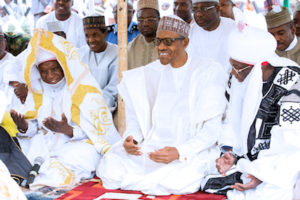 President Muhammadu Buhari has sought divine guidance for Nigeria to get over the current challenges.
