


DSS Hands Over Sexually Assaulted 16-Year Old Miss Walida By Its Officer To Jigawa Governor

The Department of State Services (DSS) Headquarters has finally handed over the 16-year old Miss Walida Abdulhadi Ibrahim to Jigawa State Governor, Malam Umar Namadi after series of protests by various Non-Governmental Organizations and individuals over her abduction and sexual assault by the officer of the Service.
The handover took place in Abuja yesterday night, February 25, in response to intense pressure from civil society coalitions and the Jigawa State government.
The Chief Press Secretary to the Governor, Hamisu Mohammed Gumel, confirmed in a telephone chat today, February 26, that all necessary documentation have been concluded, with final arrangements underway to complete her formal transfer to the state government.
“I can authoritatively confirm that the Jigawa State Government, under the leadership of Governor Umar Namadi, took custody of Walida Abdulhadi Ibrahim last night. Other necessary arrangements will be finalised today to ensure her full transfer into government care.”
Gumel explained that the state government has made arrangements to admit Walida to a hospital for a comprehensive medical evaluation to ascertain her physical and psychological condition.
According to him, the government will also facilitate her return to school and assume full responsibility for her educational needs up to the tertiary level to ensure her successful reintegration into society.
“Arrangements are being made to admit her into a hospital and take full responsibility for her healthcare and mental well-being. The government will also ensure she resumes her education and completes it successfully.”
Gumel said that the state government would pursue justice to its logical conclusion, adding: “the government will not rest on its oars until those responsible for her abduction and subsequent (sexual) assault are brought to justice. The Nigeria Police Force is also expected to take over the process of identifying and prosecuting the culprits to ensure justice is served.”
It can be recalled that Miss Walida was abducted in 2023 from Hadejia Local Government Area of Jigawa State and later found in the custody of a DSS operative, named Ifeanyi Onyewuenyi. Allegations contained in petitions filed by her family said that she was unlawfully detained, forced to change her religion and subjected to sexual exploitation during her captivity.
After repeated efforts by her relatives to secure her release proved unsuccessful, a petition was submitted to the DSS headquarters in Abuja.
The family subsequently approached a court in Jigawa State, which ordered her release to her parents but the DSS filed a counter-motion, saying that it was investigating the matter.
The case drew sustained pressure from civil society and faith-based organisations, accusing the DSS of defying a valid court order by continuing to hold the teenager.
A coalition operating under the banner “Concerned Coalition for Walida Abdulhadi” addressed newsmen, describing the situation as a serious test of institutional accountability and respect for the rule of law.
The coalition called for strict compliance with judicial directives and demanded an independent investigation into the allegations against the DSS operative.
It was gathered that lawyers from Gamji Lawchain, acting on behalf of Walida’s father, had filed a detailed petition alleging abduction, unlawful detention, sexual exploitation and forced religious conversion without parental consent. The petition said that Walida gave birth while in custody of Ifeanyi of the DSS.
Walida’s father alleged that her mother died during the period of her disappearance and attributed her death to prolonged emotional trauma, arising from uncertainty about her daughter’s fate.
Earlier in the week, organisations, including the Abuja chapter of the Muslim Rights Concern (MURIC), the Federation of Muslim Women’s Associations in Nigeria (FOMWAN), the Muslim Students’ Organisation of Nigeria (MSON), and Women in Da’awa held a joint press conference in Abuja, calling for her transfer to a neutral authority and a transparent investigation.
Speaking on behalf of the coalition, Ustaz Yunus Salahudeen said that the matter transcends religious considerations and underscores broader issues of justice, constitutional order, and human rights.
The case has continued to generate widespread public reaction, drawing comparisons with the earlier case involving one Miss Ese Oruru of Bayelsa State, which similarly sparked national debate over abduction, sexual assault, religious conversion and the rule of law.
Source: PRNigeria.








To DSS Boss: What Was Good For Ese Oruru Must Also Be Good For Walida Abdulhadi, By Yushau A. Shuaib
Among the current crop of Nigeria’s security chiefs, perhaps none is as widely respected for his professional record as the Director General of the Department of State Services (DSS), Adeola Oluwatosin Ajayi. Since his assumption of office, he has been celebrated as a quintessential officer who is neither a religious bigot nor an ethnocentric partisan. His track record in states like Bauchi and Kaduna reflects a man who understands the delicate fabric of our diverse society and has often supported Muslim communal activities with the same zeal he applies to national security.
It is precisely because of this high regard that I find myself profoundly bewildered. Why is it that this same leadership, credited with a commitment to due process, appears to be wavering in the face of a clear court order? I am referring to the case of Walida Abdulhadi Ibrahim, a young Muslim girl from Jigawa State, and the stalled prosecution of a DSS operative, Ifeanyi Onyewuenyi, accused of her abduction, sexual exploitation and forced conversion to Christianity.
This disturbing saga echoes the Ese Oruru case. The nation vividly remembers how a teenage girl from Bayelsa was taken to Kano by Yunusa Dahiru (popularly known as Yellow), where she was allegedly converted to Islam and impregnated. The public outcry at the time was overwhelming. The media, civil society and the international community demanded swift justice.
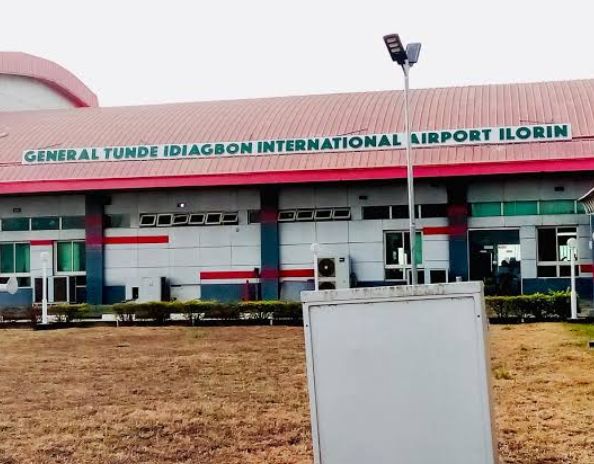
The Bayelsa State Government under Governor Seriake Dickson intervened decisively providing medical care, insisting on a thorough investigation and ensuring prosecution. Yunusa Dahiru was eventually convicted and jailed. Ese Oruru received rehabilitation and later graduated from the University of Ilorin in flying colour
In my recent essay, From Ese Oruru to Walida: Unmasking Selective Outrage, I asked a rhetorical question that now feels prophetic: Would Walidas case attract the same moral panic? Or would it be quietly buried because it doesn’t fit a convenient narrative of religious persecution? My fears are being validated by the day.
A coalition of civil society and faith-based organisations recently raised the alarm in Abuja, accusing the DSS of violating a subsisting court order directing the release of 16-year-old Walida to her family. They specifically named DSS officer, Ifeanyi Onyewuenyi as central to the allegations and called for his prosecution should any culpability be established.
A petition filed by Gamji Lawchain paints a disturbing picture: a minor allegedly abducted two years ago, held in unlawful custody and denied access to her parents. Her father maintains that the trauma of this ordeal contributed directly to the untimely death of Walida’s mother.
At the heart of the controversy is the DSS acting simultaneously as custodian and investigator, a clear conflict of interest. Compounding this is a suspicious dispute over her age. While the family insists she is 16, there are attempts to portray her as a 22-year-old adult. An independent, document-based verification of her age is essential. Anything less would undermine the integrity of our child protection laws.
Strangely, a group known as the Arewa Youth Assembly (AYA) has issued a counter message, claiming that she left home in 2023 and was taken by a woman called Maryam later identified as Chinaza who allegedly converted her to Christianity. The AYA leader, Salihu Danlami, further asserted that Walida underwent a mental evaluation and is stable and happy with her captor. Such claims overlook the well documented psychological phenomenon known as Stockholm Syndrome.
We have seen this before in the North-East; rescued Chibok and Dapchi girls have, at times, expressed a desire to return to their abusers after rescue from ISWAP/Boko Haram, exhibiting emotional bonds with their captors as a survival-driven coping mechanism. A girl who has been serially abused and impregnated outside of matrimony cannot be declared “mentally stable” by a youth group in a press conference. She requires clinical rehabilitation, not media interviews.
The DSS must comply fully with judicial directives concerning Walidas custody and potential reunification with her family. A neutral, independent inquiry into the allegations against the DSS operative should be conducted. If found guilty, he must face the full weight of the lawjust as Yunusa Dahiru did in the Ese Oruru case.
There must also be transparent verification of Walidas age through credible documentation and independent scrutiny. NAPTIP should assume a leading role, given the child-protection and trafficking dimensions.
Equally, the Jigawa State Government under Governor Umar Namadi must not remain on the sidelines. A decade ago, Governor Seriake Dickson of Bayelsa did not treat Ese Oruru’s case as someone else’s burden. He intervened decisively and stood by the victim. Jigawa should do no less for Walida.
The media and the public must resist the urge to frame this matter in inflammatory religious terms. During the Ese Oruru case, northern traditional rulers and religious leaders were hastily accused of complicity. We must not repeat that mistake or allow this situation to be cast as a religious confrontation. Just as many argued in 2016 that Yunusa’s actions did not represent Islam, we must also acknowledge that the alleged actions of Onyewuenyi do not represent Christianity or the DSS.
We cannot afford another cycle of collective suspicion. Responsible communication not sensationalism must guide public discourse. This is not a religious contest. It is a child rights issue. Justice must never depend on religious identity.
If Nigeria is to remain a nation governed by law rather than sentiment, then institutions, especially the DSS must uphold due process, transparency and accountability. This case must follow the same standard of judicial openness and constitutional procedure that defined the high profile Ese Oruru investigation, which the police handled with commendable neutrality.
I therefore respectfully appeal to the Director General of the DSS to act swiftly, transparently and in full fidelity to the rule of law. As a man of established integrity, he must ensure that justice is neither delayed nor distorted. Let it never be said that under his leadership, the law became a respecter of persons or uniforms.
In cases involving alleged child exploitation or forced conversion, justice delayed is justice questioned. Institutional integrity is measured not by rhetoric but by response.
What was good for Ese Oruru must, in the interest of fairness and equity, also be good for Walida.
Yushau A. Shuaib is the author of “An Encounter with the Spymaster” and can be reached via yashuaib@yashuaib.com.