The National Chairman of the Peoples Democratic Party (PDP) Board of Trustees (BoT), Senator Walid Jibrin, has described the defection of Senator Abubakar Sodangi from the PDP to the All Progressives Congress (APC) as good riddance to bad rubbush, saying the party would lose nothing over his defection. Jibrin told newsmen in Nasarawa, his country home in Nasarawa State, that the accusation of impunity against the PDP by Sodangi was laughable. Sodangi had served as senator for Nasarawa west from 1999 to 2011 under the PDP. He announced his defection to the APC, given as reason the inability of the PDP to purge itself of impunity and imposition of candidates. The BOT chairman dismissed the claim, insisting that the party, especially in the state, would not be affected by the defection. Senator Jibrin said: “I don’t want to mention Sodangi’s name because I have no business mentioning his name as we suffered to mobilize and vote for him as senator three consecutive times from 1999 to 2011 under our great party, PDP. “Even if somebody is blind, reasons given by him for his defection is laughable. After you benefited so much and served for 12 years in the senate under PDP, you are coming today saying impunity made you to leave PDP, who are the people that caused the impunity. “If Sodangi said we are not doing things correctly for the past 12 years, why didn’t he correct us then, and who will now agree with him that he is not part of the impunity.” According to him, several efforts were made to discuss issues affecting the party with Sodangi, but that the senator “ran away.” Jibrin said that the PDP would provide level playing field to all its members aspiring for any elective position under its platform. [myad]
Dame Patience Jonathan, the wife of former president Goodluck Jonathan has said that the $15 million which the Economic and Financial Crime Commission (EFCC) frozen in four companies’ accounts was meant to settle her medical bills while she was out of the country. Her explanation was contreference number GA/Abibo/00226/2016, written by her lawyers, Granville Abibo (SAN) and Co, and addressed to the Acting Chairman of the EFCC, Ibrahim Magu. Dame Patience expressed surprise that EFCC has been indirectly harassing or haranguing her as well as short-changing her of her personal funds in breach of her fundamental human rights. She asked the EFCC boss to intervene by stopping what she called ‘the untoward and wrongful actions’ of his officials to embarrass, inconvenience and short-change her. The four accounts belonged to the following companies: Pluto Property and Investment Company Limited, Seagate Property Development and Investment Company Limited, Trans Ocean Property and Investment Company Limited and Globus Integrated Service Limited. It was earlier revealed that a house boy, a driver and other domestic workers of a former Special Adviser on Domestic Affairs to Jonathan, Waripamowei Dudafa, were named as directors, but Patience’s $15 million was lodged in the accounts and she was given a platinum card and exclusive access to the accounts. The letter read in part: “It is noteworthy to emphasise that the said accounts, which were in US dollar denomination, were card-based accounts and our client is the sole signatory to these accounts. % accounts. “However, our client has been operating the said accounts using the cards for her medical bill payments and purchases for her private purposes without any let or hindrance. Our client was therefore surprised when the said cards stop functioning on July 7, 2016, or thereabout. Our client immediately, thereupon, contacted Skye Bank Plc through our solicitors. It was only then that the bank officials informed our client that the said accounts were placed on a ‘No Debit Order’ following investigations and instruction from your commission and this is without notice to our client by either the bank or the commission. “It is in the light of the foregoing that we urge you to use your good offices to vacate the ‘No Debit/Freezing Order’ placed on the said accounts. “Despite the foregoing, our client, who is a law-abiding citizen, has watched with surprise how efforts are being made surreptitiously to indirectly harass or harangue her and short-change her of her personal funds in breach of her fundamental human rights. We urge you sir, to kindly intervene to stop the untoward and wrongful actions of your officials to embarrass, inconvenience and short-change our client.” Responding to the letter a detective in the EFCC said: “We got a relevant court order to freeze those accounts and we have evidence which we will present in court on Friday. “We did not know that the accounts belonged to Patience Jonathan at the time we froze them. The accounts do not bear her name neither do they carry her BVN (Bank Verification Number). So, how can she accuse us of harassment? “She has a separate account in Skye Bank with the title ‘Patience Jonathan,’ which has a balance of $5m. If she claims she needs money for medical treatment, then the $5m should be alright.” [myad]
Suspected cultists who were said to have been on revenge mission in Rumuekini Community, have killed a woman, Mrs. Comfort Nnedah Ikunga, who had just been put to bed with triplets in Obio/Akpor Local government Area of Rivers State. Comfort, a mother of six other children, was said to be the sister of one of the alleged hardened cultists in the state who had led so many deadly missions to the family of his rivals. The husband of the murdered woman, Mr. Mboy Ikunga had already taken the remains of his wife to the mortuary even as his younger brother, Peterson Ikunga expressed surprise at the cold murder. Peterson said that some cultists had entered the house of the victim and butchered her with a knife by slashing her head and ribs, and that she was still breathing until Monday morning when they rushed her to the hospital where she was confirmed death. He said that Police officers from Choba Police Station were at the compound to ascertain the cause of her death and to begin investigation into her unfortunate death. “It was around 9pm on Monday, they called me and said some cultists entered my brother’s bedroom when the wife was sleeping and used knife and axe to cut her in three places. This was done in the presence of her children and unfortunately the husband was not around. “They took her to two hospitals where she was rejected, until we got to University of Port Harcourt Teaching Hospital (UPTH) where they confirmed him death. We don’t know those who killed her but we have handed everything to God.” One of the youths in the area who pleaded anonymity confirmed that a brother of the victim is a “deadly cultist” who has killed many people through his cult related activities. “The brother is deadly and a leader of one of the cult groups in Port Harcourt. He had killed many people I believe this is one of the revenge missions of the rival group. It is a pity that an innocent woman is paying for the crime his brother committed.” At press time, the Rivers State Police Command has not confirmed the incident, but, a senior police officer at Choba Police Divisional Headquarters said investigation has commenced to into the circumstances that led to the killing. [myad]
Skipper Wayne Rooney has been left out of the Manchester United squad for Thursday’s Europa League clash with Feyenoord. The 30-year-old footballer, whose performances have been questioned this season, has not been included in Jose Mourinho’s 20-man travelling squad for the Group A match in Rotterdam on Thursday night. Antonio Valencia and Luke Shaw have also been rested, while Henrikh Mkhitaryan misses out through injury after aggravating a thigh problem in the Manchester derby at the weekend. There are spots for Timothy Fosu-Mensah, Memphis Depay and Marcos Rojo as Mourinho prepares to ring the changes ahead of this weekend’s Premier League clash with Watford, but out-of-favour centre-back Phil Jones has not been selected Mourinho has already confirmed that Marcus Rashford will start the European tie, meaning that Zlatan Ibrahimovic, who is Man United’s leading scorer this season, is expected to be named on the bench. The full squad is made up as follows: Goalkeepers – De Gea, Romero, Johnstone Defenders – Darmian, Bailly, Blind, Fosu-Mensah, Rojo, Smalling Midfielders – Carrick, Fellaini, Herrera, Mata, Pogba, Schneiderlin, Young Forwards – Memphis, Ibrahimovic, Martial, Rashford. [myad]
The remains of the Director of Information in the Presidency, Mr. Onuorah Justin Abuah will be laid to rest on Friday, September 16 in Abuja. According to a burial programme released by the family, the interment will take place at the Apo Cemetery, after a funeral service at Our Lady Queen of Nigeria Pro-Cathedral in Area 3 (Garki, Abuja). The service starts at 10am. The statement said that on Thursday, 15, Service of Songs and Night of Tributes will be held at the National Press Centre, Radio House, Herbert Macaulay Way, Area 10 (Garki, Abuja). The Service of Songs will start at 5pm. Abuah, who was the Head of Department in the Media and Publicity Department in the State House, passed away in an Abuja hospital on August 14, 2016. The late Director of Information worked in the Presidency for 30 years, serving eight Nigerian Heads of State, from 1986 to 2016. [myad]
President Muhammadu Buhari has described a Jamaican-born Nigerian veteran journalist, Carlton Lindsay Barret, as unique as he clocks 75 years tomorrow, September 15. A congratulatory message issued by his special adviser on media and publicity, Femi Adesina today, quoted the President as commending Mr. Barret who is a poet, a novelist, an academic and a versatile journalist, for having lived and worked in Nigeria for 50 years, since 1966. The President also commended Barret for his love for Nigeria, which inspired his relocation from the Caribbean to settle in the country, raised a family and also took up citizenship in the 80’s. Buhari said that the thematic thrusts of Barret’s writings on Africa, Africans in Diaspora and Afro-Americans have contributed significantly to global discourse on the history and identity of the black race, and the renewed interest in the future of Africa and people of African descent. He then prayed to God to grant Barret longer life, good health and strength to keep projecting his ideas. [myad]
Arik Air has announced its return fully to normal flight operations after a short disruption during which many of its passengers got stranded in airports across the country. The spokesperson for the airline, Adebanji Ola, in a statement said that flight operations resumed today, Wednesday from 11.00 am. The management of Arik Air had on Tuesday afternoon announced temporary suspension of scheduled flight operations, attributing the decision to inability to get approval for renewal of its insurance. Ola’s statement reads: “Arik Air, West and Central Africa’s largest airline, is pleased to announce that after a temporary disruption of flights on Tuesday, 13 September pending approval of aircraft documentation related to insurance renewal, it’s scheduled flights will resume as normal operations from 11 am tomorrow, Wednesday September 14, 2016. “The company expresses its deepest regrets at the unfortunate inconvenience caused to its customers and requests that all booked passengers contact the airline on 01-2799999 or through its ticket offices for rescheduling their flights.” [myad]
It’s the reason why productivity, creativity, innovation, and motivation became meaningless in our nation. Study all that you can, read all the books in the whole world, attend the best universities in the universe, heap degrees upon degrees, generate mind boggling ideas, but unfortunately, you might forever remain unemployed and useless in Nigeria except you receive an anointing from above. Even the menial jobs in the land, were/are all controlled by the high and mighty. Nigeria was operating on high speed corruption. Our brains were becoming useless; the billions and trillions in the private bank accounts of premature elites took the place of analytical reasoning and futuristic planning. Agbada-wearing rogues were allowed to take over governance, whilst men and women of sound intellect stood by in tattered and old fashioned suits, watching sheepishly and hopelessly as ill-mannered politicians raped the economy to death. Brain dearth is a by-product of corruption. Brothers and sisters please tell them that it’s development that gives value to money and not vice versa. Billions and trillions are completely useless in an unconducive environment. How can you have billions and trillions stolen from public office in the bank, yet your village does not have pipe-borne water, good schools, electricity, good roads, health-care facilities, and other basic amenities of the modern man? Don’t you get it? It’s not the money in the bank that gives value, rather, it’s what the money in the bank has achieved for the masses that gives value. It is an archaic pattern of thinking that must be flushed out of the wacky minds of most public servants in Nigeria. Money without development is useless! When did the primitive accumulation of billions and trillions become a norm in public service? How can an economy survive when huge sums lie dormant in the private bank accounts of public servants? What is money without development? In other parts of the world, business men and women are richer than public servants, but here, reverse is the case. It then follows that economic recession is directly proportional to the rate of corruption in a country. Just recently the media went agog with news of how Dame Patience Faka Jonathan, the wife of former President Goodluck Ebele Jonathan, is battling with the Economic and Crimes Commission (EFCC ) in court over ownership of a frozen $31.4 in an ongoing fraud case. While I do not want to delve into the nitty gritties of the matter at hand because it’s still undergoing adjudication, however, I’ll still throw a challenge at Mrs. Jonathan and so many other public servants who have billions and trillions sleeping in their private bank accounts, whilst Nigerians are groaning and bleeding under the terrible burden of recession. The challenge is quite simple. I dare any of such persons mentioned above to show me one developmental initiative that they’ve embarked on in the past one year in order to better the lives of the impoverished masses of Nigeria. For instance, the people of Otueke, the hometown of former President Goodluck Jonathan, after years of living without access to clean water, have just received succour from President Buhari’s ‘Central Ogbia Regional Water Supply Project’ in Bayelsa State. About 130,000 people are expected to benefit from the project estimated at N5.9 billion. Is this not the type of impact that Dame Patience should be making in her husband’s land? Wait a minute: is this just a fluke? Or could this be the universe jamming time and chance together to produce a blend of synchronising rhythms of truth and reality? Or maybe, this is just the handiwork of a master strategist working for the Presidency, assiduously trying to perfectly draw a correlation between recession, corruption and mediocrity? Whichever way it is, the story of Dame Patience Jonathan’s billions, and the present economic recession is a reward for our mediocrity.
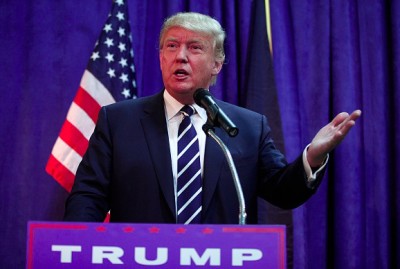
If Donald Trump is elected president, will he and his family permanently sever all connections to the Trump Organization, a sprawling business empire that has spread a secretive financial web across the world? Or will Trump instead choose to be the most conflicted president in American history, one whose business interests will constantly jeopardize the security of the United States?
Throughout this campaign, the Trump Organization, which pumps potentially hundreds of millions of dollars into the Trump family’s bank accounts each year, has been largely ignored. As a private enterprise, its businesses, partners and investors are hidden from public view, even though they are the very people who could be enriched by—or will further enrich—Trump and his family if he wins the presidency.
A close examination by Newsweek of the Trump Organization, including confidential interviews with business executives and some of its international partners, reveals an enterprise with deep ties to global financiers, foreign politicians and even criminals, although there is no evidence the Trump Organization has engaged in any illegal activities. It also reveals a web of contractual entanglements that could not be just canceled. If Trump moves into the White House and his family continues to receive any benefit from the company, during or even after his presidency, almost every foreign policy decision he makes will raise serious conflicts of interest and ethical quagmires.
The Mumbai Shuffle
The Trump Organization is not like the Bill, Hillary & Chelsea Clinton Foundation, the charitable enterprise that has been the subject of intense scrutiny about possible conflicts for the Democratic presidential nominee. There are allegations that Hillary Clinton bestowed benefits on contributors to the foundation in some sort of “pay to play” scandal when she was secretary of state, but that makes no sense because there was no “pay.” Money contributed to the foundation was publicly disclosed and went to charitable efforts, such as fighting neglected tropical diseases that infect as many as a billion people. The financials audited by PricewaterhouseCoopers, the global independent accounting company, and the foundation’s tax filings show that about 90 percent of the money it raised went to its charitable programs. (Trump surrogates have falsely claimed that it was only 10 percent and that the rest was used as a Clinton “slush fund.”) No member of the Clinton family received any cash from the foundation, nor did it finance any political campaigns. In fact, like the Clintons, almost the entire board of directors works for free.
On the other hand, the Trump family rakes in untold millions of dollars from the Trump Organization every year. Much of that comes from deals with international financiers and developers, many of whom have been tied to controversial and even illegal activities. None of Trump’s overseas contractual business relationships examined by Newsweek were revealed in his campaign’s financial filings with the Federal Election Commission, nor was the amount paid to him by his foreign partners. (The Trump campaign did not respond to a request for the names of all foreign entities in partnership or contractually tied to the Trump Organization.) Trump’s financial filings also indicate he is a shareholder or beneficiary of several overseas entities, including Excel Venture LLC in the French West Indies and Caribusiness Investments SRL, based in the Dominican Republic, one of the world’s tax havens.
Trump’s business conflicts with America’s national security interests cannot be resolved so long as he or any member of his family maintains a financial interest in the Trump Organization during a Trump administration, or even if they leave open the possibility of returning to the company later. The Trump Organization cannot be placed into a blind trust, an arrangement used by many politicians to prevent them from knowing their financial interests; the Trump family is already aware of who their overseas partners are and could easily learn about any new ones.
Many foreign governments retain close ties to and even control of companies in their country, including several that already are partnered with the Trump Organization. Any government wanting to seek future influence with President Trump could do so by arranging for a partnership with the Trump Organization, feeding money directly to the family or simply stashing it away inside the company for their use once Trump is out of the White House. This is why, without a permanent departure of the entire Trump family from their company, the prospect of legal bribery by overseas powers seeking to influence American foreign policy, either through existing or future partnerships, will remain a reality throughout a Trump presidency.
Moreover, the identity of every partner cannot be discovered if Trump reverses course and decided to release his taxes. The partnerships are struck with some of the more than 500 entities disclosed in Trump’s financial disclosure forms; each of those entities has its own records that would have to be revealed for a full accounting of all of Trump’s foreign entanglements to be made public.
The problem of overseas conflicts emerges from the nature of Trump’s business in recent years. Much of the public believes Trump is a hugely successful developer, a television personality and a failed casino operator. But his primary business deals for almost a decade have been a quite different endeavor. The GOP nominee is essentially a licensor who leverages his celebrity into streams of cash from partners from all over the world. The business model for Trump’s company started to change around 2007, after he became the star of NBC’s The Apprentice, which boosted his national and international fame. Rather than constructing Trump’s own hotels, office towers and other buildings, much of his business involved striking deals with overseas developers who pay his company for the right to slap his name on their buildings. (The last building constructed by Trump with his name on it is the Trump-SoHo hotel and condominium project, completed in 2007.)
In public statements, Trump and his son Donald Trump Jr. have celebrated their company’s international branding business and announced their intentions to expand it. “The opportunities for growth are endless, and I look forward to building upon the tremendous success we have enjoyed,” Donald Trump Jr. said in 2013. Trump Jr. has cited prospects in Russia, Ukraine, Vietnam, Thailand, Argentina and other countries.
The idea of selling the Trump brand name to overseas developers emerged as a small piece of the company’s business in the late 1990s. At that time, two executives from Daewoo Engineering and Construction met with Trump at his Manhattan offices to propose paying him for the right to use his name on a new complex under development, according to former executives from the South Korean company. Daewoo had already worked with the Trump Organization to build the Trump World Tower, which is close to the Manhattan headquarters of the United Nations. The former Daewoo executives said Trump was at first skeptical, but in 1999 construction began on the South Korean version of Trump World, six condominium properties in Seoul and two neighboring cities. According to the two former executives, the Trump Organization received an annual fee of approximately $8 million a year.
Shortly after the deal was signed, the parent company of Daewoo Engineering and Construction, the Daewoo Group, collapsed into bankruptcy amid allegations of what proved to be a $43 billion accounting fraud. The chairman of the Daewoo Group, Kim Woo Choong, fled to North Korea; he returned in 2005, was arrested and convicted of embezzlement and sentenced to 10 years in prison. According to the two former Daewoo executives, a reorganization of Daewoo after its bankruptcy required revisions in the Trump contract, but the Trump Organization still remains allied with Daewoo Engineering and Construction.
This relationship puts Trump’s foreign policies in conflict with his financial interests. Earlier this year, he said South Korea should plan to shoulder its own military defense rather than relying on the United States, including the development of nuclear weapons. (He later denied making that statement, which was video-recorded.) One of the primary South Korean companies involved in nuclear energy, a key component in weapons development, is Trump’s partner—Daewoo Engineering and Construction. It would potentially get an economic windfall if the United States adopted policies advocated by Trump.
In India, the conflicts between the interests of the Trump Organization and American foreign policy are starker. Trump signed an agreement in 2011 with an Indian property developer called Rohan Lifescapes that wanted to construct a 65-story building with his name on it. Leading the talks for Rohan was Kalpesh Mehta, a director of the company who would later become the exclusive representative of Trump’s businesses in India. However, government regulatory hurdles soon impeded the project. According to a former Trump official who spoke on condition of anonymity, Donald Trump Jr. flew to India to plead with Prithviraj Chavan, chief minister of Maharashtra, a state in Western India, asking that he remove the hurdles, but the powerful politician refused to make an exception for the Trump Organization. It would be extremely difficult for a foreign politician to make that call if he were speaking to the son of the president of the United States.
The Mumbai deal with Rohan fell apart in 2013, but a new branding deal (Trump Tower Mumbai) was struck with the Lodha Group, a major Indian developer. By that time, Trump had an Indian project underway in the city of Pune with a large developer called Panchshil Realty that agreed to pay millions for use of the Trump brand on two 22-floor towers. His new partner, Atul Chordia of Panchshil, appeared awed in public statements about his association with the famous Trump name and feted Trump with a special dinner attended by actors, industrialists, socialites and even a former Miss Universe.
Last month, scandal erupted over the development, called Trump Towers Pune, after the state government and local police started looking into discrepancies in the land records suggesting that the land on which the building was constructed may not have been legally obtained by Panchshil. The Indian company says no rules or laws were broken, but if government officials conclude otherwise, the project’s future will be in jeopardy—and create a problem that Indian politicians eager to please an American president might have to resolve.
Through the Pune deal, the Trump Organization has developed close ties to India’s Nationalist Congress Party—a centrist political organization that stands for democratic secularism and is led by Sharad Pawar, an ally of the Chordia family that owns Panchshil—but that would be of little help in this investigation. Political power in India rests largely with the Indian National Congress, a nationalist party that has controlled the central government for almost 50 years. (However, Trump is very popular with the Hindu Sena, a far-right radical nationalist group that sees his anti-Muslim stance as a sign he would take an aggressive stand against Pakistan. When Trump turned 70 in June, members of that organization threw a birthday party for the man they called “the savior of humanity.”)
Even as Trump was on the campaign trail, the Trump Organization struck another deal in India that drew the Republican nominee closer to another political group there. In April, the company inked an agreement with Ireo, a private real estate equity business based in the Indian city of Gurgaon. The company, which has more than 500 investors in the fund that will be paying the Trump Organization, is headed by Madhukar Tulsi, a prominent real estate executive in India. In 2010, Tulsi’s home and the offices of Ireo were raided as part of a sweeping corruption inquiry related to the 2010 Commonwealth Games held in New Delhi. According to one Indian business executive, government investigators believed that Ireo had close ties with a prominent Indian politician—Sudhanashu Mittal, then the leader of the Bharatiya Janata Party, India’s second largest political party—who was suspected in playing a role in rerouting money earned from Commonwealth Games contracts through tax havens into Ireo’s real estate projects. A senior official with Ireo, Tulsi is a relative of Mittal’s. No charges were ever brought in the case, but the investigation did reveal the close political ties between a prominent Indian political party and a company that is now a Trump partner.
No doubt, few Indian political groups hoping to establish close ties to a possible future American president could have missed the recent statements from the Trump family that its company wanted to do more deals in their country. As the Republican National Convention was about to get underway in July, the Trump Organization declared it was planning a massive expansion in the South Asian country. “We are very bullish on India and plan to build a pan-India development footprint for Trump-branded residential and office projects,’’ Donald Trump Jr. told the Hindustan Times. “We have a very aggressive pipeline in the north and east, and look forward to the announcement of several exciting new projects in the months ahead.”
That is a chilling example of the many looming conflicts of interest in a Trump presidency. If he plays tough with India, will the government assume it has to clear the way for projects in that “aggressive pipeline” and kill the investigations involving Trump’s Pune partners? And if Trump takes a hard line with Pakistan, will it be for America’s strategic interests or to appease Indian government officials who might jeopardize his profits from Trump Towers Pune?
Branding Wars in the Middle East
Trump already has financial conflicts in much of the Islamic world, a problem made worse by his anti-Muslim rhetoric and his impulsive decisions during this campaign. One of his most troubling entanglements is in Turkey. In 2008, the Trump Organization struck a branding deal with the Dogan Group, named for its owners, one of the most politically influential families in Turkey. Trump and Dogan first agreed that the Turkish company would pay a fee to put the Trump name on two towers in Istanbul.
When the complex opened in 2012, Trump attended the ribbon-cutting and declared his interest in more collaborations with Turkish businesses and in making significant investments there. In a sign of the political clout of the Dogan family, Turkish President Recep Tayyip Erdogan met with Trump and even presided over the opening ceremonies for the Trump-branded property.
However, the Dogans have fallen out of favor, and once again, a Trump partner is caught up in allegations of criminal and unethical activity. In March, an Istanbul court indicted Aydin Dogan, owner and head of the Dogan Group, on charges he engaged in a fuel-smuggling scheme. Dogan has proclaimed his innocence; prosecutors are seeking a prison sentence of more than 24 years.
According to an Arab financier with strong ties to Turkish political leaders, government connections with the Dogan family grew even more strained in May, when a consortium of news reporters released what are known as the Panama Papers, which exposed corporations, politicians and other individuals worldwide who evaded taxes through offshore accounts. One of the names revealed was that of Vuslat Dogan Sabanci, a member of Dogan Holding’s board.
With the Dogans now politically radioactive, Erdogan struck at the family’s business partner, Trump, for his anti-Muslim rhetoric. In June, Erdogan called for the Trump name to be removed from the complex in Istanbul and said presiding over its dedication had been a mistake.
This is no minor skirmish: American-Turkish relations are one of the most important national security issues for the United States. Turkey is among the few Muslim countries allied with America in the fight against the Islamic State militant group; it carries even greater importance because it is a Sunni-majority nation aiding the U.S. military against the Sunni extremists. Turkey has allowed the U.S. Air Force to use a base as a major staging area for bombing and surveillance missions against ISIS. A Trump presidency, according to the Arab financier in direct contact with senior Turkish officials, would place that cooperation at risk, particularly since Erdogan, who is said to despise Trump, has grasped more power following a thwarted coup d’état in July.
In other words, Trump would be in direct financial and political conflict with Turkey from the moment he was sworn into office. Once again, all his dealings with Turkey would be suspect: Would Trump act in the interests of the United States or his wallet? When faced with the prospect of losing the millions of dollars that flow into the Trump Organization each year from that Istanbul property, what position would President Trump take on the important issues involving Turkish-American relations, including that country’s role in the fight against ISIS?
Another conundrum: Turkey is at war with the Kurds, America’s allies in the fight against ISIS in Syria. Kurdish insurgent groups are in armed conflict with Turkey, demanding an independent Kurdistan. If Turkey cuts off the Trump Organization’s cash flow from Istanbul, will Trump, who has shown many times how petty and impulsive he can be, allow that to influence how the U.S. juggles the interests of these two critical allies?
Similar disturbing problems exist with the United Arab Emirates (UAE), another Muslim nation that is an important American ally. Trump has pursued business opportunities in the oil-rich nation for years, with mixed success. His first venture was in 2005, when the Trump Organization struck a branding deal with a top Emirates developer called Nakheel LLC, backed by Dubai’s royal family, that planned to build a tulip-shaped hotel on a man-made island designed to look like a palm tree.
In 2008, a bribery and corruption probe was launched involving the company’s multibillion-dollar Dubai Waterfront project. Two Nakheel executives were charged with fraud and cleared, but Nakheel’s financial condition deteriorated amid a collapse in real estate prices; the Trump project was delayed and then canceled.
So, in 2013, the Trump Organization struck another branding deal, this time with Nakheel’s archrival, Damac Properties, a division of the Damac Group, that wanted the Trump name on a planned 18-hole PGA Championship golf course. The deal was negotiated by Hussain Ali Sajwani, chairman of Damac, who had engaged in controversial land deals with senior government officials in the UAE. He met personally with Trump about the project, and their relationship grew, ultimately leading to Damac working with the Trump Organization on two branded golf courses and a collection of villas in Dubai. According to the former executive with the Trump Organization, Trump has said he personally invested in some of the Dubai projects.
In this case, even the possibility of a Trump presidency has created chaos for the Trump Organization. On December 7, when Trump called for a “total and complete shutdown” of Muslims being allowed into the United States, the reaction in the UAE was instantaneous: There were calls to boycott the Damac-Trump properties. Damac put out a statement essentially saying its deal with the Trump Organization had nothing to do with Donald Trump personally, a claim that fooled no one. On December 10, Damac removed Trump’s image and name from its properties. Two days later, the name went back up, setting off an even louder outcry. Damac’s share price dropped 15 percent amid the controversy, and it was forced to guarantee rental returns for some of its luxury properties bearing the Trump name.
Other UAE businesses with connections to Trump are also shunning the brand. The Dubai-based Landmark Group, one of the Middle East’s largest retail companies, said it was pulling products with Trump’s name off of its shelves.
With Middle Eastern business partners and American allies turning on him, Trump lashed out. Prince Alwaleed bin Talal—the billionaire who aided Trump during his corporate bankruptcies in the 1990s by purchasing his yacht, which provided him with desperately needed cash—sent out a tweet amid the outcry in Dubai, calling the Republican candidate a “disgrace.” (Alwaleed is a prodigious tweeter and Twitter’s second largest shareholder.) Trump responded with an attack on the prince—a member of the ruling Saudi royal family—with a childish tweet, saying, “Dopey Prince @Alwaleed_Talal wants to control our U.S. politicians with daddy’s money. Can’t do it when I get elected. #Trump2016.”
Once again, Trump’s personal and financial interests are in conflict with critical national security issues for the United States. During the Bush administration, Abu Dhabi, the UAE’s capital, and Washington reached a bilateral agreement to improve international standards for nuclear nonproliferation. Cooperation is particularly important for the United States because Iran—whose potential development of nuclear weapons has been a significant security issue, leading to an international agreement designed to place controls on its nuclear energy efforts—is one of the UAE’s largest trading partners, and Dubai has been a transit point for sensitive technology bound for Iran.
Given Trump’s name-calling when faced with a critical tweet from a member of the royal family in Saudi Arabia, an important ally, how would he react as president if his company’s business in the UAE collapsed? Would his decisions in the White House be based on what is best for America or on what would keep the cash from Dubai flowing to him and his family?
A Strongman’s Best Friend
Some of the most disturbing international dealings by the Trump Organization involved Trump’s attempts to woo Libyan dictator Muammar el-Qaddafi. The United States had labeled Qaddafi as a sponsor of terrorism for decades; President Ronald Reagan even launched a military attack on him in 1986 after the National Security Agency intercepted a communications that showed Qaddafi was behind the bombing of a German discotheque that killed two Americans. He was also linked to the bombing of Pan Am Flight 103, which exploded over Lockerbie, Scotland, killing 259 people, in 1988.
But for the Trump Organization, Qaddafi was not a murdering terrorist; he was a prospect who might bring the company financing and the opportunity to build a resort on the Mediterranean coast of Libya. According to an Arab financier and a former businessman from the North African country, Trump made entreaties to Qaddafi and other members of his government, beginning in 2008, in which he sought deals that would bring cash to the Trump Organization from a sovereign wealth fund called the Libyan Investment Authority. The following year, Trump offered to lease his estate in Westchester County, New York, to Qaddafi; he took Qaddafi’s money but, after local protests, forbade him from staying at his property. (Trump kept the cash.) “I made a lot of money with Qaddafi,’’ Trump said recently about the Westchester escapade. “He paid me a fortune.”
Another business relationship that could raise concerns about conflicts involves Azerbaijan, a country the State Department said in an official report was infused with “corruption and predatory behavior by politically connected elites.” According to Trump’s financial filings, the Republican nominee is the president of two entities called OT Marks Baku LLC and DT Marks Baku Manaaina Member Corp. Those were established as part of deals the Trump Organization made last year for a real estate project in the country’s capital. The partner in the deal is Garant Holding, which is controlled by Anar Mammadov, the son of the country’s transportation minister, Ziya Mammadov. According to American diplomatic cables made public in 2010, the United States possessed information that led diplomats to believe Ziya Mammadov laundered money for the Iranian military. No formal charges have been brought against either Mammadov.
Once again, however, this exposes potential conflicts between Trump’s business connections and national security. While the development is currently on hold, it has not been canceled, meaning that Anar Mammadov could soon be paying millions of dollars to Trump. If American intelligence concludes, or has already concluded, that his business partner’s father has been aiding Iran by laundering money for the military, will Trump’s foreign policy decisions on Iran and Azerbaijan be based on the national security of the United States or the financial security of Donald Trump?
An Oligarch in D.C.
The Trump Organization also has dealings in Russia and Ukraine, and officials with the company have repeatedly stated they want to develop projects there. The company is connected to a controversial Russian figure, Vladimir Potanin, a billionaire with interests in mining, metals, banking and real estate. He was a host of the Russian version of The Apprentice (called Candidate), and Trump, through the Trump Organization, served as the show’s executive producer. Potanin is deeply tied to the Russian government and obtained much of his wealth in the 1990s through what was called the loans-for-shares program, part of an effort by Moscow to privatize state properties through auction. Those sales were rigged: Insiders with political connections were the biggest beneficiaries.
Hoping to start its branding business in Russia, the Trump Organization registered the Trump name in 2008 as a trademark for projects in Moscow, St. Petersburg and Sochi. It also launched negotiations with a development company called the Mos City Group, but no deal was reached. The former Trump executive said that talks fell apart over the fees the Trump Organization wanted to charge: 25 percent of the planned project’s cost. However, the executive said, the Trump Organization has maintained close relations with Pavel Fuks, head of the Mos City Group. Fuks is one of the most politically prominent oligarchs in Russia, with significant interests in real estate and the country’s financial industry, including the Pushkino bank and Sovcombank.
The Trump Organization has also shown interest in Ukraine. In 2006, Donald Trump Jr. and Ivanka Trump met with Viktor Tkachuk, an adviser to the Ukrainian president, and Andriy Zaika, head of the Ukrainian Construction Consortium. The potential financial conflicts here for a President Trump are enormous. Moreover, Trump’s primary partner for his lucrative business in Canada, a well-respected Russo-Canadian billionaire named Alex Shnaider, is also a major investor in Russia and Ukraine, meaning American policies benefiting those countries could enrich an important business connection for the Trump Organization.
Meanwhile, Trump has raised concerns in the United States among national security experts for his consistent and effusive praise for Vladimir Putin, the Russian ruler who also now controls much of Ukraine. With its founder in the White House, the Trump Organization would have an extraordinary entrée into those countries. If the company sold its brand in Russia while Trump was in the White House, the world could be faced with the astonishing site of hotels and office complexes going up in downtown Moscow with the name of the American president emblazoned in gold atop the buildings.
The dealings of the Trump Organization reach into so many countries that it is impossible to detail all the conflicts they present in a single issue of this magazine, but a Newsweek examination of the company has also found deep connections in China, Brazil, Bulgaria, Argentina, Canada, France, Germany and other countries.
Never before has an American candidate for president had so many financial ties with American allies and enemies, and never before has a business posed such a threat to the United States. If Donald Trump wins this election and his company is not immediately shut down or forever severed from the Trump family, the foreign policy of the United States of America could well be for sale. [myad]
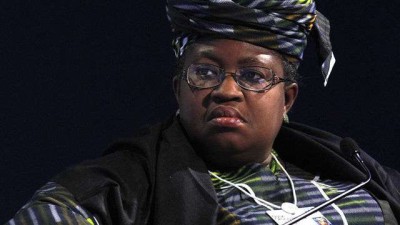
Nigeria’s ex Finance Minister, Dr. Ngozi Okonjo-Iweala, has expressed the hope that Nigeria can crawl out of the economic recession if the government would focus on certain fundamentals, such as stable exchange rate among others.
Okonjo-Iweala, who spoke on Aljazeera programme, ‘The Stream,’ charged African nations to concentrate on solving macroeconomic problems as key to fixing the continent’s economic challenges.
According to her, having a firm control over the rate of inflation in addition to ensuring a stable exchange rate should be prioritized by African governments.
“I have contributed the best I could to the country. It is still the most interesting country in the world. It is better to leave those who are managing now to say what they would do.
“All I can say is that there are solutions. Nigeria is a vibrant country. I love it so much. I know it is going to come out of this one way or another.
“One of the things you learn as you get wiser is to talk less as you grow older. I have spent my time contributing to the country. It will be better to live those managing the economy to do what they know how to do. There can be solutions.
“I am not a typical politician. I went in as a technocrat. I think on the continent we have seen a period when the economy was doing well, in the last two years we have been experiencing challenges. We need to focus on the basics which are macro-economics. You must get the fundamentals like having a stable exchange rate and having inflation under control.
“I served my country for seven years and it was a great honour. The second time was very tough but it is still an honour. I am not the only person who is a repository of knowledge. There are other people who can equally try their hands in running the economy.
“I will advise young people not to wait for employment. They should create jobs to employ six people or more. During my time in government, we had a programme called You Win designed to support young entrepreneurs. The whole idea was to have a business plan competition.
“The idea was that they should create jobs. And each, created 9-10 jobs. The World Bank did an evaluation of it and found it good. I do believe that the government should come in. We started a peer to peer mentoring. Now, one of the things I want to say is that creating employment is not only about struggles, it is about managing success.
” Also, counseling people on accounting, bookkeeping and not falling apart is very important.”
On her service in Nigeria, she said: “It was a very tough fight, I must thank my team, you don’t do it alone, I had the support of an economic team in the Ministry of Finance. It was tough because at the end of the day you need to have some principles.
“The average life span of a Finance Minister is two years in a country. No one likes a Finance Minister because it is the business of saying no. It is very difficult and challenging. It was interesting for me. I wish I had seen myself as wielding power. All I saw was the job because I was seeing myself working for the country.” [myad]
We use cookies on our website to give you the most relevant experience by remembering your preferences and repeat visits. By clicking “Accept”, you consent to the use of ALL the cookies.
This website uses cookies to improve your experience while you navigate through the website. Out of these, the cookies that are categorized as necessary are stored on your browser as they are essential for the working of basic functionalities of the website. We also use third-party cookies that help us analyze and understand how you use this website. These cookies will be stored in your browser only with your consent. You also have the option to opt-out of these cookies. But opting out of some of these cookies may affect your browsing experience.
Necessary cookies are absolutely essential for the website to function properly. This category only includes cookies that ensures basic functionalities and security features of the website. These cookies do not store any personal information.
Any cookies that may not be particularly necessary for the website to function and is used specifically to collect user personal data via analytics, ads, other embedded contents are termed as non-necessary cookies. It is mandatory to procure user consent prior to running these cookies on your website.


 Dame Patience Jonathan, the wife of former president Goodluck Jonathan has said that the $15 million which the Economic and Financial Crime Commission (EFCC) frozen in four companies’ accounts was meant to settle her medical bills while she was out of the country.
 Suspected cultists who were said to have been on revenge mission in Rumuekini Community, have killed a woman, Mrs. Comfort Nnedah Ikunga, who had just been put to bed with triplets in Obio/Akpor Local government Area of Rivers State.
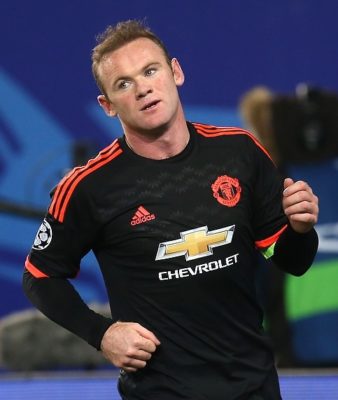 Skipper Wayne Rooney has been left out of the Manchester United squad for Thursday’s Europa League clash with Feyenoord.
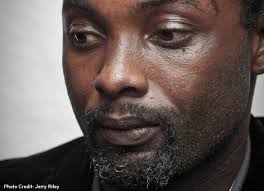 President Muhammadu Buhari has described a Jamaican-born Nigerian veteran journalist, Carlton Lindsay Barret, as unique as he clocks 75 years tomorrow, September 15.


Dame Patience’s Billions, Symbol Of Nigeria High Speed Corruption, By Solomon Okocha
It’s the reason why productivity, creativity, innovation, and motivation became meaningless in our nation. Study all that you can, read all the books in the whole world, attend the best universities in the universe, heap degrees upon degrees, generate mind boggling ideas, but unfortunately, you might forever remain unemployed and useless in Nigeria except you receive an anointing from above. Even the menial jobs in the land, were/are all controlled by the high and mighty.
Nigeria was operating on high speed corruption. Our brains were becoming useless; the billions and trillions in the private bank accounts of premature elites took the place of analytical reasoning and futuristic planning. Agbada-wearing rogues were allowed to take over governance, whilst men and women of sound intellect stood by in tattered and old fashioned suits, watching sheepishly and hopelessly as ill-mannered politicians raped the economy to death. Brain dearth is a by-product of corruption.
Brothers and sisters please tell them that it’s development that gives value to money and not vice versa. Billions and trillions are completely useless in an unconducive environment. How can you have billions and trillions stolen from public office in the bank, yet your village does not have pipe-borne water, good schools, electricity, good roads, health-care facilities, and other basic amenities of the modern man?
Don’t you get it? It’s not the money in the bank that gives value, rather, it’s what the money in the bank has achieved for the masses that gives value. It is an archaic pattern of thinking that must be flushed out of the wacky minds of most public servants in Nigeria. Money without development is useless!
When did the primitive accumulation of billions and trillions become a norm in public service? How can an economy survive when huge sums lie dormant in the private bank accounts of public servants? What is money without development? In other parts of the world, business men and women are richer than public servants, but here, reverse is the case. It then follows that economic recession is directly proportional to the rate of corruption in a country.
Just recently the media went agog with news of how Dame Patience Faka Jonathan, the wife of former President Goodluck Ebele Jonathan, is battling with the Economic and Crimes Commission (EFCC ) in court over ownership of a frozen $31.4 in an ongoing fraud case. While I do not want to delve into the nitty gritties of the matter at hand because it’s still undergoing adjudication, however, I’ll still throw a challenge at Mrs. Jonathan and so many other public servants who have billions and trillions sleeping in their private bank accounts, whilst Nigerians are groaning and bleeding under the terrible burden of recession.
The challenge is quite simple. I dare any of such persons mentioned above to show me one developmental initiative that they’ve embarked on in the past one year in order to better the lives of the impoverished masses of Nigeria. For instance, the people of Otueke, the hometown of former President Goodluck Jonathan, after years of living without access to clean water, have just received succour from President Buhari’s ‘Central Ogbia Regional Water Supply Project’ in Bayelsa State. About 130,000 people are expected to benefit from the project estimated at N5.9 billion. Is this not the type of impact that Dame Patience should be making in her husband’s land?
Wait a minute: is this just a fluke? Or could this be the universe jamming time and chance together to produce a blend of synchronising rhythms of truth and reality? Or maybe, this is just the handiwork of a master strategist working for the Presidency, assiduously trying to perfectly draw a correlation between recession, corruption and mediocrity? Whichever way it is, the story of Dame Patience Jonathan’s billions, and the present economic recession is a reward for our mediocrity.
solomon.okocha@gmail.com. 9myad]