Minister of the Federal Capital Territory (FCT), Malam Muhammad Musa Bello has asked Nigerians to cheer up as better days are coming. In a message to Muslims across Nigeria, especially those resident in the Federal Capital Territory, Abuja as they mark this year’s Eid-el-Kabir, the minister asked Nigerian to reflect on the lessons of the festival and the teachings of the doctrine of Islamic faith, which is premised on sacrifice and peace. He cited the story of Prophet Ibrahim who attempted to sacrifice his only son, culminating into the celebration of Eid-al-Adha to commemorate his (Ibrahim’s) willingness to follow God’s command to sacrifice his son. Muhammad Bello asked Nigerians to use the occasion to foster unity by making sacrifices in the spirit of the sacrifice made by Prophet Ibrahim. The Minister stressed the importance of people living selfless life with love and sacrifice even as he called on all residents of FCT to be law-abiding as his Administration is out to implement the Change Agenda. Muhammad Bello enjoined Nigerians, irrespective of their religious and political inclinations, to continue to live in peace and harmony with one another. “We should be our brothers’ keeper.” He appealed for greater unity, love and peaceful co-existence among Nigerians as well as total support for President Buhari’s administration in its fight against corruption and plans to grow the economy and take it out of recession. The Minister also called for prayers for the success of the country’s leadership under President Buhari, for Allah’s guidance, protection and wisdom to steer the affairs of the nation. [myad]
The Inspector General of the Nigeria Police, Ibrahim Idris has acknowledged that public protests and processions are integral parts of democratic norms but that they must conform with the rule of law and public order. The Inspector General, who was reacting to barrage of condemnation of the police stoppage of the Bring Back Our Girls group from protesting to the Presidential Villa, Abuja, said that his men and officers would never stop any protest or procession so long it is within the arm bit of the law, insisting that protesters must notify the police ahead of their demonstration. He said that what he tried to do was to prevent the procession from being hijacked by miscreants. A statement from Force Headquarters, signed by DCP Don Awunah, quoted the police boss as saying: “Categorically, at no time did Nigeria Police Force place a ban on peaceful public protest/procession anywhere in Nigeria, particularly the Federal Capital Territory”. The statement continued: “Peaceful public protest/procession is an integral part of democratic norms in as much as it conforms with the rule of law and public order. “The Nigeria Police Force recognises the constitutional rights of every law abiding citizen to express his or her view through public protest/procession and other legitimate means. “In order to ensure that public protest/procession is not hijacked by hoodlums and miscreants to unleash mayhem and disturbance of public peace, persons or group of persons undertaking public protest/procession should endeavour to notify the police to enable the police protect and process the public procession through designated routes and destinations. “However, the police will not condone any protest/procession on the public highways and roads inhibiting or disallowing public freedom and right of way. “The Inspector General of Police is committed to the principles of democratic policing and adherence to international best practices in public order management. “To this end, State Commissioners of Police and Police Commanders are directed to emplace strategies to protect and facilitate lawful public protest/processions as well as protect other members of the public who are not engaged in any form of public protest/procession.” Recall that members of the ‘BringBackOurGirls’ coalition in Abuja were stopped from gaining entrance into the premises of the Presidential Villa, Abuja when they launched protest over the inability of the authority to retrieve over 200 female students of the Government Girls Secondary School in Chibok, Borno state, Abducted by members of Boko Haram in May 2014. [myad]
There used to be a unifying political gladiator in Ebiraland, Kogi state of Nigeria, whose name, Ahmed Tijjani Ahmed, popularly called A. T. Ahmed rang bell across the length and breadth of Nigeria and beyond. Over nine years after his demise, a consummate writer and journalist, M.J Suleiman Ege, who followed the tapestry of the life of A.T, is out with 180-page book titled: A Hero And A Mission Aborted. His sudden death in an auto crash along Abuja-Lokoja road on June 10, 2006 shook the land and brought with it, the closure of a beautiful era in Ebiraland. Suleiman Ege chronicles not only the life and time of A.T in the book, but also the environment into which he was born and in which he flourished as a civil servant, as a political iroko tree and as a dynamic leader. The author starts, in chapter one, by narrating his first meeting with the late politician in his Lagos GRA residence, along with another friend of his, and how such meeting snowballed into A.T being touted as running mate to Olusegun Obasanjo in the 1999 Presidential election and how at the same time, he (A.T) had thrown the towel into the ring to contest the Kogi state governorship election, none of which actually materialized. As a matter of fact, the author goes beyond the conventional narration to offer pieces of advice, in page 10, on how political leaders, who are often prey to deceitful aides, should “strive to live above rumour,” which he said, late A.T discovered early enough. The author actually brought out the major qualities of late A.T, saying in page 16: “he remains a leader whose spirit of giving exceeded his person…A selfless man who gave wealth freely to any who crossed his path in need…He enriched those around him with power, money and influence much to his own disadvantage and comfort. He was much misrepresented sometimes, by the same people he so trusted or empowered and so enriched while alive. But in death, his mission became clearer. He grew so large that a replacement is yet to be found nearly ten years on…” After the first chapter which is all about the author’s encounter with the late politician, the second chapter falls into the conventional narration: about his birth, circumstances of his birth, his early life, the clan he belonged to, the family tree and so on. The subsequent chapters, upto seven are analysis of the summation in chapter one: his crisis with associates and rivals, enemies made and enemies inherited, his political career, his political philosophy, his position on power shift or power rotation in Kogi state politics and so on. From chapter eight, the author veers off into the political and geographical history of Ebira and Kogi state, interspersing the pages with newspaper cuttings on the political runs, around Kogi state. In the epilogue, the author rounds up by taking a look at the destiny, superstition or death in A.T Ahmed’s political goal even as he ends the book, on page 175, with a tribute he (the author) had earlier written, titled: “A.T Ahmed: A Selfless Service To An Ungrateful Generation?” The narration in the 180-page book speaks well about the clear thinking of the author. In fact, the language used is simple, effective with a great deal of professionalism. As a matter of fact, the author displayed excellent mastery of English; mainly flawless and attractive. It is never surprising when it is realized that Suleiman Ege is a world-class communications and journalism professional with over 28 years standing. He holds a second-class upper Degree in Mass Communications from the University of Lagos and Masters Degree in Communications and Policy Studies from the prestigious City University in London. The book, which is the subject of this treatise, has its defects, the most transparent one is the very poor quality of the final product. The quality of the pictures is below standard as are also the quality of the printed words. As a matter of fact, the writings on the newspaper cutting are so tiny and hazy that they obviously couldn’t have been made to be read, because they are not readable. Also, the arrangement of chapter and sub-chapter lacks professional touch. In fact, any work being done on A.T Ahmed doesn’t need to be rushed: doesn’t need to be haphazardly done, knowing that the late political sage loved quality. In fact, his personal status requires, at all times, even in death, quality. However, in all, the book is worth the effort, after all, it is what the author writes about the late politician that the readers would take away. Lovers of A.T Ahmed, and even those who did not admire him for whatever reason, being human, as well as the bystanders, would gain a lot, not only from the life and time of this politician, but through him, the life itself, in this book. This is saying that every lover of history, of life and living, needs to own and read this unique book. Or you may only hear the narration from second-hand point that is no exactly the original one. So, do not miss the opportunity of the originality! [myad]
In the past few weeks, my colleagues who have taken over as spokespersons for the Muhammadu Buhari government and the All Progressives Congress have found themselves in the line of fire, as they are accused of destroying their old reputation as truth-tellers, courageous journalists and activists of the Fourth and Fifth Estates of the Realm. It is the same old accusation. Once a journalist crosses into government and becomes a spokesperson, he or she is called all kinds of names: traitor, turn-coat, hustler. Readers and fans feel betrayed. The defender of the people’s interest is accused of “joining them” to go and “eat”. This is the dilemma of every Nigerian journalist who has taken up the job of spokesperson in whatever governmental capacity. I was abused, vilified and called all kinds of names, but it wasn’t so different with my predecessors nor has it been any easier for my successors. My favourite on this subject was a poem published online titled “The Death of Reuben Abati’s pen” (I don’t remember the author) but Pius Adesanmi was charitable to me in another piece in which he argued that I really didn’t need the job, but my “arrogance” could be tolerated. Pius, o kare oh.
In other parts of the world, journalists also get appointed as spokespersons. The assumption is that a journalist who has spent years communicating with the public, will be able to write, articulate views, understand the media system and the technology of the practice, cultivate his or her colleagues and forcefully defend the interest of the appointing system. But this is precisely where the problem lies. A journalist is required to be independent: free from partisan political involvement, be completely unbiased, and defend the underprivileged, the powerless, the displaced, and all victims of the oppressive, negligent or indifferent state.
The primary job of the journalist is neither advertising nor propaganda: his job is to shed light so the people can see the way, and their oppressors can be constantly reminded that there are barking and wailing watchdogs who will not permit oppression, or utter irresponsibility in the use of power. The journalist is to tell the truth so forcefully and forthrightly, the truth will cause the oppressor pain and distress, but at the same time set the people free. To jump from this background into government or a political propaganda assignment could definitely attract criticisms. The more prominent and influential the journalist is, the more controversial his new role could be. People put a tag on you over time, they don’t imagine you could assume another role in the public space, and when you do, they don’t see it as a new assignment, they use your original role to define your present.
And in the age of technology where every word that is written or spoken is eternally lodged in cyber-memory, you really can’t win the argument. I was hunted with articles I had written on fuel subsidy removal (my revision based on new facts and understanding was considered convenient). In the same manner, today’s men are facing the same heat, as tomorrow’s men would.
The simple truth is that the job definition of a spokesperson is not the same as that of a journalist. When you take up a job as a spokesperson, you have elected to defend the interest of the appointing authority, in this case, the person or organization you speak for, and in the case of a country, the national interest, the definition of which is probably one of the most contentious issues in public policy. If it is a political assignment, then you have the added baggage of being accused of endorsement: something a journalist doing basic reportorial work is not supposed to do, and if as a journalist, you become a brand ambassador, you have also again crossed the line, you have become a commercial face, not a dispassionate dispenser of truth who can investigate the truth and deliver it not minding whose ox is gored.
As a spokesman or brand ambassador, you definitely have no opinion of your own. You are a vehicle, a compromised special purpose vehicle: you speak according to directives, and in the name of the authority you work for. It took me some time to figure that out, when you work for government, you are not expected to sound like an activist in the corridors but you can make a lot of significant inputs. “When you eat, you don’t talk”, that was how some people rationalized it, unfortunately, not knowing that a lot of serious talking actually goes on in government.
What was not properly acknowledged is that the knowledge acquired working in the public sector is quite different from that of the private space: you will certainly as a former private sector person gain access to the inner workings of government. You will build a new network. You gain access to new knowledge and opportunity to contribute to the process of change – you are definitely better positioned to do so from within – except that forces of ethnicity, nepotism, cronyism and even the insecurity of key players could limit your ability to ensure the triumph of good reason in such an environment that is dominated by vicious search for advantages, rustic thinking and competition driven by fear and greed. But still, a spokesperson must do the job. You must be ready to take the bullet for your boss. You are a fall guy. You prevent unnecessary news if you can. It is not your job to tell the media – go and shoot. You are a spin master, a spin-doctor: you help the media to get the facts about government’s efforts, and persuade them not to “kill.”
Even if the heavens are falling and every one is lamenting about the falling weight of heaven, it is your job to give the ordinary people hope. You must let them know that something is being done on their behalf.
To defend the ordinary people is at the base of the assignment: if you work inside government, you don’t throw people into despair, you reassure them, if you work outside government, you give the government people hell, so as to promote the same people, two sides of the same coin. On both sides, the most important element is the people-element, their rights, their relevance, because it is the reason government and society exist.
I admit the whole thing is delicate; it is a walking-a-tight-rope scenario. How do you convince the people you are serving their interest when they see you actively defending the government, the political head and his political party, in the name of giving hope? They would tell you pointedly you are lying to keep a job. The critical point is that government is not a media house. The rules of engagement are different. And that is why every government spokesperson becomes a target of virulent criticism. Where does this lead us to then? It is this: that the people’s mind works differently from government’s mind, particularly in developing countries.
The challenge is to find a synergy. And that synergy lies in government serving the people’s interest: not populism, but meeting the people’s expectations, keeping promises and being seen to be actually working, accepting responsibility, not shifting blames or goal posts, and having a good team. The last point is important- having a good team. You can interpret this whichever way you want, but a political leader must have around him, people who are ready to take the fall for him. They must be willing to shield him, and not throw him under the wheels. When you have ministers who don’t speak up and are virtually absent, or spokespersons who are busy hiding their necks and faces, then there is a problem. Can you imagine some government spokespersons at a critical hour posting Rio Olympics pictures, or talking about fashion or some other irrelevancies when they should be on their Oga’s case?
May be what we are dealing with is actually a conflict of roles. A journalist in government still thinks he is perhaps a journalist and in his mind, he is torn between two conflicts. Those who manage to walk the tight-rope carefully come out looking clean, those who stick their necks out get bruised: but whichever way, much reputational damage is incurred. But the painful fact of the Nigerian reality is that the entire Nigerian journalism establishment is in cahoots with the partisan establishment. There are more sponsored spokesmen outside than within, with the people outside perpetually peeping inside and the whole concept of professional independence trampled afoot as the media digs deep into Nigerian politics and business for easy profit. This must be a subject for another day.
All told, the fortunes of the government make the difference. The ambition of every political leader is to be popular with the people, to win elections and to be taken seriously. Nobody in a leadership position wants to end up badly. Every leader wants to make an impact and be remembered positively. The rub of it is that what the people see is what they believe, and this may be different from what they get to know in the long run. When a government does well, the people will know and acknowledge its achievements. Unfortunately, Nigerian democracy in the last 16 years has suffered greatly from the rise of competitive propaganda, but the simple local logic is that if a lie travels twenty years ahead, one day, the truth will catch up with it. That is not to discount the fact that Nigerians only appreciate their present in the future. We condemn everything that is before us, only to look back a few years later and regretfully revise history. My take is that Nigeria is not an easy country to govern. How easily can anyone govern a country where everybody including the uneducated are vocal experts on every subject from football to politics, foreign exchange and governance?
When you are a spokesperson though, speak. Every job has its own definition. And when you are in the kitchen, don’t complain of heat. The same people who criticize and talk about “doing the job with wisdom” know the truth, and one way or the other, the truth gets told. [myad]
Not too long ago, on March 17, 2009, to be precise, Nigerians were roused to a blistering campaign on attitudinal change. Its pass-code was: Nigeria, Good People, Great Nation. And it was from the fertile ideas factory of the then Minister of Information and Communications, the late Prof Dora Akunyili. May God rest her beautiful soul.
In her characteristic fashion, she plunged every fibre of her being into the campaign. She mobilised every resource to push the mantra. And in a jiffy, the airwaves, social media and the conventional media, especially print, were on fire with their news with the slogan. It was powerful; it was forceful. Ironically, the more people heard and listened to it, the more disenchanted they appeared to be.
A few years later, the National Orientation Agency (NOA) under Mike Omeri launched a fresh campaign anchored on the slogan: Do The Right Thing. Yet the effort met with similar indifference by Nigerians whose attention it was meant to catch. Indeed Omeri NOA initiative fell flat on its face as he failed to correctly judge the mood of Nigerians with the poor reflexes they seemed to be getting from the government of the day on economy and their general well- being. This forced the question; Why?
The answer was not too far to locate. There was an apparent disconnect in the campaign between the people and those in government. It failed to psyche up the masses and they could not see or feel why they should feel good or key into the slogan. No sooner that the initiative was launched than it went into oblivion. It went with the enormous resources invested in it. Everything went down the drain.
The questions begging for answers; What did we learn from these moribund rebranding campaigns? What lessons have we brought to the table to guide our policy makers in their latest attitudinal change campaign? The initiative, launched in Abuja on Thursday 8 September 2016 has theme; Change Begins With Me.
It is good to galvanize the populace to be on the same page with the government in its various initiatives towards making Nigeria an utopian state (if there is any such thing) in all its ramifications, be it political, social and economic. But from my observation, the people that should have been mobilized to buy into these projects have always been inadvertently left out. Hence they are often dead on arrival. The reason is not difficult to locate: our policy makers love putting the cart before the horse.
Let the truth be told; the “Change Begins With Me” campaign came too little and too late. It is belated. For me, the change mantra started way back when President Muhammad Buhari was sworn in as the President of Nigeria. The people voted massively for him because they saw in him a renewal of hope, a rebirth of sort from their seemingly hopeless estate. The frenetic chants of Sai Baba almost became the national anthem of Buhari fanatics who showed their loyalty in diverse forms. Some trekked hundreds of kilometers to Abuja while others gave their last coin to celebrate PMB’s second coming. To me, that was the point the build-up to the launch of the change slogan should have started. But from all indications, the organizers had no roadmap. No lesson was learnt from the Akunyili and Omeri experiences.
A change slogan like this should have started with a well thought out advocacy programme a year ago beginning with the rural populace; comprising farmers, traders, community leaders, traditional rulers and school children. It should have come with juicy and attractive welfare packages that will translate into training them how to fish. Had this been done, it would have been easier for the people to key into it. It would have been easier for the people to engrave into their hearts an undying love and commitment for positive change.
It is only after people have been properly and appropriately sensitised that the administration could then prepare for a grand take off like what we saw in Abuja on Thursday even something much bigger than that.Such preparation should have seen the architects of the programme going round the country, mobilizing the people at every stratum of society. For Lai Mohammed and his crew to now begin to take the campaign round, for what I suspect, would amount to a waste of scarce resources, and an inducement for corruption, trust me. And an economy in recession cannot afford that.
The government should learn how to put smiles on people’s faces – like the ongoing efforts for mass employment for the million of unemployed- before dreaming of how to mobilize them for change of attitude. This is certainly a challenge for the government with its current advocacy campaign, to draw new people and new nation out of Nigeria.
However, hope is not completely lost as Mr President, has pledged personal commitment and leadership for the project. His apparent goodwill and honesty will definitely be an added advantage. The people must start seeing the reflection of change which they are noticing from the President. The cabinet members should queue in by conducting their affairs transparently. National Assembly members too should take a new attitude in which they put the interest of Nigerians first in their agenda and shun extravagant living. The Judiciary too must begin to to fight corruption within its fold and desist from trading judgement with money bags. The Nigerian Police that interface more with the public must be the show piece of this change.
This is absolutely necessary in order to encourage Nigerians to key into the change mantra.
Change must not be about mere slogans. As they say, talk is cheap. So, the architects of this mantra must show leadership by example. They must walk the talk. This must be expressed through some variations, including:
* Showing strong leadership sensibility.
* Establishing trust by proving practically to taxpayers and voters that as leaders, they are dedicated to the society, community and the people.
* Restoring confidence and demonstrating strength and leadership through actions and programmes that beam strong rays of hope for the future. And of course, ensuring fairness and justice.
Even before President Buhari got to power, he had foreseen the enormity of the problems facing Nigeria and the Herculean task of changing the culture of governance. He mirrored this in an interview he granted ThisDay newspapers in 2014 during his electioneering campaigns, he said:
“The priority will have to put the country in order first.In attempting to put the country in order, it is going to be a terrible situation for whoever wins and I pity whoever succeeds President Jonathan, even if it were to be myself. But this is what we can do; the practical way to tackle corruption is to draw a line, because institutions have been compromised. We cannot go on the way we did in the military in 1983 to fight corruption. This time around, you cannot do it that way because most of the institutions have been compromised. The person you will depend on as the auditor to go and check the CBN, maybe he has got some substantial part of the deal. These are facts on the ground. So, what you do is to persuade them to help to amend it. And that part of the amendment is for the people to have attitudinal change to the ills of this country.”
However, no matter how hard he tries, President Buhari cannot do it alone. For the campaign to succeed, all hands must be on deck. Those charged with the implementation of his initiatives must put on their thinking caps, and endeavour to march his pace in his efforts at pulling the country out of the current recession. This is one battle we must win for our country.
Olamiti a Media Consultant wrote from Abuja. [myad]
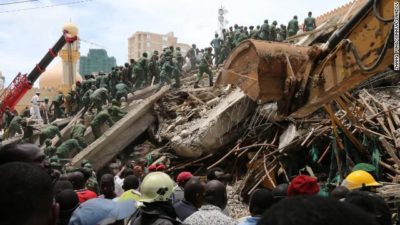
An earthquake measuring 5.7-magnitude has hit the North-West Tanzania, resulting in the death of at least eleven people and injuring about 129 others.
Report says that the earthquake was felt as far away as western Kenya and parts of Uganda, which share the waters of Lake Victoria. Tremors were also felt in Kigali, Rwanda.
The 11 who died in Tanzania were in brick structures in the town of Bukoba, said Augustine Olomi, regional police commander for the Kagera region.
Saturday’s quake was shallow, occurring at a depth of 10 kilometers (six miles). Shallow quakes generally tend to be more damaging than deeper quakes. Seismic waves from deep quakes have to travel farther to the surface, losing energy along the way, while the shaking from shallow quakes is more intense.
A statement from the office of the President of Tanzanian, John Magufuli said that he was “shocked by reports of the earthquake that caused the death of many people, injury others and destruction of property.”
Recent earthquakes in the area have caused secondary hazards such as landslides. The last notable quake in the region was in 2004 and measured 4.7. [myad]
Former Nigerian Vice President, Alhaji Atiku Abubakar has sent a word of courage to Nigeria over the hard-hitting economic crisis in the country, assuring the citizens that this storm would soon pass away.
In a statement by his Media Office in Abuja, the former Vice President, advised Nigerians to use the opportunity of the Eid-el-Kabir, which comes up on Monday, to reflect on the situation in the country and lend one another a shoulder of support.
He said that Nigerians should go and celebrate the festival like other people in the world in spite of the economic situation that has hit the country hard, and that this storm will pass away.
He added that rather than despair, the occasion should call for sober reflection, prayers, cooperation and the display of solidarity among Nigerians so that no one would feel left out.
He called on Nigerians to continue to work hard, persevere and pray for the success of the policies and measures being put in place by the APC government of President Muhammadu Buhari to restore the nation’s economy to good health and improve the lives of the people.
He said that the situation of things will take some time to improve because a lot was left undone for too long by previous leaders of the country assuring however, that there is always a silver lining at the end of a dark cloud.
He looked at the challenge in what basic survival has become, Atiku said that this is the time that all Nigerians should invoke the spirit of brotherhood and communal fraternity to beat the reality of the hard times, adding that with mutual help, everyone will come out stronger to see better days. [myad]
Dame Patience, wife of the immediate past Nigerian President, Dr. Goodluck Jonathan has laid claim to the ownership of $31.4 Million (over N10 Billion) which has been frozen by the Economic and Financial Crime Commission (EFCC). The money is involved in an alleged fraud case before a Federal High Court in Lagos.
The Counsel to the first defendant in the charge, with case number FHC/337C/16, Gboyega Oduwole, informed the court that Mrs. Patience Jonathan had filed a fundamental application against the Economic and Financial Crimes Commission, claiming ownership of the money. In an application filed on September 6, this year, with file number FHC/L/C5/1233/16, Mrs. Patience Jonathan is asking the court to make an order for the enforcement of her fundamental rights, in terms of reliefs she sought, and naming as defendants, the EFCC and Skye Bank Plc. The former first lady asked the court to make a declaration that the fund standing to the credit of four of the companies and an account in her own name in Skye Bank belonged to her. She also asked the court to declare that the action of the respondents in placing a No Debit/Freezing Order on the said accounts without any order of a competent court of law or prior notice to her, to be in breach of her fundamental rights as contained in the constitution of the Federal Republic of Nigeria. The EFCC had taken former presidential aide, Amajuoyi Azubike Briggs; former Skye Bank official, Damola Bolodeoku; Pluto Property and Investment Company Limited; and Avalon Global Property Development Company Limited to court in an alleged $31.4 million fraud involving the companies without addresses. Others also charged included Seagate Property Development and Investment Company Limited, Trans Ocean Property and Investment Company Limited, Avalon Global Property Development Company Limited and Globus Integrated Services Limited. .Source: The Guardian. [myad]
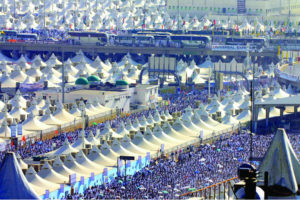
No fewer than 1.5 million Muslims have moved en-mass to Minnah today, Saturday, to herald the beginning of the 2016 Hajj rites in Saudi Arabia. The multitudes of the Muslims from across the world are expected to climax the pilgrimage on Sunday when they will also move en-mass to Arafat.
The number of Muslims performing this year’s hajj is said to be smaller than the previous years because of the absence of thousands of Iranians over tensions between their Shiite nation and the Sunni-dominated Gulf kingdom.
The pilgrims moved to Minnah in what was described as debilitating temperatures exceeding 40 C (100 F). Some of the pilgrims walked under coloured parasols.
They are following in the footsteps of Prophet Muhammad who performed the same rituals about 1,400 years ago.
“It’s an indescribable feeling. You have to live it to understand. This is my sixth hajj and I still cannot express how happy I am to be in Mecca,” said Hassan Mohammed, 60, from Egypt.
The hajj is one of the five pillars of Islam, which capable Muslims must perform at least once, marking the spiritual peak of their lives.
“People come from every country of the world, talk every language of the world, and meet here in one place under one banner, the profession of the Muslim faith,” said Ashraf Zalat, 43, also from Egypt.
The first day of hajj was traditionally the chance for pilgrims to let their animals drink and to stock up on water.
Then they proceed to Mount Arafat, several kilometres further, for the peak of the hajj on Sunday.
Meanwhile, for the first time in 35 years, Saudi Arabia’s top cleric will not give a traditional hajj sermon to pilgrims from around the world, a newspaper reported on Saturday.
Grand Mufti Abdul Aziz al-Sheikh has annually addressed the faithful from the Namira mosque in Mount Arafat for the peak of hajj, which this year falls on Sunday.
Okaz newspaper, citing anonymous sources, said Sheikh, “will step down from delivering the sermon on the day of Arafat, due to health reasons.”
He was appointed Grand Mufti in 1999 after the death of his predecessor, Sheikh Abdel Aziz bin Baz.
But Okaz said Sheikh had for about two decades prior to that, given the annual address to the hajj throng at the site where Prophet Muhammad is said to have delivered his final sermon.
Okaz said the mufti spent about two months preparing for each address.
The grey-bearded Sheikh is a descendant of Sheikh Muhammad bin Abdul Wahhab, the 18th-century fundamentalist preacher who co-founded the Saudi state.
In previous Arafat sermons, Sheikh has attacked jihadist extremists and Yemeni rebels who Saudi Arabia accuses of receiving weapons from Iran.
In a report in the Makkah daily newspaper, Sheikh said Iranians are “not Muslims,” after the supreme leader of the Shiite country launched a fresh tirade over the kingdom’s handling of the hajj pilgrimage. [myad]
No fewer than 30 buildings located in densely populated Works Layout in Amakohia area of Owerri in Imo State have been submerged by flood following a downpour.
The rain, which started at about 6pm and lasted till about 8.30pm on, caused flooding that affected property worth millions of naira in some parts of the town.
Cloths, cooking pots, plates, bags, books, and tricycles were seen floating on the flood.
Although no building collapsed, but the flooding fell the fence of some buildings leading to water flowing into houses.
The areas badly affected within the Works Layout area are Mgbeahuru Street, Road C, and Road B in Amakohia Housing Estate Owerri where almost all the upstairs buildings had the ground floors covered with water.
Kelechi Uzohu, a resident of the area, blamed the flooding on poor road construction by contractors engaged to rehabilitate the road from the Standard Shoe Industry Amakohia to Imo State University Junction.
Uzohu said: “The gutter constructed by the construction workers now is narrow and can no longer contain large water such as the former one built by past government and because of this, we record serious flooding here.”
Another victim, Emma Ugochukwu said but for the prompt intervention of his neighbours his two children and sister in-law would have drowned in the flood.
Ugochukwu said: “I was still on my way back home when the rain started and I stopped somewhere for the rain to subside.
“Unknown to me that flood had already covered my flat with my two children trapped in my flat with my 12-year old sister in-law.
“It was my fellow tenants who noticed that I was not yet back that rushed and forced my door open to rescue them.”
Also speaking, Vitus Nwadikwa, a resident of MCC/Uratta area of Owerri, said: “I cannot count the number of buildings covered by water in the area where I reside this evening.
Nwadikwa said:“The level of damage is enormous and people are running here and there in the rain to move their things out.”
Other areas also affected by flood were Umunguma area, Akwakuma, Orji, Ikenegbu and some part of Ekeukwu Owerri Main Markert on Douglas Road Owerri.
The National Emergency Management Agency office in Owerri had earlier warned people living in flood-prone areas to relocate to safer locations due to imminent flooding expected towards the end of the year. [myad]
We use cookies on our website to give you the most relevant experience by remembering your preferences and repeat visits. By clicking “Accept”, you consent to the use of ALL the cookies.
This website uses cookies to improve your experience while you navigate through the website. Out of these, the cookies that are categorized as necessary are stored on your browser as they are essential for the working of basic functionalities of the website. We also use third-party cookies that help us analyze and understand how you use this website. These cookies will be stored in your browser only with your consent. You also have the option to opt-out of these cookies. But opting out of some of these cookies may affect your browsing experience.
Necessary cookies are absolutely essential for the website to function properly. This category only includes cookies that ensures basic functionalities and security features of the website. These cookies do not store any personal information.
Any cookies that may not be particularly necessary for the website to function and is used specifically to collect user personal data via analytics, ads, other embedded contents are termed as non-necessary cookies. It is mandatory to procure user consent prior to running these cookies on your website.


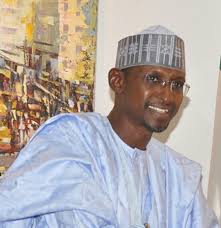 Minister of the Federal Capital Territory (FCT), Malam Muhammad Musa Bello has asked Nigerians to cheer up as better days are coming.
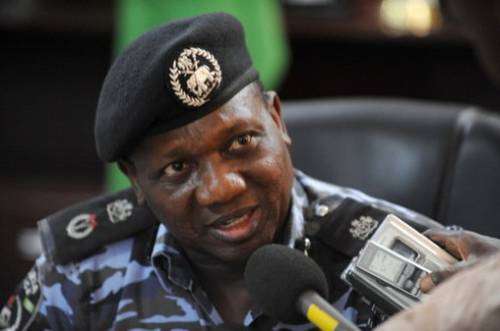 The Inspector General of the Nigeria Police, Ibrahim Idris has acknowledged that public protests and processions are integral parts of democratic norms but that they must conform with the rule of law and public order.
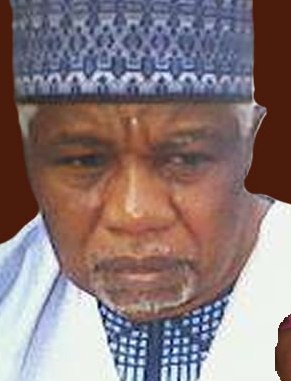 There used to be a unifying political gladiator in Ebiraland, Kogi state of Nigeria, whose name, Ahmed Tijjani Ahmed, popularly called A. T. Ahmed rang bell across the length and breadth of Nigeria and beyond.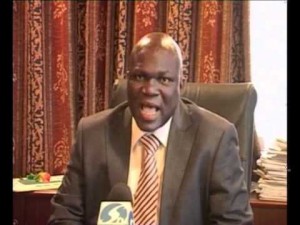





The Change Mantra, By Folu Olamiti
Not too long ago, on March 17, 2009, to be precise, Nigerians were roused to a blistering campaign on attitudinal change. Its pass-code was: Nigeria, Good People, Great Nation. And it was from the fertile ideas factory of the then Minister of Information and Communications, the late Prof Dora Akunyili. May God rest her beautiful soul.
In her characteristic fashion, she plunged every fibre of her being into the campaign. She mobilised every resource to push the mantra. And in a jiffy, the airwaves, social media and the conventional media, especially print, were on fire with their news with the slogan. It was powerful; it was forceful. Ironically, the more people heard and listened to it, the more disenchanted they appeared to be.
A few years later, the National Orientation Agency (NOA) under Mike Omeri launched a fresh campaign anchored on the slogan: Do The Right Thing. Yet the effort met with similar indifference by Nigerians whose attention it was meant to catch. Indeed Omeri NOA initiative fell flat on its face as he failed to correctly judge the mood of Nigerians with the poor reflexes they seemed to be getting from the government of the day on economy and their general well- being. This forced the question; Why?
The answer was not too far to locate. There was an apparent disconnect in the campaign between the people and those in government. It failed to psyche up the masses and they could not see or feel why they should feel good or key into the slogan. No sooner that the initiative was launched than it went into oblivion. It went with the enormous resources invested in it. Everything went down the drain.
The questions begging for answers; What did we learn from these moribund rebranding campaigns? What lessons have we brought to the table to guide our policy makers in their latest attitudinal change campaign? The initiative, launched in Abuja on Thursday 8 September 2016 has theme; Change Begins With Me.
It is good to galvanize the populace to be on the same page with the government in its various initiatives towards making Nigeria an utopian state (if there is any such thing) in all its ramifications, be it political, social and economic. But from my observation, the people that should have been mobilized to buy into these projects have always been inadvertently left out. Hence they are often dead on arrival. The reason is not difficult to locate: our policy makers love putting the cart before the horse.
Let the truth be told; the “Change Begins With Me” campaign came too little and too late. It is belated. For me, the change mantra started way back when President Muhammad Buhari was sworn in as the President of Nigeria. The people voted massively for him because they saw in him a renewal of hope, a rebirth of sort from their seemingly hopeless estate. The frenetic chants of Sai Baba almost became the national anthem of Buhari fanatics who showed their loyalty in diverse forms. Some trekked hundreds of kilometers to Abuja while others gave their last coin to celebrate PMB’s second coming. To me, that was the point the build-up to the launch of the change slogan should have started. But from all indications, the organizers had no roadmap. No lesson was learnt from the Akunyili and Omeri experiences.
A change slogan like this should have started with a well thought out advocacy programme a year ago beginning with the rural populace; comprising farmers, traders, community leaders, traditional rulers and school children. It should have come with juicy and attractive welfare packages that will translate into training them how to fish. Had this been done, it would have been easier for the people to key into it. It would have been easier for the people to engrave into their hearts an undying love and commitment for positive change.
It is only after people have been properly and appropriately sensitised that the administration could then prepare for a grand take off like what we saw in Abuja on Thursday even something much bigger than that.Such preparation should have seen the architects of the programme going round the country, mobilizing the people at every stratum of society. For Lai Mohammed and his crew to now begin to take the campaign round, for what I suspect, would amount to a waste of scarce resources, and an inducement for corruption, trust me. And an economy in recession cannot afford that.
The government should learn how to put smiles on people’s faces – like the ongoing efforts for mass employment for the million of unemployed- before dreaming of how to mobilize them for change of attitude. This is certainly a challenge for the government with its current advocacy campaign, to draw new people and new nation out of Nigeria.
However, hope is not completely lost as Mr President, has pledged personal commitment and leadership for the project. His apparent goodwill and honesty will definitely be an added advantage. The people must start seeing the reflection of change which they are noticing from the President. The cabinet members should queue in by conducting their affairs transparently. National Assembly members too should take a new attitude in which they put the interest of Nigerians first in their agenda and shun extravagant living. The Judiciary too must begin to to fight corruption within its fold and desist from trading judgement with money bags. The Nigerian Police that interface more with the public must be the show piece of this change.
This is absolutely necessary in order to encourage Nigerians to key into the change mantra.
Change must not be about mere slogans. As they say, talk is cheap. So, the architects of this mantra must show leadership by example. They must walk the talk. This must be expressed through some variations, including:
* Showing strong leadership sensibility.
* Establishing trust by proving practically to taxpayers and voters that as leaders, they are dedicated to the society, community and the people.
* Restoring confidence and demonstrating strength and leadership through actions and programmes that beam strong rays of hope for the future. And of course, ensuring fairness and justice.
Even before President Buhari got to power, he had foreseen the enormity of the problems facing Nigeria and the Herculean task of changing the culture of governance. He mirrored this in an interview he granted ThisDay newspapers in 2014 during his electioneering campaigns, he said:
“The priority will have to put the country in order first.In attempting to put the country in order, it is going to be a terrible situation for whoever wins and I pity whoever succeeds President Jonathan, even if it were to be myself. But this is what we can do; the practical way to tackle corruption is to draw a line, because institutions have been compromised. We cannot go on the way we did in the military in 1983 to fight corruption. This time around, you cannot do it that way because most of the institutions have been compromised. The person you will depend on as the auditor to go and check the CBN, maybe he has got some substantial part of the deal. These are facts on the ground. So, what you do is to persuade them to help to amend it. And that part of the amendment is for the people to have attitudinal change to the ills of this country.”
However, no matter how hard he tries, President Buhari cannot do it alone. For the campaign to succeed, all hands must be on deck. Those charged with the implementation of his initiatives must put on their thinking caps, and endeavour to march his pace in his efforts at pulling the country out of the current recession. This is one battle we must win for our country.
Olamiti a Media Consultant wrote from Abuja. [myad]