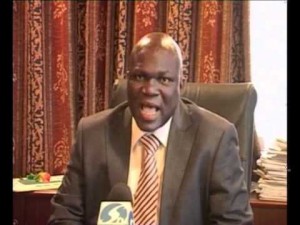
For most of the people, especially women living in remote villages far from medical centres, it is not only malnutrition that has been devastating their children, and to some extent, even women themselves, but the difficulty in accessing health centres in which they can seek for help to come out of the ailment. More often, access to the health centres constitute another burden to the point of discouraging mothers from taking the first step of seeking immediate help for their malnourished children. For instance, most of the sufferers of malnutrition in Gidan Habibu village in Wamakko local government council of Sokoto state and its environs, are facing the challenge of transportation to the nearest centre, i.e. a dispensary for Community Management of Acute Malnutrition (CMAN), funded by European Commission for Humanitarian Office (ECHO) and managed by International Medical Corps. To start with, malnutrition is a health condition which saps the energy of the sufferer and weakens the function of vital organs in the body. Malnutrition, in most cases, is not caused by lack of food to eat, but is caused sometime by not eating the right food at the right time, according to medical and nutritional experts. Experts further said that a malnourished child has many chances of contacting all sort of diseases as the immune deficiency is high. It is also believed that even a nursing mother can fall victim of malnutrition, making her breast milk to be affected, especially in quantity. And in the aforementioned Gidan Habibu in Wamakko local government area of Sokoto state, many nursing mothers have to trek for over an hour to be able to access Gidan Habibu Dispensary. By the time such women, with their malnourished babies strapped to their backs, arrived at the Dispensary after trekking that far, sometime in hot sun, they too would have fagged out and fallen into the category of malnutrition. To worsen the situation, the structure in which the malnourished ‘patients’ are being attended to in this area is very dilapidated. The walls are sagging, threatening to fall apart any moment. The painting on the wall has virtually washed off even as big cracks are visible in all parts of the structure. It is not surprising that its archaic zink leaks whenever it rains, thereby exposing the sickly babies and their mothers to added health danger. Except for the voluntary workers, who appear to be enjoying the job of attending to and treating the malnourished children and some of their mothers, there is nothing encouraging about the centre, which gives a clear impression of neglect by the government. Of course, the Sokoto state Commissioner of Health, Dr. Balarabe Shehu Kakale had said, when he addressed media men and women who attended a UNICEF’s two-day interactive session on children malnutrition, that the state has woken up to the reality of the danger posed by malnutrition and had voted huge amount of money in the budget to control it, a great lot of work still need to be done to arrest the fast drift of the tomorrow’s leaders into oblivion, no thanks to malnutrition. There is of course, the danger in an attempt by the government, which is just waking up to the reality of the situation regarding malnutrition, the national and International Donour Agencies trying to solve child malnutrition in this particular area with little attention paid to the havoc being caused to the nursing mothers as result of the long distance trekking that is likely to create another challenge on its own. As a matter of fact, the larger picture is that there might be the tendency of the mothers nursing malnourished children refusing, for no fault of theirs, to access the centre, thereby denying the children the benefit of enjoying the facilities and therefore, dying unnecessarily. Considering the life-time effect of malnutrition on the children, their growth and the negative effect on the nation itself, it is not asking too much for the government at all levels to create special task force to address the challenges. This is one of the ways of checking malnutrition and therefore, insuring the future of our children. [myad]
The Managing Director of Delta State Oil Producing Area Development Commission (DESOPADEC), Chief William Makinde, speaking on Quest FM on Tuesday, 6th September, 2016, made a very serious point regarding the relocation of oil servicing companies from Delta State that should be a take home for every true lover of the Niger Delta. His major point was that we created the state of insecurity that chased away the companies that would have provided employment for our teaming unemployed youths.
This is the immutable truth that our so-called agitators and those who applaud them have failed to see. There is on the rise, a culture of laziness and self-destruct that has permeated and continues to bedevil the Niger Delta region, especially Delta State.
I can recall the mid-80s to the early 90s when Warri, the economic hub of Delta State was home to hundreds of oil companies. Oil production was at its peak and many of our young men and women were engaged in one form of employment or the other: technicians, fitters, welders, caterers, security guards, etc. It was in this era that catering, a hitherto disregarded profession in this area came to the fore.
Several catering schools sprang up to train careers to fill the need of the catering companies that catered for the countless oil companies that operated offshore and they were legion. Even security companies became sophisticated and people were no longer ashamed to take on security jobs as they were now well kitted and the pay was good. The economy of the area boomed. Night life and recreational activities which are indicators of economic buoyancy of the citizenry thrived.
Female night workers, popularly called club girls, could visit any of the night clubs, pick up an expatriate oil worker of any nation and take him to her one room apartment in a face me I face you apartment and spend the night in peace. That white man would wake up in the morning take a cab and go back to his place of abode without any fear or may even decide to spend the weekend without a care for his safety. Club girls were known then to turn down advances from black men whom they nicknamed “si kro kro” for lack of dollar power during club nights until the early hours of the morning when it became clear that there would be no white customers to catch. Such were the exotic tastes of even prostitutes! How times have changed.
Enter the dragon! From nowhere, in the name of resource control, greedy politicians seeking leverage in national politics empowered and encouraged criminal groups to cripple oil installations. This graduated to kidnapping of expatriate oil workers for ransom and then vandalization and bombing of pipelines.
There was a time in Warri when you walked into a roadside bar and you would see an “Oyibo” man drinking beer. They had black friends, co-workers, whom they visited at home. But with the advent of unthinking militancy, the companies started relocating one after the other. Those that remained bought up our security and made us second class citizens in our land. You need to observe these expatriates hold up traffic during rush hours.
While our gun wielding uniform security operatives clear traffic for them –sometimes flogging us – we are made to spend needless hours in traffic just so that they can pass. While there is shortage of security for our homes and neighborhood, our expatriate friends have no such worries. Even the almighty Nigerian Army has been reduced to “maigad” – personal security men – status at the residents of the expatriates. You dare not loiter around their abodes or else you get the usual bloody civilian treatment.
Where has all this left us? A teeming horde of lazy jobless youths who think the surest way to easy wealth is intimidation and violence. They are even against the development of their own communities. Anyone who has attempted to create a road, draw electricity or site a building project in any of our commutes will know what I am talking about. “Deve” collection has driven away many investors from our clime as well as hampered and led to the folding up of many business concerns.
The evil that we created has come full circle. In the absence of white men to kidnap, these so called agitators have turned on our wives, daughters, and mothers who are daily kidnapped, and violated.
How does bombing and polluting the already degraded environment help the Niger Delta cause? How has the harassment and intimidation of investors helped the cause of the region? Instead of acting with tact to protect and preserve our environment, we have contributed in no small measure to its destruction. Instead of agitating to create wealth and employment, we have chased away employment opportunities.
Now let me say this to the so-called Niger Delta agitators who blow up oil pipelines and pollute the already over devastated environment. You are like the mad man who in an attempt to solve problem of rats in his house, set the house on fire only to sleep out in the rain. You are worse than the Boko Haram of the North-East. At least, for the Boko Haram, there is a religious hope of heaven and dream of conjugal bliss with seventy virgins, but for you, your religion has already condemned you to a life of damnation in hell, for the faith you profess is against rape, arson, stealing and murder. And for those who profess the African traditional religious faith, yours is even worse, for the gods of Egbesu, Agbejugbele, Igbe or whatever god you serve does not wait for the afterlife to mete out retribution.
Until we create a conducive atmosphere for investment to thrive we will continue to be jobless. The DESOPADEC MD put it succinctly when he said, until a white man can walk freely from NPA, Warri, to Enerhen junction in Effurun, without fear of being kidnapped, investors will continue to run away from our region and with them the prospect of employment and general economic boom.
Mark Zuckerberg recently came to Nigeria, freely walked on the streets of Lagos and jogged on Eko Bridge without security escort. This is the kind of environment that encourages investors and employment creation and not an atmosphere like the killing fields of the streets of Lebanon.
I challenge all “Waferians” with memory to cast their minds back to the mid-80s to early 90s before the agitation that drove away the companies and tell me when the region was better off: before or after the agitations? What gains has the so-called militancy brought us if not strife, tears and pain? Besides making billionaires of a few, what gains have the years of criminal militancy disguised as agitation for freedom the region?
Niger Deltans, it is time for us to think.
Austin Emaduku wrote from Ekete, Udu LGA, Delta State, Nigeria. [myad]
Dame Patience, wife of the immediate past Nigerian President, Dr. Goodluck Jonathan has obviously dipped her finger in a burning fire. In other words, she typifies the Igbo coined English which says ‘trouble de sleep and nyanga go wake am.’
In this context, since the Economic and Financial Crime Commission (EFCC) opened fire on many Nigerians that were suspected to have siphoned the nation’s collective wealth into their private accounts, the name of Dame Patience had never came up even though, there were many Nigerians who believed that given the role she played; the way she played Father-Christmas to those who were worshiping her, she should have been among those focused by the anti-corruption agency.
While the EFCC officers were pursing the suspected thieves who stole Nigerian monies in billions, Dame Patience suddenly appeared from the background, as she was pursued by the god of Change, to announce that she is one of the thieves.
Either out of desperation or ignorance or both, Dame Patience filed a case in court on Thursday, claiming that the $31.4 Million (over N10 Billion), which the EFCC had frozen belonged to her.
The money is involved in an alleged fraud case before a Federal High Court in Lagos. The Counsel to the first defendant in the charge, with case number FHC/337C/16, Gboyega Oduwole, informed the court that Mrs. Patience Jonathan had filed a fundamental application against the Economic and Financial Crimes Commission, claiming ownership of the money. In an application filed on September 6, this year, with file number FHC/L/C5/1233/16, Mrs. Patience Jonathan is asking the court to make an order for the enforcement of her fundamental rights, in terms of reliefs she sought, and naming as defendants, the EFCC and Skye Bank Plc. The former first lady asked the court to make a declaration that the fund standing to the credit of four of the companies and an account in her own name in Skye Bank belonged to her. She also asked the court to declare that the action of the respondents in placing a No Debit/Freezing Order on the said accounts without any order of a competent court of law or prior notice to her, to be in breach of her fundamental rights as contained in the constitution of the Federal Republic of Nigeria. The EFCC had taken former presidential aide, Amajuoyi Azubike Briggs; former Skye Bank official, Damola Bolodeoku; Pluto Property and Investment Company Limited; and Avalon Global Property Development Company Limited to court in an alleged $31.4 million fraud involving the companies without addresses.
Just as Patience, who had been quietly left to rest all this while but who decided to ruffle the hornet’s nest, was stuggling to repossess her over N10 Billion, the EFCC stumbled on another $5 Million (over N1.5 Billion) belonging to her too. It was then that things began to take far different shapes. As a matter of fact, the money that has so far traced to her account is $200 Million (over N60 Billion)!!!
EFCC officers who are working on her case discovered that it was discovered that the accounts belonged to Patience Jonathan and that she is the sole signatory to the accounts. She was said to have been given a special card which she used in making withdrawals across the world. “We, therefore, wondered why the accounts were not opened in her name if she had nothing to hide. In fact, we later found out that her personal account, which bears her name, has a balance of $5 million. One wonders where a person, who has never held a government position, got the money from. She was not our initial target but she certainly has questions to answer.” Commenting on the matter, the Chairman of the Presidential Advisory Committee Against Corruption, Professor Itse Sagay (SAN), said that with the fresh admission by Patience that she owns the accounts, the EFCC has the right to probe her. Sagay said that the Act establishing the EFCC gave the anti-graft agency the power to investigate anybody who is seen to have more wealth than he ought to have even as he too wondered how Patience, who was a civil servant and never held any government position, could have billions in her bank accounts. “The EFCC and ICPC Act have provisions under which they can ask the court to freeze the account of a person if a person’s capacity to earn is below the amount of money that the person appears to have. “If you are living a lavish lifestyle and it appears you don’t have the means to have acquired the property and the wealth you have, the EFCC is free to probe you. “If she is claiming the money belongs to her, she has put herself in a position where she must explain how she earned it.”
If this is not a case of trouble de sleep and nyanga go wake am, someone should please, in the name of God, tell me what is?
Was Dame Patience under a spell of Change and had to smoke herself out, identifying herself as one of the nation’s marauders?
I just overheard a naughty hungry man across the street saying: “na so our gods go de catch them one by one.” [myad]
President Muhammadu Buhari has made it clear that it is not possible to separate the present from the past even as he assured that his government will eventually get the economy right. “It is impossible to separate the present from the past to appreciate the extent to which mistakes of the past are affecting everyday life today.” President Buhari, in a message to Muslims on the Eid-el-Kabir celebration, beginning tomorrow, Monday, said: “the present recession is as a result of cumulative effects of worldwide economic downturn and failure in the past to plan and save for difficult times.” The President who assured Nigerians that his government is working round the clock to remove the hardships the country is going through, acknowledged their steadfastness in spite of the difficult economic times the country is going through. “Rail and road constructions, projects in the housing sector, support for farmers and for small and medium scale industries, youth and women’s empowerment programmes, support for revival of industries are all designed to reinvigorate the economy and enhance living standards of ordinary people. “We are getting security right. We are stopping corruption in its tracks and we will get the economy right by the Grace of God.” Turning to Muslims in particular, Buhari enjoined them to live by the dictates of Islam and to keep good relationships with their Christian brothers and sisters “and as patriots, to maintain the spirit of the Nigerian nation.” This is even as an Osun State based civil group, the Civil Societies Coalition for the Emancipation of Osun State (CSCEOS) asked Nigerians to live in peace and unity among themselves, irrespective of religion differences. It said that only unity of purpose among the people could make them to put the leaders on their toes by enjoying the dividend of good governance. The CSCEOS in its Eid-El-Kabir message to the People of Osun State, signed by its Chairman, Comrade Adeniyi, Alimi Sulaiman, congratulated the Muslims and Christian in the State for witnessing another Eid-El-Kabir festival as well as Muslims from the state who performed this year Hajj in fulfillment of a key injunction of the Islamic faith. The group called the people of the State and Nigeria to imbibe the lessons of commitment, dedication and obedience to Almighty Allah in Prophet Ibraheem’s willingness to sacrifice his son in obedience to the will of Allah. The group also called on Muslims to use the occasion to strengthen the unity, peace and progress of the State and Nigeria, even as it advised the Pilgrims in the Holy Land to pray fervently for the progress of the State. “We must be bold to tell the truth in the interest of our country and her people. Our dear country needs capable and result-driven leadership to steer the ship of state in the emerging new world order which places premium on breaking new grounds to create opportunities for our teeming population. We want to say that this year’s celebration needs more prayers and total dedication now than ever before. Nigeria is at a critical political crossroads coupled with our economy recession.We need strong leadership that is prepared to address the greater challenges confronting the country at the moment. “As it is today, the economic situation of the country is nothing to write home about. The spate of kidnappings, pipeline vandalism armed robberies, arms proliferation, smuggling, unemployment, youths restiveness and decaying infrastructure calls for worry particularly in a society where the moral values have taken a nose dive. We ask the Almighty Allah to give us leaders that will honour agreements whether written or verbal, whether documented or otherwise, so that we can collectively nurture a God-fearing society with sound moral values, ethics and rule of law.” [myad]
The Economic and Financial Crimes Commission (EFCC) has stumbled on $5 million in the Skye Bank account of Dame Patience Jonathan, the wife of former President Goodluck Jonathan. This is in addition to the $31.4 Million which she personally claimed belonged to her and which EFCC has frozen. This brings to $200 million the total amount so far traced to the former first lady. As part of investigations into a money laundering case against a former Special Adviser on Domestic Affairs to ex-President Jonathan, Waripamowei Dudafa, the EFCC had traced four company accounts to him with a balance of $15 million. The EFCC subsequently charged Dudafa and the four companies with money laundering. The four companies, whose accounts have since been frozen, are Pluto Property and Investment Company Limited, Seagate Property Development and Investment Company Limited, Trans Ocean Property and Investment Company Limited and Globus Integrated Service Limited. A source at the EFCC said that while “we were investigating Dudafa, we traced the four companies to him. The companies have domiciliary accounts at Skye Bank with a balance of about $15 million. So, we obtained a court order and froze the accounts. “We then traced the directors of the companies who then denied ownership of the accounts. It was later that we were informed that the accounts belonged to Patience Jonathan and that she is the sole signatory to the accounts. She was given a special card which she used in making withdrawals across the world. “We, therefore, wondered why the accounts were not opened in her name if she had nothing to hide. In fact, we later found out that her personal account, which bears her name, has a balance of $5 million. One wonders where a person, who has never held a government position, got the money from. She was not our initial target but she certainly has questions to answer.” Jonathan’s wife has already sued Skye Bank for freezing her bank accounts and giving the EFCC vital information about her finances. Patience filed a N200 million fundamental rights enforcement suit against Skye Bank Plc. One Sammie Somiari, who deposed to an affidavit on behalf of Patience, claimed that the EFCC placed a No Debit Order on the four accounts in July, in the course of probing Dudafa. The EFCC has now filed an amended 17 counts against Dudafa and seven others, including the four companies, wherein the suspects were accused of conspiring to conceal $15,591,700, which the EFCC claimed they ought to have known formed part of proceeds of an unlawful act. Somiari said that in the affidavit filed on behalf of Patience, who is said to be away for an urgent medical treatment abroad, that it was Dudafa who helped Patience open the four bank accounts which the EFCC froze. According to him, Dudafa had on March 22, 2010 brought two Skye Bank officers, Demola Bolodeoku and Dipo Oshodi, to meet Patience at home to open five accounts. The deponent claimed that Patience was the sole signatory to the accounts. He, however, claimed that after the five accounts were opened, Patience later discovered that Dudafa opened only one of the accounts in her name, while the other four were opened in the names of companies belonging to Dudafa. “The applicant (Patience) complained about this to Dudafa, who at his prompting and instance promised to effect the change of the said accounts to the applicant’s name; and to effect this change, Dudafa brought the said bank manager, Mr. Dipo Oshodi, who was purported to have effected the changes. This was about April 2014. “The applicant is not a director, shareholder or participant in the companies named in the aforementioned four accounts. “The bank official, Mr. Dipo Oshodi, as it would appear, did not effect or reflect the instruction of the applicant to change the said accounts to her name(s) despite repeated requests of the applicant. “Besides, the ATM credit cards bearing the said companies’ names were brought to the applicant by Mr. Dipo Oshodi of the second respondent bank, who promised to replace them once the cards bearing the changed names were available, but he never did. “However, since 2010 up until 2014 and thereafter, the applicant had been using the cards on the said accounts and operating the said accounts without let or hindrance. “Even in May, June and July 2016, the applicant travelled overseas for medical treatment and was using the said credit cards abroad up until July 7, 2016 or thereabout when the cards stopped functioning.” In her fundamental rights suit, Patience is urging the court to compel the EFCC to immediately remove the No Debit Order placed on her accounts. She also wants the court to order Skye Bank to pay her damages in the sum of N200 million for what she termed a violation of her right to own personal property under Section 44 of the Constitution. However, the EFCC is in moves to arraign Dudafa and his alleged accomplices for money laundering before a Federal High Court in Lagos. Further proceedings in the case has been adjourned until September 15. However, the Chairman, Presidential Advisory Committee Against Corruption, Professor Itse Sagay (SAN), has said that with the fresh admission by Patience that she owns the accounts, the EFCC has the right to probe her. Sagay said that the Act establishing the EFCC gave the anti-graft agency the power to investigate anybody who is seen to have more wealth than he ought to have. The senior advocate wondered how Patience, who was a civil servant and never held any government position, could have billions in her bank accounts. He said: “The EFCC and ICPC Act have provisions under which they can ask the court to freeze the account of a person if a person’s capacity to earn is below the amount of money that the person appears to have. “If you are living a lavish lifestyle and it appears you don’t have the means to have acquired the property and the wealth you have, the EFCC is free to probe you. “If she is claiming the money belongs to her, she has put herself in a position where she must explain how she earned it.” Attempts to get the comments of the wife of the former president were not successful. Repeated calls and a text message sent to the Media Adviser to former President Goodluck Jonathan, Mr Ikechukwu Eze, were also not responded to as at 8:45pm on Saturday.
The National Hajj Commission of Nigeria (NAHCON) has announced that the returning journey of Nigerian pilgrims who are currently performing hajj in Saudi Arabia will commence on September 17. The Commission’s Commissioner of Operations, Alhaji Abdullahi Saleh, who spoke during a pre-Arafat meeting with stakeholders in Makkah, said that the returning journey will start with pilgrims from Kwara and Kogi States. He said: “FlyNas Airline is ready to begin the operation of returning the pilgrims back home. We have got schedule of FlyNas as at Saturday, while Med-view and MaxAir are to follow suit soon. “We call on state leadership for collaboration, dialogue and consultation with operators. They should exercise patience and cooperate with the operators.” Meanwhile, the pilgrims, early in the morning of today, Sunday, marched en mass to the plain of Arafat to observe the climax point of the pilgrimage. The over 1,500,000 pilgrims are expected to remain in Arafat for the whole day, and to leave for Muzdalifa at the sun set. They would spend the night in Muzdalifa after which they will proceed to Jamrah on Monday morning to pelt the Devil, marking the Eid-el-Kabir and the beginning of the end of the hajj rites.
Here is the Last Sermon (Khutbah) of Prophet Muhammad (Farewell Sermon) which he delivered on the ninth of Dhul Hijjah (12th and last month of the Islamic year), 10 years after Hijrah (migration from Makkah to Madinah) in the Uranah Valley of mount Arafat. His words were quite clear and concise and were directed to the entire humanity.
After praising, and thanking Allah he said:
“O People, lend me an attentive ear, for I know not whether after this year, I shall ever be amongst you again. Therefore listen to what I am saying to you very carefully and TAKE THESE WORDS TO THOSE WHO COULD NOT BE PRESENT HERE TODAY.
Beware of Satan for the safety of your religion. He has lost all hope that he will ever be able to lead you astray in big things, so beware of following him in small things.O People, just as you regard this month, this day, this city as Sacred, so regard the life and property of every Muslim as a sacred trust. Return the goods entrusted to you to their rightful owners. Hurt no one so that no one may hurt you. Remember that you will indeed meet your LORD, and that HE will indeed reckon your deeds. ALLAH has forbidden you to take usury (interest), therefore all interest obligation shall henceforth be waived. Your capital, however, is yours to keep. You will neither inflict nor suffer any inequity. Allah has Judged that there shall be no interest and that all the interest due to Abbas ibn ‘Abd’al Muttalib (Prophet’s uncle) shall henceforth be waived…
O People, it is true that you have certain right with regard to your women, but they also have rights over you. Remember that you have taken them as your wives only under Allah’s trust and with His permission. If they abide by your right then to them belongs the right to be fed and clothed in kindness. Do treat your women well and be kind to them for they are your partners and committed helpers. And it is your right that they do not make friends with any one of whom you do not approve, as well as never to be unchaste.
O People, listen to me in earnest, worship ALLAH, say your five daily prayers (Salah, fast during the month of Ramadan, and give your wealth in Zakat. Perform Hajj if you can afford to.
All mankind is from Adam and Eve, an Arab has no superiority over a non-Arab nor a non-Arab has any superiority over an Arab; also a white has no superiority over black nor a black has any superiority over white except by piety (taqwa) and good action. Learn that every Muslim is a brother to every Muslim and that the Muslims constitute one brotherhood. Nothing shall be legitimate to a Muslim which belongs to a fellow Muslim unless it was given freely and willingly. Do not, therefore, do injustice to yourselves.
Remember, one day you will appear before ALLAH and answer your deeds. So beware, do not stray from the path of righteousness after I am gone.
O People, NO PROPHET OR APOSTLE WILL COME AFTER ME AND NO NEW FAITH WILL BE BORN. Reason well, therefore, O People, and understand words which I convey to you. I leave behind me two things, the QURAN and my example, the SUNNAH and if you follow these you will never go astray.
All those who listen to me shall pass on my words to others and those to others again; and may the last ones understand my words better than those who listen to me directly. Be my witness, O ALLAH, that I have conveyed your message to your people”.
(Reference: See Al-Bukhari, Hadith 1623, 1626, 6361) Sahih of Imam Muslim also refers to this sermon in Hadith number 98. Imam al-Tirmidhi has mentioned this sermon in Hadith nos. 1628, 2046, 2085. Imam Ahmed bin Hanbal has given us the longest and perhaps the most complete version of this sermon in his Masnud, Hadith no. 19774.)
Minister of the Federal Capital Territory (FCT), Malam Muhammad Musa Bello has asked Nigerians to cheer up as better days are coming. In a message to Muslims across Nigeria, especially those resident in the Federal Capital Territory, Abuja as they mark this year’s Eid-el-Kabir, the minister asked Nigerian to reflect on the lessons of the festival and the teachings of the doctrine of Islamic faith, which is premised on sacrifice and peace. He cited the story of Prophet Ibrahim who attempted to sacrifice his only son, culminating into the celebration of Eid-al-Adha to commemorate his (Ibrahim’s) willingness to follow God’s command to sacrifice his son. Muhammad Bello asked Nigerians to use the occasion to foster unity by making sacrifices in the spirit of the sacrifice made by Prophet Ibrahim. The Minister stressed the importance of people living selfless life with love and sacrifice even as he called on all residents of FCT to be law-abiding as his Administration is out to implement the Change Agenda. Muhammad Bello enjoined Nigerians, irrespective of their religious and political inclinations, to continue to live in peace and harmony with one another. “We should be our brothers’ keeper.” He appealed for greater unity, love and peaceful co-existence among Nigerians as well as total support for President Buhari’s administration in its fight against corruption and plans to grow the economy and take it out of recession. The Minister also called for prayers for the success of the country’s leadership under President Buhari, for Allah’s guidance, protection and wisdom to steer the affairs of the nation. [myad]
The Inspector General of the Nigeria Police, Ibrahim Idris has acknowledged that public protests and processions are integral parts of democratic norms but that they must conform with the rule of law and public order. The Inspector General, who was reacting to barrage of condemnation of the police stoppage of the Bring Back Our Girls group from protesting to the Presidential Villa, Abuja, said that his men and officers would never stop any protest or procession so long it is within the arm bit of the law, insisting that protesters must notify the police ahead of their demonstration. He said that what he tried to do was to prevent the procession from being hijacked by miscreants. A statement from Force Headquarters, signed by DCP Don Awunah, quoted the police boss as saying: “Categorically, at no time did Nigeria Police Force place a ban on peaceful public protest/procession anywhere in Nigeria, particularly the Federal Capital Territory”. The statement continued: “Peaceful public protest/procession is an integral part of democratic norms in as much as it conforms with the rule of law and public order. “The Nigeria Police Force recognises the constitutional rights of every law abiding citizen to express his or her view through public protest/procession and other legitimate means. “In order to ensure that public protest/procession is not hijacked by hoodlums and miscreants to unleash mayhem and disturbance of public peace, persons or group of persons undertaking public protest/procession should endeavour to notify the police to enable the police protect and process the public procession through designated routes and destinations. “However, the police will not condone any protest/procession on the public highways and roads inhibiting or disallowing public freedom and right of way. “The Inspector General of Police is committed to the principles of democratic policing and adherence to international best practices in public order management. “To this end, State Commissioners of Police and Police Commanders are directed to emplace strategies to protect and facilitate lawful public protest/processions as well as protect other members of the public who are not engaged in any form of public protest/procession.” Recall that members of the ‘BringBackOurGirls’ coalition in Abuja were stopped from gaining entrance into the premises of the Presidential Villa, Abuja when they launched protest over the inability of the authority to retrieve over 200 female students of the Government Girls Secondary School in Chibok, Borno state, Abducted by members of Boko Haram in May 2014. [myad]
There used to be a unifying political gladiator in Ebiraland, Kogi state of Nigeria, whose name, Ahmed Tijjani Ahmed, popularly called A. T. Ahmed rang bell across the length and breadth of Nigeria and beyond. Over nine years after his demise, a consummate writer and journalist, M.J Suleiman Ege, who followed the tapestry of the life of A.T, is out with 180-page book titled: A Hero And A Mission Aborted. His sudden death in an auto crash along Abuja-Lokoja road on June 10, 2006 shook the land and brought with it, the closure of a beautiful era in Ebiraland. Suleiman Ege chronicles not only the life and time of A.T in the book, but also the environment into which he was born and in which he flourished as a civil servant, as a political iroko tree and as a dynamic leader. The author starts, in chapter one, by narrating his first meeting with the late politician in his Lagos GRA residence, along with another friend of his, and how such meeting snowballed into A.T being touted as running mate to Olusegun Obasanjo in the 1999 Presidential election and how at the same time, he (A.T) had thrown the towel into the ring to contest the Kogi state governorship election, none of which actually materialized. As a matter of fact, the author goes beyond the conventional narration to offer pieces of advice, in page 10, on how political leaders, who are often prey to deceitful aides, should “strive to live above rumour,” which he said, late A.T discovered early enough. The author actually brought out the major qualities of late A.T, saying in page 16: “he remains a leader whose spirit of giving exceeded his person…A selfless man who gave wealth freely to any who crossed his path in need…He enriched those around him with power, money and influence much to his own disadvantage and comfort. He was much misrepresented sometimes, by the same people he so trusted or empowered and so enriched while alive. But in death, his mission became clearer. He grew so large that a replacement is yet to be found nearly ten years on…” After the first chapter which is all about the author’s encounter with the late politician, the second chapter falls into the conventional narration: about his birth, circumstances of his birth, his early life, the clan he belonged to, the family tree and so on. The subsequent chapters, upto seven are analysis of the summation in chapter one: his crisis with associates and rivals, enemies made and enemies inherited, his political career, his political philosophy, his position on power shift or power rotation in Kogi state politics and so on. From chapter eight, the author veers off into the political and geographical history of Ebira and Kogi state, interspersing the pages with newspaper cuttings on the political runs, around Kogi state. In the epilogue, the author rounds up by taking a look at the destiny, superstition or death in A.T Ahmed’s political goal even as he ends the book, on page 175, with a tribute he (the author) had earlier written, titled: “A.T Ahmed: A Selfless Service To An Ungrateful Generation?” The narration in the 180-page book speaks well about the clear thinking of the author. In fact, the language used is simple, effective with a great deal of professionalism. As a matter of fact, the author displayed excellent mastery of English; mainly flawless and attractive. It is never surprising when it is realized that Suleiman Ege is a world-class communications and journalism professional with over 28 years standing. He holds a second-class upper Degree in Mass Communications from the University of Lagos and Masters Degree in Communications and Policy Studies from the prestigious City University in London. The book, which is the subject of this treatise, has its defects, the most transparent one is the very poor quality of the final product. The quality of the pictures is below standard as are also the quality of the printed words. As a matter of fact, the writings on the newspaper cutting are so tiny and hazy that they obviously couldn’t have been made to be read, because they are not readable. Also, the arrangement of chapter and sub-chapter lacks professional touch. In fact, any work being done on A.T Ahmed doesn’t need to be rushed: doesn’t need to be haphazardly done, knowing that the late political sage loved quality. In fact, his personal status requires, at all times, even in death, quality. However, in all, the book is worth the effort, after all, it is what the author writes about the late politician that the readers would take away. Lovers of A.T Ahmed, and even those who did not admire him for whatever reason, being human, as well as the bystanders, would gain a lot, not only from the life and time of this politician, but through him, the life itself, in this book. This is saying that every lover of history, of life and living, needs to own and read this unique book. Or you may only hear the narration from second-hand point that is no exactly the original one. So, do not miss the opportunity of the originality! [myad]
In the past few weeks, my colleagues who have taken over as spokespersons for the Muhammadu Buhari government and the All Progressives Congress have found themselves in the line of fire, as they are accused of destroying their old reputation as truth-tellers, courageous journalists and activists of the Fourth and Fifth Estates of the Realm. It is the same old accusation. Once a journalist crosses into government and becomes a spokesperson, he or she is called all kinds of names: traitor, turn-coat, hustler. Readers and fans feel betrayed. The defender of the people’s interest is accused of “joining them” to go and “eat”. This is the dilemma of every Nigerian journalist who has taken up the job of spokesperson in whatever governmental capacity. I was abused, vilified and called all kinds of names, but it wasn’t so different with my predecessors nor has it been any easier for my successors. My favourite on this subject was a poem published online titled “The Death of Reuben Abati’s pen” (I don’t remember the author) but Pius Adesanmi was charitable to me in another piece in which he argued that I really didn’t need the job, but my “arrogance” could be tolerated. Pius, o kare oh.
In other parts of the world, journalists also get appointed as spokespersons. The assumption is that a journalist who has spent years communicating with the public, will be able to write, articulate views, understand the media system and the technology of the practice, cultivate his or her colleagues and forcefully defend the interest of the appointing system. But this is precisely where the problem lies. A journalist is required to be independent: free from partisan political involvement, be completely unbiased, and defend the underprivileged, the powerless, the displaced, and all victims of the oppressive, negligent or indifferent state.
The primary job of the journalist is neither advertising nor propaganda: his job is to shed light so the people can see the way, and their oppressors can be constantly reminded that there are barking and wailing watchdogs who will not permit oppression, or utter irresponsibility in the use of power. The journalist is to tell the truth so forcefully and forthrightly, the truth will cause the oppressor pain and distress, but at the same time set the people free. To jump from this background into government or a political propaganda assignment could definitely attract criticisms. The more prominent and influential the journalist is, the more controversial his new role could be. People put a tag on you over time, they don’t imagine you could assume another role in the public space, and when you do, they don’t see it as a new assignment, they use your original role to define your present.
And in the age of technology where every word that is written or spoken is eternally lodged in cyber-memory, you really can’t win the argument. I was hunted with articles I had written on fuel subsidy removal (my revision based on new facts and understanding was considered convenient). In the same manner, today’s men are facing the same heat, as tomorrow’s men would.
The simple truth is that the job definition of a spokesperson is not the same as that of a journalist. When you take up a job as a spokesperson, you have elected to defend the interest of the appointing authority, in this case, the person or organization you speak for, and in the case of a country, the national interest, the definition of which is probably one of the most contentious issues in public policy. If it is a political assignment, then you have the added baggage of being accused of endorsement: something a journalist doing basic reportorial work is not supposed to do, and if as a journalist, you become a brand ambassador, you have also again crossed the line, you have become a commercial face, not a dispassionate dispenser of truth who can investigate the truth and deliver it not minding whose ox is gored.
As a spokesman or brand ambassador, you definitely have no opinion of your own. You are a vehicle, a compromised special purpose vehicle: you speak according to directives, and in the name of the authority you work for. It took me some time to figure that out, when you work for government, you are not expected to sound like an activist in the corridors but you can make a lot of significant inputs. “When you eat, you don’t talk”, that was how some people rationalized it, unfortunately, not knowing that a lot of serious talking actually goes on in government.
What was not properly acknowledged is that the knowledge acquired working in the public sector is quite different from that of the private space: you will certainly as a former private sector person gain access to the inner workings of government. You will build a new network. You gain access to new knowledge and opportunity to contribute to the process of change – you are definitely better positioned to do so from within – except that forces of ethnicity, nepotism, cronyism and even the insecurity of key players could limit your ability to ensure the triumph of good reason in such an environment that is dominated by vicious search for advantages, rustic thinking and competition driven by fear and greed. But still, a spokesperson must do the job. You must be ready to take the bullet for your boss. You are a fall guy. You prevent unnecessary news if you can. It is not your job to tell the media – go and shoot. You are a spin master, a spin-doctor: you help the media to get the facts about government’s efforts, and persuade them not to “kill.”
Even if the heavens are falling and every one is lamenting about the falling weight of heaven, it is your job to give the ordinary people hope. You must let them know that something is being done on their behalf.
To defend the ordinary people is at the base of the assignment: if you work inside government, you don’t throw people into despair, you reassure them, if you work outside government, you give the government people hell, so as to promote the same people, two sides of the same coin. On both sides, the most important element is the people-element, their rights, their relevance, because it is the reason government and society exist.
I admit the whole thing is delicate; it is a walking-a-tight-rope scenario. How do you convince the people you are serving their interest when they see you actively defending the government, the political head and his political party, in the name of giving hope? They would tell you pointedly you are lying to keep a job. The critical point is that government is not a media house. The rules of engagement are different. And that is why every government spokesperson becomes a target of virulent criticism. Where does this lead us to then? It is this: that the people’s mind works differently from government’s mind, particularly in developing countries.
The challenge is to find a synergy. And that synergy lies in government serving the people’s interest: not populism, but meeting the people’s expectations, keeping promises and being seen to be actually working, accepting responsibility, not shifting blames or goal posts, and having a good team. The last point is important- having a good team. You can interpret this whichever way you want, but a political leader must have around him, people who are ready to take the fall for him. They must be willing to shield him, and not throw him under the wheels. When you have ministers who don’t speak up and are virtually absent, or spokespersons who are busy hiding their necks and faces, then there is a problem. Can you imagine some government spokespersons at a critical hour posting Rio Olympics pictures, or talking about fashion or some other irrelevancies when they should be on their Oga’s case?
May be what we are dealing with is actually a conflict of roles. A journalist in government still thinks he is perhaps a journalist and in his mind, he is torn between two conflicts. Those who manage to walk the tight-rope carefully come out looking clean, those who stick their necks out get bruised: but whichever way, much reputational damage is incurred. But the painful fact of the Nigerian reality is that the entire Nigerian journalism establishment is in cahoots with the partisan establishment. There are more sponsored spokesmen outside than within, with the people outside perpetually peeping inside and the whole concept of professional independence trampled afoot as the media digs deep into Nigerian politics and business for easy profit. This must be a subject for another day.
All told, the fortunes of the government make the difference. The ambition of every political leader is to be popular with the people, to win elections and to be taken seriously. Nobody in a leadership position wants to end up badly. Every leader wants to make an impact and be remembered positively. The rub of it is that what the people see is what they believe, and this may be different from what they get to know in the long run. When a government does well, the people will know and acknowledge its achievements. Unfortunately, Nigerian democracy in the last 16 years has suffered greatly from the rise of competitive propaganda, but the simple local logic is that if a lie travels twenty years ahead, one day, the truth will catch up with it. That is not to discount the fact that Nigerians only appreciate their present in the future. We condemn everything that is before us, only to look back a few years later and regretfully revise history. My take is that Nigeria is not an easy country to govern. How easily can anyone govern a country where everybody including the uneducated are vocal experts on every subject from football to politics, foreign exchange and governance?
When you are a spokesperson though, speak. Every job has its own definition. And when you are in the kitchen, don’t complain of heat. The same people who criticize and talk about “doing the job with wisdom” know the truth, and one way or the other, the truth gets told. [myad]
We use cookies on our website to give you the most relevant experience by remembering your preferences and repeat visits. By clicking “Accept”, you consent to the use of ALL the cookies.
This website uses cookies to improve your experience while you navigate through the website. Out of these, the cookies that are categorized as necessary are stored on your browser as they are essential for the working of basic functionalities of the website. We also use third-party cookies that help us analyze and understand how you use this website. These cookies will be stored in your browser only with your consent. You also have the option to opt-out of these cookies. But opting out of some of these cookies may affect your browsing experience.
Necessary cookies are absolutely essential for the website to function properly. This category only includes cookies that ensures basic functionalities and security features of the website. These cookies do not store any personal information.
Any cookies that may not be particularly necessary for the website to function and is used specifically to collect user personal data via analytics, ads, other embedded contents are termed as non-necessary cookies. It is mandatory to procure user consent prior to running these cookies on your website.


 For most of the people, especially women living in remote villages far from medical centres, it is not only malnutrition that has been devastating their children, and to some extent, even women themselves, but the difficulty in accessing health centres in which they can seek for help to come out of the ailment.

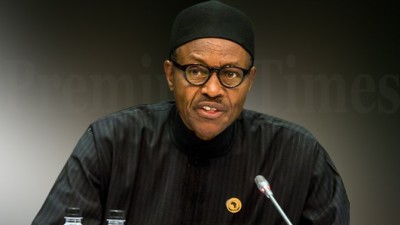 President Muhammadu Buhari has made it clear that it is not possible to separate the present from the past even as he assured that his government will eventually get the economy right.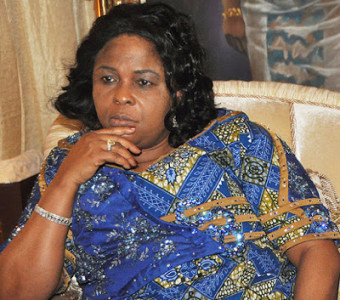
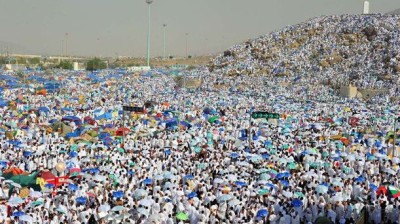 The National Hajj Commission of Nigeria (NAHCON) has announced that the returning journey of Nigerian pilgrims who are currently performing hajj in Saudi Arabia will commence on September 17.
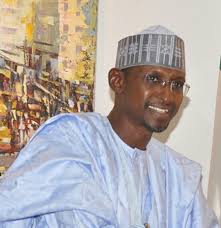 Minister of the Federal Capital Territory (FCT), Malam Muhammad Musa Bello has asked Nigerians to cheer up as better days are coming.
 The Inspector General of the Nigeria Police, Ibrahim Idris has acknowledged that public protests and processions are integral parts of democratic norms but that they must conform with the rule of law and public order.
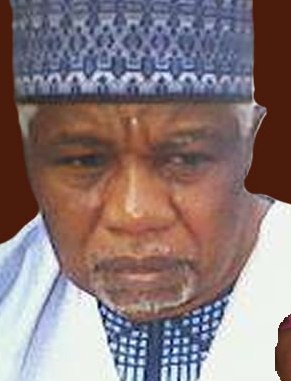 There used to be a unifying political gladiator in Ebiraland, Kogi state of Nigeria, whose name, Ahmed Tijjani Ahmed, popularly called A. T. Ahmed rang bell across the length and breadth of Nigeria and beyond.