

Role Of Teamwork In Improving Nutritional Statues Of Malnourished Children, By Shittu Ahmed Obassa
 Analysts say that no less than 20 per cent of Nigerian children are at a great risk of surviving beyond their first birthday in many parts of Nigeria because of the growing menace of malnutrition that is killing tens of thousands of them without much efforts being made to stem the tide.
There also seems to a consensus among the majority of the members of the nutrition community that the level attention from the authorities to the plight of the children being ravaged by different forms of malnutrition ranging from severe acute malnutrition(SAM) through stunting to wasting across the length and breadth of the country is a result of the concerns being expressed by the international donor agencies and other humanitarian organisations with the specific mandate to save the lives of the innocent souls.
Again, there is no gainsaying the fact that many government officials are still behaving like the doubting Thomas each time statistics are reeled out by the media about the seriousness of malnutrition silently destroying the lives of the young ones even in the least expected places like the Federal Capital Territory where there is the seat of power.
Only recently, the social media went viral when a report was published that children in Kaduna State were malnourished. An altercation between the government of Kaduna state and the United Nations Children’s Fund(UNICEF) Field Office in Kaduna ensued over the figure reported about the state of malnourished children totalling 1.6 million. As it is expected , the Commissioners and other political aides of the governor were fuming at the announcement of such calamitous figure.And one of the wives of the governor summoned the Nutrition Specialist at the Kaduna Field Office, Dr. Florence Oni, along with the Communication Officer, Malam Rabiu Musa accompanied by the Chief Programme Officer because her husband was having sleepless nights since the report broke out, quoting unicef as its source.
But when the facts and figures were laid bare the hot argument gave way to a serious discussion about the situation on hand as the information was authentic and being deeply touched by the reality on the governor, Malam Nasir el-Rufa’i pledged to release the sum of 250 million naira towards ameliorating the deplorable condition of the malnourished children that is even noticeable in his own Fatika ward in Zaria where he hails from.
Impressed by the government’s action another pledge of 250 million naira came from the Kaduna field office as a support to the cause of the hapless children. This was the second time the two parties are collaborating on the issue of malnutrition . The first was a result of the report on a set of twins on the verge of being sent to their early graves at Kawo in the Kaduna North Local Government Area of the state.
Much as the depth and the dimension of malnutrition in Nigeria arebeing under reported by both the traditional and social media the available statistics from unofficial quarters indicate that the silent killer is so ubiquitous that the homes of the rich are not left out.
Just as it is visible in highbrow areas such as Ikoyi, so it is in a far flung wards of Gidan Habibu and Gidan Dahala in Wamakko Local Government Area of SoktoState. In other words, both the
urban and rural areas are not immune to the menace of malnutrition and it is pertinent for all stakeholders to rise up to the occasion at this critical time some 49,000 children in the Internally Displaced Camps are said to be on the danger list if no assistance reaches them in good time.
The Communication Specialist at UNICEF, Geoffery Njoku, told the participants at a two-day nutrition media dialogue held in Sokoto between 25 and 26 August, 2016, that the Nigerian authorities were indeed responding to the clarion call from stakeholders about the urgency that malnutrition demanded but added that the magnitude of the problem deserved more than the current official efforts. According to him, the reports reaching the government circles from the various dialogues organised by UNICEF in collaboration with the Child Rights Information Bureau of the Federal Ministry of Information and Culture have now struck the right cord and the wife of the President, Mrs Aisha Muhammadu Buhari’s non-government organisation, known and named “Future Assured” is picking up the gauntlet to fight the scourge of malnutrition. She was said to have admitted the fact that the data collated from the Owerri nutrition media dialogue were spurring her to action.
It goes without saying that the matter of children does not deserve lackadaisical attitude from anyone with conscience and that is the reason Sokoto State Commissioner of Health Dr.Shehu Balarabe Kakale appealed to media professionals to join forces with the relevant agencies and institutions in his state to sensitise mothers on the imperative of exclusive breastfeeding that seems to suffer criminal neglect due largely to some ingrained beliefs and social norms that have no basis in the modern age. He noted that the means of breeding an intelligent populace is exclusive breastfeeding just as the commonest factor destroying children’s immunity is malnutrition. To him, malnutrition is the cause of death of as many as two children at any given moment while the overall growth and development of children are better enhanced by exclusive breastfeeding.
But the snag is that most women living in the rural areas never get the right enlightenment so as to shun archaic practices and embrace key household practices that are germane to the steady development of their young ones coupled with the fact that the heads of the households never pay much attention to food security at home before migrating to the urban centres in search of menial jobs after harvesting their crops and selling them to the middlemen at give-away prices because there are no durable storage facilities with which to preserve the farm produce.
Furthermore, when the signs of malnutrition are visible the issue of getting the understanding of the men becomes a difficult one because of the religious injunction that wives must take permission from their husbands before stepping out of their home in search of the much needed health facility that can rescue the malnourished children. The facility wherever available is not close by their abodes. And the mothers will have to trek tens of kilometres in order to access medical attention. Apart from the issue of distance, the funding of the trip is not that simple to resolve when the women are known to be idle as full-time housewives.
The pitiable situation of the rural women has caused some nutrition advocates to suggest that the setting up of mobile facilities for community-based management of acute malnutrition(CMAM) will go a long way towards reducing the rate of deaths and the number of defaulters that are being recorded at the present facilities established in the nine local government areas in Sokoto State.
When media professionals two of the facilities in Wamakko Local Government Area the circumstances under which the medical personnel and the patients were interacting really stirred emotions such as pity in many. Nevertheless, their enthusiasm was never dampened. And one was forced to ask:What kind of incentives are they receiving from the authorities responsible for the facilities? But, Mom seemed to be the answer. However, it was gathered during the visit that as little as 5,000 naira is given to the volunteers every month. But yet, they still do a marvellous job of going into the villages to fish out malnourished children using the Mid Upper Arm Circumference (MUAC). It is after the volunteers might concluded their own bit largely on the basis of guesswork, because of old age and lack of exposure to best practices, that the members of the International Medical Corps begin their the work of identifying the malnourished children with complications from those having less severe malnutrition after the volunteers must concluded theirs.
As it is the usual practice, the CMAM facility takes charge of the children using ready to use therapeutic food(RUTF) being imported from Niger Republic, South Africa and the United States of America(USA) while the critical cases are sent to designated stabilisation centres for proper medical treatment.
The concerted efforts between the volunteers and the medical personnel at getting the malnourished children to improve their nutritional status at the various CMAM facilities in Sokoto State in particular and elsewhere in general, deserves a kind of special commendation and reward from the authorities. It is this kind of synergy that enhances the survival of the Nigerian children in the farthest parts of this vast country with the least presence of government in terms of infrastructure and social amenities.
Doubtlessly, the menace of child malnutrition requires that all hands must be on deck, with each and every one contributing his or her widow’s mite towards eradicating it.
And the bottom line is that the policy-makers, the community and religious leaders, the Nutrition Society of Nigeria, the media, international agencies and non-governmental as well as hunimanitarian organisations must cease from pursuing individual goals and objectives and start complementing the efforts of other stakeholders towards stopping child malnutrition in the country. This is a collective responsibility as the children are our future.
Indeed, the collaborative effort of the Child Rights Information Bureau of the Federal Ministry of Information and Culture with UNICEF in facilitating the fifth in the series of media dialogue being held on child malnutrition now assuming the status of a national problem cannot but be commended. It is indeed the way to demonstrate teamwork and team spirit for a patriotic cause. [myad]
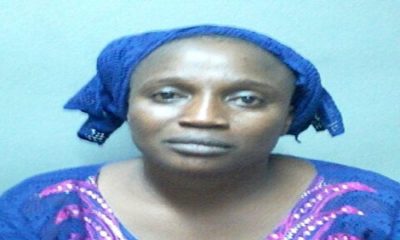 The National Drug Law Enforcement Agency (NDLA) has swiftly detected and stopped from moving into Saudi Arabia to perform this year’s hajj, 55-year old Kwara state female pilgrim, Basira Iyabo Binuyo.
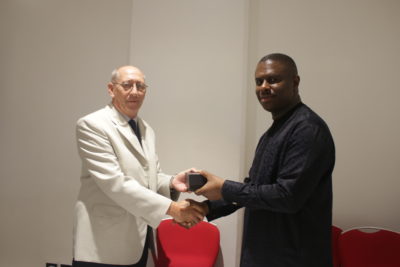 The Director General of the Nigerian Maritime Administration and Safety Agency, (NIMASA) Dr. Dakuku Peterside has assured stakeholders that his administration is creating business-friendly environment for them in the maritime sector.




What Is President Buhari Doing With The Economy? By Garba Shehu
There is a cacophony of voices telling the Muhammadu Buhari administration to close its eyes to the past; that given the enormous tasks that lie ahead, history and its consequences for our nation should be the least of the government’s preoccupation at this juncture.
I disagree. Let us keep a fiery memory of the past so that we don’t repeat its mistakes. Look back, look ahead. The future must of necessity be built on the foundations of the past.
The Conservative Party took power in Britain six years ago from Labour. Check the British press, they are talking about Labour 24/7, is anyone complaining?
Japheth Omojuwa, one of Nigeria’s top three influencers seemed tasked in his patience reacting to calls that we must stop talking about the immediate past administration in this country. “People are still talking about who ran governments in 1865 you want us to forget those who left government last year? (Expletive)”
Music icon, Fela Anikulapo Kuti, who many agree was a philosopher disguised as Afro-musician taught in one of his songs that without knowing where you are coming from, you won’t know where you are going. Wise men say that the empty can doesn’t disappear by simply kicking it down the road.
To avoid repeating the past mistakes, Nigerians must come to terms with what went wrong with the past, how bad were things, what was done wrongly, what the past government should have done, before we come to what needs to be done to right those wrongs. Believe me, episodes from the Jonathan era can fill books, and other possibilities such as courtroom drama thriller.
Against this backdrop, I sought to hear our erudite Finance Minister Kemi Adeosun on where we are coming from, vis-a-vis the administration’s chosen path to recovery and accelerated growth. What is the administration doing to revitalize the economy? She spoke at length on the many measures being put in place, many of which are not glamorous. They of necessity come with pain. Why should Nigerians be asked to endure pains? Why should they be asked to make adjustments?
The simple explanation is that the economy was broken, and just as they do the broken leg, you must bear the pain of fixing it. The current situation was caused by years of mismanagement and corruption.
As explained by President Buhari again and again, trumpeted by Madam Adeosun and other senior officials, we solely relied on oil, the price of which was as high as US$140 per barrel. Government simply reticulated oil revenue through personal spending by corrupt leaders, wasteful expenses and salaries. This was done rather than investing in what would grow the economy. Economies grow due to capital investment in assets like seaports, airports, power plants, railways, roads and housing. Nigeria has not recorded a single major infrastructural project in the last 10 years. In short the money was mismanaged.
In addition to failing to spend money on what was needed, no savings were made by Government unlike other countries like Qatar, Saudi Arabia and Norway.
To compound the problem, the previous government was borrowing heavily and owed contractors, and international oil companies. When this government took over we had accumulated debt back to the level it was before the Paris Club Debt Forgiveness.
All these factors were building up to Nigeria heading for a major crisis if the price of oil fell. Nigeria did not have fiscal buffers to withstand an oil shock.
The oil shock should and could have been foreseen. These are matters that both the Emir of Kano, Muhammadu Sanusi II and Professor Chukwuma Soludo, both of them eminent former Central Bank Governors had occasions to warn the government of the day about, but they were clobbered. The dire warning was written all over the wall, but they were ignored by Nigeria’s economic managers.
What should they have done?
They should have had the courage and vision to do as the present administration is doing through the Economic Team, the Ministry of Finance under Madam Adeosun and the various agencies of the state to envision a better future by first of all fighting corruption. Look at what a civilian administration is today doing to the military, investigating their finance and accounts that the military could not do to themselves.
See what the current administration is doing to sanitize the huge salary bill by eliminating payroll fraud. So far, the federal payroll has been rid of about 40,000 ghost workers. More than eight billion Naira stolen monthly has been saved.
We are also saving on wasteful expenses like First Class Travel and Private jets for official trips.
The federal government is not limiting the reforms to the centre but forcing State Governments to reform their spending and build savings or investments.
Government is also increasing spending on capital projects especially on infrastructure needed to make Nigerian businesses competitive and create jobs. The administration is at the same time blocking leakages that allowed government revenues to be siphoned into private hands.
Currently, there is focus on key sectors (apart from oil) that can create jobs and or generate revenue such as Agriculture, Solid Minerals and Manufacturing. If these things had been done when the oil price was as high as US$140 per barrel, Nigeria would not be in the current predicament. We would not be suffering now if we had no cash reserves but we had regular supply of power, a good rail system, good roads and good housing.
Now that the oil has fallen as low as US$28 per barrel, it is very difficult to do what is needed but they must be done to save Nigeria. There is no other way if we want to be honest.
If PDP were still in power they would have continued deceiving people, by borrowing to fund stealing and wastage and the problem would have simply been postponed for future generations to face.
There are many who say that this Government’s economic strategy is unclear whereas the previous government seemed well co-ordinated. I will make the confession that we, the officials hired to communicate government policies, that includes myself, have not done as well as we should have.
The truth is that more than any other time before, there is a clear direction and strategy for achieving growth and development. Revisionists may not agree, but the truth of the matter is that the previous administration only had one issue, which was how to spend money (oil revenues and borrowed money).
As mentioned earlier this spending was focussed on the wrong things and even though the economy seemed to be growing it was not sustainable, it was, as described by Minister Adeosun, a classic “boom and bust”’ driven solely by the oil price.
Unemployment was and remained high (never forget the NIS jobs that exploited thousands of desperate graduates in a scam that was used to fund house purchases in high brow areas and claimed so many lives).
Inequalities were growing (our then President boasted about the highest number of private jets when most Nigerians could barely afford to eat).Terrorism and social unrest were growing. Real development was lacking. As soon as the oil price fell, these vulnerabilities were exposed.
From its records so far, this administration is trying to reset the Nigerian economy and ensure that it attains its potential and is diverse and resilient. We are doing this at a time when the global economy is in crisis due to the oil price collapse. Even rich nations like Saudi Arabia are experiencing problems.
The Government is people-focussed and wants the economy to grow in a way that will create a more stable future which is not dictated by world oil prices (over which we have no control). No more boom and bust (thanks Minister Adeosun).
Nigeria wants to take responsibility for its own destiny, therefore our policies will ensure that Nigeria returns to growth in a sustainable manner. No more dependence on oil. Every part of Nigeria has a role to play in contributing to our growth. We will create an environment where people can thrive and where business can grow.
To this effect, all relevant agencies have been reoriented to:
· Focus government spending on infrastructure which will create jobs and opportunities for Nigerians across a number of sectors (not just oil).
· Ensure that we reduce our reliance on oil by developing other revenue streams such as taxes, efficient customs collections and other government revenues.
· Develop key sectors in which we have comparative advantage.
· Encourage development of agriculture to ensure food security for our huge population.
· Develop petro-chemical industry on the back of the oil industry.
· Develop solid mineral extraction and
· Develop light manufacturing to provide locally made basic needs and reduce importation.
If you are an official of this administration and a mixer, that is someone who mingles with citizens high and low, a charge you are forced to defend is that this Government seems to be bringing austerity and suffering to the people. Blame not, Buhari.
The current pain is due to the mismanagement of the past. What Nigeria is currently experiencing was inevitable. This government is simply being honest with the people instead of piling up debts and concealing the truth by pretending all was rosy. This government believes that Nigerians deserve to know the truth.
People stole unbelievable amounts of money. The kind of money some of these ex-officials hold is itself a threat to the security of the state. Since it is not money earned, they feel no pain deploying just anyhow to thwart genuine and well-intentioned government efforts.
Sadly, even that which was not stolen was wasted. Government coffers were left empty, with huge debts unpaid and unrecorded (this government is working to quantify the amount owed). Even the current high food prices can be traced to past deceit. For example, the previous government purchased fertiliser in 2014, worth N65Bn and left the bill unpaid. In 2015 the suppliers could not supply fertiliser which resulted in a low harvest, shortages and high food prices. This government had to pay off the debt so that the suppliers could begin to supply fertiliser again. Across Nigeria a green revolution is occurring as Nigerians are going back to the farms, from rice in Kebbi and Ebonyi to Soya and Sesame in Jigawa and Kano. At the same time Nigerians are looking inwards to identify commercial opportunities from agri-businesses.
Most of our road contractors had not been paid since 2012, many of them had sent their workers away adding to the unemployment problem. This government has released capital allocations in the last three months that is more than the whole of 2015. In 2015 Nigeria spent a paltry N19Bn on roads, in three months we have spent N74Bn and we are already releasing more.
In the transport sector in 2015, government spent just N4.2Bn; we have spent N26Bn with more to follow. We are starting a concession that will revive our old rail system for freight, whilst we build a new high speed rail system. Moving heavy goods by rail will reduce our transport costs which will reduce food prices and will save our roads from damage from heavy loads. Government will embrace the private sector through PPP, concessions and other collaborations to deliver services and infrastructure efficiently.
Nigerians expected a lot from President Buhari and are right to have done so. Many feel disappointed. While much of this warranted, a lot more is arising from opposition politics.
A man who has promised good things is being accused of failing to use the palm to cover the sun or that he is unable to stop the rain. Nigerians are right to be disappointed but they must direct their anger at the right quarters. The bad management and corruption of the past are firmly to blame.
This government is fighting corruption. It is working hard to do things right and do them in a manner that will endure. No government has ever considered the poor like this one. Under the current budget, the administration devoted N500 Billion for social intervention programmes for those who need and deserve support.
There are also programmes for affordable housing with mortgages which will transform thousands from tenant status to home-ownership.
Any process that will endure, must involve some pain but things will begin to improve. There is always a time lag between policy and effect. That is why the bad effects of past policies are manifesting now. Similarly, the positive impact of the work being undertaken to fix Nigeria’s problems will soon begin to show and we will emerge from this period stronger, wiser and more prosperous.
There is hope for Nigeria, a hope that was previously clouded by corruption, greed and lack of focus.
Nigeria is starting over and everyone has a role to play. Look back, look ahead.
Garba Shehu is Senior Special Assistant to the President on Media and Publicity. [myad]