Facebook Founder and Chief Executive Officer, Mark Zuckerberg has described what he called ‘energy’ of Nigeria as amazing as he arrived in the country for a visit, the first trip he ever made to sub-Saharan Africa.
Zuckerber, who made his first stop-over in Lagos on Tuesday said: “this is my first trip to sub-Saharan Africa. I’ll be meeting with developers and entrepreneurs, and learning about the startup ecosystem in Nigeria. The energy here is amazing and I’m excited to learn as much as I can.
“Our first stop is the Co-creation Hub Nigeria (CcHUB) in Yaba. I got to talk to kids at a summer coding camp and entrepreneurs who come to CcHub to build and launch their apps. I’m looking forward to meeting more people here!”
Zuckerberg has 42-million followers on Facebook out of which 16 million users are from Nigeria, with a population of about 170 million.
Yaba is in the capital Lagos and is considered the closest to a Silicon Valley, and is home to CcHUB, which wrote on its Facebook page: “We were Mark Zuckerberg’s FIRST STOP on his FIRST TRIP EVER to Sub-Saharan Africa. Can you beat that??? Awesome time hosting a genuine world changer…”
Facebook said in a statement that Zuckerberg is in Nigeria to listen and learn and take ideas back to California on how Facebook can better support tech development and entrepreneurship across Africa.
Facebook has a keen interest in Africa, which is seen by many as the new growth market as more and more consumers come online using mobile devices. The vast majority of Facebook users in Nigeria – and through Africa – are on mobile. Africa has the world’s fastest-growing mobile market, according to the GSMA, and has grown to half a billion users.
Nigeria’s monthly active users (MAU) on Facebook have grown to 16-million (from 15-million) which is a 6.67% increase, as of the first quarter of 2016, according to figures released by Facebook in June. Kenya has 5.3-million (up from 4.3-million or 18.6%). Just less than half of these figures in Nigeria are daily active users (DAU), and just less in Nigeria. [myad]
An Irish born International Rock Star Artist, a lead singer of rock group U2, Paul David, popularly called Bono, has said that he was able to see the real Boko Haram in Borno state, Nigeria. Bono, who visited Maiduguri, capital of Borno state, in the company of the African richest man and President of Dangote Group, Alhaji Aliko Dangote on Sunday, August 28, described the real Boko Haram he saw as that hungry toddler that never enjoyed parental love and never will. “I asked a five year old boy in the Internally Displaced Persons’ (IDP) Camp in Borno where was his father. The boy looked surprise, because he did not know what I was talking about. He had no idea about the concept of father. That is a potential Boko Haram.” Bono downplayed the conceptualization in many quarters that Boko Haram insurgent is that man that wears masks on his face, carries heavy AK 7 gun and march in the forest looking for a prey, saying: “Boko Haram is more than that. The new Boko Haram Nigeria will contend with after the end of the battle is that of hunger, starvation, diseases and poverty unless urgent measures are taken to address those things.” Bono, who co-founded One Campaign organization, meant to end poverty, described Nigeria as an incredible country. “This is a country with plenty of natural endowments but with excruciating poverty riding high in many communities and homes.” He expressed surprise, at a news conference he jointly held in Abuja with the President of Dangote Group, Aliko Dangote that over 50,000 million children are said to be facing death before the end of this year in some IDP camps in the North East, if they are not properly cared for. Bono commended Aliko Dangote for having so far spent N4.5 billion in aid to IDPs in Borno, Yobe and Adamawa states even as he called on others to chip in their widow’s mite This was even as the Chief Executive of the Dangote Foundation, Zouera Youssoufou, promised that with the new direction of the Foundation, more financial and material assistance would be made not only to the IDPs, but the poor and helpless ones in various communities. [myad]
The Nigeria minister of Youth and Sports, Mr. Solomon Dalung has said that he is not the problem of the Nigerian sports and that his resignation, as people have been asking him to do, would not solve the problem.
Answering questions from news men on the poor performances of the Nigerian contingents to the Rio 2016 Olympic Games shortly after his meeting with President Muhammadu Buhari at the presidential villa, Abuja on Tuesday, the minister said that the problem of Nigeria’s sports predated his appointment.
He said: “we need to go back to grassroots and groom talents for future competitions. I am not the problem of Nigerian sports because abysmal performance predates my appointment.”
He said that he was in the Villa to president feedback on the outing of the team to the President, saying: “it is normal if somebody sends you on an errand, when you accomplish that task you first and foremost brief that person before you go public to start talking to outsiders.
“So, all I did was to brief the President on our performance, the challenges we had, the progress we made because in 2016 Nigeria was celebrated. These two (Nigerian) athletes (Aruna Quadri and Ukogu) were recognized internationally in Rio; that happening to Nigeria is an achievement. “And I also requested from him the support for getting a date to organize a reception for our dream team that has gotten a bronze medal for us.
“He (President Buhari) also appreciated our performance and thanked us for doing the country proud and keeping the flag flying. He challenged us to do more for the country to move forward in sports.”
The minister pleaded with President Buhari to host the Nigerian contingent despite winning only one bronze medal in football and coming 78th on the medals table even as he debunked speculations making the rounds that Coach Samson Siasia who handled the football team at the Olympics had resigned.
According to him, it was not resignation but an expiration of contract with NFF. He frowned at the NFF’s action for withdrawing Siasia’s official car in Abuja, urging the football federation to think of engaging the coach due to his achievements.
Dalung exonerated Siasia and his team over the $390, 000 donations by a Japanese surgeon, adding that it was not for any personal aggrandizement.
On the issue of hiring a foreign coach for the Super Eagles by the NFF, Dalung said that NFF has not formally communicated to him. [myad]
Justice Olukayode Adeniyi of the High Court of Abuja has expressed confusion over a litany of legal battles being fought by the two factional leaders of the Peoples Democratic Party (PDP) Reacting to a suit filed by the Ahmed Markarfi-led faction against the Chief Judge of the Federal High Court, Justice Ibrahim Auta, and another judge in the Abuja Division of the court, Justice Okon Abang, the judge said: “I must express my reservation that this is not the kind of suit that should be filed in court. I do not know what this suit seeks to achieve.” Justice Auta’s lawyer, Mr. James Igwe (SAN), agreed with Justice Adeniyi’s observation and said that he had expressed similar view. The Makarfi-led faction of the PDP had filed the suit with respect to the ongoing leadership crisis in the party. The suit marked, CV/2239/2016, seeks among others, the enforcement of the party’s right to fair hearing. The party blamed Justices Auta and Abang for the various conflicting decisions given in relation to the leadership crisis in the party. The plaintiff said it was wrong for Justice Abang to assume jurisdiction on cases relating to the party’s leadership crisis when a judge of the court’s Port Harcourt division was already hearing similar cases. But Justice Abang had in one of his rulings said that the PDP leadership crisis case was first assigned to him before the case on the same subject matter was filed before the Port Harcourt Division. The plaintiff is praying among others, for an order setting aside all the decisions and orders made so far by Justice Abang in the cases on the PDP leadership crisis. But Justice Adeniyi, who was to hear the case, faulted the rationale behind the suit filed on behalf of the plaintiff by Mr. Ken Njemanze (SAN). The judge said that such case was not one that ought to be filed in court. “I think before the last date, the plaintiff would have had a rethink and withdrawn it. He, however, said he has filed all necessary documents, including a notice of preliminary objection, to the suit and that he was ready for whichever decision taken by the plaintiff at the end of the day. Justice Abang, who had also filed other processes, including a notice of preliminary objection against the suit, was represented by his lawyer, Aliyu Ahmed. [myad]
Lawyers in Nigeria, under the auspices of the Nigerian Bar Association (NBA) have not taken it kindly with a statement credited to the Chairman of the Economic and Financial Crimes Commission (EFCC), Ibrahim Magu, calling lawyers in the country rogues and vultures. In a statement in Abuja by the NBA General Secretary, Isiaka Abiola Olagunju, the Association asked Ibrahim Magu to withdraw the offensive statement and to render unreserved apology to the lawyers, even as he termed such statement as uncivilized.
The General Secretary said: “The inaugural address of the NBA President was a statement of nearly 30 pages, which set its vision and direction of his programmes for the Nigerian legal profession. He committed himself to leading a brave new Bar fully aligned with the aspirations of Nigerians in their quest for national development which can only be abhored the rule of law built on strong institutions. “In the paragraph of the statement dealing with corruption, the NBA President restated the commitment of the NBA in the fight against corruption. He commended the modest achievement of the EFCC but called for the reform of the agency to enhance its capability to deliver on its mandate on a consistent and sustainable basis devoid of political interference and on the basis of well established institution safeguard that demands proper regulation of the wide discretionary power involved in the investigation and prosecution of criminal matters. “The NBA condemns in the strongest term the use of abusive and uncivil language of ‘rogues and vultures’ and such structures by the public authority. Name calling and abusive language is not expected of any public institution. It is unacceptable. The NBA demands unequivocal withdrawal of these statements and unreserved apology from the EFCC.” Last weekend, Magu described the Nigerian bench as one populated by rogues and vultures. It said such group of people cannot sit in judgement over others or command their respect. The EFCC in a statement by its spokesman, Wilson Uwujaren, in response to the call by the new President of the Nigerian Bar Association, Abubakar Mahmoud, for the restructuring of the anti-graft agency. Mahmoud had, after his inauguration as the president of the NBA, called for the restructuring of the EFCC. Among other proposals, he said the anti-graft agency should be stripped of its prosecutorial powers. But the EFCC in the statement by Uwujaren said the call by Mahmoud was a self-serving one and that the aim of the call was to create “a cabal of untouchables” since some of the country’s senior lawyers are undergoing trial now for cases of corruption. It vowed that there would be no sacred cows in the bid to stamp out corruption in the country. The statement said: “It is too much of a strange coincidence that the suggestion to strip the EFCC of its prosecutorial powers is being floated few months after the Commission, in unprecedented fashion arraigned some senior lawyers for corruption.” [myad]
The Central Bank of Nigeria (CBN) has announced that it has licensed more International Money Transfer Operators (IMTOs) to operate in Nigeria.
A statement by the bank’s Director of Corporate Communications, Mr. Isaac Okorafor said that the move is one of the efforts at liberalizing the Foreign Exchange Market, ensure liquidity and make foreign exchange more readily available to low end users.
The bank then listed the IMTOs who have been licensed to operate in Nigeria in line with the existing Guidelines on International Money Transfer Services in Nigeria (2014), as:
Trans-Fast Remittance LLC
Worldremit Limited
UAE Echange Centre LLC
Wari Limited
Homesend S.C.R.L
Small World Financial Group Limited
Weblink International Limited
Cashpot Limited
DT & T Corporation Limited
Fiem Group LLC DBA Ping Express
CP Express Limited
The CBN, in the statement, reiterated its commitment to providing an enabling environment for international money transfer services in Nigeria. [myad]
The Minister of the Federal Capital Territory (FCT), Malam Muhammad Musa Bello has stopped individuals and corporate bodies from constructing any house and other structures unless it is approved by the Development Control Department of the FCT Administration.
He instructed the Department to swing into action and take full responsibility for building plan approvals and construction supervision in the Territory in accordance with extant regulations.
The Minister, who was reacting to the incident of building collapse in Gwarimpa on Monday, reminded the Department that in line with the provisions of Section 7, Sub-section 1-3 of the FCT Act of 1976 and Part II, Section 27-41 of the Nigeria Urban & Regional Planning Law of 1992 amended in 1999, no person or body is authorized to carry out any development within the FCT without the written approval of the FCT Department of Development Control.
Muhammad Bello also directed the Department to ensure that the Federal Housing Authority (FHA), that approved and supervising the collapsed building, and other stakeholders in mass housing development subsector in the FCT henceforth adheres strictly to all regulations on property development in the Territory.
He warned that the FCT Administration will no longer ignore the construction of buildings on flood plains and will take necessary measures to correct the anomalies.
The minister sympathized with the victims of the accident and said that human lives often lost in the process of building collapse can be avoided if simple urban and regional regulations were sternly followed.
He emphasized that his Administration would not fold its arms to watch the wanton waste of lives which he said is sacred and must be protected. [myad]
Factional National Chairman of the Peoples Democratic Party (PDP), Senator Ali Modu Sheriff has insisted that the Caretaker Committee led by Senator Ahmed Makarfi is an illegal body and cannot organize the convention of the party, even as he faulted the party’s BoT position granting recognition to the caretaker committee.
Modu Sheriff maintained that, because there is no provision for a caretaker at the national level in the PDP constitution, coupled with the fact that a competent court has pronounced it as illegal, while affirming Sheriff as the chairman, references should not even be made to the caretaker committee in looking for solutions to the PDP crisis.
In a statement, the embattled chairman said that it is the imposition of the caretaker committee is a contraption that precipitated the crisis in the first place, saying that any attempt to legitimize their function could spell further crisis for the PDP.
He stressed that BoT members should stop playing the ostrich and come to terms with the reality of his chairmanship, until a proper convention is organized.
He said that the Chairman of the BOT, Senator Walid Jibrin has forfeited the confidence of greater majority of party members because of his inconsistency and crave for money, and should give way to a credible person whose honour and integrity are not in dispute to steer the affairs of the PDP BoT.
Sheriff stated that the BoT chairman has in his actions and utterances portrayed the BOT as being teleguided, in such a way that he has brought credibility problem to the august body by clearly taking sides and championing the cause of particular interests in the crisis, at the expense of his leadership roles as mediator.
The chairman is of the view that, even though the BOT lacks the powers to give orders, it has acted in breach of its sacred duty as a father and so called conscience of the party by recognizing the Caretaker Committee, even when members know that it was the wrong thing to do. As much as he respects the BOT members, they should not allow themselves to be dragged into fighting a war for the benefits of a few power brokers.
He insisted that the BoT which earlier derailed peace initiatives by taking sides, coupled with the obvious roles of some of its members in the crisis, and against the background of the fact that it is merely an advisory body, lacks the moral and legitimate rights to dictate the pace of negotiations.
He said that already, the reconciliation committee, under Governor Seriake Dickson is still carrying out its assignment of reaching out to all parties, and that until the committee makes its recommendations, which the national Working Committee will look at and convene a NEC for necessary deliberations, the BoT’s actions are of no consequence. [myad]
The Director General of the Nigerian Maritime Administration and Safety Agency (NIMASA), Dr. Dakuku Peterside has boasted about his Management’s determination to make the Agency a world class high performance organization.
Dr. Peterside, who spoke during the Management Performance Review (MPR) of the Agency in Lagos, said that the Agency’s repositioning initiative is all encompassing and that when concluded, would be beneficial to the entire maritime sector.
The NIMASA boss said that the MPR is an avenue to assess the progress being made by the Agency vis-a-vis its reform, restructuring and repositioning drive to ensure that the Agency’s mandate is achieved.
“There is no organization that can grow without innovation and the MPR affords us a rare opportunity to assess our journey thus far. It is a rare privilege to match set goals with results…to assess ourselves on how far we have gone in this journey.
“When I joined you in NIMASA we sat down and agreed to build a world class high performance organization. In subscribing to that, we set out to craft a Medium Term Strategic plan which would be our roadmap. We have already started the critical elements of the things we agreed that are necessary to build a world class maritime organization. One is the automation of our processes and to fast track this, we set up a special taskforce. It is our vision that by October, NIMASA would be fully automated.”
Peterside noted that the dream of the Agency is to be recognized as the foremost maritime regulatory Agency in Africa that is the pride of the continent, adding that the Agency has the duty to facilitate maritime business and not to stifle it.
“The bigger picture is to build a world class, high performance organization that would satisfy the interest and yearnings of our clients as well as serve the interest of the country that set us up. We are indeed facilitators of maritime business; therefore we will not stifle it.”
The MPR session, which is still ongoing is expected to review the achievements of the Agency’s targets for the half year ended June 30, 2016 and map out strategies for meeting the set targets as outlined in its work plan for the period in review. [myad]
Tokyo International Conference on African Development, “TICAD 6” just ended in Nairobi, Kenya and in attendance were several African Presidents and Prime Ministers including our own Muhammadu Buhari and the co-convener of the conference, Shinzo Abe, the head of the Japanese government.
The TICAD seeks a win-win partnership between Japan and Africa. A key objective of the conference is to build up African ownership of its own vision of growth and development.
In furtherance of this, Japan seeks to differ with the other players on the continent by placing emphasis on high quality infrastructure that do more than job creation by transferring technology through the training of youth and women.
The conference held every five years from the time it started in 1993 until the last one in 2003 when it was decided that it should be convened every three years instead. The one that just finished is significant in the sense that this was the first time it took place in Africa. They met in Japan all the time in the past.
Another significant departure is the recognition of the role of the private sector in the economic take-off of the continent. In this respect, more than 100 Chief Executive Officers, CEOs from leading Japanese companies accompanied Prime Minister Abe. This is a clear indication that more and more Japanese companies are eying the African continent. A modest number of Nigerian business and state-owned enterprises were equally present.
From its start, Prime Minister Abe made known the intention of Japan to spend 10 Billion Dollars in the next twelve months and overall USD 30 Billion over a three-year period on areas key to African economies, targeting infrastructural projects such as roads, energy, ports, hospitals and training institutions. The money will partly be disbursed through the African Development Bank, ADB.
At the end of the conference, a statement tagged “Nairobi Declaration” was issued. Among its highlights is the launching of “Initiative for Food and Nutrition Security for Africa, IFNA.” This aims to bring African governments together to swiftly implement food and nutrition security policies and programs. There were important resolutions taken on economic diversification and industrialization; promotion of “resilient health system for quality of life” and measures for the promotion social stability and shared prosperity.
For Nigeria in particular, “TICAD 6” milestones include the important meeting between President Buhari and Prime Minister Abe, at which event problems militating against the inflow of Japanese investment into Nigeria were discussed and agreed upon.
Japanese companies had done a lot by way of investment in the past in Nigeria but there has noticeably been a drop in the last decade or two. Chiefly to blame is the problem of security, disguised in official discussions as “business environment.”
President Buhari used this meeting effectively in giving assurances that the problem is being addressed. Boko Haram terrorism is nearly gone and sabotage in the Niger Delta will soon be ended preferably through dialogue and if not, by force of arms.
Coming into close personal contact for the second time, the two leaders discussed the issues of trade and investment, health, peace and development of the continent. In addition, they discussed issues in diplomacy and international relations.
President Buhari’s statement at the Head of States’ round table meeting with business leaders underscored the serious efforts government is making to improve Nigeria’s notoriously bad business environment.
At this meeting, he announced the coming into place of a soon-to-be inaugurated “Presidential Enabling Business Council, PEBEC.”
He described it as an inter-ministerial council to oversee the efforts of government to remove various bottlenecks that stifle business and economic activity to give way to the right enabling environment and investment climate in Nigeria. It will be powered by the government but will be private-sector driven.
According to its vision, the PEBEC will make Nigeria one of the most attractive business destinations in the world. It will start with the modest effort of moving the country up 20 points in the World Bank ranking in the ease of doing business in the first year, taking it into the top 100 at the end of the four-year mandate of the current administration.
A third takeaway is on the sidelines of the TICAD where the Nigerian government delegation met a good number of big Japanese enterprises. Collectively and individually, these businesses expressed their intention of either coming in newly or expanding their participation in Nigeria’s private sector. The companies with varied interests in power, agriculture, automobile, motor cycles, textiles, financing and the service sector included the Honda Manufacturing (Nigeria) Limited, representing Honda Motor Co. Ltd; Japan Tobacco Inc., Marubeni Corporation and Mitsubishi Corporation.
Others included Toyota Tsusho Corporation, Toyota Tsusho (Nigeria) Ltd., an affiliate of Toyota Tsusho Corporation, West African Seasoning Co. Ltd., affiliate of Ajinomoto Co. Inc., and Japan External Trade Organization, JETRO.
At these meetings, they explored the scope for the incentive packages the Nigerian government will give them so as to deepen and expand their investments. These included export rebates, access to Foreign Exchange, land, interest rates, transparency in business regulation and favourable regulatory structure.
The fourth important takeaway is the formation of a new group KENSA made up of industry leaders on the continent, Kenya representing East Africa, Egypt for North Africa, South Africa for the South and Nigeria, from West Africa.
The four countries agreed to consolidate their quadrilateral grouping initiated at the 19th July UNCTAD (United Nations Conference on Trade and Development) meeting and decided to expand business and trade between the four of them, inject impetus into the CFTA, the African Union-inspired free trade agreement among African countries and to coordinate their positions on trade and investment inside and outside Africa.
Fifth, Nigeria and Kenya seized the opportunity of the meeting of their leaders to not only strengthen bilateral relations but to follow up on the achievements of the State Visit to Nairobi by President Buhari earlier this year.
From the time of the visit, both countries have seen a growing impetus for trade and investment between them. Kenya which discovered oil lately is picking lessons from Nigeria’s vast experience in oil and gas. Nigeria is learning from Kenyan experience in managing animal grazing. There are efforts on both sides to share experience and promote private sector participation in trade, cooperatives, micro finance, cotton farming and palm oil processing.
Sixth, under the auspices of the Bank of Industry and the Nigerian Investment Promotion Council NIPC, several memoranda of understanding, MOUs were signed between Nigerian parties and their foreign counterparts. From many of these, investments and jobs will follow.
On the President’s delegation were the Ministers of Agriculture, Health, Budget and National Planning, and Industry, Trade and Investment.
There were also the National Security Adviser, NSA and the Director-General, National Intelligence Agency, NIA.
Members of the delegation expressed satisfaction with the outcome of the conference and the side engagements.
Garba Shehu is Senior Special Assistant to the President on Media and Publicity. [myad]
We use cookies on our website to give you the most relevant experience by remembering your preferences and repeat visits. By clicking “Accept”, you consent to the use of ALL the cookies.
This website uses cookies to improve your experience while you navigate through the website. Out of these, the cookies that are categorized as necessary are stored on your browser as they are essential for the working of basic functionalities of the website. We also use third-party cookies that help us analyze and understand how you use this website. These cookies will be stored in your browser only with your consent. You also have the option to opt-out of these cookies. But opting out of some of these cookies may affect your browsing experience.
Necessary cookies are absolutely essential for the website to function properly. This category only includes cookies that ensures basic functionalities and security features of the website. These cookies do not store any personal information.
Any cookies that may not be particularly necessary for the website to function and is used specifically to collect user personal data via analytics, ads, other embedded contents are termed as non-necessary cookies. It is mandatory to procure user consent prior to running these cookies on your website.



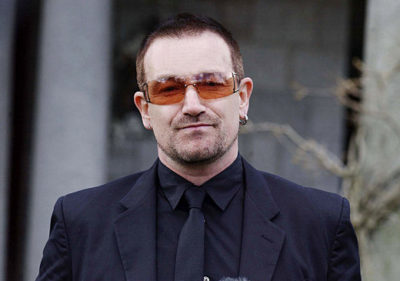 An Irish born International Rock Star Artist, a lead singer of rock group U2, Paul David, popularly called Bono, has said that he was able to see the real Boko Haram in Borno state, Nigeria.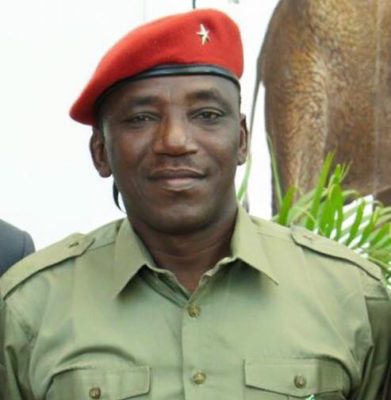
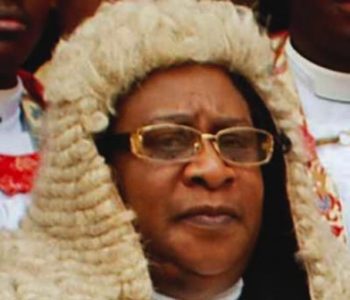 Justice Olukayode Adeniyi of the High Court of Abuja has expressed confusion over a litany of legal battles being fought by the two factional leaders of the Peoples Democratic Party (PDP)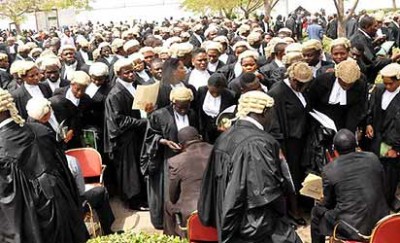




6 Takeaways From Buhari’s Participation In “TICAD 6” Nairobi, Kenya, By Garba Shehu
Tokyo International Conference on African Development, “TICAD 6” just ended in Nairobi, Kenya and in attendance were several African Presidents and Prime Ministers including our own Muhammadu Buhari and the co-convener of the conference, Shinzo Abe, the head of the Japanese government.
The TICAD seeks a win-win partnership between Japan and Africa. A key objective of the conference is to build up African ownership of its own vision of growth and development.
In furtherance of this, Japan seeks to differ with the other players on the continent by placing emphasis on high quality infrastructure that do more than job creation by transferring technology through the training of youth and women.
The conference held every five years from the time it started in 1993 until the last one in 2003 when it was decided that it should be convened every three years instead. The one that just finished is significant in the sense that this was the first time it took place in Africa. They met in Japan all the time in the past.
Another significant departure is the recognition of the role of the private sector in the economic take-off of the continent. In this respect, more than 100 Chief Executive Officers, CEOs from leading Japanese companies accompanied Prime Minister Abe. This is a clear indication that more and more Japanese companies are eying the African continent. A modest number of Nigerian business and state-owned enterprises were equally present.
From its start, Prime Minister Abe made known the intention of Japan to spend 10 Billion Dollars in the next twelve months and overall USD 30 Billion over a three-year period on areas key to African economies, targeting infrastructural projects such as roads, energy, ports, hospitals and training institutions. The money will partly be disbursed through the African Development Bank, ADB.
At the end of the conference, a statement tagged “Nairobi Declaration” was issued. Among its highlights is the launching of “Initiative for Food and Nutrition Security for Africa, IFNA.” This aims to bring African governments together to swiftly implement food and nutrition security policies and programs. There were important resolutions taken on economic diversification and industrialization; promotion of “resilient health system for quality of life” and measures for the promotion social stability and shared prosperity.
For Nigeria in particular, “TICAD 6” milestones include the important meeting between President Buhari and Prime Minister Abe, at which event problems militating against the inflow of Japanese investment into Nigeria were discussed and agreed upon.
Japanese companies had done a lot by way of investment in the past in Nigeria but there has noticeably been a drop in the last decade or two. Chiefly to blame is the problem of security, disguised in official discussions as “business environment.”
President Buhari used this meeting effectively in giving assurances that the problem is being addressed. Boko Haram terrorism is nearly gone and sabotage in the Niger Delta will soon be ended preferably through dialogue and if not, by force of arms.
Coming into close personal contact for the second time, the two leaders discussed the issues of trade and investment, health, peace and development of the continent. In addition, they discussed issues in diplomacy and international relations.
President Buhari’s statement at the Head of States’ round table meeting with business leaders underscored the serious efforts government is making to improve Nigeria’s notoriously bad business environment.
At this meeting, he announced the coming into place of a soon-to-be inaugurated “Presidential Enabling Business Council, PEBEC.”
He described it as an inter-ministerial council to oversee the efforts of government to remove various bottlenecks that stifle business and economic activity to give way to the right enabling environment and investment climate in Nigeria. It will be powered by the government but will be private-sector driven.
According to its vision, the PEBEC will make Nigeria one of the most attractive business destinations in the world. It will start with the modest effort of moving the country up 20 points in the World Bank ranking in the ease of doing business in the first year, taking it into the top 100 at the end of the four-year mandate of the current administration.
A third takeaway is on the sidelines of the TICAD where the Nigerian government delegation met a good number of big Japanese enterprises. Collectively and individually, these businesses expressed their intention of either coming in newly or expanding their participation in Nigeria’s private sector. The companies with varied interests in power, agriculture, automobile, motor cycles, textiles, financing and the service sector included the Honda Manufacturing (Nigeria) Limited, representing Honda Motor Co. Ltd; Japan Tobacco Inc., Marubeni Corporation and Mitsubishi Corporation.
Others included Toyota Tsusho Corporation, Toyota Tsusho (Nigeria) Ltd., an affiliate of Toyota Tsusho Corporation, West African Seasoning Co. Ltd., affiliate of Ajinomoto Co. Inc., and Japan External Trade Organization, JETRO.
At these meetings, they explored the scope for the incentive packages the Nigerian government will give them so as to deepen and expand their investments. These included export rebates, access to Foreign Exchange, land, interest rates, transparency in business regulation and favourable regulatory structure.
The fourth important takeaway is the formation of a new group KENSA made up of industry leaders on the continent, Kenya representing East Africa, Egypt for North Africa, South Africa for the South and Nigeria, from West Africa.
The four countries agreed to consolidate their quadrilateral grouping initiated at the 19th July UNCTAD (United Nations Conference on Trade and Development) meeting and decided to expand business and trade between the four of them, inject impetus into the CFTA, the African Union-inspired free trade agreement among African countries and to coordinate their positions on trade and investment inside and outside Africa.
Fifth, Nigeria and Kenya seized the opportunity of the meeting of their leaders to not only strengthen bilateral relations but to follow up on the achievements of the State Visit to Nairobi by President Buhari earlier this year.
From the time of the visit, both countries have seen a growing impetus for trade and investment between them. Kenya which discovered oil lately is picking lessons from Nigeria’s vast experience in oil and gas. Nigeria is learning from Kenyan experience in managing animal grazing. There are efforts on both sides to share experience and promote private sector participation in trade, cooperatives, micro finance, cotton farming and palm oil processing.
Sixth, under the auspices of the Bank of Industry and the Nigerian Investment Promotion Council NIPC, several memoranda of understanding, MOUs were signed between Nigerian parties and their foreign counterparts. From many of these, investments and jobs will follow.
On the President’s delegation were the Ministers of Agriculture, Health, Budget and National Planning, and Industry, Trade and Investment.
There were also the National Security Adviser, NSA and the Director-General, National Intelligence Agency, NIA.
Members of the delegation expressed satisfaction with the outcome of the conference and the side engagements.
Garba Shehu is Senior Special Assistant to the President on Media and Publicity. [myad]