Brazil’s Senate has impeached President Dilma Rousseff for manipulating the budget, putting an end to 13 years in power of her left-wing Workers’ Party. Sixty-one senators voted in favour of her impeachment and 20 against, meeting the two-thirds majority needed to remove her from the presidency. The impeached Rousseff has denied the charges of tampering with the b udget. Acting President Michel Temer will serve out Rousseff’s term, which ends on January 1, 2019. Temer, from the centre-right PMDB party, was expected to be officially sworn in on Wednesday, August 31. Rousseff had been suspended in May after the Senate voted to go ahead with the impeachment process. She was accused of moving funds between government budgets, which is illegal under Brazilian law. Her critics said she was trying to plug deficit holes in popular social programmes to boost her chances of being re-elected for a second term in October 2014.
The National Space Research and Development Agency (NASRDA), has announced that it is providing a centre for residents of Abuja, the nation’s Federal Capital Territory (FCT) to view the annual eclipse due to occur on September 1st.
The Agency, which asked Nigerians not to panic over the eclipse named the viewing centre as the Obasanjo Space centre, along airport road, Abuja, to enable members of the public, pupils and students from various schools to view the eclipse.
In a statement by the agency’s Head of Media and Corporate Communication, Mr. Felix Ale in Abuja, said the eclipse will be experienced between the hours of 7:15am and 10:03am with slight variations in actual timing across the country.
An annular eclipse, the agency explained, occurs when the sun and the moon are exactly in line, but the apparent size of the moon is smaller than that of the sun, hence the sun appears as a very bright ring or annulus surrounding the dark disk of the moon.
Ale said that the agency will provide specially designed viewing instruments for Nigerians who wish to watch the eclipse between those hours.
According to him, eclipse is an astronomical event, and an occurrence of nature for man to behold but cannot be viewed with the naked eyes as this can cause permanent damage to the human eyes.
“The eclipse will be experience at varying obscurities, with the southern part of the country having the highest degree of obscurity of eighty per cent, and in the north the lowest obscurity of fort-five per cent.
“In the Federal Capital Territory Abuja, there will be a partial eclipse, with an obscurity of sixty per cent, and the first contact at about 7:17am, with maximum eclipse at 8:32am and end at 10:00am.”
According to him, Lagos will also experience its first contact with the eclipse at 7:15am, with a maximum eclipse occurring at 8:32am and ending at about 10:00am.
He advised the public not panic or attach any spiritual connotation to this appearance of the eclipse, as this is a natural occurrence which has been accurately predicted by science.
“The National Space Research and Development Agency has developed necessary capacity to accurately make these predictions.
“The viewing centre which has been set up by the agency will be open to the public on Thursday 1st September, 2016 from 6:45am for school pupils and students to observe the annular eclipse as part of its continuous programmes to expose Nigerians and students to matters concerning astronomical environment.” [myad]
President Muhammadu Buhari has assented to the Federal Capital Territory (FCT) Appropriation Act, 2016 which was passed by the National Assembly some weeks ago.
The Special Assistant to the President on National Assembly Matters, Senator Ita Enang, disclosed this when he met with journalists in Abuja on Tuesday.
The total budget approved and signed into law for the FCT stands at N241 billion.
According to Enang, the legal implantation of the Budget, therefore, comes into effect, which will result in employment in the formal and informal sectors through projects implementation and employment there from arising.
On the issue of the budget of statutory agencies and parastatals still pending before the National Assembly, Enang said that it is in line with the Fiscal Responsibility Act for President Buhari to forward the budget proposal of all the 38 agencies to the National Assembly.
He said that once it is passed into law, it would stimulate the economy and create massive job opportunities.
He however declined to respond or provide any details about an executive bill seeking “emergency” power for President Buhari to reposition the economy.
“Some Nigerians have asked questions as to the legal and legislative grounds for the laying of the Budget of Statutory Corporations before the National Assembly for consideration and passage.
“The Fiscal Responsibility Act, 2007 requires that the Budget of the underlisted Agencies among others be laid before the Assembles by Mr. President, in addition to, and independent of the annual Appropriation Act. [myad]
Minister of the Federal Capital Territory (FCT), Malam Muhammad Musa Bello has said that he will not discriminate in allocating plots earmarked for religious worship centres in the Abuja Master Plan.
The Minister, who spoke when a delegation of the Catholic Community in Abuja, led by the Archbishop of Abuja, John Cardinal Onaiyekan that paid him a visit in his office, said that the Abuja Master Plan makes provision for the need of every sector in the society.
He reiterated that his Administration would make sure the ones that belong to worship centres are equitably allocated amongst all religious faiths in tune with the Change Agenda of the Federal Government.
“Despite the huge demands for land in the FCT, the Administration will try as much as possible to ensure that plots meant for religious organizations are left for that purpose so that everybody is given a sense of belonging in the Territory.
“The Planners of Abuja have made plots available for religious bodies in all of the districts in the Federal Capital City and the current FCT Administration intends to implement its land allocation policy based on this plan.
“I think this is standard practice. For every district, there are religious plots that cater for all the faiths. Ordinarily, fairness should be adopted in this kind of issues. You may find some people complaining over the years, if there has not been fairness.”
Muhammad Bello said that there is a deliberate policy by the current FCT Administration not to allocate new plots of land either now or in the near future until such areas or districts are clearly provided with the best compliments of infrastructure.
The Minister said that this policy is not aimed at stifling development, but to ensure that development go the way it should be, by providing for the best possible infrastructure before allocations are made, so that issues like land speculation or double allocation are discouraged.
He said that lands that are in compensation for wrongs done or maybe as part of amicable resolutions to disputes would be exempted from this arrangement; adding that the FCT Administration will give priority to these exceptions.
Muhammad Bello called on religious bodies and other residents of the FCT to embrace out-of-court settlement of land related disputes to reduce the time expended in seeking resolutions at the courts, which he said retards development of the FCT.
Speaking earlier, the leader of delegation, John Cardinal Onaiyekan thanked the Minister for encouraging the inter-religious seminar that afforded religious leaders in the Federal Capital Territory to rub minds. [myad]
The Nigerian Presidency has said that the priority it had given to the agriculture and mining sectors has pushed oil sector on which the nation depended for years, to the background, as the just released GDP figures for the 2016 second quarter by the National Bureau of Statistics (NBS) confirmed the growth in the agric sector.
The Presidency said that though the report indicated a temporary decline in the economy generally but that it indicated an hopeful expectation in the country’s economic trajectory. “Besides the growth recorded in the agriculture and solid mineral sectors, the Nigerian economy in response to the policies of the Buhari presidency is also doing better than what the IMF had estimated with clear indications that the second half of the year would be even much better. “The Buhari presidency will continue to work diligently on the economy and engage with all stakeholders to ensure that beneficial policy initiatives are actively pursued and the dividends delivered to the Nigerian people. In a statement by the Special Adviser to the President on Economic Matters, Dr. Adeyemi Dipeolu on the latest NBS report read: “The just recently released data from the National Bureau of Statistics showed that Gross Domestic Product declined by -2.06% in the second quarter of 2016 on a year-on-year basis. A close look at the data shows that this outcome was mostly due to a sharp contraction in the oil sector due to huge losses of crude oil production as a result of vandalisation and sabotage. However, the rest of the Q2 data is beginning to tell a different story. There was growth in the agricultural and solid minerals sectors which are the areas in which the Federal Government has placed particular priority. Agriculture grew by 4.53% in the second quarter of 2016 as compared with 3.09% in the first quarter. The metal ores sector showed similar performance with coal mining, quarrying and other minerals also showing positive growth of over 2.5%. Notably also, the share of investments in GDP increased to its highest levels since 2010, growing to about 17% of Gross Domestic Product. The manufacturing sector though not yet truly out of the woods is beginning to show signs of recovery while the service sector similarly bears watching. Nevertheless, the data already shows a reduction in imports and an increase in local produced goods and services and this process will be maintained although it will start off slowly in these initial stages before picking up later. The inflation rate remains high but the good news is that the month-on-month rate of increase has fallen continuously over the past three months. Unemployment remains stubbornly high which is usually the case during growth slowdowns and for reasons of a structural nature. The picture that emerges, barring unforeseen shocks, is that the areas given priority by the Federal Government are beginning to respond with understandable time lags to policy initiatives. Indeed, as the emphasis on capital expenditure begins to yield results and the investment/GDP numbers increase, the growth rate of the Nigerian economy is likely to improve further. As these trends continue, the outlook for the rest of the year is that the Nigerian economy will beat the IMF prediction of -1.8% for the full year 2016. The IMF had forecasted a growth of -1.8% for 2016, however the economy is performing better than the IMF estimates so far. For the half year it stands at -1.23% compared to an average of -1.80% expected on average by the IMF. What is more, it is likely the second half will be better than the first half of 2016. This is because many of the challenges faced in the first half either no longer exist or have eased.” [myad]
Twenty-five-year-old Nigerian alumnus of the Wesley Girls High School, Lagos, Fathia Ayodele Kareem, has received 12 out of 15 awards of the School of Medical Sciences of the Kwame Nkrumah University of Science and Technology, Ghana, breaking its academic record. She received the awards during the oath-swearing and induction ceremony for fresh doctors of the institution. Her record became the highest in the 41-year establishment of the KNUST Medical School. It was a happy and proud moment for family and friends when she took several turns to receive the awards in the 55-year-old ivory tower. Kareem hopes to specialize in the field of pediatrics/child care. The record breaker said that she was not sure if she would be able to ganner so many awards at the end of her course. “I worked hard by studying but I did not expect to receive so many awards.” Of late, many Nigerians have distinguished themselves in many overseas universities, with some of them emerging as valedictorians of their schools. [myad]
Perhaps, ambled into wakefulness from slumber, quite angry too, a Nigerian, symbolizing the mindsets of millions of other voiceless Nigerians assert this rather affirmative melody, as reflected in the caption: “Yes, President Buhari is Still the Change.” It is the most auspicious time to call a spade a spade.
As Christians, congregants are only told about the second coming of Jesus Christ; but the same scriptures and pastors who sermonize it would neither hint of the day of salvation nor the hour. But after crucifixion, death and resurrection, Jesus Christ appeared to his disciples, as the messiah, but some doubted him. Today, that misstep is widely celebrated as a religious mythology euphemistically encoded in the parable of doubting Thomases. It’s even an axiom used in sacred or less sacred places.
This is the fate of President Muhammadu Buhari. Nigerians have taken themselves too much for granted. They carelessly malign all their leaders, yet fail to present a better alternative. Baffling too, some otherwise respected intellectuals in the country have also contracted their intellectualism to these past vermins of power, still pained at losing a stranglehold on the reins of governance. To denigrate the present government of President Buhari is a favorite pastime.
The media space (No thanks to social media) has been inundated with acerbic criticisms of the less than one and a half year, civilian leadership of Nigeria by President Buhari. Reading through the emotions and anger antagonists express with such venom, what instantly strikes a discerning mind is the penchant of Nigerians not to only forget history, but also, bury it in the most isolated of graves.
These critics mask differently. But, their trademark remains unconcealed, exposing an unjustified destructive mindset. It runs unhindered, mostly in the shadowy cloaks of yawning hate sentiments.
They are either political chieftains or party financiers; community leaders; Civil Society Groups; decorated human rights activists; untouchable godfathers of the land, or some queer High Chiefs, some amazingly without even a kingdom to preside, much more a voice to command respect.
But to the estimation of these Buhari’s critics, the regime has accomplished nothing and the verdict has been inexplicably mouthed loudly in places that hold no significance. They forget that power belongs to the Nigerian masses in a democracy and not the flavor of their veiled sponsors in whatever guise. They vaguely goad Buhari that payback time is 2019, if he dares to seek another mandate.
It is this clan of a few elites, who have been on the saddle of leadership since Nigeria’s independence and unwilling to quit or their latest intellectual collaborators that configure the new clique of the anti-Buhari campaigners. They have recently morphed into critical columnists not of any scientific breakthrough or quantum of knowledge in any academic field, but about Buhari.
They delight more in writing to articulate his failures and wrong deeds, than sighting any of his progressive feats. Some even condescend to the incendiary, by deriding Buhari’s voluntary confession of the rot in Nigeria and the burden of cleansing the mess bestowed on him now, as in 1983 as military Head of State.
To this camp of Nigerians, it’s the President’s self-admittance of leadership incompetence. They claim the masses are deprived meaningful leadership and impoverished. They claim the economy is bad and heap all sorts of blames on the Presidency.
Therefore, infinitesimal issues such as allegations of Buhari’s failure to publicly declare his assets in violation of his campaign promise have become issues of national homilies. These critics migrate from the mundane to the auspicious, with nothing cogent other than hurting the draperies of the administration.
Their rhetorics question everything, but provide little or no insight on the way forward. They also forget easily, the decay or degeneration of the system, they blackmailed Buhari through the ballot to inherit. They are the unseen hands in Buhari’s frustration in efforts to reinvent and redefine Nigeria. But in public, they cry louder about the delay in settling these national malaises.
An African proverb queried this disposition, by scolding the wisdom of a frog which spent days in the water- well, without liberation, but cried of suffocation on the fourth day of rescue.
This clan of Nigerians in secured places, least expected to stop reaping from the institutional rot, deeply entrenched in the system. They are not happy that these channels have been blocked by a regime of change. They are sad that even stolen cash stashed in vaults of private mansions or graves, cannot be spent freely.
There is no more family holidaying in Durbar, Europe or the Caribbean Islands with Nigeria’s stolen wealth. Tax collectors on behalf of the government are scared to corner part of proceeds to grease the palms of benefactors. Not many are happy with Buhari’s implementation of the Treasury Single Account (TSA) which has netted over N3 trillion in the last one year. Why would they be happy with Buhari, when government officials no longer fleece the state with meaningless foreign travels, workshops and seminars?
If twice Buhari has remitted bailout funds to states to clear outstanding salaries and some governors embezzle it, yet those affected keep quiet, should the President double as governor of those states where citizens are docile?
Their sponsorship of Boko Haram insurgents is no longer yielding fruits, as President Buhari through an energized military has caged the outlaws. Thus, avenues of bargaining for negotiation with terrorists; initiated and fruitlessly pursued by dubious politicians, where millions of naira were hitherto guzzled are closed, at least within Buhari’s eternity in Aso Rock.
Definitely those who sold public assets to themselves, like PHCN or NITEL, would certainly not embrace the Buhari game. They know it might be recovered someday. Contractors awarded city rail contracts or those engaged in roads construction, know it’s dangerous to corner mobilization fees as usual. Cleaning up the mess in the NNPC, a cesspool of corruption by Buhari is distasteful to many. So, why must Buhari be a good President?
So, from sobriquets like “Baba go slow,” to “ Change the Change,” and multiple others, all invectives have been dishonestly flung at Buhari by adversaries of the administration. They pirouette in same circles and even curse their ancestors for this change. They drum that Buhari is not the change Nigerians anticipated.
But henceforth, it is going to be a battle between the few rich Nigerians who debase the nation and the majority poor, who still adorn and cherish President Buhari for exposing and prosecuting perennial looters of the nation’s economy. Despite instigation in sacred shrines by the corrupt elites, Buhari is still the change Nigerians would never sacrifice.
From left to right are Minister of Defence, Brigadier General Mansur Dan-Ali, Minister of FCT, Malam Muhammad Musa Bello, Minister of State for Environment, Alhaji Ibrahim Usman Jibril and Minister of Education, Mallam Adamu Adamu in a tete-a-tete before the beginning of the Federal Executive Council (FEC) Meeting held at the Council Chambers, Aso Rock Presidential Villa on Wednesday, August 31.
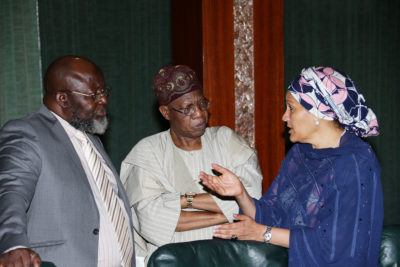
Also at the FEC Meeting on August 31 are L-R; Minister of Communication, Barrister Adebayo Shittu, Minister of Information, Alhaji Lai Mohammed and Minister of Environment, Hajiya Amina Mohammed.
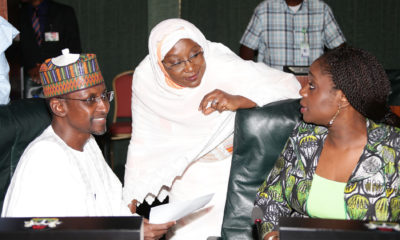
Also from L-R; Minister of FCT, Alhaji Muhammad Musa Bello, Minister of State Foreign Affairs, Hajiya Khadija Bukar Ibrahim and Minister of Finance, Mrs. Kemi Adeosun.
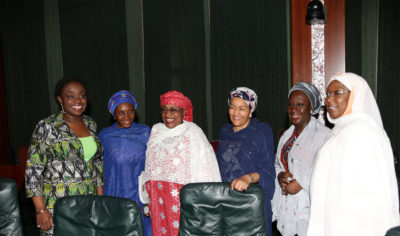
All the women ministers get together for a shot, from L-R; Minister of Finance, Mrs. Kemi Adeosun, Minister of State Budget and National Planning, Hajiya Zainab Ahmed, Minister of Women Affairs, Senator Aisha Alhassan, Minister of Environment, Hajiya Amina Mohammed, Minister of State, Trade, Investment and Industry, Hajiya Aisha Abubakar and Minister of State Foreign Affairs, Khadija Bukar Ibrahim. Photo by Sunday Aghaeze. [myad]
Facebook Founder and Chief Executive Officer, Mark Zuckerberg has described what he called ‘energy’ of Nigeria as amazing as he arrived in the country for a visit, the first trip he ever made to sub-Saharan Africa.
Zuckerber, who made his first stop-over in Lagos on Tuesday said: “this is my first trip to sub-Saharan Africa. I’ll be meeting with developers and entrepreneurs, and learning about the startup ecosystem in Nigeria. The energy here is amazing and I’m excited to learn as much as I can.
“Our first stop is the Co-creation Hub Nigeria (CcHUB) in Yaba. I got to talk to kids at a summer coding camp and entrepreneurs who come to CcHub to build and launch their apps. I’m looking forward to meeting more people here!”
Zuckerberg has 42-million followers on Facebook out of which 16 million users are from Nigeria, with a population of about 170 million.
Yaba is in the capital Lagos and is considered the closest to a Silicon Valley, and is home to CcHUB, which wrote on its Facebook page: “We were Mark Zuckerberg’s FIRST STOP on his FIRST TRIP EVER to Sub-Saharan Africa. Can you beat that??? Awesome time hosting a genuine world changer…”
Facebook said in a statement that Zuckerberg is in Nigeria to listen and learn and take ideas back to California on how Facebook can better support tech development and entrepreneurship across Africa.
Facebook has a keen interest in Africa, which is seen by many as the new growth market as more and more consumers come online using mobile devices. The vast majority of Facebook users in Nigeria – and through Africa – are on mobile. Africa has the world’s fastest-growing mobile market, according to the GSMA, and has grown to half a billion users.
Nigeria’s monthly active users (MAU) on Facebook have grown to 16-million (from 15-million) which is a 6.67% increase, as of the first quarter of 2016, according to figures released by Facebook in June. Kenya has 5.3-million (up from 4.3-million or 18.6%). Just less than half of these figures in Nigeria are daily active users (DAU), and just less in Nigeria. [myad]
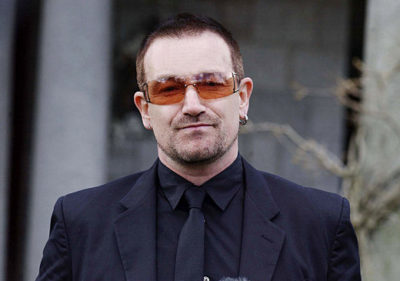
An Irish born International Rock Star Artist, a lead singer of rock group U2, Paul David, popularly called Bono, has said that he was able to see the real Boko Haram in Borno state, Nigeria. Bono, who visited Maiduguri, capital of Borno state, in the company of the African richest man and President of Dangote Group, Alhaji Aliko Dangote on Sunday, August 28, described the real Boko Haram he saw as that hungry toddler that never enjoyed parental love and never will. “I asked a five year old boy in the Internally Displaced Persons’ (IDP) Camp in Borno where was his father. The boy looked surprise, because he did not know what I was talking about. He had no idea about the concept of father. That is a potential Boko Haram.” Bono downplayed the conceptualization in many quarters that Boko Haram insurgent is that man that wears masks on his face, carries heavy AK 7 gun and march in the forest looking for a prey, saying: “Boko Haram is more than that. The new Boko Haram Nigeria will contend with after the end of the battle is that of hunger, starvation, diseases and poverty unless urgent measures are taken to address those things.” Bono, who co-founded One Campaign organization, meant to end poverty, described Nigeria as an incredible country. “This is a country with plenty of natural endowments but with excruciating poverty riding high in many communities and homes.” He expressed surprise, at a news conference he jointly held in Abuja with the President of Dangote Group, Aliko Dangote that over 50,000 million children are said to be facing death before the end of this year in some IDP camps in the North East, if they are not properly cared for. Bono commended Aliko Dangote for having so far spent N4.5 billion in aid to IDPs in Borno, Yobe and Adamawa states even as he called on others to chip in their widow’s mite This was even as the Chief Executive of the Dangote Foundation, Zouera Youssoufou, promised that with the new direction of the Foundation, more financial and material assistance would be made not only to the IDPs, but the poor and helpless ones in various communities. [myad]
We use cookies on our website to give you the most relevant experience by remembering your preferences and repeat visits. By clicking “Accept”, you consent to the use of ALL the cookies.
This website uses cookies to improve your experience while you navigate through the website. Out of these, the cookies that are categorized as necessary are stored on your browser as they are essential for the working of basic functionalities of the website. We also use third-party cookies that help us analyze and understand how you use this website. These cookies will be stored in your browser only with your consent. You also have the option to opt-out of these cookies. But opting out of some of these cookies may affect your browsing experience.
Necessary cookies are absolutely essential for the website to function properly. This category only includes cookies that ensures basic functionalities and security features of the website. These cookies do not store any personal information.
Any cookies that may not be particularly necessary for the website to function and is used specifically to collect user personal data via analytics, ads, other embedded contents are termed as non-necessary cookies. It is mandatory to procure user consent prior to running these cookies on your website.


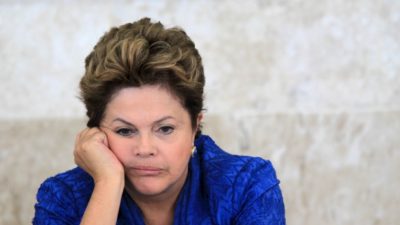 Brazil’s Senate has impeached President Dilma Rousseff for manipulating the budget, putting an end to 13 years in power of her left-wing Workers’ Party.


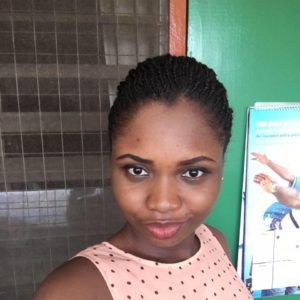 Twenty-five-year-old Nigerian alumnus of the Wesley Girls High School, Lagos, Fathia Ayodele Kareem, has received 12 out of 15 awards of the School of Medical Sciences of the Kwame Nkrumah University of Science and Technology, Ghana, breaking its academic record.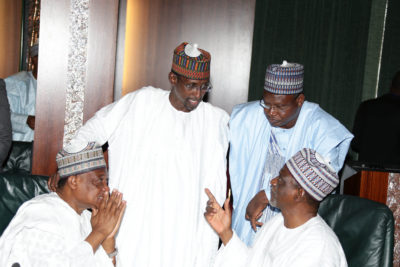

 An Irish born International Rock Star Artist, a lead singer of rock group U2, Paul David, popularly called Bono, has said that he was able to see the real Boko Haram in Borno state, Nigeria.

Yes President Buhari Is Still The Change We Voted For! By Philip Agbese
Perhaps, ambled into wakefulness from slumber, quite angry too, a Nigerian, symbolizing the mindsets of millions of other voiceless Nigerians assert this rather affirmative melody, as reflected in the caption: “Yes, President Buhari is Still the Change.” It is the most auspicious time to call a spade a spade.
As Christians, congregants are only told about the second coming of Jesus Christ; but the same scriptures and pastors who sermonize it would neither hint of the day of salvation nor the hour. But after crucifixion, death and resurrection, Jesus Christ appeared to his disciples, as the messiah, but some doubted him. Today, that misstep is widely celebrated as a religious mythology euphemistically encoded in the parable of doubting Thomases. It’s even an axiom used in sacred or less sacred places.
This is the fate of President Muhammadu Buhari. Nigerians have taken themselves too much for granted. They carelessly malign all their leaders, yet fail to present a better alternative. Baffling too, some otherwise respected intellectuals in the country have also contracted their intellectualism to these past vermins of power, still pained at losing a stranglehold on the reins of governance. To denigrate the present government of President Buhari is a favorite pastime.
The media space (No thanks to social media) has been inundated with acerbic criticisms of the less than one and a half year, civilian leadership of Nigeria by President Buhari. Reading through the emotions and anger antagonists express with such venom, what instantly strikes a discerning mind is the penchant of Nigerians not to only forget history, but also, bury it in the most isolated of graves.
These critics mask differently. But, their trademark remains unconcealed, exposing an unjustified destructive mindset. It runs unhindered, mostly in the shadowy cloaks of yawning hate sentiments.
They are either political chieftains or party financiers; community leaders; Civil Society Groups; decorated human rights activists; untouchable godfathers of the land, or some queer High Chiefs, some amazingly without even a kingdom to preside, much more a voice to command respect.
But to the estimation of these Buhari’s critics, the regime has accomplished nothing and the verdict has been inexplicably mouthed loudly in places that hold no significance. They forget that power belongs to the Nigerian masses in a democracy and not the flavor of their veiled sponsors in whatever guise. They vaguely goad Buhari that payback time is 2019, if he dares to seek another mandate.
It is this clan of a few elites, who have been on the saddle of leadership since Nigeria’s independence and unwilling to quit or their latest intellectual collaborators that configure the new clique of the anti-Buhari campaigners. They have recently morphed into critical columnists not of any scientific breakthrough or quantum of knowledge in any academic field, but about Buhari.
They delight more in writing to articulate his failures and wrong deeds, than sighting any of his progressive feats. Some even condescend to the incendiary, by deriding Buhari’s voluntary confession of the rot in Nigeria and the burden of cleansing the mess bestowed on him now, as in 1983 as military Head of State.
To this camp of Nigerians, it’s the President’s self-admittance of leadership incompetence. They claim the masses are deprived meaningful leadership and impoverished. They claim the economy is bad and heap all sorts of blames on the Presidency.
Therefore, infinitesimal issues such as allegations of Buhari’s failure to publicly declare his assets in violation of his campaign promise have become issues of national homilies. These critics migrate from the mundane to the auspicious, with nothing cogent other than hurting the draperies of the administration.
Their rhetorics question everything, but provide little or no insight on the way forward. They also forget easily, the decay or degeneration of the system, they blackmailed Buhari through the ballot to inherit. They are the unseen hands in Buhari’s frustration in efforts to reinvent and redefine Nigeria. But in public, they cry louder about the delay in settling these national malaises.
An African proverb queried this disposition, by scolding the wisdom of a frog which spent days in the water- well, without liberation, but cried of suffocation on the fourth day of rescue.
This clan of Nigerians in secured places, least expected to stop reaping from the institutional rot, deeply entrenched in the system. They are not happy that these channels have been blocked by a regime of change. They are sad that even stolen cash stashed in vaults of private mansions or graves, cannot be spent freely.
There is no more family holidaying in Durbar, Europe or the Caribbean Islands with Nigeria’s stolen wealth. Tax collectors on behalf of the government are scared to corner part of proceeds to grease the palms of benefactors. Not many are happy with Buhari’s implementation of the Treasury Single Account (TSA) which has netted over N3 trillion in the last one year. Why would they be happy with Buhari, when government officials no longer fleece the state with meaningless foreign travels, workshops and seminars?
If twice Buhari has remitted bailout funds to states to clear outstanding salaries and some governors embezzle it, yet those affected keep quiet, should the President double as governor of those states where citizens are docile?
Their sponsorship of Boko Haram insurgents is no longer yielding fruits, as President Buhari through an energized military has caged the outlaws. Thus, avenues of bargaining for negotiation with terrorists; initiated and fruitlessly pursued by dubious politicians, where millions of naira were hitherto guzzled are closed, at least within Buhari’s eternity in Aso Rock.
Definitely those who sold public assets to themselves, like PHCN or NITEL, would certainly not embrace the Buhari game. They know it might be recovered someday. Contractors awarded city rail contracts or those engaged in roads construction, know it’s dangerous to corner mobilization fees as usual. Cleaning up the mess in the NNPC, a cesspool of corruption by Buhari is distasteful to many. So, why must Buhari be a good President?
So, from sobriquets like “Baba go slow,” to “ Change the Change,” and multiple others, all invectives have been dishonestly flung at Buhari by adversaries of the administration. They pirouette in same circles and even curse their ancestors for this change. They drum that Buhari is not the change Nigerians anticipated.
But henceforth, it is going to be a battle between the few rich Nigerians who debase the nation and the majority poor, who still adorn and cherish President Buhari for exposing and prosecuting perennial looters of the nation’s economy. Despite instigation in sacred shrines by the corrupt elites, Buhari is still the change Nigerians would never sacrifice.
Agbese writes from United Kingdom. [myad]