Home Blog Page 1771

Still On That Dog Matter, By Reuben Abati
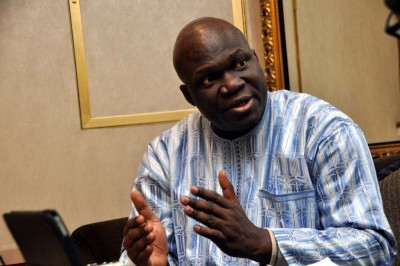
Abati Reuben

Last Friday, my phones rang again and again (thank God for dead phones gradually playing Lazarus), but what triggered that ring-ring was the article: “The Man Who Named His Dog Buhari” (August 26) in which I had indicated all the positive attributes of a dog and why a man naming his dog Buhari should not generate a community and legal trial or so much stress in the public space.  One caller kept me on the phone for close to two hours.

He said he was proceeding right-away to buy a dog and name it Reuben Abati and that he would bring that dog to my neighbourhood, with the name inscribed on both sides of the dog and he would in my presence call out the dog: “Reuben Abati, come and eat, Reuben Abati, stop shouting, Reuben, stop being stupid, Reuben, you this idiotic dog!” and he’d like to see my reaction.  I laughed. He said it was not something to be amused about, because although I had argued that a dog is a man’s best friend, and that in other societies, a dog is treated with respect and considered loyal and trustworthy, his view was that I failed to acknowledge the fact that in our culture, to attach the name of a man to an animal is definitely an insult.

His point was that Africans are not cut out for that kind of indulgence, and we have not yet, given our peculiar circumstances of development and culture, attained that stage where animals are given such reverence, or a time when Africans will build hotels for cats and dogs, have sex with dogs, adopt animals as biological children or talk about animal rights. He said in Nigeria, dogs are variously perceived as a taboo, as a dirty animal, as bush meat to quench hunger or as item for rituals. He said a lot of other things.

“You were writing about a dog being so important in Western cultures. You should have told us what a dog is in our own culture and may be that will give you an idea of why Joe Chinakwe’s action should not be treated so lightly?”

He answered his own question.

“What you don’t now is that a dog is a dirty animal in our culture. Even in the Bible, the dog is referred to as something dirty and vile, don’t mind these Oyinbo people now turning a dog into something important.  And if you are wondering why Joe Chinakwe’s neighbours want him dead, I need to tell you that in Islam, a dog is like a pig, a taboo.  Go and do your investigation, you are not likely to find Muslim families keeping dogs as pets. People use dogs for rituals in Yorubaland to appease Ogun, the god of iron and they eat it afterwards. In the South South, a dog is also a special delicacy for the family soup pot. And have you seen an Ondo man eyeing a dog, and salivating? Special meat. So, if a dog in America is a king, here it is a sacrificial lamb. Should anybody then give the suggestion around here that Buhari is a sacrificial lamb or an edible offering? What nonsense!”

I kept quiet. I wanted him to exhaust his angst.

“The lesson of this whole thing is that people should avoid actions that can cause problems.  We are living in a delicate country where people are suspicious of one another. People should learn to watch what they do. That your Chinakwe knew what he was doing. He took a dog, labelled it Buhari on both sides and went to a place occupied mostly by Northerners, and Muslims, and he started parading the dog. Look, he could have been killed. And if he was killed, the next thing we would hear is that Fulani herdsmen have killed an Igbo man and his dog. Nobody will ask for the cause of the violence, or talk about what the Igbo man did. Why should an Igbo man act that way? It is obvious a good number of them don’t like this government, and they have the right not to, but they should not disturb public peace, or try to frustrate this innocent man in Abuja.”

I gave a short speech about human rights and the freedom of choice, and the need to avoid ethnic labeling. He fired back, so loudly I had to move the phone a few inches away:

“Nobody is saying Igbos should support Buhari. But why is it that they are always the ones at the centre of every incident? When they live in your community, they want to take over. They will appoint an Eze Ndigbo, something they will not allow in the East for other ethnic groups, and they will disregard the local monarch. They have taken over a part of Lagos and claimed it as their own, but nobody else can claim any part of Igboland. Who introduced unitary government, but now Igbos are the ones saying they want Nigeria to be restructured. Every trouble in this country, there must be an Igbo hand in it. If that man and his dog had been slaughtered, the whole thing could have degenerated into an ethnic conflict.”

I made some statements about tolerance and why ethnic-labeling is unproductive. I argued that President Goodluck Jonathan was called a goat and that the goat had the name printed on it.  He didn’t allow me to land.

“That was bad enough because a goat is regarded as a senseless animal among Igbos, they call it Mkpi. It wasn’t a Northerner that called Jonathan a goat.”

“They said worse things about him,” I interjected.

“But no Northerner went to Jonathan’s household or his community to abuse him to his face. We must talk about our culture not American or European culture. If Chinakwe had named his dog Buhari and kept it within his compound, there would have been no problem, but to carry a placard on the dog and begin to walk around with it, that is provocative. Do we write names on dogs in Nigeria? We don’t. You can call your dog what you like, but don’t behave in a manner that can cause problems.”

“But the police are being mischievous. They are doing eye service. They are chasing the wrong dog.”

“No”, he retorted. “It is their job to enforce law and order and to protect life and property. Your friend’s action posed a threat to what the police stand for. What was he trying to achieve? He deserves to be jailed”

“Because he is Igbo?”

“Because he did something stupid.”

“He says he named the dog Buhari because he loves President Muhammadu Buhari”

“He is lying.  He should know that no Muslim will feel honoured being called a dog.  And why is he mentioning the President’s name? A man who says his father is Alhaji Buhari, and he is aggrieved, took him to the police station. It has nothing to do with the President. He should be lucky he is alive. And being Igbo, he also knows that when you call a man Nkita in Igboland, he could take your head off in anger.”

“I stand with him. We are in a democracy. He has the right to call his dog any name he chooses.”

“Yes. But he cannot use the same name to provoke people. He is not being charged for naming a dog, he is being charged for inciting hate and behaving in a manner that could breach the public peace. If he loves President Buhari as he says, why doesn’t he name a child of his after the President? That is how we honour people we admire in African culture.  In your article, you were quoting white people, dead and alive, I am quoting my grandmother in the village whose wisdom is more relevant.”

“I still don’t get your point.  And I think we are spending too much energy on this naming of a dog and its parade.”

“We should because small things matter a lot, and small things can destroy a country. People should know their environment and behave properly. I want to see that man punished.”

“I don’t want him to be punished. We should aspire to make this country an open and free society.”

“Of course, it is people like you who defend gay rights, abortion and prostitution. One man has  just been arrested, again in Ogun State, for stealing 18 tubers of yam (valued at N10, 000) and a bunch of vegetables (worth N50) I won’t be surprised if you argue that he is exercising his right to be free from hunger. Or you may even say- that is stealing and not corruption.”

“I will argue that it is a sign of the times, in the same manner in which the widespread theft of pots of soup in local compounds is a sign of the times, and in fact in the same manner in which Chinakwe’s naming of his dog is a poignant political statement. When the people are hungry, angry, helpless and afraid, they will resort to codes, actions, symbols and metaphors to reflect their sorry condition and frustration. For your information, the man who stole yam and vegetables is insisting that he is not guilty! He is 30 years old and he has been remanded in prison custody.”

“Good for him. We are waging a war against indiscipline and corruption.”

Long after the conversation with this fellow, who by the way is a government official in Abuja, I came to the same conclusion that Nigeria is at a tethering edge. We are not yet a nation. We are divided by ethnicity, culture, and religion and the walls of division are so strong, only a little push could pull down those walls.  This situation places us far away from the currents of democratic leadership and limits our ability to balance primordial culture with new realities and the people’s aspirations. We are at a crossroads of belief, unbelief and faithlessness.

I had thought or read that it was Joe Chinakwe (whose name keeps changing curiously in various reports – Joe, Joseph, Joachim, Iroko- but no matter, he is at best a working metaphor) who had put dog Buhari to death, but it turns out that the dog was actually killed by aggrieved Northerners in Chinakwe’s community. Chinakwe’s dog is yet another Nigerian metaphor: a metaphor of extant fault-lines. That Igbo dog-owner must watch his back. If he gets roughly handled like his dog, the same policemen who have been so busy trying to punish him are likely to do nothing since in their view, he brought it all upon himself. [myad]
Maritime Agency Disowns Views Of Its Staff

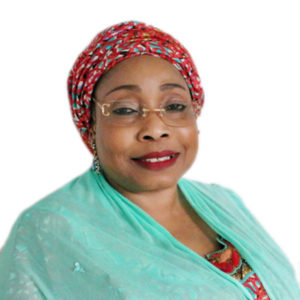
Lami TumakaThe Nigerian Maritime Administration and Safety Agency (NIMASA) has disowned a statement made by one of its staff, Momoh Alhassan, that the Agency is opposed to the Comptroller General of the Nigerian Customs Service (NCS) serving as chairman of the Board of the NIMASA. Momoh Alhassan also said that NIMASA is pushing to be represented on the Board of the NCS.
In a statement on Saturday by NIMASA Head of Corporate Communications, Hajiya Lami Tumaka, the abency said: “we want to state categorically that this is NOT the position of the Agency. The event which was held in Lagos and organized by the Nigerian Customs was intended to sensitize stakeholders and garner feedback on the proposed amendment to the Customs and Excise Management Act (CEMA). Mr. Momoh Alhassan, though a staff of the Agency, was merely expressing his opinion in his personal capacity.

NIMASA is not unaware of the correct procedure to be adopted in making its own presentations on matters of this nature which the Agency regards as very important. Being a draft law that will be forwarded to the National Assembly for legislative input and passage, the Agency will articulate its position at a public hearing at the National Assembly when the need arises.

As a responsible organization, NIMASA is dedicated to its core mandate of promoting the development of indigenous commercial shipping in international and coastal trade and the regulation of the maritime industry in Nigeria. The Agency will therefore always commit to only those ideals that can further this course.” [myad]

EFCC Accuses New NBA Chairman Of Trying To Create “A Cabal Of Untouchables”

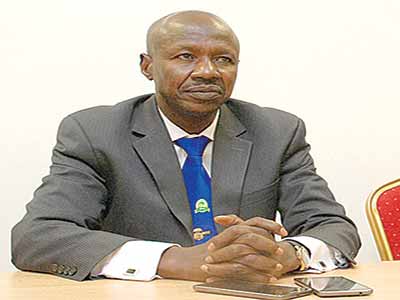
Ibrahim Magu of EFCC

The Economic and Financial Crimes Commission, EFCC, has described the call by the president of the Nigerian Bar Association (NBA), Abubakar Mahmoud for the reform of the agency, part of which is for it to be stripped of its prosecutorial powers, as “self-serving” and aimed at creating “a cabal of untouchables.”

The EFCC, in a statement by its spokesperson, Wilson Uwujaren, said that the senior lawyers have been complicit in cases of corruption and money laundering, adding that some NBA members are “rogues and vultures.

“It is too much of a strange coincidence that the suggestion to strip the EFCC of its prosecutorial powers is being floated few months after the Commission, in unprecedented fashion, arraigned some senior lawyers for corruption.”

The Commission noted that the new NBA chairman, was silent on the reason for his position even as it said that it could comprehend how the redefinition of EFCC’s mandate in narrow terms, ultimately whittling it down, fits into the clamour by Nigerians and the vision of the President Muhammadu Buhari administration for a vibrant and courageous anti-corruption agency.

“Instead, Mahmoud’s suggestions appears perfectly in sync with a cleverly disguised campaign by powerful forces that are uncomfortable with the reinvigorated anti-graft campaign of the EFCC and are hell-bent on emasculating the agency by stripping it of powers to prosecute with the tame excuse that an agency that investigates cannot also prosecute.

“The question Nigerians must ask the Mahmoud-led NBA is, what is wrong with EFCC prosecution? Mahmoud is in a position to answer this question. He was the Attorney General of the Federation’s counsel in the trial of former Delta State governor, James Ibori at the Federal High Court, Asaba, a case which EFCC lost in questionable circumstances. But the same ingredients from that case were used to fetch Ibori a 13-year jail term in London. Mahmoud is also the Commission’s counsel in the appeal against the infamous perpetual injunction from arrest and prosecution by former Rivers State governor, Peter Odili, which is still pending before the Court of Appeal in Port Harcourt, many years after it was filed.

The full text of the EFCC statement goes thus:

The 56th Annual General Conference of the Nigerian Bar Association came to an end August 26, in Port Harcourt with the bar making pronouncements on major issues of national importance.

One of the new commitments as articulated by the new President of the Association, Mr. Abubakar Mahmoud, SAN, is to reinvent the association by reclaiming its moral high ground through a campaign for ethical rectitude by members of the bar.

“The NBA under my watch will fight judicial corruption. We shall make the legal profession unattractive for corrupt lawyers,” he said.

This is reassuring considering the evidence that senior members of the Bar have become complicit in cases of corruption and money laundering, leading to the Economic and Financial Crimes Commission, EFCC, arraigning two members of the inner bar for acts of corruption. A Bar populated or directed by people perceived to be rogues and vultures cannot play the role of priests in the temple of justice.

The EFCC appreciates the NBA’s acknowledgement of the Commission’s strategic place in the fight against corruption in Nigeria and the modest achievements that it has recorded so it. It also welcomes the suggestion for reform. As the Acting Chairman, Ibrahim Magu has repeatedly started in his public pronouncements, the agency is open to suggestions that will improve its operations as it cannot pretend to have a monopoly of ideas on how to fight corruption.

Nevertheless, the Commission views with concern, the call by the NBA president that the EFCC be stripped of its prosecutorial powers. According to him, “We need to define its mandate more narrowly and more clearly… I strongly recommend that the EFCC be limited to investigation… while prosecution should be handled by an independent resource prosecution agency”.

The Commission’s discomfort over this seeming innocuous proposition, stem from the fact Mahmoud was silent on the reason for his position. More importantly, the Commission cannot comprehend how the redefinition of EFCC’s mandate in narrow terms, ultimately whittling it down, fits into the clamour by Nigerians and the vision of the President Muhammadu Buhari administration for a vibrant and courageous anti-corruption agency.

Instead, Mahmoud’s suggestions appears perfectly in sync with a cleverly disguised campaign by powerful forces that are uncomfortable with the reinvigorated anti-graft campaign of the EFCC and are hell-bent on emasculating the agency by stripping it of powers to prosecute with the tame excuse that an agency that investigates cannot also prosecute.

The question Nigerians must ask the Mahmoud-led NBA is, what is wrong with EFCC prosecution? Mahmoud is in a position to answer this question. He was the Attorney General of the Federation’s counsel in the trial of former Delta State governor, James Ibori at the Federal High Court, Asaba, a case which EFCC lost in questionable circumstances. But the same ingredients from that case were used to fetch Ibori a 13-year jail term in London. Mahmoud is also the Commission’s counsel in the appeal against the infamous perpetual injunction from arrest and prosecution by former Rivers State governor, Peter Odili, which is still pending before the Court of Appeal in Port Harcourt, many years after it was filed.

It is too much of a strange coincidence that the suggestion to strip the EFCC of its prosecutorial powers is being floated few months after the Commission, in unprecedented fashion arraigned some senior lawyers for corruption.

For the avoidance of doubt, the Commission has recorded more convictions in the last one year than all the states and federal ministries of justices combined.

Against this background, the current campaign appears to be self-serving, intended to create a cabal of untouchables who can be investigated but may never be prosecuted.

The EFCC however wishes to reassure Nigerians that there will be no sacred cows in the renewed fight against corruption in Nigeria. [myad]

Senate President Fumes Over Alleged Diversion Of Food Items For IDPs

Saraki

President of the Nigeria Senate, Dr. Abubakar Bukola Saraki, us angry with people who were alleged to have diverted food items meant for the Internally Displaced Persons (IDPs) in the North East leading severe hunger and nutrition crisis in IDP camps and vowed that the Senate will investigate the matter.

Senator Saraki, who was reacting to the Thursday’s public protest by hundreds of women from camps in Borno State, described the development as desperate.

“Anyone that is found to be diverting the food aid deliveries should be investigated and brought to book if investigations prove their participation in these vicious schemes. Profiting from a complex humanitarian crisis is unacceptable. The people of the North East have suffered enough indignities in the past four years from the marauding Boko Haram terrorists. Stealing food meant for starving children is beyond the pale and only adds insult to injury.”

The Senate President called on the Police, the Economic and Financial Crimes Commission (EFCC) and other law enforcement agencies to quickly move in to investigate the diversion of food aid deliveries. He said that government officials and contractors should be held to account for how truckloads of provisions intended for the IDP camps mysteriously went missing.

“The situation in the North East has been underreported and under resourced for far too many years. In terms of scale and complexity, the situation in the North East is more dire than South Sudan. Yet, apparently the crisis appears not to be sexy or star-studded enough to attract greater international attention and support.”

He emphasized the need for Nigeria to quickly operationalise a more effective and efficient humanitarian response infrastructure to address the dire situation.

“It is important that we all focus on eliminating the coordination, access and food supply issues hindering us from successfully feeding the millions of IDPs. This is particularly important for the many children who are dying daily from starvation. It should break every Nigerians heart to know that our own women and children are enduring such horrendous hardships”, he stated.

Saraki plans to offer a motion on the situation in the North East when the Senate reconvenes from recess next month. The motion specifically calls for the establishment of a Senate Ad-Hoc Committee on the North East. Additionally, the motion will call for the conduct of a public hearing for the purpose of the Senate to use its oversight powers to review Nigeria’s humanitarian policies, better understand the current humanitarian coordination infrastructure and hear testimony from witnesses representing the government, humanitarian experts and the IDPs themselves. [myad]

Heavy Downpour Sacks Abuja, Kafanchan Communities

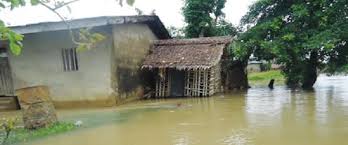
Abuja communityA day-long heavy downpour, on Friday, rendered some communities in the Federal Capital Territory (FCT) homeless, even as communities such as Kuchiyakwo, Shetukwo and Shadadi were completely cut off from Kuje, headquarters of one of the six area councils in Abuja.
This was even as unabated downpour in Kafanchan, Kaduna statel, which began on Friday and ran through to Saturday has forced residents of Aduan, Ungwan Musa and Soba areas of Kafanchan to live in fear of flooding any moment from now

From Abuja, the News Agency of Nigeria (NAN) reports that the heavy rainfall has flooded some houses and washed away the road linking Kuchiyakwo ECWA Church and its extension in the community.
Some residents of the community, who spoke with the NAN on Saturday, described the state of the road as devastating and called on Kuje Area Council authorities for immediate action.
Abraham Gado, a resident whose house was flooded, attributed the havoc to lack of standard drainage and improper building by some residents.
Gado said: “The district head and some stakeholders of the community have had series of meetings to find a lasting solution to this road but have yielded no result.
“The road has no drainage and some have built their houses very close to the road instead of giving some space.
“The community leader and the stakeholders on regular basis have advised people to stop erecting structures very close to the road side but they refused to listen.
“The past Kuje Area Council administration promised to construct drainages and put the road in good shape but nothing has been done.
“If this kind of rain continues for a long time, many houses in this community will be seriously washed down.”
Gado added that a tax force was appointed to stop people from erecting structures at the road side but some residents failed to adhere to instructions.
Hadiza Musa, another affected resident of the community, described the flood as a strange disaster that needed immediate response from the Satellite Town Development Authority.
Musa said: “I can’t even move out with my car because the road has been completely washed off and we can’t gain access to the main road.
“This disaster requires an emergency response from the STDA or else some houses will not last another year.
“The previous Kuje Area Council Administration promised it was going to rehabilitate the road but nothing was done about it.
She said: “We want the relevant authorities to come and address the state of this disaster and put the road in good shape.”

And in Kafanchan, NAN also reports that most parts of the roads and pedestrian ways have been covered with water while some business premises have remained closed because of the flood.
Some of the residents, who spoke with the NAN, expressed worry that if the rainfall continued for more days, they would be forced to start evacuating their valuables to safe areas.
Sani Abubakar, who resides at Aduwan area said that the situation had remained the same in the past three years he had lived in the area.
Abubakar said: “Although the drainage system behind my house was reconstructed before the rains this year, nobody can tell if it can help this year’s flood because of the amount of rainfall.
“In the previous year, water enters our living rooms over flooding the entire compound.”
Grace Samuel of Ungwan Musa said although the area was prone to flood, residents do not have alternative houses to move into as majority of them lived in their personal houses.
Samuel said: “We only resort to prayers whenever it rains like this as we don’t have anywhere to run to.”
Ndibusi Chucks, an electronics dealer at Soba Street, told NAN that he had to evacuate his goods to prevent them from being damaged by water.
Chucks said: “As you can see, the water level has already covered the road and is gradually threatening to enter the shop as such a stitch in time saves nine.”
Meanwhile, business premises have remained deserted due to the continued rainfall while the roads now witness low vehicular movements within the metropolis. [myad]

No Innocent Christian Was Killed For Blasphemy In Zamfara, Police Boss Clarifies

Zamfara governorThe Zamfara state commissioner of Police, Adaji Gabriel has said that no innocent Christian student of the Abdu Gusau polytechnic was killed over alleged blasphemy as reported in some media organizations recently.
The police boss recalled that some media gave bad impression that eight Christian students of Abdu Gusau Polytechnic were killed for alleged blasphemy,”which was not true.”
He told news men at the Command headquarters in Gusau that there was no single innocent soul that was  taken by the unwanted development that occurred in Talata Mafara town.
“In Our record, we have so far eight people who were burnt alive and were hoodlums who took advantage of the boiling situation in the town and went to a house belonging to a good Samaritan who rescued the embattled student for safety.
“T,they entered and are not lucky as the innocent family had vacate already.”
He said that the hoodlums were nine but that eight died while one hide in a toilet, thereby escaping the death.
The police boss said that the suspect is currently assisting the Police with the required information.
“With this development, there was no innocent life lost and there was no single Christian student who lost his live, It was mere argument between three students that stay in the same room at Abdu Gusau Polytechnic,Talata Mafara.” [myad]

FCT Minister Wants Staff Who Would Tell Him Truth, Not Sycophant

FCT Minister Bello 5Minister of the Federal Capital Territory (FCT), Malam Muhammad Musa Bello has said that he wants a staff of his ministry that would tell him the truth about the situation on ground, not sycophant.
“I want the Federal Capital Territory and indeed the entire Nigeria to get to a stage where for instance, the Director of Urban & Regional Planning will tell the Minister or any political appointee that the plot of land you are asking me to earmark cannot be allocated because it is a green area meant for aesthetic, beautification or relaxation points for generations yet unborn.”
The minister who spoke at a special congress meeting of the Nigerian Union of Journalists (NUJ), organised in his in his on Saturday at the Council Secretariat in Utako District, Abuja said that achieve such ideal, his administration will strengthen the various institutions in the Federal Capital Territory and maintain extant rules in carrying out all its statutory activities.
Muhammad Bello explained that under the proposed dispensation, that institutions would be allowed to do their work to ensure that all wrongs in the Federal Capital Territory in the past are corrected.
He reminded the people that Abuja is a creation of the law and in that in administering it, the rule of law would take precedence over other considerations.
“We need to strengthen the institutions to eradicate individual or selfish interests in our actions and inactions, especially with those in the position of leadership.”
The Minister said that the ongoing Abuja Light Rail project has reached 70 percent completion and that it would be completed and operational in December 31, 2017.
The Minister appreciated the media for the support it has been giving to his administration even as he appealed for continuous understanding.
Chairman of the Abuja Council of the NUJ, Mr. Paul Abeche Ella recalled that since 1976 when FCT got its first Minister, none of the other 16 Ministers had ever attended the NUJ Congress which Muhammad Bello had done.
He regretted however that 30 years in the life of the Abuja Council of the Union, it had no a permanent secretariat even as he appealed to the Minister to assist in completing the ongoing work at the Secretariat.
The NUJ Congress meeting was also attended by the FCT Permanent Secretary, Dr. Babatope Ajakaiye, Chairman of the Abuja Municipal Area Council, National President of NUJ, Acting Secretaries of all the Mandate Secretariats, Coordinator of the Abuja Metropolitan Management Council, NUJ Zonal officials, all the state chairmen of NUJ in North Central as well as some FCT Directors, including Information & Communications, Development Control and Abuja Environmental Protection Board. [myad]

Buhari Has No Hand In Ordeals Of Man Who Named His Dog ‘Buhari,’ Presidency Swears

Garba Shehu
Garba Shehu

The Nigeria Presidency has made it clear that President Muhammadu Buhari has no hand in the ordeals a man who named his dog ‘Buhari’is reported to be going through.

The President’s spokesman, Malam Garba Shehu, who reacted to the controversy, for the first time since it started, said that if anything, his boss has always been in love with cartoons and caricatures.

“He (President Buhari) enjoys cartoons and likes to share them. The ones that he enjoys most are those that caricature him”

In his reaction via microblogging site, Twitter, to the general public, Garba Shehu said: “when he picks a paper the first page he reaches for is page the page on caricatures. He (would) laugh and laugh. It is cheap and sensational to say he can order a police action against a caricature. People should listen to the real story behind this dog incidence…”

There has been a running controversy over a trader from the South East, Joe Chinakwe, who named his dog ‘Buhari’ which the law enforcement agency consider to be capable of causing public disorder. [myad]

President Buhari Approves Governing Boards For NPA, NIMASA

President Buhari at AU

President Muhammadu Buhari, has approved the composition of the Governing Boards of the Nigerian Ports Authority (NPA) and the Nigerian Maritime Administration and Safety Agency (NIMASA).

A statement by the Director of Press in the office of the Secretary to the Government of the Federation (SGF), Bolaji Adebiyi, listed members of the boards as:

For the Nigeria Ports Authority (NPA)

(i) Emmanuel Olajide Adesoye-Chairman

(ii) Supo Shasore-Member

(iii) Suleiman Ibrahim Halilu-Member

(iiii) Constance Harry Mashal-Member

(v) Umar Shu’aibu-Member

(vi) Charles Efe Emukowhate Sylvester-Member

(vii) Hadiza Bala Usman-Member

(viii) Mohammed Bello Koko-Member

(ix) Dr. Sekonte Davis-Member

(x) Professor Idris Abubakar-Member

(xi) Mrs. I. J. Uche-Okoro-Member

  1. For Nigeria Maritime Administration and Safety Agency (NIMASA), members are as follows:

(i) Major General Jonathan India Garba -Chairman

(ii) Asekomhe Oakhia Kenneth-Member

(iii) Mohammed Gidado Muazu-Member

(iiii) Hon. Barrister Ebele Obi-Member

(v) S. U. Galadanchi-Member

(vi) Ms Nene Betty Dike-Member

(vii) Dakuku Peterside-Member

(viii) Rear Admiral Adeniyi Osinowo-Member

(ix) Bashir Yusuf Jamoh-Member

(x) Joseph Oluwarotimi Fashakin-Member

(xi) Gambo Ahmed-Member. [myad]

Petroleum Minister Wants To Know How Niger Delta’s $40 Billion Was Squandered In 10 Years

Ibe Kachikwu 3

The Minister of State for Petroleum Resources, Emmanuel Ibe Kachikwu has challenged the traditional rulers, leaders and indigenes of the Niger Delta to embark on soul searching on the roles they played in the application of the $40 billion which the federal government disbursed for the development of the region in the last10 years.

The minister, who spoke to the traditional rulers from the Niger Delta when they paid him a visit in Abuja, regretted that when he went round the creeks, he found no infrastructure that reflects the money disbursed to the region through the Niger Delta Development Commission (NDDC) or the 13 per cent derivation from the Federation Accounts Allocation Committee (FAAC).

Kachikwu, who is from Delta State, said that the Federal Government is interested in releasing money for the development of the Niger Delta, if governance and transparency are addressed, saying that unless the issue of transparency in the management of funds is solved no further release of cash would be made.

“If you look at the amount of money that has been out into the Niger Delta over the last 10 years, in papers it is over $40billion. These have come from NDDC; it has come from derivation, it has come from oil companies’ investments.

“Over $40billion, but as I go to the creek, I see no single infrastructure that you can point to to say this is the result for these investments. So what it means is that we must begin to do some soul searching ourselves: where did all this money go to. Who to them, what where they applied for ? What were the roles of our own people and others no necessary from the Niger Delta and how this money was applied .

“Because unless you solve the governance and transparency issue in terms of spending this money it doesn’t matter how much money put into the place you are going to go back to square one.

“So the first fundamental question we must begin to ask now is how are these institutions run? How are these monies placed and what roles do our traditional rulers play in the decision making process on how these projects are supposed to …

“And how can we put a sense of responsibility on delivering on the infrastructural imperative ? So there is a lot of home truth that must happen.” [myad]

Advertisement ADVERTORIAL
WP2Social Auto Publish Powered By : XYZScripts.com

