Federal, States and local governments have shared N443.6 billion as revenue realized in July. This was made known at a news briefing by the Minister of Finance, Kemi Adeosun, on Thursday. Adeosun, who was represented by the Permanent Secretary in the Ministry, Mahmoud Isa-Dutse, announced this while addressing newsmen on the outcome of the Federation Accounts Allocation Committee meeting. The amount is 11 per cent less than the N559 billion that was distributed for June. Adeosun said: “The distributable statutory revenue for the month is N268.7 billion. “The sum of N6.3 billion was refunded to the Federation Account by Nigerian National Petroleum Corporation. “There is a distribution of N1.3 billion excess bank charges recovered from 2008 to 2012. “Also, there was the exchange gain of N70 billion and N36.4 billion arrears for May, which were also proposed.” Giving the breakdown of revenue among the three tiers, Adeosun said the Federal Government received N129.2 billion, representing 52.68 per cent, while states got N65.5 billion, representing 26.72 per cent. The local governments, she said, received N50.5 billion, amounting to 20.60 per cent of the amount distributed. She said N12.8 billion, representing 13 per cent derivation revenue, was shared among the oil producing states. Adeosun also said during the month under review, the country generated N119.4 billion as mineral revenue and N168.4 billion as non-mineral revenue, showing a decrease of N250.9 billion from both sources. The minister said the country’s Excess Crude Account stood at $3.03 billion. She explained that the main cause of the decline in revenue was mainly attributable to the reduction in the quantity of petroleum sold due to the activities of vandals in the Niger Delta. Adeosun also said Lagos State had not started receiving the 13 per cent derivation from the sale of crude oil. She said: “Lagos State has not started receiving the 13 per cent derivation because the money has not started coming in yet. “It is after the actual export that the money would be realised and it would be given the derivation.” [myad]
A 30-year-old man, Samodi Olorodo,is facing a case of theft involving 18 tubers of yam worth N10,000 and a bunch of vegetables worth N50 in in the Oke-Odo Area of Osiele, Abeokuta.
Olorodo, who has been ordered to be remanded in prison by the Abeokuta Magistrates’ Court in Isabo on Thursday, had however pleaded not guilty. The accused is of no fixed address.
The Prosecutor, Insp. Olakunle Shonibare, told the court that the offence was committed on August 1 at about 10:00 a.m.
Shonibare said the accused stole 18 tubers of yams valued at N10, 000 and a bunch of vegetables worth N50, property of one Mr Adeney Safiu.
According to him, at about 10:00 a.m. when the complainant got to his store, he saw the accused person coming out from his store with the tubers of yam and a bunch of vegetables on his head.
He was interrogated but could not give a reasonable answer, which led to his arrest.
The prosecutor noted that the offence contravened Sections 516, 383 and 390 of the Criminal Code, Laws of Ogun, 2006.
The Magistrate, Mr Idowu Olayinka, ordered that the accused be remanded at the Federal Prisons, Ibara, to enable the police carry out more investigation.
He adjourned the case to Oct. 5, for further hearing. [myad]
The Sokoto state commissioner of Health, Dr. Balarabe Shehu Kakale has warned that malnutrition on the millions of children in Nigeria is threatening to extinct healthy citizens that are expected to be the leaders of tomorrow. The commissioner was emphatic that one of the dangerous effects of malnutrition is rendering the victims to suffer from retarded mental development and therefore making such the victims to look stupid and useless. Dr. Balarabe Kakale spoke on Thursday at the opening of a two-day interactive dialogue on child malnutrition, organised by the United Nations Children Education Fund (UNICEF) for media executives, editors and reporters in print, electronic and online media at the Dankani Guest House in Sokoto. The commissioner stressed that a country like Nigeria, with wide spread malnourished younger ones is doomed, because such young ones would grow up to be dunce, lacking the necessary Intelligent Quotient to live useful life. According to him, the danger about malnutrition is that it is not the preserve of the poor and uneducated as erroneously believe in many quarters and neither is it restricted to some parts of the country. He explained that malnutrition is so wide spread that even rich and influential people experience through over-feeding and resultant obesity. He said that malnutrition now ranks higher than the HIV in terms of immune deficiencies, adding that malnourished children are exposed more to all types of dangerous diseases and deaths than the HIV. “Malnourished children are stunted both in physical appearances and in terms of brain,”the commissioner said, adding that for a child to be bright and intelligent is not the function of the best school he attends, but the correct early exclusive breast feeding he enjoys right from birth. Dr. Balarabe Kakale said that Sokoto state government has began to invest heavily on growing nutritional food and other measures that would boost the nutrition of the food the people, especially, children eat. This was even as the state commissioner for information, Alhaji Andulkadir Jeli Abubakar stressed the urgent need to educate the people about eating healthily, reminding the people about the saying: health is wealth. He said that for Nigeria to have healthy leaders tomorrow, the government and other stakeholders should rise up and campaign to face the challenge of arresting malnutrition in the children. Different topics on child malnutrition in the interactive dialogue, coordinated by the UNICEF’s Communication Specialist, Geoffrey Njoku, were treated by UNICEF nutritional specialist, Paul Mudzongo; Coordinator of the African Centre for Media and Information Literacy, Chido Onumah; Head of the Child Rights information Bureau in the Federal Ministry of Information, Mrs. Rose Modu; Dr. Chris Osa. Isokponwu and others.
This was even as UNICEF has warned that 49,000 people in the IDP Camps in Borno state, Boko Haram’s heartland, will die this year if they do not receive treatment.
UNICEF, which is appealing for $308 million to cope with the crisis, said that to date, it had only received $41 million, 13 percent of what it needs to help those affected in the four countries – Chad, Nigeria, Niger and Cameroon – that border Lake Chad. At the start of 2015, Boko Haram occupied an area the size of Belgium but has since been pushed back over the last 18 months by military assaults by the four countries. Most of its remaining forces are now hiding in the wilds of the vast Sambisa forest, southeast of the Borno provincial capital, Maiduguri. UNICEF said that as Nigerian government forces captured and secured territory, aid officials were starting to piece together the scale of the humanitarian disaster left behind in the group’s wake. “Towns and villages are in ruins and communities have no access to basic services,” UNICEF said in a report. In Borno, nearly two thirds of hospitals and clinics had been partially or completely destroyed and three-quarters of water and sanitation facilities needed to be rehabilitated. Despite the military gains, UNICEF said 2.2 million people remain trapped in areas under the control of Boko Haram – which is trying to establish a caliphate in the southern reaches of the Sahara – or are staying in camps, fearful of going home. Boko Haram is thought to have killed as many as 15,000 people since the launch of its insurgency in 2009. Responding to its battlefield setbacks, Boko Haram has turned to suicide bombings, many involving children. UNICEF said it had recorded 38 cases of child suicide bombings so far this year, against 44 in the whole of 2015 and just four the year before that. [myad]
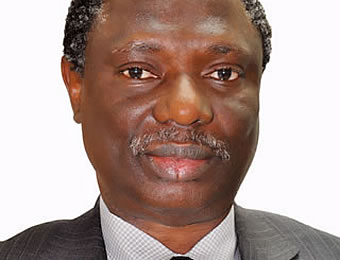
Determined to maintain the zero level of poliomyelitis in the Federal Capital Territory (FCT) as it returned to Borno state recently, the government of the capital city has decided to re-activate the Task Force that will work towards preventing the disease from entering Abuja, and to ensure routine immunization. The FCT Permanent, Dr. Babatope Ajakaiye, who spoke as he inaugurated the Task Force in Abuja on Thursday, said that the action has been taken as a proactive measure to prevent any resurgence of poliomyelitis in any part of the Federal Capital Territory. Dr. Ajakaiye said that the Administration has also approved the expansion of the Task Force membership in order to ensure sector-wide stakeholder participation. The Permanent Secretary said that the effort of the FCT Administration is geared towards strengthening Childhood Immunization Services across the 8,000 square kilometers of the Territory. Dr. Ajakaiye insisted that Abuja must remain the pace setter for the 36 states of the federation to emulate and therefore urged members of the Task Team to work very hard to maintain the tempo. He said that the FCT Administration would continue to provide all the necessary support to ensure that the programmes earmarked for the sustenance of the agenda are fully implemented. The Task Force’s terms of reference include ensuring effective leadership and coordination of all immunization activities by the FCT; preparing and regularly review/update a 12 month state plan for the intensification of Polio Eradication and Routine Immunization activities required to interrupt/sustain interruption of wild poliovirus transmission. Others are to ensure the formation of Area Council inter-sectoral committees to coordinate planning and implementation of quality routine immunization campaigns at local level; to over see preparation of budgets for immunization activities, advocate for timely and adequate resource allocation and ensure judicious use of all funds allocation for these activities as well as coordinate the planning and execution of polio eradication supplemental immunization activities amongst others. The Task Force is being Chaired by himself, while the Executive Secretary of the FCT Primary Health Care Board would serve as the Secretary. Other members of the 35-Member Task Force include some officials of the FCT Administration, Traditional Rulers, Religious Organizations, Media, World Health Organization, UNICEF, European Union, Emergency Agencies as well as the FCT Area Councils’s officials. Speaking earlier, the Acting Secretary of the FCT Health and Human Services Secretariat, Mrs. Alice Odey Achu assured that the Secretariat is poised to sustain the zero status of the Federal Capital Territory in poliomyelitis. [myad]
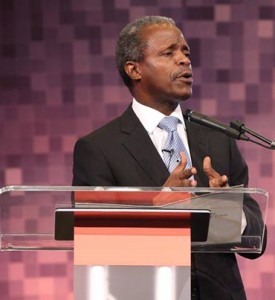
Nigeria’s Vice President, Professor Yemi Osinbajo has admitted that the past governments had never been short on good ideas, good intentions and good plans but that they lacked the ability to keep to the plans and implement them. “I must say that governments in Nigeria have never been short of good ideas , good intentions, or even good plans. but one of the key difficulties is just that ability to keep to the plan, plodding through day by day, doing the routine things that eventually fulfil a plan.” Vice President Osinbajo who spoke on Thursday in Kano, at the meeting of the National Council on Development Planning (NCDP), noted that the discipline to stay focussed over the long term is crucial to the success of any plan. “To do so as a team requires even harder work, but success in any aspect of State building requires just that -hardwork.” The Vice President said that strategic planning might sound academic or esoteric but that the truth is that no modern economy has made notable progress without strategic planning. He stressed that Nigeria is well placed in terms of human and natural endowment to be a thought leader and economic role model in Africa and indeed globally. “I am confident that if we remain positive, determined and focused our country can achieve such lofty goals and great heights that we have set for ourselves.” The full text of Professor Osinbajo’s key-note address is reproduced here:
otocol
I am delighted to be here with you today for this very important meeting of the National Council on Development Planning (NCDP) taking place in this historic and dynamic city of Kano. I must say how honored i am to be so warmly welcomed. I thank the Kano State Government under the leadership of Governor Abdullahi Ganduje for the warm hospitality extended to me and all participants here. Similar appreciation goes to the leadership of the Ministry of Budget and National Planning for the arrangements made to ensure the successful convening of this meeting.
This Council meeting is well timed and well thought out, as it enables effective partnership and cooperation amongst all tiers of government to envision our collective future while tackling the challenges facing the economy. Your deliberations will also complement the on-going process of articulating the medium term sector strategy 2017-2019 and the 2017 Budget.
The focus of the 2016 NCDP’s meeting is on “National Strategic Planning as Vehicle for Attainment of the Sustainable Development Goals (SDGs) in Nigeria” This focus is appropriate indeed.
It shows the intrinsic link between planning and expected outcomes, in this case the SDGs. The adoption of the SDGs in September 2015 was intended to place our world on the path of sustainable development by the year 2030.
The 17 SDGs which combine economic, social and environmental objectives are intended to be universal unlike the Millennium Development Goals which were meant solely for developing countries.
The universal application of the SDGs and their 169 targets show that they are a menu of options. This allows implementation to take account of different national realities, capacities, policies and priorities. In the Nigerian context, some of the issues that must engage our minds relate to economic diversification, boosting economic growth, eradication of extreme poverty, promoting social inclusion, creating jobs and stemming environmental degradation including climate change.
The empirical evidence from across the globe has shown that national strategic planning is very critical for attaining structural transformation and sustainable development. The countries of East Asia have proved this convincingly even though their development was largely private sector driven.
Such plans provide strategic direction, coherence and coordination. They are indeed a framework for guiding the activities of all stakeholders towards achieving a common goal. Planning specifics such as goals, targets and indicators which embody the SDGs also enable tracking, monitoring and evaluation.
Excellencies, Distinguished Ladies and Gentlemen-
Successful implementation of strategic plans and attainment of the SDGs entail partnerships as encapsulated in Goal 17-which is about the need to create (global) partnerships in order to attain sustainable development. Accordingly, just as the Federal Government seeks international partnerships at the global level with regard to rules and resources, we also seek partnerships at the national level. Such domestic partnerships entails working closely with the States which is one of the main reasons for the establishment of NCDP. Other essential partnerships are also being built with other sectors of society especially the private sector which is the indisputable engine of growth in successful economies.
Let me now speak about some of the things that the Buhari Administration is doing with regard to strengthening short and medium term planning. We have strengthened the link between budgeting and strategic planning by merging the National Planning Commission with the Budget Office of the Federation. We have adopted Zero-based Budgeting which compels the interrogation of public expenditure at micro levels and allows effective deployment of limited financial resources to areas and sectors with the greatest need. We have used a short-term strategic implementation plan to guide the 2016 budget and just yesterday the Federal Executive Council approved the Medium Term Expenditure Framework and the Fiscal Strategy Paper which are fully consistent with the SDGs and AU Agenda 2063.
The strategic priorities of the Federal Government in the area of tackling insecurity, combatting corruption and growing the economy will undoubtedly find expression in any medium term plan. The same is true for the policy interventions in the Strategic Implementation Plan notably with regard to the policy, security and governance; diversification of the economy; power, rail and roads; oil and gas reforms; ease of doing business and social investments.
The commitment of the Buhari Administration to promoting broader macroeconomic and structural reform is obvious in our push to mitigate supply-side constraints. With the deregulation of the downstream petroleum sector there has been a significant increase in the availability of petrol throughout the country with savings of N1.4 trillion on subsidy payments alone. Also a more flexible exchange rate regime will help to ease the pressure on the external reserves. In the short run of course there will be consequences for inflation, but we expect that with the greater clarity we are seeing in the implementation of the policy by the CBN, the foreign exchange market will stabilise, and confidence will be restored.
With regard to diversification, agriculture is a major priority of this government. The obvious gains are food security and a reduction in the financial burden and pressure on foreign exchange resulting from importing foods that we can produce. We are therefore looking to self sufficiency in a number of key types of produce including rice, wheat and tomato paste, while scaling up the export of traditional and non-traditional crops like cocoa, cassava, cashew and sesame seeds.
A strategic framework for coherent coordination of trade, industrial and investment activities is also being developed. A mixture of support instruments and incentives will be used to bring about growth in sectors that are critical for economic revitalization, especially in agriculture, agri-business, agro-processing, and SMEs promotion. It will also leverage the Nigeria Industrial Revolution Plan comprising Nigeria Automotive Development Plan, National Sugar Master Plan, and Local Patronage Initiative. I urge State Governments to key into and get maximum leverage from these initiatives.
Indeed, infrastructural development is being accorded priority in current interventions with total capital budgetary releases from January to July 2016 amounting to over 50% of total budget that has been released to the MDAs going to these needs. If security is added, this rises to over 70% with the Presidential Initiative for the North East being prioritized in order to give a new lease of life to our people in North East.
Some of the key Sustainable Development Goals relate to the social sector which is very much in tandem with the priorities in our social intervention programme. Just as conditional cash transfers address Goal 1 which aims to eliminate extreme poverty, we are also tackling Goal 2 which aims for zero hunger through our Home Grown School Feeding Programme which was launched in July 2016. The Teacher Corps programme to put 500,000 unemployed young graduates to work meets the objectives of Goal 4 on quality education and Goal 8 which is about employment.
In other words, our on-going interventions speak to the ultimate aim of the SDGs to get people out of poverty and address health and education issues of children and other vulnerable groups.
It is important to emphasise that neither planning nor implementation can gain much traction without strong governments and institutions . The capacity to implement is largely a function of the ability of state institutions to deliver social goods. Public health for example, eradicating Polio, AIDS, Laser fever, Ebola, depends so completely on , well funded, well resourced healthcare systems. A healthcare system organised to respond promptly, efficiently and robustly will save more lives and livelihoods than one that is less endowed. The capacity to enforce not just law and order, but social services like immunisation, public education programmes, is the very essence of Statehood.
Excellencies, Distinguished Ladies and Gentlemen,
Let me take this opportunity to highlight the African Union Development Agenda which is described as “Ágenda 2063”, to which Nigeria, has subscribed.
Agenda 2063 seeks to develop an Afro-Centric or home grown development framework that is predicated on harnessing the vast opportunities of the continent, as well as proffering solutions towards addressing the peculiar challenges African Nations are faced with in the current global sphere. It is a call to action to all segments of African Society to work together to build a common future and destiny as espoused in the AU vision. It represents a source of inspiration for the development of national and regional sustainable development plans.
The task before us therefore requires finding ways to promote partnership and collaboration in the articulation of a strategic national plan that that is aligned to the SDGs and the AU Agenda 2063. I enjoin you to participate actively in all related activities such as taking stock of the country’s performance particularly on the defunct MDGs, convening multi-stakeholders dialogues and validations at zonal levels, and the work of Technical Working Groups. Such active participation will ensure that the concerns, interests and aspirations of our people are reflected in annual budgets and national development plans. It will also quite naturally help to ensure effective implementation.
Other critical challenges we will face in mainstreaming and implementing the SDGs are in the areas of implementation capacity, needs assessment & costing, financing etc etc. Others include rationalisation of the 169 targets and identification of the ones that are most relevant to our specific needs, situation and challenges, and harnessing baseline and disaggregated data needed to monitor progress. Your contributions on how these issues can be addressed would be invaluable.
Excellencies,
Strategic planning may sound academic or esoteric but the truth is that no modern economy has made notable progress without strategic planning. I must say that governments in Nigeria have never been short of good ideas , good intentions, or even good plans. but one of the key difficulties is just that ability to keep to the plan, plodding through day by day, doing the routine things that eventually fulfil a plan. The discipline to stay focussed over the long term is crucial to the success of any plan. To do so as a team requires even harder work, but success in any aspect of State building requires just that -hardwork.
Nigeria is well placed in terms of human and natural endowment to be a thought leader and economic role model in Africa and indeed globally. I am confident that if we remain positive, determined and focused our country can achieve such lofty goals and great heights that we have set for ourselves.
Permit me to again thank the National Council on development planning for their kind invitation to me to be here, and may I wish you a very fruitful and productive meeting and look forward to receiving the outcomes of this meeting and another invitation next year.
President Muhammadu Buhari has sent birthday messages to Professor Tamunoemi Sokari David-West who was Nigeria’s former Petroleum minister and Pastor Sunday Coffie Mbang, former Prelate Emeritus of the Methodist Church of Nigeria, both of who have turned 80. This is even as the President leaves for Nairobi Kenya on Saturday to attend the Sixth Tokyo International Conference on African Development (TICAD VI). Statements from the Presidential spokesman, Femi Adesina described Professor David-West as eminent academic, as he recalled, with fond memories, his long term relationship with the Professor, when he served as Minister of Petroleum, 1984 from 1985. The President commended Professor David-West’s steadfastness and forthrightness on issues of good governance, democracy, human rights and the unity of Nigeria, especially when some seem to easily give up on the project of building one great nation. “President Buhari assures the octogenarian that his place in Nigeria’s history is guaranteed for the statesmanship, fearlessness, intellectual depth, resourcefulness and versatility that he brought into public discourse. President Buhari congratulated Pastor Mbang for attaining the ripe age of 80 in good health and a rich legacy of a life lived in the service of God, his nation and humanity. He said that as a former Prelate of the Methodist Church and President of the Christian Association of Nigeria, the legacy Mbang which include his working towards reconciliation, reconstruction and revival in all leadership positions, captures the central message of the Bible, which is love. President Buhari assured the former Prelate that his efforts in pursuing unity in the body of Christ and the country will always be remembered by posterity, especially in co-chairing Nigeria’s Inter-Religious Council (NIREC), a government body responsible for the promotion of inter-faith dialogue. The President also commended the courage of the His Eminence in always speaking out against tyranny, corruption and social ills like immorality, cultism and drug abuse in the country. He prays that the almighty God will grant Mbang good health and more years of service to his father land. Meanwhile, the Nairobi summit which would run through to August 28, was co-organised by the Government of Japan, the United Nations Office of the Special Adviser on Africa, the United Nations Development Programme, the African Union and the World Bank. It will focus on promoting structural economic transformation through diversification and industrialisation; promoting resilient health system for quality life and promoting social stability for shared prosperity. During the conference, President Buhari will participate in plenary sessions on TICAD in alignment with African Development, the Dialogue with the Private Sector as well as the Global Launch of the Second Africa Human Development Report. The President will also hold a bilateral meeting with the Japanese Prime Minister, Shinzo Abe. The statement from Adesina said that no fewer than 35 African leaders are expected at the two-day high level summit which will also be attended by leading private sector companies from Japan. This will be the first time TICAD is being held in Africa since its inception in 1993. Nigeria has played a prominent role at the forum aimed at forging international partnerships for Africa’s transformation and prosperity through economic growth, agriculture and social stability. [myad]
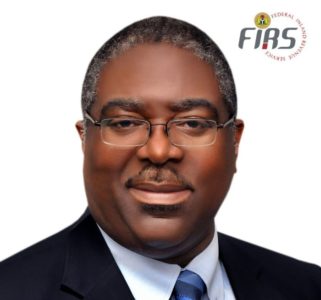
The Join Tax Board in Nigeria has revealed that out of about 170 million Nigerians, only 10 million are paying taxes to the government.
A member of the National Tax Policy review committee and the Lead Presenter, Taiwo Oyedele, said at the stakeholders’ meeting in Abuja that the situation has denied the country huge revenue for developmental projects.
He said that in addition to the small number of Nigerians that are paying taxes, people have not been complying with issue of 10 percent Value Added Tax.
This was even as the chairman of the committee, Professor Abiola Sanni, said that the essence of the review was to improve it for better implementation.
Technical assistant at the Nigerian Association of Small and Medium Enterprises, Chris John Mamuda, advised the committee to consider granting tax amnesty for SMEs in order to encourage the businesses to grow. [myad]
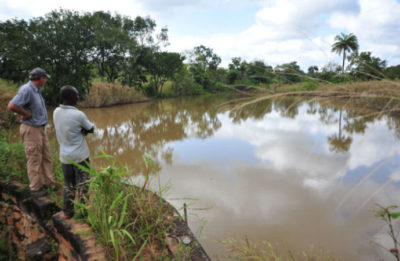
Information reaching us indicated that the four officials of the World Bank who died when the boat in which they were travelling capsized in Ekiti State did not wear life jackets.
The four people who were among the World Bank team on an assignment, drowned at Egbe Dam located in Egbe Ekiti in Gbonyin Local Government. They were said to have commenced work at the site on Tuesday before tragedy struck on Wednesday.
The World Bank team was said to have came from Development Dams and Irrigation Scheme in Kaduna State to carry out an assessment of the dam which had long been overdue for turnaround maintenance.
The boat which was sailing from one end of the dam to the other was meant to carry only four passengers but was overloaded with seven passengers. The bodies of the victims were recovered by local fishermen mobilized to the scheme by Gbonyin Local Government Council Chairman.
The local government council chairman, Mrs. Sade Akinrinmola described the incident as ‘unfortunate, saying that she had contacted the community’s monarch, the Owa Egbe, Oba Ayodele Ige Olokesusi, on the tragic incident.
She said that the bodies of the victims have been deposited at the General Hospital, Ode Ekiti, headquarters of the council area.
She said: “We immediately mobilised a rescue team and an ambulance and those wearing life jackets were rescued. The rescued people were the ones who told us that others were in the water. Their bodies were later retrieved by the local fishermen.
“We believe that they (the victims) were there based on some of the proposals we had written on the dam and how it could be put to use and we believe that the World Bank had started work on the river based on the calls.”
Police spokesman, Alberto Adeyemi confirmed the incident which he said was still under investigation.
Adeyemi said: “They must have come from the Federal Ministry because dams are owned by the Federal Government. It is true that their boat capsized, four of them died while three survived.”
Meanwhile the Ekiti State House of Assembly, on Thursday, observed a-minute silence in honour of the four members of the World Bank assessment team who drowned in Ekiti River. The House expressed sympathy for the Federal Government and the World Bank. A statement by the Special Assistant on media to the House Speaker, Stephen Gbadamosi, said that the House, at its plenary on Thursday, observed a one-minute silence in honour of the members of the World Bank assessment team on assignment at Egbe Dam in Egbe Ekiti, Gbonyin Local Government Area of the state. The Speaker of the House, Rt. Hon. Kola Oluwawole, responding to the observation made by the House Committee Chairman on Information, Chief Olugboyega Aribisogan, calling the House’s attention to the tragedy, described the development as saddening and unfortunate. Oluwawole said: “It is a sad development. We have to express our condolences to the Federal Government and the World Bank. “It is unfortunate that they died in active service and on our soil. I implore the House to let us stand and observe a minute silence in honour of the departed officials.” [myad]
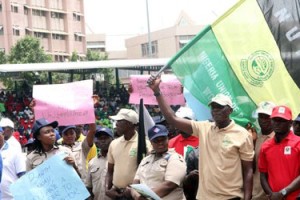
Workers of the Bendel Feed and Floor Mill (BFFM), Ewu, in Edo State have taken the management of the company and the Assets Management Company of Nigeria (AMCON), to the National Industrial Court, Akure, Ondo State, demanding that the company should be made to pay their outstanding entitlements, including salaries and gratuities.
The workers in the suit by James Otokunrin, Victor Ebohon for themselves and former workers of BFFM against the Receiver; M.I. Igbokwe, AMCON and the new owners, Prime Feed and Flour Mill Ltd, want the court to grant a “mareva injunction” directing the Receiver “to disclose the bank account in which he paid the money paid by Prime Feed for the acquisition of BFFM.”
The workers also want the court to restrain the Receiver from disbursing the said money in any form pending the determination of the substantive suit. They said that the money paid by Prime Feed was meant to pay the outstanding claims of the former staff and others that the BFFM were indebted to.
According to the suit, the workers are pleading with the court to declare that they as former staff of the company, are entitled “to their terminal benefits namely; accumulated salaries for three years of service, leave and transport grants, medical allowances and gratuity for the period they served Bendel Feed and Flour Mill Limited, Ewu, computed in accordance with the conditions and service of staff of Bendel Feed and Flour Mill Ltd, prior to the receivership organised by the 2nd defendant.”
The workers also want the court to stop the 1st and 2nd defendants from disbursing money paid by the 3rd defendant for the takeover of the company until all their entitlements were paid.
It will be recalled that AMCON took over Bendel Feed and Floor Mill and appointed a receiver, who sold the company to meet its financial obligations without paying the workers their emoluments. [myad]
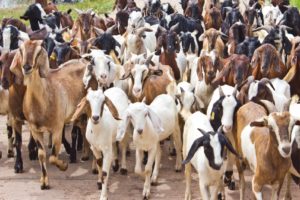
A 32-year-old man, Wale Adeyemi, is alleged to have stolen 25 goats and nine sheep at Atikankan area of Ado-Ekiti on July 24 this year.
The man who was charged in an Ado-Ekiti Chief Magistrate, was arrested by the police and detained in police custody to give room for investigation.
The Police prosecutor, Inspector Caleb Leranmo, told the Court that the accused, on July 24, unlawfully stole 25 -she goats and nine sheep, which valued as several thousands of naira.
He said that the offence contravened Section 390 of the Criminal Code, Cap C 16, Laws of Ekiti State 2012.
However, the accused pleaded not guilty to the offence while his counsel, Chris Omokhafe, prayed the court to grant bail to his clients in liberal terms, promising that he would not jump bail.
Chief Magistrate Aderopo Adegboye consequently granted bail to the accused in the sum of N50,000 and two sureties in like sum. [myad]
We use cookies on our website to give you the most relevant experience by remembering your preferences and repeat visits. By clicking “Accept”, you consent to the use of ALL the cookies.
This website uses cookies to improve your experience while you navigate through the website. Out of these, the cookies that are categorized as necessary are stored on your browser as they are essential for the working of basic functionalities of the website. We also use third-party cookies that help us analyze and understand how you use this website. These cookies will be stored in your browser only with your consent. You also have the option to opt-out of these cookies. But opting out of some of these cookies may affect your browsing experience.
Necessary cookies are absolutely essential for the website to function properly. This category only includes cookies that ensures basic functionalities and security features of the website. These cookies do not store any personal information.
Any cookies that may not be particularly necessary for the website to function and is used specifically to collect user personal data via analytics, ads, other embedded contents are termed as non-necessary cookies. It is mandatory to procure user consent prior to running these cookies on your website.




 The Sokoto state commissioner of Health, Dr. Balarabe Shehu Kakale has warned that malnutrition on the millions of children in Nigeria is threatening to extinct healthy citizens that are expected to be the leaders of tomorrow.
 Determined to maintain the zero level of poliomyelitis in the Federal Capital Territory (FCT) as it returned to Borno state recently, the government of the capital city has decided to re-activate the Task Force that will work towards preventing the disease from entering Abuja, and to ensure routine immunization.