The Chief of Army Staff, Lieutenant General Tukur Buratai, has assured Nigerians that the army will soon rescue the Chibok school girls that were abducted in Borno state by members of Boko Haram.
Speaking to news men at the commissioning of a nursery and primary school built by the Nigerian Army Officers Wives Association (NAOWA), One Division chapter in Kaduna State, General Buratai said that the ongoing counter-insurgency operations in the volatile region would ensure the release of the abducted Chibok girls and others kidnapped by the Boko Haram insurgents.
The army chief who said that over 20,000 people kidnapped by the Boko Haram terrorists have so far been rescued since he assumed office, stressed that the military is determined to completely flush out the terrorists from Nigeria.
General Buratai appealed to the public to always avail the military or any nearby security agency of any useful information that would lead to the continued success in the counter-insurgency war. [myad]
A Nigerian Athlete, Mariam Usman has said that Nigeria never prepared for the just concluded Olympic in Rio, Brazil as other serious nations did.
Mariam, who competed in the +75 category, amassed 265 kg and finished 8th in her group, said: “it is painful to come to the Olympics and see people who are your contemporaries perform better than you; not because you lack the ability but because you were not prepared like them. “For me, it is not just about jumping into the plane every four years to go to the Olympics. Every athlete you see here wants to step on the podium. If you can’t aim to climb up there, you have no business coming to the Olympics. I can only consider going to another Olympics if things change for the better. But if the status quo is maintained, I don’t think I will go to another Olympics again. She felt bad about what she called lack of preparation for the Olympics while other Olympians from other countries were preparing for between and four years. “Olympic gold medal doesn’t come cheap. It is painful that one has to suffer and when competition comes they expect you to win a medal with your blood. “The people you have to compete with had everything they needed: training grants, competitions and are exposed to the most modern equipment. I had nothing. You don’t expect such people who have invested so much to lose to one who don’t even train adequately.” [myad]
The Delta State University, Abraka, has sacked six of its lecturers for their involvement in several offences, including alleged sexual harassment of female students.
The University Governing Council at 97th regular meeting affirmed their sack after a disciplinary committee set up to investigate the allegations against them recommended their dismissal having found them culpable.
Investigations revealed that the sacked lecturers were also involved in financial extortion for marks, leaking of examination questions and other corrupt offences.
While six were dismissed, four others were demoted and received various degrees of query for their gross misconducts.
The Public Relations Officer of DELSU, Eddy Agbure, confirmed the development. [myad]
“Any nation that does not punish election offenders is doomed.”
This was the position of the chairman of the Independent National Electoral Commission (INEC), Professor Mahmood Yakubu when he visited some offices of the national newspapers, including The Tribune, The Punch, The Nation and The Guardian.
Professor Yakubu insisted on the establishment of the Electoral Offences Commission and Tribunal as prescribed by the Justice Mohammed Uwais and Ahmed Lemu Commissions.
He said that inconclusive elections are as a result of violence and that the only way to put to rest this specter of violence is to put in place a mechanism that would seek to punish offenders.
“There are people who believe that they can do anything and get away with it,” he said, even as he said inconclusive elections have also been compounded by the recent evolution of two strong parties “as opposed to the past where we had one mega party and smaller ones.”
The INEC Boss said that the import of this evolution of two formidable parties is that the contestation for political office is keener and the margins between the winners and runner ups is so narrow that any incidents of violence could mar the elections and render them inconclusive. Professor Yakubu cited the instance of the last presidential election where the margin between the winner and the runner up was 2.5 million and a Councillorship election in Gwagwalada, in the Federal Capital Territory (FCT), where the winner out bested his runner up with a mere eleven votes.
“The days of landslide election victory are gone, and gone for good.”
Professor Yakubu who traced the history of inconclusive elections to the 1979 presidential election observed, however, that inconclusive elections are not strange to our laws.
The INEC Chairman said that logistics which used to be one of the perennial Achilles heels of the Commission and that such has been addressed squarely by the creation of SUPER RACs.
He said that the consequence of this is that the Commission recorded 92 percent opening of Polling Units on Election Day in the Kogi governorship election and 100 percent in the recent Ife and Minjibir Constituency bye elections in Oyo and Kano States respectively.
He expressed optimism that following representations made by the Commission to the Presidency, the outstanding six National Commissioners and twenty-one Resident Electoral Commissioners (RECs) would soon be appointed to replace those whose tenures have lapsed. He stressed that the prerogative of nominating or appointing the Commissioners was that of the President.
Professor Yakubu disclosed that so far, not less than one hundred staff of the Commission have been invited by the EFCC and that based on revelations, the number kept increasing.
“So far, over a hundred staff of INEC had been invited. At a point, we toyed with the idea of speaking to the EFCC to see the weight of evidence they have so that we can take administrative action against our staff, but they are innocent until they are proven guilty. They have to be charged to court, but we have taken notice and we have a complete list.”
He said that the Commission is co-operating with the EFCC and that ultimately staff who are culpable would “be shown the way out.” [myad]
Tokyo has formally received the flag for the hosting of next Olympic in 2020, as the Rio 2016 Olympic officially came to an end on Sunday.
The News Agency of Nigeria (NAN) reports that Tokyo showcased its vibrant carnival parade during the carnival that signaled the end of the Rio Olympic, which the President of the International Olympic Committee, Thomas Bach described as “a marvelous Olympics, in a marvelous city.
“Over the last 16 days a united Brazil inspired the world, in difficult times for all of us, with its irresistible joy for life.”
Bach officially closed the Games of the 31st Olympiad after 16 days of competition, featuring 11,303 athletes from 206 nations and a refugee team.
The US topped the medals table with a total haul of 121 medals, comprising 46 gold medals, 37 silver and 38 bronze. Great Britain, which finished the Games with 67 medals, were second as they recorded their highest tally at an overseas Olympics, made up of 27 gold, 23 silver and 17 bronze.
China was in third place with 26 gold, 18 silver and 26 bronze for a total of 70 medals.
Russia, in spite of all the controversy about their doping scandal, which led their contingent being reduced, were fourth with 19 gold, 18 silver and 19 bronze to total 56 medals.
In fifth place was Germany with a total of 42 medals, comprising 17 gold, 10 silver and 15 bronze.
Japan were sixth with 41 medals, comprising 12 gold, 8 silver and 21 bronze, while France were seventh with 10 gold, 18 silver and 14 bronze for 42 medals.
South Korea was in eighth place with 21 medals made up of 9 gold, 3 silver and 9 bronze.
Italy were ninth with 8 gold, 12 silver and 8 bronze to total 28 medals, while Australia were 10th with 29 medals comprising 8 gold, 11 silver and 10 bronze.
Hosts Brazil were placed 13th with 19 medals made up of 7 gold, 6 silver and 6 bronze, while Nigeria were joint 78th with one bronze medal.
Kenya had the best African performance, hauling 13 medals to finish 15th with 6 gold, 6 silver and 1 bronze.
The closing ceremony featured the symbolic handover of the Olympic flag. Rio mayor Eduardo Paes returned it to IOC president Bach, before it was passed to Tokyo governor Yuriko Koike.
That was followed by an impressive 12-minute showcase of Tokyo, which included Prime Minister Abe’s star turn. [myad]
President Muhammadu Buhari has expressed appreciation to the Islamic Development Bank (IDB) for the development of the country.
The President particularly acknowledged that the bank has funded several people-oriented projects in Osun, Kaduna, Jigawa, Niger, Katsina, Kano and Ebonyi states, which showed its “soft spot and robust support” for Nigeria.
The President, who received in audience on Monday, the President of the IDB Group, Dr. Ali Madani, at the Presidential Villa, Abuja, also appreciated the bank’s support for several developmental projects across Nigeria.
Buhari said that his government will deepen its partnership with the IDB to fund critical projects in health, water and the infrastructure sector.
‘‘We can’t thank you enough for the height you have achieved for the bank in 41 years. Now that you are about to retire, we thank you for the quality leadership which the world has recognized,’’ the President said.
President Buhari also expressed appreciation to the IDB Group and other countries for extending their assistance to Internally Displaced Persons in the North-East even as he assured the IDB chief that Nigeria, a major financier of the bank, will meet all its obligations to the development institution within the shortest time possible.
He highlighted efforts of the current administration at diversifying the economy with emphasis on agriculture and expressed strong optimism that Nigeria will achieve self-sufficiency in rice and sugar; and export both commodities in the next three years.
In his remarks, Dr. Madani congratulated President Buhari on the positive outcomes of the war against corruption and terrorism, adding that the bank is ready to mobilize resources from Arab fund for developmental initiatives of the Nigerian government and the private sector, particularly on agriculture. [myad]
I have asked myself how best to contribute to an issue that is currently pressing Nigerians without falling into the trap of Nigerians who only see the problem without offering solution or at least, a clearer understanding that would lead to the formulation of solutions. I therefore decided to write to offer my perspectives. Since Boko Haram released the video of some of the Chibok Girls they captured over two years ago, we have been doing what we do best as Nigerians by engaging in exactly the reactionary knee jerking that the terror group and the brains behind it expected. It is no different from where we have been in other spheres of life; we wait until our national team is left without means of transportation before venting our righteous anger; we allowed the past administration run the economy aground with looting and profligacy while chanting its praises only to start denouncing a mutually invited change when the evils of that previous government began yielding fruits; and never accepted other realities as well. Reactions to the video have thus been extreme. Some think the terrorists should be blasted to hell and its offer to exchange the girls for its captured fighters rejected. Others are strident in pressuring the government to negotiate with Boko Haram, exchange the girls for the killers in custody without offering where to go from there. On the heels of these arguments, the Bring Back Our Girls Group (BBOG) is planning a protest to pressure government into trading the girls as demanded by Boko Haram. When it happens their protest is going to offer a needed distraction to the western media that are by now tiring of their newfound poster boy in Syria. The Nigerian government and military would be demonized and the protestors would offer the validation that is needed to make the image of a failing state stick. Because the forces of destabilization do not work in isolation, there have been concerted efforts to push for Boko Haram’s demand by persons that look as if they are genuinely interested in the wellbeing of the girls, Nigerians and Nigeria. What they are however asking for could eventually sink not just Nigeria but the entire West Africa and the Maghreb with some spill over to Central and East Africa. The ongoing orchestra that is whining for terrorists considers everything with the exception of one. Recidivism. These groups and individuals that have been canvassing a swop of Boko Haram prisoners for the abducted Chibok Girls do so without regards for the penchant for recidivism among terrorists like any other type of criminals. Recidivism is the chances of a previously arrested, detained or convicted terrorist returning to extremism or violence. Military records would probably show that some of these people we are being asked to free are in incarceration because it was not their first time of being tied to terror. Mr. President, recidivism is difficult to measure, particularly so in a country like Nigeria where we are still working to bring our statistics and research capabilities up to date. But cases like the US Guantanamo Bay facility and Indonesia record anywhere between 10 and 30 percent instances of re-offense among released terrorists. That means if Nigeria frees 1000 Boko Haram detainees there is a fair chance that we are putting anything in the range of 300 terrorists back on the streets. It took fewer than that number to abduct the girls in the first place. In the case of what has been witnessed in Nigeria so far, not many of those that would be release would return to being farmers, artisans or becoming informants to the security agencies. Instead, the reality is there is the risk of them returning to the war front to re-stock Boko Haram’s fighting ranks. Those who are receptive to the idea of a swop argue that anyone of prisoners that returns to terrorism risks being killed in future military operations but that would be taking unnecessary chances. When these guys are released without fully serving their sentences they would definitely become a sources of inspiration both to encourage more youths to sign up with Boko Haram and to assure them that there are no consequences. The level of our infrastructure equally means the released terrorist cannot be adequately tracked so they could flee to Syria, Somali, Yemen or other terror strongholds, make new connections there, build new cells and revive a Boko Haram that is almost completely wiped out. To pre-empt the argument that we should release them now and worry later all we have to do is to look south. Hundreds of men who should spent the remainder of their national lives in jail were summarily granted amnesty under the Late President Umaru Yar’Adua’s government and their kinsman ensured the deal was sweetened by making us put billions of naira in the pockets. In a classic case of recidivism many of these persons and fresh ones they inspired are today blowing up critical infrastructure. So, they go amnesty, got money and they still returned to the same issues that necessitated those concessions in the first place. Your Excellency, what a vocal minority has thus been canvasing amounts to day dreaming. No terrorist will ever surrender and he is ever ready to be kitted with a suicide vest anytime. It’s melancholic to think a terrorist will ever give up his cause. It is criminal for anyone to mute the idea of swapping terrorists with any person. It is madness to even consider making deals with terrorists or anyone that has contact with them. It is going to be a futile venture. Osama Bin Laden never surrendered. He got his wish, he died the way he wanted. Many more wannabe Bin Ladens have emerged since then. They would not stop until they get their death wishes. We may cringe at the prospect of this but even those that lecture us on human rights know better than negotiating with terrorists or granting their demands. Any negotiations will only prolong the conflict since a truce would be needed to make that happen. We give three months of truce and Boko Haram will resurface much stronger. They would have gotten more time and loophole to plant their suicide squad into more of our cities and two years down the line those that would have fled to other countries would return with more venom in their blood and they will rain hell on us. We must therefore take stock and ask who are these people talking about doing deals with the devil. Are they in any way connected through a hidden group to the likes of Ahmad Salkida, Aisha Wakil and Ahmed Bolori, whom the military have named as persons of interest in securing the release of the girls? These people should of course by now become recipients of our collective appeal to use their relationship with the terrorists to secure freedom for the girls without the terms and conditions that Boko Haram is laying down. It is a poisoned chalice that no government in a sane country would drink. Your Excellency, Mr President, Nigerians are aware of the enormous success that your administration has recorded. We know how the military has decimated Boko Haram and therefore feel You should not dance to the tune of any one in resolving this issue. Mr President, do accept the assurances of my best regards as you review my position on this matter.
Philip Agbese is United Kingdom based patriotic Nigerian. [myad]
The Movement for the Emancipation of the Niger Delta (MEND), has condemned Ijaw National leader, Chief Edwin Clark and other leaders for being silent over a series of attacks on oil installations by the Niger Delta Avengers (NDA).
MEND specifically questioned Chief Clark over his position on the restructuring and ongoing militancy, saying that the elder statesman lacks the moral authority to be championing for restructuring of the country.
In a statement by its spokesman, Jomo Gbomo, MEND said that Chief Clark and other leaders of the region kept quiet during the six-year administration of former President Goodluck Jonathan even as it called on the federal government to ignore the resolution reached at Friday’s Niger Delta stakeholders consultative meeting held at the PTI Conference Centre Effurun, Delta State.
The statement accused the leaders of the region for failing to categorically condemn the criminal and treasonable activities of the Niger Delta Avengers (NDA) which has claimed responsibility for series of attacks on oil facilities in the region.
MEND reiterated its support for the use of military against the militants in the region, even as it said that those who attended the meeting lacked the capacity to persuade the people of the Niger Delta to support the current efforts of the President Muhammadu Buhari’s administration to bring peace and development to the region. [myad]
Solid Minerals Development Minister Kayode Fayemi has said that Nigeria is looking for investments of $7 billion in mining and steel over the next decade as it seeks to develop gold and iron ore extraction industries to diversify its oil-dependent economy.
He said that one of the government’s priorities is to meet its annual steel demand of 6.8 million metric tons, from a current output of a third of that, produced mainly from scrap iron.
“About $5 billion will kick-start the mining sector,” Fayemi stated. “In two to five years, we want to have started production of iron ore, lead, zinc, bitumen, nickel, coal and gold at a serious scale.”
Companies considering investments in Nigeria’s mining sector include Lagos-based Multiverse Mining & Exploration Plc and Kogi Iron Ltd., based in West Perth, Australia, he said.
Boosting mining output, along with developing agriculture and infrastructure, is part of plans to broaden the economy.
Crude oil export accounts for around 70 percent of Nigeria’s revenue and for 13 percent of gross domestic product, according to Finance Minister Kemi Adeosun.
Slumping global oil prices, from over $100 a barrel of Brent crude in 2014 to under $50 a barrel currently, and reduced output due to militants attacks on pipelines in Niger Delta, have squeezed state finances and caused a chronic dollar shortage. [myad]
At least 50 people were killed on Saturday evening when a suspected suicide bomber detonated his explosives among people dancing on the street at a wedding party in the southern Turkish city of Gaziantep.
The local governor’s office said in a statement 50 people were killed in the bombing, and more wounded were still being treated in hospitals around the province.
“The celebrations were coming to an end and there was a big explosion among people dancing,” said 25-year-old Veli Can. There was blood and body parts everywhere.”
Blood stains and burns marked the walls of the narrow lane where the wedding party was attacked while women in white and checkered scarves cried sitting crosslegged and waiting outside the morgue for word on missing relatives.
At least 12 people were buried on Sunday, but other funerals would have to wait because many of the victims were blown to pieces and DNA forensics tests would be needed to identify them, security sources said.
President Tayyip Erdogan said that it was likely that Islamic State militants had carried out the late-night attack, the deadliest bombing this year in Turkey.
The pro-Kurdish Peoples’ Democratic Party, or HDP, said in a statement that the wedding was for one of its members, and women and children had been among those killed.
Mahmut Togrul, an HDP lawmaker from Gaziantep, around 40 km north of the border with Syria, told Reuters it was a Kurdish wedding.
Islamic State has been blamed for suicide bombings on Kurdish gatherings in the past as militants try to stir ethnic tensions.
“It was carried out like an atrocity,” witness Ibrahim Ozdemir said. “We want to end these massacres. We are in pain, especially the women and children.”
Turkey is still tense after an attempted coup on July 15 which Ankara blames on U.S.-based preacher Fethullah Gulen. He has denied the charge.
We use cookies on our website to give you the most relevant experience by remembering your preferences and repeat visits. By clicking “Accept”, you consent to the use of ALL the cookies.
This website uses cookies to improve your experience while you navigate through the website. Out of these, the cookies that are categorized as necessary are stored on your browser as they are essential for the working of basic functionalities of the website. We also use third-party cookies that help us analyze and understand how you use this website. These cookies will be stored in your browser only with your consent. You also have the option to opt-out of these cookies. But opting out of some of these cookies may affect your browsing experience.
Necessary cookies are absolutely essential for the website to function properly. This category only includes cookies that ensures basic functionalities and security features of the website. These cookies do not store any personal information.
Any cookies that may not be particularly necessary for the website to function and is used specifically to collect user personal data via analytics, ads, other embedded contents are termed as non-necessary cookies. It is mandatory to procure user consent prior to running these cookies on your website.




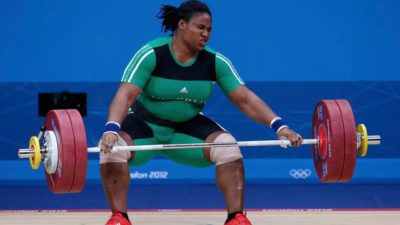 A Nigerian Athlete, Mariam Usman has said that Nigeria never prepared for the just concluded Olympic in Rio, Brazil as other serious nations did.




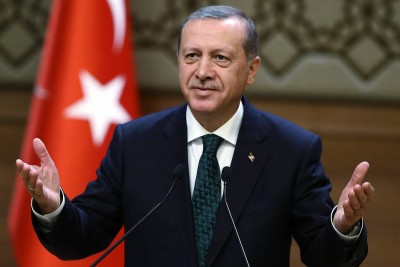


Boko Haram’s Offer Of Poisoned Chalice, By Philip Agbese
I have asked myself how best to contribute to an issue that is currently pressing Nigerians without falling into the trap of Nigerians who only see the problem without offering solution or at least, a clearer understanding that would lead to the formulation of solutions. I therefore decided to write to offer my perspectives.
Since Boko Haram released the video of some of the Chibok Girls they captured over two years ago, we have been doing what we do best as Nigerians by engaging in exactly the reactionary knee jerking that the terror group and the brains behind it expected. It is no different from where we have been in other spheres of life; we wait until our national team is left without means of transportation before venting our righteous anger; we allowed the past administration run the economy aground with looting and profligacy while chanting its praises only to start denouncing a mutually invited change when the evils of that previous government began yielding fruits; and never accepted other realities as well.
Reactions to the video have thus been extreme. Some think the terrorists should be blasted to hell and its offer to exchange the girls for its captured fighters rejected. Others are strident in pressuring the government to negotiate with Boko Haram, exchange the girls for the killers in custody without offering where to go from there.
On the heels of these arguments, the Bring Back Our Girls Group (BBOG) is planning a protest to pressure government into trading the girls as demanded by Boko Haram. When it happens their protest is going to offer a needed distraction to the western media that are by now tiring of their newfound poster boy in Syria. The Nigerian government and military would be demonized and the protestors would offer the validation that is needed to make the image of a failing state stick.
Because the forces of destabilization do not work in isolation, there have been concerted efforts to push for Boko Haram’s demand by persons that look as if they are genuinely interested in the wellbeing of the girls, Nigerians and Nigeria. What they are however asking for could eventually sink not just Nigeria but the entire West Africa and the Maghreb with some spill over to Central and East Africa. The ongoing orchestra that is whining for terrorists considers everything with the exception of one. Recidivism.
These groups and individuals that have been canvassing a swop of Boko Haram prisoners for the abducted Chibok Girls do so without regards for the penchant for recidivism among terrorists like any other type of criminals. Recidivism is the chances of a previously arrested, detained or convicted terrorist returning to extremism or violence. Military records would probably show that some of these people we are being asked to free are in incarceration because it was not their first time of being tied to terror.
Mr. President, recidivism is difficult to measure, particularly so in a country like Nigeria where we are still working to bring our statistics and research capabilities up to date. But cases like the US Guantanamo Bay facility and Indonesia record anywhere between 10 and 30 percent instances of re-offense among released terrorists. That means if Nigeria frees 1000 Boko Haram detainees there is a fair chance that we are putting anything in the range of 300 terrorists back on the streets. It took fewer than that number to abduct the girls in the first place.
In the case of what has been witnessed in Nigeria so far, not many of those that would be release would return to being farmers, artisans or becoming informants to the security agencies. Instead, the reality is there is the risk of them returning to the war front to re-stock Boko Haram’s fighting ranks. Those who are receptive to the idea of a swop argue that anyone of prisoners that returns to terrorism risks being killed in future military operations but that would be taking unnecessary chances. When these guys are released without fully serving their sentences they would definitely become a sources of inspiration both to encourage more youths to sign up with Boko Haram and to assure them that there are no consequences.
The level of our infrastructure equally means the released terrorist cannot be adequately tracked so they could flee to Syria, Somali, Yemen or other terror strongholds, make new connections there, build new cells and revive a Boko Haram that is almost completely wiped out.
To pre-empt the argument that we should release them now and worry later all we have to do is to look south. Hundreds of men who should spent the remainder of their national lives in jail were summarily granted amnesty under the Late President Umaru Yar’Adua’s government and their kinsman ensured the deal was sweetened by making us put billions of naira in the pockets. In a classic case of recidivism many of these persons and fresh ones they inspired are today blowing up critical infrastructure. So, they go amnesty, got money and they still returned to the same issues that necessitated those concessions in the first place.
Your Excellency, what a vocal minority has thus been canvasing amounts to day dreaming. No terrorist will ever surrender and he is ever ready to be kitted with a suicide vest anytime. It’s melancholic to think a terrorist will ever give up his cause. It is criminal for anyone to mute the idea of swapping terrorists with any person. It is madness to even consider making deals with terrorists or anyone that has contact with them. It is going to be a futile venture.
Osama Bin Laden never surrendered. He got his wish, he died the way he wanted. Many more wannabe Bin Ladens have emerged since then. They would not stop until they get their death wishes. We may cringe at the prospect of this but even those that lecture us on human rights know better than negotiating with terrorists or granting their demands.
Any negotiations will only prolong the conflict since a truce would be needed to make that happen. We give three months of truce and Boko Haram will resurface much stronger. They would have gotten more time and loophole to plant their suicide squad into more of our cities and two years down the line those that would have fled to other countries would return with more venom in their blood and they will rain hell on us.
We must therefore take stock and ask who are these people talking about doing deals with the devil. Are they in any way connected through a hidden group to the likes of Ahmad Salkida, Aisha Wakil and Ahmed Bolori, whom the military have named as persons of interest in securing the release of the girls? These people should of course by now become recipients of our collective appeal to use their relationship with the terrorists to secure freedom for the girls without the terms and conditions that Boko Haram is laying down. It is a poisoned chalice that no government in a sane country would drink.
Your Excellency, Mr President, Nigerians are aware of the enormous success that your administration has recorded. We know how the military has decimated Boko Haram and therefore feel You should not dance to the tune of any one in resolving this issue.
Mr President, do accept the assurances of my best regards as you review my position on this matter.
Philip Agbese is United Kingdom based patriotic Nigerian. [myad]