

What Is In John Kerry’s Visit To Nigeria For The US? By Reuben Abati

Essential elements of intelligence and the intelligence cycle in overseas relations include what is better described as “the cover story”. It is an old conundrum referring to the story that is put out to the public and sustained as a narrative to mask far more strategic interests in government-to- government relations.
It is based on that established thin line between the right to know and the need to know and indeed in diplomatic relations, if ordinary people are allowed to know everything, there will be utter chaos on the streets around the world. I make this point in the light of the excitement that US Secretary of State John Kerry’s visit appears to be generating. He will visit Nigeria, August 23-24, after Kenya, 22-23, and from here, he will jet off to Saudi Arabia, 24-25.
The cover story is that he will hold talks with President Muhammadu Buhari, Northern Governors and religious leaders, give a speech on “countering violent extremism” in Sokoto, and thematically focus on “counter-terrorism efforts, the economy, the fight against corruption and human rights issues” during the trip. Nicely, correctly crafted cover story! America loves Nigeria. America wants to help Nigeria. And once we are told this story, even our foreign ministry officials get really excited. They tell the President: “this is big! It shows America is supporting the administration. Mr. President, America loves you, don’t mind those tweeps on social media.” They would have forgotten most conveniently that Secretary John Kerry has been visiting Africa since 2014, and before him, Secretary of State Hillary Clinton did so too. We tend to be overly impressed by the recognition, but we often fail to look beyond the cover story.
The Americans don’t consider a visit such as this the circus that we think it is. And that is why the Foreign Affairs Ministry must put up its thinking caps in preparing the briefing notes for President Buhari. They must anticipate one critical question that the cover story does not cover: what does America want? What is in this visit for the United States? And what does Nigeria want? And what should the Nigerian President say to Mr. Kerry at that critical moment when he suddenly requests for a one-on-one and all Presidential assistants are asked to leave the room? That is usually where the rub is, that critical moment when the Nigerian President is left alone with a strategic guest and he may not know exactly what to say to messages and statements for which he had not been prepared. And when the American envoy makes requests, what should he say at that very moment? We have a lot at stake, and it is important that this particular visit is not treated as another opportunity to have a nice dinner party and showcase Nigerian culture and arts.
John Kerry attended President Buhari’s inauguration in May 2015. This is what he wrote, inter alia, after the visit: “Last May, I shared in an extraordinary moment. I had the privilege, together with many leaders from across Africa, of bearing witness to the first peaceful, democratic transition of power between two parties in Nigeria. I traveled to Lagos earlier this year to emphasize that for the United States, Nigeria is an increasingly important strategic partner with a critical role to play in the security and prosperity of the region. I also said that it was imperative that these elections set a new standard for democracy in the continent. There is no doubt that this is a decisive moment for democracy in Africa…In Africa, as elsewhere, there is a deep hunger for governments that are legitimate, honest and effective….”
Secretary of State Kerry will be visiting Nigeria tomorrow I believe, to carry out a year-after, on-the-spot, hear-see-for-yourself assessment. He must have heard that a year after his last visit, so much has happened in Nigeria, and the rest of Africa. Africa itself is at a tipping point, growth has slowed down tragically, commodity prices have declined, old problems and wounds have resurfaced, and democratic renewal has not resulted in “honest and effective” governance, and in all this, Nigeria faces special challenges; it is at the outmost edge of that tipping point. The threat level in the country has gone up, policy uncertainty is high, the people’s voices are not being heard and generally, things are hard: unemployment, security issues, human rights, and an economy in recession capable of exacerbating social crisis and so on.
America will expect President Buhari to defend his administration. The briefing notes must take care of that, but let no one be fooled: no one may have talked about behind-the-scene meetings, the truth is that the American team will not listen to only one side of the story. There will be undeclared meetings with civil society, the opposition, the business community and other interest groups, who in typical Nigerian fashion will speak their minds. Right now, that may not be complimentary. Non-state actors are perhaps more important sources of intelligence because intelligence is neither mere information nor publicity or a strictly state-based activity. Take this: John Kerry may be visiting to enable the American government make up its mind about the Buhari government.
But why should anyone care about what America thinks? We are after all, a sovereign nation, and Secretary of State John Kerry should not even be talking to President Buhari, he should meet with his counterpart in our own foreign ministry. Hold it. The difference is that America remains the world’s superior power and it does not joke with its self-assigned role of the world’s police, even if at the centre of that mix, is the paramount element of America’s national interest. Nigeria, being the most populous country in Africa, and an oil-rich country with international investments, is of strategic interest to the United States.
We are, by that fact also, a threat to America’s interest in a number of ways. The first is the threat of Nigeria becoming a festering spot for terrorism, and home of the world’s deadliest terror group. Since May 2015, the Buhari administration has made efforts to curb terrorism in the problematic parts of the North, but in the past few weeks, with the re-appearance of Abubakar Shekau, the factionalisation of the Jama’t Ahl as-Sunnah lid Da’wah wa’l Jihad with a faction led by Abu Musab al-Barnawi, and the further confirmation of a linkage with the ISIL, it seems obvious that the threat of terrorism in Nigeria is far from being resolved. The potential of that threat getting worse is even far more evident now more than ever.
The second threat is the Niger Delta, and the resurgence of violence in that volatile part of the world. America may have discovered Shale oil and its reliance on Nigerian Brent crude may have reduced, but American multinationals still have significant investments in Nigeria. America has every reason to protect American investment and citizens. The third threat is Nigeria’s continuing romance with China. The Jonathan administration did not hide its interest in China and Sino-Nigerian relations. I believe his administration paid dearly for this open, and well-intended friendship with America’s rival in Africa. The Buhari administration continued in this regard, where the Jonathan administration left off, since in any case, Nigeria is non-aligned, but the sub-text is that the United States may not be too comfortable with the Chinese encroachment on spaces it once occupied and the open complicity of traditional allies in undermining American interest. President Buhari should be briefed to listen very carefully to both what is spoken and that which is unspoken.
The fourth threat is the security situation in the country. In the last month alone, both the United States and the United Kingdom have released, perhaps the most damaging travel warnings to their nationals living in or doing business in Nigeria. The UK Foreign and Commonwealth Office advises against travel by British nationals to 11 states of the Federation, and strictly essential travel to another seven states. The United States warns against travel to about 20 states. Both countries cite “high threat from terrorism, kidnapping, violent crime and demonstrations/civil unrest.” What is left? It is as bad as both major partner-countries alleging that Nigeria is not safe for anyone. Their European allies and other countries may not have issued any travel warnings, but the disclaimers from the US and the UK can be taken as a reflection of the assessment of the Nigerian situation and international reaction to Nigeria’s change agenda since 2015. Whoever is preparing the briefing notes for President Buhari should take this into consideration.
And may I advise that the briefing should avoid the initial reaction by Information Minister Lai Muhammed. He dismissed the travel warnings as untrue and advised the Nigerian media to ignore and not promote the story. It actually seems as if the local media acted as directed. Which is stupid. What has been overlooked is that foreign embassies in Nigeria from where intelligence about local situations is sourced are non-partisan. Ahead of the visit by Secretary of State John Kerry, the Foreign Affairs Ministry should have engaged the relevant embassies and assured them of the administration’s efforts. They could have issued ahead of John Kerry’s arrival, a reasonable account of what has been done so far, in a manner that does not compromise the sovereign, but which deals with the perception issues thrown up by the pre-Kerry visit build up by America and its allies.
And of course, whatever the tone of the diplomatese, always look beyond the cover stories. John Kerry’s visit may be the tipping point for the Buhari administration and it may well not be, considering the fact that the United States is itself in transition, but if Secretary of State Hillary Clinton becomes President, we would be dealing from January 2017 with someone who knows Nigeria too well. In the meantime, President Buhari should have something specific to say to the United States through Kerry. It’d be wrong to treat this as a farewell visit by a lame-duck American administration. Not yet and certainly not so. President Barack Obama will leave office in November without ever visiting Nigeria! [myad]


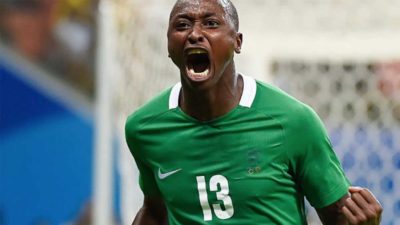 Nigeria’s Under-23 football team, the Dream Team VI, has beaten Honduras 3-2 in the third place football match, grabbing bronze, the first medal by Nigeria, in the ongoing Rio Olympic Games in Brazil.
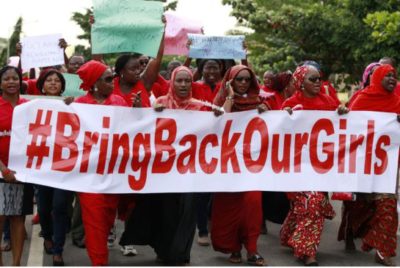 The Buhari Media Support Group (BMSG) has cautioned the #BringBackOurGirls advocacy Group to stop playing politics with the kidnapped Chibok schoolgirls.
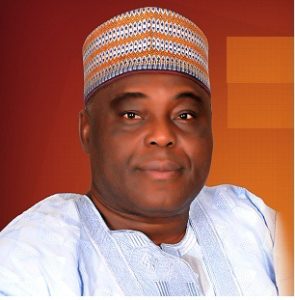 One of the strong National chairmanship hopefuls of the Peoples Democratic Party (PDP), Chief Raymond Dokpesi has said that with the intrigues that heralded the botched national convention of the party in Port Harcourt, he would have been forced to form his own faction of the party.


Garba Shehu, This Is Definitely Not The Change Buhari Promised, By Jude Ndukwe
Reading through the essay, one would have no choice but to have pity on a spokesperson who has nothing positive to write about his boss but must still write something positive all the same in order to help shore up his diminished rating. Honestly, I feel for the president’s spokespersons; this is not the kind of president anyone would want to speak for as evidenced in Shehu’s and Femi Adeshina’s futile attempts to always want to ‘squeeze water from stone’ in order to convince Nigerians about President Muhammadu Buhari.
Expectedly, Shehu started that essay rather lamely by reminding Nigerians of how they are now being asked after Buhari in London, Dubai, Beijing, Washington, New York or Tokyo. According to him: “Nigerians get the good feeling of being asked the question, how is President Muhammadu Buhari?”
There is no gainsaying the fact that this is very far from the truth. In Atlanta where the Dream Team VI were left stranded and got to the Rio Olympics same day they had their opening match in a Games of the Olympics magnitude says much about how other countries view our president. Rather than ask how is President Buhari, Americans, Brazillians and indeed the world, who have never in the history of the world heard about a contingent arriving the Games the same day they have a match, would rather ask, what is wrong with President Buhari?
It is such a shame and smacks of excessive executive irresponsibility to allow athletes representing our great country to fend for themselves. Not even Syria or Iraq or any of the war-torn nations treated their athletes in such a shabby manner. As if that was not enough, it took a patriotic John Obi Mikel to take up the responsibility of a highly over-rated federal government to settle the hotel bills of the country’s football team to the tune of £4,600 singlehanded.
This should not be a surprise to anyone, it is only a reflection of how bad things have gone back home, so bad citizens of other countries now ask if there is a government in Nigeria.
Shehu in that his brazenly bizarre essay alluded to the fallacy that the current perception of Nigeria is the type that can lead to attracting foreign investments to the country. With such falsehood, one need not wonder why our economy is as bad as it is now, for while the economy is officially in recession, our stock market has lost close to a whopping N2 trillion within just 15 months, while foreigners are running away in droves, yet, Shehu has the temerity to talk about attracting foreign investments into Nigeria?
What this simply means is that people who are closest to the president have detached themselves from the reality on ground, no wonder they are driving Nigeria remorselessly into economic oblivion and political obliteration.
It is laughable that Shehu and his ilk still bask in the false euphoria of a non-existing support for Buhari “among the lower segment of the local population.”
Such support which, in truth, did exist in mass at the early life of this administration has since faded into thin air. The fact of the matter is that in the days leading to the general elections and the ones immediately following, a good part of Nigeria’s populace supported Buhari even up to a fanatical point. Taxi drivers, commercial tricycle operators, shopkeepers, okada riders etc, did not only chant “Sai Buhari”, a majority of them proudly tied the broom which is the ruling party’s symbol and had APC and Buhari’s stickers wantonly displayed on their wares, their vehicles and every other place possible as a sign of solidarity and support for the president.
In fact, one embarked on the needless and self-inflicted punitive journey by foot from Lagos to Abuja just to celebrate his ‘hero’ in the aftermath of that election. A few others soon joined, trekking from one far city to another as it created a bandwagon effect.
But just 15 months after his inauguration, the people have realized that Buhari’s promises to them during the campaigns were nothing but a mere mirage and hoodwink; these same set of people who just 15 months ago chanted “Sai Baba” with reckless abandon have hurriedly and angrily removed anything that has to do with Buhari and APC from their wares and vehicles and have since dissociated themselves from the president and his obviously incompetent party. The urgency with which they have done this is akin to the urgency needed to remove a cancerous growth from the body. The song has since simply changed from “Sai Baba” to “Chai Baba.”
To make matters worse, Garba Shehu in his frustration, inferred that the press has given more prominence to the activities of Boko Haram, the same one they claimed they have defeated, and “pipeline vandal from the Delta region…than the Minister of Labour, Governor Ngige or the Finance Minister, Kemi Adeosun, talking about job creation in the economy”.
Shehu should know that there is nothing new in this as a good section of the media is already used to this line of reportage having been used by the APC to spin and report only negative stories and falsehood against the government of former President Goodluck Jonathan while under-reporting or even ignoring his achievements, all in a bid to score banal political points. The presidential spokesman should stop complaining about this; he and his principals are only naturally reaping whirlwind today from the wind they sowed yesterday!
The deserved criticism of the government of the day has, as usual, been placed at the door step of officials of the last administration as its sponsors. Nothing can be further from the truth.
Nigerians do not need anyone to tell them how biting the current hardship on them is. No matter how much the Buhari administration tries to cover up its mess, they should know that you can only tell a blind man that there is no oil in the soup but you cannot tell him that there is no salt in it.
In trying to further vilify the past administration as is their practice, Shehu claimed that the ‘war on corruption’ “has forced the return to the treasury of billions of Naira and millions of Dollars stolen by past officials,” yet, Buhari keeps telling Nigerians that we are broke and uses this as a reason for his obvious economic incompetence. What then happened to the billions of Naira and millions of Dollars always gleefully claimed to have been returned by suspected ‘looters?’ Have they also been re-looted?
What has also happened to the N2 trillion claimed by Garba to have been saved annually by this government from the removal of fuel subsidy? Does this not mean that some good money must have been saved between when the subsidy was removed and now? What is happening to those funds?
What about the money Garba also said have been saved from reducing the number of ministries from 46 to 24? The height of sophistry is when in one breath you say Nigeria has recovered and saved billions of naira and millions of dollars from various sources but also say that the country is broke because oil prices have dropped! Garba Shehu and his masters speak from both sides of the mouth and seem to also have a case to answer!
The continued excuses that low oil price is a major factor militating against Buhari’s performance is nothing but a frequently rehashed story concocted to cover up the failure of this government. Does it mean that if per adventure Nigeria’s oil dries up today, Buhari would be justified for making Nigerians hungry and leaving many more die needlessly?
Even in the face of prosperity, Buhari and his men have proved to be bad managers of resources. Or, how else can one explain the avoidable death from malnutrition and other health factors of over a thousand Nigerian children and women placed in the direct care of government in internally displaced persons, (IDP) camps in the northeast despite the abundance of resources, some from international agencies and donors?
Just like Prince Deji Adeyanju, an aspirant to the office of National Publicity Secretary in PDP’s last convention at Port Harcourt, said in one of his facebook posts, before this government came to power, they had all the solutions to all our problems but now that they are in power, they have only excuses for all our problems. How apt!
The likes of Garba Shehu should not think they can succeed this time in deceiving Nigerians. One is sure that APC and their goons now realize that it was easier to lie to the people when they were in opposition than now that they are ruling. The lesson in all this is that propaganda, lies and deceit may get you power, but performance, and not excuses, is required to remain there!
Buhari and APC now know better. The people have also come to realize that the change agenda of the federal government is nothing but a ‘one chance’ agenda!
Someone should tell Garba Shehu that this is certainly not the change!
. Ndukwe writes from jrndukwe@yahoo.co.uk; Twitter: @StJudeNdukwe.
Tweet. [myad]