The Saudi Arabian authorities have arrested three pilgrims from Kwara State for alleged possession of substance suspected to be cocaine. The Executive Secretary of the Kwara Muslim Pilgrims Welfare Board, Hajiya Fatima Abolore-Jimoh, who confirmed the arrest on Wednesday from Saudi Arabia in a telephone interview with the News Agency of Nigeria, said that the three pilgrims were among the first batch of 505 Pilgrims from Kwara State.
She said that they were arrested in Madinnah by Saudi Arabia security operatives. The executive secretary, who did not disclose the identities of the three suspects, said they were still in the custody of Saudi Arabian authorities. Abolore-Jimoh said that the Saudi Arabian law would take its course on the three suspected drug traffickers, describing the arrest as unfortunate and painful in spite of several appeals to them to be good ambassadors of Kwara State and Nigeria. The executive secretary said that other pilgrims from the state are still in Madinnah, hale, healthy and in good spirit in spite of the unfortunate incident. About 1,978 pilgrims from the state are expected to perform the 2016 pilgrimage exercise. [myad]
A prominent Ijaw leader and former Nigerian minister of Information, Chief Edwin Clark, and former Minister of Police Affairs, Broderick Bozimo have reminded the militants that they are destroying the lands on which they could make useful contribution to the development of the nation. They said: “we have observed that the problem of vandalism has affected the national economy and affected us too; crisis does not solve crisis, dialogue is the answer.” The two leaders, who are among the Niger Delta leaders that are mobilising the militants and other stakeholders in the six states in the South South region toward a peaceful resolution of the crisis in the region, spoke to news men in Warri, the capital of Delta state. A meeting to engage the militants and stakeholders in dialogue for the purpose of ending the violence in the region has been scehduled to hold at the Petroleum Training Institute Conference Centre in Warri. Clark and Bozimo said that the stakeholders that have been invited to attend the meeting include serving and past governors, legislators, former and current ministers, prominent traditional rulers and politicians from the six states in the zone. They listed the states as Akwa Ibom, Bayelsa, Cross River, Edo, Rivers and Delta. Clark said: “The problem is not Ijaw problem alone; it is a problem of the entire Niger Delta coastal states. “We have observed that the problem of vandalism has affected the national economy and affected us too; crisis does not solve crisis, dialogue is the answer.” Clark said that violence is not a solution to the problem of neglect, marginalisation, unemployment and underdevelopment that plagued the region, but that dialogue is the only way out. “There is no way you can begin to fight without looking back. “We are part of Nigeria, we believe in the unity and development of this country. “There can never be development without peace and there cannot be peace without justice.” The Ijaw leader said that President Muhammadu Buhari had also recognised the importance of dialogue. He said that one of the agenda of the meeting is to call on the President to dialogue with a team of stakeholders on the amnesty document currently before him.
Former Military President, retired General Ibrahim Badamasi Babangida, has said that he could not exceed the time appointed for him to die. “As a Muslim, whether you like it or not, you will die with time and I cannot exceed a certain time.” Babangida, who recalled the recent rumour that went round that he was dead, said that such rumour is not new in this country. “They did it to former President Shehu Shagari, to former President Nnamdi Azikiwe and other elder statesmen.” The former President, who spoke to news men in his Minna mansion, Niger State, to mark his 75th birthday on Tuesday, said that by the virtue of training as a military officer, it is mandatory for him to love people, adding: “I believe I have a very excellent background. “My feeling is, I can understand that by the virtue of the job I was doing, I am bound to be misconstrued and people will take it that way. But I consider it as their opinion. “Since, I am not what you thought I am, I feel satisfied.” On the alleged N12 billion oil wind fall, which he was accused of having taken away as the military president in 1992, Babangida humorously stated: “If, I have so much money, I will not live in this country.”
Babangida also said that his toughest encounter in the Army was when he trekked from Enugu to Umuahia where he sustained injury during the Nigeria civil war. “Movement from Enugu to Umuahia was very tough and challenging because you need to be physically fit to be able to undertake that kind of journey on foot. “We had to go through the jungles and the hills. “I think it was my toughest encounter in the army because that was where I got wounded in April 1969.” The former President said that he joined the army for the purpose of helping to protect the internal and external integrity of the country. According to him, as a military person, one must subject oneself to a constituted authority, adding that the constitutional roll and international treaties made it possible for military personnel to serve anywhere in the world. The former military president said the military job was more challenging than being the president of a country. “If they have faith in you, they follow you. If you have faith in them, you go along with them. “So, it is more challenging than being a president.” Babangida said that as a president or Head of State, one has to seek people’s advice, interact and discuss with them to get solution based on the prevailing circumstances. “Being a military officer, you are the only one leading your troops, hoping on you. “If you lead them wrongly, you will kill many of them. “So, I consider the military more challenging than the political job.” [myad]
A female lawyer, who was among the three people declared wanted by the Nigerian Army on Sunday, Aisha Wakil Alkali had confessed as far back as 2009, before the beginning of the Boko Haram insurgency in the North East in particular and many other parts of the North in general, that she knew and interacted with most of the leaders and members of the sect.
Aisha Wakil, a Barrister-at-law, who works with the National Human Rights Commission, told Peoples Daily, an Abuja-based newspaper that largely covers the north, that her relationship with members of the sect dates back to a time before the conflict began and before the death of the spiritual leader of the group. She was quoted as saying that she “started the dialogue process since 2009, even before the major crisis erupted, because I knew their slain spiritual leader, Muhammad Yusuf. His father in-law, late Alhaji Baba Fugu Mohammed was my spiritual father in Islam, and I used to visit his home.
“In fact, Mohammed Yusuf almost married my younger sister Amina, but Almighty Allah did not make it possible. So that was how I got closer to the duo. It went even to the extent that I was cooking food and taking it to the house of late Alhaji Fugu, to the pupils of the Qur’anic school (almajari). “And because I am from the southern part of the country, I normally prepared southern dishes, which Yusuf had always come to eat. In fact he liked my egusi soup very much and we became very close when his father-in-law told him that was the one who cooked the food. So anytime we met, he expressed delight and prayed that Almighty Allah would reward me, for he was eating from my pot and that was how I established a strong relationship with him. “Though I did not know where he lived at that time, but whenever I visited Fugu’s house, I saw many people trooping to the area and they would later gather behind a particular compound, so I asked Fugu who these people were. He replied that they were the followers of his son-in-law and that they had come for a preaching session conducted by the late Boko Haram leader. When they finished the preaching and were offering closing prayers, I would sometimes walk across to get the blessings of the prayers.” Wakil admits knowing some members of the sect saying, “I reside in Shehuri North Ward, the epicentre of the insurgency and I know majority of the insurgents, so I sat down and made up my mind, that how could I just watch them continue like that?” “When this thing was about to start in 2009, late Yusuf had been detained severally and when he came out after one of the detentions, I went to his house to greet him, but his followers refused to allow me access to him. I was angry and said I would never go to greet him again. “On hearing that, he rushed to his father-in-law and asked him to plead with me that I should forgive him, saying he was not around when I came. But three weeks to this problem, I started hearing rumours that they would launch deadly attacks. So, I called him (Yusuf) to my house and when he came, I learnt that Abubakar Shekau and other followers had escorted him, but they stayed outside. “When he entered my house, he didn’t even look directly at my face. He put his two hands behind him and I said to him, “my son, I’m hearing something. These rumours I’m hearing, I beg you in the name of Allah, don’t do it. He said that he was betrayed; I said by whom, he said by government, I said can I come into it, he said. Alright, if you can intervene and settle it, we are ready. “But I was unable to do so due to the protocol involved in government, especially when it entails meeting governors. I tried all I could to get to the former governor, Ali Modu Sheriff, to discuss the issue, but wasn’t able to get to him. But I later spoke to Yusuf’s in-law, telling him that I was not comfortable with these rumours I was hearing but he said there was nothing he could do, as he was a man of over 70 years and that he had written a letter to the government but he didn’t tell me precisely the content of the said letter. “I continued talking to Yusuf and he kept giving me instances of the betrayal as his followers were shot over the use of crash helmet for instance. Then when they carried their dead bodies for burial they shot them again despite the fact that there was an agreement between them, they were betrayed. “In fact he had seriously lamented this betraya as I’m talking to you now I don’t know the betrayal he was referring to and nobody has told me about it up till now. And another issue is, I didn’t know the problem will degenerate into mayhem like we have seen, otherwise I would have contacted some of the elders in the state so that they can come into the matter with a view to finding a solution to it.” But how was she able to convince the sect members to lay down their arms, she was asked. She said “it was not easy, it was hell. It was horrifying, scary, because when I spoke with one of them, he directed me to come to a particular place. When I reached the location, I found him with an AK 47 rifle and improvised explosive devices (IEDs). “Afterwards, he said, ‘Mama, why did you risk your life to come here? I said because we are killing ourselves and I want to put a stop to the bloodshed. He said ‘you know I’m not alone’. I replied that yes, I know and I said but you can talk to others and that was how the whole thing started. I was able to persuade them to come out from their hide-outs in the forest and show their faces, promising that they will not be harmed or arrested. I was able to do so because I’m fully involved in the dialogue procedure. “After succeeding in convincing some of the insurgents to show up as their safety was guaranteed, I was linked with someone and I contacted the Borno State Governor, Kashim Shettima, who welcomed the development and facilitated several meetings between myself and the insurgents who accepted the dialogue on one hand with the top officials of the state government as well as the Borno Elders Forum, after which the dialogue process was mapped out resulting in the present ceasefire.” They, however, gave conditions, which include the need for absolute confidence from government that they would not be arrested, all their members in detention should be freed, compensation should be paid to the families and relations of all those killed in the violence. Others were, rebuilding of the enclave of their leader and houses of some members destroyed in the conflicts, they should also be empowered to be self-reliant, and that all those involved in the extra-judicial killing of late Yusuf should be prosecuted.” She was not unmindful of the fact that some members of the sect denied ever agreeing to a ceasefire, but said that the denial could not have come from Abubakar Shekau, leader of the sect. She noted that the leaflets denying the ceasefire did not “emanate from Shekau, because he was in support of the truce and in fact was the one who directed Ibn Abdul-Aziz to represent the sect in the agreement.” Moreover, why did it take long before the purported Shekau denied the ceasefire? She replied: “You would recall that before the ceasefire was reached, Shekau was always hasty to react on any particular issue that didn’t emanate from him. I also want to dismiss the recent video footage of the person who claimed to be Shekau, because the insurgents’ spiritual leader does not cover his face in all his appearances as that man did. But even with the ceasefire, killings and bombings have continued. Actually all these attacks were the handiwork of some faceless enemies of peace and progress of the state. Whether they are politicians or ordinary citizens, all I know is that there are some individuals who are not at all happy with the ongoing peace process that the state has started enjoying.” But she is not happy with the statement credited to President Goodluck Jonathan, calling the sect members ghosts. She said, “it is quite unfortunate that the president made this statement at a time when dialogue is still going on, Boko Haram is not a faceless group because we have seen them and sat with them. The president’s position will not in any way jeopardise our peace initiative because we are doing it for the benefit of women, children and elderly people, who are at the receiving end.”
During one peace march by women in Borno State, she was quoted as asking them to come out and state their grievances.
“My sons, I have been begging you since in silence to come out and state your grievances and stop destroying your homeland. Please come out and state your grievances and stop these killings,” she allegedly said amidst tears. One Mohammed Amin Abdullahi, who said Aisha was a friend to his sister, claimed on his Facebook page that Aisha Wakil actually hails from the South-East, but converted to Islam when verses of the Holy Qur’an started appearing on her skin and blended well with the Borno Muslim community. He wrote: “Barr. Aisha Wakil, I would say, is a mysterious woman. She is Igbo by tribe and was a Christian during her education in University of Maiduguri many years ago. She converted to Islam when inscriptions of verses from the Holy Qur’an started appearing on her skin. Members of the sect became so close to her that they even called her mummy. “They visited her house at will. She even sold her valuables to feed them, just to convince them to drop their weapons. There was a time she seized from them and burnt a note book containing the lists of people killed and those to be killed. “A lot of them confessed to her that they were fed up with the sect activities. She has been trying to convince members to stop their insurgency long before the issue of dialogue and amnesty started. I got to know all these because she is a close friend of my sister’s, who is also a human rights activist. I once drove my sister, whose name I don’t want to mention here, to Aisha’s house and had the opportunity of seeing the sect members.” Aisha Wakil may be the key to solving the insecurity that has continued to destroy the north and the economies of some of the most vibrant cities of the north. It is apparent that a lot will be expected from her if the peace initiative is to work. [myad]
Governor Simon Lalong of Plateau state has set up a six member Judicial Commission of Inquiry to probe his predecessor, David Jang, especially on all the financial transactions done or entered into, contracts awarded, among others from 29th May, 2007 to 29th May, 2015.
The Commission is headed by Justice Stephen Adah JCA, while Alhaji Sani Yahaya Mavo is to serve as Secretary. Other members of the Commission are Professor Mrs. Bibiana Bawa, Barrister Aliyu Sangei, Professor Ekoja B. Ekoja and Engineer Samuel Onu Agamah.
A statement by the Director of Press and Public Affairs to Governor Lalong, Mr. Emmanuel Nanle, reads: “The Executive Governor of Plateau State, Barrister Simon Bako Lalong, in the exercise of the powers conferred on him by Section 2 of the Commissions of Inquiry Law Cap 25 of the Laws of Northern Nigeria 1963, (as applicable to Plateau State) and other relevant laws enabling him in that behalf, has established and constituted a Judicial Commission of Inquiry.”
The terms of reference given to the Commission includes, “To ascertain all financial transactions, done or entered into by the Government of Plateau State of Nigeria or through any of its Ministries, Departments, and Agencies (MDAs), or official acting in its name from the 29thday of May 2007 to 29thMay 2015.
“To ascertain and establish all financial allocations, funds, grants or monetary interventions and revenues which accrued to or in the name of the Government of Plateau State of Nigeria. Departments, Agencies (MDAs), Officials or Agents from the Federal Government of Nigeria or any International Institutions or Donor Agencies from 29th May 2007 to 29th May 2015.
“To ascertain and establish all loans granted to or obtained by the Government of Plateau State of Nigeria through any of its Ministries, Departments, Agencies (MDAs), and the purpose for which such loans were obtained and whether the loans were used for such purpose.
“To ascertain whether any property belonging to the Government of Plateau State or any of its Ministries, Departments, Agencies (MDAs), Parastatals and Institutions which were sold or in any way concessioned to any person(s), or institution(s), by any Government Ministry, Department, Agency (MDAs), or officials between 29th May 2007 and 29th May 2015, followed due process or procedure and whether the proceeds of such sale or concession were paid into appropriate Government coffers.
“To ascertain whether any property or properties purchased or acquired for or in the name of the Government of Plateau State were purchased in line with due process and procedure.
“To ascertain all contracts awarded by the Government of Plateau State or any of its Ministries, Departments, Agencies (MDAs), Parastatals or Officials between 29th May 2007 and 29th May 2015, the process or procedure followed in the award of such contracts, the value of each contract (including any variations and whether such variations were necessary and done in good faith), the level of execution or completion of each of them and the amount paid to the contractor as at 29th May 2015.
“To ascertain the total amount paid by the Government of Plateau State as salaries and allowances of serving and retired State Civil Servants, Local Government Employees and Political Appointees from 29th May 2007 to 29th May 2015; And to further establish whether any person or employee of Government received multiple payments of salaries or pensions, and the role played by any person(s) toward such payments.”
The Commission will be inaugurated on Wednesday August 17. [myad]
President Muhammadu Buhari has commended the Nigeria’s former military President, Ibrahim Badamasi Babangida, popularly known as IBB, for his commitment to the oneness of the country.
Buhari, in a letter he sent to IBB to wish him happy birth day at 75, said: “I equally wish to congratulate you on your service to the country, and your commitment to oneness and indivisibility of the Federal Republic of Nigeria.
“There is hardly any major episode in Nigeria’s short history where your name and contribution does not feature.”
President Buhari described IBB’s attainment of 75 years as milestone even as he prayed that Almighty Allah would grant him many more years to see Nigeria grow and develop beyond all of our wildest dreams. [myad]
President Muhammadu Buhari has made it clear that his government is making efforts to start the nation’s steel industry all over again. “We are making efforts to start our steel industry all over again. I see vast opportunities for both the country and those who invest here.” President Buhari who spoke on Tuesday when he received in audience, Executive Members of Association of Africa Automotive Manufacturers (AAAM), led by the chairman, Mr. Jeff Nemeth at the Presidential Villa, Abuja, regretted that Nigeria though, recognized its problems early enough, but did not achieve much result. President Buhari said that to reverse the trend: “we must avoid the mistakes made in the past by both government and manufacturers, and we are ready to get investment from all quarters, so that we can improve the lives of our people.” The President lamented that Nigeria failed to develop on automobile initiatives which were started in Bauchi, Kaduna and Ibadan, but preferred to depend too much on oil as mainstay of the economy. Responding, Nemeth said that the Association comprised potential investors who are ready to unlock investment potentials on the African continent. “We are ready to offer strategic partnership with Nigeria. We want to promote investor-friendly regulatory frameworks and sustainable manufacturing. “We will equally promote infrastructure development, job creation, and skills transfer.” The AAAM chairman sought the support of the Presidency in the realization of the vision and mission of the association. Meanwhile, President Buhari has assured international and local human rights groups that he is studying the report of the judicial inquiry into the clashes between soldiers and members of the Shiite movement in Nigeria, led by Sheikh Ibrahim El-Zakzaky. The President said that soon, after studying the report, he will make appropriate response. He said that his commitment to human rights remains unchanged, saying that it is a cardinal component of the democratic order. It would be recalled that when the clashes occurred in December, President Buhari had told the nation during the Presidential Media Chat that he was awaiting the outcome of the report of inquiry into the incident before making appropriate response. He stressed that his administration believes in due process and the rule of law, adding that any response to the report would follow this principle, adding that he will continue to act in the larger interest of the public to prevent such violent incidents. [myad]
Minister of the Federal Capital Territory (FCT), Malam Muhammad Musa Bello has cried out over what he called obsolete laws that have made the administration of the capital city difficult. The Minister, who spoke on Tuesday when the Acting Chairman of the Nigerian Law Reform Commission visited him in his office, emphasized that most of the laws in the FCT have become obsolete, thereby making the running of the Abuja city centre very difficult. He therefore stressed the need for the review of such laws to make it easy to manage the influx of people into the Territory. The Minister frowned at a situation where law breakers in the FCT are for instance, given N2,000 option of fine which can easily be paid on the spot, adding that the development and growth of Abuja ought to be matched with vibrant laws that are stringent enough to deter offenders. “The penalty in FCT laws are not in tandem with the reality of our time and therefore not serving as deterrent as it is supposed to be.” The Minister said that Abuja is the only city in the federation that is a product of law and should be well guided by the law to function well. Muhammad Bello commended the efforts of the Commission, saying: “FCT Administration values and will support any institution that adds value to the well-being of the society.” Speaking earlier, the Acting Chairman of the Nigerian Law Reforms Commission, Mr. Kefas Musa Magaji stressed the need for review of every law every ten years to conform with the reality on the ground, saying that there is no way the society will move forward if the laws are stagnant. He recalled that the Commission last reviewed the FCT laws in 2006 and that such laws are due for further re-evaluation to conform with the time. Meanwhile, the minister has warned the new Governing Board of the FCT National Youth Service Corps to shun corruption and mismanagement in the running of the affairs of the Board or face the full wrath of the law. The Minister who inaugurated the Governing Board of FCT NYSC and presentation of awards to 2011-2013 batches of outstanding corps members in Abuja on Tuesday, enjoined the new board members to be prudent in the management of NYSC resources to ensure that that the precious funds made available to the NYSC by the government are judiciously deployed only for the good of the corps members. The Minister who was represented at the occasion by the FCT Permanent Secretary, Dr. Babatope Ajakaiye presented award certificates to 76 corps members who had excelled in their primary assignment between 2011 and 2013 service years. The awardees received different cash prizes depending on the categories of their awards and performances, namely: Category A- Certificate of Merit & N200,000; and Category B – Certificate of Merit & N100,000 each. [myad]
Vice President Yemi Osinbajo has insisted that President Muhammadu Buhari is positioning agriculture as the arrowhead of the economic recovery effort and that it is one of the most critical components of the plan to revive the economy. “There is no question at all that if we get agriculture right, we will get our economy right.” Osinbajo, who spoke on Tuesday in Abuja at the public presentation of ‘The Green Alternative’, The Buhari Administration’s Agricultural Promotion Policy, said: The roadmap that we are about to present, identifies two key challenges. The first is the inability to meet domestic food requirements: this is a productivity challenge driven by an input system and farming model that is likely inefficient, the lack of good seeds, fertilisers, irrigation, crop protection etc. “And two: the inability to export at the level required for marketing, which is typified by an inefficient system for setting and enforcing food quality, poor knowledge of target markets, a weak inspectorate system and poor coordination amongst relevant agencies. “With great clarity, ‘The Green Alternative’ sets out strategies for resolving these challenges. “I am personally impressed that The Roadmap does not dismiss the Agricultural policies of the past. Indeed, the policy says that it is “building on the successes of the agricultural transformation agenda, closing the gap.” The Vice President said that the problem has never been a lack of policy, but that it has always been the focus and capacity to stick to the plan, to modify when necessary and ensure also that the plan aligns with all aspects of the economic plan of the Government. He said that a policy encouraging local food production cannot work with another policy that has a high tariff on imported agricultural equipment. “There is no way that we can encourage local production, when we allow unbridled importation of the same things that we are trying to produce. “There is no way we can do the scale of agricultural production both for domestic consumption and export, without ensuring local improved seedling development, alongside those that have been bought and of course encouraging the work of the Agencies, and the Ministry of Science and Technology, who have been making great strides in local development of agricultural improvement.” He said that the nation’s social investment programmes ought to be designed to align with its agricultural and other policies. “So, of the 500,000 Teacher Corps that will be engaged, 100,000 of them will be trained as extension workers for our farms. Our Home Grown School Feeding Programme which seeks to provide a meal a day to primary school children is described as ‘homegrown’ specifically because the food will be from the farms in each state. “Some of the states that have started the programme are already seeing the important multiplier effects in their agricultural sector. “Financing of agriculture is also a crucial policy. With double digit interest rate at the moment, we must develop some funding options in the short term. The Anchor Borrowers’ Scheme of the CBN has proved to be extremely useful. Indeed the phenomenal success of the Kebbi State rice programme where the farmers move from 3.5MT per hectare to 7.5MT per hectare was largely because of the single digit interest rate extended by the Anchor Borrowers’ Scheme of the CBN which they used to purchase the right fertilizer quality and other inputs.” Osinbajo said that the ministry of Finance has concluded plans to recapitalize and re-engineer the Bank of Agriculture and that it is expected that before the end of this quarter, the Bank of Agriculture should be ready to give single digit interest loans to farmers. He commended the minister of agriculture and rural development, Chief Audu Ogbeh, for spearheading the effort of developing this roadmap which is the nation’s pathway to sustained and rapid progress in the agricultural sector. “Indeed, not only has Chief Audu Ogbeh developed this roadmap effectively and within a very short time but he has also conducted advocacy of the kind we have not seen in a long time in the agricultural sector.” [myad]
Republican candidate in the forthcoming Presidential election in the United States of America, Donald Trump has threatened to suspend Nigerians and other nationals that are contending with terrorism from entering America if he wins and become the next President. He stressed that for America and its allies to defeat Islamic State (IS) and other global terrorism, there is need for the United States to wage an unrelenting ideological fight, comparing the modern day terrorism to the Cold War era. He vowed to temporarily suspend immigration from “the most dangerous and volatile regions of the world” and judge allies solely on their participation in America’s mission to root out Islamic terrorism. In a speech at Youngstown State University in Ohio, a critical swing state where polls show him trailing Hillary Clinton, Trump combined old vows to seize Middle Eastern oil fields with the announcement of a series of new, if still vague, proposals to change America’s battlefield tactics. “Just as we won the Cold War, in part by exposing the evils of communism and the virtues of free markets, so too must we take on the ideology of radical Islam,” he said. He again tried to change his politically inflammatory approach to immigration, replacing his 2015 vow to bar Muslims from entering the United States with a new commitment to bar anyone from parts of the world where terrorism breeds. Once again, he did not name those countries, or say whether citizens of longtime allies where terrorists have plotted and executed attacks — Germany, France and Belgium among them — would be included. Trump, who has pledged to build a wall along the border with Mexico, also said he would call for “extreme vetting” of immigrants that would include requiring them to respond to a questionnaire with an “ideological test.” Over all, he appeared to be arguing for the kind of terrorism-centric foreign policy that President George W. Bush adopted after the September 11, 2001, attacks. But over time, that approach ran into complications: China and Russia used the fight against terrorism to crack down on Muslim minorities. And the Bush administration eventually discovered that a one-dimensional approach, measuring countries almost exclusively on their commitment to fighting Islamic terrorists, left it little leverage when their partners in counter-terrorism took other steps opposed to American interests — from the Chinese claiming portions of the South China Sea to increasing Russian threats against former Soviet states. Monday’s speech represented another attempt by Mr. Trump to focus on issues after a rocky period in his campaign, much as he did last Monday with a speech on the economy. He laid the blame for the rise of Islamic extremism on President Obama and Mrs. Clinton. He said they made “a catastrophic mistake” in “the reckless way in which they pulled out” of Iraq. He charged that Mrs. Clinton compounded the error by attempting to “build a democracy in Libya.” He argued that Mrs. Clinton had been a vocal proponent of the American intervention in Libya in 2011, which Mr. Obama has repeatedly acknowledged was the most ill-thought-out foreign policy move in his nearly eight years in office. He also charged that “Hillary Clinton wants to be America’s Angela Merkel,” a reference to the German chancellor. Germany has taken in tens of thousands of refugees fleeing the civil war in Syria, in which fighting between forces loyal to President Bashar al-Assad, rebels opposed to his rule and Islamic State jihadists has claimed 400,000 lives. Trump offered no criticism of Mr. Assad, but criticized the Obama administration for advocating the removal of the Syrian leader and Hosni Mubarak of Egypt, who was deposed in the first blush of the Arab Spring, because doing so took out the strongmen who kept the lid on violence in the region. He pledged to form a new partnership with Israel, Egypt and Jordan to try to stop the spread of terrorism, including groups such as Hamas and Hezbollah. He also suggested that the United States would be well served by joining forces with Russia against the Islamic State. [myad]
We use cookies on our website to give you the most relevant experience by remembering your preferences and repeat visits. By clicking “Accept”, you consent to the use of ALL the cookies.
This website uses cookies to improve your experience while you navigate through the website. Out of these, the cookies that are categorized as necessary are stored on your browser as they are essential for the working of basic functionalities of the website. We also use third-party cookies that help us analyze and understand how you use this website. These cookies will be stored in your browser only with your consent. You also have the option to opt-out of these cookies. But opting out of some of these cookies may affect your browsing experience.
Necessary cookies are absolutely essential for the website to function properly. This category only includes cookies that ensures basic functionalities and security features of the website. These cookies do not store any personal information.
Any cookies that may not be particularly necessary for the website to function and is used specifically to collect user personal data via analytics, ads, other embedded contents are termed as non-necessary cookies. It is mandatory to procure user consent prior to running these cookies on your website.



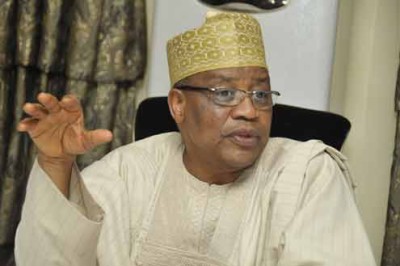 Former Military President, retired General Ibrahim Badamasi Babangida, has said that he could not exceed the time appointed for him to die.

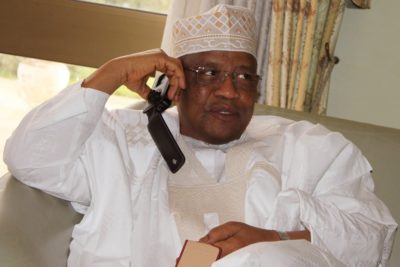 President Muhammadu Buhari has commended the Nigeria’s former military President, Ibrahim Badamasi Babangida, popularly known as IBB, for his commitment to the oneness of the country.
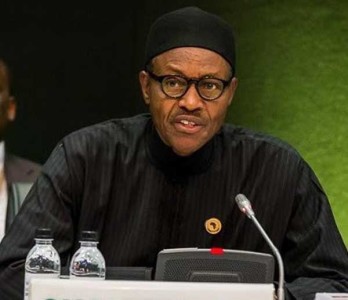 President Muhammadu Buhari has made it clear that his government is making efforts to start the nation’s steel industry all over again.
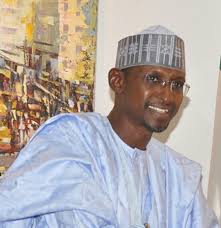 Minister of the Federal Capital Territory (FCT), Malam Muhammad Musa Bello has cried out over what he called obsolete laws that have made the administration of the capital city difficult.
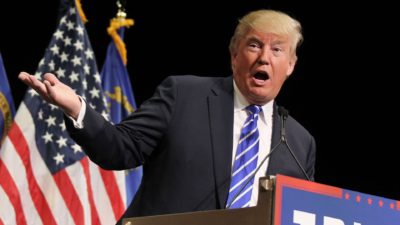 Republican candidate in the forthcoming Presidential election in the United States of America, Donald Trump has threatened to suspend Nigerians and other nationals that are contending with terrorism from entering America if he wins and become the next President.
