Chairman of the Dangote Foundation, Alhaji Aliko Dangote, has vowed to continue to contribute towards the alleviation of poverty and sufferings in Nigeria through the Foundation.
“Dangote Foundation is committed to alleviating poverty and suffering of underprivileged by supporting social and economic change through investments and interventions that improve the lives of the less fortunate”
Dangote, who spoke through the Director of Health and Nutrition, Dr. Azeez Oseni while donating Dangote Sugar, Dangote Salt, Dangote Spaghetti, rice, Danvita and wheat meal to the vulnerable and the indigent in the Federal Capital Territory, Abuja, said that the Foundation is committed to alleviating poverty in Nigeria.
Amongst the beneficiaries of the latest Dangote’s largese include Abuja Children Home, Peoples with Disabilities Traders Union, Para Soccer Team FCT, Poorest of the Poor, Old People’s Home and Abuja Parasutes Association, among others.
The items, which were presented to the Minister of the Federal Capital Territory (FCT), Malam Muhammad Musa Bello and received on his behalf by the Acting Secretary of Social Development, Bolanle Irene Elegbede, came just a few days after the Dangote Foundation also gave N2 Billion cash to the Internally Displaced Persons (IDPs) in Borno state.
Aliko Dangote said that the Foundation will be focusing on Health and Nutrition, Education, Economic Development and the provision of relief materials during disaster even as he said that the Foundation is determined to reduce the number of lives lost to malnutrition and disease through access to quality nutrition and healthcare with a particular emphasis on children.
“It is also aggressively working towards the reduction of out-of-school children, while supporting talented under-privileged young people to achieving their potentials as well as educating girls and women on health related issues.”
He said that the Foundation’s cardinal objectives include: Health and Nutrition, education, economic empowerment and disaster relief.
The food distribution to the vulnerable and indigent during and beyond the season of Ramadan is one of Alhaji Aliko Dangote’s philanthropic activities directed towards helping the poor in the society.
The richest man in Africa said: “I will like to specifically thank the Social Welfare Secretariat Team and FCT Emergency management Agency for the Day-to-Day logistic support and planning on food distribution to the beneficiaries.”
It would be recalled that within a spate of five years, the total amount donated to various camps of Internally Displaced Persons (IDPs), across the country by the Dangote Foundation has grown significantly to N6. 3 billion. [myad]
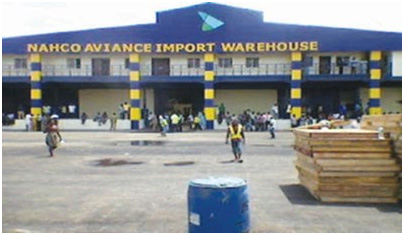
In spite of the difficult operating environment, the Nigerian Aviation Handling Company Plc (NAHCO) has recorded a five percent turnover in its 2015 financial year.
The company’s Annual Report shows that despite the difficult business terrain and the contraction in the economy from 6.5 per cent in 2014 to around 2.5 per cent in 2015, NAHCO was able to maintain a consistent growth in its turnover earnings and dividends.
The report, which is due to be presented to the shareholders by the chairman of the company, Alhaji Suleiman Yahya, indicates that the company achieved a marginal improvement in its performance from N81.bn in 2014 to N8.5bn in 2015.
Despite the global challenges and Nigeria’s political economy, the company, according to the Report, grew its Profit Before Tax (PBT) from N769.5 million in 2014 to N796.8 million in 2015.
It said that the Board of the company has lowered the cost of doing business and shifted its funding structure from debt to equity, while approving the repayment of the N2bn Series 1 Bond from its Bond Cash Reserve Account which is due by the third quarter of 2016.
“These two steps will free up cash for future distribution to shareholders as enhanced dividend and to increase our cash buffer,” the chairman said in his statement due to be presented to shareholders.”
Meanwhile, the Board has recommended to the shareholders, a dividend of N324.8 million at 20 kobo per ordinary share of 50 kobo less withholding tax for the financial year end, December 31st 2015.
The Report shows that the company is investing in the NAHCO Agric Zone Project in 2016 even as it appointed Mr. Bamidele Adelaja as the Chief Financial Officer (CFO). [myad]
Hillary Clinton has nominated a 58 year old Virginia Senator, Tim Kaine to be her running mate in this year’s Presidential election in the United States of America.
“I’m thrilled to announce my running mate, @TimKaine, a man who’s devoted his life to fighting for others. -H,” she tweeted. Minutes later, Kaine tweeted: “Just got off the phone with Hillary. I’m honored to be her running mate. Can’t wait to hit the trail tomorrow in Miami!” Clinton will introduce her new partner at a campaign rally Saturday in Miami, a recognition of Florida’s pivotal importance in the fall. It’s also a chance for Kaine, a fluent Spanish speaker, to introduce Clinton to Latino voters, a critical slice of the electorate in her quest to defeat Donald Trump. Clinton is hoping to seize the spotlight from Republicans after their convention in Cleveland. The site of Kaine’s first joint appearance with Clinton is Florida International University, where the student body is more than half Hispanic. Clinton’s decision to choose Kaine began when John Podesta brought the candidate two-dozen binders to her home in Chappaqua, New York, in April, according to a campaign aide. Last week, Clinton and Kaine spent 90 minutes together, followed by another meeting on Saturday that brought together the two families, including Clinton’s husband, daughter and son-in-law, as well as Kaine’s wife. Ultimately, Clinton was swayed by her personal comfort with Kaine, as well as the belief that the senator is fully prepared to do the job. On Friday, Clinton called Kaine around 7:30 p.m., then spoke with President Barack Obama. It may be an anti-establishment year, but Clinton’s running mate is an insider: A senator and former governor from the critical battleground of Virginia and a former chairman of the Democratic National Committee. Kaine, 58, has long been seen as a seasoned and safe choice for Clinton, who could help shore up support among white working-class voters. Her selection ended a long search that was conducted almost entirely in secret, a stark contrast to Trump’s vice presidential search. It reflected a strategic choice by Clinton: To go with a running mate who amplifies her argument that experience in government — not sizzle — is the best path to keeping the White House in Democratic hands. Kaine’s midwestern roots also run strong: Born in Minnesota, Kaine is the son of a welder who was raised in Kansas and graduated from the University of Missouri. He went to Harvard law school, but before graduating served a year as a missionary in Honduras. It was an experience that cemented his Catholic faith and strengthened his fluency in Spanish. Kaine was the first member to give an entire speech on the Senate floor in Spanish. It was during a debate in support of the bipartisan “Gang of 8” immigration reform package. At a joint campaign appearance last week in Virginia, which served as a final audition, Clinton stood side-by-side Kaine and beamed as he spoke of her virtues in Spanish. “Estamos listos para Hillary,” he declared. The Clinton campaign selected Kaine over a roster of at least three other senators and two Cabinet secretaries to Obama. Advisers to Clinton see Kaine as a stable force on the bottom of the ticket, foregoing the allure of a pick that could provide more star power in favor of one they are hoping will be void of drama. “We all know we need a bridge builder, not a trash talker,” Kaine said last week as he introduced Clinton at the Virginia rally. His resume is far more fulsome than when he was vetted as a potential running mate for Obama in 2008. With nearly three years of experience in the Senate under his belt, Kaine has beefed up his foreign policy credentials. He serves on both the Senate Foreign Relations and Armed Services Committees, emerging as a leading proponent of pushing the administration to consult with Congress before engaging in military action. Kaine is well known inside the Democratic Party, serving as its national chairman during the first years of the Obama administration. He jumped onto the Clinton campaign early — the second time around — announcing his support in 2014, a year before her announcement. His bipartisan roots, the Clinton campaign believes, could resonate with voters seeking an alternative to Trump. At Harvard, he met Anne Holton, the daughter of former Virginia Gov. Linwood Holton, a Republican. Kaine and Holton married and settled in Richmond where both practiced law and sewed the seeds of Kaine’s political future. After 10 years working as a civil rights lawyer and lecturer at the University of Richmond’s law school, Kaine mounted a successful campaign for city council from Richmond’s Northside. His political rise continued to the mayor’s office and a successful bid for lieutenant governor before being elected governor in 2005. His governorship was a study in practical decision-making and political maneuvering — qualities valued by the Clinton organization. He pushed through measures like an indoor smoking ban — popular with voters, but controversial in a state with a once robust tobacco industry. Virginia was the first state in the south to enact a ban of this nature. Kaine also earned high marks for his stewardship of the state after the Virginia Tech Massacre, at the time the worst mass shooting in U.S. history. In the wake of the Tech massacre, Kaine became a leading voice on reforming gun control laws, an issue Clinton has highlighted throughout her campaign. Early during his time as governor, Kaine took one his biggest political risks: offering a hearty endorsement to then-Sen. Barack Obama in his 2008 presidential bid. At the time Obama was the underdog to Hillary Clinton and Kaine was the first sitting governor to endorse his campaign. Obama returned the favor by naming Kaine one of his national co-chairs and after securing the Democratic nomination, he put Kaine on a short list as a potential running mate. Kaine was vetted by the Obama team, but in the end Obama chose Sen. Joe Biden of Delaware — someone with a deeper foreign policy resume, an issue at the time that was considered a weak spot for Obama. While Kaine is perceived as far more of political moderate, particularly with today’s liberal strain coursing through the party, he is often a reliable liberal vote in the Senate. Despite his Catholic faith, he is a staunch supporter of abortion rights. He is a defender of the Affordable Care Act and announced his support for same sex marriage in 2013. On guns he has an “F” rating from the National Rifle Association (NRA). By comparison, until the Sandy Hook Massacre of 2012, his counterpart Warner had an “A” rating from the NRA. While geography of a running mate seldom matters in recent presidential elections, the Clinton campaign believes he can certainly help secure Virginia’s 13 electoral votes. The state twice voted for Obama after a generation of solidly voting for Republicans in presidential elections. CNN. [myad]
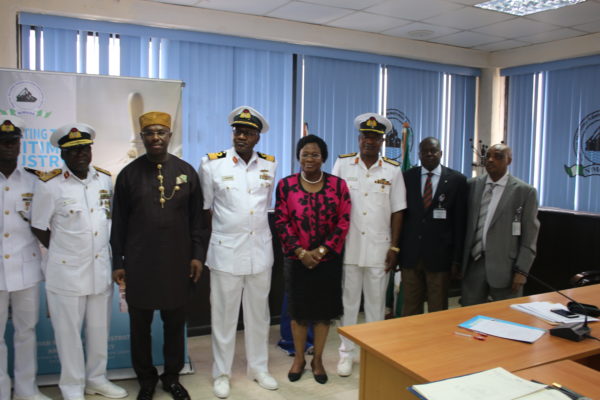
The Director General of the Nigerian Maritime Administration and Safety Agency (NIMASA), Dr. Dakuku Peterside, has called on the security operatives and other stakeholders in the Nigerian maritime industry to redouble their efforts towards eradicating criminality in the Nigerian maritime domain. Peterside particularly referred to the Nigerian Navy.
The NIMASA boss hosted the Flag Officer Commanding, Western Naval Command, Rear Admiral Ferguson Bobai at the Agency’s head office in Lagos, decried the rise in piracy activities in the early part of this year called for strategic initiatives and synergy among stakeholders to arrest the trend.
“The operations report available to us is nothing to cheer about. While there is a drop in the number of vessels calling our ports, there seem to be a comparative increase in piracy activities. This means that operationally, both NIMASA and the Nigerian Navy must step up our game in order to guarantee continuous prosperity of Nigeria’s economy.”
Dr. Peterside commended the Nigerian Navy for the considerable reduction of criminal activities in the Nigerian territorial waters in the last three months, even as he charged stakeholders to do more in order to completely eliminate the scourge.
He acknowledged the existing partnership with the Nigerian Navy which he said has been mutually beneficial and said that the memorandum of Understanding (MoU) between the two Agencies is currently being reviewed to make it more effective and beneficial to the entire maritime industry.
“I am confident that the strategies being put in place by the Nigerian Navy including the launch of the FALCON EYE and partnerships with relevant stakeholders will go a long way in addressing the security challenges in our waterways.”
He pledged the Agency’s continuous collaboration with the Nigerian Navy in the task of promoting a friendly environment for maritime activities in Nigeria.
Earlier,, Rear Admiral Ferguson Bobai said he was in NIMASA for a familiarization visit after taking over the Western Naval Command and re-echoed the need for greater cooperation between the two Agencies for the overall interest of Nigeria.
He assured the Director General of the readiness of the Navy to partner with NIMASA, adding: “our doors are open for a sustained partnership with your Agency. And there should be no obstacles to our collaboration which should guarantee the unhindered movement of vessels doing legitimate business in Nigerian waters.”
A committee earlier set up with members drawn from NIMASA, the Navy and the Nigerian Ports Authority (NPA) for the development of a Forward Operating Base (FOB) in Takwa Bay was also mandated to expedite action for the actualisation of the project. [myad]
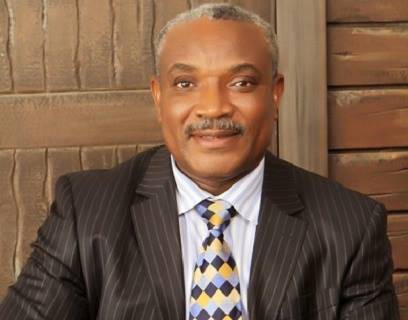
Chairman of the Nigerian Aviation Handling Company (NAHCO, Aviance), Suleiman Yahya has been appointed Ambassador for IDPNetwork in Nigeria.
INSEAD is a graduate business school with campuses in Europe; Fontainebleau, France, Asia (Singapore), and the Middle East (Abu Dhabi).
INSEAD which is in the category of Havard Business School, was founded in 1957 by venture capitalist and Harvard professor Georges Doriot, along with Claude Janssen and Olivier Giscard d’Estaing.
The school offers various academic programmes, including a full-time Master of Business Administration (MBA) programme, Executive MBA (EMBA) programme, a Master in Finance programme, a PhD in management programme, and a variety of executive education programmes.
In a correspondence to Yahyah, the IDPN Committee said that the appointment as Ambassador is for an initial period of one year.
Responding to the letter of appointment, Yahyah told newsmen that this is an opportunity for him to bring INSEAD and campus to Africa, and to broaden the awareness of INSEAD in Africa.
Yahyah who bags a First Class Degree in Economics and a Master of Philosophy in Economics from Cambridge University England is also the chairman of Lafarge Ashaka Cement Plc, a leading cement producer in Nigeria. He also chairs the Abuja Business Council.
The new Ambassador is an advocate of best practice in Corporate Governance. He is the first African to be certified as a Corporate Governance Director of INSEAD. [myad]
Fellow Nigerians, let me start by saying nothing worries me more than the intractable problems of our dearly beloved country. There are times I wish I could just mind my own business but it seems I’m addicted to the issues and problems of Nigeria.
Lately, I have come up with different theories about why we are where we are. One of them is to go superstitious and believe we are jinxed and we’ve been jazzed by some fiendish demons. Or how does one explain the fact that no government has been able to find a practical and workable solution to our incredible challenges.
My second theory is that we actually hate our country but just pretend to be patriotic which is best seen in our words and not, of course, in our action.
An average Nigerian spends a large proportion of his time daily lamenting about Nigeria and regurgitating the same simple facts and seeming solutions that would ultimately lead to no grand denouement because nothing is done about them. We talk, talk and talk and that’s where it ends. If we truly love our country as much as we claim, we should have arrived at our Eldorado by now given the plethora of sometimes practical and workable solutions that we proffer.
My third theory is that we have a cultural problem that requires a cultural revolution. Our culture turns a once simple human being to an unrecognisable monstrosity in little or no time. One begins to wonder what suddenly caused the 360-degree transformation. Leaders in Nigeria at all levels live and act like emperors. Even the most enlightened ones among us behave like victims of hypnotism and accept whatever was in place before, and continue the madness.
One of them is the over-ceremonial nature of governments. Every leader over-dresses, over-militarises security, and over-spends on personal comfort and so on. I must commend the simplicity of the Vice-President, Professor Yemi Osinbajo as he seems to be able to buck this trend and dress simply in Kaftan and suits as he has always done. Governor Olusegun Mimiko is another leading politician who imbibes the simple culture.
The one I find most baffling is how many times Governors have to travel to Abuja, Nigeria’s Federal character for all manner of meetings and ceremonies. States keep properties at home (including guest houses, more like abattoirs) and then replicate the same in Abuja and in Lagos.
The Federal Government has properties scattered everywhere in choice locations lying fallow most times. Our Presidential fleet is competing with that of America and they must be maintained by all means. So, how can we complain about under-development when leaders are not ready to compromise on expensive lifestyles?
My fourth theory is that a society gets the type of leaders it deserves. We are largely docile and accept our leaders’ excesses. If you complain too much, they would ask “is it only you that knows how to talk?” I watched closely as Wole Soyinka, Tai Solarin, Gani Fawehinmi, Femi Falana, Balarabe Musa, and others struggled so much for a thankless nation. They were regularly harassed by government and frequently abused by the same people they were trying to protect. Their families suffered in silence without any of us asking how they fared. And as popular as they were, none except Balarabe Musa could win major elections. Gani Fawehinmi was a Presidential candidate and he lost resoundingly. Femi Falana tried to be the Governor of Ekiti State but it was an impossible mission. Our society moves on regardless of what happens to these social and welfarist gladiators.
Where then do we go from here? There are no easy solutions to these problems. None springs out as being the most practical and necessary. My suggestion however, is that we must start from somewhere. We cannot just resign ourselves to fate and do nothing.
I have received some impetus lately from my experience in Ghana. Anyone following me on social media would have noticed my romance with the old Gold Coast. The country has demonstrated that we can surmount our problems once we make up our minds to start the journey. My advice is that we should never feel too big to learn from others, even from those we feel are smaller to us. The story of Ghana should impress and not depress us.
I have had the privilege of watching President John Dramani Mahama build and transform Ghana into a modern nation state. We, therefore, don’t have to travel far to borrow examples. I know that in our usual bravado we may dismiss this innocuous call as arrant nonsense but I wish to beg our leaders, in the name of all that is good, to treat this as a clarion call. There is ample evidence that Ghana is working and there is no reason why Nigeria cannot work. Ghana has fewer resources than Nigeria but it has managed to properly harness and enhance these resources over the years. More recently, President Mahama has taken up the gauntlet and done a lot more to make Ghana a progressive, buoyant economy with significant infrastructural development.
The first reality check is to accept that no leader can do it all. No leader has the monopoly of wisdom and nobody should try to pin that on any of our leaders and seek to transform them into what they are not. Once we understand that the President is not a magician or sorcerer, we can begin to appreciate his limitations and not be overly expectant of miracles.
Nonetheless, President Muhammadu Buhari can still do much more in the under two years that he has left before he decides to seek re-election or not. His first task is to prioritise the activities of his Government having substantially dealt with his primary agenda of fighting corruption. I am sure that the President knows that the fight against corruption is just one of the foundations upon which the monument of development and progress will be based. Unfortunately, added to the traditional features of progressive development like the economy, education, health, agriculture and social welfare, Nigeria has added security and insecurity. All of these need to be given proper consideration and prioritised in order to ensure that the elusive well-being of our people is achieved.
I will never get tired of reiterating this fact; Nigeria will never make substantial progress until we upgrade our educational institutions. This is one area Ghana is doing very well. Ghana today has about 60,000 educational institutions from primary to tertiary institutions. I know that Nigeria has many more but it is in the quality and the detail that Ghana emerges superior. Enrolment in the various levels of Ghanaian institutions is about ten million out of a population of about 26 million. I am aware that Nigeria falls far short in this regard.
In 2013, close to 32 million exercise books were distributed by Government to nearly five million pupils. About two million school uniforms have gone out to pupils since 2010. In 2013, 12.5 million Maths, English and Science text books were distributed to government basic schools. An average pupil in Ghana has access to about four textbooks. Osun State has taken a welcome lead by its controversial Tablet, called Opon Imo which features several textbooks.
School feeding Programme is approaching about two million children. 60,000 laptops have been given out to Basic School pupils while about 50,000 teachers received ICT training. 10,000 locally made sandals went to underprivileged pupils. Teacher Training institutions now have well equipped science laboratories in order to improve the teaching of Science and Maths. Massive library facilities have been undertaken even in rural areas. Technical schools are thriving where artisans are trained for performance and efficiency.
Tertiary institutions are receiving special boosts. The University of Ghana has nearly completed a 617-bed teaching hospital complex for the training of medical students and nurses. Government is providing Distance Education ICT centres for all ten regions of Ghana equipped with video conferencing and lecture auditoriums. Kwame Nkrumah University of Technology in Kumasi has ultra-modern laboratories with latest gadgets such as “high capacity nuclear magnetic resonance spectrometers, mass spectrometers and analysers… petroleum engineering laboratories with drill simulators…” There is a new Veterinary hospital equipped to be the most advanced in West Africa. Polytechnics are being rebranded into Technical Universities. Just imagine how many billions of dollars Nigeria would save on foreign education if we can improve the quality at home drastically. Whilst it is laudable that the Nigerian Government is allowing entrepreneurs and religious organisations to invest in education, Government cannot and must not abdicate its responsibility to them. Government owes a duty to see the proper educational advancement and development of its children. It must take the lead and show the way and not wait for such private institutions to provide the foundation for our industrial development. Happily, some of these institutions like the Elizade University, Ilara-Mokin which has an Engineering Faculty that has equipment capable of producing a fire engine and race cars in the not too distant future have taken up the challenge.
Health they say is wealth. Nigeria would do extremely well if we can return to the days of old when our medical facilities were world class. Ghana has set up an ambitious plan to deliver 6,000 new hospital beds soon and some of the projects have advanced so much in the past two years because about two billion dollars has been invested by the Mahama government covering “two Teaching Hospital projects, three Institutional Hospitals, four Regional Hospitals, 14 District Hospitals, dozens of polyclinics and scores of health centres…” The beauty of it is that, the government is reaching out to many rural areas in the distribution of facilities. Looking through the Ghana Green Book containing the endless accounts of developmental projects garnished with crispy pictures one could see a country fully and gloriously at work for the improvement of the lives of its people.
On the international and tourist front, the small but efficient Kotoka International Airport Accra is being upgraded. The general ambience has improved with about 26 Immigration cubicles equipped with cameras and finger-printing machines. There are new conveyor belts, elevators, escalators, etc. The cargo section is heavenly. A new terminal is being added because of the economic expansion and development that is attracting Foreign Direct Investment (FDI) to Ghana. All this has been achieved within a very short period. On the contrary, our airports remain horrible.
Where there is work in progress like the extensions at at Nnamdi Azikwe International Airport, Abuja and Murtala Mohammed International Airport, Lagos the work has been done at snail speed. This is not good enough for the giant of Africa. Something must be done urgently to stop this disgrace. The airport is always the first point of contact with most countries for visitors and investors. For whatever reasons, our airports have remained our worst PR edifices as a nation.
President Buhari has urgent work to do. It must start now by first deciding the way forward after the corruption battle. [myad]
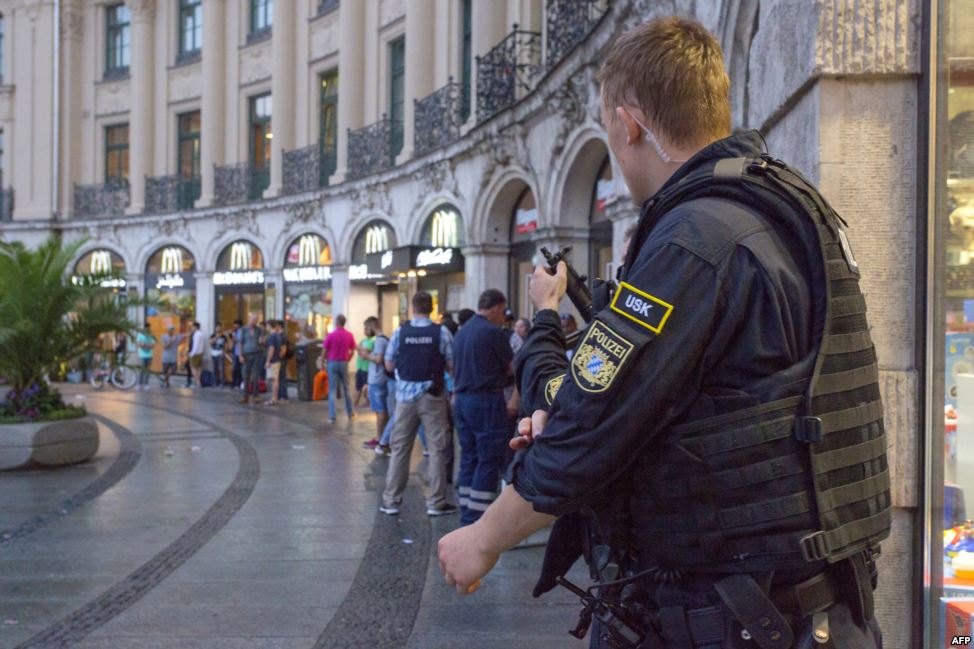
Unidentified gunmen, on Friday evening, launched a deadly attack on a busy shopping mall in the German city of Munich, spraying bullets as people fled in horror for safety from what police said was a terrorist attack.
Police said that six people have been killed and the attackers were still at large. They told the public to get off the streets as the city – Germany’s third biggest – went into lockdown, with transport halted and highways sealed off.
As Special Forces rushed to the scene, some people remained holed up in the Olympia shopping center.
“Many shots were fired, I can’t say how many but it’s been a lot,” said a shop worker hiding in a store room inside the mall.
The woman, who asked not to be identified, said she had seen a shooting victim on the floor who appeared to be dead or dying.
A worker at a different shop, Harun Balta, said: “We are still stuck inside the mall without any information; we’re waiting for the police to rescue us.”
It was the third major act of violence against civilians in Western Europe in eight days. Previous attacks in France and Germany were claimed by the Islamic State militant group.
No suspects had been arrested yet, she said.
Police spokesman said: “we believe there was more than one perpetrator. The first reports came at 6 p.m. (1700 GMT), the shooting apparently began at a McDonald’s in the shopping center. There are still people in the shopping center. We are trying to get the people out and take care of them.”
The mall near the southern German city’s Olympic stadium was surrounded by police after shots were fired.
“There is a major police operation under way in the shopping centre,” Munichpolice said on Twitter, urging people to avoid the area.
Emergency vehicles were seen in the streets outside, as passers-by looked on.
The shooting comes just days after a teenage asylum seeker went on rampage with an axe and a knife on a regional train in Germany, injuring five people.
Interior Minister, Thomas de Maiziere said the teenager was believed to be a “lone wolf” attacker who appeared to have been “inspired” by the Islamic State group but was not a member of the jihadist network.
It also follows a truck attack in the French Riviera city of Nice after Bastille Day fireworks last week that left 84 people dead. [myad]
President of Turkey, Recep Erdogan, has announced that no fewer than 10,410 people have so far been arrested in the country following the last week’s attempted coup even as the country now monitors its citizens travelling out.
Erdogan insists that the rapid pace of arrests is targeting the supporters of U.S.-based cleric Fethullah Gulen. He had said that the suspects were behind the failed July 15 coup which has disturbed many of Turkey’s Western allies, who said they see Turkey going down.
Among the soldiers were 162 generals, almost half the generals in the second-largest army of the NATO alliance.
“Beyond the arrests, more than 37,500 civil servants and police officers have been suspended. Additionally, 21,000 teachers in private schools have lost their licences.”
That is even Ankara announced the intensification of checks on Turkish citizens leaving the country in a move to prevent people associated with the attempted coup from escaping the authorities.
“Those travelling from any of the country’s international airports will now have to provide proof of their employment.
Civil servants as well as their spouses and children will need authorisation by their employer to travel.
“Meanwhile other employees will have to prove that they work in the private sector and are therefore not civil servants,’’ sources close to the government said.
The government has vowed to “clean” the civil service from Gulen supporters.
All civil servants have been banned from going on holiday, while those currently abroad have been asked to return home.
Turkey entered into a 90-day state of emergency on Thursday, which Erdogan has said is necessary to restore order after the coup, which left 260 dead.
“Turkey is also demanding that the U.S. extradite Gulen.
Citizens have to defend themselves against the “most insidious and vile coup attempt in the history of the Turkish people,” Erdogan said.
People have indeed continued to celebrate the crushing of the coup since the weekend.
Thousands gathered overnight on the Bosporous Bridge, which was occupied by troops in tanks who fired on civilians during the coup attempt.
Yasin Aktay, spokesman of Erdogan’s Justice and Development Party (AKP) said: “we cannot understand the criticism we’re getting from Europe about this.
“There have been two recent incidents in France and Belgium where terrorist attacks resulted in six months of states of emergency, which were extended for six months.”
He added that Turkey had been the victim of multiple terrorist attacks during this time and refrained until now from issuing a state of emergency.
“The fact that we did it in this case should be applauded much more, out of the 10,410 people arrested, 7,423 were soldiers; 287 police; and 2,014 judges and prosecutors. Furthermore, 686 civilians had been arrested.”
In the light of events in Turkey, Germany has said it would slow down talks on the country’s accession to the EU.
Whether or not negotiations would be halted completely, however, was not immediately clear.
Germany’s government spokesman Steffen Seifert said in Berlin that “this is not a German decision after all.”
The 28-member bloc started accession negotiations with Turkey 11 years ago, though progress has been slow with only 15 out of 35 negotiation chapters having been addressed and only one completed.
Meanwhile, the U.S. military said that the power supply to the Incirlik air base in Turkey, which was cut off following the coup, had been reinstated. [myad]
Special Assistant to President Muhammadu Buhari on Prosecution, Chief Okoi Obono-Obla, has painted a picture of how lawyers manipulate judges to either delay cases in courts or twist the cases.
“The lawyers take advantage of the fact that they are senior members of the bar and the judges are not firm on them, so they come out with all manner of excuses to get adjournment to prolong the matter. “So if the lawyers are alive to their responsibilities as ministers in the temple of justice, then they cannot do that because the law is very clear even if it would be adverse to your client’s interest.”
Obono-Obla, who spoke to the News Agency of Nigeria (NAN) on Friday in Abuja, accused counsels to defendants of being in the habit of using frivolous motions to delay trials because the judges are not firm. “If you look at the Administration of Criminal Justice Act, there is supposed to be collaborations between the Courts, the Law Enforcement Agencies and persons and authorities. “If you look at Section 1 (2) of the Administration of Criminal Justice Act of 2015, it is to ensure that there is compliance of that law. “And what is the essence of that law? The essence of that law is to protect society from crime, to protect the rights and interests of defendants, suspects and society. Obono-Obla said that the President is depending on the National Prosecution Coordinating Committee (NPCC) to improve the standard of prosecuting public officers that have looted the country’s treasury. This is even as he said that the anti-graft war should be seen as a collective fight, and that the President needed the support of the judiciary, legislature and the public to succeed. [myad]
We use cookies on our website to give you the most relevant experience by remembering your preferences and repeat visits. By clicking “Accept”, you consent to the use of ALL the cookies.
This website uses cookies to improve your experience while you navigate through the website. Out of these, the cookies that are categorized as necessary are stored on your browser as they are essential for the working of basic functionalities of the website. We also use third-party cookies that help us analyze and understand how you use this website. These cookies will be stored in your browser only with your consent. You also have the option to opt-out of these cookies. But opting out of some of these cookies may affect your browsing experience.
Necessary cookies are absolutely essential for the website to function properly. This category only includes cookies that ensures basic functionalities and security features of the website. These cookies do not store any personal information.
Any cookies that may not be particularly necessary for the website to function and is used specifically to collect user personal data via analytics, ads, other embedded contents are termed as non-necessary cookies. It is mandatory to procure user consent prior to running these cookies on your website.



 In spite of the difficult operating environment, the Nigerian Aviation Handling Company Plc (NAHCO) has recorded a five percent turnover in its 2015 financial year.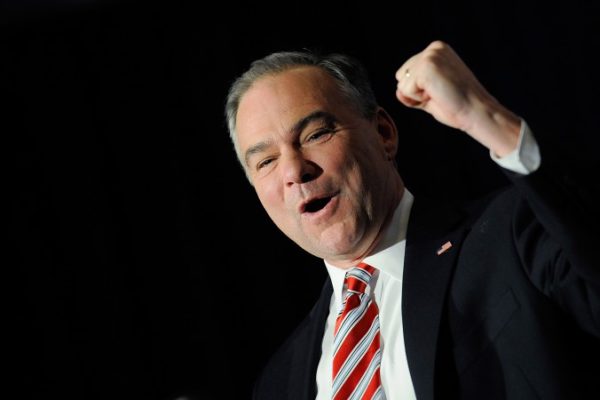
 The Director General of the Nigerian Maritime Administration and Safety Agency (NIMASA), Dr. Dakuku Peterside, has called on the security operatives and other stakeholders in the Nigerian maritime industry to redouble their efforts towards eradicating criminality in the Nigerian maritime domain. Peterside particularly referred to the Nigerian Navy.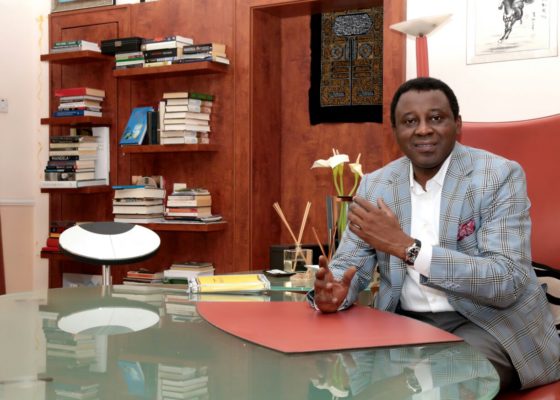



How To Move Nigeria Forward, By Dele Momodu
Lately, I have come up with different theories about why we are where we are. One of them is to go superstitious and believe we are jinxed and we’ve been jazzed by some fiendish demons. Or how does one explain the fact that no government has been able to find a practical and workable solution to our incredible challenges.
My second theory is that we actually hate our country but just pretend to be patriotic which is best seen in our words and not, of course, in our action.
An average Nigerian spends a large proportion of his time daily lamenting about Nigeria and regurgitating the same simple facts and seeming solutions that would ultimately lead to no grand denouement because nothing is done about them. We talk, talk and talk and that’s where it ends. If we truly love our country as much as we claim, we should have arrived at our Eldorado by now given the plethora of sometimes practical and workable solutions that we proffer.
My third theory is that we have a cultural problem that requires a cultural revolution. Our culture turns a once simple human being to an unrecognisable monstrosity in little or no time. One begins to wonder what suddenly caused the 360-degree transformation. Leaders in Nigeria at all levels live and act like emperors. Even the most enlightened ones among us behave like victims of hypnotism and accept whatever was in place before, and continue the madness.
One of them is the over-ceremonial nature of governments. Every leader over-dresses, over-militarises security, and over-spends on personal comfort and so on. I must commend the simplicity of the Vice-President, Professor Yemi Osinbajo as he seems to be able to buck this trend and dress simply in Kaftan and suits as he has always done. Governor Olusegun Mimiko is another leading politician who imbibes the simple culture.
The one I find most baffling is how many times Governors have to travel to Abuja, Nigeria’s Federal character for all manner of meetings and ceremonies. States keep properties at home (including guest houses, more like abattoirs) and then replicate the same in Abuja and in Lagos.
The Federal Government has properties scattered everywhere in choice locations lying fallow most times. Our Presidential fleet is competing with that of America and they must be maintained by all means. So, how can we complain about under-development when leaders are not ready to compromise on expensive lifestyles?
My fourth theory is that a society gets the type of leaders it deserves. We are largely docile and accept our leaders’ excesses. If you complain too much, they would ask “is it only you that knows how to talk?” I watched closely as Wole Soyinka, Tai Solarin, Gani Fawehinmi, Femi Falana, Balarabe Musa, and others struggled so much for a thankless nation. They were regularly harassed by government and frequently abused by the same people they were trying to protect. Their families suffered in silence without any of us asking how they fared. And as popular as they were, none except Balarabe Musa could win major elections. Gani Fawehinmi was a Presidential candidate and he lost resoundingly. Femi Falana tried to be the Governor of Ekiti State but it was an impossible mission. Our society moves on regardless of what happens to these social and welfarist gladiators.
Where then do we go from here? There are no easy solutions to these problems. None springs out as being the most practical and necessary. My suggestion however, is that we must start from somewhere. We cannot just resign ourselves to fate and do nothing.
I have received some impetus lately from my experience in Ghana. Anyone following me on social media would have noticed my romance with the old Gold Coast. The country has demonstrated that we can surmount our problems once we make up our minds to start the journey. My advice is that we should never feel too big to learn from others, even from those we feel are smaller to us. The story of Ghana should impress and not depress us.
I have had the privilege of watching President John Dramani Mahama build and transform Ghana into a modern nation state. We, therefore, don’t have to travel far to borrow examples. I know that in our usual bravado we may dismiss this innocuous call as arrant nonsense but I wish to beg our leaders, in the name of all that is good, to treat this as a clarion call. There is ample evidence that Ghana is working and there is no reason why Nigeria cannot work. Ghana has fewer resources than Nigeria but it has managed to properly harness and enhance these resources over the years. More recently, President Mahama has taken up the gauntlet and done a lot more to make Ghana a progressive, buoyant economy with significant infrastructural development.
The first reality check is to accept that no leader can do it all. No leader has the monopoly of wisdom and nobody should try to pin that on any of our leaders and seek to transform them into what they are not. Once we understand that the President is not a magician or sorcerer, we can begin to appreciate his limitations and not be overly expectant of miracles.
Nonetheless, President Muhammadu Buhari can still do much more in the under two years that he has left before he decides to seek re-election or not. His first task is to prioritise the activities of his Government having substantially dealt with his primary agenda of fighting corruption. I am sure that the President knows that the fight against corruption is just one of the foundations upon which the monument of development and progress will be based. Unfortunately, added to the traditional features of progressive development like the economy, education, health, agriculture and social welfare, Nigeria has added security and insecurity. All of these need to be given proper consideration and prioritised in order to ensure that the elusive well-being of our people is achieved.
I will never get tired of reiterating this fact; Nigeria will never make substantial progress until we upgrade our educational institutions. This is one area Ghana is doing very well. Ghana today has about 60,000 educational institutions from primary to tertiary institutions. I know that Nigeria has many more but it is in the quality and the detail that Ghana emerges superior. Enrolment in the various levels of Ghanaian institutions is about ten million out of a population of about 26 million. I am aware that Nigeria falls far short in this regard.
In 2013, close to 32 million exercise books were distributed by Government to nearly five million pupils. About two million school uniforms have gone out to pupils since 2010. In 2013, 12.5 million Maths, English and Science text books were distributed to government basic schools. An average pupil in Ghana has access to about four textbooks. Osun State has taken a welcome lead by its controversial Tablet, called Opon Imo which features several textbooks.
School feeding Programme is approaching about two million children. 60,000 laptops have been given out to Basic School pupils while about 50,000 teachers received ICT training. 10,000 locally made sandals went to underprivileged pupils. Teacher Training institutions now have well equipped science laboratories in order to improve the teaching of Science and Maths. Massive library facilities have been undertaken even in rural areas. Technical schools are thriving where artisans are trained for performance and efficiency.
Tertiary institutions are receiving special boosts. The University of Ghana has nearly completed a 617-bed teaching hospital complex for the training of medical students and nurses. Government is providing Distance Education ICT centres for all ten regions of Ghana equipped with video conferencing and lecture auditoriums. Kwame Nkrumah University of Technology in Kumasi has ultra-modern laboratories with latest gadgets such as “high capacity nuclear magnetic resonance spectrometers, mass spectrometers and analysers… petroleum engineering laboratories with drill simulators…” There is a new Veterinary hospital equipped to be the most advanced in West Africa. Polytechnics are being rebranded into Technical Universities. Just imagine how many billions of dollars Nigeria would save on foreign education if we can improve the quality at home drastically. Whilst it is laudable that the Nigerian Government is allowing entrepreneurs and religious organisations to invest in education, Government cannot and must not abdicate its responsibility to them. Government owes a duty to see the proper educational advancement and development of its children. It must take the lead and show the way and not wait for such private institutions to provide the foundation for our industrial development. Happily, some of these institutions like the Elizade University, Ilara-Mokin which has an Engineering Faculty that has equipment capable of producing a fire engine and race cars in the not too distant future have taken up the challenge.
Health they say is wealth. Nigeria would do extremely well if we can return to the days of old when our medical facilities were world class. Ghana has set up an ambitious plan to deliver 6,000 new hospital beds soon and some of the projects have advanced so much in the past two years because about two billion dollars has been invested by the Mahama government covering “two Teaching Hospital projects, three Institutional Hospitals, four Regional Hospitals, 14 District Hospitals, dozens of polyclinics and scores of health centres…” The beauty of it is that, the government is reaching out to many rural areas in the distribution of facilities. Looking through the Ghana Green Book containing the endless accounts of developmental projects garnished with crispy pictures one could see a country fully and gloriously at work for the improvement of the lives of its people.
On the international and tourist front, the small but efficient Kotoka International Airport Accra is being upgraded. The general ambience has improved with about 26 Immigration cubicles equipped with cameras and finger-printing machines. There are new conveyor belts, elevators, escalators, etc. The cargo section is heavenly. A new terminal is being added because of the economic expansion and development that is attracting Foreign Direct Investment (FDI) to Ghana. All this has been achieved within a very short period. On the contrary, our airports remain horrible.
Where there is work in progress like the extensions at at Nnamdi Azikwe International Airport, Abuja and Murtala Mohammed International Airport, Lagos the work has been done at snail speed. This is not good enough for the giant of Africa. Something must be done urgently to stop this disgrace. The airport is always the first point of contact with most countries for visitors and investors. For whatever reasons, our airports have remained our worst PR edifices as a nation.
President Buhari has urgent work to do. It must start now by first deciding the way forward after the corruption battle. [myad]