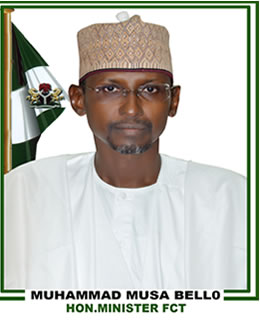
Minister of the Federal Capital Territory (FCT), Malam Muhammad Musa Bello has promised to complete the multi-million-Naira modern Nyanya transport terminal as a way of tackling the notorious traffic congestion along the Nyanya axis.
The Minister, who spoke when he and the FCT Permanent Secretary, Dr. Babatope Ajakaiye paid an unscheduled visit to the old Nyanya bus terminal that was bombed by terrorists in 2014, expressed displeasure over the commencement of the project without taking into account the construction of an access road to the new terminal.
He wondered why such a gigantic project would start without the award of contract for the construction of the necessary road network to connect motorists in and out of the terminal, stressing that everything would be done to ensure that the terminal is completed and made operational to not only tackle traffic congestion in that axis, but to also improve security of the motoring public.
The Minister also visited the new Nyanya Transport terminal under construction which is about 62 percent complete, and is expected to gulp a total sum of N628,265,998.63.
The development of a new Nyanya bus terminal was conceived by the FCT Administration to provide a secure and convenient facility with adequate services for use by commuters, sequel to the series of bombing at the old Nyanya Motor Park, which led to the loss of many lives.
The construction work which began in the first quarter of 2015 is expected to provide arrival terminal building, departure terminal building, security block, Bank, Driver’s lodge, maintenance block, communication block and commercial block. Other structures under construction also include a church, a mosque, an Administrative block as well as public conveniences. [myad]
All is now set for the 12th edition of the All Nigeria Editors’ Conference scheduled to hold from August 3 to 7 in Port Harcourt, Rivers State, with the theme: “Economic Diversification: Agriculture as Option for a Prosperous Nigeria.” No fewer than 300 Nigerian editors, a collection of mainstream farmers, agriculture financiers, policy makers and captains of industry are expected to grace the event.
This year’s edition has been tailored primarily to focus on agriculture as a counterfoil to the dwindling receipts from crude oil. Speakers include a rich mix of practising farmers, agriculture financiers and policy-makers. The Founder of HoneySuckle PTL Ventures, Mosunmola Cynthia Umoru, would speak on Agriculture as Panacea for Unemployment, while Kola Adeniji of Niji Farms would talk on Agriculture as a Foreign Exchange Earner. The Chief Executive of the Bank of Agriculture, Prof. Danbala Danju, would be explaining the Role of Banks in Agriculture Financing, while Kano State-based farmer, Muhammad Abubakar, the Managing Director of L&Z Integrated Farms, would experientially explore the topic: Making the Most of Agriculture Value Chain. The Acting President of the Guild, Funke Egbemode, said: “The sole emphasis on agriculture for this year’s conference was in response to the falling price of crude oil at the international market which has automatically reduced government’s earnings and revenue base. This is the first the conference is focusing on agriculture in the most pragmatic sense and it is meant to draw the nation’s attention to the limitless opportunities that abound in agriculture.”
The All Nigeria Editors’ Conference is the largest gathering of Nigerian editors. It is a watering hole of ideas that have shaped government policies and programmes over the years. The maiden edition was held in 2004 at Ada, in Osun State. Subsequent editions have been held in different parts of the country. The conference also attracts both local and foreign speakers as well as editors from organizations such as the West African Editors Forum, the African Editors Forum, the World Editors Forum and the World Association of Newspapers. Host Governor, Nyesom Ezenwo Wike, said the conference would afford the state the opportunity to showcase its investment potentials. In a statement signed by the Special Assistant to the Governor on Electronic Media, Simeon Nwakaudu, governor Wike said that the conference would be a fitting platform to partner with editors and the media to consolidate development in both the state and the nation at large. He said that the state is hosting several national and international events as a demonstration of the fact that Rivers State is an investors’ destination, stressing that the state is peaceful and the people hospitable. “Hosting this year’s conference will also make the editors witness first-hand the development projects and programmes of my administration which has improved the living standard of the people,” the Governor said. Previous editions have bordered on good governance, electoral values among others. In 2005, the then Minister of the Federal Capital Territory Administration, Malam Nasir el-Rufai, facilitated the conference in Abuja with the theme: Media, a Catalyst for Good Governance. In 2006, the government of Dr. Goodluck Jonathan, then the Governor of Bayelsa State, sponsored the conference, which was held in Yenagoa and the theme was Media and the Challenges of Political Transition. In 2007, ANEC was held in Bauchi State, with the support of the government of Malam Isa Yuguda. The theme then was: The Media: Electoral Reform and Election Management. The 5th edition was held in 2008 in Kaduna with the support of the government of the then Governor Mohammed Namadi Sambo, with the theme: Vision 2020, Economic Growth and the Nigerian Editor. In 2010, Governor Rotimi Amaechi of Rivers State hosted, and theme was: Oil and Gas, Post-Amnesty and the Nigerian Editor, while in 2011, Governor Adams Oshiomhole of Edo State hosted the conference, with theme: Deepening our Democracy: Role of the Nigerian Editor. In 2012, the Akwa Ibom State government hosted, and theme was: National Security and the Nigerian Editor. Governor Emmanuel Uduaghan of Delta State hosted in 2013 and the theme was: Nigeria Beyond Oil, while in 2014, the Katsina State government hosted, with the theme: Credible Elections and Good Governance – The Role of the Editor. Last year, Bayelsa State hosted and the theme was: Nigeria: The Change We Need – Role of the Editor. [myad]
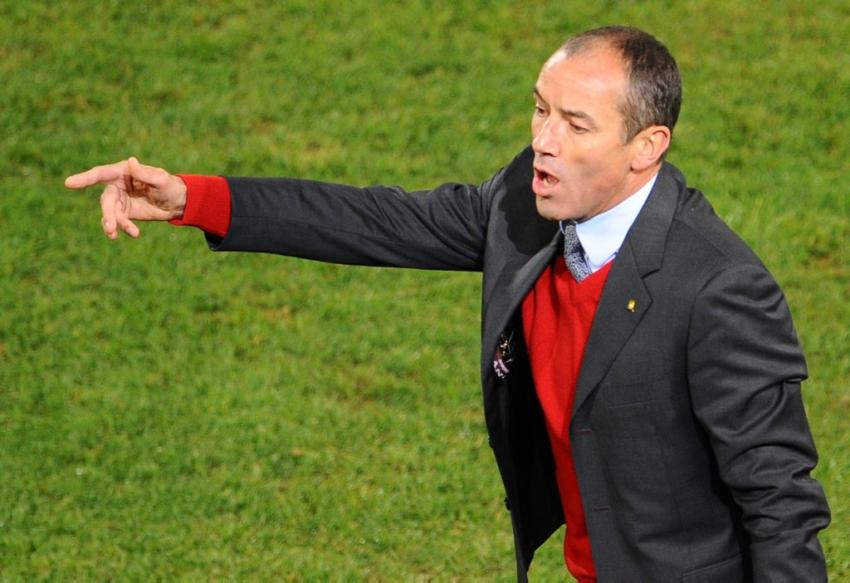
52 year old Frenchman, Paul Le Guen, has turned down the offer from the Nigeria Football Federation (NFF) to head the technical crew of the Nigeria Super Eagles as Technical Adviser.
Herve Penot, a journalist at L’ Euipe, wrote via his handle @hpenot_lequipe: “Paul Le Guen rejects Nigeria. Frenchman insists the country’s FA (NFF) yet to meet terms and conditions to be coach.”
The dream Technical Adviser was quoted as saying that lack of order and openness in the manner football is run in Nigeria as being one of the reasons why he would not take up the job offered him by the Nigeria football ruling body.
He was also quoted as saying that NFF did not meet the terms and conditions that would make him work for Nigeria.
The Technical and Development Committee of the Nigeria Football Federation on Monday named Le Guen as the new Technical Adviser of the Senior National Team, Super Eagles while Nigerian Salisu Yusuf was named as his assistant, who takes the role of Chief Coach.
The NFF has said the appointments are subject to agreement of contract terms with its Executive Committee.
The development means that the NFF would scurry back to the marketplace to shop for a fitting Technical Adviser for a rudderless Super Eagles team. [myad]
The Governor of Kogi State, Alhaji Yahaya Bello, has directed the Vice Chancellor of the Kogi State University, Anyigba to reopen the school immediately. This was after three months industrial action by members of the Academic Staff Union of Universities of the institution. Governor Bello said that having met the major demands of the lecturers, they are expected to return to classes. He said that his government will continue to place premium attention to education, urging the different heads of tertiary institutions in the State to deepen the culture of patriotism and hard work among their staff members. According to the Governor, the Treasury Single Account (TSA) will soon come afloat in the State, stating that public accountability will remain the hallmark of his administration. Bello said having paid six months salaries in just six months into his tenure, his government should be trusted by the lecturers. The Governor promised to look into cases of over-taxation of lecturers in the past, adding that cases of unjust taxation will be redressed, adding that the approval on the subject matter, which was handed over to him, was for tax waiver. He directed full scale audit of all tertiary institutions in the State. Responding, the heads of the tertiary institutions thanked the Governor for paying four months salary arrears owed by the previous administration. He said that the gesture is a signature of the Governor’s commitment to tertiary education in the State. [myad]
The United Nations Children Education Fund (UNICEF) has raised alarm that the next possible weapon for mass death in the aftermath of the devastating Boko Haram is malnutrition, especially amongst the young ones in various Internally Displaced Persons (IDP) camps in Borno State. In a statement assessing the current situation as it is prevaling in the state most hit by the Boko Haram insurgency, UNICEF sais that nearly a quarter of a million children are severely malnourished in Borno state, and are facing a high risk of death. UNICEF said that as the scale of the humanitarian crisis caused by the Boko Haram emergency continues to unfold and more areas are becoming accessible to humanitarian assistance, the extent of the nutrition crisis affecting children is becoming even more apparent. The UN children’s agency therefore appealed to all partners to join the humanitarian response and donors to urgently provide resources. It said: “out of the 244,000 children suffering from severe acute malnutrition in Borno, an estimated 49,000 children – almost 1 in 5 – will die if they are not reached with treatment. “Some 134 children on average will die every day from causes linked to acute malnutrition if the response is not scaled up quickly.” The statement, signed by the UNICEF Regional Director for Western and Central Africa, Manuel Fontaine, who just returned from a visit to Borno state said: “we need all partners and donors to step forward to prevent any more children from dying. No one can take on a crisis of this scale alone.” While visiting newly accessible sites, previously under Boko Haram control, Fontaine witnessed destroyed towns accommodating displaced people, families with little access to adequate sanitation, water or food, and thousands of frail children in desperate need of help. “There are two million people we are still not able to reach in Borno state, which means that the true scope of this crisis has yet to be revealed to the world,” Fontaine said. “There are organizations on the ground doing great work, but none of us are able to work at the scale and quality that we need. We must all scale up.” The statement said that UNICEF is working with partners to screen and treat children for malnutrition and improve access to water and sanitation. It said that UNICEF’s humanitarian response also includes providing medical care, immunization, education and psychological support to the children affected by the violence. “In early 2016, UNICEF appealed for $55.5 million to respond to the humanitarian crisis in north-east Nigeria, but has so far only received $23 million – 41 percent. As the children’s agency gains access to new areas with vast humanitarian needs in the coming weeks, it expects the appeal to increase significantly.” [myad]
Three civil society groups in Nigeria have sent a joint protest to the House of Representatives Committee on Public Procurement, protesting on the dangers inherent in the proposed amendments to the Public Procurement Act 2007 now before the Legislature. The groups are: Procurement Observation and Advocacy Initiative (PRADIN), Civil Society Legislative and Advocacy Centre (CISLAC) and Trade Union Congress of Nigeria (TUC). In a letter of protest, dated June 28 and jointly signed by the National Coordinator of PRADIN, Mohammed Bougei Attah, the Executive Director of CISLAC, Auwal Musa Rafsanjani, and the representative of TUC, Comrade Aliyu Abdulhakeem, the groups warned that the House of Representatives’ Public Hearing of Tuesday July 19 and the Senate version on Thursday May 26 have political undertone and that there are several inconsistencies in the proposed amendments to the Act. The protest letter, titled ‘Joint Position and Memorandum by Coalition of Civil Society Organizations Working in the Areas of Sound Public Procurement System through Good Governance, Transparency and Accountability’ read in parts: “we wish to put on record that this Memorandum and Joint Statement represents the voice of over 150 CSOs in Nigeria and as represented by Procurement Observation and Advocacy Initiative (PRADIN) and Civil Society Legislative and Advocacy Centre (CISLAC) and the Trade Union Congress (TUC). Thus, this letter is a follow up to the earlier Memorandum submitted to the Senate Committee on Public Procurement in response to the invitation to the Public Hearing and Call for Memorandum of Thursday 26 of May 2016 as advertised on Thursday May 24” In particular, the groups noted that the subject of the Public Hearing, as advertised, and as contained on the schedule distributed by the Office of the Clerk to the Senate and House Committees are similar to the amendments proposed earlier in the last two dispensations of Presidents Umar Musa Yar’Adua and Goodluck Jonathan administrations. For the record, the group noted that this is the fourth time the Legislators have attempted to amend the PPA 2007 but failed due to inconsistencies and lack of genuine concern for the subject of transparency that the Act stands. Further, the groups pointed out certain flaws in the planned amendments which is as advertised reads “A Bill for an Act to Amend the Public Procurement Act 2007, by Adding a new Member to the Council, Amending the Procedure for Appointing the Director General of the Bureau and Extending the Application of the Act to Defence Procurement; and for other Matters Connected Therewith – HB. 16.03.475” In a swift reaction to the above, the group argued that assuming but not conceding that the intention of the lawmakers – and by extension the Public Hearing – was to amend Section 1 (2) of the Principal Act by removing the Minister of Finance as the Chairman of the National Council for Public Procurement and replacing it with the President, Section 1 (2) (f) of the Principal Act by adding The Nigerian Institute of Quantity Surveyors as member of the National Council for Public Procurement, Section 1 (4) of the Principal Act by deleting ‘The Chairman and other members of the Council shall be appointed by the President’ to only ‘Other members of the Council shall be appointed by the President’ and Section 7 (1) of the Principal Act by making the appointment of the Director General of the Bureau of Public Procurement (BPP) a competitive selection on the recommendation of the Council but to be confirmed by the National Assembly, “the attempt to reinvent or reintroduce what has previously being debated and addressed under the 6th and 7th Legislative Assemblies make the process a self ridicule” PRADIN, CISLAC and TUC pointed out that the proposal to make the President the Chairman of the yet-to-inaugurated National Council for Public Procurement violates Chapter VI, Part 1 Section 138 of the 1999 Constitution (as amended). The section states unequivocally that “The President shall not, during his tenure of office, hold any other executive office or paid employment in any capacity whatsoever”. The wisdom here is that the President already holds such Executive Powers that are above what is currently sought. It is important here to note that the Minister of Finance as the Chairman of the Council (as in the Principal Act) is a representative of the President, much so other members of the Federal Executive Council (FEC).” In the letter, the groups said that if they entertain the request and evaluate it against other standards, by making the President of the country as Chairman of the Council, it implies that the Executive body will now be the Alpha and Omega as well as presiding judge in their case while other arms of government and sector will be at their mercy. “By this act also, any such statutory report, such as the bi-annual procurement audit report coming from the Council and the Bureau of Public Procurement (BPP) will be biased because it will be solely an executive affair. Again, the independence of the Bureau would have been compromised here because there are three arms of government and the Council is expected to recognize this. The crafters of the law are very conscious of the need for checks and balances such that it does not allow the Council to be at the mercy of one party. It was created in a way that it accommodates all the sectors – public, private and the non-profit sectors – as council members with equal powers.” [myad]
It is a good thing to note that religious organizations have been contributing to the socio-economic development of Nigeria since their inception. Missionaries started with the establishment of the first primary schools, 1843 in Badagry, and they helped reduce illiteracy at a very fast rate. Those schools provided qualitative education at affordable prices while many were even free.
Unfortunately, instead of the government to establish her schools and make them compete with the privately owned ones, the government mischievously took over private schools and ran them aground. Religious organisations in Nigeria watched helplessly how the quality of education was bastardised by government. It was not until 1990’s when religious organisations returned into education investment.
Religious organisations also invested in the provision of health care centres, though they are not as many as the schools they own, yet their impacts are felt wherever they are located. Some operate maternity centres in local areas while some offer routine medical check-up.
In 1999, Madonna University was approved as the first religious organisation owned private university in Nigeria, since then, other religious groups have been establishing universities all over Nigeria. However, so much criticism has accompanied the ‘exorbitant’ fees introduced by them as people claim the poor cannot afford them.
The fact that these universities were established by religious organisation makes it look ‘exploitative’ to critics because they believe that services of religious organisations should either be free or cheap as they were funded by followers’ contributions. Moreover, they have invested rightly and I believe the fees would be more affordable in the future.
Media (TV and radio) stations of religious organisations are being operated on various outfits. Some are into real estate, sports and building of skill acquisition centres. All these are not cheap, they cost a huge sums. Setting up a standard university is very expensive, some say it requires a minimum of 10 billion naira to acquire human and physical resources for the start up.
Taking a look at the operations of religious organisations in Nigeria, one will observe that they control huge funds in the economy. Donating/giving for religious purposes is one of the voluntary acts in Nigeria, but unfortunately, there is so much poverty in the society. Religious organisations became economic spectators because the government monopolised the responsibility of developing the economy.
Corruption and cluelessness perpetrated by successive governments have impoverished the society, therefore the government could not discharge her obligations to the society. Malnutrition and hunger has ravaged Nigeria. People with capital would rather import food than to establish farms. Government officials steal billions of naira in attempt to provide farming facilities for farmers. Now, the government has resulted to seeking help from the private organisation, religious organisations inclusive.
Present day agriculture is capital intensive. Much money is needed to achieve abundant food production as local farmers cannot afford the required amount. I have not seen any food exporting nation that keeps using primitive tools for farming. So I don’t believe that we should continue to encourage primitive farming but to continue to find financially capable organisations -like the religious organisations- to invest in agriculture.
I believe that religious organisations must invest in agriculture because poverty, malnutrition and unemployment are synonymous to all religious groups in Nigeria. The investment capability of religious organisations must be optimally harnessed in order to boost food production. They also do not need to depend on the government for land, fertilizers, chemicals, irrigation, machines and other facilities needed for production as they can afford them
The successes recorded in the provision of tertiary education, mass media and other socio-economic developmental activities of these religious organisations must be replicated in the agricultural sector. Successive governments have contributed their efforts (positively or negatively) toward the agricultural sector, yet food remains scarce. Therefore religious leaders must not continue to watch hunger ravage our nation but to convince their followers to join hands towards food production.
Religious organisations (and the government) must greatly reduce the amount spent on holy pilgrimages and invest in agriculture. The nations we visit are self sufficient in food production while we suffer malnutrition. So terrible that the hungry congratulate the pilgrims on successful pilgrimages, yet pilgrims have noting tangible to offer the hungry. Many went on holy pilgrimages in the past, but now, they do not even have food on their tables. Pilgrimages can continue when we all have so much to eat.
Efforts to acquire more private universities and media stations should be suspended while the money should be diverted into agriculture. Youths from all religious groups need jobs and food, so let’s provide for them through this means. The era of acquiring private jets, and expensive cars for religious leaders should also be suspended as these are the ways funds can easily be raised for food production.
Only few worshippers benefited from the universities operated by religious organisations. But If religious organisations can eventually invest in agriculture, both faithful and unfaithful follower will benefit directly and indirectly. Agriculture is a very profitable business, so any religious group intending to invest in agriculture should know she has nothing to lose.
When we have abundant food, the over $11bn spent annually on food production will be saved. The value of the naira which has fallen by over 100 percent since January 2015 will definitely rise as the demand for foreign currency will reduce. Presently, the government is confused as far as agricultural development is concerned, therefore let us take responsibility now (am seeking partnership on a proposal I have on how to make religious organisation invest in agriculture).
A Chinese proverb says ‘the best time to plant a tree is ten years ago, the second best time is now’. If we had started ten years ago we would have gone far, but still not too late to begin massive investment in agriculture.
The Independent National Electoral Commission (INEC) has announced that 19 governorship candidates of their respective political parties have been clear to participate in the September 10, 2016 governorship election in Edo State. Head of Legal Services of the electoral body, Mathew Ugwuocha, who made the announcement in Benin, the Edo State capital on Monday, explained that, 15 male running mates and four female running mates were also cleared for the election. He gave the names of the governorship candidates with female running mates as Thompson Osadolor of KOWA; Adviser Nowamagbe of UPP; Ishaka Ofemile of AA and Ukonga Frank of NNPP. The running mates are Nancy Ewemade of AA; Florence Okundaye of KOWA; Okosun Davis of UPP and Emodogo Eweha of NNPP. Other governorship candidates include Osagie Ize-Iyamu of PDP, with John Yakubu as running mate and Godwin Obaseki of APC, with Philip Shaibu, member of House of Representatives, as running mate. [myad]
The President of the Senate, Dr. Abubakar Bukola Saraki, has made it clear that he is still loyal and committed to the All Progressives Congress (APC) and that he believes in the ability of President Muhammadu Buhari to redeem the party’s electoral promises made during the 2015 general elections. The Senate President spoke at the 10th Abuja Housing Show on Monday in Abuja, in which top government officials and prominent stakeholders in the housing sector brainstormed on the theme: “Expanding Access To Affordable Housing In Africa.” Saraki, who acknowledged the presence of the APC National Organizing Secretary, Senator Osita Izunaso, promised that the APC government is unwaveringly committed to the social welfare of the people while re-affirming his unalloyed loyalty to the party. “The Senate and the National Assembly as a whole believe very strongly that we must make a difference in the housing sector,” he said. The Senate President, reacting to observations that the existing housing laws needed amendment and repeal, charged the organizers of the Summit to take a further step by forwarding a document of laws requiring amendments to the National Assembly. “I assure you that action will be taken instantaneously,” Saraki promised. Saraki asserted that the Senate has commenced the review processes of several laws affecting property rights and access housing in the country. According to him, the review of the National Housing Fund Act is ongoing and would be completed before the end of the year. [myad]
The Technical and Development Committee of the Nigeria Football Federation has named 52 year old Frenchman, Paul Le Guen, as the new Technical Adviser of the Senior National Team, the Super Eagles. Le Guen will be assisted by Nigerian, Salisu Yusuf, who takes the role of Chief Coach. The appointments are subject to agreement of contract terms with the NFF Executive Committee. New Eagles’ boss Le Guen steered the Indomitable Lions of Cameroon to the 2010 FIFA World Cup finals. He played for Brest, Nantes and Paris Saint Germain and wore 17 caps for France, before coaching Rennes, Lyon, PSG (in France) and Glasgow Rangers (in Scotland). He also coached Oman. Yusuf, capped at U20 level by Nigeria, called the shots in interim capacity for two international friendly matches in Europe at the end of May, which the Eagles won. Spokesman of the Committee, Paul Bassey, told thenff.com after the meeting at the NFF secretariat on Monday that Enugu Rangers gaffer, Imama Amapakabo, and former Super Eagles’ goalkeeper and skipper, Alloy Agu, who served as assistant coach and goalkeeper trainer for the games against Mali and Luxembourg in May, retain their places in the technical crew. The new crew’s immediate challenge is a 2017 Africa Cup of Nations qualifier against Tanzania in the first week of September – a dead rubber, but which would serve as ample preparation for the 2018 FIFA World Cup qualifying match away to Zambia on October 3. The Committee has also recommended to the NFF Board the appointment of one-time Super Eagles’ Assistant Coach, Bitrus Bewarang, as the new NFF Technical Director. Bewarang, who is the President of the Nigeria Football Coaches Association, will replace the late Coach, Shaibu Amodu. There is also a recommendation that former Super Eagles’ defender, Nduka Ugbade, be restored to the U17 National Team as assistant to Coach Manu Garba. [myad]
We use cookies on our website to give you the most relevant experience by remembering your preferences and repeat visits. By clicking “Accept”, you consent to the use of ALL the cookies.
This website uses cookies to improve your experience while you navigate through the website. Out of these, the cookies that are categorized as necessary are stored on your browser as they are essential for the working of basic functionalities of the website. We also use third-party cookies that help us analyze and understand how you use this website. These cookies will be stored in your browser only with your consent. You also have the option to opt-out of these cookies. But opting out of some of these cookies may affect your browsing experience.
Necessary cookies are absolutely essential for the website to function properly. This category only includes cookies that ensures basic functionalities and security features of the website. These cookies do not store any personal information.
Any cookies that may not be particularly necessary for the website to function and is used specifically to collect user personal data via analytics, ads, other embedded contents are termed as non-necessary cookies. It is mandatory to procure user consent prior to running these cookies on your website.