The United Nations Children Education Fund (UNICEF) has raised alarm that the next possible weapon for mass death in the aftermath of the devastating Boko Haram is malnutrition, especially amongst the young ones in various Internally Displaced Persons (IDP) camps in Borno State. In a statement assessing the current situation as it is prevaling in the state most hit by the Boko Haram insurgency, UNICEF sais that nearly a quarter of a million children are severely malnourished in Borno state, and are facing a high risk of death. UNICEF said that as the scale of the humanitarian crisis caused by the Boko Haram emergency continues to unfold and more areas are becoming accessible to humanitarian assistance, the extent of the nutrition crisis affecting children is becoming even more apparent. The UN children’s agency therefore appealed to all partners to join the humanitarian response and donors to urgently provide resources. It said: “out of the 244,000 children suffering from severe acute malnutrition in Borno, an estimated 49,000 children – almost 1 in 5 – will die if they are not reached with treatment. “Some 134 children on average will die every day from causes linked to acute malnutrition if the response is not scaled up quickly.” The statement, signed by the UNICEF Regional Director for Western and Central Africa, Manuel Fontaine, who just returned from a visit to Borno state said: “we need all partners and donors to step forward to prevent any more children from dying. No one can take on a crisis of this scale alone.” While visiting newly accessible sites, previously under Boko Haram control, Fontaine witnessed destroyed towns accommodating displaced people, families with little access to adequate sanitation, water or food, and thousands of frail children in desperate need of help. “There are two million people we are still not able to reach in Borno state, which means that the true scope of this crisis has yet to be revealed to the world,” Fontaine said. “There are organizations on the ground doing great work, but none of us are able to work at the scale and quality that we need. We must all scale up.” The statement said that UNICEF is working with partners to screen and treat children for malnutrition and improve access to water and sanitation. It said that UNICEF’s humanitarian response also includes providing medical care, immunization, education and psychological support to the children affected by the violence. “In early 2016, UNICEF appealed for $55.5 million to respond to the humanitarian crisis in north-east Nigeria, but has so far only received $23 million – 41 percent. As the children’s agency gains access to new areas with vast humanitarian needs in the coming weeks, it expects the appeal to increase significantly.” [myad]
Three civil society groups in Nigeria have sent a joint protest to the House of Representatives Committee on Public Procurement, protesting on the dangers inherent in the proposed amendments to the Public Procurement Act 2007 now before the Legislature. The groups are: Procurement Observation and Advocacy Initiative (PRADIN), Civil Society Legislative and Advocacy Centre (CISLAC) and Trade Union Congress of Nigeria (TUC). In a letter of protest, dated June 28 and jointly signed by the National Coordinator of PRADIN, Mohammed Bougei Attah, the Executive Director of CISLAC, Auwal Musa Rafsanjani, and the representative of TUC, Comrade Aliyu Abdulhakeem, the groups warned that the House of Representatives’ Public Hearing of Tuesday July 19 and the Senate version on Thursday May 26 have political undertone and that there are several inconsistencies in the proposed amendments to the Act. The protest letter, titled ‘Joint Position and Memorandum by Coalition of Civil Society Organizations Working in the Areas of Sound Public Procurement System through Good Governance, Transparency and Accountability’ read in parts: “we wish to put on record that this Memorandum and Joint Statement represents the voice of over 150 CSOs in Nigeria and as represented by Procurement Observation and Advocacy Initiative (PRADIN) and Civil Society Legislative and Advocacy Centre (CISLAC) and the Trade Union Congress (TUC). Thus, this letter is a follow up to the earlier Memorandum submitted to the Senate Committee on Public Procurement in response to the invitation to the Public Hearing and Call for Memorandum of Thursday 26 of May 2016 as advertised on Thursday May 24” In particular, the groups noted that the subject of the Public Hearing, as advertised, and as contained on the schedule distributed by the Office of the Clerk to the Senate and House Committees are similar to the amendments proposed earlier in the last two dispensations of Presidents Umar Musa Yar’Adua and Goodluck Jonathan administrations. For the record, the group noted that this is the fourth time the Legislators have attempted to amend the PPA 2007 but failed due to inconsistencies and lack of genuine concern for the subject of transparency that the Act stands. Further, the groups pointed out certain flaws in the planned amendments which is as advertised reads “A Bill for an Act to Amend the Public Procurement Act 2007, by Adding a new Member to the Council, Amending the Procedure for Appointing the Director General of the Bureau and Extending the Application of the Act to Defence Procurement; and for other Matters Connected Therewith – HB. 16.03.475” In a swift reaction to the above, the group argued that assuming but not conceding that the intention of the lawmakers – and by extension the Public Hearing – was to amend Section 1 (2) of the Principal Act by removing the Minister of Finance as the Chairman of the National Council for Public Procurement and replacing it with the President, Section 1 (2) (f) of the Principal Act by adding The Nigerian Institute of Quantity Surveyors as member of the National Council for Public Procurement, Section 1 (4) of the Principal Act by deleting ‘The Chairman and other members of the Council shall be appointed by the President’ to only ‘Other members of the Council shall be appointed by the President’ and Section 7 (1) of the Principal Act by making the appointment of the Director General of the Bureau of Public Procurement (BPP) a competitive selection on the recommendation of the Council but to be confirmed by the National Assembly, “the attempt to reinvent or reintroduce what has previously being debated and addressed under the 6th and 7th Legislative Assemblies make the process a self ridicule” PRADIN, CISLAC and TUC pointed out that the proposal to make the President the Chairman of the yet-to-inaugurated National Council for Public Procurement violates Chapter VI, Part 1 Section 138 of the 1999 Constitution (as amended). The section states unequivocally that “The President shall not, during his tenure of office, hold any other executive office or paid employment in any capacity whatsoever”. The wisdom here is that the President already holds such Executive Powers that are above what is currently sought. It is important here to note that the Minister of Finance as the Chairman of the Council (as in the Principal Act) is a representative of the President, much so other members of the Federal Executive Council (FEC).” In the letter, the groups said that if they entertain the request and evaluate it against other standards, by making the President of the country as Chairman of the Council, it implies that the Executive body will now be the Alpha and Omega as well as presiding judge in their case while other arms of government and sector will be at their mercy. “By this act also, any such statutory report, such as the bi-annual procurement audit report coming from the Council and the Bureau of Public Procurement (BPP) will be biased because it will be solely an executive affair. Again, the independence of the Bureau would have been compromised here because there are three arms of government and the Council is expected to recognize this. The crafters of the law are very conscious of the need for checks and balances such that it does not allow the Council to be at the mercy of one party. It was created in a way that it accommodates all the sectors – public, private and the non-profit sectors – as council members with equal powers.” [myad]
It is a good thing to note that religious organizations have been contributing to the socio-economic development of Nigeria since their inception. Missionaries started with the establishment of the first primary schools, 1843 in Badagry, and they helped reduce illiteracy at a very fast rate. Those schools provided qualitative education at affordable prices while many were even free.
Unfortunately, instead of the government to establish her schools and make them compete with the privately owned ones, the government mischievously took over private schools and ran them aground. Religious organisations in Nigeria watched helplessly how the quality of education was bastardised by government. It was not until 1990’s when religious organisations returned into education investment.
Religious organisations also invested in the provision of health care centres, though they are not as many as the schools they own, yet their impacts are felt wherever they are located. Some operate maternity centres in local areas while some offer routine medical check-up.
In 1999, Madonna University was approved as the first religious organisation owned private university in Nigeria, since then, other religious groups have been establishing universities all over Nigeria. However, so much criticism has accompanied the ‘exorbitant’ fees introduced by them as people claim the poor cannot afford them.
The fact that these universities were established by religious organisation makes it look ‘exploitative’ to critics because they believe that services of religious organisations should either be free or cheap as they were funded by followers’ contributions. Moreover, they have invested rightly and I believe the fees would be more affordable in the future.
Media (TV and radio) stations of religious organisations are being operated on various outfits. Some are into real estate, sports and building of skill acquisition centres. All these are not cheap, they cost a huge sums. Setting up a standard university is very expensive, some say it requires a minimum of 10 billion naira to acquire human and physical resources for the start up.
Taking a look at the operations of religious organisations in Nigeria, one will observe that they control huge funds in the economy. Donating/giving for religious purposes is one of the voluntary acts in Nigeria, but unfortunately, there is so much poverty in the society. Religious organisations became economic spectators because the government monopolised the responsibility of developing the economy.
Corruption and cluelessness perpetrated by successive governments have impoverished the society, therefore the government could not discharge her obligations to the society. Malnutrition and hunger has ravaged Nigeria. People with capital would rather import food than to establish farms. Government officials steal billions of naira in attempt to provide farming facilities for farmers. Now, the government has resulted to seeking help from the private organisation, religious organisations inclusive.
Present day agriculture is capital intensive. Much money is needed to achieve abundant food production as local farmers cannot afford the required amount. I have not seen any food exporting nation that keeps using primitive tools for farming. So I don’t believe that we should continue to encourage primitive farming but to continue to find financially capable organisations -like the religious organisations- to invest in agriculture.
I believe that religious organisations must invest in agriculture because poverty, malnutrition and unemployment are synonymous to all religious groups in Nigeria. The investment capability of religious organisations must be optimally harnessed in order to boost food production. They also do not need to depend on the government for land, fertilizers, chemicals, irrigation, machines and other facilities needed for production as they can afford them
The successes recorded in the provision of tertiary education, mass media and other socio-economic developmental activities of these religious organisations must be replicated in the agricultural sector. Successive governments have contributed their efforts (positively or negatively) toward the agricultural sector, yet food remains scarce. Therefore religious leaders must not continue to watch hunger ravage our nation but to convince their followers to join hands towards food production.
Religious organisations (and the government) must greatly reduce the amount spent on holy pilgrimages and invest in agriculture. The nations we visit are self sufficient in food production while we suffer malnutrition. So terrible that the hungry congratulate the pilgrims on successful pilgrimages, yet pilgrims have noting tangible to offer the hungry. Many went on holy pilgrimages in the past, but now, they do not even have food on their tables. Pilgrimages can continue when we all have so much to eat.
Efforts to acquire more private universities and media stations should be suspended while the money should be diverted into agriculture. Youths from all religious groups need jobs and food, so let’s provide for them through this means. The era of acquiring private jets, and expensive cars for religious leaders should also be suspended as these are the ways funds can easily be raised for food production.
Only few worshippers benefited from the universities operated by religious organisations. But If religious organisations can eventually invest in agriculture, both faithful and unfaithful follower will benefit directly and indirectly. Agriculture is a very profitable business, so any religious group intending to invest in agriculture should know she has nothing to lose.
When we have abundant food, the over $11bn spent annually on food production will be saved. The value of the naira which has fallen by over 100 percent since January 2015 will definitely rise as the demand for foreign currency will reduce. Presently, the government is confused as far as agricultural development is concerned, therefore let us take responsibility now (am seeking partnership on a proposal I have on how to make religious organisation invest in agriculture).
A Chinese proverb says ‘the best time to plant a tree is ten years ago, the second best time is now’. If we had started ten years ago we would have gone far, but still not too late to begin massive investment in agriculture.
The Independent National Electoral Commission (INEC) has announced that 19 governorship candidates of their respective political parties have been clear to participate in the September 10, 2016 governorship election in Edo State. Head of Legal Services of the electoral body, Mathew Ugwuocha, who made the announcement in Benin, the Edo State capital on Monday, explained that, 15 male running mates and four female running mates were also cleared for the election. He gave the names of the governorship candidates with female running mates as Thompson Osadolor of KOWA; Adviser Nowamagbe of UPP; Ishaka Ofemile of AA and Ukonga Frank of NNPP. The running mates are Nancy Ewemade of AA; Florence Okundaye of KOWA; Okosun Davis of UPP and Emodogo Eweha of NNPP. Other governorship candidates include Osagie Ize-Iyamu of PDP, with John Yakubu as running mate and Godwin Obaseki of APC, with Philip Shaibu, member of House of Representatives, as running mate. [myad]
The President of the Senate, Dr. Abubakar Bukola Saraki, has made it clear that he is still loyal and committed to the All Progressives Congress (APC) and that he believes in the ability of President Muhammadu Buhari to redeem the party’s electoral promises made during the 2015 general elections. The Senate President spoke at the 10th Abuja Housing Show on Monday in Abuja, in which top government officials and prominent stakeholders in the housing sector brainstormed on the theme: “Expanding Access To Affordable Housing In Africa.” Saraki, who acknowledged the presence of the APC National Organizing Secretary, Senator Osita Izunaso, promised that the APC government is unwaveringly committed to the social welfare of the people while re-affirming his unalloyed loyalty to the party. “The Senate and the National Assembly as a whole believe very strongly that we must make a difference in the housing sector,” he said. The Senate President, reacting to observations that the existing housing laws needed amendment and repeal, charged the organizers of the Summit to take a further step by forwarding a document of laws requiring amendments to the National Assembly. “I assure you that action will be taken instantaneously,” Saraki promised. Saraki asserted that the Senate has commenced the review processes of several laws affecting property rights and access housing in the country. According to him, the review of the National Housing Fund Act is ongoing and would be completed before the end of the year. [myad]
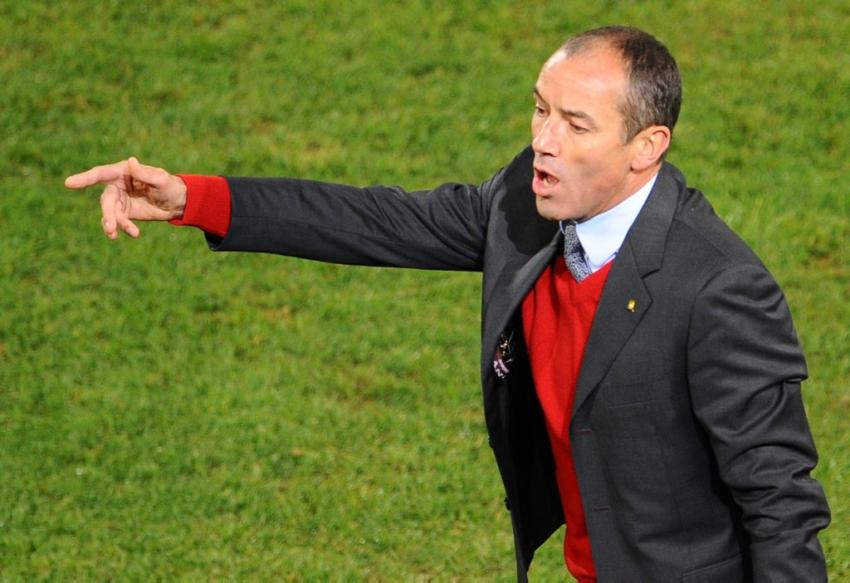
The Technical and Development Committee of the Nigeria Football Federation has named 52 year old Frenchman, Paul Le Guen, as the new Technical Adviser of the Senior National Team, the Super Eagles. Le Guen will be assisted by Nigerian, Salisu Yusuf, who takes the role of Chief Coach. The appointments are subject to agreement of contract terms with the NFF Executive Committee. New Eagles’ boss Le Guen steered the Indomitable Lions of Cameroon to the 2010 FIFA World Cup finals. He played for Brest, Nantes and Paris Saint Germain and wore 17 caps for France, before coaching Rennes, Lyon, PSG (in France) and Glasgow Rangers (in Scotland). He also coached Oman. Yusuf, capped at U20 level by Nigeria, called the shots in interim capacity for two international friendly matches in Europe at the end of May, which the Eagles won. Spokesman of the Committee, Paul Bassey, told thenff.com after the meeting at the NFF secretariat on Monday that Enugu Rangers gaffer, Imama Amapakabo, and former Super Eagles’ goalkeeper and skipper, Alloy Agu, who served as assistant coach and goalkeeper trainer for the games against Mali and Luxembourg in May, retain their places in the technical crew. The new crew’s immediate challenge is a 2017 Africa Cup of Nations qualifier against Tanzania in the first week of September – a dead rubber, but which would serve as ample preparation for the 2018 FIFA World Cup qualifying match away to Zambia on October 3. The Committee has also recommended to the NFF Board the appointment of one-time Super Eagles’ Assistant Coach, Bitrus Bewarang, as the new NFF Technical Director. Bewarang, who is the President of the Nigeria Football Coaches Association, will replace the late Coach, Shaibu Amodu. There is also a recommendation that former Super Eagles’ defender, Nduka Ugbade, be restored to the U17 National Team as assistant to Coach Manu Garba. [myad]
A group operating under the aegis of Concerned Christians of Nigeria has accused the new leadership of the Christian Association of Nigeria (CAN) of manipulating election that brought it into being with money.
“We are afraid that money and other forms of manipulations have been used in CAN elections. We are against Christian leadership that abuses both the exegetical and contextual principle of the message of ‘grace’ in other to perpetuate or cover up evil under any guise.” The spokesman of the group, Rev. Luke Shehu who spoke to news men in Jos, the Plateau State Capital on Monday, described as unholy, the acts being perpetrated by the CAN leadership over leadership interests even as he expressed concern over the protracted crises that have bedeviled the association on who succeeds Pastor Ayo Oristejeafor as President. Rev. Shehu said that instead of the leadership of the CAN to rise up and address the challenges confronting Christians, especially victims of terrorism in Northern Nigeria, it is busy soiling its name for parochial interests. “While resisting attempts to resolve the conflict from the election, the CAN leadership is insistent upon ratifying the election at the National Council meeting on Tuesday, 19th July 2016. “The lack of willingness by the CAN leadership to resolve the issue regarding election is further dividing CAN and leading to distrust and insecurity. “This is evident in the various interests, actions and publications for and against each of the parties. “The leadership of the CAN has resisted demand for peaceful resolution that will lead to evolution and transit to a new leadership through due process and in accordance with CAN constitution. Rev. Shehu called on proponents of allies of the CAN president to desist from misleading Christians that the Presidency or the Federal Government is interested in a candidate for the CAN presidency. He warned that should the leadership of the CAN throw caution to the winds, the Northern CAN would be compelled to revert to the pre-independence Northern Nigerian Christian Association (NNCA), which, according to him, was the umbrella body of the Christians in Northern Nigeria since the colonial administration. “We plead with the well meaning Christian leaders, both Lay/Laity and other relevant organizations concerned to prevail on the current CAN leadership and the five bloc in CAN to restrain and desist from the plan to impose a leadership on the CAN as this may lead to disunity and breach of peace.” [myad]
The Presidency has appealed to the National Assembly to hasten work on the budget of the Ministries, Department and Agencies (MDAs) of the government which has been submitted to it by President Muhammadu Buhari.
In a chat with news men, the senior special assitant to the President on media and publicity, Malam Garba Shehu, said that the President has also demonstrated his respect for the parliament, as a principal arm of government in a constitutional democracy.
“Our hope and expectation is that the National Assembly, acting in the best interest of the nation, will allow the immediate operationalization of the MDAs budgets, so that the momentum of growth of the economy which has begun to build up will be sustained.”
Garba Shehu made it clear that Buhari’s government, which came to power on the plank of anti-corruption and good governance, will fully comply with the provisions of the Fiscal Responsibility Act and other extant laws as they relate to the submission of budget proposals of Federal Government agencies and corporations to the National Assembly.
He said that the President has lived up to this commitment of accountability and transparency with the recent submission of the proposed budgets of CBN, NNPC, Nigerian Ports Authority and others.
“The transmission of budgets for the MDAs to the National Assembly, particularly those regarding the Central Bank and the NNPC behemoth is clearly unprecedented.
“The President is determined to make the budgeting process more transparent and participatory.
“It is all part of the re-engineering of the entire processes of governance for the benefit of ordinary citizens.”
According to Garba Shehu, the President strongly believes that good governance and transparency are integral to the nation’s progress and key to the Federal Government’s programme to revamp the economy.
He said that by responding positively to the demand of the National Assembly that MDA budgets be laid before it for scrutiny, a demand mostly ignored by past administrations.
“President Buhari has indeed given a clear indication of his commitment to an open, transparent and people-oriented government for Nigerians.” [myad]
Remi Tinubu, wife of National Leader of the All Progressives Congress, APC, Asiwaju Bola Ahmed Tinubu, has written to the Inspector General of Police, Ibrahim Idris, seeking police protection.
Senator Tinubu (APC-Lagos), in a letter dated Monday July 18 explained to the IGP that she made the request following threat by Senator Dino Melaye (APC-Kogi).
In the letter, Senator Remi recalled that “during the proceedings on July 14, 2016, I had cause to contribute to a matter of national importance. Apparently dissatisfied with my contributions, Senator Dino Melaye threw caution to the winds, resorted to vulgar abuse of my person and wanted to assault me.
“It was the timely intervention of a number of my colleagues which prevented Senator Melaye from unleashing physical attack on me.”.
Remi Tinubu lamented that the Senate leadership refused to call Melaye to order, adding: “in view of Senator Melaye’s antecedent, particularly in the House of Representatives, where a brawl led by him had led to the untimely death of a lawmaker, I have decided not to ignore his threat to my life.” [myad]
The Minister of Solid Minerals Development, Dr. Kayode Fayemi has given an indication that his ministry is already making efforts to generate electricity from nuclear materials, particularly through the exploration, exploitation and utilization of uranium.
He said that his ministry has invited experts from the International Atomic Energy Agency (IAEA) to conduct a one-week training for nuclear practitioners as well as security officers in the country on the extraction, exploitation and utilization of the substance.
The minister, who spoke at the opening ceremony for the national training course on nuclear security for the uranium extraction industry in Abuja, stressed the need for Nigeria to exploit available resources to meet her power needs.
Fayemi, who was represented by a Deputy Director in the ministry, Mr. Wuyep Karnap, said: “last week at the National Council on Power conference in Kaduna, the issue of uranium for power generation was actually canvassed as a vital component in the energy mix equation.
“So, this training is coming at the right time where capacity to explore, exploit and utilize uranium for power generation and other uses cannot be overemphasized. And apart from the exploration, exploitation and utilization, the security and health aspects of uranium need to be taken care of, and that is why we have security delegates here.” [myad]
We use cookies on our website to give you the most relevant experience by remembering your preferences and repeat visits. By clicking “Accept”, you consent to the use of ALL the cookies.
This website uses cookies to improve your experience while you navigate through the website. Out of these, the cookies that are categorized as necessary are stored on your browser as they are essential for the working of basic functionalities of the website. We also use third-party cookies that help us analyze and understand how you use this website. These cookies will be stored in your browser only with your consent. You also have the option to opt-out of these cookies. But opting out of some of these cookies may affect your browsing experience.
Necessary cookies are absolutely essential for the website to function properly. This category only includes cookies that ensures basic functionalities and security features of the website. These cookies do not store any personal information.
Any cookies that may not be particularly necessary for the website to function and is used specifically to collect user personal data via analytics, ads, other embedded contents are termed as non-necessary cookies. It is mandatory to procure user consent prior to running these cookies on your website.


 The United Nations Children Education Fund (UNICEF) has raised alarm that the next possible weapon for mass death in the aftermath of the devastating Boko Haram is malnutrition, especially amongst the young ones in various Internally Displaced Persons (IDP) camps in Borno State.